 (208) 991-3502
 Meridian, ID



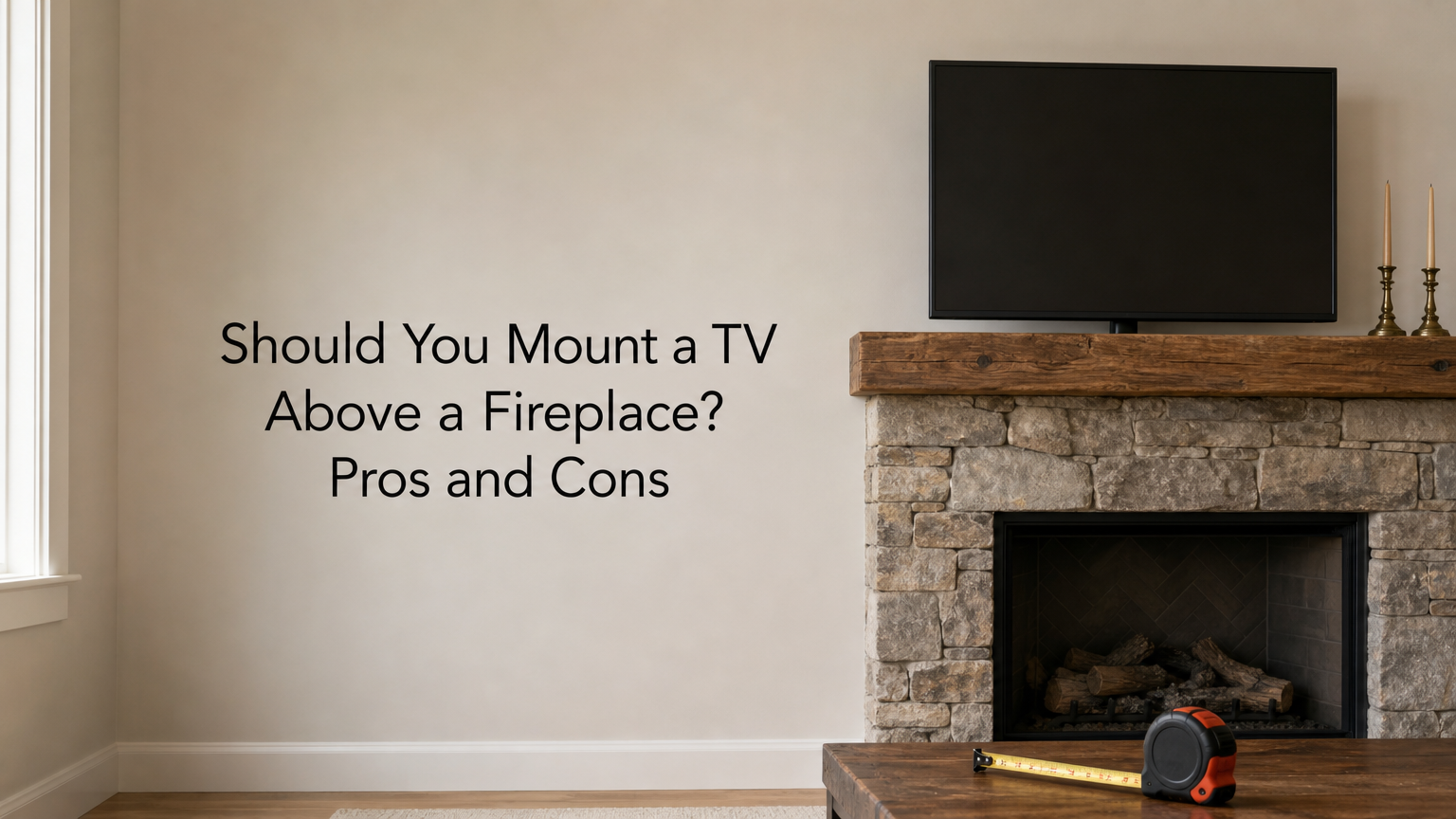

So, should you mount a TV above a fireplace? Yes, when three things check out. The heat at the screen must stay within what the TV manual allows. The screen must sit low enough that you can watch with...
So, should you mount a TV above a fireplace? Yes, when three things check out. The heat at the screen must stay within what the TV manual allows. The screen must sit low enough that you can watch without craning your neck. The wall behind it must carry the weight. If any one of the three fails, the answer is no. That is the test we use on every fireplace job, and it settles both whether it is OK and whether it is safe.
Most advice online picks a side. Designers argue about looks, reviewers warn about neck strain, and fireplace makers say it works with the right clearances. All three are partly right. This article takes each concern in turn, shows you how to test your own fireplace, works through a real viewing-angle example, and covers mounts, alternatives, and what an installation costs.
Treasure Valley Solutions installs TVs over fireplaces across the Treasure Valley, and every one of those jobs starts with the same assessment. Here is what we check, so you can decide whether to mount your TV above the fireplace before anyone touches a drill.
Why the answer depends on your fireplace and room
Mounting a TV above a fireplace is neither always fine nor always a mistake. The result depends on how much heat reaches the screen, how high the screen ends up, and what the wall is made of. Those variables change from house to house, so a blanket "never" or "always" is wrong.
The short answer: three checks decide it
If you are asking yourself "should I mount my TV above the fireplace," run it through these three checks. Each one has a pass or fail result, and you need all three to pass.
- Heat: The temperature at the screen stays inside the TV's rated operating range, and the fireplace manual allows a TV at that spot.
- Height: The center of the screen lands within a comfortable angle of your seated eye level, or a mount brings it there.
- Wall: The wall can be anchored securely, and the cables reach the TV without passing through anything hot.
A TV over a fireplace is fine when heat, height, and wall all pass, and a bad idea when any one fails.
What goes wrong when you skip the checks
Heat is the failure people fear most, and the fear is fair. A TV sitting in the plume of rising warm air runs hotter than its designers planned for. That shortens the life of the set and in bad cases kills it outright. The damage is slow, so you may not connect a failing panel to the fire you lit all winter.
Neck strain is the failure people actually complain about. The mantel sits at chest height, the TV goes above it, and the screen ends up far above your eyes. You tilt your head back for a two-hour movie, and soon nobody wants to watch in that room. The third failure is the wall. Brick, stone veneer, and hollow chimney surrounds each need the right anchors, and a mistake here means a TV on the floor.
Quick verdicts by fireplace type
Your fireplace type sets the starting point. Use this table for a first read, then confirm with your own manuals and the heat test in the next section.
| Fireplace type | Heat reaching a TV above | First-read verdict |
|---|---|---|
| Wood-burning, used often | Highest. Hot air, smoke, and soot rise past the mantel | Test carefully, and often place the TV elsewhere |
| Gas, glass front | Moderate to high, depends on the model and mantel | Yes, if the manual allows the clearance |
| Gas with built-in heat management | Designed to redirect heat away from the wall | Yes, if installed per the manual for a TV |
| Electric | Low to moderate, check where the heater vents | Usually yes |
| Decorative or rarely used | Low | Yes, but mind the height |
How to check whether the heat is safe for a TV
To judge whether it is safe to mount a TV above a fireplace, measure the heat at the screen's location while the fireplace runs, and compare the reading to your TV manual. Do this before you buy a mount. A measured number beats any rule of thumb, including ours.
Read both manuals before you drill
Two documents set the limits: the fireplace manual and the TV manual. The fireplace manual states the minimum clearances above the unit and rules on what can sit on the wall above it. The TV manual gives its operating temperature range, and many sets list an upper limit of roughly 104°F (40°C). The TV also needs airflow behind it, so a tight alcove with no gap traps heat.
Clearances differ by product. Some linear gas units with a passive heat system are engineered so a TV can sit 12 inches above the unit. Other fireplaces call for more space, so the number printed in your manual wins over any figure you read online. If you cannot find the manual, search the fireplace's model number on the manufacturer's site before you plan anything.
The fireplace manual and the TV manual both have to say yes, and the stricter one wins.
Run a heat test with your own fire
A test costs almost nothing and tells you what your fireplace does in your room. Use your usual fire, not a short one, because heat builds over a long burn.
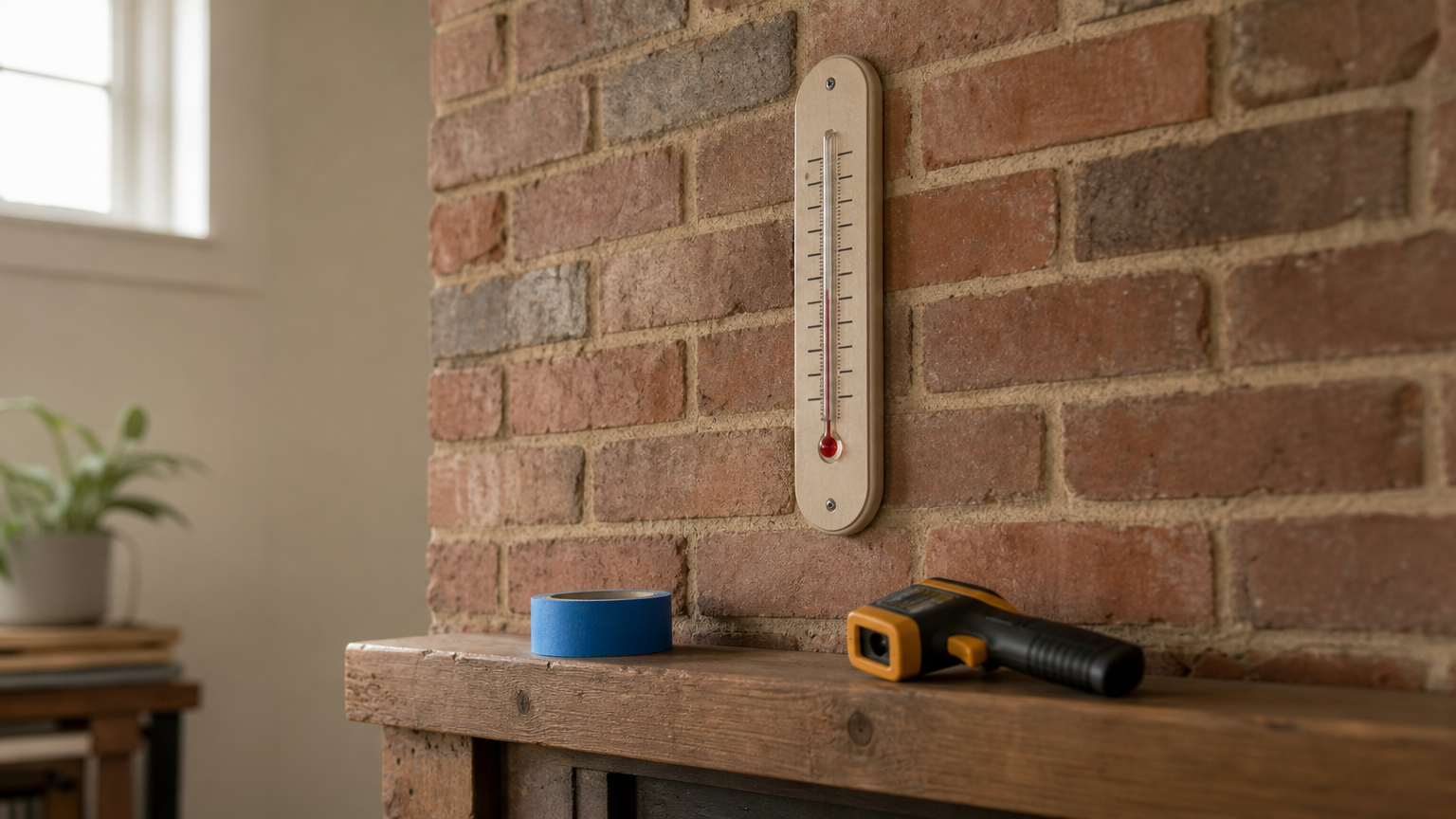
- Mark the planned TV footprint on the wall with painter's tape.
- Hang a thermometer at the center of the tape, and note the temperature just below the bottom edge, where rising air hits first.
- Run the fireplace at its normal setting for at least an hour. In a cold climate like ours, an evening fire often runs longer, so test the long case if you can.
- Read the thermometer, or use an infrared thermometer on the wall surface, and compare it to the upper limit in the TV manual.
- Treat any reading near that limit as a fail. The TV generates its own heat, so you need real headroom.
If you have no thermometer, hold your hand at the spot. If you cannot keep it there comfortably, a TV will not be comfortable either.
Ways to bring the heat down
A failed test does not always end the project. A deep, solid mantel deflects rising air outward and away from the wall, which is why fireplace makers recommend a proper mantel or a recessed alcove for the TV. Lowering the flame, switching a gas fireplace to a lower setting, or using a fan to push warm air into the room all reduce what rises.
Some gas fireplaces have built-in heat management that redirects heat through discharge slots or vents it outside. Those systems must be planned and installed with the fireplace, not added later. For a wood-burning fireplace, add soot and ash to the list. Smoke residue settles on screens and vents, so a wood-burning setup demands a bigger safety margin than gas or electric.
How to avoid neck strain and a bad viewing angle
The fix for neck strain is to get the center of the screen close to your seated eye level, or to sit far enough back that the upward angle stays small. Seated eye level is typically 40 to 45 inches off the floor, and a mantel puts a TV well above that. The angle, not the height, is what your neck feels.
Where the screen center should sit
For comfortable viewing, the screen's center should be near your seated eye level. Above a fireplace you rarely get that, so the question becomes how much angle you can live with. Our working rule is that under about 10 degrees above eye level feels natural. Past 15 degrees, most people notice it during a long movie.
Distance changes the answer. The farther back you sit, the smaller the angle for the same screen height. That is why a TV above a fireplace works in a deep living room and fails in a small den where the sofa sits six feet away.
A worked example with a 65-inch TV
Take a mantel 54 inches off the floor. A 65-inch TV is about 32 inches tall, and if its bottom edge sits 6 inches above the mantel, the screen center lands at 76 inches. With seated eyes at 42 inches, the center is 34 inches above eye level.
| Seat distance from the wall | Angle up to screen center |
|---|---|
| 8 feet | about 19.5 degrees |
| 10 feet | about 15.8 degrees |
| 12 feet | about 13.3 degrees |
Now lower the screen with a pull-down mount until the center sits at 48 inches. At 10 feet, the center is only 6 inches above eye level, about 3 degrees. That one change moves the same TV from a noticeable strain to a comfortable view.
Measure your mantel height and seat distance first, because those two numbers predict neck strain better than any opinion.
Does a high mount hurt the picture?
It can. Most LCD and LED TVs lose contrast and color when you view them from a steep vertical angle, and OLED panels hold up better. A tilting mount points the screen at your eyes and reduces both the angle and the glare, but it cannot fully undo what the panel does off-axis. Fire glow and nearby windows also create reflections on the screen, so check the glare at the hours you actually watch.
When a high TV is perfectly fine
Some rooms forgive height. In a bedroom you watch from bed, and a higher screen lets you see over your feet. If you mostly stand in a kitchen or open-plan room, a higher screen is better. And if your sofa is deep and you recline, your neck is already tilted back, so the strain drops. In those cases the question is just heat and wall, and the viewing check passes more easily.
Will it look right? Design fixes that work
Whether it looks good is taste, but a few rules make a TV over a fireplace look intentional instead of accidental. Scale, color, and the mantel treatment do most of the work. Designers genuinely split on this, so you should decide by how you use the room.
Why designers disagree
One camp says a TV over a fireplace is a cliché. The fireplace is a natural focal point, and a black rectangle above it competes with the architecture. The other camp points out that most rooms cannot give the TV its own wall. Splitting the two across different walls creates two competing focal points, and someone ends up with a bad seat.
We side with function first. If the room needs one wall for both, you have a legitimate reason. Treat the look as a design problem to solve, not a reason to give up on the TV. A rectangle above a rectangle can look deliberate, much like a painting over a mantel.
Design moves that make it work
These changes make the biggest visual difference:
- Paint the fireplace wall a dark color so the screen blends in when it is off.
- Pick a TV size that fits the width of the chimney breast instead of overwhelming it.
- Use a simple, shallow-profile mantel or none at all. A fussy, formal surround under a big black screen is what most people dislike.
- Consider a TV with an art mode, which displays artwork while idle, so the wall never reads as a dead screen.
- Keep the decor symmetrical on both sides so the TV reads as part of the composition.
- Hide the cables, since a visible cord ruins the effect faster than the TV does.
A TV above a fireplace looks best when it is sized to the chimney breast, colored to blend in, and free of visible cords.
Which mount works best above a fireplace
For most fireplaces, a tilting mount is the safe default, and a pull-down mount is the best fix when height is the problem. The mount choice should follow your height check and heat test, not the other way around. A mount cannot fix a fireplace that runs too hot for a TV.
Fixed, tilting, full-motion, and pull-down compared
Each mount type solves a different problem. Here is how they compare above a fireplace:
| Mount type | What it does | Fit above a fireplace |
|---|---|---|
| Fixed | Holds the TV flat and close to the wall | Lowest profile. Works when the screen is already near eye level or sits in an alcove |
| Tilting | Angles the screen down a few degrees | The common choice. Reduces glare and the angle modestly |
| Full-motion | Swings and extends from the wall | Helps with off-center seating. Does not lower the screen, and the arm adds leverage on the wall |
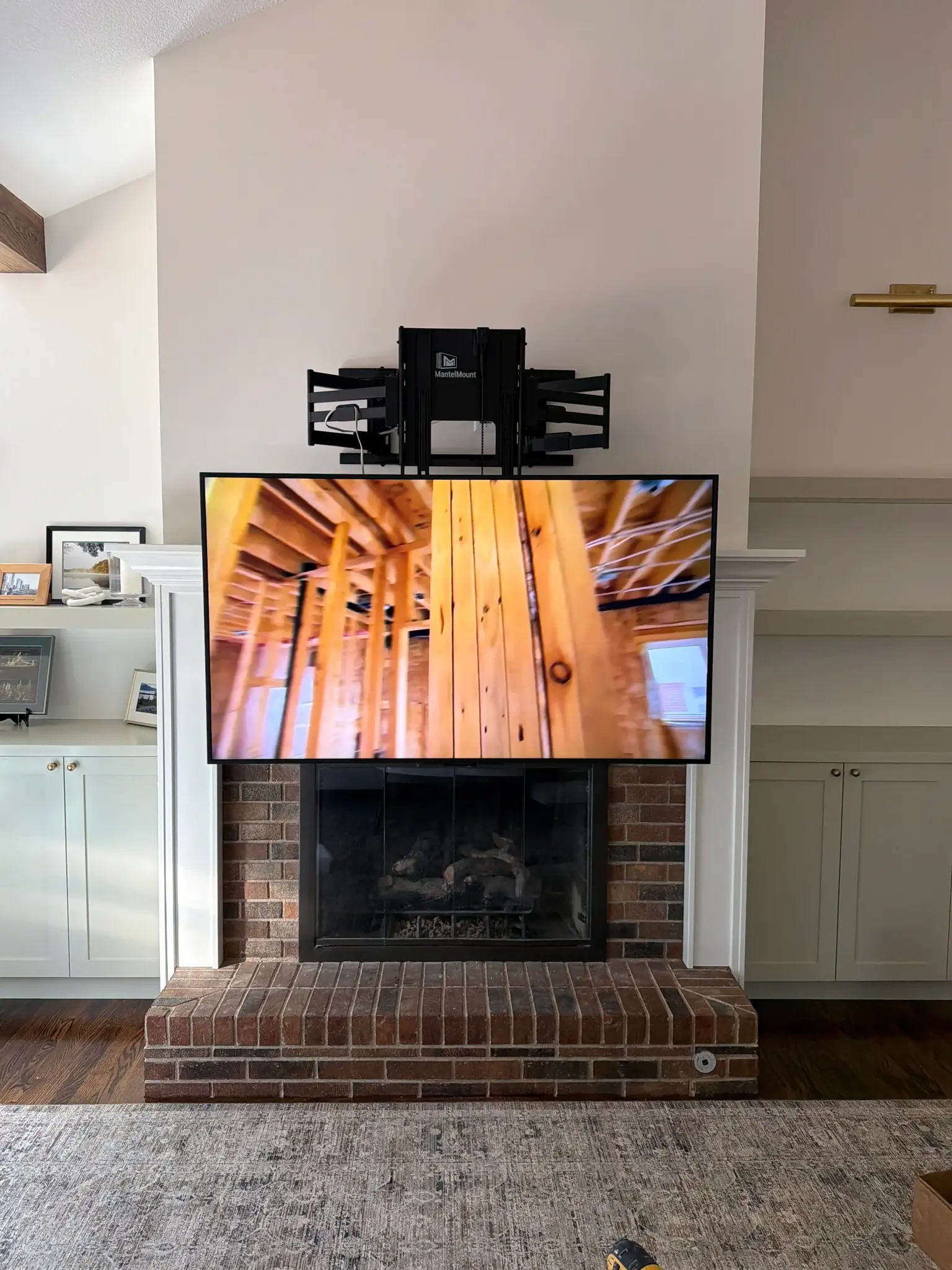
| Pull-down | Lowers the screen toward eye level and folds back up | Best fix for height, and the one that actually solves neck strain |
Where a pull-down mount earns its cost
A pull-down mount lowers an above-fireplace display to a more comfortable viewing position, and it folds back flush against the wall when you are done. We install MantelMount pull-down mounts for exactly this situation, and we assess the fireplace heat, the wall structure, and the full range of movement before installing. That last check matters, because the screen must clear the mantel and any decor as it travels.
One caution. A pull-down mount is a viewing-position option, not a safety device. It does not protect the TV from heat, and it does not make a too-hot fireplace safe. Pass the heat test first, then use the mount to fix the angle.
What to do instead when the answer is no
If the heat test or the angle fails, move the TV instead of forcing it. The best alternative keeps the screen near eye level and out of the fireplace's heat. You have more options than you think.
Same-wall options that skip the height problem
You can keep the TV and fireplace on one wall without stacking them. A TV placed beside the fireplace, at eye level in an alcove or between a window and the fireplace, avoids both the heat and the strain. A swivel arm lets it turn toward the seating when you need it. In a new build or remodel, a stove-style fireplace beside the TV shares the focal wall while letting the screen sit lower.
The downside is looks. A TV beside a fireplace can read as a rectangle next to a chunky rectangle, so lean on the design fixes from earlier. The trade is usually worth it when the alternative is a strained neck.
Other-wall and hidden options
If you have a free wall, put the TV on it and angle the seating so both the fire and the screen are in view. If you want the screen out of sight, a cabinet with doors or a recessed alcove hides it when it is off. A projector and retractable screen also work, but the picture washes out in a lit room, and dark blacks need a dark room.
If your fireplace fails the heat or angle test, put the TV beside it or on another wall instead of forcing the stack.
What a professional fireplace TV install involves
A good installer checks the wall, the heat, the viewing position, and the mount's full movement before mounting, and only then picks hardware. The assessment is the real job, and the drilling is the easy part. Here is what happens behind the wall and what it costs.
What the wall and framing need
Fireplace walls vary. A brick or stone surface needs masonry anchors. A stone veneer over framing needs the installer to find the structure behind it. A painted drywall chimney breast needs studs or proper blocking. The load matters too: the weight of the TV plus the mount, and with a pull-down or full-motion arm, the leverage when it extends.
Brick, concrete, and stone take longer and need different tools, which is why masonry surfaces carry a surcharge. Our fireplace TV mounting service does not assume wall opening, repair, patching, or paint is included, so ask about those up front if your wall needs work.
Power and cables around a fireplace
Cables are where DIY jobs go wrong. Never run cords through or alongside the firebox or chimney framing, and never use an extension cord inside a wall. A recessed outlet behind the TV is the clean answer, and new power outlets belong to a licensed electrician. Plan the cable route before you pick the mount so nothing ends up near the heat.
What a mounting job costs
Our TV mounting service is priced by TV size, with a surcharge for masonry walls. Use these base rates as a starting point for budgeting.
| Item | Price |
|---|---|
| Base labor, 55 inches or smaller | $139 |
| Base labor, 56 to 97 inches | $169 |
| Base labor, 98 inches or larger | $199 |
| Brick, concrete, stone/tile, and other walls | $49 per TV |
| Supplied mount, fixed / tilting / full-motion | $99 / $119 / $199 |
A worked example: a 65-inch TV on a brick chimney breast with a supplied tilting mount comes to $169 base labor, plus $49 for the masonry, plus $119 for the mount, which is $337. Idaho's 6% sales tax applies to physical materials only, so it adds $7.14 on the mount, for $344.14 in total.
What to ask any installer
Hire someone who will talk about the fireplace before the TV. Ask these questions:
- Will you check my fireplace clearances and heat before choosing the mount?
- Are you licensed and insured, with general liability and workers compensation coverage?
- How long will the job take? A single standard mount typically takes one to two hours.
- What does your warranty cover? We give a one-year warranty on all work.
- What is not included, such as wall repair, patching, and paint?
Making the call on your fireplace
You should mount a TV above a fireplace when the heat at the screen stays within the TV's rating, the viewing angle stays comfortable, and the wall can carry the load. If heat or angle fails, move the TV beside the fireplace or to another wall. The tests are simple: read both manuals, run a one-hour heat test, and measure your angle.
If you want a second set of eyes on your fireplace, we offer free, no-obligation on-site consultations and estimates around the Treasure Valley. Contact Treasure Valley Solutions and we will check the heat, the wall, and the viewing position before we suggest any mount.
Recent Google reviews
Read all reviews →“Great job!!”
“Amazing customer experience. They went above and beyond installing my 2 TVs on the wall and setting up my ring doorbell. Thier price was very very reasonable. Great experience, have used their service twice now.”
“Professional, on time and the team did an outstanding job! 100% would recommend and will use again.”