 (208) 991-3502
 Meridian, ID



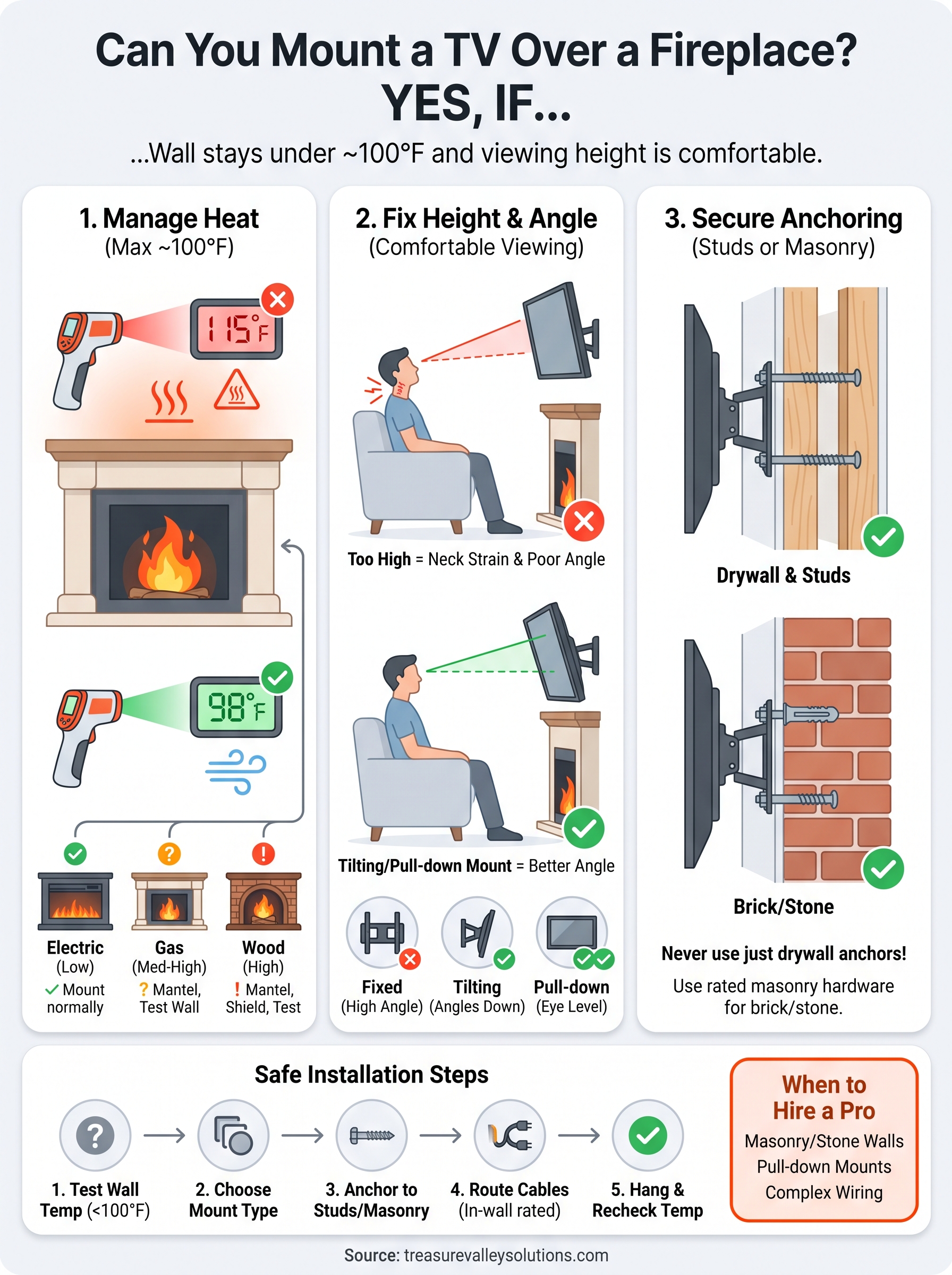
So, can you mount a TV over a fireplace? Yes, as long as the wall behind the screen stays under your TV's maximum operating temperature, usually around 100°F, and the screen sits at a height you can w...
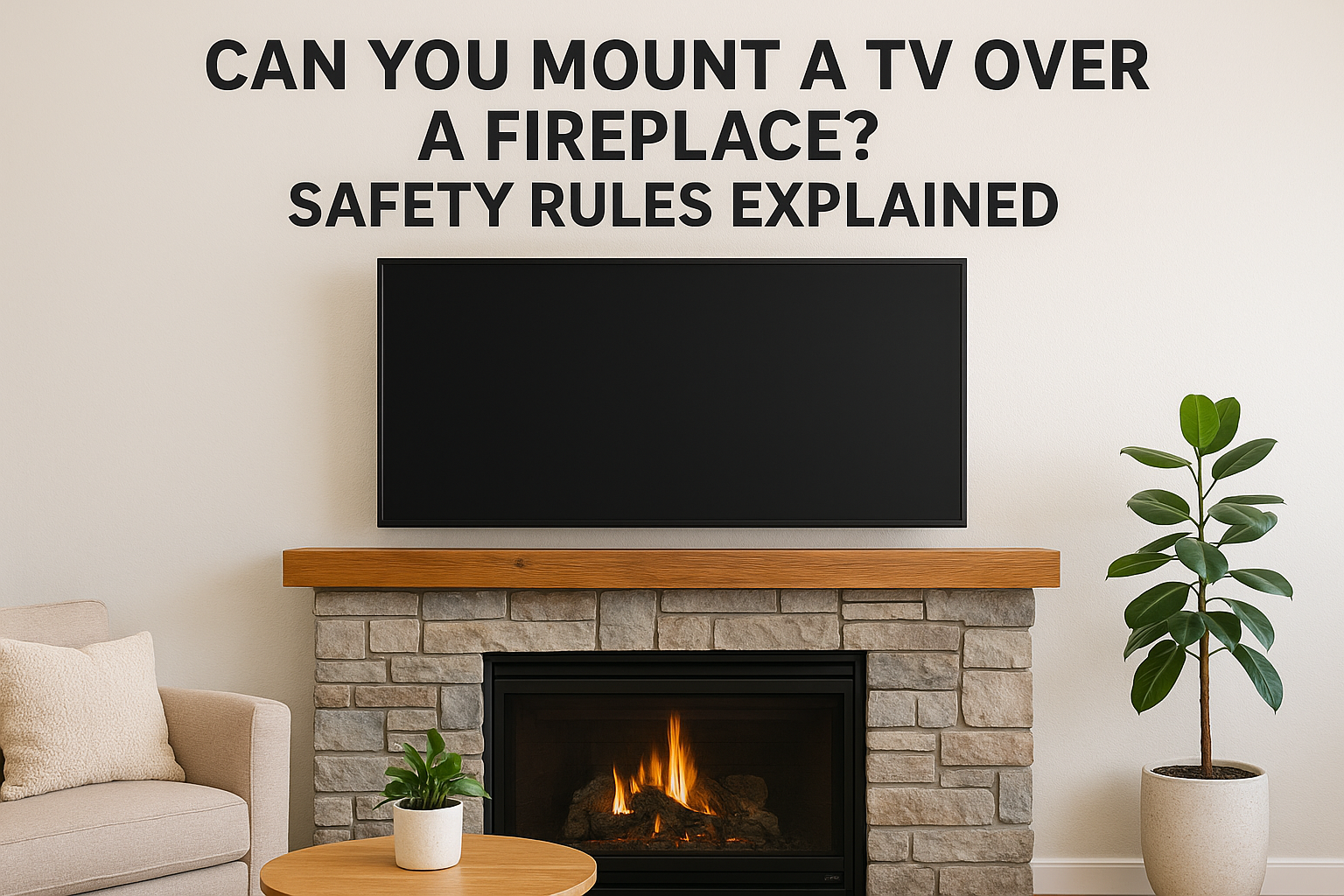
So, can you mount a TV over a fireplace? Yes, as long as the wall behind the screen stays under your TV's maximum operating temperature, usually around 100°F, and the screen sits at a height you can watch comfortably. Gas, wood-burning, and electric fireplaces all work in principle. What changes is how much heat rises past the mantel and how much prep you need to manage it.
This question matters because the wall above the fireplace is the most requested and most misjudged TV spot in a home. It looks like the natural focal point of the room. It also combines three problems: rising heat, a high viewing angle, and a wall that is often brick, stone, or short on studs. Each problem has a fix, and none of them require a special TV.
This guide covers why a fireplace changes the rules, the heat limits for gas and wood-burning units, and the height, mount, and installation steps that keep your TV safe. We install TVs across the Treasure Valley from our base in Meridian, Idaho, and fireplace walls are the jobs where planning pays off most.
Why a fireplace changes the rules for TV mounting
A fireplace changes the rules because it adds heat, pushes the screen higher than a normal living room position, and often gives you a harder wall to drill into. Ignore any one of these and the TV pays for it, either in lifespan or in comfort.
Heat is the biggest risk
Heat matters most because rising warm air collects around the screen and gets pulled into its vents. Most TV manuals list an operating range of roughly 32 to 104°F, so a wall that regularly hits 110°F is outside what the set was built for. A short spike rarely kills a TV. Repeated heat cycles over months can shorten its life.
A solid mantel helps. It deflects part of the rising heat, which is why a TV above a mantel fares better than one hung directly over the opening.
Heat, not the fire itself, decides whether a TV above your fireplace lasts.
Height and viewing angle
Height is the second problem. A seated adult's eyes sit about 40 to 45 inches off the floor, while the center of a TV above a mantel often lands at 65 inches or higher. Looking up at that angle for a two-hour movie strains your neck, and many LED panels lose contrast and color when you view them from steeply below.
Whether it looks good is a matter of taste. A TV centered on the fireplace, angled toward the seats, and free of dangling cables rarely looks tacky. If you are choosing a set for this spot, pick a bright panel with good off-angle viewing, because you will rarely watch it from dead center.
Heat limits for gas and wood-burning fireplaces
Your fireplace manual and your TV manual set the real limits, and the practical target is a wall that stays under about 100°F while the fire runs. How likely you are to hit that number depends on the fuel type.
Gas fireplaces
You can usually mount a TV above a gas fireplace, but the manual decides how close it can go. A sealed, direct-vent unit with a glass front sends less heat upward than an open one. Some linear gas models include built-in heat management that allows a TV a short distance above the unit. Vent-free units push rising heat into the room, so treat them like a wood-burning fireplace.
Wood-burning fireplaces
A TV above a wood-burning fireplace is possible, but it is the least forgiving setup. Peak burns run hotter, and an open masonry firebox also sends up ash, soot, and smoke odor. Plan on a solid mantel and, often, a heat deflector or shield. Inserts with glass doors push heat outward instead of up, so the wall above them is often cooler. Test it anyway.
Comparing fireplace types and testing your wall
| Fireplace type | Heat above the opening | Usual approach |
|---|---|---|
| Electric | Low | Mount normally, check the manual |
| Direct-vent gas | Moderate | Mantel, manual clearance, test the wall |
| Vent-free or open gas | Moderate to high | Deep mantel, deflector, test the wall |
| Wood-burning | High | Mantel, heat shield, test, consider another wall |
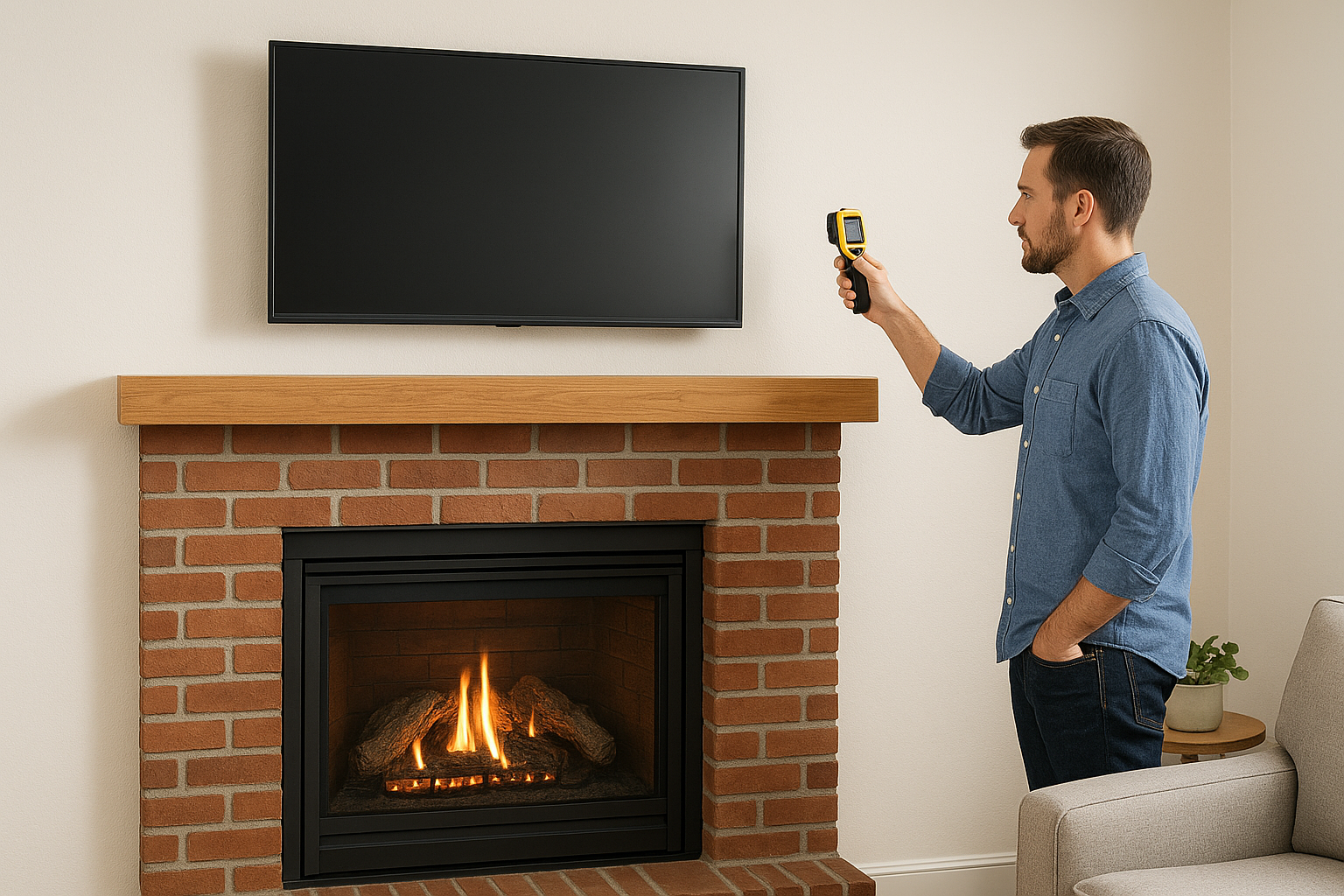
Testing takes an afternoon and removes the guesswork:
- Run the fireplace at the level you normally use, for at least two to three hours.
- Point an infrared thermometer at the spot where the TV's bottom edge and center will be.
- If readings stay under about 100°F, you are in the safe zone. If not, add a mantel or heat shield, or choose another wall.
If the wall stays under 100°F after a long burn, the TV will be fine.
How to mount a TV above a fireplace safely
To mount a TV above a fireplace safely, you pick the right height and mount, anchor into solid framing or rated masonry, and route cables away from heat. Do the steps in order and the finished job stays safe for years.
Choose the height and mount type
Keep the bottom edge of the TV at least 6 to 12 inches above the mantel, or whatever your fireplace manual requires, whichever is greater. Then bring the screen toward your sightline with the right mount:
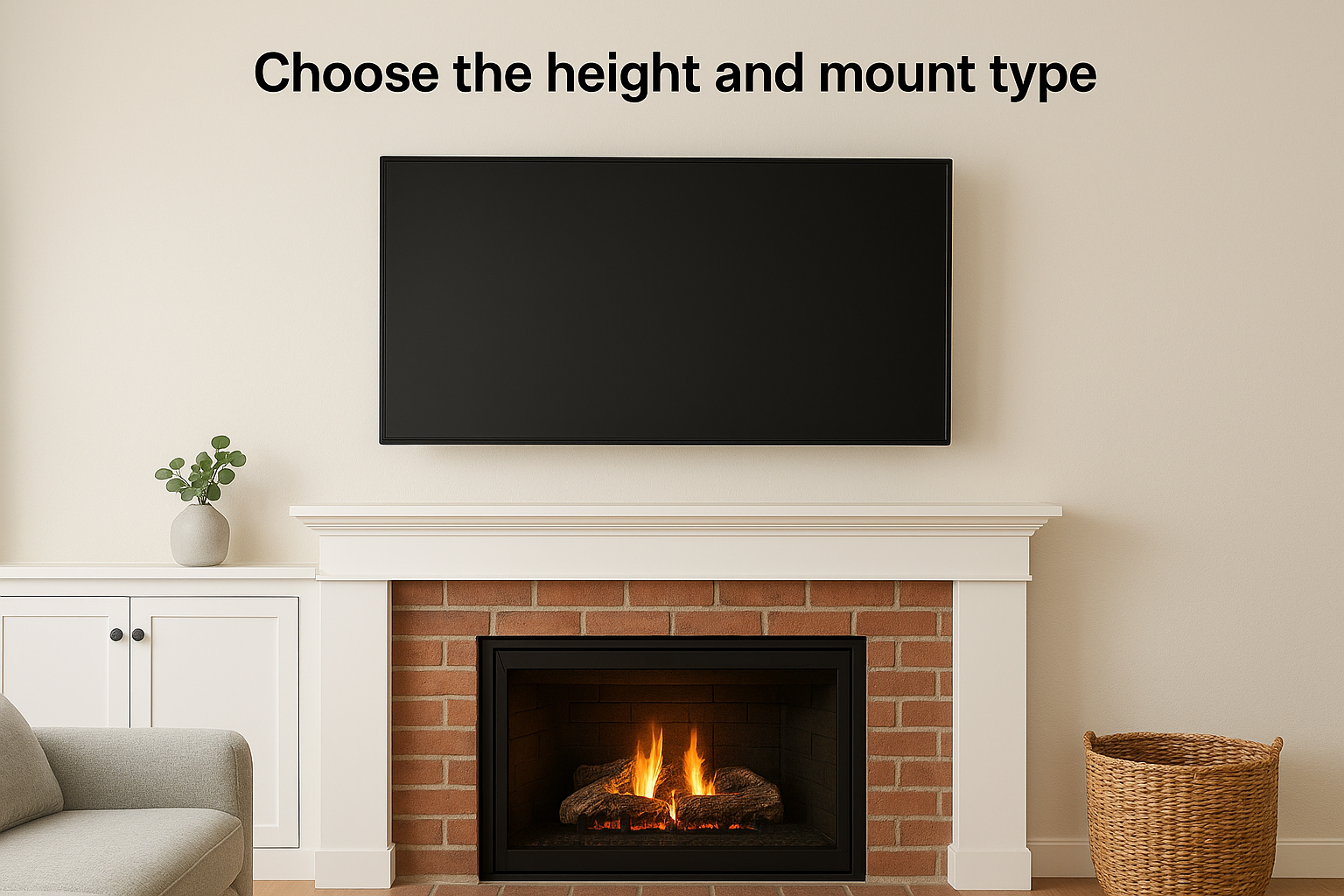
- Fixed: Cheapest, but it locks in the high viewing angle. Avoid it unless the TV sits only slightly above eye level.
- Tilting: Angles the screen down a few degrees. It works when the TV is high but not extreme.
- Full-motion: Swings and angles the screen toward the seating area.
- Pull-down: Lowers the TV to eye level, which is best for comfort. Never lower it in front of the firebox while the fire is burning.
A pull-down or tilting mount fixes neck strain, but only if you keep the TV out of the heat.
Anchor into studs, brick, or stone
Studs are the best anchor. Find them with a stud finder, since they usually sit 16 inches apart, and drive lag screws into at least two. If the studs do not line up with your mount, add blocking or a mounting plate that spans them. Never trust drywall anchors alone with a TV this heavy.
Brick fireplace TV mounts and stone surfaces need different hardware. Use a masonry bit and anchors rated for masonry and for the TV's weight. Stone veneer on a stone fireplace is thin, so anchor through it into the framing behind. Confirm the mount's weight rating before you drill.
Installation order and cable routing
Heat damages cable insulation too, so keep power and HDMI cables away from the firebox. Follow this order:
- Test the wall temperature, as described above.
- Mark the TV's center and bottom edge, then locate studs or masonry.
- Install the mount and check that it is level.
- Run in-wall rated cables and put the outlet behind the TV. A licensed electrician should add any new fireplace TV outlet.
- Hang the TV, adjust the angle, and recheck the wall temperature after a long burn.
When to hire a professional for a fireplace TV install
Hire a professional when the wall is masonry or stone, when you want a pull-down fireplace mount, or when wires need to disappear inside the wall. These jobs carry real risk for a TV worth hundreds or thousands of dollars.
Signs the job needs a pro
A large TV above a wood-burning fireplace, a stone surround with no accessible studs, or a wall that reads close to 100°F in your test all call for experienced hands. The same goes for new outlets or in-wall cable runs.
What a pro checks
An installer verifies fireplace clearances, tests wall temperature, sets the mount height for your actual seating, and hides the cabling cleanly. Our technicians are licensed and insured, and every install is tested before we leave.
The short answer on mounting over a fireplace
You can mount a TV above a gas or wood-burning fireplace when the wall stays under about 100°F, the screen is angled toward your seats, and the mount is anchored into solid framing or rated masonry. Check both manuals, test the wall, then choose the mount that matches your height problem.
If you would rather have it done right the first time, talk to our team about a fireplace TV install and we will plan the height, heat checks, and wiring with you.