Home Theater Prewiring
Prewiring coordinates the low-voltage pathways and connection points your theater will need before drywall closes. We begin with approved equipment positions and a plan for display, speakers, AV and data connections, controls, power coordination with the responsible electrical trade, and a central equipment location.
Approve the room layout before rough-in
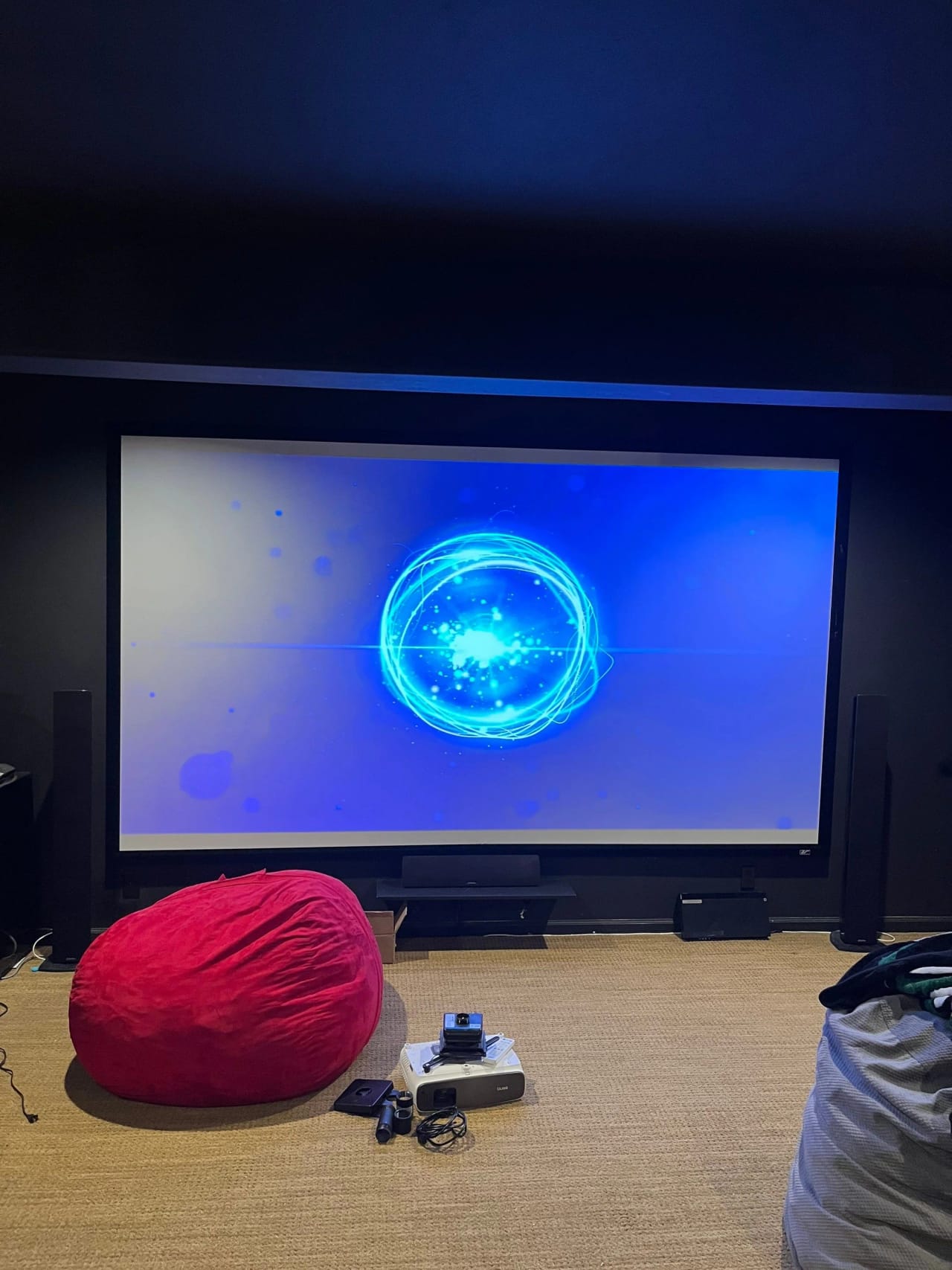
Start with the screen wall, primary listening position, expected seats, and how the room will be used. Mark the front, surround, and potential height-channel speaker locations against the intended receiver and speaker configuration. More channels require appropriate positions, not simply more cable. Confirm projector lens and mounting positions against the selected model's throw and clearance requirements. Screen control and any motorized screen connections depend on the selected product.
Connect the display, rack, network, and controls
Plan speaker runs, display or projector signal connections, data connections, and any low-voltage control wiring as a complete path. Cable type and signal-extension choices depend on equipment, distance, and supported formats. Reserve a rack or equipment location with ventilation, service access, a network connection, and coordinated power. Agree who supplies equipment, mounting provisions, and any trade-specific infrastructure before work begins.
Plan for the installation and what comes next
The scope can address pathway access, rack ventilation and service access, cable labeling, installation documentation, and planned future expansion. We coordinate timing with the project team so the wiring plan supports the intended system rather than relying on assumptions.
Schedule the approved low-voltage rough-in while framing is accessible and before insulation or drywall, subject to the builder's sequencing and required inspections. Label both ends, record cable destinations, and document agreed locations before walls close. Discuss spare runs and accessible routes for future expansion; no cable specification guarantees compatibility with every future product.
Rough-in is not a commissioned theater
The rough-in proposal identifies cable endpoints, testing and documentation, exclusions, and responsibility for each location. Final equipment supply, trim-out, system programming, calibration, and training are separate phases unless the written agreement includes them. Recheck equipment compatibility before final installation.
Electrical circuits and power work belong to the responsible electrical trade. Conduit is not standard TVS prewire work and must be specified and coordinated separately. Construction, drywall, and finish repairs are not implied by a low-voltage prewire scope.
For the wider building technology discussion, see our residential builder resources. This theater consultation is not a builder partnership application and does not require plan uploads.
Scope depends on approved positions, access, the construction schedule, and coordination with other trades. Explore our home theater work and read the home theater blog.
Request a home theater project consultation.
 (208) 991-3502
 Meridian, ID