 (208) 991-3502
 Meridian, ID



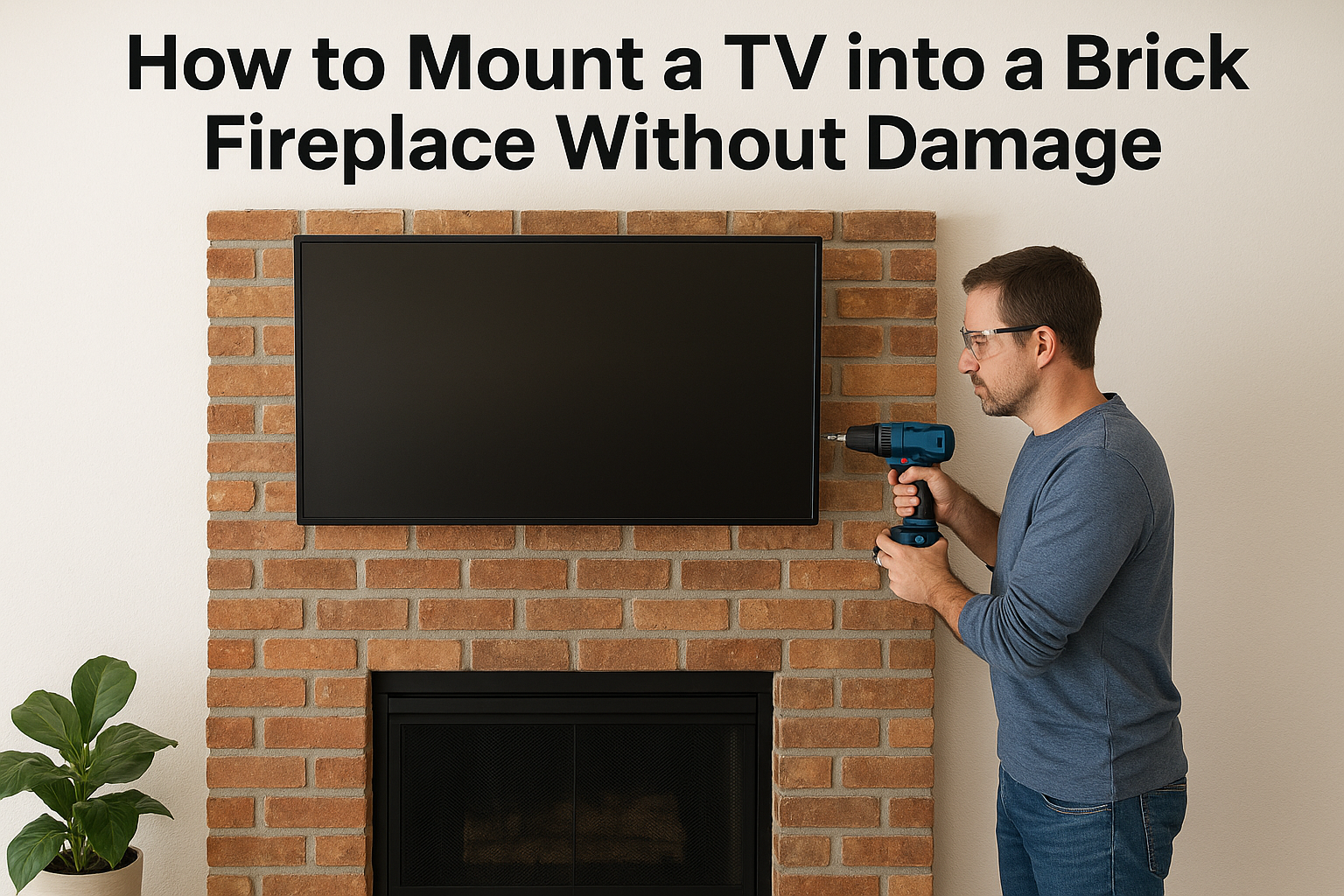

The safe way to mount a TV into a brick fireplace is to use a hammer drill with a carbide masonry bit, drill into the center of the brick face instead of the mortar, set masonry anchors rated well abo...
The safe way to mount a TV into a brick fireplace is to use a hammer drill with a carbide masonry bit, drill into the center of the brick face instead of the mortar, set masonry anchors rated well above the load, and lift the TV onto the bracket with a helper. Pick a tilting or pull-down mount if the screen sits high. Check the heat before you finish.
The hard part is that brick punishes mistakes. A standard drill stalls. Drywall anchors spin out. A hole in a mortar joint crumbles under weight. Thin brick veneer can hide a hollow wall. Then there is the heat from the firebox, the height of the mantel, and the cables that now hang down the face of your fireplace. Most failed installs come from skipping one of these checks.
This guide walks you through the full job in order: what to check first, the tools and anchors, marking and drilling, hanging the TV, and hiding the wires. We cover the no-drill question too. Treasure Valley Solutions installs TVs on brick and stone for homeowners across Meridian, Boise, and Eagle, so these steps come from real fireplace installs.
Is a brick fireplace safe for a TV mount?
Yes. Solid brick is one of the strongest surfaces for a TV mount, provided the anchors go into the brick face and the mount is rated well above your TV's weight. Brick does not flex like drywall, and you never have to find studs. The risks are the wrong hardware, drilling into mortar, and a wall that is thinner than it looks.
Why brick holds a TV so well
A 65-inch TV and a full-motion bracket together often weigh well under 100 pounds. Properly installed masonry anchors in solid brick are rated for far more than that. The load is spread across four to six anchor points, and fired clay grips an anchor without crumbling the way old mortar can.
Anchor into the brick face and never the mortar, and the wall will hold far more than your TV weighs.
Check what you actually have
Look closely at the fireplace before you buy anything. Solid brick is at least a few inches deep and sounds dense when you knock on it. Thin brick veneer is a decorative layer, often under an inch thick, glued over drywall, cement board, or block. Veneer over drywall cannot carry a TV on its own.
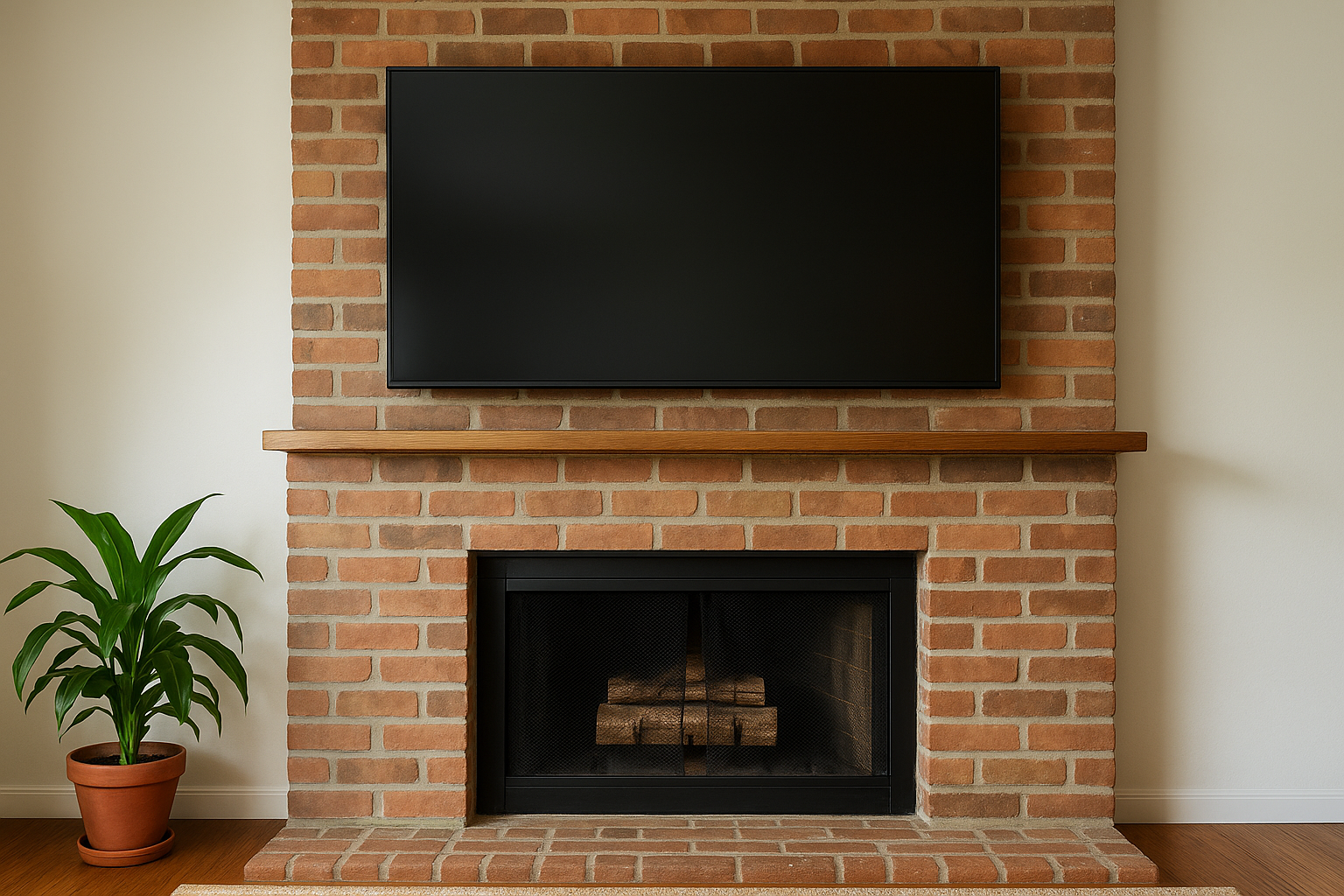
Test with one small pilot hole in a spot the mount will cover. If the bit drills through in an inch or less and the dust changes color or the bit suddenly runs free, stop. You are in a different material. Hollow brick, cracked brick, and crumbling mortar are also reasons to stop and get a pro's opinion.
Difficulty, cost, and heat
Is it hard? It is a moderate DIY job. The skills are measuring, drilling straight, and lifting safely. The costs are a masonry bit, anchors, and a hammer drill, which hardware stores commonly rent. A professional install costs more, and the price varies with the mount type and wire work.
Heat matters if you burn fires. Many TV manuals list a maximum operating temperature around 104°F, but check yours. Run the fireplace for an hour, then measure the wall where the screen will sit with an infrared thermometer. If it runs hot, mount higher or choose a pull-down mantel mount that keeps the screen up and out of the heat when the fire is on.
Step 1. Gather the right tools and hardware
You need a hammer drill, carbide-tipped masonry bits, masonry anchors, a level, and a mount rated above your TV's weight. A standard drill will not do the job. The bit must match the anchor, and the anchor must suit brick, which is why the plastic drywall anchors in the mount's box go in the trash.
Tools for the job
- Hammer drill (rent one if you do not own one)
- Carbide-tipped masonry bits that meet ANSI standards, in the diameter your anchors call for
- Level and pencil
- Painter's tape or a depth stop for the bit
- Socket set or wrench for lag bolts
- Safety glasses and a dust mask, because brick dust is harmful to breathe
- Shop vacuum or a squeeze bulb to clear dust from the holes
- A helper, since lifting a TV onto a high bracket is a two-person job
Pick the right anchor
Check what the mount includes. Many ship with lag bolts and drywall anchors, which suit studs and not brick. Buy masonry hardware separately and confirm it fits the bracket's bolt holes.
| Anchor type | How it works | Best for |
|---|---|---|
| Concrete screws (Tapcon style) | Thread directly into a pre-drilled hole | Solid brick, common DIY choice |
| Sleeve anchors | A sleeve expands as you tighten the nut or bolt | Solid brick and concrete block |
| Lag shields with lag bolts | A metal shield sits in the hole and grips the lag bolt | Solid brick when the bracket needs lag bolts |
| Plastic drywall anchors | Expand in hollow drywall | Not suitable for brick |
Whatever you choose, read the package. It lists the bit size, the minimum embedment depth, and the rated load. Pick anchors that carry several times your total weight, since the bracket's arm adds leverage.
Choose a mount for a fireplace
For a TV above a mantel, a tilting mount helps you angle the screen down toward seated eyes. A pull-down mount lets you lower the TV to eye level and tuck it back up when not in use. A fixed mount works only if the TV sits at a comfortable height. Check that the mount's VESA pattern matches your TV and that its weight rating exceeds the TV's weight. A full-motion arm that extends from the wall pulls harder on the anchors, so give it the strongest hardware you can.
Match the anchors to the brick and the mount to the load, because the box hardware was almost certainly not built for masonry.
Step 2. Mark the position and drill into the brick
Set the height, mark the hole locations with the bracket held level, and drill into the center of the brick face, never into the mortar joint. Mortar is softer and crumbles under sustained load. A hammer drill with a sharp carbide bit makes clean holes in brick quickly when you let the hammer action do the work.
Set the height and mark the holes
Start with where the screen should sit. Seated eye level for most living rooms is roughly 40 to 48 inches off the floor, and a fireplace usually pushes the TV higher than that. Sit on your sofa and have a helper hold painter's tape where the center of the screen would be. If the spot is far above eye level, plan on a tilting or pull-down mount.
Tape the mount's paper template, or the wall plate itself, to the brick and level it. Mark each hole with a pencil.
Make every hole land on brick
Look at each mark. Brick courses run horizontally, and mortar joints are only about 3/8 inch wide, so some marks will fall on mortar. Shift the plate left or right a little, use a different hole in the plate's pattern, or pick a bracket with slotted holes. Aim for the center of each brick, an inch or so from its edges, so the brick does not crack when the anchor tightens.
Never drill into mortar. If a mark lands on a joint, move the plate, not the rule.
Drill clean, straight holes
Put on your glasses and mask. Wrap painter's tape around the bit as a depth flag, set about a quarter inch deeper than the anchor's embedment so dust has room to settle. Set the drill to hammer mode and hold it square to the wall.
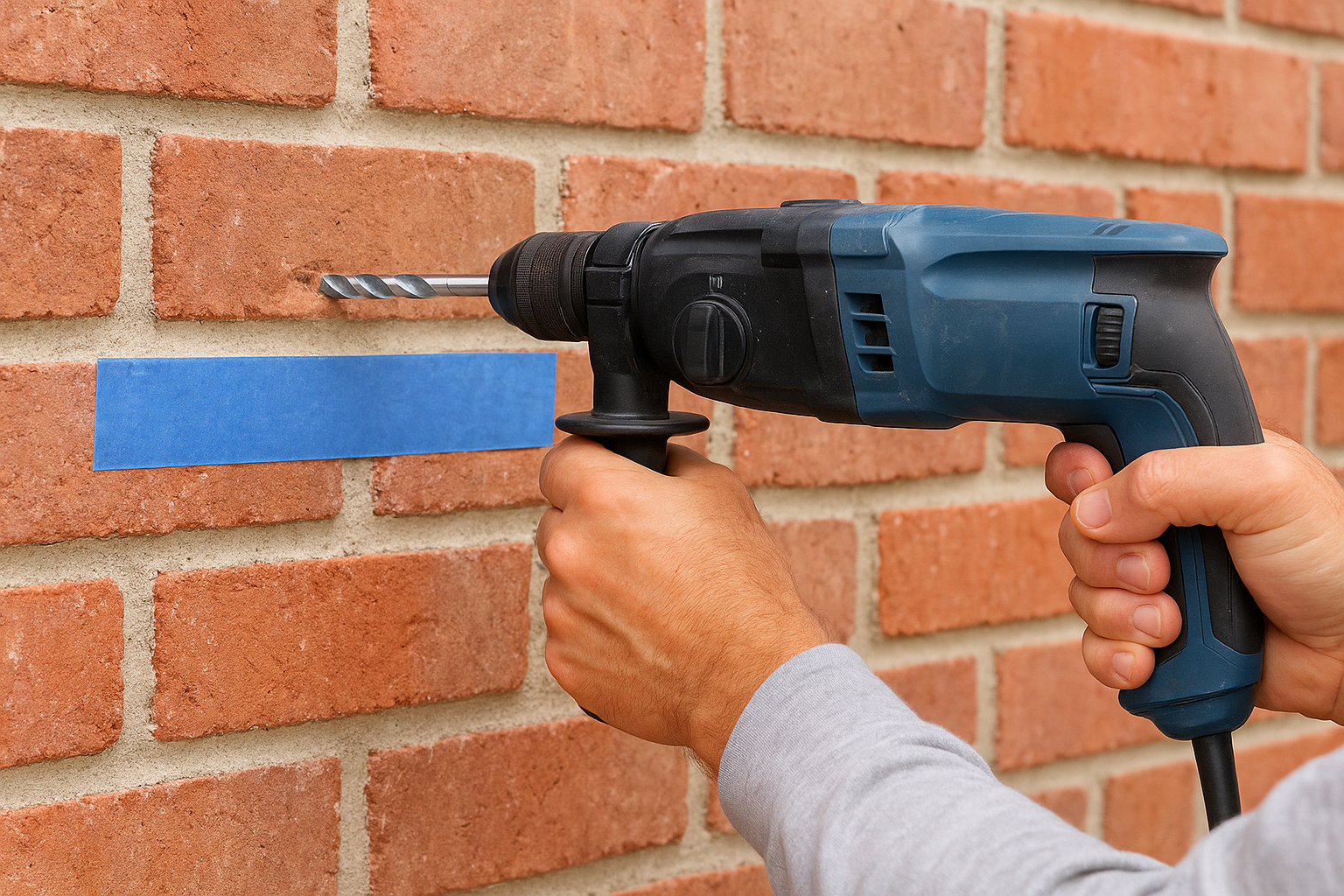
- Start slowly to keep the bit from wandering on the brick's surface.
- Apply steady, light pressure. Forcing the drill burns the bit.
- Pull the bit out a few times to clear dust.
- Stop at the tape flag.
- Vacuum or blow out each hole. Dust left behind weakens the anchor's grip.
If a hole breaks out the face of the brick, mark a new spot nearby and drill again. Do not use a damaged hole.
Step 3. Anchor the bracket and hang the TV
Set the anchors, bolt the wall plate to the brick snug and level, test it by hand with no TV on it, and only then lift the TV into place. Overtightening can crack a brick, so stop when the bracket feels firmly seated.
Fasten the wall plate
Line up the plate with the holes. Insert the concrete screws or lag bolts with shields through the plate and tighten them. With sleeve anchors, tap each anchor in until flush with the plate, then tighten the nut or bolt so the sleeve expands. Check the level once more before the final turn. Tighten the fasteners in a cross pattern so the plate seats flat.
Test before you trust it
Grab the wall plate and pull down and out firmly, the way a leaning kid or a bumped arm might. It should not move at all. If an anchor spins freely, remove it, check the hole, and use a longer or larger anchor in a fresh hole nearby. Good installs pass this test with the plate empty, long before a TV goes up.
Pull-test the bare bracket first, because a loose anchor is easy to fix before the TV is hanging on it.
Attach the TV and lift
Mount the arms or brackets to the back of the TV first. Use the screws and spacers that come with the mount, and match the screw length to your TV's VESA holes so you do not strip them. Lay the TV face down on a soft surface for this.
Then lift the TV with a helper, hook it onto the plate, and lock the safety latches. Check the level, and adjust. If you have a tilting or pull-down mount, run the full range of motion once to confirm nothing hits the mantel or the brick.
Step 4. Hide the wires and consider no-drill options
Wires over brick cannot go inside the wall, so run them in a paintable raceway or route them to an outlet behind the TV. If you would rather not drill at all, a freestanding stand or a TV on an adjacent drywall wall are the safe alternatives. Adhesive hooks and clamps are not safe for a TV.
Hide the wires
Brick offers no cavity, so plan the cable path before you finish. Options, from simplest to cleanest:
- Paintable cord cover: a slim raceway that runs from the TV down to the mantel or the floor. Paint it to match the brick. Fasten it with masonry screws, since adhesive grips brick poorly.
- Thin cables: a slim fiber or flat HDMI cable and a short power cord lower the bulk you have to hide.
- Outlet behind the TV: have a licensed electrician install a recessed outlet or route power so the cord stays out of sight. A standard power cord must not run inside a wall. A code-compliant in-wall power kit exists for that reason.
- Chase wall above the firebox: if your fireplace has a drywall chimney breast, in-wall routing may be possible there. Keep wires away from the flue and the firebox, and never run them through either.
Mount without drilling
Is there a safe way to mount a TV on a brick fireplace without drilling? Not on the brick itself. Adhesive strips, suction mounts, and mantel clamps cannot safely hold a screen against heat and a rough surface. The safe options are:
- A floor stand or a media console placed beside or in front of the fireplace
- A TV mounted on a nearby drywall wall, using studs
- A pole-style or freestanding mount that rests on the floor
If you rent, ask your landlord before drilling. Holes in brick can be filled and tinted afterward, but that is a repair, not a free pass.
When to hire a professional
Call a pro if you find hollow brick, veneer, a cracked chimney face, or a TV above 75 pounds that you cannot lift safely with help. Wire work that involves new outlets also calls for a licensed electrician. You can see finished fireplace installs on our work page to judge what a clean result looks like.
Your fireplace TV, mounted the safe way
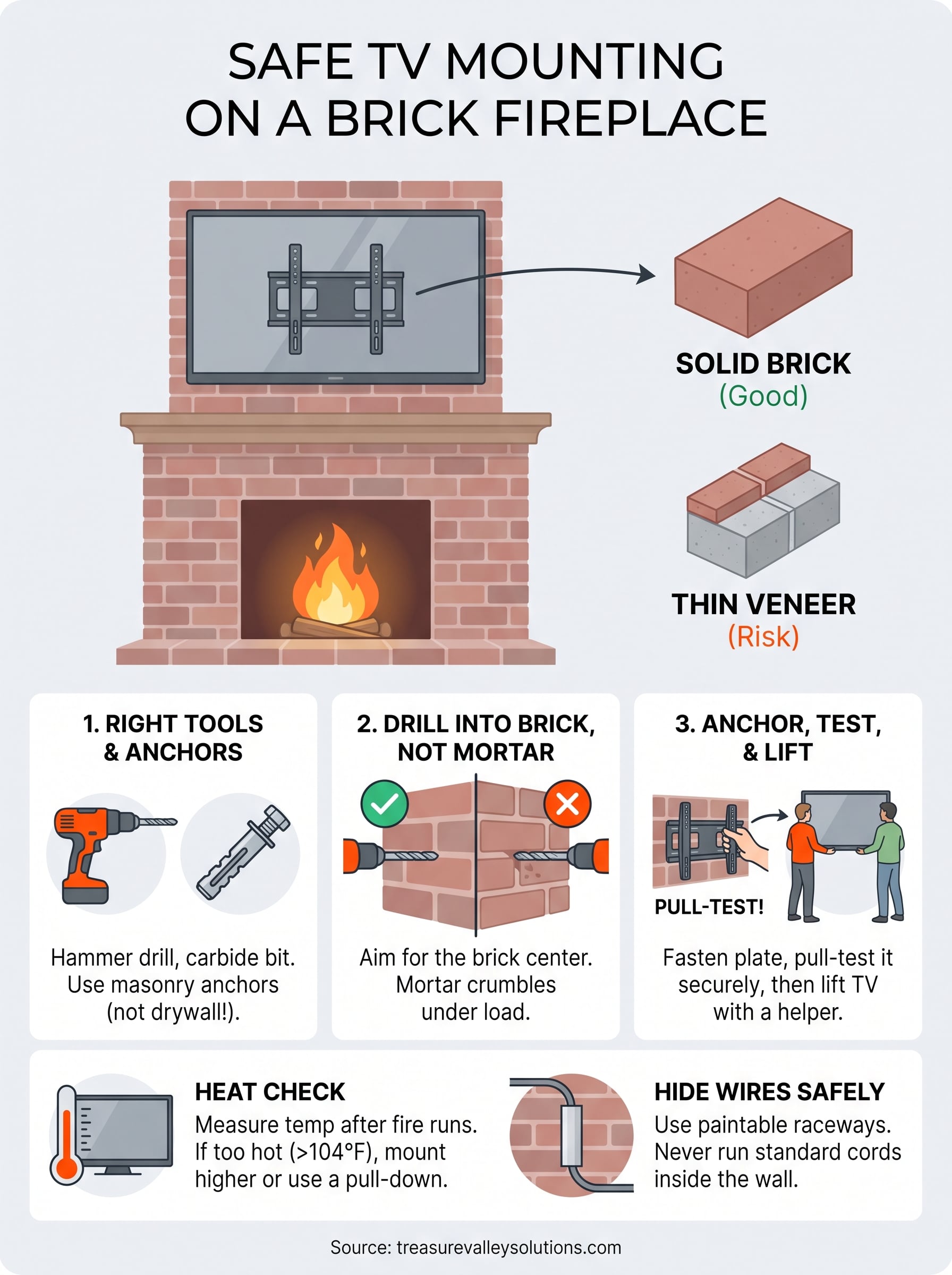
Mounting a TV on brick comes down to a few non-negotiable choices. Check that the wall is solid brick, use masonry anchors, drill into the brick face instead of the mortar, test the bare bracket, and manage the heat and the wires. Skip any of these and the install gets riskier. Follow them and the TV will stay put for years.
If you would rather have an experienced crew handle the drilling, the lifting, and the hidden cable work, reach out to Treasure Valley Solutions and tell us about your fireplace. We will tell you what your wall can take and quote the job.
Need Expert Help?
Ready to implement these solutions in your own home or business?
Our Services
Expert TV Mounting Treasure Valley Homeowners & Businesses Trust

Home theater design and installation planned around your room, viewing goals, and equipment scope.
Serving the Treasure Valley
Local installation in your city