(208) 991-3502
 Meridian, ID


What is the wall?
Confirm the actual mounting substrate and backing. Drywall, framing, masonry, and decorative veneer are not interchangeable; veneer alone may not be the structural attachment point.
Boise · Meridian · Treasure Valley
Fireplace installations deserve more than a mount picked from a screen size. We assess the actual fireplace, wall construction, manufacturer clearances, viewing position, and how the screen will move before we recommend a scope.
No universal heat threshold, blanket safety promise, or pull-down-mount shortcut: the fireplace and every product’s own instructions govern the decision.
Start with the site conditions
We review the exact TV, mount, and fireplace manufacturer instructions and required clearances, then look at the installation conditions. If a requirement cannot be confirmed or met, we’ll say so and discuss alternatives rather than treating a different bracket as a workaround.
Confirm the actual mounting substrate and backing. Drywall, framing, masonry, and decorative veneer are not interchangeable; veneer alone may not be the structural attachment point.
Review the exact appliance instructions, flue and vent location, mantel shape, and clearances. There is no single safe heat number that applies to every fireplace, television, and mount.
Consider seated eye line, viewing distance, screen size, mantel geometry, and whether the fixed position creates an uncomfortable upward angle.
Check the mount’s motion path against the mantel, hearth, and nearby objects. Plan enough cable slack and protected routing for the full intended travel.
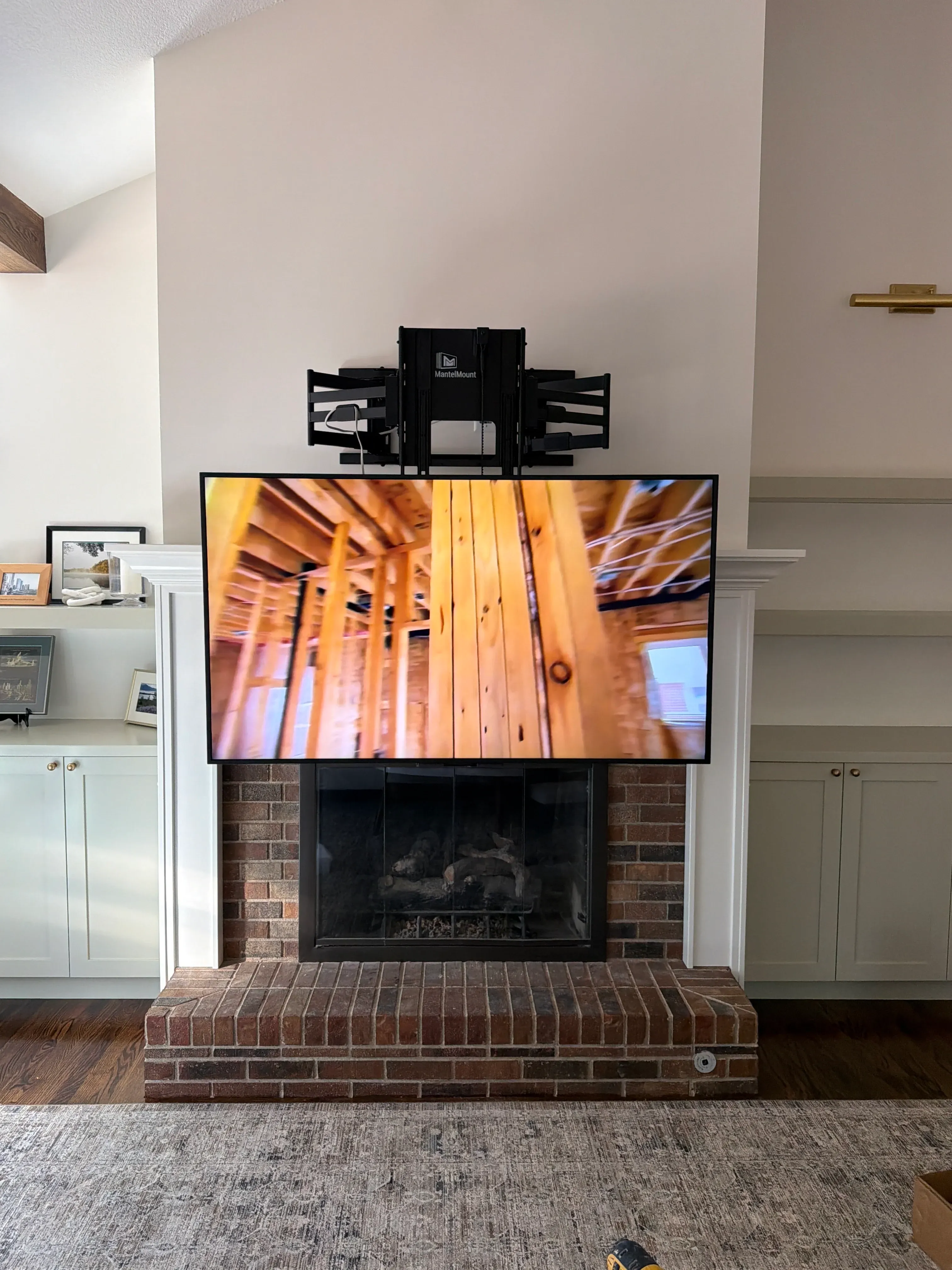
MantelMount and other pull-down designs may bring a screen lower for viewing, but they do not make an unsafe fireplace, unsuitable mounting surface, or unmet manufacturer clearance safe. The same site and product requirements still apply in every position.
Choose by use, then confirm fit
Screen size and weight limits, wall construction, fireplace clearances, intended movement, and the mount manufacturer’s instructions all need to align.
Keeps the screen close to the wall with no adjustment after installation. It can suit a fireplace layout only when the resulting viewing height, clearances, and other site requirements are acceptable.
Adds a limited downward angle and can help with glare or screen angle; it does not meaningfully lower the screen or remove a height concern.
Extends and pivots for flexible viewing. The arm, anchors, cable slack, and clearance through its entire movement range need to be considered.
A purpose-built option that can lower and reposition a screen for viewing. Model fit, attachment requirements, reach, mantel geometry, clearances, and the motion path still require project-specific review.
Looking specifically at MantelMount products and fit?
Explore the MantelMount brandA documented project, honestly described
This project verifies a MantelMount installation on a drywall surface. It does not establish that a fireplace was operated or tested for heat, and it is not a substitute for reviewing the instructions and clearances at your home.
See the Boise projectBring the TV and mount model, fireplace type, mantel dimensions, photos of the wall, and a little context about how you watch. We’ll discuss what can be confirmed and what needs an on-site look.
For general TV mounting and project scope, visit TV mounting in the Treasure Valley.