 (208) 991-3502
 Meridian, ID



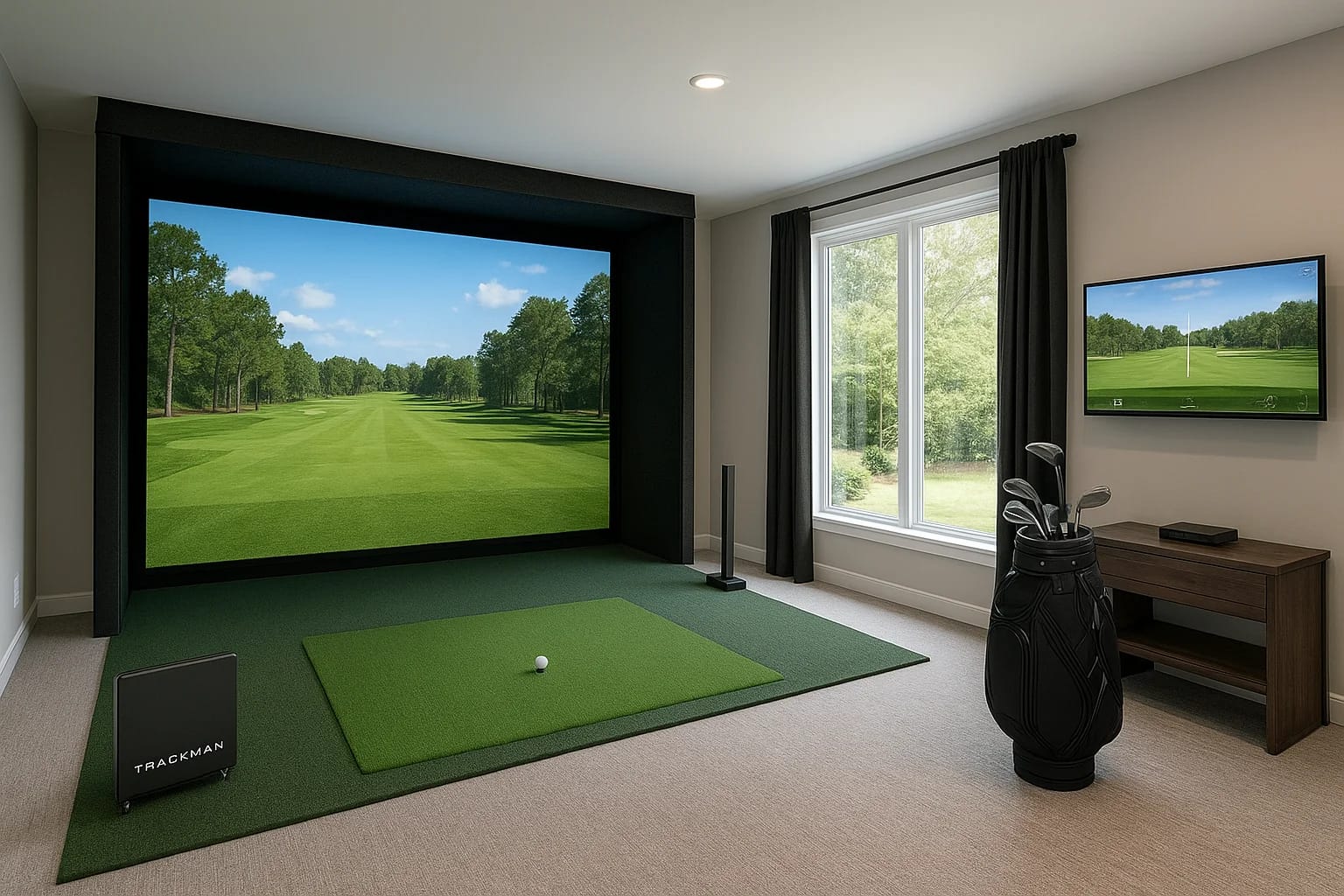

A premium golf simulator is one of those rare investments that actually gets used. It turns a spare room, garage, or commercial space into a year-round training and entertainment hub, no tee times, no...
A premium golf simulator is one of those rare investments that actually gets used. It turns a spare room, garage, or commercial space into a year-round training and entertainment hub, no tee times, no weather delays, no waiting. But once you start shopping for high end golf simulator systems, the options get overwhelming fast. Launch monitors alone range from $2,000 to $20,000+, and that's before you factor in screens, enclosures, projectors, and the software that ties it all together.
At Treasure Valley Solutions, we design and install custom entertainment and AV spaces for homes and businesses across the Boise and Meridian area. We've seen firsthand how a properly integrated simulator setup, with clean wiring, calibrated displays, and reliable networking, outperforms a box-kit solution every time. The technology matters, but so does how it's installed and configured.
This guide breaks down six of the best premium golf simulator systems available in 2026, covering what makes each one worth the price. Whether you're building out a home theater slash sim room or adding a client-facing attraction to your business, these are the setups worth serious consideration.
1. Treasure Valley Solutions custom high-end simulator build
Unlike off-the-shelf packages, a Treasure Valley Solutions custom build is engineered around your exact space, budget, and goals. We specify, source, and install every component ourselves, which means no compatibility issues, no guesswork, and no leftover cables stuffed behind drywall.
What makes this a high-end system
The difference between a custom build and a retail kit comes down to system integration. Every component, from the launch monitor to the projector, screen, lighting, and networking, is selected to work together. You get a cohesive, calibrated setup rather than a collection of parts that mostly cooperate.
A fully integrated custom simulator performs and feels fundamentally different from a self-assembled kit.
Best for
This build suits serious golfers, business owners, and homeowners who want a dedicated simulator space that functions reliably and looks clean. It also works well for entertainment-focused rooms where the simulator shares space with a home theater or bar setup.
Space, build, and room requirements
You'll need a minimum of 10 feet of ceiling height, 15 feet of depth, and 12 feet of width for a functional single-bay setup. Larger rooms open up better screen configurations and additional seating options. We assess your space before recommending any specific equipment.
Core components and upgrade options
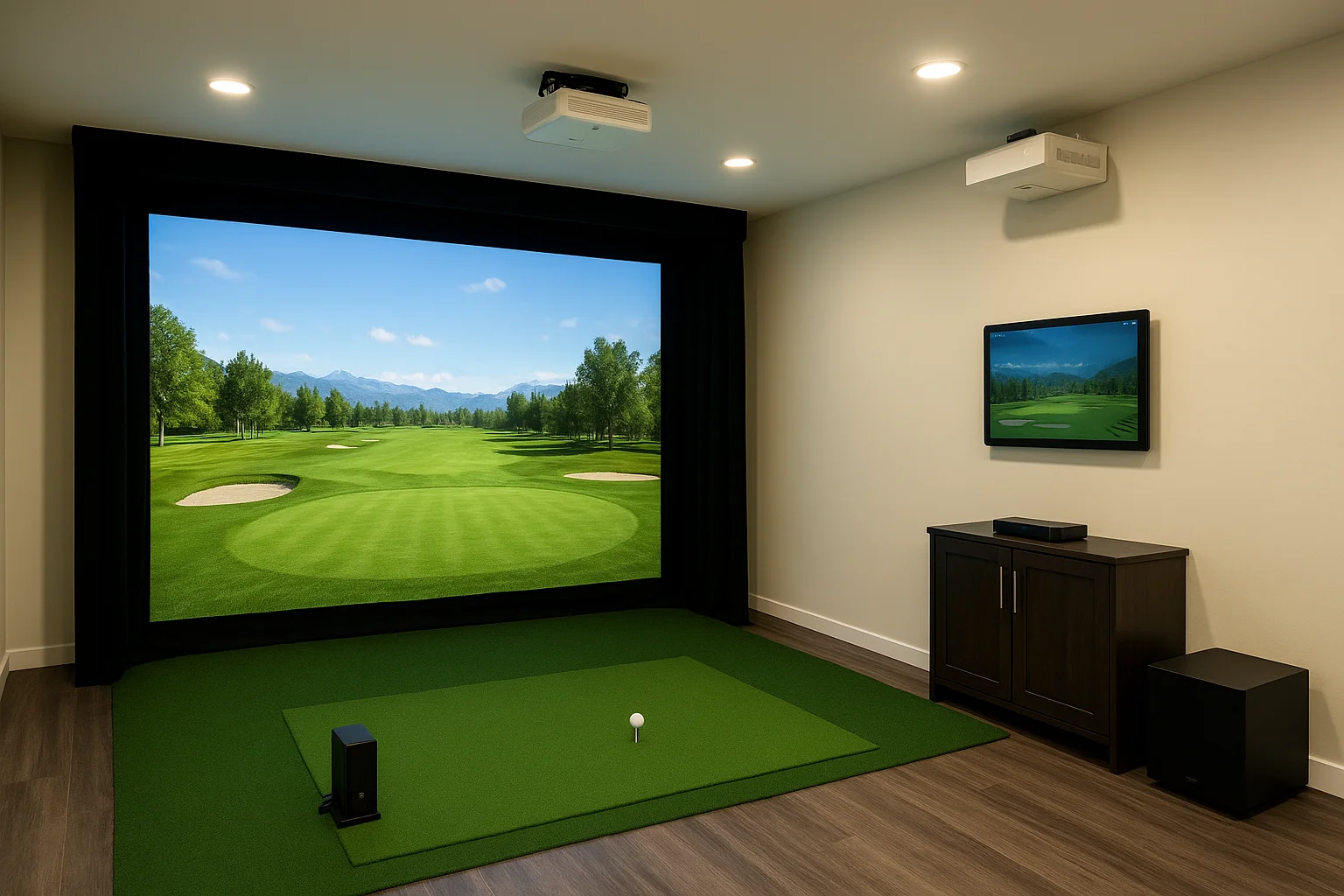
A standard build includes a launch monitor, impact screen, enclosure frame, short-throw projector, and control system. Upgrade paths include 4K laser projectors, multi-screen layouts, dedicated audio, custom lighting scenes, and integrated smart home control through platforms like Control4.
Installation, calibration, and ongoing support
Our technicians handle everything from framing and wiring to software configuration and launch monitor calibration. After installation, we test every system under real playing conditions. Ongoing support is available whenever software updates or hardware adjustments are needed down the line.
Typical pricing range and what drives cost
Custom builds for high end golf simulator systems typically start around $20,000 and climb based on launch monitor tier, room size, and AV upgrades. The biggest cost drivers are the launch monitor you choose, projector quality, and any structural modifications your space requires.
2. Trackman iO
The Trackman iO is the radar-based system professional tours have relied on for years, and it now comes packaged for high end golf simulator systems in both home and commercial settings. If data accuracy is your primary concern, this is the benchmark other systems are measured against.
What makes this a high-end system
Trackman uses dual radar technology to capture both club and ball data simultaneously with professional-grade precision. Every swing produces 26 measurable parameters, giving you more actionable feedback than nearly any other launch monitor at this price tier.
Trackman's radar tracks full ball flight rather than just launch conditions, which matters significantly when you're analyzing real carry and curvature data.
Best for
The iO suits teaching professionals, elite amateurs, and commercial facilities where shot data accuracy is non-negotiable.
Space, build, and room requirements
You need at least 10 feet of ceiling height and 15 feet of depth for the iO to track shots reliably inside a simulator bay.
Data and performance strengths
Trackman measures a full picture of each shot, including:
- Club speed, path, face angle, and dynamic loft
- Ball speed, spin rate, spin axis, and launch angle
- Carry distance, total distance, and landing angle
Software and course library considerations
Their software platform includes 250-plus courses and comprehensive fitting and practice tools, though an ongoing subscription fee applies for full access.
Typical pricing range and what drives cost
The iO unit starts around $20,000 to $25,000. Your total build cost climbs considerably once you add a quality screen, projector, and enclosure.
3. Full Swing Pro 2.0 Simulator
The Full Swing Pro 2.0 has earned serious credibility among high end golf simulator systems, partly because Tiger Woods uses one at home. That association generates attention, but the underlying technology backs it up with consistent, camera-based performance.
What makes this a high-end system
Full Swing uses overhead high-speed cameras to capture both ball and club data with strong accuracy. The camera-based approach means no ball markers are required, which keeps your normal practice routine intact without any pre-shot prep.
The Pro 2.0 delivers repeatable data that holds up across different lighting conditions inside a dedicated simulator room.
Best for
This system suits elite home users and commercial installations where reputation, realism, and overall build quality carry real weight alongside raw performance numbers.
Space, build, and room requirements
You need a minimum 10-foot ceiling height and roughly 10 feet of depth, which makes it more adaptable than radar-based systems that require longer throw distances to function accurately.
Data and performance strengths
The Pro 2.0 tracks key metrics including ball speed, launch angle, and spin rate, along with club path data, giving you enough detail to sharpen your game or run a structured fitting session.
Software and multisport considerations
Their software includes 100-plus courses and multisport modes covering baseball and other activities, which adds meaningful versatility for commercial spaces that want to serve a broader audience beyond golfers.
Typical pricing range and what drives cost
Full simulator packages run $40,000 and up, with cost driven by screen size, projector quality, and any structural modifications your room requires before installation begins.
4. Foresight Sports GCQuad simulator setup
The Foresight Sports GCQuad stands as one of the most respected camera-based launch monitors in high end golf simulator systems, trusted by club fitters, teaching professionals, and serious amateurs worldwide. Its reputation for quad-camera precision has made it a preferred choice in professional fitting bays for years.
What makes this a high-end system
The GCQuad uses four high-speed cameras to capture ball and clubface data simultaneously at the point of impact. That approach delivers consistent, repeatable measurements without relying on radar or requiring long room depths to function accurately.
The GCQuad's clubface imaging gives you face-to-path data that most other systems cannot match at the actual point of contact.
Best for
This system works best for club fitters, teaching professionals, and home users who prioritize shot data granularity over course simulation features.
Space, build, and room requirements
You need a minimum 9-foot ceiling and roughly 10 feet of depth, which makes the GCQuad one of the more adaptable options for tighter residential spaces or lower-ceiling basements.
Data and performance strengths
The GCQuad captures a detailed picture of each shot, including:
- Ball speed, launch angle, and carry distance
- Spin rate, spin axis, and clubface angle
- Club path and face-to-path relationship at impact
Software ecosystem considerations
Foresight's FSX software platform includes course play, practice modes, and fitting tools. However, full feature access requires an ongoing subscription on top of the hardware purchase price.
Typical pricing range and what drives cost
The GCQuad unit runs approximately $13,000 to $15,000, with a complete simulator build pushing well past $25,000 depending on your screen, enclosure, and projector selections.
5. Uneekor EYE XO2
The Uneekor EYE XO2 competes directly in the upper tier of high end golf simulator systems, offering overhead camera-based tracking that serious home users and commercial operators can rely on without reaching the price points that Trackman or Full Swing demand.
What makes this a high-end system
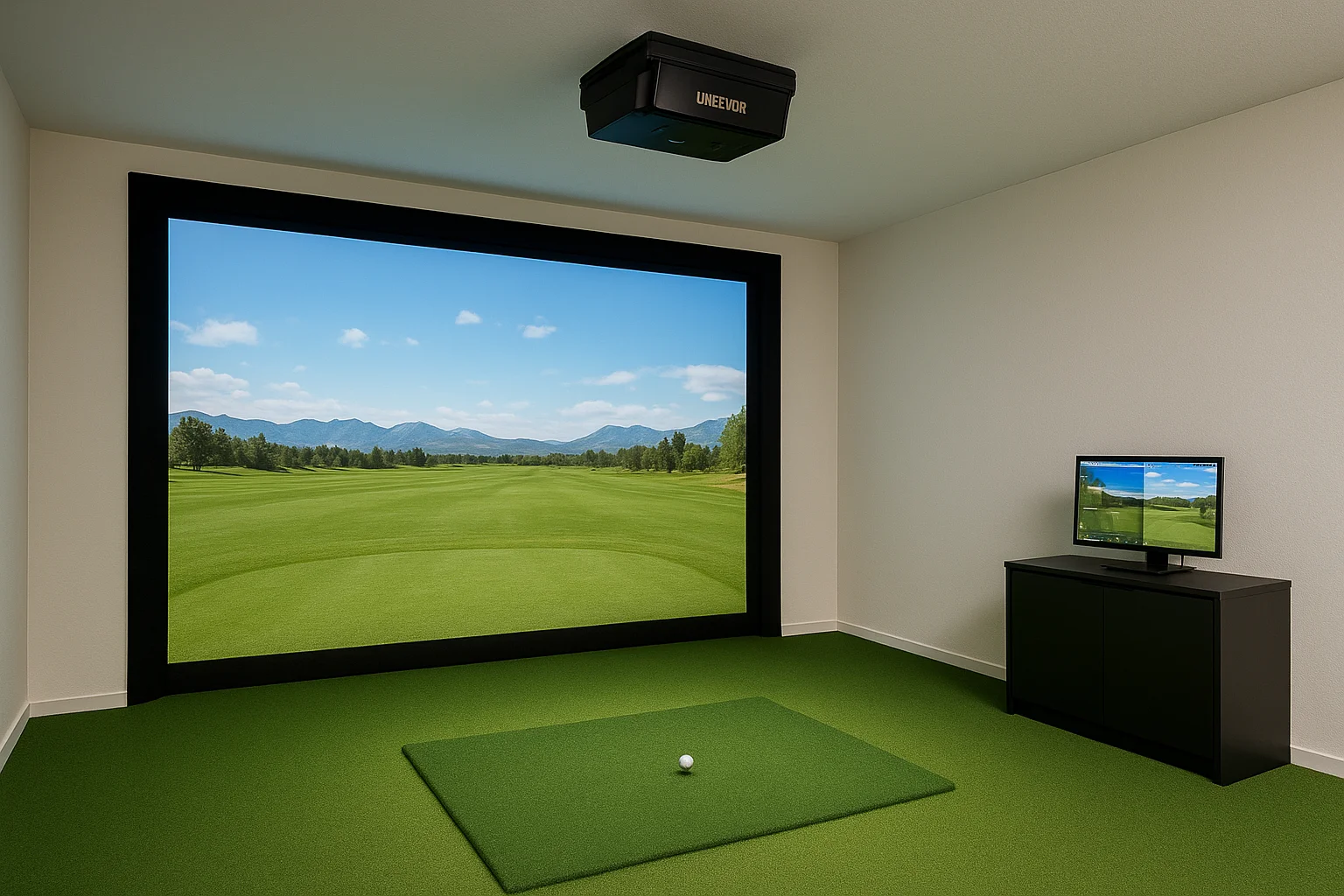
Uneekor mounts its cameras overhead in the ceiling of the bay, which keeps your hitting area completely clear. That setup eliminates clutter at your feet and creates a more natural swing environment that floor-based units simply cannot replicate.
A clean hitting area matters more than most buyers expect until they actually stand in the bay and take their first swing.
Best for
The EYE XO2 works well for dedicated home simulator rooms and mid-size commercial facilities where you want professional-grade overhead tracking without committing to the highest price tier on the market.
Space, build, and room requirements
You need a minimum 9-foot ceiling height to mount the unit correctly, plus roughly 10 feet of depth for reliable shot capture across all club types including driver.
Data and performance strengths
The EYE XO2 tracks ball speed, launch angle, spin rate, and carry distance alongside full club data including path, face angle, and loft at impact, giving you a thorough picture of each shot.
Software and practice tools considerations
Uneekor is compatible with multiple third-party software platforms including TGC2019 and Creative Golf 3D, which gives you flexibility when selecting your course library and practice environment.
Typical pricing range and what drives cost
The EYE XO2 unit runs approximately $7,000 to $8,000, with a complete bay build landing between $20,000 and $35,000 depending on your projector, screen, and enclosure choices.
6. TruGolf APOGEE with E6 simulator setup
The TruGolf APOGEE pairs an overhead camera-based launch monitor with the industry-leading E6 Connect software platform, creating one of the more turnkey options in high end golf simulator systems for both home and commercial buyers.
What makes this a high-end system
TruGolf built the APOGEE around ceiling-mounted infrared cameras that track ball and club data without any floor-mounted hardware cluttering your hitting zone. The tight integration between the APOGEE hardware and E6 software means fewer configuration headaches out of the box compared to mixing third-party components.
A purpose-built hardware and software combination reduces setup friction significantly, which matters in commercial environments where downtime costs money.
Best for
This setup suits commercial venues, entertainment facilities, and serious home users who want a polished, ready-to-play experience without spending time sourcing compatible third-party software.
Space, build, and room requirements
You need a minimum 9-foot ceiling height and roughly 10 feet of depth to install the APOGEE correctly and capture reliable data across all club types.
Data and performance strengths
The APOGEE measures ball speed, launch angle, spin rate, and carry distance alongside club path and face angle, giving you enough data for both casual play and structured practice sessions.
Software and commercial features considerations
E6 Connect includes over 100 courses and built-in multiplayer modes, which makes it a strong fit for bars, entertainment venues, and hospitality spaces looking to keep guests engaged for extended sessions.
Typical pricing range and what drives cost
Complete APOGEE builds typically land between $20,000 and $40,000, with screen size and projector quality being the primary cost drivers beyond the base unit.
Final thoughts
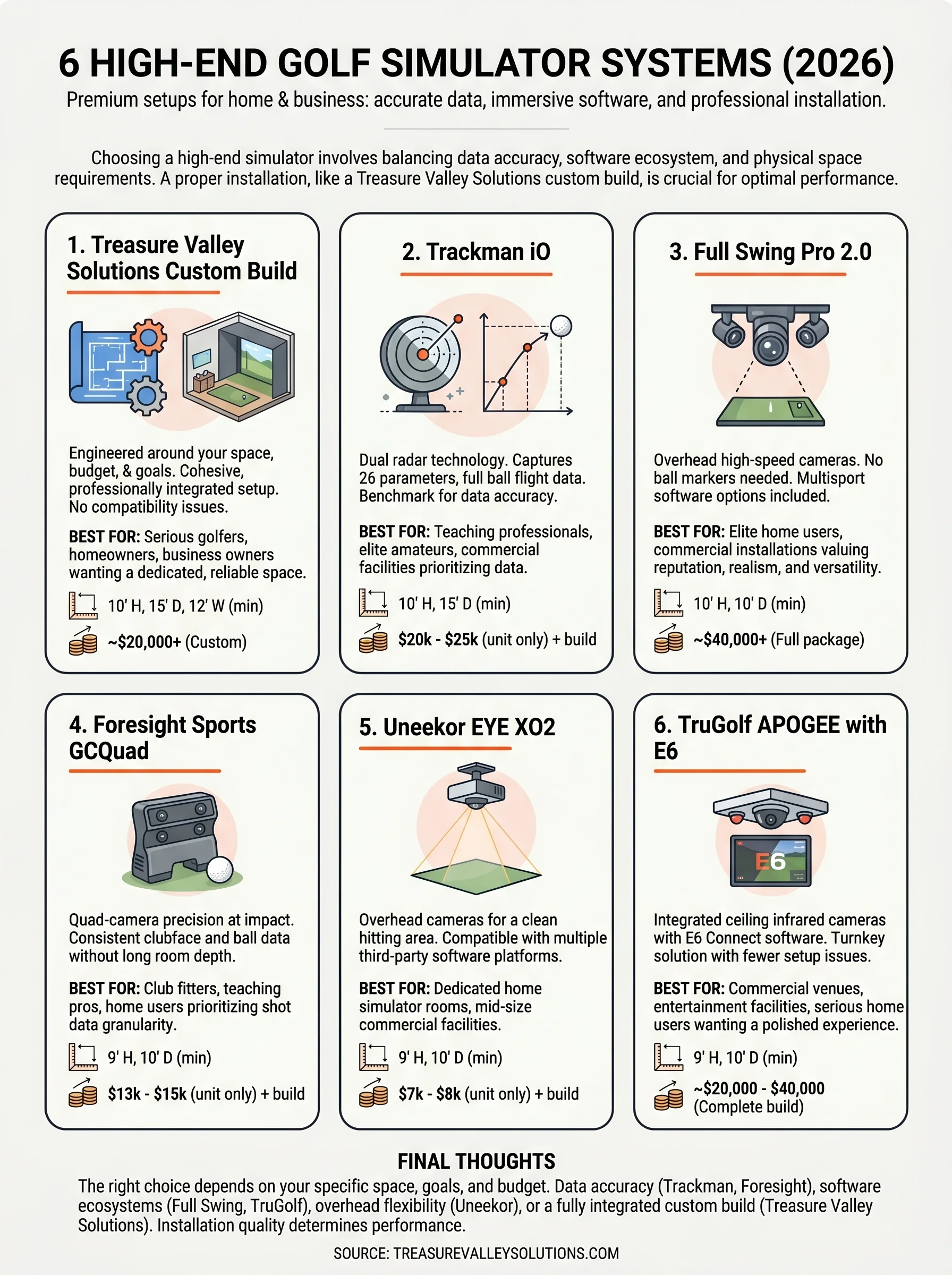
Every system on this list earns its place in the high end golf simulator systems category, but the right choice depends on your specific space, goals, and budget. Trackman and Foresight lead on raw data accuracy for serious players and fitters. Full Swing and TruGolf bring strong software ecosystems for entertainment-focused builds. Uneekor gives you overhead tracking at a price point that leaves room for premium AV upgrades. And a custom Treasure Valley Solutions build ties everything together into a space that functions exactly the way you want it to.
Getting the launch monitor right matters, but installation quality determines how well it all performs day to day. Clean wiring, proper calibration, and a reliable network make a bigger difference than most buyers expect before they live with a system. If you're planning a simulator build in the Treasure Valley area, reach out to our team and we'll walk through your space and goals before you spend a dollar.
Need Expert Help?
Ready to implement these solutions in your own home or business?
Our Services
View All Services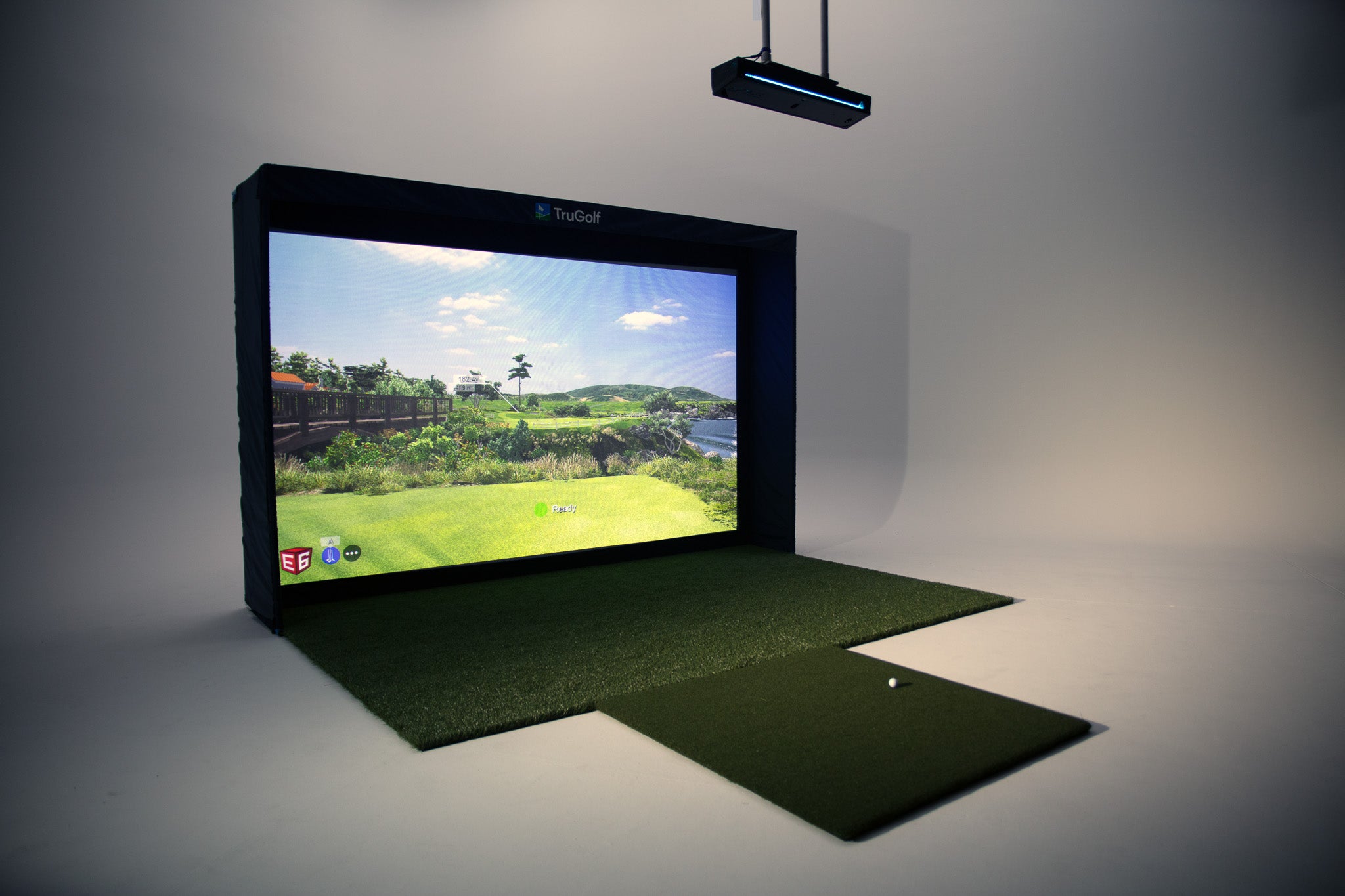
Serving the Treasure Valley
Local installation in your city