 (208) 991-3502
 Meridian, ID


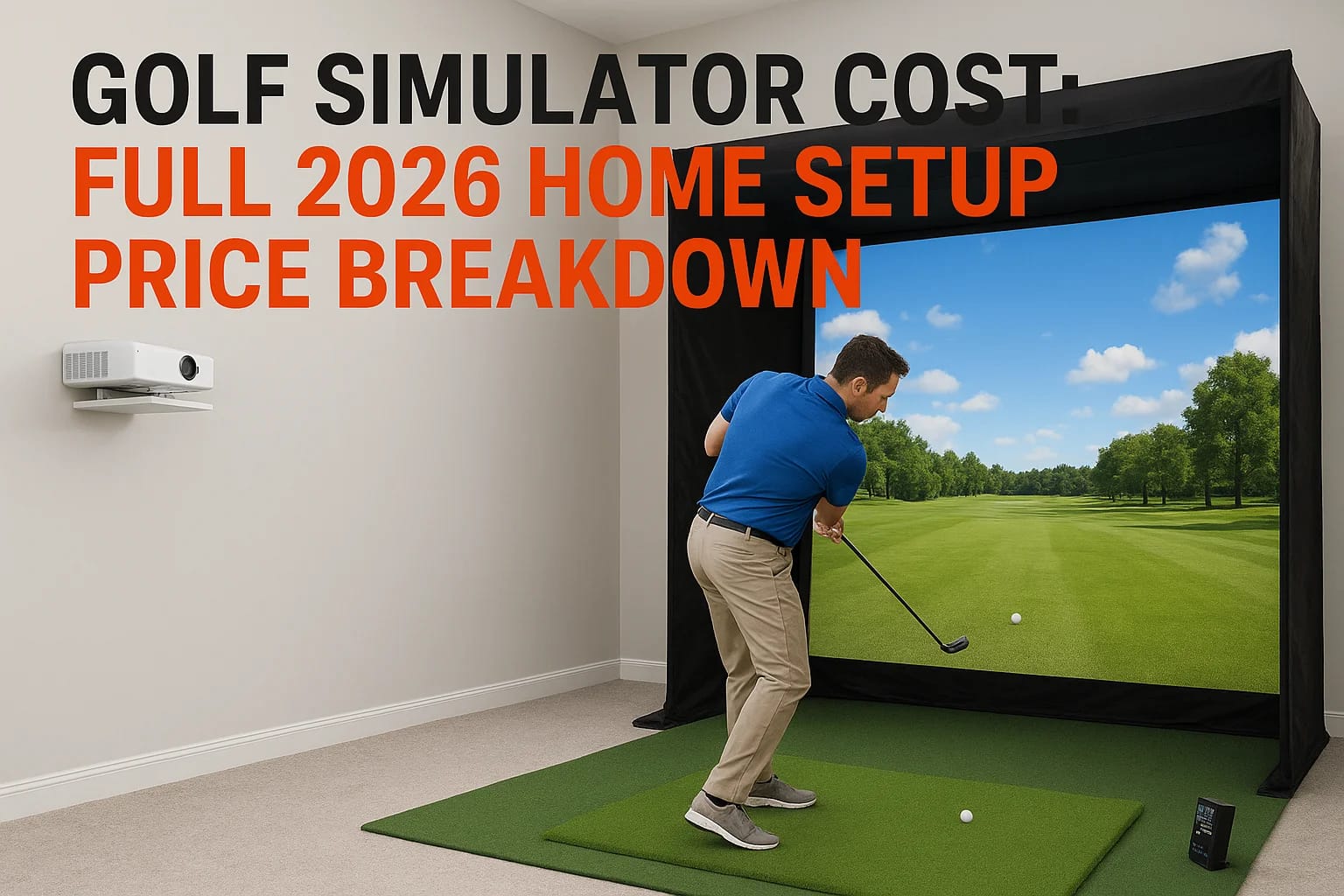

A home golf simulator sounds great until you start pricing one out. Between launch monitors, impact screens, projectors, enclosures, and software, the golf simulator cost can range anywhere from $1,50...
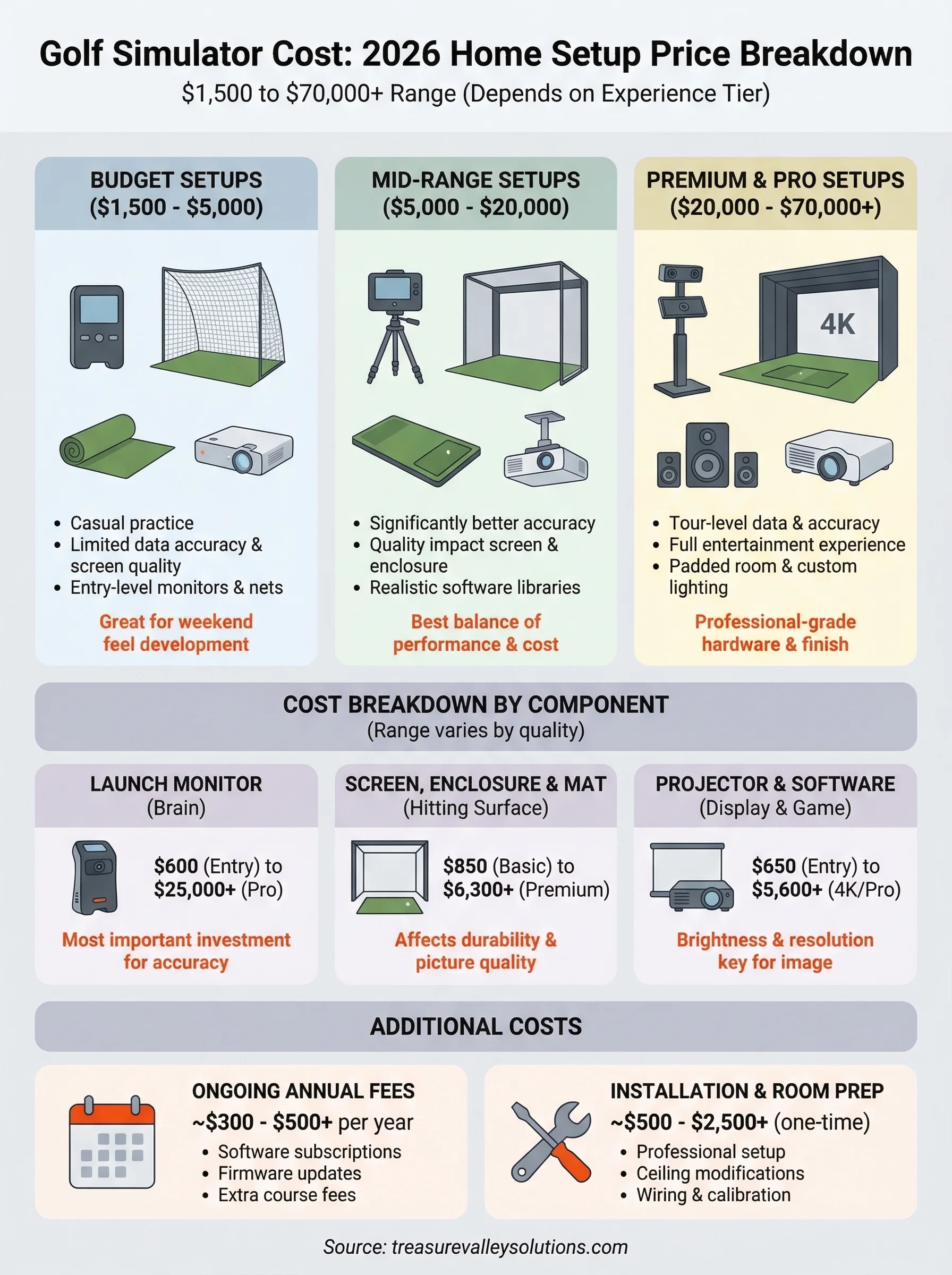
A home golf simulator sounds great until you start pricing one out. Between launch monitors, impact screens, projectors, enclosures, and software, the golf simulator cost can range anywhere from $1,500 to well over $70,000, and that spread leaves a lot of room for confusion.
The truth is, what you'll spend depends entirely on the experience you're after. A casual setup for weekend practice looks nothing like a tour-level simulator room with a 4K short-throw projector and premium swing analysis. Each component carries its own price range, and understanding those ranges is the difference between a smart investment and an expensive disappointment.
At Treasure Valley Solutions, we design and install custom AV and entertainment spaces across the Boise and Meridian area, including dedicated golf simulator rooms with properly calibrated displays, integrated audio, and clean wiring. We've seen firsthand what each tier of setup actually costs and what's worth the money.
This guide breaks down every major component and price tier for a home golf simulator in 2026, so you can plan your build with real numbers instead of guesswork.
What a home golf simulator includes
Before you can accurately estimate your golf simulator cost, you need to understand what you're actually buying. A home simulator is not a single product, it's a system of components that all work together. Miss one piece or choose the wrong combination, and the experience falls short. Each part has a job, and each part has its own price range that can vary significantly based on quality and intended use.
The launch monitor
The launch monitor is the brain of the system. It's the device that reads your swing and ball flight, measuring data points like club speed, ball speed, launch angle, spin rate, and carry distance. That data feeds into the simulation software to move the virtual ball accurately. Without a quality launch monitor, nothing else in your setup performs well, regardless of how much you spend on the screen or projector.
The launch monitor is the single most important investment in your simulator setup, and it's where the biggest price jumps happen across tiers.
Launch monitors fall into two main categories: camera-based systems that use high-speed imaging, and radar-based systems that use Doppler technology to track ball and club movement. Camera-based units like the Uneekor EYE XO or Skytrak+ tend to work better indoors, while radar-based units like the Foresight GCQuad perform well in either environment. Your choice here shapes everything else about the build.
The hitting surface, enclosure, and screen
Your hitting bay is made up of three physical components: the impact screen, the enclosure frame, and the hitting mat. The impact screen takes the projected image and also absorbs ball strikes, so it needs to be durable and tight enough to produce a sharp picture. The enclosure frame holds the screen in place and protects the surrounding space from stray shots.
The hitting mat sits where you take your swing and simulates the feel of turf. Better mats have separate tee positions, adjustable lie angles, and foam bases that reduce joint stress on repeated swings. This is one area where skimping shows up fast, since a poor mat affects your practice quality every session.
Simulation software and display equipment
The simulation software is what turns raw launch data into a playable round on a virtual course. Popular platforms include GSPro, E6 Connect, and TGC 2019, each with different course libraries, graphics quality, and subscription costs. Your projector or display then renders that software output onto the impact screen, which means projector brightness, throw ratio, and resolution all directly affect how sharp and immersive the final image looks inside your space.
2026 golf simulator cost ranges by setup tier
Understanding where your budget lands is the fastest way to set realistic expectations. The golf simulator cost landscape breaks cleanly into three tiers, each offering a meaningfully different experience in terms of accuracy, image quality, and durability.
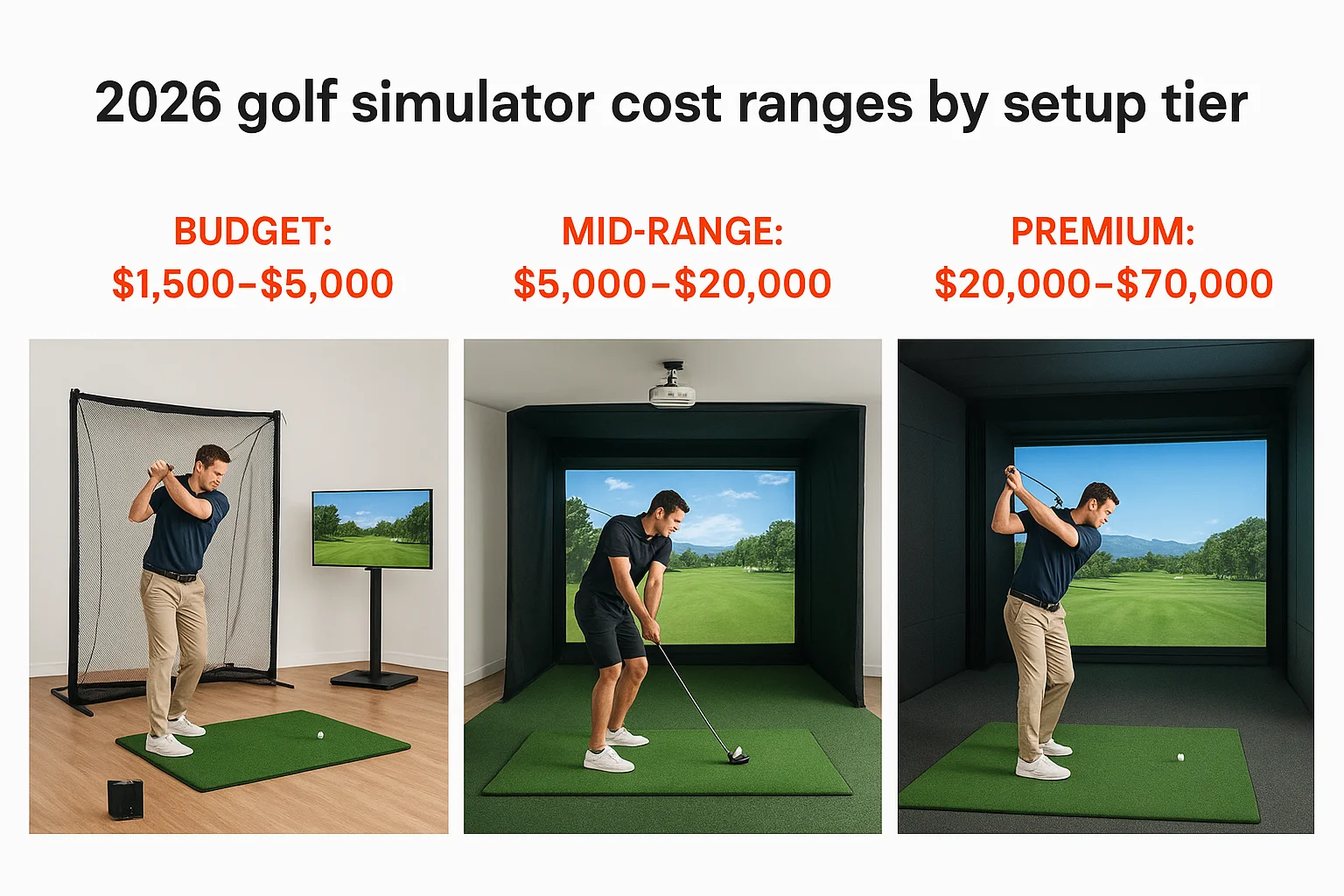
Budget setups: $1,500 to $5,000
At this tier, you're working with entry-level launch monitors like the Garmin Approach R10 or original SkyTrak, paired with a basic net, a portable mat, and either a budget projector or a large TV screen. These setups work well for casual practice and developing a feel for simulation. However, data accuracy and screen quality are noticeably limited compared to higher tiers, which matters if you're using the system to genuinely improve your game.
Mid-range setups: $5,000 to $20,000
This is where most serious home golfers land. You get significantly better launch monitor accuracy from units like the Uneekor QED or SkyTrak+, combined with a proper enclosure, a quality impact screen, and a brighter short-throw projector. Software options expand, course libraries get more realistic, and the overall experience starts to feel closer to what you'd find in a commercial simulator bay.
The mid-range tier delivers the best balance of real performance and manageable cost for most homeowners building a dedicated space.
Premium and professional setups: $20,000 to $70,000+
At this level, you're building around professional-grade hardware like the Foresight GCQuad, Trackman 4, or Uneekor EYE XO2. Projectors are high-lumen 4K units, enclosures are custom-built, and the space itself is often finished with padded walls, dedicated lighting, and integrated audio. These setups deliver tour-level data and a full entertainment experience, not just practice.
Cost breakdown by component
When you break down the total golf simulator cost by individual part, the numbers get easier to plan around. Each component has its own price range and quality tier, so you can shift budget toward the pieces that matter most for how you'll actually use the space.
Launch monitor costs
The launch monitor takes the biggest slice of most budgets. Entry-level units like the Garmin R10 run $600 to $700, mid-range options like the SkyTrak+ land around $2,000 to $3,000, and professional units like the Foresight GCQuad or Trackman 4 range from $13,000 to $25,000.
Spending more on your launch monitor pays off in data accuracy, and that accuracy is what makes your practice sessions actually transferable to the course.
Screen, enclosure, and mat costs
A quality impact screen runs $400 to $2,500 depending on size and material thickness. Enclosure frames add $500 to $3,000 on top of that, and hitting mats range from $150 for basic turf options up to $800 for premium multi-lie setups with built-in tee positions.
Bundled enclosure kits from manufacturers often save you $300 to $700 compared to sourcing each piece separately, and they're sized to work together out of the box, which simplifies the build considerably.
Projector and software costs
Short-throw projectors suitable for simulator use range from $500 to $5,000, with brightness in lumens and resolution being the two primary cost drivers. You want at least 3,500 lumens for a usable image in most indoor rooms. Simulation software runs $150 to $600 per year, with platforms like GSPro and E6 Connect landing at the popular end of that range.
A second display or TV for score tracking and course selection adds another $300 to $800 depending on size, and it's a small addition that makes the overall experience noticeably cleaner to navigate.
Room and space requirements that affect price
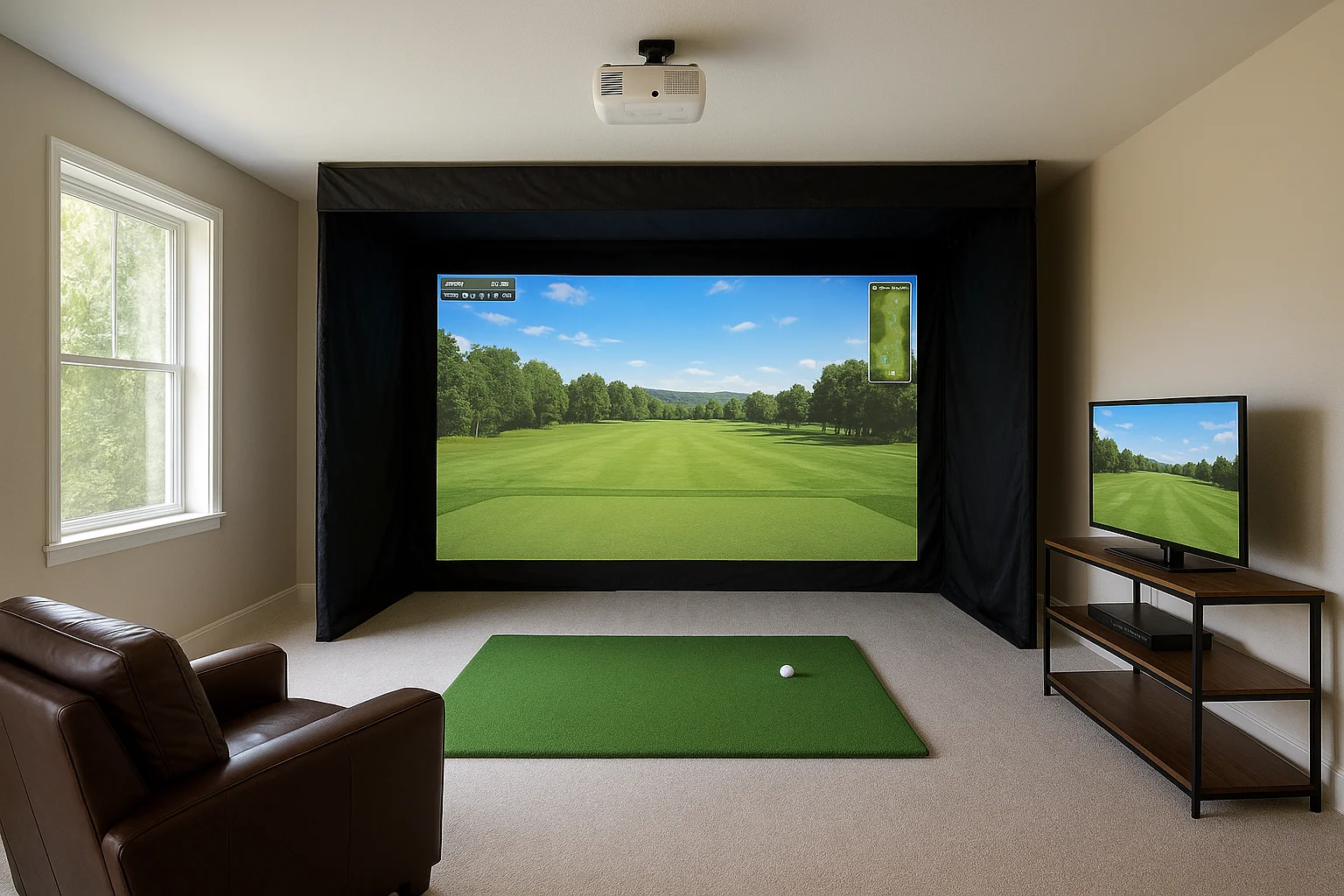
Your room dimensions have a direct impact on your total golf simulator cost, often in ways buyers don't anticipate until they're mid-build. The space you have available shapes which projector throw ratio works, how large your enclosure can be, and whether you'll need any construction work before a single component gets installed.
Ceiling height and swing clearance
Ceiling height is the first number to measure before you price anything else. Most golfers need at least 9 feet of clearance to swing a driver without restriction, and 10 feet is a more comfortable target. If your space sits below that, you're either limited to shorter clubs or you're paying for ceiling modifications before the simulator gear even arrives.
Taller ceilings also give your projector more vertical placement flexibility, which improves image alignment without requiring expensive lens shift adjustments.
Lower ceilings in finished basements sometimes require drywall removal or structural work that can add $1,000 to $4,000 to your project depending on the scope.
Room depth and projector throw distance
Your room needs enough depth behind the hitting position to keep the projector at the right distance from the screen. Most short-throw setups need 10 to 14 feet of total room depth to work correctly. Ultra-short-throw projectors can compress that to around 6 feet, but they cost significantly more, often $2,000 to $5,000 compared to $500 to $1,500 for standard short-throw options.
Wider rooms also allow for better side netting placement and give you room for a secondary display or seating without the space feeling cramped during use.
Ongoing costs and common budget surprises
Most buyers focus on hardware costs and forget that a golf simulator has recurring expenses that add up year over year. Knowing these in advance keeps your total golf simulator cost estimate accurate from the start, not just on install day.
Software subscriptions and annual fees
Simulation software is not usually a one-time purchase. GSPro costs around $250 per year, and E6 Connect runs on a tiered subscription that ranges from $200 to $600 annually depending on course access and features. Some launch monitors also carry their own subscription fees on top of the software, with platforms like Foresight FSX adding to your yearly total.
Budget at least $300 to $500 per year just for software before you add any hardware maintenance or upgrades.
Beyond software, certain launch monitors require periodic firmware updates or recalibration services to stay accurate, and that can carry a service fee depending on the manufacturer and your support plan.
Installation, calibration, and room prep
Professional installation is one of the most commonly underestimated line items in a simulator budget. Running clean power, mounting a projector correctly, calibrating screen alignment, and integrating audio adds real cost that most online price guides skip. Expect to pay $500 to $2,500 for professional installation, depending on your room's complexity and what's already in place.
Room prep surprises are common too. Lighting adjustments, outlet placement, and flooring changes all affect the final number. Padded wall panels to reduce ball rebound and absorb sound run $300 to $1,200, and most buyers only think of them after their first session in a bare room.
A simple way to price your build
Start with your launch monitor budget first, since that single decision shapes everything else in your build. Once you know what tier of accuracy you want, the screen, enclosure, and projector costs fall into place around it. Add 15 to 20 percent on top of your hardware total to cover installation, room prep, and first-year software, and you'll have a realistic starting number rather than a figure that blows up after the gear arrives.
Your total golf simulator cost will land somewhere between $3,000 and $70,000 depending on the choices you make at each step, and every dollar is traceable when you understand the components. If you're planning a dedicated simulator room in the Boise or Meridian area and want a professional design and installation behind it, contact Treasure Valley Solutions to start building your plan.
Need Expert Help?
Ready to implement these solutions in your own home or business?
Our Services
View All Services
Serving the Treasure Valley
Local installation in your city