 (208) 991-3502
 Meridian, ID




You've decided your home or business needs cameras, but now comes the harder part. A quick search for surveillance camera installation service near you turns up dozens of names, and half of them are h...
You've decided your home or business needs cameras, but now comes the harder part. A quick search for surveillance camera installation service near you turns up dozens of names, and half of them are handymen with a drill and an Amazon cart. That's a problem when the whole point of a camera system is that it actually works when you need it, at 2 a.m., in the rain, on the one angle that matters.
Choosing the right installer isn't about finding the cheapest quote. It's about matching experience to your property type, checking that they design systems instead of just mounting hardware, and confirming they'll be around for ongoing support after the invoice is paid. A residential job in Eagle looks nothing like wiring surveillance for a Boise warehouse, and the wrong company will treat them the same way.
We've installed and serviced security systems across the Treasure Valley since 2014, so we've seen what separates a reliable installer from a rushed one. This article walks through the exact factors to check, from licensing and camera quality to local response times, so you can hire with confidence instead of guessing.
1. Local smart home integration companies
Local integrators are companies (like us) that offer smart home installation services, designing and installing complete technology systems for homes and businesses, with surveillance cameras as one piece of a bigger, connected setup. Instead of treating a camera install as a standalone job, they look at your whole property: where you already have lighting, audio, or access control, and how a camera system should tie into it. This is the category most likely to hand you a system that feels custom-built rather than bolted on.
How it works
A local integrator typically starts with an on-site walkthrough, not a phone quote. They'll map blind spots, check your existing wiring or network capacity, and ask what you actually want to accomplish, whether that's catching package theft, monitoring a loading dock, or keeping an eye on an aging parent. From there, you get a custom camera layout with specific camera types, placement, and a system design before anyone touches a ladder. Installation is done by trained, licensed technicians, and most companies offer programming plus ongoing support afterward, so the system keeps working as your needs change.
A system designed for your property beats a system that just happens to fit it.
Who it's best for
This route suits homeowners who want cameras integrated with lighting, locks, or a home theater, plus businesses like offices, restaurants, or retail spaces that need a scalable setup. It's also the natural choice for builders and property managers who want technology planned in from the start rather than retrofitted later.
Typical cost
| Property type | Typical range |
|---|---|
| Small home (2-4 cameras) | $800 - $2,000 |
| Larger home or small business (5-10 cameras) | $2,500 - $6,000 |
| Commercial or multi-building sites | $6,000+ |
Pricing depends on camera count, wiring complexity, and whether you want integration with other smart technology, so it's worth reviewing what surveillance camera installation costs in 2025 before you budget.
What to watch for
Not every company calling itself an integrator actually designs systems. Ask to see sample layouts, confirm they're licensed and insured, and get a written scope before signing. If you're in the area, our own security camera installation in Boise and the Treasure Valley follows this exact process from design through long-term support.
2. Big-box retailers with installation services
Big-box retailers like Best Buy and Costco sell cameras in-store and online, then offer a paid installation add-on through their own techs or a partnered service network. It's a familiar, low-friction path if you already trust the store for electronics and just want someone to hang the hardware. Quality varies a lot depending on which installer gets dispatched to your address that day.
How it works
You pick a camera system from their shelf or website, then schedule an installation slot, often through a third-party contractor the retailer books on your behalf. The tech shows up, mounts the cameras roughly where you point, connects them to your network, and leaves. There's rarely a design phase, and the installer usually has no say in camera selection since you already bought the kit.
A retail install mounts hardware; it doesn't design a system.
Who it's best for
This fits homeowners with a small, simple property and a fixed budget who just want a basic camera installation service without much planning involved, though it's worth comparing against the best home security system installation companies first.
Typical cost
Expect $99 to $250 per camera for installation labor, on top of the hardware cost.
What to watch for
Ask who's actually doing the install, since it's frequently a subcontractor with no accountability to the store's brand. Coverage gaps and awkward angles are common when nobody walks the property first.
3. National home security system providers
Companies like ADT and Vivint sell bundled security packages that pair cameras with alarm monitoring, door sensors, and a monthly monitoring fee. You're not just buying an installation, you're signing up for a subscription-based security system that locks you into their hardware and their monitoring center for years. This is a different animal from a one-time surveillance camera installation service, and it's worth knowing that going in.
How it works
A sales rep or online form gets you a package tier, then a technician installs the cameras, sensors, and a control panel, all tied to a 24/7 monitoring contract, so it helps to know what alarm monitoring actually is before you sign. The equipment is usually leased or discounted upfront in exchange for a multi-year commitment, and canceling early often triggers a penalty.
Bundled monitoring can be convenient, but it comes with a contract, not just a camera.
Who it's best for
This suits homeowners who want professional alarm monitoring alongside cameras and don't mind paying monthly for someone else watching the feed.
Typical cost
| Item | Typical range |
|---|---|
| Installation | Often $0 - $100 (bundled into contract) |
| Monthly monitoring | $30 - $70 |
| Contract length | 24 - 36 months |
What to watch for
Read the contract closely, and compare the total against a full home security system installation pricing guide. Equipment often stays proprietary, meaning you can't easily swap providers later, and cancellation fees can run into hundreds of dollars.
4. Independent electricians and handymen
A licensed electrician or general handyman can absolutely run wire and mount a camera, and for a lot of homeowners that feels like the obvious call since you might already have one on speed dial. The catch is that most electricians know power and code, not camera placement, network configuration, or app setup, so you're often getting half a job done well and the other half done by trial and error.
How it works
You hire them the same way you'd hire them for an outlet or a ceiling fan: a quote, a scheduled visit, and hardware you've usually already purchased yourself. They'll run cable, mount the camera bracket, and connect power, but configuring the recorder, app, or remote viewing is frequently left to you.
Running wire isn't the same skill as designing a camera installation service that actually covers your property.
Who it's best for
This works for a single camera at a front door or garage, especially if you're comfortable handling the app setup yourself, and the same logic applies to hiring a pro for a video doorbell.
Typical cost
Expect $75 to $150 per hour, with most single-camera jobs running $150 to $400 depending on wiring distance.
What to watch for
Ask directly whether they've configured NVRs or camera apps before. Many haven't, and you'll end up troubleshooting a blank screen alone after they've left.
5. Online contractor marketplaces
Platforms like Thumbtack, Angi, and TaskRabbit let you post a job description and get bids from local installers, sight unseen. It's a fast way to collect quotes for a surveillance camera installation service without calling around yourself, but the marketplace itself does none of the vetting for quality, which is why many people start with a shortlist of the best local security pros instead.
How it works
You fill out a short form describing your camera needs, and the platform pings nearby pros who match the category. Several installer profiles message you with rough quotes, reviews, and availability, and you pick one directly through the app or site.
Who it's best for
This suits homeowners comparing multiple bids quickly for a straightforward job, especially if you're flexible on scheduling and want price competition rather than a single trusted contact.
Fast bids don't guarantee a fast, well-planned install.
Typical cost
Expect $150 to $500 for a basic 2-4 camera job, though pricing swings widely since it's set by whichever contractor bids, not a standard rate card.
What to watch for
Reviews on these platforms can be thin or unverified, and the contractor doing the work often isn't background-checked by the platform itself. Confirm licensing and insurance yourself before booking, since the marketplace mostly just facilitates the introduction.
6. Specialized commercial security integrators
Specialized commercial integrators focus almost entirely on large-scale surveillance for warehouses, multi-tenant buildings, schools, and retail chains, where commercial security camera installation costs work differently than they do at a house. These firms work with enterprise-grade camera systems, access control, and video management software that residential-focused companies rarely touch. If your project spans multiple buildings or needs integration with existing badge readers and alarm panels, this is the tier built for it.
How it works
Projects usually start with a site survey and network assessment, since commercial installs often run on dedicated VLANs with failover recording. Engineers design camera placement around loading docks, parking structures, and compliance requirements, then coordinate installation crews across multiple phases if the building is still occupied during work.
Commercial security isn't a bigger version of home cameras, it's a different discipline entirely.
Who it's best for
This fits property managers, school districts, and multi-location businesses that need scalable surveillance tied into broader access control, not just standalone cameras watching a door, and the same applies when you're comparing office security camera systems.
Typical cost
| Project size | Typical range |
|---|---|
| Single small commercial site | $5,000 - $15,000 |
| Multi-building or enterprise site | $20,000+ |
What to watch for
Ask about ongoing service contracts and response times for repairs, since downtime on a commercial system carries real liability. Confirm the integrator can support your camera count long after install day, not just during the initial rollout.
7. DIY camera kits with self-installation
Brands like Ring, Arlo, and Wyze sell complete kits you set up yourself, no installer involved at all. This is the cheapest path to cameras on your property, and for a lot of renters or budget-conscious homeowners, it's the only option that makes sense financially. You're trading professional placement and wiring for a lower price tag and a Saturday afternoon of your own labor.
How it works
Ordering a kit gets you cameras, a hub or base station, and an app that walks you through pairing each device to your Wi-Fi. Most units are battery-powered or plug into an outlet, so there's no wire-running or drilling into walls unless you choose a wired model. You mount the brackets, connect to the app, and set up motion alerts or recording schedules on your own.
A DIY kit gets cameras on your wall fast, but you're the installer, the designer, and the tech support.
Who it's best for
This fits renters, apartment dwellers, and homeowners with a tight budget who want basic coverage on a front door, backyard, or single entry point without hiring anyone, and there are plenty of security systems built for renters that skip the drilling entirely.
Typical cost
Expect $30 to $60 per camera for hardware, plus optional cloud storage subscriptions running $3 to $10 monthly per camera.
What to watch for
Wi-Fi dead zones cause dropped footage, and DIY placement often misses the angle that actually matters during an incident.
Finding the right fit for your property
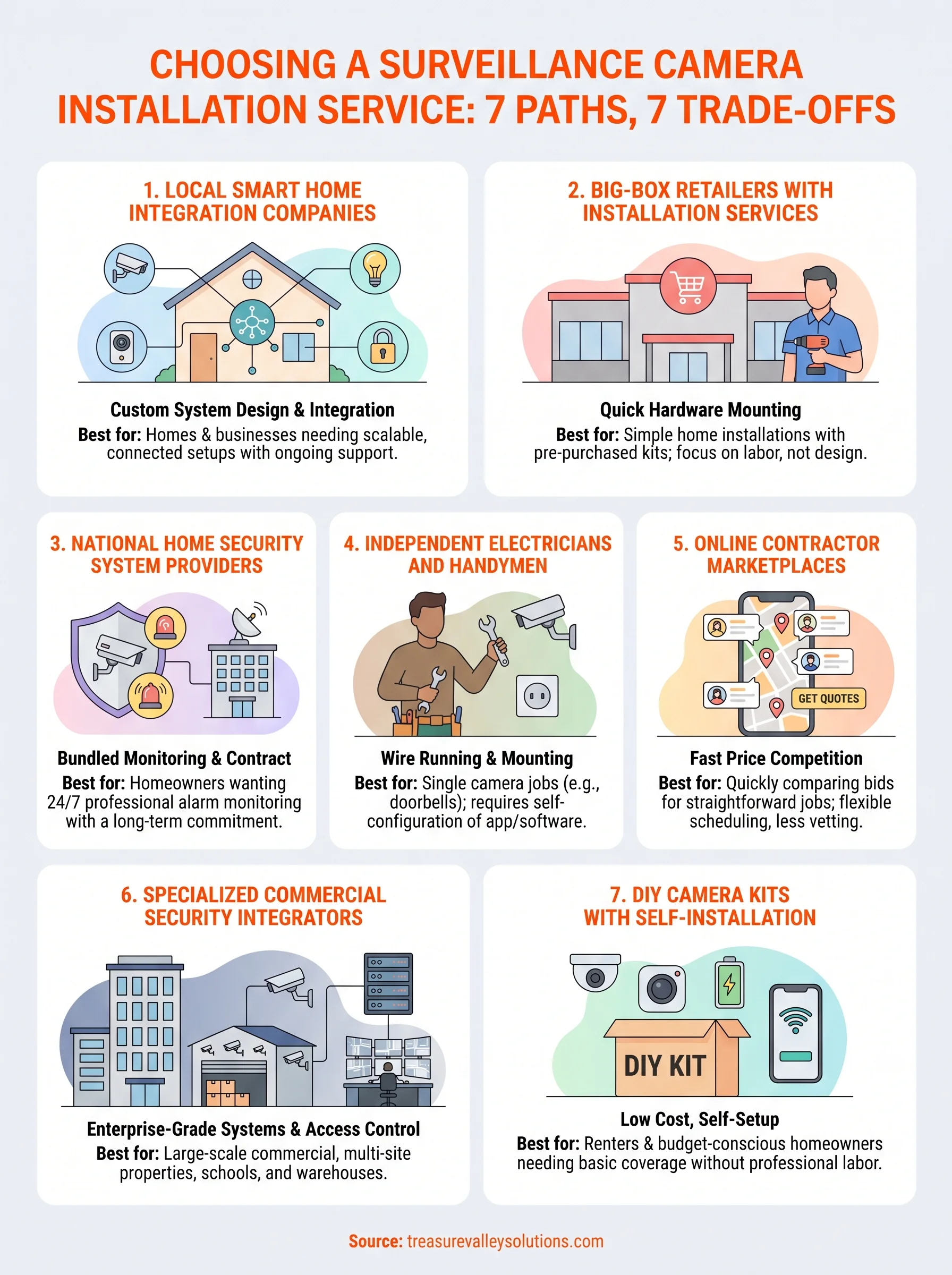
Seven paths, seven trade-offs. A DIY kit works fine for a renter watching one door, but a warehouse manager needs a commercial integrator who understands failover recording. Big-box installers and marketplace bids fill the gap when your job is simple and your budget is tight, while national security providers make sense if you actually want monthly monitoring alongside the contract. None of these are wrong choices, they're just built for different properties and different priorities.
What matters most is matching the installer to the actual complexity of your site, not the cheapest quote you can find. A local smart home integration company earns its cost when your cameras need to work with lighting, locks, or a growing property, and when you want someone local to call if something breaks in year three. If that sounds like your situation, get in touch with our Treasure Valley installers and we'll walk your property before we ever talk hardware.
Plan your project
Your next step
Request a Camera AssessmentOur Services
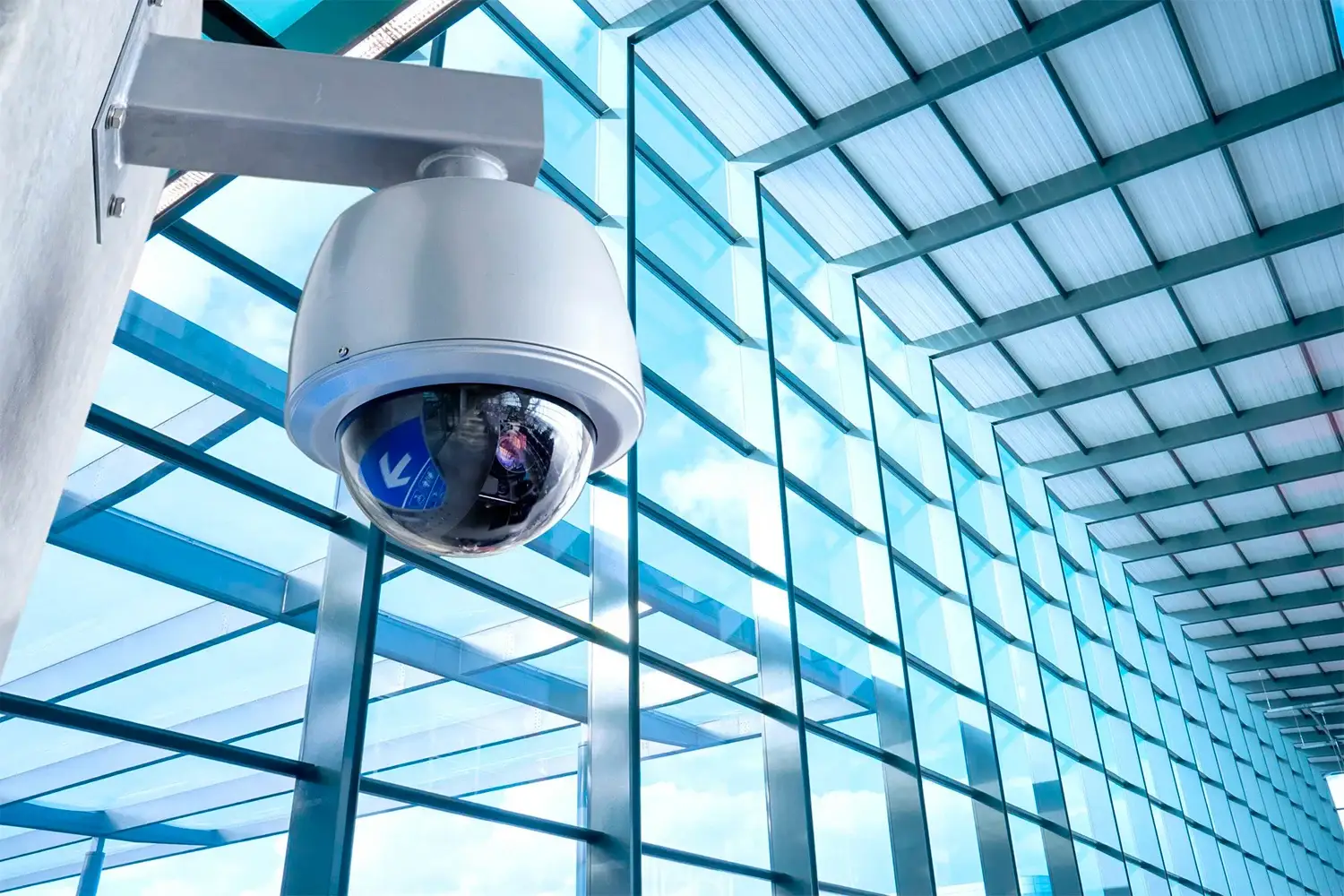
High-definition surveillance for peace of mind.
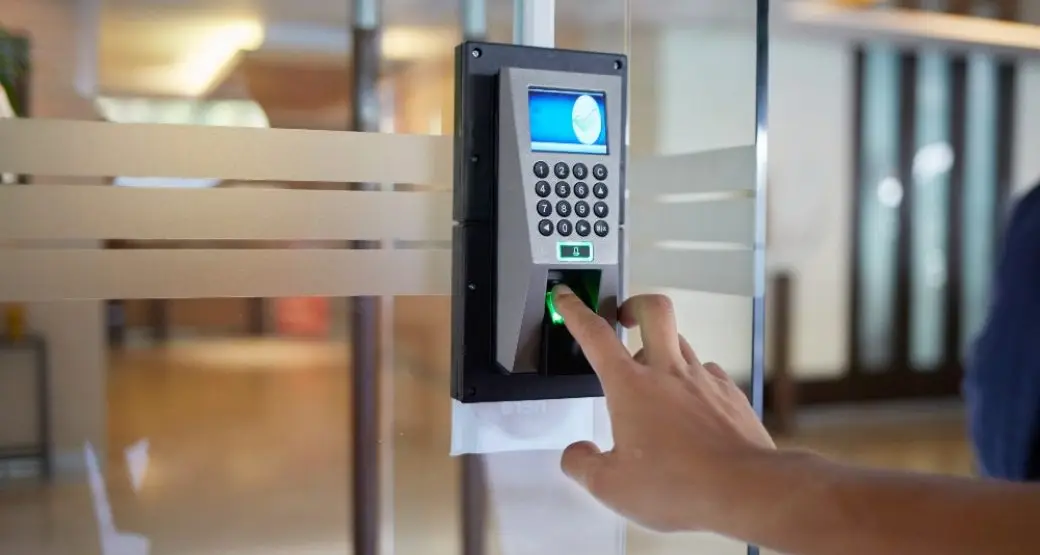
Comprehensive security solutions for home and business.
Serving the Treasure Valley
Local installation in your city