 (208) 991-3502
 Meridian, ID



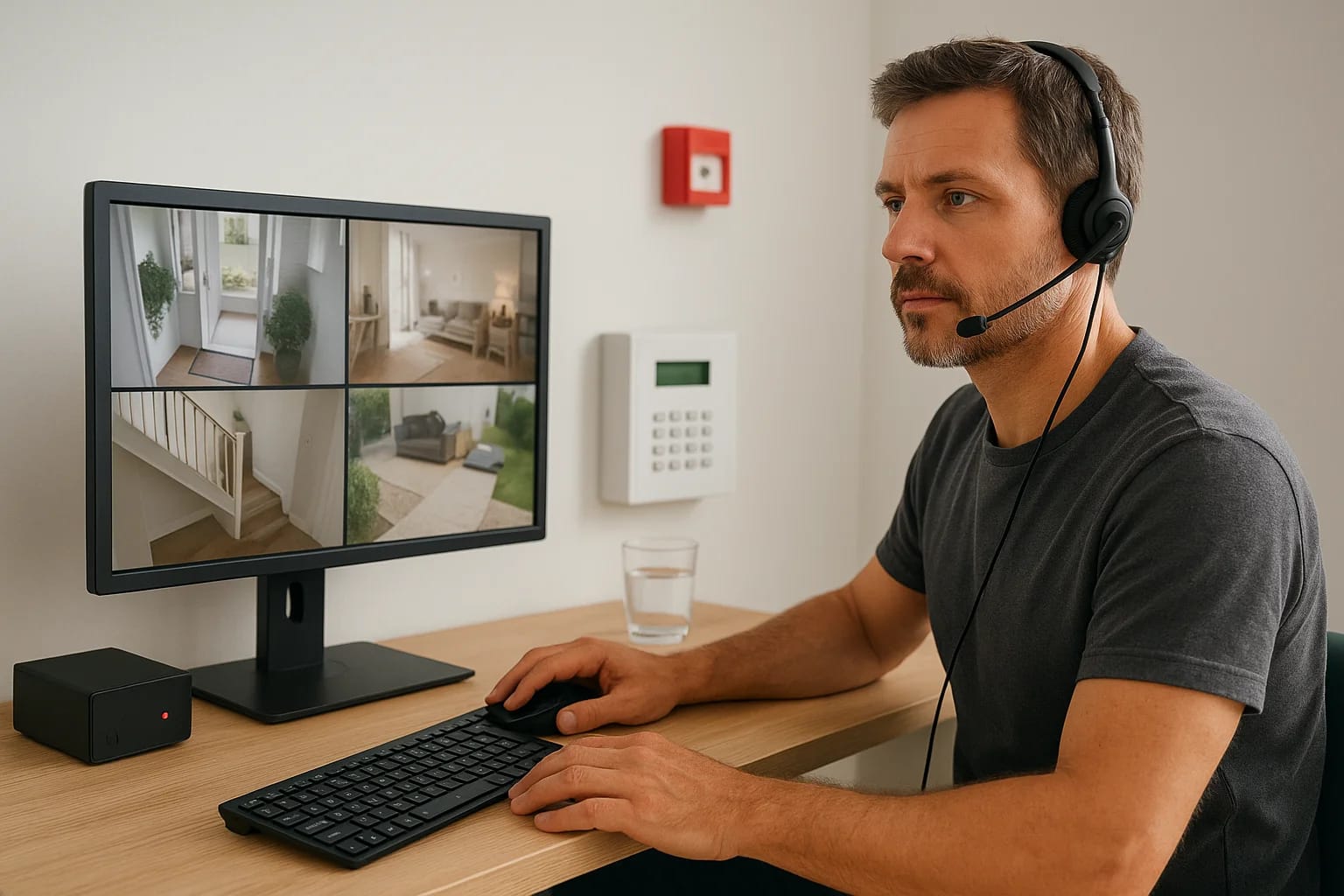

Your security system detects a break-in at 2 AM. An alarm sounds. But then what? That's where alarm monitoring comes in, it's the service that connects your security hardware to a team of real people...
What Is Alarm Monitoring? How It Works, Benefits & Cost
Your security system detects a break-in at 2 AM. An alarm sounds. But then what? That's where alarm monitoring comes in, it's the service that connects your security hardware to a team of real people who can respond on your behalf, 24 hours a day, whether you're home, asleep, or out of town.
Without monitoring, a security system is essentially a noisemaker. It might scare off an intruder, or it might not. With professional monitoring, every alarm trigger is received by a central monitoring station that can verify the event, contact you, and dispatch police, fire, or medical services within moments. It's the difference between hoping someone notices and knowing someone will act.
At Treasure Valley Solutions, we design and install comprehensive security systems for homes and businesses across the Boise and Meridian area, and we regularly help clients understand how monitoring fits into their overall setup. This article breaks down exactly how alarm monitoring works, what it costs, and whether it's worth the investment for your situation.
What alarm monitoring includes
When people ask what is alarm monitoring, they're really asking what happens behind the scenes the moment a sensor trips. Monitoring is a structured service that connects your security hardware to a staffed facility operating 24 hours a day, 365 days a year. The hardware on your wall is only half the equation; the monitoring service is what gives it real teeth.
24/7 central station coverage
A central monitoring station is a secure, professionally staffed facility that receives alerts from your system the moment something triggers. Operators there follow a defined protocol: verify the alarm, reach you or your listed emergency contacts, and dispatch police, fire, or medical services if needed. Response time at a professional station is typically measured in seconds, and that speed is what separates monitoring from simply having a loud alarm.

A monitored system doesn't rely on a neighbor hearing your siren or a passerby calling 911, it routes directly to trained professionals whose only job is to respond.
What your monitoring plan typically covers
Most residential and commercial monitoring plans cover intrusion detection (doors, windows, motion sensors), fire and smoke alerts, carbon monoxide detection, and panic or medical buttons. Higher-tier plans extend to flood sensors and video verification, where an operator reviews a live or recorded clip to confirm an actual threat before sending responders, which reduces false alarm fees from local authorities.
Your plan also determines how your system communicates with the central station. Older setups relied on landlines, but modern installations use cellular or broadband connections that are faster and harder to cut or disrupt. Cellular communication is now the standard for professional-grade systems because it stays active even when your power or internet connection goes down, keeping your protection intact when it matters most.
Why alarm monitoring matters
Once you understand what is alarm monitoring, the value becomes clear fast. A security system without monitoring is a passive deterrent at best. It might trigger a siren, but that siren reaches no one with the authority or training to act. Professional monitoring closes that gap by ensuring every alarm signal lands with a human who can take immediate, coordinated action on your behalf.
The cost of going unmonitored
An unmonitored system puts the entire response burden on you. If your sensor trips while you're traveling or asleep with your phone on silent, no one receives that alert. Burglaries typically last under 10 minutes, meaning a delayed or missed notification often means the incident is over before you even see it.
The window between an alarm triggering and responders arriving is where monitoring earns its value every single time.
For businesses, the stakes are higher. Theft, vandalism, and fire damage can close operations for days and cost far more than a year of monitoring fees combined.
Consistent protection regardless of your schedule
Your schedule changes, but your security coverage should not. A monitoring service operates the same at 3 AM on a holiday as it does on a Tuesday afternoon. Whether you're managing a rental property from across the state or running a commercial facility with overnight inventory, consistent 24/7 coverage removes the gaps that opportunistic criminals look for.
How alarm monitoring works step by step
Understanding what is alarm monitoring gets easier when you trace the signal from trigger to response. The entire process moves fast and follows a clear sequence, starting the moment your sensor detects something and ending when trained professionals have taken action on your behalf.
When a sensor trips
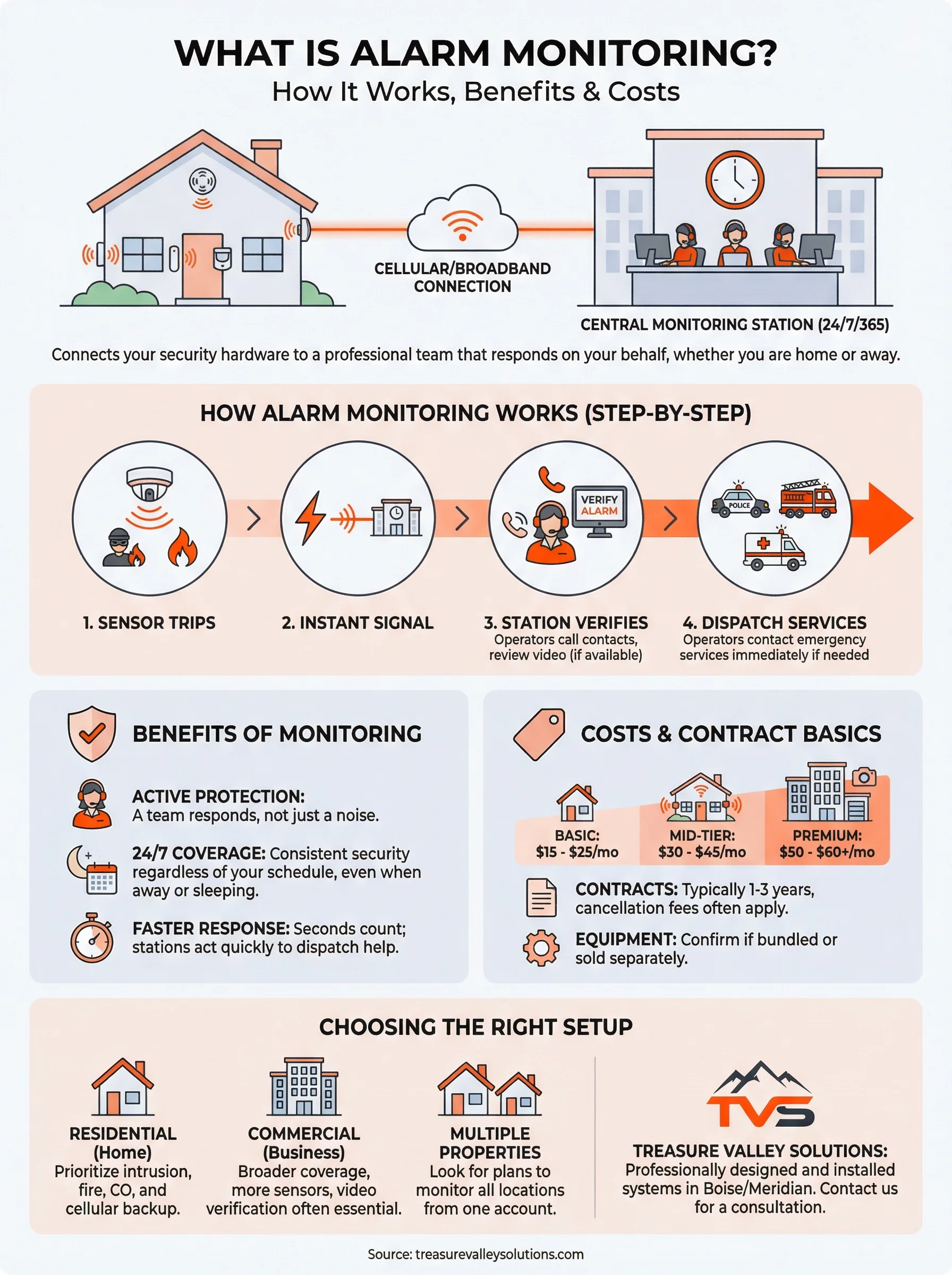
Your security system sends an instant signal to the central monitoring station the moment a sensor activates, whether that's a door contact, motion detector, smoke sensor, or panic button. That signal travels over a cellular or broadband connection and arrives at the station in seconds, not minutes.
Most professional monitoring stations acknowledge an incoming alarm signal within 30 to 45 seconds of receiving it.
What the monitoring station does next
Once the station receives your alert, an operator follows a defined response protocol. They first attempt to verify the alarm by calling your listed contact numbers. If you confirm the event is real, or if no one answers, they immediately dispatch the appropriate emergency services to your address.
Many modern systems include video verification, where the operator reviews a brief clip tied to the triggered zone before calling responders. That extra step reduces false dispatches and helps emergency services arrive with better context about what they're walking into.
Alarm monitoring costs and contract basics
Once you understand what is alarm monitoring and how it works, pricing is the next thing to get right. Monthly monitoring fees typically range from $15 to $60 depending on the level of service, the communication method (cellular costs more than broadband), and whether your plan includes video verification or smart home integration.
What monthly monitoring fees look like
Basic plans covering intrusion and fire alerts usually start around $15 to $25 per month. Mid-tier plans that add cellular backup, carbon monoxide monitoring, and environmental sensors generally run $30 to $45. Premium plans with video verification and dedicated commercial coverage can reach $50 to $60 or higher, depending on the number of devices and monitoring zones included.

Professional monitoring costs less per month than most streaming subscriptions, but the return on that spend is protection around the clock.
Contract terms to know before you sign
Most monitoring providers require a contract commitment of one to three years, with early termination fees if you cancel before the term ends. Before you sign, confirm whether equipment is included in the monthly fee or sold separately, and whether the contract auto-renews without notice. Some providers offer month-to-month plans at a slightly higher rate, which gives you more flexibility if your situation changes. Always read the cancellation policy so you know exactly what you're committing to before the first bill arrives.
How to choose the right monitoring setup
Now that you know what is alarm monitoring and what it costs, the practical question is which setup fits your specific property and lifestyle. Not every plan works equally well for a single-family home, a rental unit, and a commercial facility, so starting with a clear picture of your coverage needs prevents you from overpaying for features you won't use or leaving gaps that put your property at risk.
Match the plan to your property type
Residential setups typically prioritize intrusion detection, fire, and carbon monoxide monitoring with cellular backup. If you own or manage multiple properties, look for plans that let you monitor all locations from a single account, which simplifies billing and oversight. Commercial properties generally need broader coverage, including larger motion detection zones, more sensors, and video verification built into the base plan rather than offered as an add-on.
Questions to ask before you commit
Before signing with any provider, get clear answers on a few key points. The right monitoring service will align with your communication method, budget, and cancellation flexibility.
- Does the plan use cellular communication, or does it depend on your internet connection staying active?
- What is the average response time at the central station?
- Are equipment costs bundled into the monthly fee or billed separately?
- What are the cancellation terms if your needs change before the contract ends?
Asking these questions upfront prevents surprises after you've already signed a multi-year contract.
Next steps
Now that you understand what is alarm monitoring, you have the foundation to make a smart decision about your security setup. Monitoring transforms a security system from a passive piece of hardware into an active, around-the-clock protection service that responds on your behalf whether you're home or not. The right plan matches your property type, uses cellular communication, and comes with contract terms you're comfortable with before you sign anything.
If you're in the Boise or Meridian area and want a professionally designed and installed security system that includes monitoring built into the plan from day one, Treasure Valley Solutions can walk you through your options. Every setup we design is tailored to the specific layout and needs of your property, not a generic package pulled off a shelf. Contact us today to schedule a consultation and get a clear picture of what a fully monitored security system looks like for your home or business.
Need Expert Help?
Ready to implement these solutions in your own home or business?
Our Services
Comprehensive security solutions for home and business.
High-definition surveillance for peace of mind.
Serving the Treasure Valley
Local installation in your city