 (208) 991-3502
 Meridian, ID



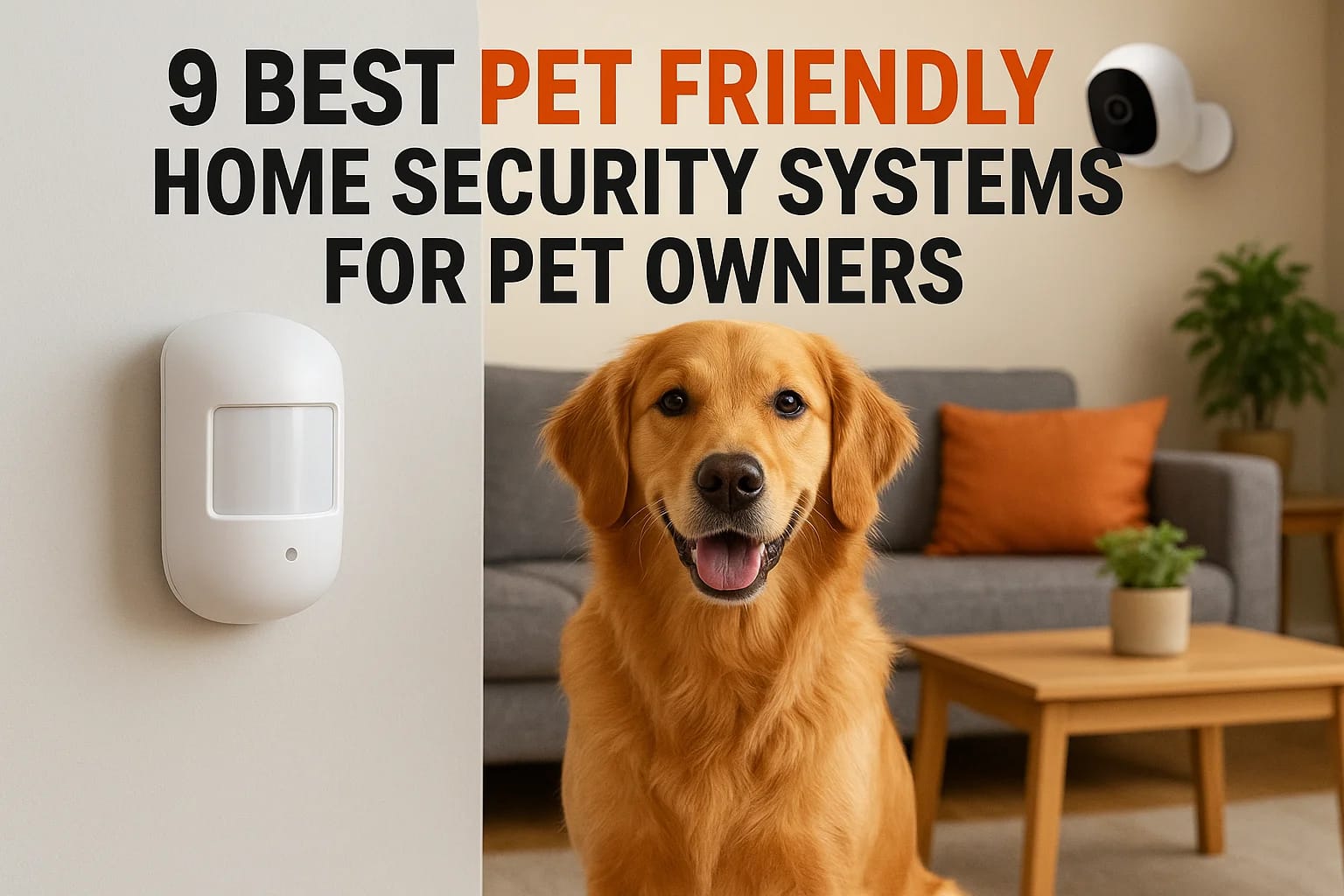

If you own a dog, cat, or any four-legged family member, you already know the frustration: your security system goes off because your golden retriever decided to patrol the living room at 2 a.m. Stand...
If you own a dog, cat, or any four-legged family member, you already know the frustration: your security system goes off because your golden retriever decided to patrol the living room at 2 a.m. Standard motion sensors don't distinguish between a burglar and a curious pet, which leads to constant false alarms and, eventually, a system you stop trusting. That's exactly why pet friendly home security systems exist, and why choosing the right one matters.
The good news is that modern security technology has come a long way. Pet-immune motion sensors, smart cameras with AI detection, and remote monitoring now make it possible to keep your home protected without punishing your pets for being, well, pets. But not every system handles this equally well, and the differences between them can be significant.
At Treasure Valley Solutions, we design and install custom security systems for homes across the Boise and Meridian area, many of which include households with pets. We've seen firsthand what works and what doesn't when animals are part of the equation.
Below, we break down nine of the best pet-friendly home security systems available right now, covering their key features, sensor capabilities, and how well they actually perform in homes with pets. Whether you have a 10-pound cat or a 90-pound lab, this guide will help you find a system that keeps your home secure without the headaches.
1. Treasure Valley Solutions
Treasure Valley Solutions is a Meridian, Idaho-based technology integration company that designs and installs fully custom security systems for homes and businesses throughout the Boise metro area. Unlike off-the-shelf systems you buy in a box, everything here is tailored to your floor plan, your lifestyle, and your pets.
What you get with a custom, professionally installed system
When you work with Treasure Valley Solutions, you're not picking from a preset package. A trained technician visits your home, assesses the layout, and builds a system around what you actually need. That means every sensor, camera, and control point is placed deliberately, not just wherever happens to be convenient during a quick self-install.
Your system can include professional-grade hardware from brands that aren't available at retail, combined with programming specific to your household. If you have multiple animals or a large property, those factors get built into the design from the start rather than worked around after the fact. The result is a system that fits your home rather than one you're constantly adjusting to compensate for.
Pet-friendly design choices that prevent false alarms
This is where custom installation makes the biggest difference for anyone shopping for pet friendly home security systems. Treasure Valley Solutions installs pet-immune passive infrared (PIR) motion sensors calibrated to ignore animals below a set weight threshold, typically up to 60 or 80 pounds depending on the sensor model. Sensors are also mounted at specific angles and heights that reduce the chance your dog triggers them during a normal evening walk through the living room.
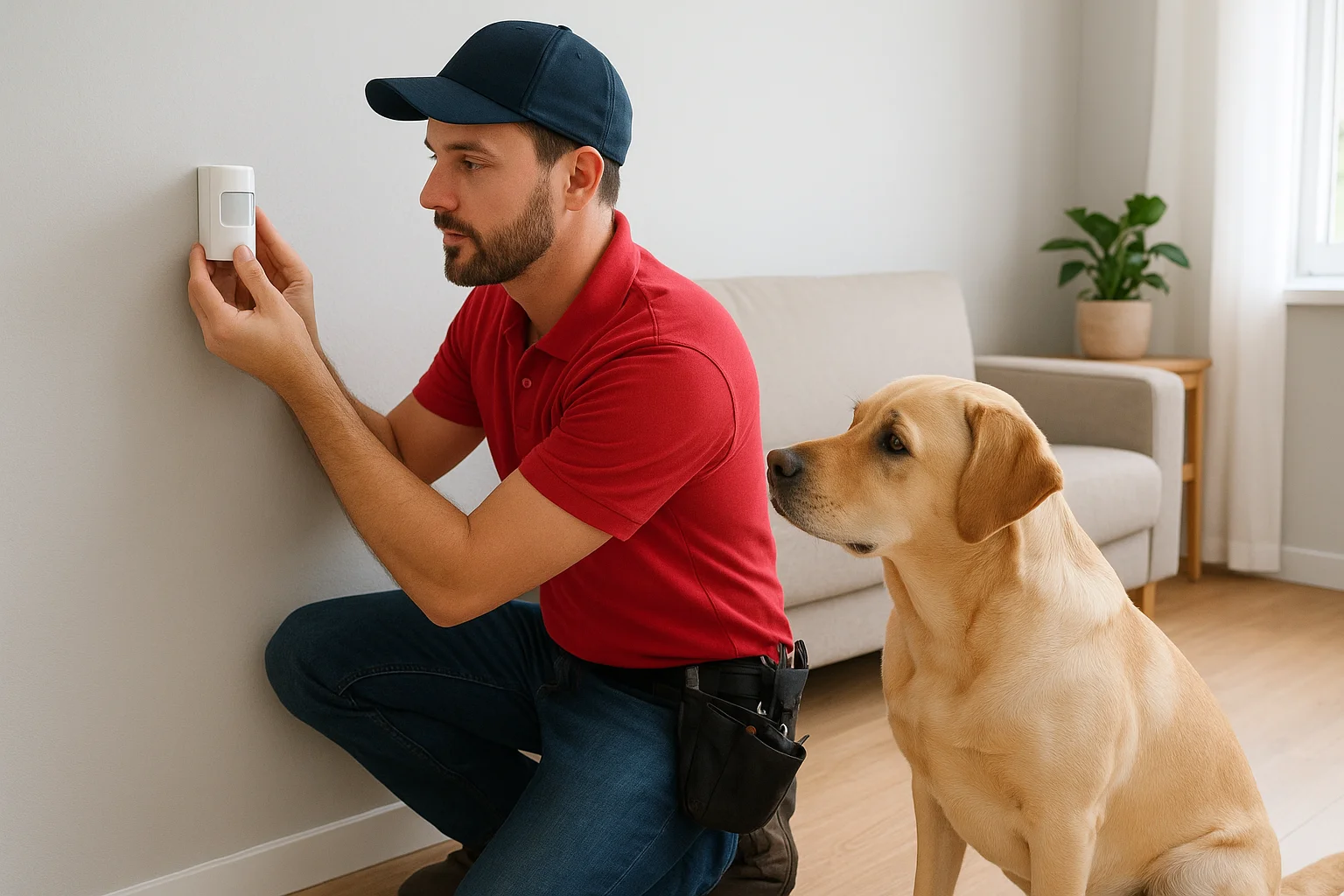
The biggest advantage of professional installation is that sensor placement is optimized for your specific pet's size, behavior, and movement patterns, which no DIY kit can replicate with the same precision.
Beyond motion sensors, the team can set up camera-based alarm verification so that when an alert fires, you or your monitoring center can pull up live footage immediately and confirm whether it's an actual intrusion or just your cat knocking something off the counter. This reduces false alarm dispatches significantly and keeps your system credible over time.
Best fit for
Treasure Valley Solutions works best for homeowners in the Treasure Valley area who want a long-term, reliable security setup and are done troubleshooting DIY configurations. It's also a strong fit for:
- Households with multiple pets or large dogs that standard pet-immune sensors struggle to handle reliably
- Homeowners building or renovating who want pre-wired infrastructure for a cleaner, more permanent install
- Families who want whole-home integration, including smart lighting, locks, and cameras all managed from one interface
Costs and commitments to expect
Treasure Valley Solutions provides custom quotes based on your specific project, so there's no published price list. Costs depend on the number of sensors, cameras, and smart devices included, along with any wiring work required. Because the hardware is professional-grade and the installation is hands-on, expect a higher upfront investment than a DIY system. That said, you're getting significantly more precision, reliability, and support in return.
Ongoing monitoring costs depend on the plan you select, and the team is straightforward about what you're paying for. There are no surprise fees buried in a long-term contract you didn't fully read.
2. ADT
ADT is one of the most recognized names in home security in the United States, with over 150 years in the industry and a large network of professional monitoring centers. For pet owners, ADT offers a range of hardware options and monitoring plans that can be configured to reduce false alarms, though the experience depends heavily on how well your installation technician sets up your system from the start.
Pet-friendly motion sensors and camera options
ADT installations typically include passive infrared motion sensors that can be calibrated to account for pets up to a certain weight, generally around 60 to 80 pounds. If you have smaller animals, a standard pet-immune sensor usually handles them reliably. Larger dogs can still trigger alerts depending on where sensors are mounted and how they're angled, so it's worth discussing your pets specifically with your installer before the job starts.
The sensor placement conversation with your ADT installer is the single most important factor in whether your system works reliably in a pet-heavy home.
ADT's camera lineup, including indoor cameras available through the ADT+ app, lets you pull up live or recorded footage when an alert fires. This gives you a way to quickly check whether an alarm was triggered by a person or your dog sprinting down the hallway.
Life safety and environmental monitoring for pets at home
Beyond intrusion detection, ADT offers environmental monitoring add-ons like smoke, carbon monoxide, and flood sensors. If you leave pets at home during work hours, these sensors give you an early warning if something goes wrong with air quality or water, which matters significantly for animals that can't evacuate on their own. Some plans also include 24/7 professional monitoring that can dispatch emergency services when you're unreachable.
Best fit for
ADT works well for homeowners who want a well-known brand with professional installation and don't want to handle any setup themselves. It suits pet owners with animals under 80 pounds who ask their installer directly about sensor calibration.
Costs and commitments to expect
Equipment costs vary based on the package, and ADT typically requires a 36-month monitoring contract. Monthly monitoring runs roughly $28 to $60 depending on the plan tier and features included.
3. SimpliSafe
SimpliSafe is a Boston-based home security company that built its reputation on easy self-installation and no long-term contracts. It's a popular choice for renters and first-time security buyers, and it offers a few features that make it reasonably workable for households with pets.
DIY-friendly setup with pet-aware motion sensors
SimpliSafe includes a motion sensor with adjustable sensitivity settings you control through the app, which uses passive infrared technology to detect movement. For pets up to roughly 50 pounds, the standard sensitivity adjustment handles most situations well. If you have a larger dog, you'll want to test placement carefully since the sensor's effectiveness drops when animals move near sensor height across a wide field of view.
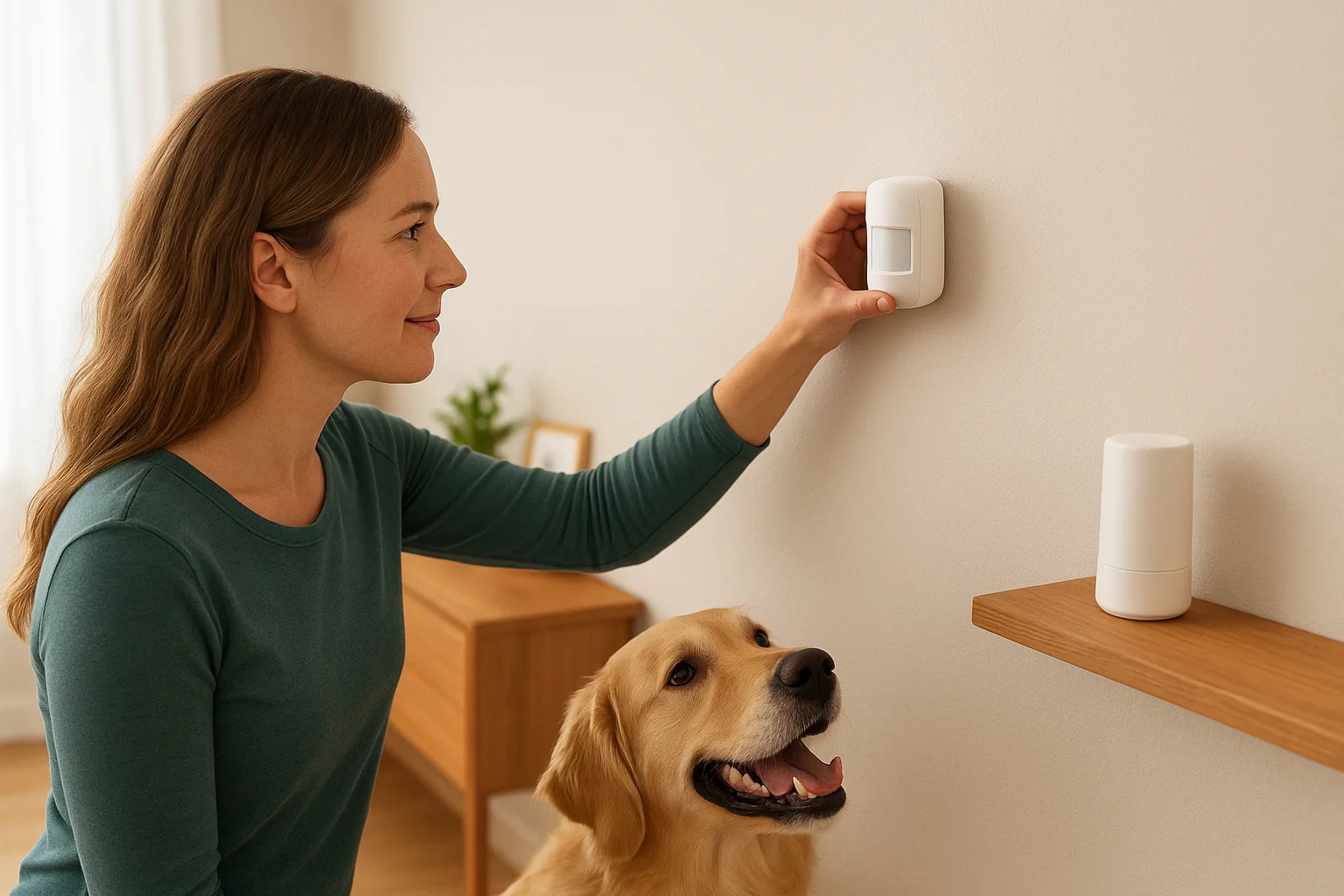
Positioning your SimpliSafe motion sensors higher on the wall and angling them downward reduces the chance that a medium or large dog triggers a false alert.
The setup process takes most people under an hour, and you can rearrange sensors without calling anyone. That flexibility is useful while you're still mapping out where your pets tend to roam throughout the day and night.
Camera monitoring for checking on pets and verifying alarms
SimpliSafe's indoor cameras integrate directly with the SimpliSafe app, letting you pull up a live view whenever an alert fires. You can quickly confirm whether the motion came from your cat or something more serious before deciding how to respond. The cameras also support continuous recording with an active monitoring plan, which gives you footage to review after the fact if you missed the notification.
For pet owners who want to check in on their animals during work hours, the live view feature adds real value beyond just alarm verification. It turns your security cameras into a basic pet monitoring tool without requiring a separate subscription or app.
Best fit for
SimpliSafe works well for renters or homeowners with smaller pets who want a no-contract setup and don't want to pay for professional installation. It's a reasonable option if your animals stay under 50 pounds and you're comfortable doing some trial-and-error with sensor placement to find what works in your specific layout. As a core pet friendly home security system, it covers the basics without overcomplicating things.
Costs and commitments to expect
SimpliSafe sells equipment as an upfront purchase, with starter kits typically ranging from $200 to $500 depending on the number of sensors included. Professional monitoring plans run approximately $20 to $30 per month, and no long-term contract is required.
4. Vivint
Vivint is a Utah-based smart home security company that combines professional installation with a strong emphasis on home automation integration. It sits at the higher end of the market, which means more features built into the platform from day one, but also a steeper price and a longer contract commitment than most competitors.
Smart home automation that helps with pet routines
Vivint's platform goes beyond basic security by letting you automate routines around your pet's daily schedule. You can program smart locks, lights, and thermostats to adjust automatically when you leave or return, which is practical if your dog's feeding or activity routine is tied to your comings and goings. The Vivint Smart Home app gives you central control over all connected devices, so managing your pet's environment while you're away doesn't require juggling multiple apps.
If your pet relies on a consistent daily routine, Vivint's automation rules help you maintain that schedule without manual adjustments every time your plans change.
Pet owners with smart feeders or connected climate controls can layer those into Vivint's ecosystem as well, which adds a level of daily convenience that purely alarm-focused systems simply don't offer.
AI camera alerts that cut down pet-triggered notifications
Vivint's indoor and outdoor cameras use AI-powered person detection to filter out movement that doesn't match a human profile. This cuts down significantly on the false alert notifications you'd otherwise receive when your cat darts past a camera or your dog shakes off in the hallway. The system focuses alerts on actual human presence, which means your phone stays quiet during normal pet activity throughout the day.
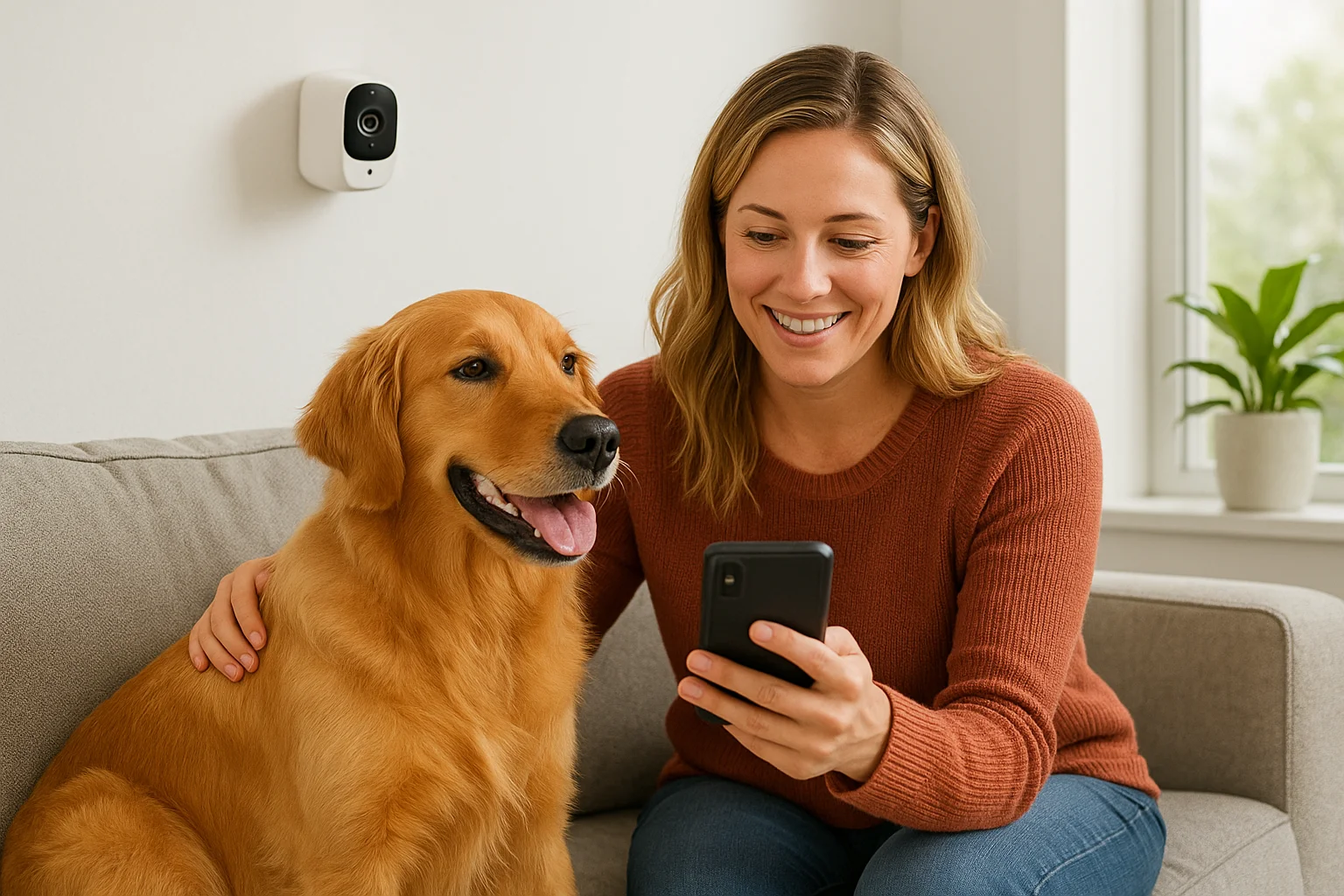
Your cameras also support continuous 24/7 recording with cloud storage, so when an alert does fire, you can pull up footage and confirm what actually triggered it. That combination of smart filtering and on-demand review makes Vivint one of the stronger pet friendly home security systems for households where animals are always moving around.
Best fit for
Vivint works best for homeowners who want deep smart home integration alongside their security setup and don't mind paying for premium hardware. It's a strong fit for:
- Households with large or multiple pets who need reliable AI camera filtering to avoid constant false notifications
- Pet owners who want automated routines tied to their daily schedule
- Homeowners committed to a single app that controls security, climate, and lighting together
Costs and commitments to expect
Vivint requires professional installation and typically locks customers into a 42 to 60-month financing contract for equipment. Monthly monitoring starts around $30 and can reach $50 or more depending on the plan tier you choose. Upfront equipment costs vary based on the number of cameras and sensors included, but a full setup commonly runs between $600 and $1,500 or higher.
5. Frontpoint
Frontpoint is a Virginia-based home security company that focuses on DIY installation paired with professional monitoring. It has built a solid reputation among pet owners specifically because its sensor lineup includes motion detectors designed to handle animals on the heavier end of the scale, which most entry-level systems struggle with.
Strong pet-immune motion options for bigger dogs
Frontpoint's pet-immune motion sensors are rated to ignore animals up to 85 pounds, which puts them ahead of many competitors that top out at 60 pounds. If you have a large breed like a German shepherd or a husky, that extra threshold makes a real difference in day-to-day reliability. The sensors use passive infrared technology and are designed to read heat signatures in a way that filters out typical pet movement patterns near floor level.
The 85-pound weight threshold is one of the highest available in a consumer-grade DIY system, which makes Frontpoint a stronger choice than most options for households with large dogs.
For homes with multiple large dogs, you'll still want to think carefully about coverage zones and overlap between sensors. Placing sensors in high-traffic hallways where two big dogs routinely cross paths increases the chance of triggering, even with pet-immune hardware.
Flexible DIY setup and sensor placement tips for pets
Frontpoint ships all equipment pre-programmed and ready to install, so the physical setup is straightforward. Because you're placing sensors yourself, you have full control over height, angle, and coverage area, which matters a lot when you're trying to find the right positioning to keep your pets from setting off false alerts. Mounting motion sensors at least seven feet high and angling them slightly downward gives you broad room coverage while keeping the detection zone above your pet's typical movement path.
For pet friendly home security systems where animals roam freely at night, Frontpoint also lets you arm the system in a "stay" mode that disables interior motion sensors while keeping door and window contacts active. That option alone removes most false alarm risk during overnight hours.
Best fit for
Frontpoint suits homeowners with large dogs who want professional monitoring without a professional installation fee. It's also a good match if you prefer hands-on control over where every sensor goes.
Costs and commitments to expect
Equipment costs start around $99 for basic packages and increase with additional sensors and cameras. Monthly monitoring runs approximately $45 to $50, and Frontpoint typically requires a 12-month contract commitment.
6. Ring Alarm
Ring Alarm is an Amazon-owned home security system that pairs affordable DIY hardware with optional professional monitoring. It's widely available, easy to find at retail, and integrates natively with the broader Ring camera and smart home ecosystem.
Motion detector settings that accommodate small pets
Ring's motion detectors include an adjustable sensitivity dial on the back of each unit, which lets you turn detection range down to reduce false alerts from small pets moving around at floor level. This works reasonably well for cats and dogs under 30 to 40 pounds, but larger animals tend to push past what the sensitivity adjustment can filter out. If your household includes a bigger dog, motion sensors alone won't give you reliable coverage without generating frequent false alarms.
For larger dogs, the more reliable strategy with Ring Alarm is to rely on door and window contact sensors rather than interior motion detectors as your primary layer of protection.
Ring cameras and alert tuning for pet-heavy homes
Ring cameras give you solid tools for managing alert volume in a pet-heavy home. Through the Ring app, you can draw custom motion zones that exclude areas where your pets spend most of their time, such as a dog bed in the corner or a cat's favorite window perch. Person-only alerts, available on Ring cameras with a Ring Protect subscription, filter notifications so you only hear from the system when a human is detected rather than every time your pet crosses the frame.
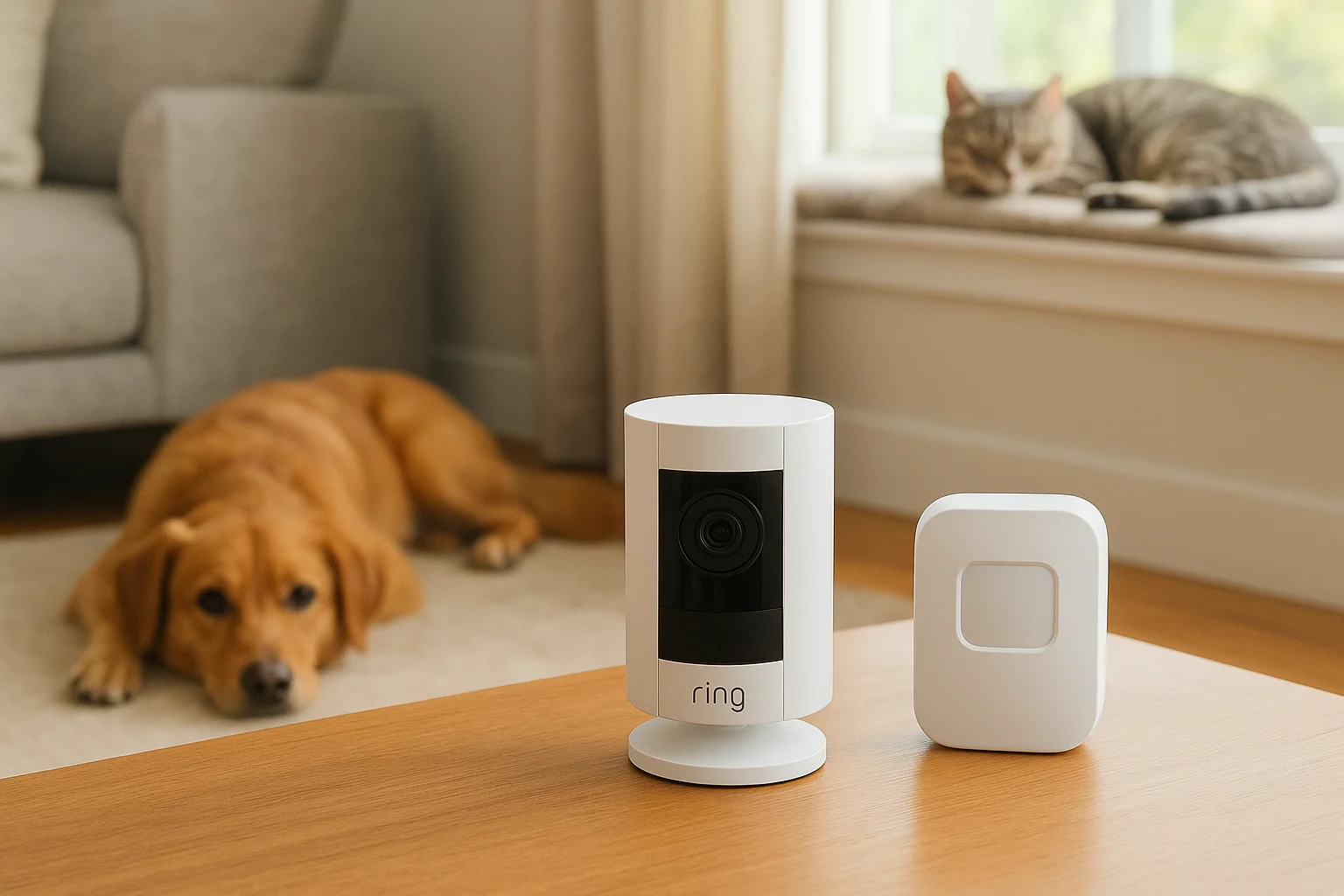
You can also use live view and event history in the Ring app to quickly verify what triggered a sensor before deciding whether to call monitoring or dismiss the alert. That combination of zone controls and camera verification makes Ring a workable option as a pet friendly home security system, particularly if your animals stay on the smaller side.
Best fit for
Ring Alarm suits renters and budget-conscious homeowners with small pets who already use Ring cameras or Amazon smart home devices. It works well if your animals weigh under 40 pounds and you want no long-term contract obligation.
Costs and commitments to expect
Ring sells equipment packages starting around $200, with additional sensors available individually. Professional monitoring runs approximately $10 to $20 per month depending on the plan, and no multi-year contract is required.
7. Cove
Cove is a Utah-based home security company that positions itself as an affordable alternative to larger professional monitoring brands. It ships pre-configured equipment directly to your door, walks you through a guided setup process over the phone if you need it, and offers month-to-month monitoring with no long-term contract required. For pet owners on a tighter budget, it covers the fundamentals without a lot of extra complexity.
Budget-friendly basics with adjustable motion sensitivity
Cove's motion sensors include a sensitivity adjustment that lets you dial back detection range when animals are present in the room. At reduced sensitivity, the sensor handles cats and dogs up to roughly 40 to 50 pounds reasonably well, particularly when mounted high on the wall and angled downward rather than positioned at mid-height where a dog's body mass moves directly through the detection field. The hardware isn't as sophisticated as what you'd find in premium systems, but for smaller pets in a straightforward floor plan, it gets the job done without constant false alerts disrupting your day.
Mounting your Cove motion sensor at seven feet or higher and pointing it slightly downward gives you the best chance of keeping smaller pets out of the detection zone while still covering the room effectively.
When to skip motions and lean on entry sensors instead
If your pets are on the larger side, the smarter move with Cove is to build your protection around door and window contact sensors rather than relying on motion detectors as your main layer. Contact sensors trigger only when a door or window actually opens, so your dog can pace the house all night without setting anything off. This is a practical approach for larger animals and also works well in homes where pets share open floor plans with wide motion coverage zones. Cove sells contact sensors individually, so you can expand your entry-point coverage without paying for a larger equipment bundle upfront. This makes it a workable pet friendly home security system when you build the setup thoughtfully around your animals' size and habits.
Best fit for
Cove works best for budget-conscious homeowners with small pets who want professional monitoring without signing a multi-year contract.
Costs and commitments to expect
Equipment packages start around $230, with individual sensors available for purchase separately. Monthly monitoring runs approximately $15 to $25 depending on the plan, and no long-term commitment is required.
8. Abode
Abode is a California-based home security company that focuses on flexibility, offering systems that work with or without a professional monitoring subscription and integrate with a wide range of third-party smart home platforms, including Amazon Alexa, Google Home, Apple HomeKit, and Z-Wave devices. That compatibility makes it appealing to renters and homeowners who already have smart devices in place and want security to fit into an existing setup rather than replace it.
A flexible system for renters and smart home users
Abode's biggest draw is that it gives you professional-grade hardware without locking you into a monitoring contract. You can self-monitor through the app at no ongoing cost, activate professional monitoring on-demand for a short trip or a few days away, or subscribe to a monthly plan if you want consistent coverage. That flexibility is genuinely useful if your schedule changes often or if you want to test the system before committing to ongoing fees.
Abode's on-demand monitoring option is one of the few in the market that lets you pay only for the periods when you actually need professional backup, which saves money if your home is rarely empty.
For renters specifically, the wireless sensors install without drilling and are easy to take with you when you move, which removes one of the bigger hesitations around investing in a security setup you might leave behind.
Pet-friendly setup strategies for mixed sensor types
Abode's motion sensors use passive infrared technology with adjustable sensitivity, which handles animals up to roughly 40 to 50 pounds without frequent false alerts when set correctly. For larger pets, the smarter approach is to build your coverage around door and window contact sensors as the primary layer and use motion sensors only in rooms your animals don't access. Abode supports a wide mix of sensor types, so you can design your system specifically around your pet's movement patterns rather than applying a one-size approach.
This kind of flexible configuration is exactly what makes Abode work as one of the more adaptable pet friendly home security systems for households with varied layouts and animals of different sizes.
Best fit for
Abode suits renters and tech-comfortable homeowners with small to medium pets who want smart home compatibility and monitoring flexibility without a long-term contract.
Costs and commitments to expect
Equipment packages start around $80 for a basic kit, with more complete bundles reaching $200 or higher depending on sensor count. Professional monitoring plans run approximately $20 per month, and no long-term contract is required.
9. Brinks Home
Brinks Home is a Texas-based home security company that offers professional monitoring backed by a national monitoring network. The company provides both self-install and professional installation options, and its equipment lineup covers the standard range of sensors, cameras, and control panels you'd expect from an established brand.
Professional monitoring with common pet-friendly sensor setups
The company offers passive infrared motion sensors that can be configured to account for pets during the installation process. For animals under 60 pounds, the standard setup typically reduces false alerts when sensors are mounted at the right height and angle. Their monitoring center operates 24/7, so when an alarm fires, a trained agent contacts you before dispatching emergency services, which gives you a chance to confirm whether your dog triggered the sensor rather than an actual intruder.
That call-before-dispatch process is one of the most practical features for pet owners, since it puts a human check between a sensor trigger and an unnecessary police response.
What to confirm about motion settings before you sign
Before you commit to a contract with Brinks Home, ask your sales representative directly about pet-immune sensor options and how sensitivity is configured on your specific equipment. Not all Brinks installations use the same hardware, and the weight threshold and mounting angle your technician applies will determine how reliably your system handles pets in practice. Get that conversation in writing if possible, so you're not troubleshooting false alarms after you've already signed.
This matters especially if you have large or active dogs that move quickly through wide open spaces. As a pet friendly home security system, Brinks can work well, but the outcome depends heavily on how your specific installation is configured from day one.
Best fit for
Brinks Home suits homeowners who want professional installation and 24/7 monitoring with a call-before-dispatch protocol. It works reasonably well for pet owners with animals under 60 pounds who ask the right questions before signing anything.
Costs and commitments to expect
Equipment costs vary depending on the package you select, and Brinks typically requires a 36-month monitoring contract. Monthly monitoring fees run approximately $30 to $45 depending on the plan tier and features included.
Final take
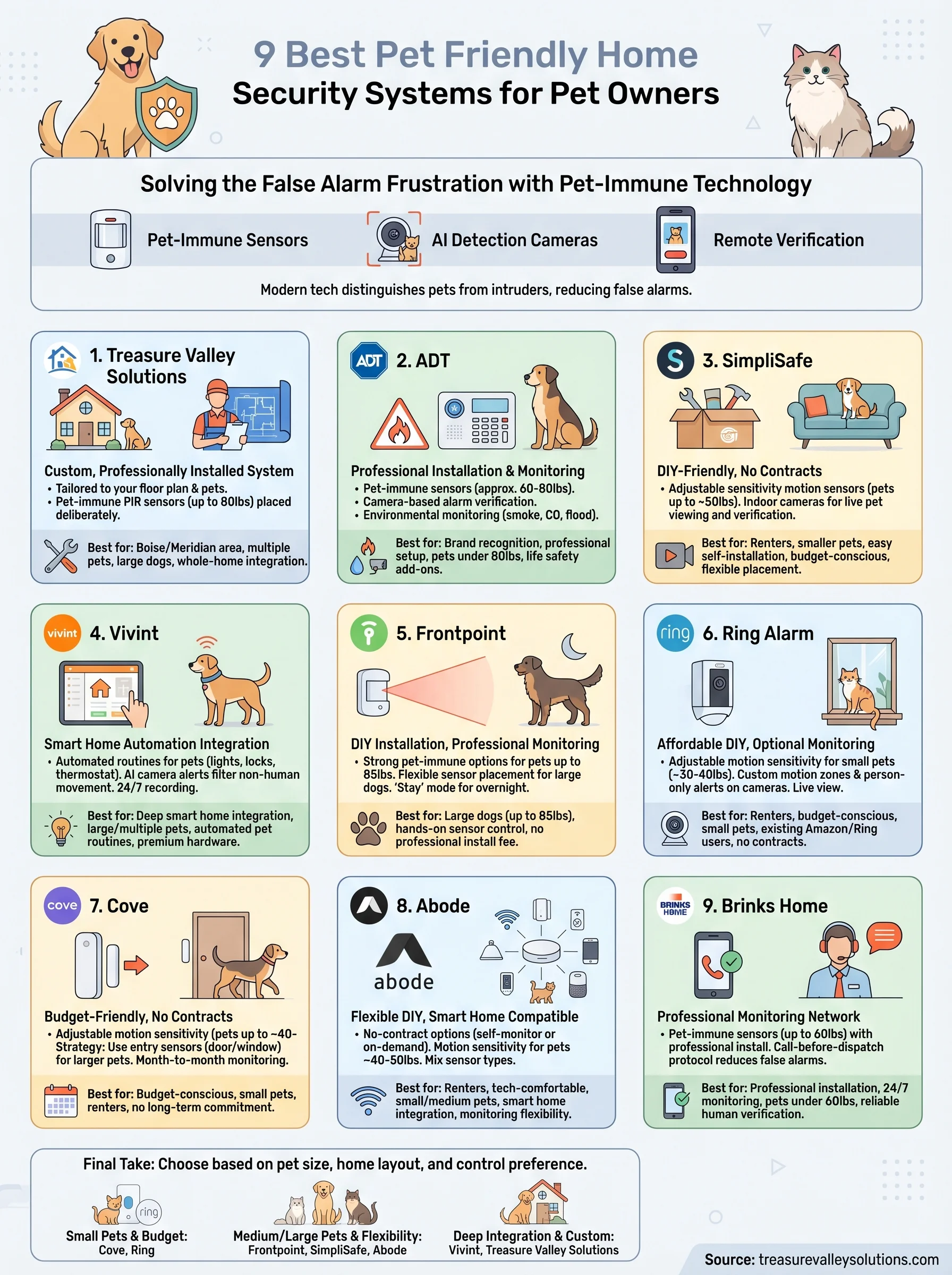
Every system on this list handles pets differently, and the right choice depends on your animals' size, your home's layout, and how much control you want over the setup. Budget-friendly options like Cove and Ring work well for smaller pets when you build your sensor strategy around entry points. Mid-range systems like Frontpoint and SimpliSafe give you more flexibility with larger dogs. If you want deep smart home integration, Vivint and Abode are worth a close look.
For homeowners in the Boise and Meridian area who want a pet friendly home security system built around their specific household rather than adapted from a retail package, a custom installation is the most reliable path. Sensor placement, calibration, and camera verification all work better when a trained technician designs the system around your floor plan and your pets from day one. Contact our team to start that conversation.
Need Expert Help?
Ready to implement these solutions in your own home or business?
Our Services
Comprehensive security solutions for home and business.
High-definition surveillance for peace of mind.
Serving the Treasure Valley
Local installation in your city