 (208) 991-3502
 Meridian, ID



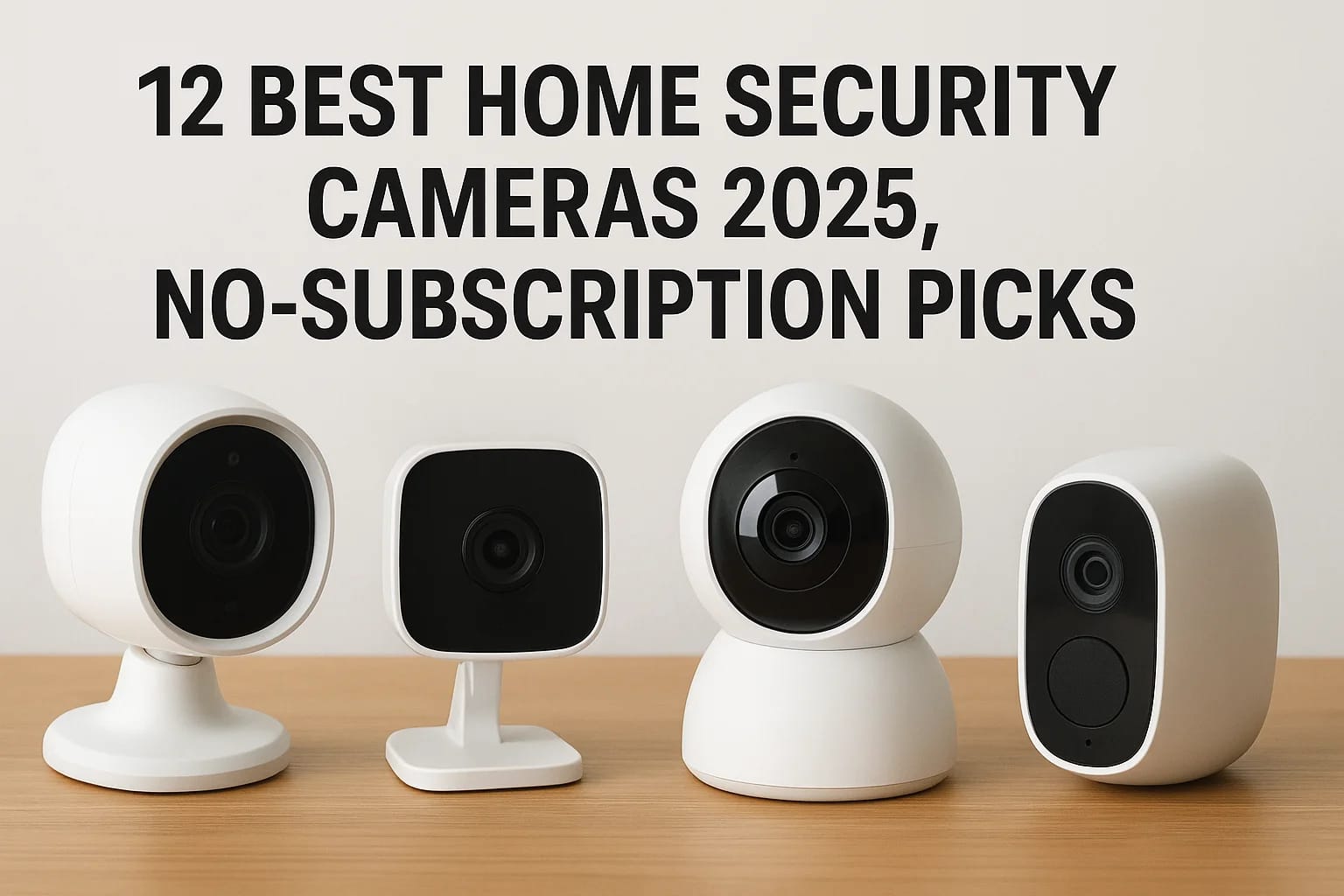

Your home security camera shouldn't require a monthly fee just to access your own footage. Yet many popular brands lock essential features behind subscriptions that add up to hundreds of dollars per y...
Your home security camera shouldn't require a monthly fee just to access your own footage. Yet many popular brands lock essential features behind subscriptions that add up to hundreds of dollars per year. If you're searching for the best home security cameras 2025 has to offer, without the recurring costs, you're not alone. More homeowners are demanding cameras that work fully out of the box, and manufacturers are finally responding.
At Treasure Valley Solutions, we've installed and configured hundreds of security camera systems across Boise, Meridian, Eagle, and the surrounding Idaho communities since 2014. We've seen firsthand which cameras hold up in real-world conditions and which ones frustrate homeowners with connectivity issues, poor night vision, or hidden fees. That hands-on experience shapes every recommendation in this guide.
This list covers 12 top-performing security cameras for 2025, organized by use case: outdoor monitoring, indoor coverage, budget-friendly options, and premium picks for those who want the best image quality available. Each camera earned its spot based on video resolution, storage flexibility, reliability, and, most importantly, whether it delivers full functionality without a subscription. Whether you're protecting a single entry point or planning a comprehensive system for your property, you'll find a camera here that fits your needs and budget.
What "no subscription" really means
The "no subscription" label gets thrown around loosely in 2025, but it doesn't mean the same thing across every camera brand. When you see a camera advertised as subscription-free, you're typically looking at one of three models: cameras that store footage locally on an SD card, systems that record to a physical network video recorder (NVR) or digital video recorder (DVR), or cameras that offer limited cloud storage without ongoing fees. Understanding these differences helps you avoid surprises when you set up your new camera and realize certain features require payment after all.
What you actually get without paying
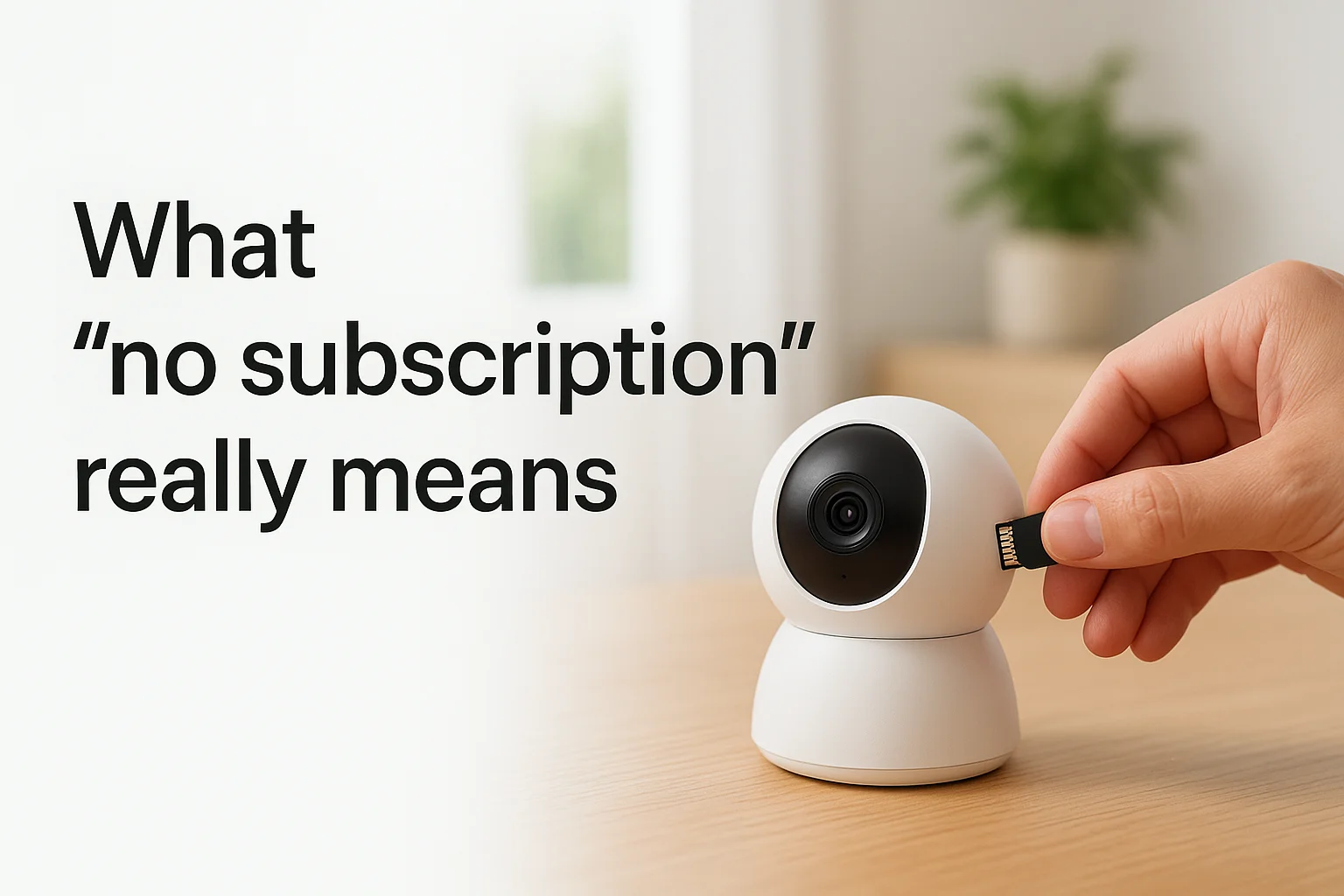
True no-subscription cameras give you access to all essential features right out of the box. You can view live feeds from your phone, receive motion alerts, and review recorded footage without entering a credit card. These cameras typically store video clips on a microSD card inside the camera itself, or they send recordings to a local storage device like an NVR. You control the footage, and you don't lose access if you stop paying a monthly fee. Some brands even offer free cloud storage for a limited number of days, though these free tiers usually come with restrictions like lower video quality or fewer cameras supported.
The moment you rely on cloud storage that requires payment to access your own recordings, you're no longer using a true no-subscription system.
What subscription-based features look like
Many cameras label themselves as "subscription-optional" rather than truly subscription-free. They'll work without payment, but they lock advanced features behind a paywall. You might find that person detection (the ability to distinguish between people and other motion) requires a subscription, or that the camera only saves five-second clips instead of full events unless you upgrade. Cloud storage fees typically range from $3 to $10 per camera per month, which adds up fast when you're monitoring multiple locations. Even among the best home security cameras 2025 offers, some highly-rated models hide their best capabilities behind these recurring charges.
How local storage avoids monthly fees
Cameras with local storage options eliminate subscription dependency entirely. An SD card slot lets you record days or weeks of footage depending on card size, and NVR systems can store months of video from multiple cameras on a single hard drive. You access everything through the manufacturer's app or software without paying for cloud servers. The trade-off is that you need to maintain the hardware yourself and accept that footage stays in your home rather than backed up to a remote server. For most homeowners, this trade-off makes financial sense.
Wired vs Wi-Fi cameras for local recording
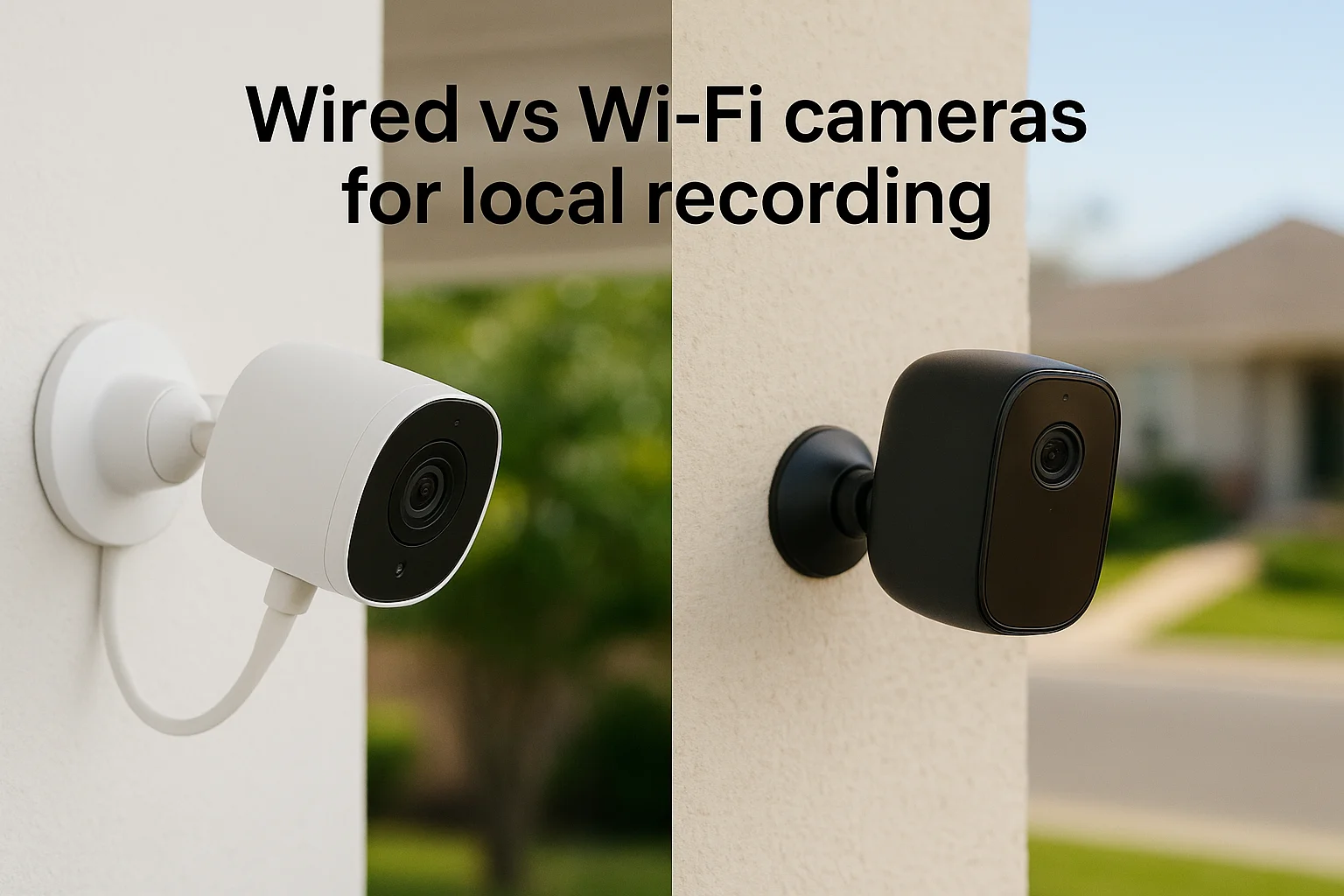
The connection method you choose determines how reliably your cameras record and how much control you have over storage. Wired systems using Power over Ethernet (PoE) typically offer the most stable recording performance for local storage, while Wi-Fi cameras provide flexibility in placement but introduce potential connectivity issues. Both can work without subscriptions when paired with the right storage solution, but each brings distinct advantages depending on your property layout and technical comfort level.
Power over Ethernet (PoE) systems
PoE cameras run a single cable from each camera back to a central network video recorder (NVR), which handles both power and data transmission. This setup eliminates battery changes and reduces the wireless interference that plagues Wi-Fi cameras. You get continuous recording to the NVR's hard drive, and you can access footage locally through a monitor or remotely through the manufacturer's app. Professional installers favor PoE for its reliability, and it's the standard we use at Treasure Valley Solutions for clients who want set-it-and-forget-it performance. The main drawback is the initial installation effort, since you need to run ethernet cables to each camera location.
Battery and plug-in Wi-Fi options
Wi-Fi cameras connect to your home network wirelessly, making them ideal for temporary monitoring or locations where running cables isn't practical. Battery-powered models like the Blink Outdoor 4 let you mount cameras anywhere without worrying about nearby outlets, though you'll need to recharge or replace batteries every few months depending on activity levels. Plug-in Wi-Fi cameras eliminate battery maintenance but still depend on your wireless network's stability. When shopping for the best home security cameras 2025 offers in this category, look for models with dual-band Wi-Fi support and the option to record to a local hub or SD card rather than relying solely on cloud storage.
Wi-Fi cameras work well for single-camera setups, but PoE systems outperform them when you're monitoring multiple locations around your property.
Quick checklist for picking a camera in 2025
Shopping for the best home security cameras 2025 offers requires cutting through marketing noise and focusing on what actually matters for your property. This checklist helps you evaluate any camera against the factors that determine long-term satisfaction, from image quality to hidden costs. Run through these points before you buy, and you'll avoid the common mistakes that lead to returned cameras or buyer's remorse.
Resolution and night vision
Your camera needs to capture usable detail in both daylight and darkness. Look for at least 1080p resolution (1920×1080), though 2K (2560×1440) and 4K (3840×2160) provide significantly more detail when you need to identify faces or license plates. For night vision, check whether the camera uses infrared LEDs (which produce black-and-white footage) or color night vision (which requires ambient light or a built-in spotlight). Test footage from reviews when possible to see actual performance rather than trusting spec sheets alone.
Storage options
Confirm that the camera supports local recording through either an SD card slot or connection to an NVR/DVR system. Check the maximum card size supported (128GB, 256GB, or 512GB) and calculate how many days of footage that provides based on your recording settings. If the camera offers cloud storage, verify whether the free tier meets your needs or whether you'll need to subscribe. Cameras that lock all storage behind a paywall don't qualify as truly subscription-free.
The storage method you choose determines whether you control your footage or rent access to it from the manufacturer.
Installation requirements
Determine whether the camera needs wired power, runs on batteries, or uses solar charging. Battery cameras offer placement flexibility but require regular maintenance, while wired options provide reliable continuous recording. If you're considering PoE cameras, confirm you have ethernet cable runs available or budget for professional installation to handle the wiring.
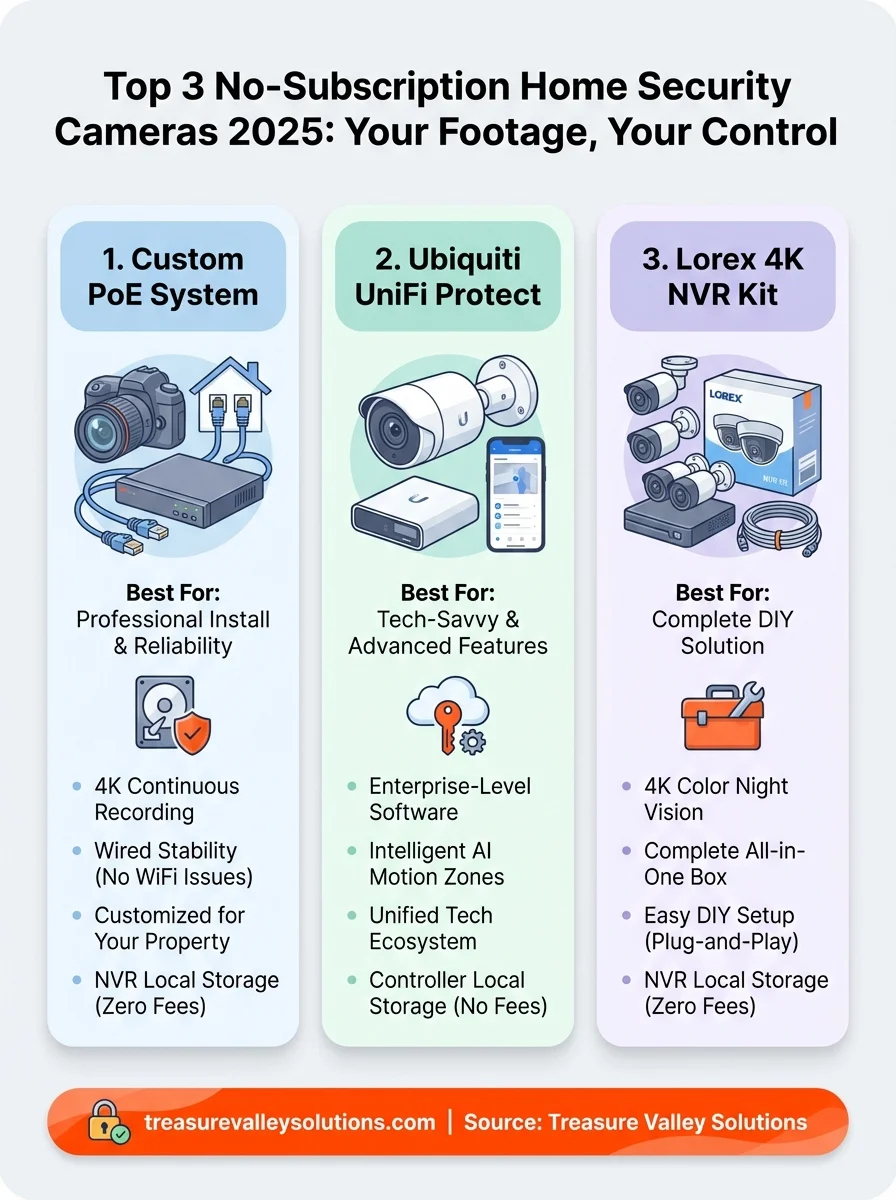
1. Treasure Valley Solutions custom PoE camera system
Our custom Power over Ethernet camera systems combine professional-grade hardware with local-only recording that eliminates subscription fees entirely. We design each system around your property's specific layout, camera placement needs, and monitoring goals, then handle the complete installation from cable runs to final configuration. This approach delivers the reliability of commercial surveillance systems without the complexity or recurring costs that frustrate homeowners.
Why it stands out
You get cameras and an NVR selected specifically for your situation rather than a one-size-fits-all kit. We evaluate your property's lighting conditions, coverage gaps, and network infrastructure before recommending equipment, which means you avoid buying cameras that underperform in your actual environment. The professional installation includes clean cable management, weatherproof connections for outdoor cameras, and complete testing to verify every camera records properly before we leave.
Best for
This system works best for homeowners who want long-term reliability without ongoing fees and who value professional installation over DIY setup. It fits properties where you're monitoring multiple locations, need continuous recording rather than event-triggered clips, or require integration with existing smart home systems.
Key specs
Systems typically include 4K resolution cameras (3840×2160) with infrared night vision up to 100 feet, an NVR with 2TB to 8TB of storage, and gigabit ethernet connectivity. You access live feeds and recordings through mobile apps or desktop software without cloud dependency.
Professional PoE systems eliminate the wireless interference and battery maintenance that plague consumer-grade options.
Local storage and fees
All footage records to the NVR's internal hard drive with zero subscription requirements. You control retention periods based on storage capacity, and you can access recordings indefinitely without paying for cloud storage.
Typical price range
Complete systems start at $2,500 for four cameras and an NVR with installation, scaling up to $6,000+ for larger properties with eight or more cameras and premium features like license plate recognition.
2. Ubiquiti UniFi Protect cameras
UniFi Protect cameras from Ubiquiti deliver enterprise-level surveillance at prices that compete with consumer brands, but you need to invest in their ecosystem to access the platform's full capabilities. The system requires a UniFi Cloud Key or UniFi Dream Machine to run the Protect software, which handles recording and management for all your cameras. Once you set up that base infrastructure, you get one of the most polished local recording experiences available in 2025, with mobile apps and web interfaces that rival subscription-based competitors.
Why it stands out
The UniFi Protect interface gives you detailed timeline scrubbing and intelligent motion detection zones that outperform most systems in this price range. You can configure each camera's sensitivity settings, adjust recording quality on the fly, and review footage across multiple cameras simultaneously through split-screen views. The system integrates with other UniFi network equipment if you're already running their switches or access points, creating a unified management platform for your entire property's technology.
Best for
This system works best for tech-savvy homeowners who want professional-grade features and plan to monitor five or more camera locations around their property. You should feel comfortable with network configuration and be willing to invest in the required controller hardware upfront.
Key specs
UniFi cameras range from 2K resolution (2688×1512) on budget models to 4K on premium turret and bullet cameras. Most models include infrared night vision, two-way audio, and weatherproof ratings for outdoor installation. Recording runs continuously to your controller's storage.
UniFi Protect eliminates subscription fees while delivering the features other brands lock behind paywalls.
Local storage and fees
All footage stores on your UniFi Cloud Key or Dream Machine with zero monthly fees. Storage capacity depends on your controller model, ranging from 1TB to 10TB+.
Typical price range
Individual cameras cost $99 to $499 depending on resolution and features. Budget $199 to $379 for a Cloud Key Plus or $299+ for a Dream Machine to run the system.
3. Lorex 4K NVR security camera kit
Lorex offers complete security camera kits that bundle everything you need in a single box: 4K cameras, an NVR, cables, and mounting hardware. These systems target homeowners who want professional-quality surveillance without hiring an installer, and they've earned a reputation for delivering reliable performance at competitive prices. You'll find Lorex kits sold through major retailers like Amazon and Costco, which makes warranty support and returns straightforward compared to ordering direct from overseas manufacturers.
Why it stands out
The 4K resolution on Lorex cameras captures sharp detail that holds up when you zoom into footage to identify faces or read license plates. Their color night vision technology uses ambient light and spotlights to maintain full-color images after dark, giving you better detail than standard infrared systems. Lorex includes a three-year warranty on most kits, which exceeds the one-year coverage typical among the best home security cameras 2025 offers in this price range.
Best for
These kits work best for homeowners who need to monitor four to eight locations around their property and feel comfortable with basic DIY installation. You should have existing cable pathways or be willing to drill through walls to run the included ethernet cables.
Lorex kits eliminate guesswork by including every cable and connector you need for a complete installation.
Key specs
Standard kits include 4K cameras (3840×2160) with 130-foot color night vision, an 8-channel NVR with 2TB storage, and 100-foot pre-made ethernet cables. Cameras carry IP67 weatherproof ratings for outdoor use.
Local storage and fees
All footage records to the NVR's hard drive with zero subscription requirements. You access recordings through Lorex's mobile app indefinitely without cloud fees.
Typical price range
Four-camera kits with 2TB storage start at $500, while eight-camera systems with 4TB storage run $800 to $1,200.
4. Reolink PoE cameras with NVR
Reolink cameras deliver exceptional value among the best home security cameras 2025 offers in the PoE category, combining reliable 4K recording with prices that undercut most competitors. Their systems appeal to homeowners who want professional-grade surveillance without the complexity of enterprise platforms like UniFi Protect, and they've built a strong reputation for responsive customer support and regular firmware updates that add features over time.
Why it stands out
The company manufactures both cameras and NVRs in-house, which means you get seamless compatibility without worrying whether third-party equipment will work together. Reolink's smartphone app provides intuitive controls for adjusting motion zones, reviewing footage, and receiving alerts, all without the lag issues that plague some budget systems. Their cameras include built-in spotlights on many models for color night vision up to 100 feet, and the two-way audio quality exceeds what you typically find at these prices.
Best for
These systems work best for homeowners monitoring four to sixteen locations who want plug-and-play simplicity with professional results. You should feel comfortable running ethernet cables or hire a local installer to handle the wiring.
Reolink eliminates the subscription trap while delivering features that competing brands lock behind monthly fees.
Key specs
Most Reolink PoE cameras offer 4K resolution (3840×2160), 100-foot infrared or color night vision, IP66 weatherproof ratings, and H.265 video compression. NVRs include 8 to 16 channels with 2TB to 12TB storage options.
Local storage and fees
All footage records to your NVR with zero ongoing costs. You access everything through Reolink's mobile app indefinitely without cloud subscriptions.
Typical price range
Four-camera kits with 2TB NVRs start at $450, while eight-camera systems with 4TB storage run $650 to $900.
5. Eufy SoloCam S230
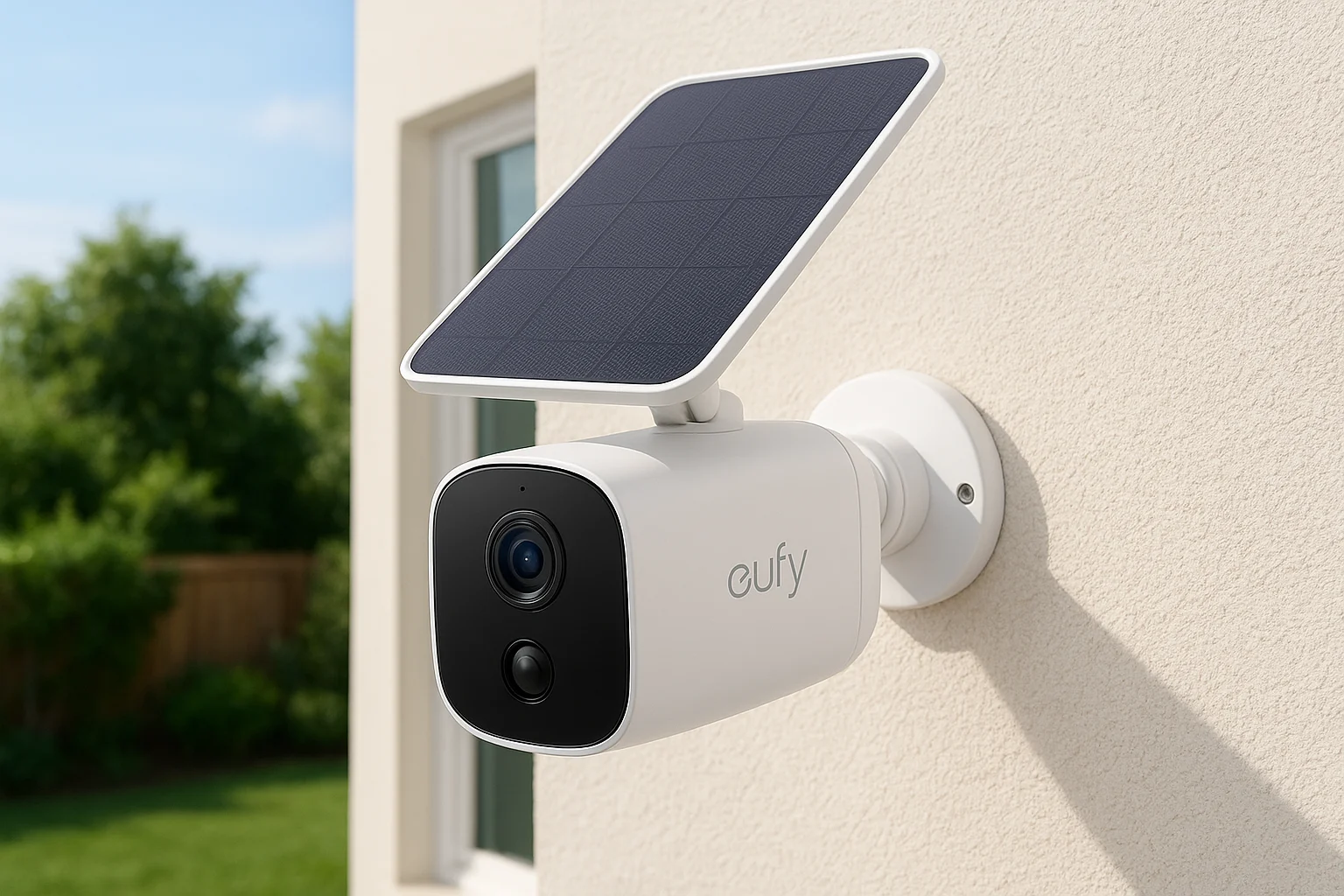
The Eufy SoloCam S230 stands out among the best home security cameras 2025 offers as a truly wireless option that operates completely subscription-free while delivering 2K resolution and integrated solar charging. This battery-powered camera handles both power and storage independently, eliminating the need for wiring, cloud fees, or frequent battery swaps. Eufy built this model for homeowners who want flexibility in placement without sacrificing video quality or smart detection features.
Why it stands out
The integrated solar panel keeps the camera charged indefinitely in locations that receive just three hours of direct sunlight daily, which eliminates battery maintenance entirely for most installations. Eufy's on-device AI processing analyzes motion events locally without sending footage to cloud servers, giving you person detection, vehicle detection, and crying baby alerts without monthly fees. The camera withstands weather extremes with its IP67 rating and continues recording even during Wi-Fi outages thanks to its 8GB of built-in storage.
Best for
This camera works best for monitoring entry points, driveways, or yards where running power cables isn't practical. You should choose this model if you want truly wireless operation with solar charging and don't need continuous 24/7 recording.
Key specs
The SoloCam S230 captures 2K resolution (2304×1296) with 135-degree field of view, infrared night vision to 26 feet, and built-in spotlight. It includes 8GB internal storage that holds roughly three months of motion-triggered clips.
Battery-powered cameras with solar charging eliminate the subscription trap while requiring minimal maintenance.
Local storage and fees
All footage stores on the camera's 8GB internal memory with zero subscription requirements. You access recordings through Eufy's app indefinitely without cloud fees.
Typical price range
Individual cameras retail for $150 to $200 depending on sales and bundle options.
6. Eufy Indoor Cam C120
The Eufy Indoor Cam C120 brings 2K pan-and-tilt monitoring to indoor spaces at a price point that makes multi-camera coverage affordable. This compact camera delivers 360-degree horizontal rotation and 96-degree vertical tilt, eliminating blind spots in rooms where a fixed camera would miss activity. Eufy designed this model for homeowners who want comprehensive indoor monitoring without cloud subscriptions, and the camera's on-device AI handles person detection, pet detection, and crying baby alerts without sending footage to external servers.
Why it stands out
The motorized pan-and-tilt mechanism tracks motion automatically, keeping moving subjects centered in the frame as they cross your room. You control the viewing angle remotely through Eufy's app, which means you can check different areas of a room without installing multiple cameras. The camera's two-way audio includes noise cancellation that makes conversations clearer than competing models, and the built-in privacy mode physically covers the lens when you're home.
Best for
This camera works best for monitoring large living spaces, nurseries, or pet areas where you need flexible coverage. You should choose this model if you want pan-and-tilt functionality with local storage and don't need outdoor weatherproofing.
Pan-and-tilt cameras eliminate coverage gaps in large rooms without requiring multiple fixed cameras.
Key specs
The Indoor Cam C120 captures 2K resolution (2304×1296) with infrared night vision to 32 feet. It includes microSD card support up to 128GB and connects via dual-band Wi-Fi.
Local storage and fees
All footage records to your microSD card (sold separately) with zero subscription requirements. You access recordings through Eufy's app indefinitely without cloud fees.
Typical price range
Individual cameras retail for $35 to $50 depending on sales and bundle options.
7. TP-Link Tapo C325WB
The TP-Link Tapo C325WB combines 2K color night vision with microSD card recording at a price point that makes it accessible for homeowners starting their first security camera setup. This outdoor Wi-Fi camera offers weatherproof construction and smart detection features without requiring subscription fees, positioning it as a strong contender among the best home security cameras 2025 offers for budget-conscious buyers who refuse to pay monthly cloud storage costs.
Why it stands out
The camera's color night vision uses an integrated spotlight to capture full-color footage in darkness up to 98 feet away, giving you better detail than standard infrared cameras when identifying vehicles or faces at night. TP-Link includes person, pet, and vehicle detection powered by on-device AI processing, which reduces false alerts from moving trees or passing shadows. The camera's IP66 weatherproof rating protects against rain and dust in outdoor installations.
Best for
This camera works best for monitoring single entry points, garages, or side yards where you need reliable outdoor coverage without complex installation. You should choose this model if you want color night vision on a budget and don't need continuous 24/7 recording.
Key specs
The Tapo C325WB captures 2K resolution (2304×1296) with 143-degree field of view and supports microSD cards up to 512GB. It connects via dual-band Wi-Fi and includes two-way audio with noise cancellation.
MicroSD storage eliminates monthly fees while giving you weeks of recorded footage in a single camera.
Local storage and fees
All footage records to your microSD card (sold separately) with zero subscription requirements. You access recordings through TP-Link's Tapo app indefinitely without cloud fees.
Typical price range
Individual cameras retail for $60 to $80 depending on sales and bundle options.
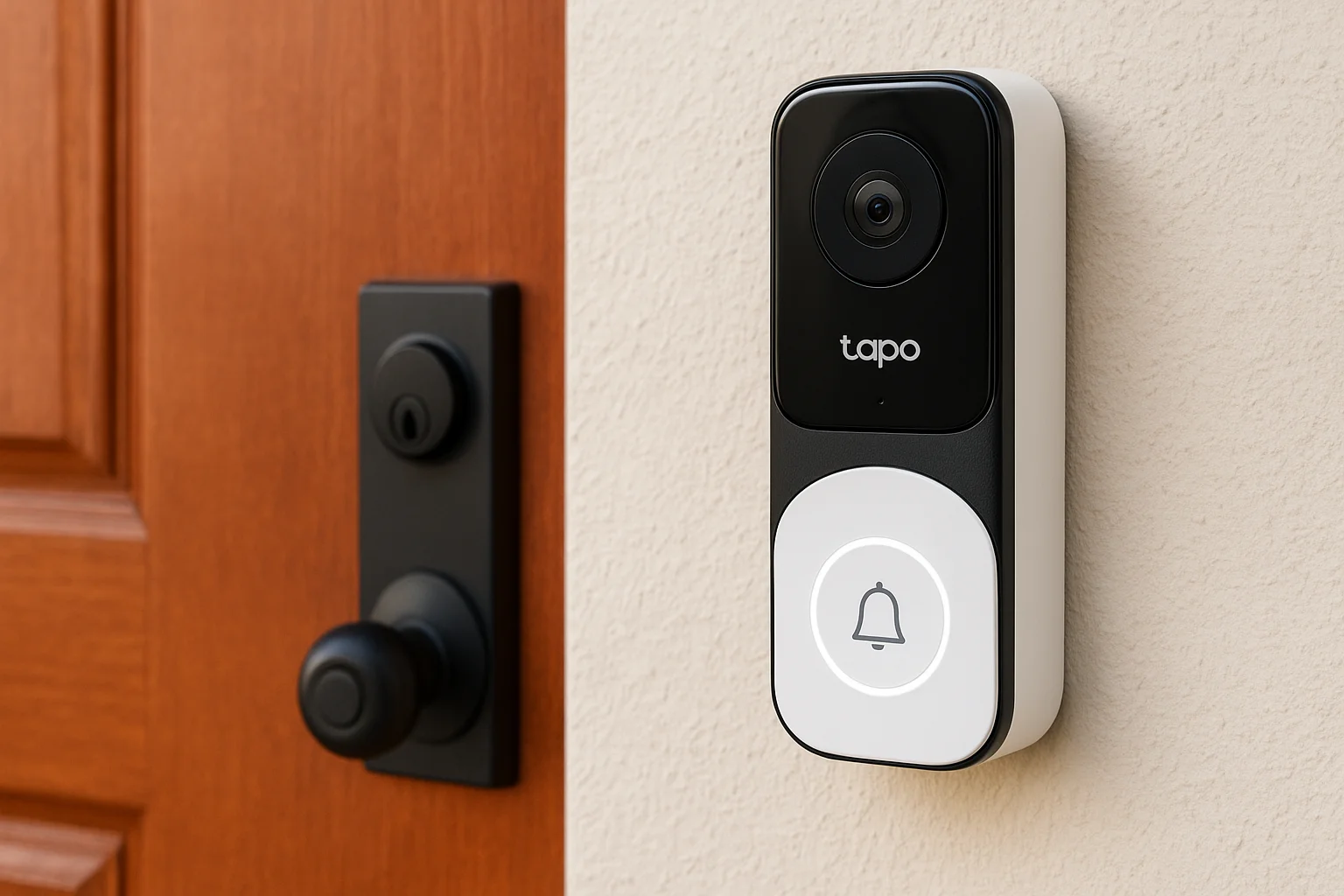
8. TP-Link Tapo D130 video doorbell
The TP-Link Tapo D130 brings 2K video recording and local storage to your front door without requiring monthly fees for basic functionality. This battery-powered doorbell combines person detection, package detection, and two-way audio in a weatherproof design that competes with Ring and Nest at a fraction of the ongoing cost. TP-Link positioned this model to capture the growing market of homeowners who want smart doorbell features without committing to subscription services that add hundreds of dollars to the total cost of ownership.
Why it stands out
The doorbell's 2K resolution captures sharp detail of visitors' faces and package deliveries, while the 150-degree diagonal field of view covers wide porches without fisheye distortion. TP-Link includes both pre-roll recording that captures seconds before the doorbell button press and smart detection that distinguishes between people, packages, and general motion. You get instant mobile alerts with thumbnail previews that help you decide whether to answer before opening the video feed.
Best for
This doorbell works best for monitoring front entrances and package deliveries where you want smart detection without cloud storage fees. You should choose this model if you have existing doorbell wiring or don't mind recharging batteries every few months.
Video doorbells with local storage eliminate subscription dependency while capturing every visitor and delivery.
Key specs
The Tapo D130 records 2K resolution (2304×1296) with infrared night vision and supports microSD cards up to 256GB. It connects via dual-band Wi-Fi and includes adjustable motion zones.
Local storage and fees
All footage records to your microSD card (sold separately) with zero subscription requirements. You access recordings through TP-Link's Tapo app indefinitely without cloud fees.
Typical price range
Individual doorbells retail for $80 to $100 depending on sales and bundle options.
9. Blink Outdoor 4 with Sync Module 2
The Blink Outdoor 4 delivers battery-powered monitoring at prices that make multi-camera coverage affordable for budget-conscious homeowners. Amazon owns Blink, and the company positions these cameras as entry-level solutions that eliminate monthly fees when paired with the Sync Module 2 hub. The system ranks among the best home security cameras 2025 offers for temporary installations or rental properties where running power cables isn't an option, though you sacrifice some features compared to wired competitors.
Why it stands out
The camera runs on two AA lithium batteries that last up to two years based on typical usage patterns, eliminating the recharging routine required by other wireless cameras. Blink's infrared night vision extends to 26 feet, and the camera withstands outdoor weather with its IP65 rating. The Sync Module 2 includes a USB port that accepts flash drives up to 256GB, giving you local storage without subscriptions when you buy the right bundle.
Best for
This system works best for monitoring three to five locations around your property where you need flexible placement without professional installation. You should choose this model if you prioritize low upfront costs and minimal maintenance over continuous recording.
Battery-powered cameras with local storage options eliminate ongoing fees without requiring complex installation.
Key specs
The Outdoor 4 captures 1080p resolution (1920×1080) with 143-degree field of view and connects via dual-band Wi-Fi. Motion detection triggers recording clips rather than continuous footage.
Local storage and fees
All footage records to your USB drive (sold separately) connected to the Sync Module 2 with zero subscription requirements. You access recordings through Blink's app indefinitely without cloud fees.
Typical price range
Individual cameras retail for $100, while three-camera bundles with Sync Module 2 cost $200 to $250.
10. Wyze Cam v4
The Wyze Cam v4 costs less than most competing cameras yet delivers 1080p color night vision and microSD card recording without subscription requirements. Wyze built its reputation on offering features that other brands lock behind paywalls, and this model continues that tradition by including person detection, vehicle detection, and pet detection in a weatherproof package that retails for under $40. The camera ranks among the best home security cameras 2025 offers for homeowners who need basic outdoor monitoring without spending hundreds on premium systems.
Why it stands out
You get color night vision through the camera's integrated spotlight, which captures more detail than standard infrared when identifying visitors or vehicles after dark. Wyze includes continuous recording to microSD cards alongside the standard motion-triggered clips, giving you 24/7 footage when you need it without paying cloud storage fees.
Best for
This camera works best for monitoring single locations where you prioritize low cost over advanced features. You should choose this model if you want subscription-free recording on a tight budget and don't need professional-grade image quality.
Key specs
The Cam v4 captures 1080p resolution (1920×1080) with 120-degree field of view and supports microSD cards up to 256GB. It connects via dual-band Wi-Fi and carries an IP65 weatherproof rating for outdoor installation.
Budget cameras with local storage eliminate monthly fees while covering basic security needs.
Local storage and fees
All footage records to your microSD card (sold separately) with zero subscription requirements. You access recordings through Wyze's app indefinitely without cloud fees, though the company offers optional cloud storage starting at $2 monthly per camera.
Typical price range
Individual cameras retail for $35 to $40 depending on sales and bundle options.
11. Swann 4K DVR and NVR systems
Swann has operated in the security camera market since 1987, giving them decades of experience in consumer surveillance systems that balance affordability with professional-grade features. Their 4K DVR and NVR kits target homeowners who want comprehensive property coverage without monthly cloud fees, and you'll find their systems sold through major retailers with strong warranty support. Swann manufactures both analog DVR systems and IP-based NVR options, letting you choose between traditional coaxial cable connections or modern ethernet-based installations depending on your property's existing wiring.
Why it stands out
Swann includes thermal sensing cameras in many of their premium kits, which detect heat signatures to reduce false alerts from moving shadows or blowing leaves. Their voice control integration with Alexa and Google Assistant lets you view camera feeds on smart displays without opening apps. The company offers free cloud storage trials with new systems, though you retain full functionality through local recording even if you never activate cloud features.
Best for
These systems work best for homeowners monitoring eight to sixteen locations who want turnkey kits with everything included. You should choose Swann if you prefer buying complete systems from major retailers rather than assembling components from multiple manufacturers.
Key specs
Swann's 4K systems record 3840×2160 resolution with infrared night vision to 150 feet on outdoor cameras. DVR kits use coaxial cables while NVR options run ethernet connections. Most systems include 2TB to 4TB storage with expandable drive bays.
Swann's thermal sensing reduces false alerts while maintaining reliable detection of actual security events.
Local storage and fees
All footage records to your DVR or NVR with zero subscription requirements. You access recordings through Swann's app indefinitely without cloud fees.
Typical price range
Eight-camera DVR kits with 2TB storage start at $600, while sixteen-camera NVR systems with 4TB storage run $1,200 to $1,800.
12. Amcrest PoE turret camera and NVR
Amcrest cameras deliver professional surveillance features at prices that undercut premium brands while matching their image quality and reliability. The company specializes in turret-style cameras that offer vandal-resistant domes combined with adjustable lenses, making them ideal for both residential and light commercial installations. Amcrest's systems integrate easily with third-party video management software while maintaining full functionality through their native apps, giving you flexibility that locked-down competitors don't provide.
Why it stands out
The turret design eliminates the infrared reflection issues that plague traditional dome cameras, delivering clearer night vision without the glare from internal reflections. Amcrest includes smart motion detection with configurable zones and sensitivity levels that reduce false alerts, and their cameras support continuous recording alongside motion-triggered clips. You access all features through their mobile app without subscription requirements, and the company regularly releases firmware updates that add capabilities over time.
Best for
These systems work best for homeowners monitoring four to eight locations who want professional-grade image quality without enterprise pricing. You should choose Amcrest if you value hardware flexibility and want cameras that work with multiple recording platforms.
Key specs
Amcrest PoE cameras capture 4K resolution (3840×2160) with 98-foot infrared night vision, IP67 weatherproof ratings, and two-way audio. NVRs include 8 to 16 channels with 2TB to 6TB storage options and H.265 compression for extended recording times.
Turret cameras eliminate dome glare while providing the vandal resistance that traditional bullet cameras lack.
Local storage and fees
All footage records to your NVR with zero subscription requirements. You access recordings through Amcrest's app indefinitely without cloud fees.
Typical price range
Four-camera kits with 2TB NVRs start at $500, while eight-camera systems with 4TB storage run $750 to $1,100.
Final picks and next steps
The best home security cameras 2025 offers span everything from budget-friendly Wi-Fi cameras under $40 to professional PoE systems that cost thousands, but they all share one critical feature: you control your footage without paying monthly fees. Your choice depends on whether you need temporary monitoring for a few entry points or comprehensive coverage that records continuously across multiple locations around your property.
Start by determining your recording needs and installation comfort level. Battery cameras like the Blink Outdoor 4 or Eufy SoloCam S230 work well for monitoring three to five locations without running cables, while PoE systems from Treasure Valley Solutions, Reolink, or Lorex deliver the reliability that serious security requires. If you're protecting a larger property in the Boise area or want professional installation that eliminates setup headaches and ensures optimal camera placement, contact our team to discuss a custom camera system designed around your specific layout and monitoring goals.
Compare your options
Your next step
Compare Wired, Wireless and Local RecordingReady for professional help? Request an estimateOur Services
High-definition surveillance for peace of mind.
Comprehensive security solutions for home and business.
Serving the Treasure Valley
Local installation in your city