 (208) 991-3502
 Meridian, ID




You've priced out the projector, the screen, and the speakers, and now you're stuck on the harder question: who actually installs all of it correctly. Searching for home theater installation services...
You've priced out the projector, the screen, and the speakers, and now you're stuck on the harder question: who actually installs all of it correctly. Searching for home theater installation services in the Treasure Valley pulls up a dozen names, and most sites look the same, so you're left guessing which company actually runs conduit cleanly, calibrates audio properly, and sticks around after the invoice is paid.
This guide gives you a straightforward way to compare providers. You'll learn the specific questions to ask before signing a contract, what fair pricing actually looks like for wiring, equipment, and labor, and which credentials separate a licensed technician from someone with a truck and a drill.
We've handled custom home theater design and installation across Meridian, Boise, Eagle, and Nampa since 2014, so we know where installs go wrong and what separates a clean, tested setup from a rack of tangled cables. Below, you'll find a clear checklist for evaluating local companies, understanding custom design versus packaged systems, and choosing a team that will still answer the phone a year after installation day.
What to know before hiring a home theater installer
Before you call anyone, understand that a home theater install is really three trades stacked together: low-voltage wiring, audio-video calibration, and furniture-grade finish work. Most home theater installation services in the Treasure Valley are strong in one area and weak in the others. A company that mounts TVs all day may have never tuned a seven-channel surround system to a room's acoustics. Knowing this upfront helps you ask sharper questions instead of judging a company by its website photos alone.
Custom design versus packaged systems
Many installers sell pre-bundled packages: same receiver, same speaker brand, same screen size, regardless of your room. That approach is faster for them, but it often wastes money on features you don't need or leaves gaps where your room actually needs more power or better acoustic treatment. A custom design process starts with your room dimensions, seating distance, and ambient light before anyone recommends equipment, the same sequence we walk through in our guide to designing a media room. Ask any installer you're considering whether they run a room assessment first or hand you a catalog on day one.
A theater built around your room will always outperform one built around a sales package.
Why licensing and insurance matter
Anyone can buy a projector and call themselves an installer. What separates a professional is licensing, insurance, and a track record you can verify. In Idaho, low-voltage electrical work often falls under specific contractor licensing depending on the scope, and a legitimate company should carry general liability insurance to cover accidental damage to your walls, flooring, or existing electronics. Before you hire anyone, confirm these basics:
- Are technicians licensed and insured, and can they show proof on request?
- Do they carry workers' compensation coverage for on-site crews?
- Will they provide references from local jobs completed in the last year?
- Do they offer post-installation support, or does the relationship end at the invoice?
DIY versus professional installation
A lot of homeowners start down the DIY path, then hit a wall running conduit through finished walls or calibrating audio in a room with hard surfaces and echo. Professional installers bring acoustic measurement tools, in-wall wiring techniques that keep your walls looking untouched, and calibration software that a home theater in a box simply can't replicate. Once you understand these differences, you're ready to look at your specific space and figure out what your room actually needs before you start collecting quotes.
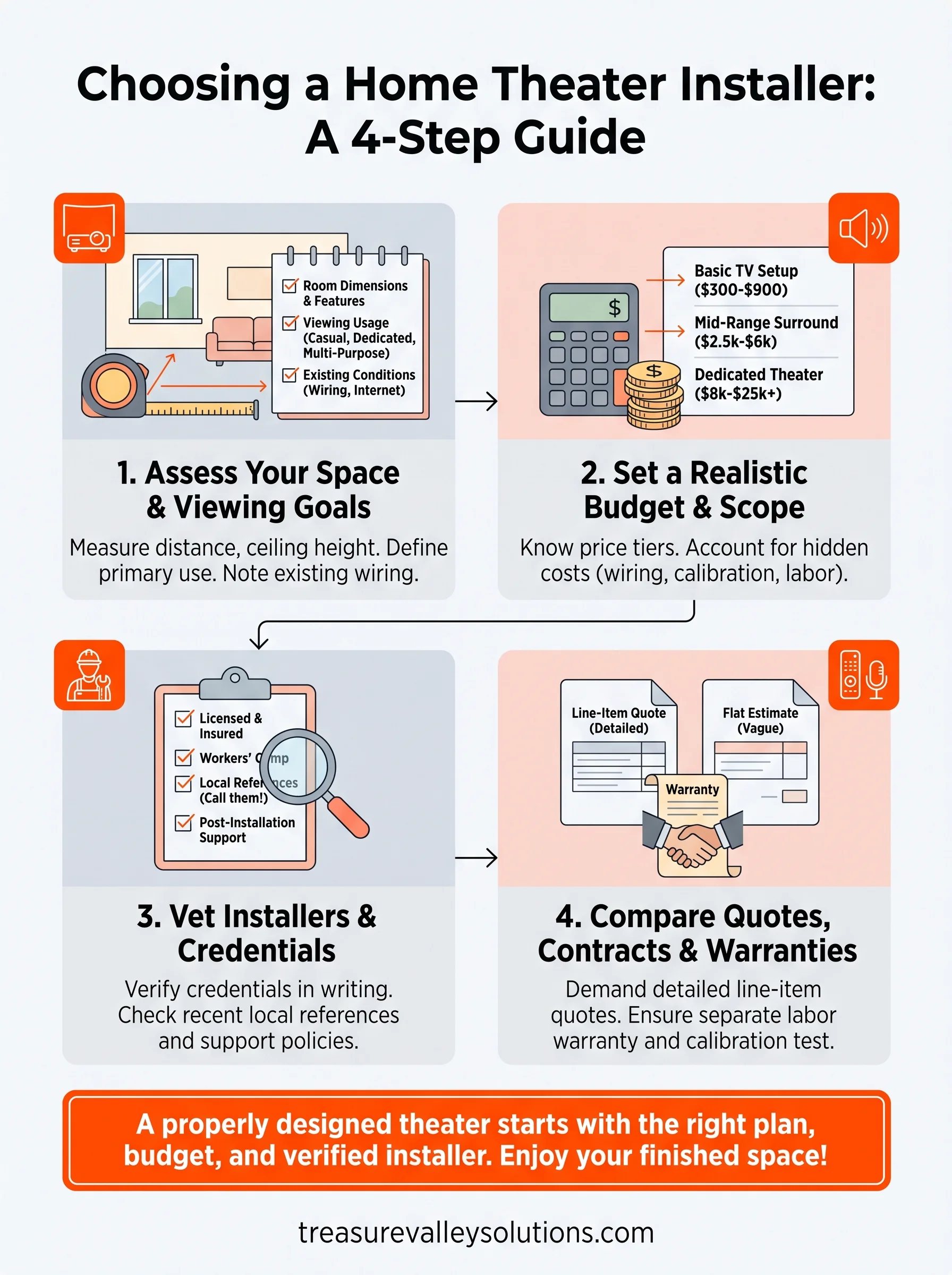
Step 1. Assess your space and viewing goals
Start by walking your room with a tape measure, not a wish list. Room shape, ceiling height, and window placement all determine what equipment will actually work well, so this step comes before you talk to a single installer. A dedicated media room with no windows behaves completely differently than an open-concept living room with afternoon sun pouring in, and the wrong assumption here leads to a projector that washes out or speakers fighting an echo, which is why it pays to weigh a projector versus a TV before you buy.
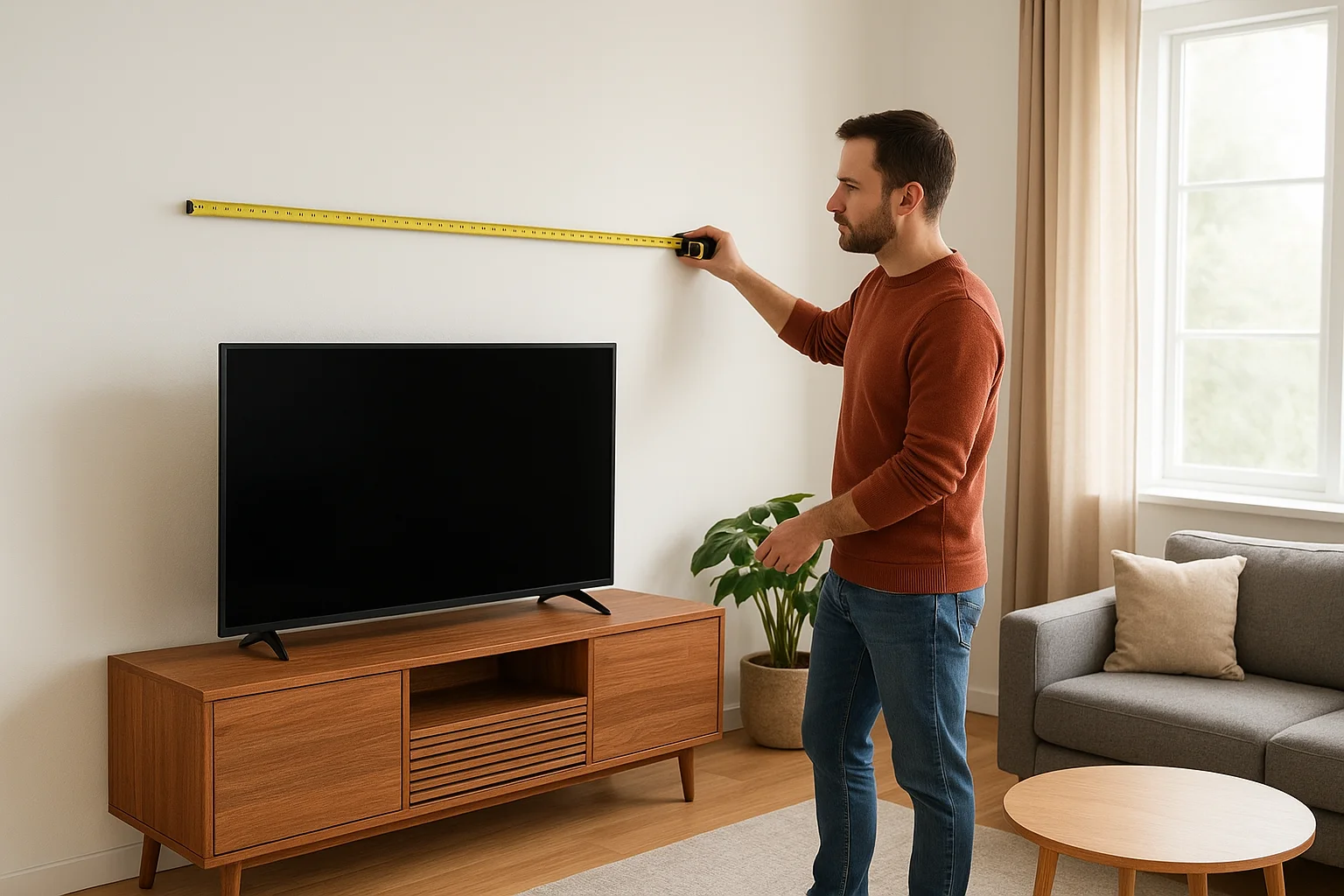
Get the room assessment right, and every equipment decision after it gets easier.
Measure before you dream
Write down your seating distance from the screen wall, ceiling height, and any structural obstacles like beams, vents, or existing outlets. These numbers determine screen size, projector throw distance, and speaker placement long before anyone recommends a brand.
Match the room to the goal
Be honest about how you'll actually use the space:
- Casual family viewing: prioritize a large TV, clean cable management, and simple voice or app control.
- Dedicated theater room: light control, acoustic treatment, and a true surround sound speaker layout matter more than screen size alone.
- Multi-purpose room: retractable screens, hidden in-ceiling speakers installed by a pro, and lighting scenes that shift between movie night and everyday use.
Note existing conditions
Check your current wiring, electrical panel capacity, and internet drop location. An installer needs this information to scope the job accurately, and skipping it is the fastest way to get a quote that changes once work begins. Once you've documented your space honestly, you're ready to attach real numbers to a budget.
Step 2. Set a realistic budget and scope
Once your room measurements are in hand, put a number on the project before you start calling around. A realistic budget protects you from scope creep once an installer is standing in your living room pointing at outlets that need moving. Treasure Valley homeowners searching for affordable home theater setup options still need to budget for what low voltage wiring costs in Treasure Valley projects, mounting hardware, and calibration time, not just the visible equipment.

Know the price tiers
Costs shift dramatically based on room complexity and finish level. Use this as a starting point when comparing quotes from local companies:
| Project Type | Typical Range | What's Included |
|---|---|---|
| TV mount and basic setup | $300 - $900 | Wall mount, cable concealment, remote setup |
| Mid-range surround system | $2,500 - $6,000 | Receiver, 5.1 speakers, in-wall wiring, basic calibration |
| Dedicated theater room | $8,000 - $25,000+ | Projector, acoustic treatment, seating wiring, full calibration |
The cheapest quote almost never covers the wiring and calibration work that makes a theater sound right.
Account for hidden costs
Vague quotes usually skip line items that surface later as change orders. Before you sign anything, ask the installer to itemize these separately:
- Electrical panel upgrades if your circuit can't handle new equipment
- Acoustic treatment like panels or bass traps for hard-surfaced rooms
- Furniture or cabinetry modifications for equipment racks
- Network upgrades if streaming devices need dedicated bandwidth
Getting these numbers on paper now means you're comparing apples to apples once actual bids start arriving from the installers you contact next.
Step 3. Vet local installers and check credentials
Now that you have a budget range, start calling companies and listen for specifics, not sales pitches, and it helps to see the best home theater installation services near you side by side first. A qualified installer should ask about your room before quoting a price, and they should answer credential questions without hesitation. This is the step where you separate a company built for the long haul from someone treating your project as a one-time job.
Ask about licensing and local experience
Request proof of licensing and insurance in writing, not just a verbal assurance. Ask how many home theater projects near me they've completed in your specific city, since a company that knows Meridian's typical home layouts or Boise's older housing stock will spot wiring issues faster than a crew unfamiliar with the area.
An installer who can't produce proof of insurance on request isn't one you want in your walls.
Check reviews and request references
Don't stop at star ratings. Call two or three references directly and ask pointed questions:
- Did the crew finish on the timeline they promised?
- Was the final invoice close to the original quote?
- Did they clean up the workspace and test every component before leaving?
- Have they returned calls for support since the install?
Confirm the scope of their service
Some companies subcontract wiring or calibration work to third parties, which adds risk if something goes wrong later. Companies like Treasure Valley Solutions handle design, installation, and ongoing programming support in-house, so you have one point of contact instead of chasing down separate vendors when a speaker drops out or a remote stops pairing. Confirming this now saves you a frustrating call six months from now.
Step 4. Compare quotes, contracts, and warranties
Once two or three bids land on your desk, resist the urge to pick based on the bottom-line number alone. A detailed quote should break out equipment, labor, wiring, and calibration as separate line items, not one lump sum. This is where your earlier research on home theater installation prices and estimates pays off, because you already know what fair pricing looks like for your room size and complexity, and you can spot a quote that's missing scope before work ever starts.
Line-item quotes beat flat estimates
Compare bids side by side and flag anything vague. Ask each installer to confirm in writing:
- Exact equipment brands and model numbers, not just categories like "receiver" or "speakers"
- Labor hours estimated for wiring, mounting, and calibration
- Who supplies the mounting hardware, brackets, and in-wall wiring materials
- A written timeline with a start and completion date
A vague quote today becomes an expensive change order once the crew is already in your walls.
Read warranty terms before you sign
Equipment warranties from manufacturers cover defective parts, but they rarely cover installation errors like a poorly seated connector or a miscalibrated amplifier. Look for a labor warranty separate from the manufacturer's coverage, ideally 90 days or longer, that guarantees the installer returns to fix workmanship issues at no charge. Confirm whether the contract includes a walkthrough and calibration test before final payment, since that step catches problems while the crew is still on-site instead of after they've packed up their tools.
Signing a contract with these details spelled out protects you from surprise costs and gives you clear recourse if something needs fixing down the road.
Enjoying your finished home theater
A properly finished theater feels different the moment the lights dim and the first scene starts. Dialogue sits where it should, bass doesn't rattle the windows, and every remote or app does exactly what you expect without a second thought. That result comes from the groundwork you just walked through: measuring your room honestly, budgeting for wiring and calibration instead of just gear, and vetting an installer who answers credential questions without flinching.
Skip any of those steps and you end up with a rack of mismatched equipment that never quite sounds right. Take them seriously, and you get a home theater installation that holds up for years, not months, backed by a team that still picks up the phone when something needs adjusting.
If you're ready to see what a properly designed theater looks like in a Treasure Valley home, take a look at the theaters and AV systems we've finished for local homeowners before you request a quote.
Need Expert Help?
Ready to implement these solutions in your own home or business?
Our Services

Home theater design and installation planned around your room, viewing goals, and equipment scope.
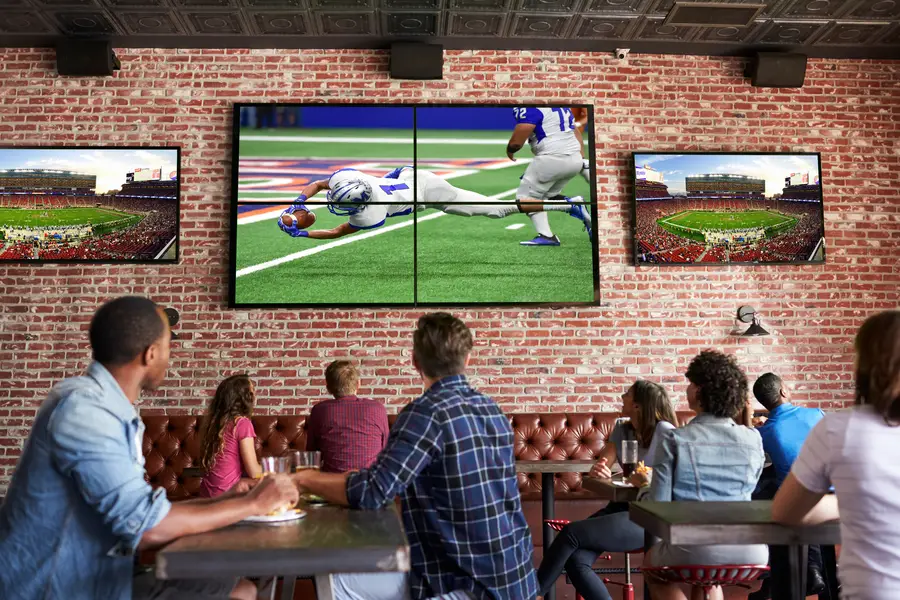
Expert TV Mounting Treasure Valley Homeowners & Businesses Trust

Explore whole-home audio, commercial sound, Sonos setup, and surround sound installation in the Treasure Valley.
Serving the Treasure Valley
Local installation in your city