 (208) 991-3502
 Meridian, ID


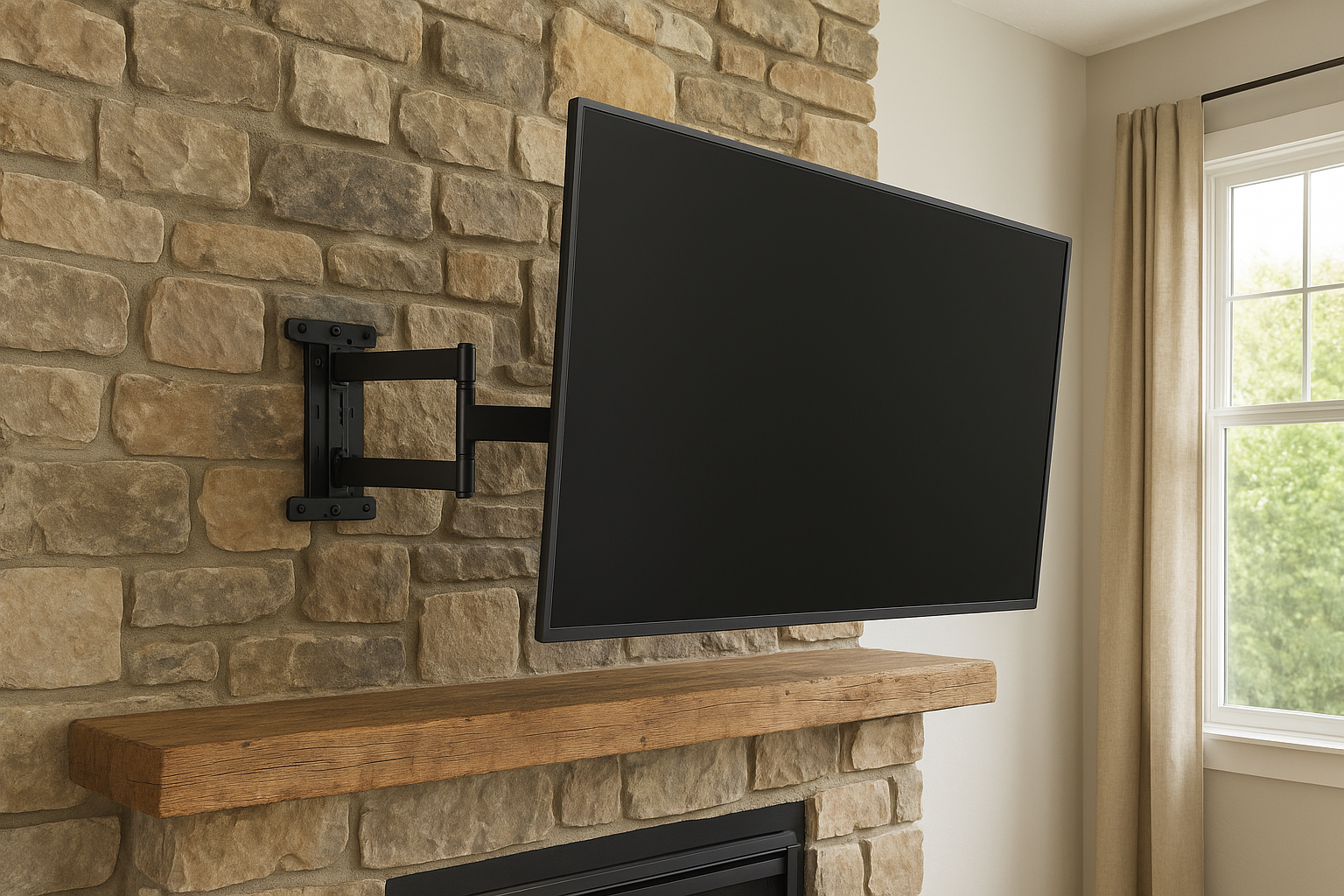

Stone is beautiful, but it is a tough surface for a television. The face is uneven, the mortar joints are shallow, and the heat from a working fireplace can shorten a TV's life. If you are shopping fo...
Stone is beautiful, but it is a tough surface for a television. The face is uneven, the mortar joints are shallow, and the heat from a working fireplace can shorten a TV's life. If you are shopping for a TV mount for stone fireplace installs, you need a mount that clears the texture, holds the weight, and sits at a comfortable height.
Here is the short answer. Choose a full-motion mount with a deep wall plate and long extension, and anchor it into solid masonry with sleeve or wedge anchors, not the drywall screws that ship in the box. Drill into the stone itself or a mortar joint, depending on the stone and the load. If you burn wood, keep the TV well above the firebox and check the heat at the screen with a thermometer.
Below, you will find 7 mounts that suit stone, with notes on weight rating, tilt, and swivel. After that come install tips on anchors, drilling, and viewing angle. We install these every week across the Treasure Valley, so the advice comes from real jobs, not spec sheets.
1. Professional installation from Treasure Valley Solutions
What it includes
Treasure Valley Solutions starts with a site visit, not a product pick. We check the stone and mortar for hollow spots, then choose a mount that fits your TV and viewing height. Our licensed, insured technicians handle the whole job, so you get a tested, clean installation in one visit. Every TV mounting project covers:
- Stone and mortar assessment
- Mount selection matched to TV weight and size
- Masonry drilling and anchoring into solid stone or mortar
- Hidden power and HDMI runs where the wall allows
- Leveling, testing, and a walkthrough
Best for which fireplaces
Rough ledgestone, river rock, and stacked stone are the hardest surfaces for a rock fireplace TV mount, and that is where a pro earns the fee. Deep texture keeps standard hardware from seating flat, and a bad anchor point can crack a stone face.
Wood-burning fireplaces, tall chimney stacks, and remodels where you want the wires hidden also suit this route. If you want a stone fireplace TV mount done once and done right, this is the safest choice.
Cost and heat considerations
Pricing is quoted per job, because stone type, TV size, and wire routing change the labor. We keep it transparent, as we have since 2014, so you see the number before work starts. Hardware is extra if you want a pull-down or motorized mount.
Heat is the bigger question. We measure the temperature at the proposed screen position during a real fire, then set the height or recommend a different mount if the wall runs hot.
Measure the heat where the screen will hang, not where you hope it will be fine.
Pros and cons
Here is the honest trade-off. You pay for expertise and labor, but you avoid the risk of damaged stone and a TV on the floor.
Pros
- Correct anchors for your specific stone
- Heat tested before the TV goes up
- Clean, concealed wiring
- Local support after the install
Cons
- Costs more than a DIY mount
- You need to schedule a visit
2. Pull-down mantel mount
What it includes
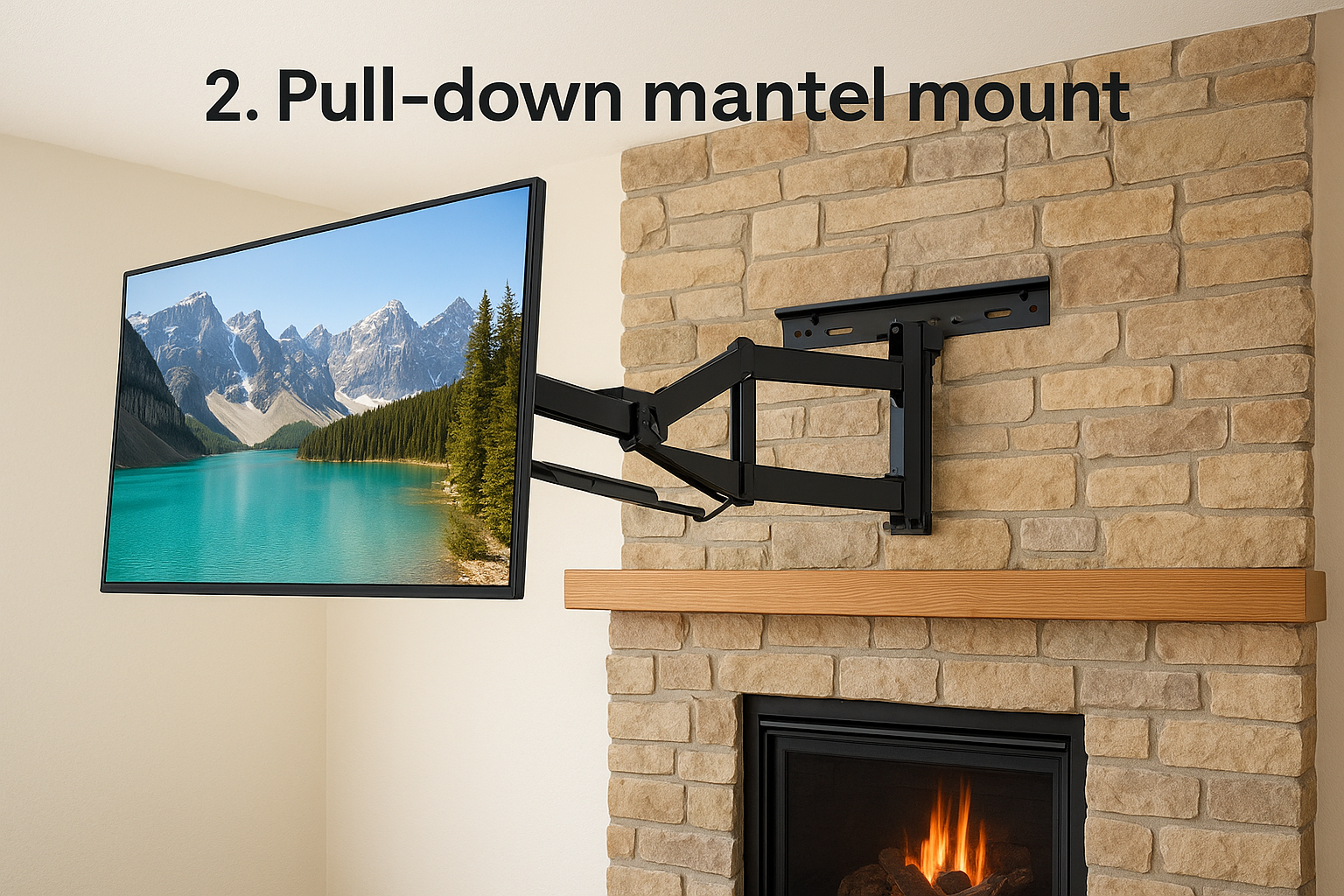
A pull-down mount is a steel arm assembly that parks the TV high above the mantel and lets you tug it down to eye level. It also tilts the screen forward as it drops. A typical kit has:
- Wall plate and parallel arms
- Handle or assist bar
- Counterbalance spring rated for a weight range
- Mounting hardware (swap the lag screws for masonry anchors)
Best for which fireplaces
This style suits tall stone fireplaces where the natural TV spot sits 65 inches or more off the floor. If you are working out how to mount a TV above a stone fireplace without neck strain, it solves the problem. It works best on flat-faced stacked stone, because the wall plate needs a fairly even surface to sit square.
Deep river rock or heavily textured ledgestone usually needs a spacer or a board behind the plate.
Cost and heat considerations
Expect to pay $150 to $500 for the mount alone, depending on weight rating. Installation and masonry anchors cost extra.
Because the TV rides high when stowed, it clears most rising heat. Pulled down, though, the screen hangs right over the firebox opening. Check the temperature at both positions before you trust the setup.
Pull the TV down only when the fireplace is cold.
Pros and cons
Overall, you get a comfortable viewing angle from a high stone wall, but the arms need real clearance and a solid anchor point.
Pros
- Fixes the too-high TV problem
- Stows flat when you are not using it
- Works with a stone fireplace TV mount height of 6 feet or more
Cons
- Bulkier than a fixed mount
- Needs enough room below to pull down
- Spring tension must match your TV's weight
3. Motorized pull-down fireplace mount
What it includes
This is the pull-down concept with a motor. An electric arm lowers and raises the TV from a remote or wall switch, so you never tug on a heavy screen. Some models tie into a smart home system. A typical kit has:
- Wall plate and motorized arm assembly
- Remote and control box
- Power supply and cable
- Mounting hardware (use sleeve anchors for stone)
Best for which fireplaces
Tall, flat-faced stone fireplaces suit this mount best, especially when the TV is large or a manual pull is awkward for the people using it. It is a good fit for a TV mount on stone fireplace walls in great rooms with high ceilings. Heavily textured river rock still needs a board or spacer behind the plate, and you need a power outlet within reach of the arm.
Cost and heat considerations
Budget $800 to $2,500 for the mount, plus anchors and labor. A concealed outlet may call for a licensed electrician.
Heat matters more here, because motors and control boards dislike it. Keep the stowed position well above the firebox, and test the wall temperature during a real fire.
A motor makes a high TV easy to reach, but it does not make a hot wall safe.
Pros and cons
The payoff is effortless adjustment from the couch. The trade-off is more parts that can fail, plus a higher price.
Pros
- One-touch lowering and raising
- Handles heavier TVs with less strain
- Stows flat above the mantel
Cons
- Most expensive mount on this list
- Needs power at the wall
- Motor repairs are harder than a spring swap
4. Full-motion articulating mount
What it includes
A full-motion mount uses a jointed extension arm that pulls the TV off the wall, swivels it, and tilts it. It is the most flexible option when the TV sits off-center or high. A typical kit has:
- Deep wall plate or dual-stud plate
- Articulating arm with swivel and tilt
- Cable management channel
- Masonry anchors (buy these separately for stone)
Best for which fireplaces
Corner fireplaces and wide stone surrounds suit this TV mount for stone fireplace walls best, since you can angle the screen toward the seating area. If you are figuring out how to mount a TV to stone fireplace faces that are not flat, the long arm helps. The plate can sit on the best patch of stone while the TV floats clear of the texture.
Skip it for very heavy TVs on weak mortar. Arm leverage multiplies the load on the top anchors.
Cost and heat considerations
Plan on $80 to $350 for the mount, with anchors and labor on top. Weight ratings of 80 to 150 pounds cover most TVs.
Heat is manageable if you keep the TV flat to the wall while the fire burns. Extending the arm over the firebox puts the screen in the hottest air, so fold it in and test the temperature first.
Fold the arm flat against the stone whenever the fire is lit.
Pros and cons
Overall, you get maximum adjustability, but you accept more stress on your anchors and a thicker profile.
Pros
- Swivels toward any seat
- Tilts down from a high spot
- Easy access to ports
Cons
- Sits farther from the wall when folded
- Needs strong anchors at the top
- Not ideal for the heaviest screens
5. Heavy-duty tilting mount
What it includes
A heavy-duty tilting mount holds the TV close to the wall and lets you angle it down 10 to 15 degrees. With no extension arm, the load stays near the stone, which is easier on your anchors. A typical kit has:
- Thick steel wall plate with wide anchor slots
- Tilt bracket with a locking handle
- Safety screws for the TV
- Mounting hardware (swap it for masonry anchors)
Best for which fireplaces
Big, heavy TVs on flat-faced stacked stone suit this mount best. If you are working out how to mount TV above stone fireplace walls with a moderate height, the tilt fixes glare and neck angle.
Skip it on deep river rock. With no arm to clear the texture, the plate needs an even surface or a board behind it.
Cost and heat considerations
Expect to pay $40 to $200 for the mount, with ratings from 100 to 200 pounds. Anchors and labor cost extra.
Heat deserves a close look. The screen sits just inches from the stone, so it absorbs warmth radiating from the wall. Mount it well above the mantel and test the temperature during a real fire.
A TV hung flat on hot stone has nowhere for the heat to go, so test before you commit.
Pros and cons
In short, this is the strongest and simplest choice for a heavy screen, but it gives up side-to-side adjustment.
Pros
- Handles the heaviest TVs on this list
- Slim profile, low stress on anchors
- Fewer parts to fail
Cons
- No swivel for angled seating
- Needs fairly flat stone
- Ports are harder to reach
6. Multi-point fixed mount
What it includes
A multi-point fixed mount is a flat steel plate with many anchor holes that holds the TV about an inch from the wall. It has no arm and no tilt, so the load spreads across several anchors instead of two or three. A typical kit has:
- Wide wall plate with 6 or more anchor slots
- TV brackets with a locking tab
- Built-in bubble level
- Mounting hardware (use masonry anchors on stone)
Best for which fireplaces
Smooth stacked stone and stone veneer suit this TV mount for stone fireplace walls best, because the wide plate needs a mostly flat surface to sit square. Gas and electric fireplaces that put out little heat are the natural match.
If you want a sleek look and the TV already lands at a good eye height, this is a clean, low-profile choice. Deep river rock still needs a board behind the plate.
Cost and heat considerations
Budget $30 to $150 for the mount, with ratings from 100 to 175 pounds. Anchors and labor cost extra. The wide plate lets you pick anchor points in solid stone or mortar wherever they land best.
Heat is the weak spot. The TV sits tight to the wall, so warmth gets trapped behind the screen. Keep it well above the mantel and test the temperature during a real wood fire.
A fixed mount spreads the weight well, but it gives heat no room to escape.
Pros and cons
Put simply, this is the cheapest and most secure hold on the list, but you get zero adjustment once it is hung.
Pros
- Spreads weight over many anchors
- Lowest price and fewest moving parts
- Slimmest look on the wall
Cons
- No tilt or swivel
- Needs fairly flat stone
- Traps heat and blocks port access
7. Plywood or mounting board adapter setup
What it includes
This is not a mount. It is a foundation for one. You anchor a 3/4-inch board to the stone, then bolt any standard mount to the board. It lets an inexpensive mount work on rough stone. A typical setup has:
- 3/4-inch plywood or hardwood board, cut wider than the mount
- Masonry sleeve anchors set into solid stone or mortar
- Shims and washers to level the board
- Lag screws to attach the mount to the board
Best for which fireplaces
Deep river rock and rough ledgestone are where this shines, because the board bridges the gaps and gives the mount a flat face. If you are sorting out how to mount a TV to a stone fireplace with heavy texture, this is the cleanest fix. Stain or paint the board to match, or trim the edges so it disappears. Skip it on thin veneer that cannot hold anchors.
Cost and heat considerations
Budget $30 to $100 for the board, anchors, and shims, on top of the mount itself. Labor is extra, and a pro can set the anchors in under an hour.
Wood burns, so heat needs a plan. Use fire-retardant-treated plywood, keep it well above the firebox, and check the temperature at the screen during a real fire.
Wood behind a TV is fine on a cool wall and a risk on a hot one.
Pros and cons
Ultimately, you get a flat, forgiving surface for almost any mount, but you add a layer to the wall and one more thing to plan around heat.
Pros
- Solves uneven stone cheaply
- Works with any mount style
- Lets you hit studs-like strength anywhere you anchor
Cons
- Adds depth and a visible board
- Wood is combustible near a hot firebox
- Poor anchors still fail, so the stone must be solid
How to install a TV on uneven stone safely
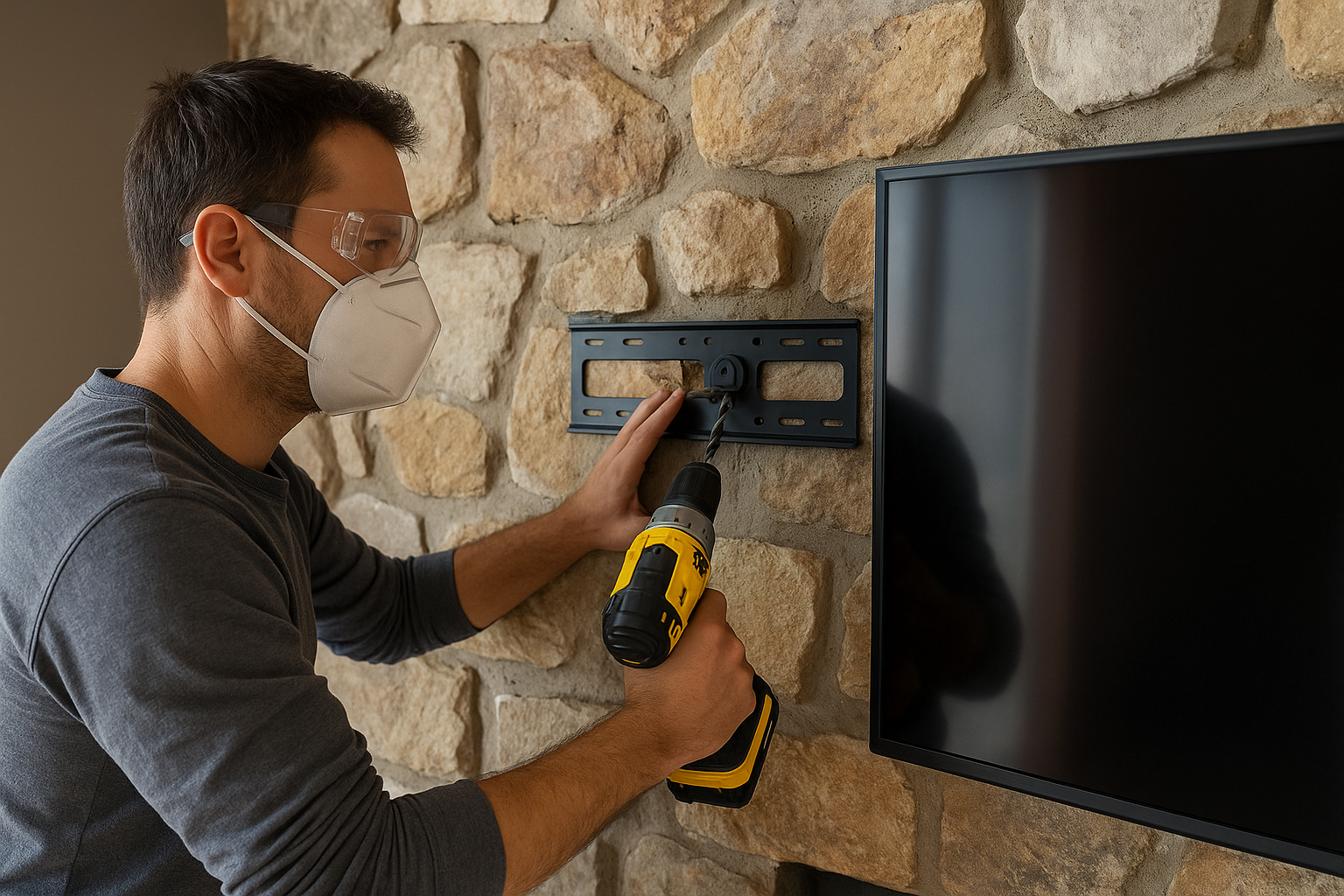
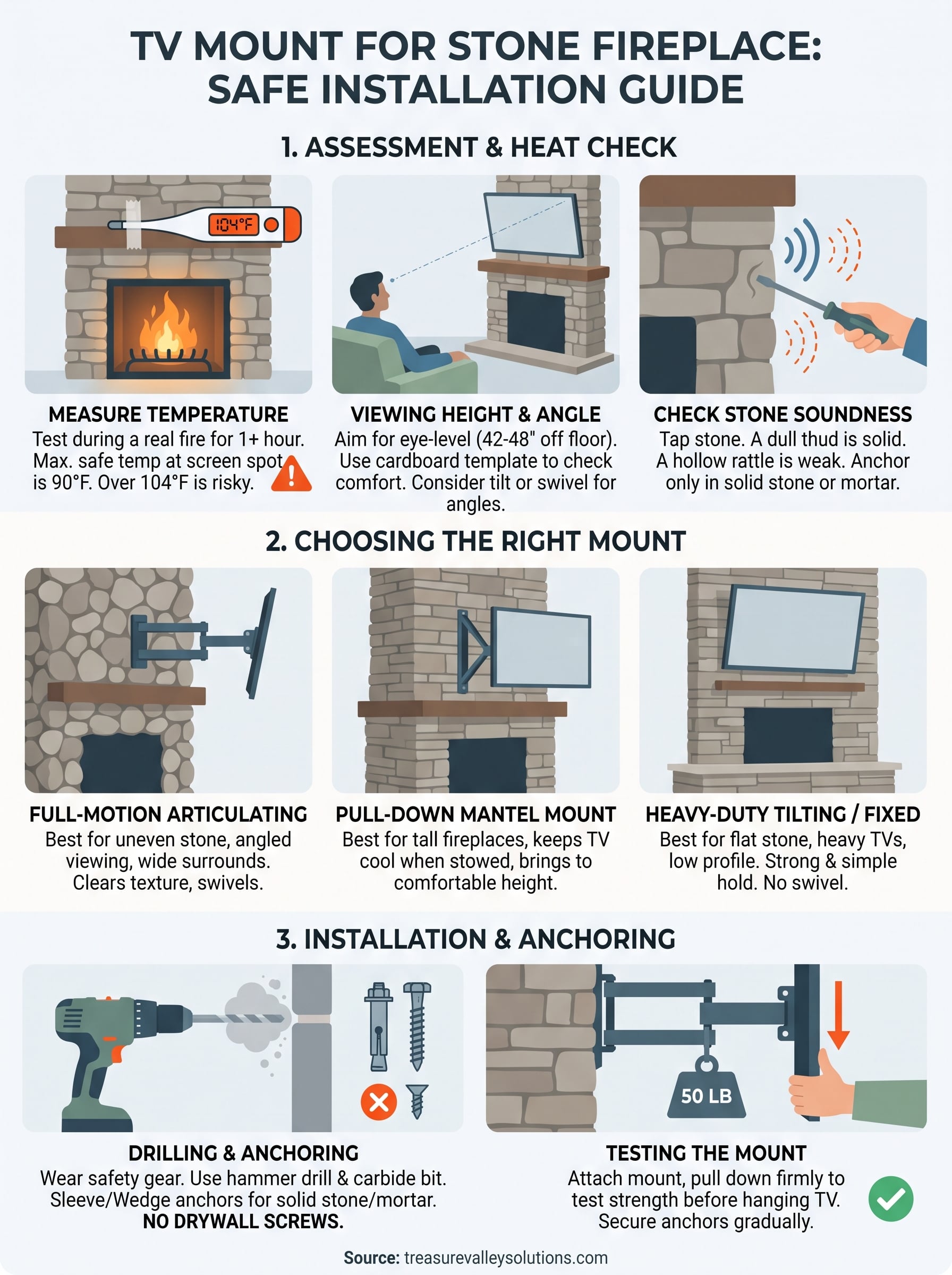
Stone fails in two ways. The face cracks, or the anchor spins in hollow fill behind it. Slow, careful steps prevent both, and this is the order we follow on every TV mount on stone fireplace job. Wear eye protection and a dust mask, because drilling stone throws fine silica dust.
Step-by-step process
- Sound the stone. Tap with a screwdriver handle. A dull thud or a hollow rattle means skip that spot.
- Mark your holes. Hold the plate or board in place, level it, and mark only solid stone or mortar.
- Drill. Use a hammer drill with a carbide masonry bit sized to your anchor. Run it at low speed and clear dust often.
- Set the anchors. Tap sleeve or wedge anchors in until the washers sit flush, then tighten gradually.
- Hang and test. Attach the mount, load it, and pull down firmly before the TV goes on.
Anchor only into solid stone or mortar, never into hollow fill or loose veneer.
Choosing anchors
Mortar joints drill easier and crack less, but they are softer than stone. Put the heaviest loads into stone and use mortar only when the stone is too hard or too thin. The box hardware is built for wood studs, so buy masonry anchors separately.
| Anchor | Best use |
|---|---|
| Sleeve anchor | Most stone and mortar, medium to heavy TVs |
| Wedge anchor | Dense, solid stone, heaviest loads |
| Masonry screw | Light TVs in sound mortar only |
If the stone sounds hollow everywhere, stop and call a pro. Guessing on a 75-pound screen is not worth it.
Heat, height and viewing angle checks
Heat check
Before you buy any TV mount for stone fireplace walls, measure the heat. Most TV manuals list a maximum operating temperature near 104°F. Tape a digital thermometer to the stone where the screen will hang, burn a normal fire for an hour, and read it.
| Reading at screen spot | What to do |
|---|---|
| Under 90°F | Go ahead and mount |
| 90 to 104°F | Raise the TV or use a pull-down mount |
| Over 104°F | Pick a different spot |
A TV that passed a thermometer test will outlast one that was only assumed safe.
Height check
Aim for the center of the screen at seated eye level, usually 42 to 48 inches off the floor. Above a mantel that is rarely possible, so expect to hang higher and tilt the screen down 10 to 15 degrees.
Test it before you drill. Cut a cardboard template the size of your TV, tape it to the stone, and sit where you normally watch. If your chin lifts, lower the position or switch to a pull-down mount.
Viewing angle check
Seating that sits off to one side calls for a swivel. Check the glare from windows and lamps at different times of day, since a glossy screen on pale stone reflects more than you expect.
Walk to every seat and look at the cardboard template. If the edges look skewed from your main seats, choose a full-motion arm over a fixed plate. Settle this now, because moving anchor holes in stone leaves scars.
Choosing the right setup for your fireplace
The right TV mount for stone fireplace walls depends on three things: how rough the stone is, how hot the wall gets, and where you sit. Flat stacked stone suits a tilting or fixed mount. Deep river rock calls for a board or a full-motion arm. A tall hearth points to a pull-down.
Whatever you pick, anchor into solid stone or mortar and test the heat with a thermometer before you drill. Those two habits prevent nearly every failure we see on stone, and they cost almost nothing.
If you would rather not guess, request a site visit from our Meridian team. We will check your stone, measure the heat at the screen position, and hang the TV so it stays put and looks right.