 (208) 991-3502
 Meridian, ID




Starting a security camera installation business looks simple from the outside: buy some cameras, learn to run cable, find customers. Run one for even a year and you'll find out fast that the real wor...
Starting a security camera installation business looks simple from the outside: buy some cameras, learn to run cable, find customers. Run one for even a year and you'll find out fast that the real work is in licensing, liability, and knowing which systems actually hold up in the field. Most people who try this without a plan burn through their first year of savings before landing a steady client base.
This guide walks you through what it actually takes, from business licensing and insurance requirements to choosing the right equipment lines and pricing your installs so you're not working for free. You'll get a realistic breakdown of startup costs, the certifications worth pursuing, and how to land your first commercial and residential contracts without underbidding yourself into the ground.
We've been designing, installing, and supporting security and surveillance systems at Treasure Valley Solutions since 2014, and we've trained plenty of technicians who went on to run their own crews. What follows comes from years of field experience, not theory, so you can skip the expensive mistakes and build a business that clients actually trust with their safety.
What it takes to launch a security camera installation business
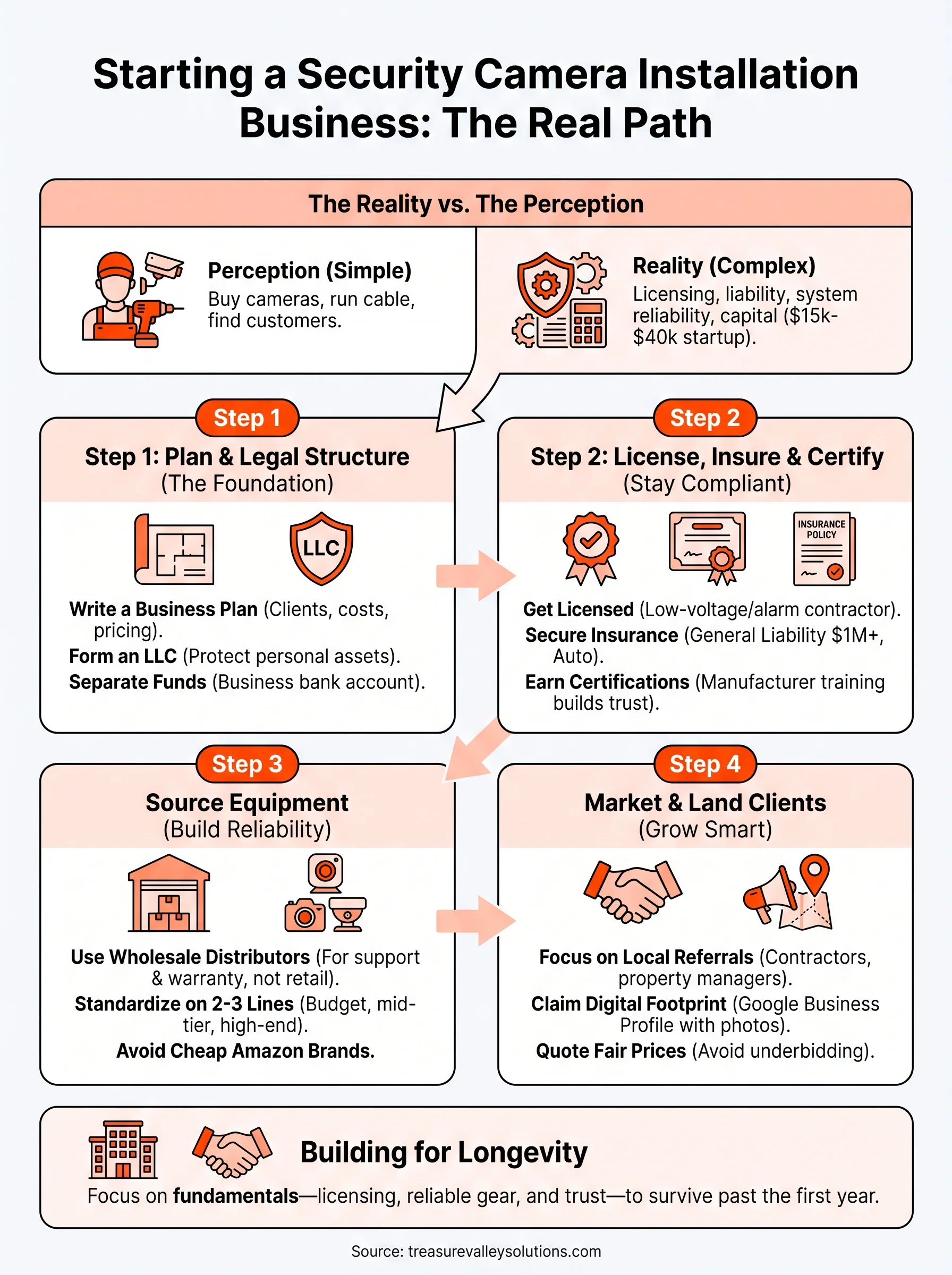
Before you buy a single camera, understand what separates a hobbyist with a drill from a real security camera installation company. You need a mix of technical skill, business fundamentals, and enough capital to survive the slow first six months. Most new owners underestimate the money side. Between tools, a work vehicle, insurance, and initial inventory, plan on $15,000 to $40,000 before you install your first system for a paying client.
The skills that actually matter
Skilled cabling and camera placement only get you halfway there. You also need to read network diagrams, understand how structured cabling forms the backbone of a building, configure NVRs and cloud storage, and troubleshoot Wi-Fi interference in a warehouse or a 100-year-old house with plaster walls. Clients don't hire you for the drill work, they hire you because their footage needs to actually be there when something goes wrong.
A camera system that looks installed but doesn't record reliably is worse than no camera at all.
Startup costs at a glance
| Cost category | Typical range |
|---|---|
| Business licensing and permits | $200 - $800 |
| General liability insurance | $500 - $1,500/year |
| Tools and ladders | $2,000 - $5,000 |
| Work vehicle (used van/truck) | $8,000 - $20,000 |
| Starter equipment inventory | $3,000 - $10,000 |
| Website and basic marketing | $500 - $2,000 |

These numbers shift depending on your city and whether you're doing residential installs priced against typical surveillance camera installation pricing or chasing bigger commercial contracts. A single-camera home job costs far less to gear up for than a 16-camera retail buildout with a dedicated NVR closet, which is why what businesses pay for commercial camera systems looks nothing like a residential quote.
Anyone starting a security camera business also needs a plan for slow months. Cash flow gaps between jobs sink more startups than bad installs do. Line up a business line of credit or keep three months of operating expenses in reserve before you quit your day job.
Step 1. Write a business plan and choose a legal structure
Getting your first customer means nothing if the business behind it collapses under its own paperwork. A tight business plan forces you to answer the questions that separate a side hustle from a real security camera installation company: who's your target client, what's your average ticket size, and how many installs do you need monthly to cover overhead.
Pick a structure that protects your assets
Most installers start as an LLC rather than a sole proprietorship. The LLC keeps a lawsuit over a botched wiring job or a break-in your system missed from touching your personal savings and house.
Your legal structure is the one decision you can't undo cheaply after year one.
What your plan needs to cover
Skip the 40-page investor deck. Build a working document instead:
- Service area and target clients (residential, commercial, or both)
- Startup and monthly operating costs
- Pricing per camera and per system tier
- Break-even point in installs per month
- Growth path toward hiring your first technician
Register your LLC with your state, get an EIN from the IRS, and open a dedicated business bank account before you take a single deposit. Mixing personal and business funds is the fastest way to lose your liability protection when you need it most.
Step 2. Get licensed, insured, and certified
Most states require a low-voltage contractor license or an alarm/security systems license before you can legally run cable and mount cameras for pay, so it helps to know exactly what low voltage wiring covers in homes and businesses. Requirements vary wildly. New York, for example, often requires a state security guard/alarm installer license through the Department of State, while other states leave licensing to the city or county. Call your local licensing board before you print business cards, not after.
Insurance isn't optional
General liability coverage protects you when a ladder scratches a client's hardwood floor or a camera falls off a mount and breaks a window. Commercial clients will ask for a certificate of insurance before they even let you quote the job, so get this in place early.
- General liability: $1M per occurrence minimum
- Workers' compensation once you hire your first technician
- Commercial auto coverage for your work vehicle
- Errors and omissions coverage for larger commercial contracts
No certificate of insurance means no commercial contract, full stop.
Certifications that build trust
Manufacturer certifications from brands like Axis, Hikvision, or Verkada aren't legally required, but they signal real technical training to skeptical clients. A BICSI cabling certification helps too, especially when bidding against unlicensed competitors on price alone.
Step 3. Source equipment and build supplier relationships
Your equipment choices make or break your reputation faster than anything else in this business. Buying whatever's cheapest on Amazon works fine for a hobbyist, but a security camera installation company needs distributor relationships that get you real support when a camera fails at 2am on a client's site.
Go through distributors, not retail
Open accounts with wholesale security distributors like ADI or Anixter instead of buying retail. Distributors give you contractor pricing, next-day shipping on replacement units, and someone to call when a firmware update bricks a whole camera line. Retail purchases also skip the warranty support commercial clients expect.
Standardize on two or three product lines
Don't stock ten camera brands. Pick two or three lines that cover different budgets and stick with them:
- A budget IP camera line for basic residential jobs, drawn from the wired and wireless camera packages homeowners actually buy
- A mid-tier line with strong NVR integration for small commercial work
- A high-end line (Axis or similar) for enterprise clients who need analytics
Fewer product lines mean faster troubleshooting and fewer surprises on install day.
This approach also speeds up training if you eventually hire technicians for your security camera installation business, since they only need to master a handful of interfaces instead of a shelf full of unfamiliar hardware.
Step 4. Market your services and land your first clients
Winning your first ten jobs takes a different playbook than winning your hundredth. Nobody searching "security camera installer near me" has heard of you yet, so it pays to understand how clients pick an installation company and borrow trust before you can build your own. Focus your early marketing budget on channels that convert strangers into paying customers fast, not brand awareness.
Build local trust before you build a brand
General contractors, property managers, and realtors refer work constantly to anyone who shows up on time and does clean cable runs. Buy lunch for three local property management companies before you spend a dollar on ads.
Referrals close faster than any ad campaign because trust already exists.
Claim your digital footprint
Set up a Google Business Profile with real install photos, then ask every satisfied client for a review within 48 hours of finishing the job. Reviews compound over time and outrank paid ads for local searches.
- Google Business Profile with before/after photos
- Simple website with pricing tiers and service area
- Local Facebook and Nextdoor groups for your target neighborhoods
- Direct outreach to builders and property managers
Underpricing to win your first residential installs feels tempting, but it trains clients to expect discount rates forever. Quote fair prices from day one, even when it costs you a job or two.
Building a business that lasts
Building a security camera installation business that survives past year one comes down to fundamentals: proper licensing, a couple of equipment lines you know cold, and a steady pipeline of referrals from people who trust your work. Skip the shortcuts on insurance or certifications, and skip the temptation to underbid your way into a full calendar. Those habits catch up with you fast once the warranty calls start coming in.
If you're weighing whether to build this from scratch or want to see what a mature security camera installation company actually looks like day to day, see the camera systems we've designed and installed for the install quality and system designs that keep clients calling back for years instead of shopping around after one bad experience. That standard is worth building toward from your very first job.