 (208) 991-3502
 Meridian, ID


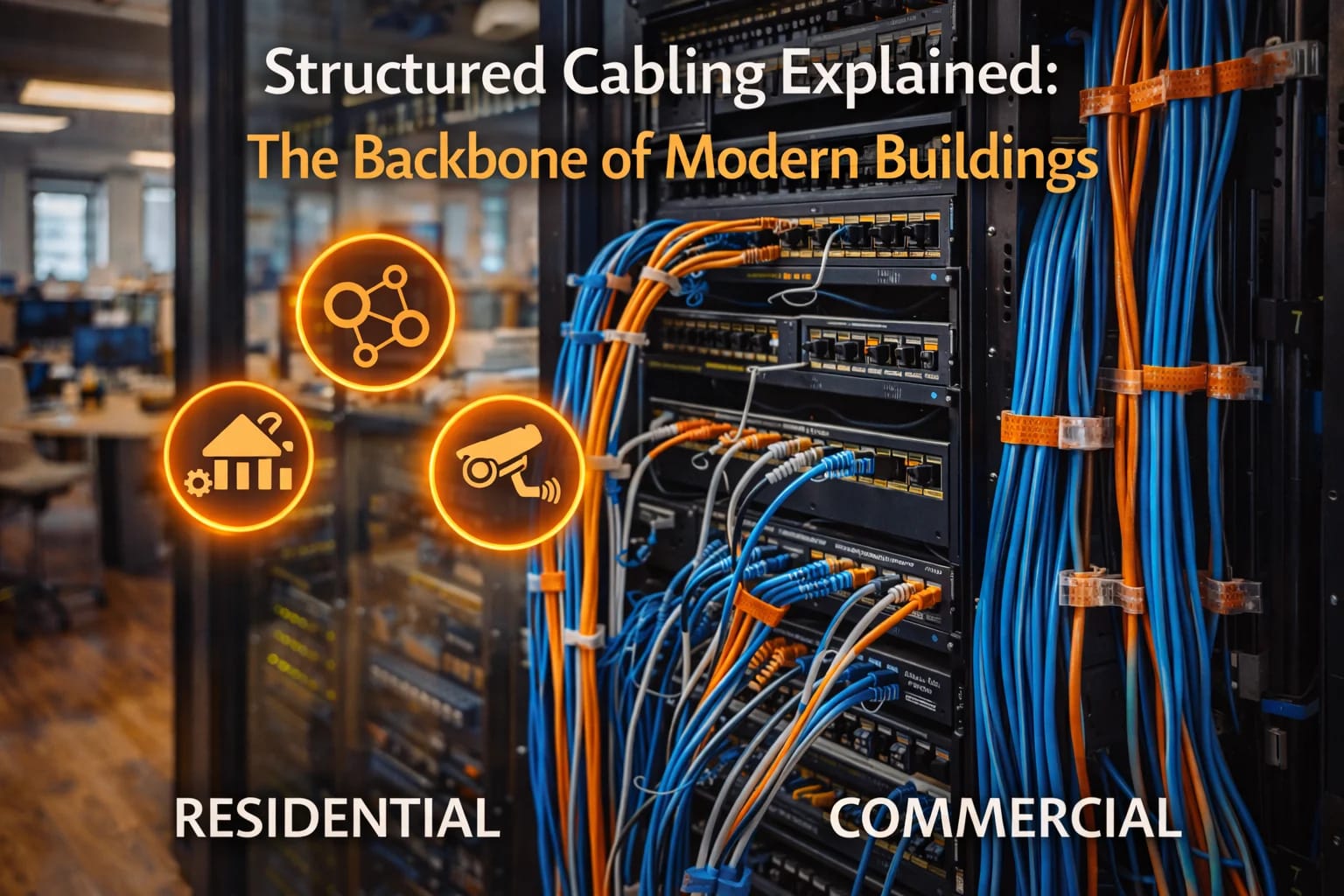

Structured cabling is the foundation that supports modern data, AV, and security systems. Learn what it is and why it matters long term.
Most technology problems don’t start with devices—they start with infrastructure. Slow networks, unreliable systems, and expensive upgrades are often symptoms of something deeper: poorly designed or disorganized cabling.
That’s where structured cabling comes in.
Across homes, offices, and commercial buildings in the Treasure Valley, structured cabling provides the foundation that allows technology systems to work reliably today and scale easily tomorrow. While it’s rarely visible once a project is complete, it quietly supports nearly every modern system behind the scenes.
This guide explains what structured cabling is, how it differs from ad-hoc wiring, and why it’s considered the backbone of modern buildings.
What Structured Cabling Actually Means
Structured cabling is a standardized approach to designing and installing low voltage wiring.
Instead of running cables randomly from one device to another, structured cabling organizes all low voltage systems into a centralized, logical framework. Data, audio, video, and security cabling all follow defined pathways and terminate in organized locations.
The goal isn’t just neatness—it’s consistency, scalability, and reliability.
When cabling is structured properly, systems are easier to manage, troubleshoot, and expand without disrupting the building.
Why Structured Cabling Exists
Before structured cabling became common, buildings were often wired on an as-needed basis. Each new system meant new cables added wherever they fit.
Over time, this approach created:
Tangled wiring
Inconsistent performance
Limited upgrade options
Difficult troubleshooting
Structured cabling was developed to solve these problems by creating a repeatable, organized framework that supports multiple systems over the life of a building.
Instead of reacting to technology changes, structured cabling prepares for them.
How Structured Cabling Supports Modern Systems
Structured cabling isn’t limited to networking—it supports nearly every low voltage system in a building.
In practice, structured cabling may support:
Wired network connections
Wi-Fi access points
Security cameras and access control
Audio and video distribution
Smart building and automation systems
By centralizing and organizing these connections, structured cabling allows systems to work together without interference or confusion.
This is why many homeowners and businesses encounter structured cabling while exploring broader technology services through
👉 https://treasurevalleysolutions.com/services/
Structured Cabling in Residential Projects
While structured cabling is often associated with commercial buildings, it has become increasingly valuable in residential construction—especially in larger or more connected homes.
In homes, structured cabling supports:
Reliable whole-home internet
Home offices and remote work
Media and entertainment systems
Security and smart home technology
Instead of relying solely on wireless connections, structured cabling provides hardwired reliability where it matters most. It also keeps equipment organized and accessible rather than scattered throughout the home.
For homeowners planning long-term, structured cabling turns technology from a collection of gadgets into a cohesive system.
Structured Cabling in Commercial Buildings
In commercial environments, structured cabling is essential.
Offices, retail spaces, schools, and multi-tenant buildings rely on structured cabling to:
Support multiple users and devices
Maintain consistent network performance
Simplify maintenance and troubleshooting
Adapt to tenant changes and growth
Commercial structured cabling is typically designed with documentation, labeling, and scalability in mind. This allows future changes to happen quickly and with minimal disruption.
In many cases, structured cabling directly reduces long-term operational costs.
Why Organization and Documentation Matter
One of the defining features of structured cabling is documentation.
Every cable has a purpose. Every termination point is labeled. Pathways are documented so future work doesn’t involve guesswork.
This organization matters because:
Troubleshooting is faster
Changes are safer
Downtime is reduced
Future upgrades cost less
Without documentation, even well-installed cabling becomes difficult to manage over time.
Structured Cabling vs “Point-to-Point” Wiring
A helpful way to understand structured cabling is to compare it to point-to-point wiring.
Point-to-point wiring connects one device directly to another. It works—but only until systems grow or change.
Structured cabling, by contrast, connects systems through a centralized framework. Devices can be added, moved, or replaced without reworking the entire system.
This flexibility is what makes structured cabling future-proof.
When Structured Cabling Should Be Installed
Structured cabling is easiest and most cost-effective during:
New construction
Major remodels
Tenant improvement projects
However, it can also be added incrementally in existing buildings when planned carefully. Even partial structured cabling can dramatically improve reliability and organization compared to ad-hoc wiring.
This planning approach aligns with broader infrastructure strategies similar to those outlined within
👉 https://treasurevalleysolutions.com/solutions/homeowner-solutions/
and adapts them for both residential and commercial projects.
Frequently Asked Questions
Is structured cabling only for large buildings?
No. Homes and small businesses benefit greatly from structured cabling.
Does structured cabling replace wireless?
No. It supports wireless by providing reliable backhaul connections.
Is structured cabling expensive?
It’s most cost-effective when planned early, and it often saves money long term.
Can structured cabling be upgraded later?
Yes. That’s one of its biggest advantages.
Does professional installation matter?
Yes. Organization and documentation are critical to long-term value.
Why Structured Cabling Is Worth the Investment
Technology will continue to change, but buildings shouldn’t struggle to keep up.
Structured cabling creates a foundation that allows systems to evolve without constant disruption. It improves reliability, simplifies upgrades, and reduces long-term costs—all while staying mostly invisible once installed.
For homeowners and businesses in the Treasure Valley, structured cabling is less about today’s devices and more about tomorrow’s possibilities.
And that’s why it’s considered the backbone of modern buildings.
Need Expert Help?
Ready to implement these solutions in your own home or business?
Our Services
Future-proof fiber optic infrastructure.

High-definition surveillance for peace of mind.

Complete home automation and control.

Home theater design and installation planned around your room, viewing goals, and equipment scope.
Serving the Treasure Valley
Local installation in your city