 (208) 991-3502
 Meridian, ID




Build a useful low-voltage allowance from cable counts, routing, system boundaries, and a comparable written scope—not an unsupported per-home price.
A low-voltage allowance is only useful when it describes what the builder is buying. Two homes with similar floor areas can require different cable quantities, routes, equipment locations, and specialty systems. For a new home in Boise or the surrounding Treasure Valley, use a plan-based scope to request pricing rather than treating a broad online range as a bid.
This guide intentionally provides no price bands, per-drop rates, savings percentages, or builder discounts. Current approved commercial terms must be confirmed with TVS for the project. The package names used in our planning resources are illustrative frameworks, not approved fixed-price offerings.
Start with a cable and location schedule
List each planned outlet, its room and wall or ceiling location, the cable type, the number of home-run cables, and its central termination point. Define what a “drop” means in the bid: one cable, one faceplate, or a bundle of several cables. A TV location with two network cables and a coax cable is not equivalent to a single network outlet even if both are described informally as one location.
Separate base floor-plan locations from buyer-selected upgrades. Count proposed access points, cameras, speaker zones, touchscreens, and other endpoints separately. Distinguish cable-only preparation from installing the device. Include a revision identifier so all bidders price the same drawing and count schedule.
Layout and routing affect installation effort
Floor area alone does not describe routing. Multiple floors, detached structures, long wings, vaulted ceilings, masonry, inaccessible framing, and the location of the network cabinet can change routes and access. Ask bidders to state assumptions about cable paths, building access, work sequencing, and any unusually long routes. Do not specify cable lengths by guesswork: final routes must suit the selected system and applicable requirements.
Choose the central distribution location before the allowance is finalized. Consider service entry, cable access, working space, equipment cooling, and electrical power supplied by the responsible trade. A closet that looks convenient on a floor plan may not have adequate room or ventilation for the proposed equipment.
Compare rough-in-only with a complete installed system
A rough-in allowance may cover cable installation and identification while leaving termination, plates, testing, equipment, and final commissioning for a later phase. Another estimate may include those items. Neither estimate is comparable until the phase boundaries are explicit.
- Rough-in: approved cable locations, routes, cable types, support and protection requirements, labeling, and pre-drywall review as agreed.
- Trim and termination: connectors, faceplates, patch panels, cabinet work, and the testing actually specified.
- Equipment: switches, wireless access points, cameras, recorders, speakers, amplifiers, displays, controls, and compatible accessories.
- Commissioning and handoff: configuration, account ownership, system checks, user instruction, and documentation when included in the agreement.
A camera pre-wire allowance is not a camera system price. Speaker cable is not an installed audio zone. A network outlet does not include an internet subscription or guarantee wireless coverage. Keep these distinctions visible in both your estimate comparison and buyer upgrade sheet.
Specialty systems need their own assumptions
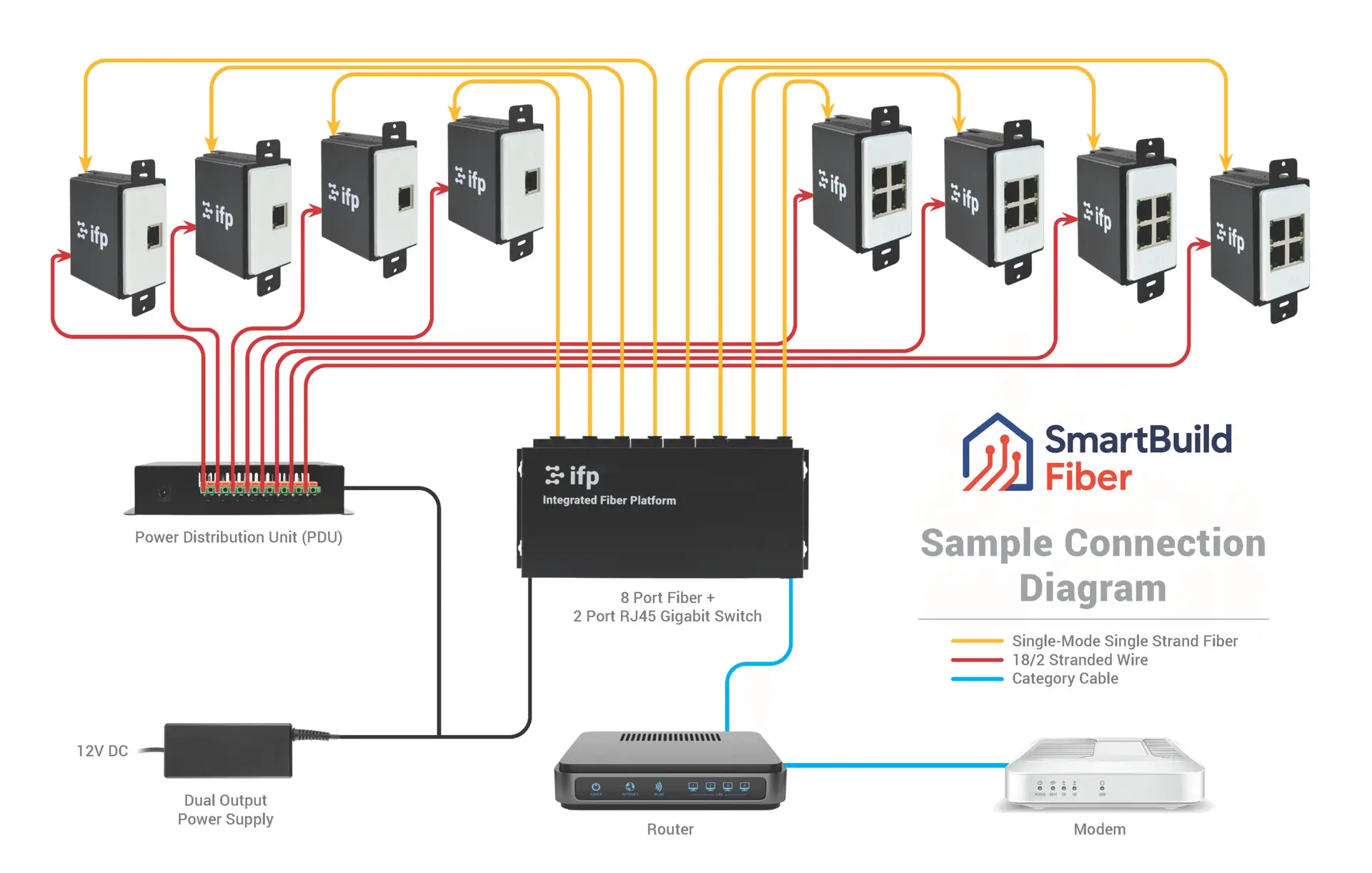
Fiber, advanced AV distribution, security, automation, motorized shades, and outdoor or detached-building connections may need different cable, power, grounding, environmental, or equipment provisions. Identify the intended system and request verification of compatibility before rough-in. Do not assume that every specialty system uses the same generic cable or that every requested installation is available.
Conduit installation is not TVS’s standard scope. Coordinate pathway requirements with the responsible trade. Do not carry conduit installation in a TVS allowance unless its availability and separate written scope have actually been confirmed. Similarly, identify responsibility for electrical circuits, structural work, drywall repair, painting, excavation, permits, and inspections rather than assuming they are included.
Write allowances and exclusions so they can be compared
For each allowance, record the plan revision, unit count, baseline cable/location schedule, phase included, equipment assumptions, and exclusions. For production homes, request a baseline by floor plan with a defined option schedule and a process for lot-specific differences. For custom homes, track room-level selections and unresolved design decisions individually.
Ask how labor, materials, mobilizations, and later visits are represented. Confirm what documentation and testing will be delivered; continuity checks and performance certification are not interchangeable. Dates in a bid request describe your requested schedule, not a guaranteed commitment by the subcontractor.
Handle changes before work proceeds
Moving a location, adding cables, changing equipment, or revising a cabinet after an accepted scope can affect routing, labor, materials, and sequencing. Record the requested change, its drawing revision, approval, cost effect, and timing effect before authorizing it. If walls have already closed, obtain a separate access and repair plan rather than assuming the rough-in allowance covers the change.
Send the current plans, cable schedule, expected rough-in window, bid deadline, and known exclusions with your request. If plans are not ready, use the no-plans-yet option and describe the decisions still outstanding. A project-specific written proposal is the basis for pricing, not this guide.
Turn the plan into a project-specific scope
For residential projects in Boise, Meridian, Eagle, and the Treasure Valley, start with our new-construction low-voltage contractor service. Compare illustrative pre-wire scope frameworks and review the rough-in scope and trade handoffs. These are planning resources, not fixed products, promised prices, or construction specifications.
Request a Bid — Submit Your Plans for one project or a repeat production scope. Partnership membership is not required. PDF plans are submitted privately for staff review; this does not book an appointment or automatically send a quote.
Published builder resources
More from the field
Need Expert Help?
Ready to implement these solutions in your own home or business?
Our Services
Future-proof fiber optic infrastructure.

Complete home automation and control.
Serving the Treasure Valley
Local installation in your city