 (208) 991-3502
 Meridian, ID



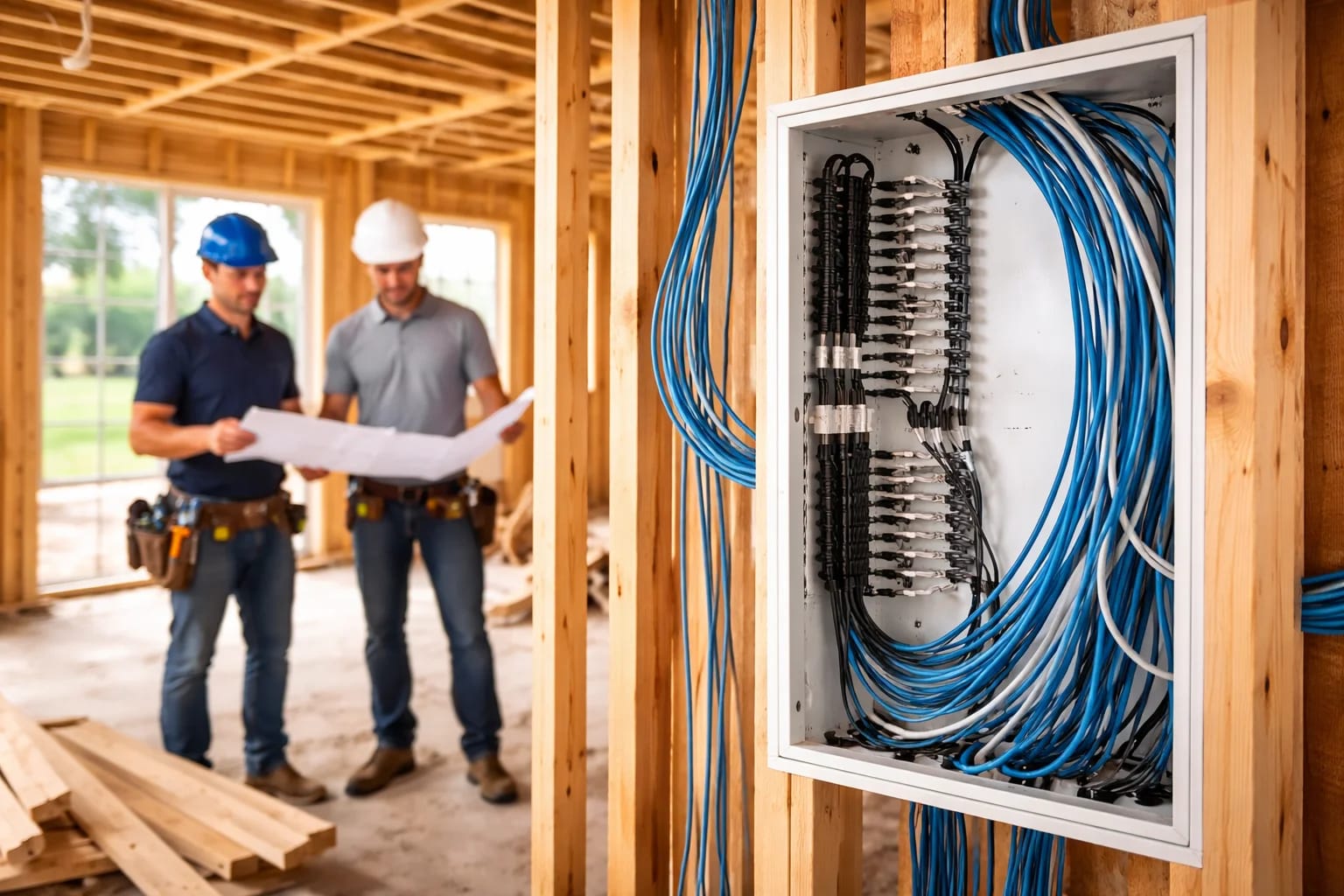

Smart home infrastructure isn’t a luxury—it’s a builder advantage. Learn why future-ready wiring and planning should be standard in every new home.
Introduction: Smart Homes Are No Longer an Upgrade—They’re an Expectation
Today’s buyers don’t ask if a home is “smart.”
They ask how well it’s built for technology.
Homebuyers stream everything, work remotely, expect reliable Wi-Fi, and assume their home will support security, audio, lighting control, and future automation. When those systems struggle—or can’t be added cleanly later—it reflects poorly on the build, not the technology.
That’s why forward-thinking builders are shifting their mindset. Smart home infrastructure isn’t a luxury add-on anymore. It’s part of responsible, future-ready construction.
In this article, we’ll break down why builders should include smart home infrastructure by default—and how doing so reduces callbacks, increases buyer satisfaction, and creates long-term value.
What “Smart Home Infrastructure” Really Means
Smart home infrastructure is not about installing gadgets.
It’s about preparing the home to support technology reliably for decades.
This typically includes:
Structured low-voltage wiring
Strategic Ethernet placement
Centralized network and AV locations
Conduit for future expansion
Power planning for smart devices
When this foundation is in place, homeowners can add or upgrade technology without tearing into walls or compromising aesthetics.
Buyer Expectations Have Changed—Permanently
Homebuyers today expect:
Strong, whole-home Wi-Fi
Clean TV and media installs
Security and camera readiness
Smart thermostat compatibility
Seamless work-from-home support
When these expectations aren’t met, buyers feel friction almost immediately after move-in.
That friction turns into:
Warranty calls
Negative reviews
Post-close frustration
Missed upsell opportunities
Infrastructure prevents these problems before they start.
Why Smart Home Infrastructure Protects Builders
1. Fewer Callbacks and Complaints
Many builder callbacks aren’t structural—they’re technological.
Common issues include:
Wi-Fi dead zones
No place to install access points
Limited Ethernet
TV locations without proper wiring
No room for networking equipment
When infrastructure is planned early, these issues disappear—or never occur at all.
2. Cleaner Installs, Better Final Walkthroughs
Nothing cheapens a beautiful home like:
Surface-mounted wires
Afterthought equipment racks
Visible power bricks
Patchwork drywall cuts
Smart home infrastructure allows:
Hidden wiring
Clean terminations
Organized panels
Professional-looking finishes
That visual quality matters during walkthroughs and listings.
3. Stronger Buyer Satisfaction (and Fewer Regrets)
Homebuyers rarely regret having too much infrastructure.
They often regret:
Not adding Ethernet
Skipping conduit
Relying only on Wi-Fi
Having no upgrade path
By including infrastructure by default, builders remove future regret—and become part of a smarter buying decision.
Infrastructure vs. Features: The Builder Advantage
Builders don’t need to sell technology packages to add value.
Infrastructure:
Doesn’t lock buyers into brands
Doesn’t go out of style
Works with any future system
Scales with buyer budgets
It’s neutral, flexible, and universally beneficial.
That makes it ideal for:
Production builders
Custom homes
Semi-custom developments
Multi-family projects
What Infrastructure Should Be Standard?
1. Ethernet Where It Actually Matters
Best-practice locations include:
Every TV location
Home offices
Ceiling Wi-Fi access point locations
Key smart device areas
Ethernet provides speed, stability, and future-proofing that wireless alone cannot.
2. Centralized Low-Voltage Panel or Rack
A dedicated technology location:
Keeps systems organized
Improves airflow
Simplifies service
Reduces homeowner confusion
This also gives builders a clean handoff point post-close.
3. Conduit for Future Technology
Conduit is inexpensive during construction—and invaluable later.
Ideal uses:
TV locations
Home theaters
Offices
Exterior runs
It allows upgrades without drywall damage.
4. Thoughtful Power Planning
Smart homes need power in places traditional homes didn’t.
This includes:
Network equipment locations
Camera and doorbell locations
Automated shade power
Smart lighting controls
Planning early prevents unsightly solutions later.
Why Relying on Wi-Fi Alone Is a Mistake
Wi-Fi is important—but it’s not infrastructure.
Homes built without wired support often struggle as:
Device counts increase
Streaming demands grow
Work-from-home becomes permanent
Security systems expand
Builders who rely solely on Wi-Fi create homes that age poorly in just a few years.
Infrastructure Makes Homes Easier to Sell
From a marketing standpoint, infrastructure:
Differentiates listings
Appeals to tech-aware buyers
Supports staging and demos
Signals quality and foresight
Even buyers who “aren’t techy” benefit immediately—especially with Wi-Fi performance.
How Smart Infrastructure Supports Aging in Place
Smart-ready homes aren’t just modern—they’re adaptable.
Infrastructure supports:
Future monitoring systems
Security and safety upgrades
Simplified controls
Remote access for caregivers
This makes homes livable for longer—and more attractive to multi-generational buyers.
Builder Partnerships: Why Integration Beats Afterthoughts
When builders partner with a technology integrator early:
Plans are coordinated
Trades stay aligned
Costs are controlled
Schedules stay intact
Late-stage tech installs are always more expensive—and more disruptive.
Common Builder Mistakes with Smart Infrastructure
Treating technology as a homeowner problem
Running too little low-voltage wiring
Skipping conduit entirely
No coordination with framing or electrical
Leaving no documentation for homeowners
Each mistake adds friction post-close.
Infrastructure Is a Long-Term Brand Decision
Builders known for:
Thoughtful design
Future-ready homes
Fewer post-close issues
Win more referrals, better reviews, and stronger reputations.
Smart home infrastructure isn’t about tech—it’s about build quality.
Final Thoughts: Build Once. Support Everything.
Homes should get better with time—not harder to upgrade.
By including smart home infrastructure by default, builders:
Reduce risk
Increase value
Improve buyer satisfaction
Future-proof their projects
It’s one of the simplest ways to deliver a better home—without complicating the build.
Published builder resources
More from the field
Need Expert Help?
Ready to implement these solutions in your own home or business?
Our Services

Home theater design and installation planned around your room, viewing goals, and equipment scope.
Expert TV Mounting Treasure Valley Homeowners & Businesses Trust

Explore whole-home audio, commercial sound, Sonos setup, and surround sound installation in the Treasure Valley.

Complete home automation and control.
Serving the Treasure Valley
Local installation in your city