 (208) 991-3502
 Meridian, ID



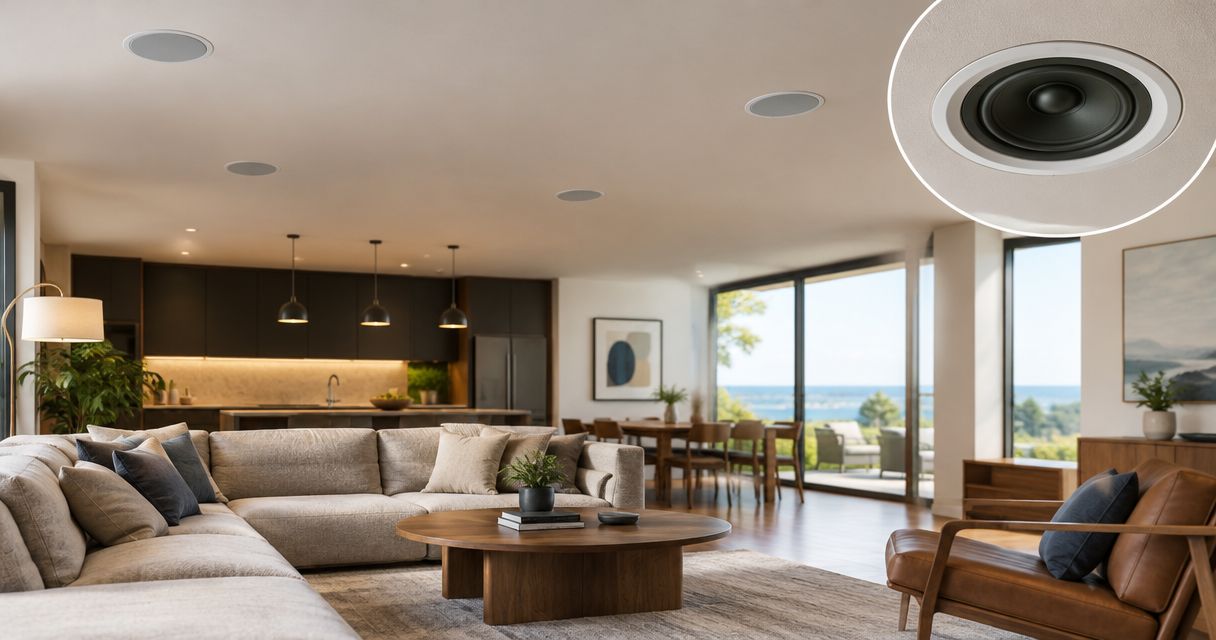

Find the best in-ceiling speakers for whole-home audio: Sonos for Sonos Amp, Polk for bathrooms, plus practical wiring and placement advice for your home.
Best overall for a Sonos-based home: Sonos In-Ceiling by Sonance. Best for focused listening: KEF Ci160QR; best for humid bathrooms: Polk Audio RC80i; best for a conventional large-driver installation: Yamaha NS-IC800—these are the best in-ceiling speakers for whole-home audio to shortlist in 2026, with amplifier compatibility and room layout deciding the final choice.
- Sonos In-Ceiling by Sonance tops the best in-ceiling speakers for whole-home audio shortlist for Sonos Amp installations.
- KEF Ci160QR suits focused listening; Polk Audio RC80i suits humid rooms, not direct water exposure.
- Yamaha NS-IC800 suits conventional installations with space for an 8-inch woofer design.
- Treasure Valley Solutions installs whole-home audio; choose zones, wiring routes, and amplifier compatibility before ordering speakers.
Why this matters
Ceiling speakers are only the visible part of whole-home audio. Your amplifier, cable routes, room boundaries, and controls determine whether the system works the way you expect.
Treasure Valley Solutions installs whole-home audio for homes and businesses throughout the Treasure Valley. Its installation services include audio/video and low-voltage wiring, so the speaker decision belongs alongside the installation plan—not ahead of it.
For a 2026 renovation, settle those details before closing ceilings. For an existing home, inspect access before choosing a speaker with a large cutout or deep enclosure.
What makes the best in-ceiling speakers for whole-home audio?
Judge each speaker against these criteria before comparing brands:
- Amplifier compatibility: Check impedance, supported speaker count, and wiring configuration against the amplifier manual. Passive ceiling speakers need amplification.
- Coverage: Match placement to where you actually listen. A dining table, kitchen island, and open living area need different layouts.
- Installation fit: Confirm cutout diameter, mounting depth, joist clearance, and access for cable pulling. Driver diameter is not cutout diameter.
- Room suitability: Humid bathrooms require an appropriate moisture-resistant design. That does not make a speaker suitable for direct spray.
- Control system: Decide which rooms share music and which need independent playback or volume control.
- Service access: Keep amplifiers accessible and label wiring. Hidden equipment still needs ventilation and maintenance.
Choose the audio zones first and the speaker model second. An expensive speaker cannot give two rooms independent music when both share the same amplifier output.
Best in-ceiling speakers at a glance
These 2026 picks serve different installation needs. The order is a decision guide, not a claim that one speaker wins every listening comparison.
| Speaker | Best for | Standout feature | Key limitation |
|---|---|---|---|
| Sonos In-Ceiling by Sonance | Sonos Amp installations | Architectural speaker designed for the Sonos ecosystem | Passive speaker; not a standalone wireless Sonos device |
| KEF Ci160QR | Focused listening areas | Uni-Q coaxial driver arrangement | Ceiling placement still affects the listening experience |
| Polk Audio RC80i | Humid bathrooms | Moisture-resistant construction with an 8-inch woofer | Not a waterproof shower speaker |
| Yamaha NS-IC800 | Conventional large-driver installations | 8-inch woofer with a swivel tweeter | Requires suitable ceiling clearance and cutout space |
1. Sonos In-Ceiling by Sonance: best for Sonos Amp homes
Sonos In-Ceiling by Sonance is a passive architectural speaker designed for use in a Sonos-based installation. Speaker cable connects it to an amplifier; the ceiling speaker itself does not replace a powered wireless speaker.
This is the clearest starting point when your whole-home audio plan already centers on Sonos Amp. It keeps the speaker selection aligned with the control system rather than treating them as separate purchases.
Sonos In-Ceiling by Sonance pros:
- Designed specifically for architectural audio within the Sonos ecosystem.
- Keeps speakers in the ceiling rather than on furniture or counters.
- Fits a system plan built around app-controlled listening zones.
Sonos In-Ceiling by Sonance cons:
- Requires an amplifier and speaker-wire runs.
- Does not create independent room control without the appropriate amplification and zone design.
- Is not the automatic choice if you already have a different amplifier system.
Best for: Homeowners planning Sonos Amp-based whole-home audio with concealed speaker wiring.
Before ordering, map each room to an amplifier output and decide which spaces should play together. An open kitchen and dining area might share a zone; a bedroom usually needs a separate decision about playback and volume.
Verdict: Buy for a planned Sonos Amp installation; skip an ecosystem change made solely to accommodate the speaker.
2. KEF Ci160QR: best for focused listening areas
The KEF Ci160QR uses KEF's Uni-Q arrangement, with the tweeter positioned within the mid/bass driver assembly. Its 6.5-inch driver format makes it a distinct alternative to the 8-inch designs elsewhere on this list.
Shortlist the KEF Ci160QR when a specific listening area matters more than simply filling adjacent rooms with background music. Placement remains essential: a ceiling location is still above the listener rather than at seated ear height.
KEF Ci160QR pros:
- Uni-Q places the high-frequency source within the mid/bass driver arrangement.
- Offers a different driver format from the larger-driver options listed here.
- Works as a passive speaker within a separately specified amplifier system.
KEF Ci160QR cons:
- Needs speaker wiring and compatible amplification.
- Does not remove the need to plan listening positions.
- Ceiling placement does not reproduce the geometry of ear-level stereo speakers.
Best for: A living or dining area where you want to plan speaker positions around regular listening seats.
If you sit down specifically to listen to music, compare ceiling placement with conventional speakers before cutting holes. Concealed installation and stereo imaging are different priorities; decide which matters more in that room.
Verdict: Buy for deliberately positioned listening areas; hold if the ceiling locations are being chosen only for visual symmetry.
3. Polk Audio RC80i: best for humid bathrooms
The Polk Audio RC80i combines an 8-inch woofer with moisture-resistant construction. That makes it a relevant shortlist option for a humid bathroom, provided the location follows the manufacturer's installation requirements.
Moisture resistance is not waterproofing. Keep the Polk Audio RC80i out of direct water exposure and do not treat a bathroom recommendation as approval for installation inside a shower.
Polk Audio RC80i pros:
- Moisture-resistant construction suits humid-room planning.
- Uses an 8-inch woofer for a conventional full-range ceiling-speaker layout.
- Includes an aimable tweeter for installation adjustment.
Polk Audio RC80i cons:
- Is not a waterproof speaker for direct spray.
- Requires clearance for the complete speaker assembly, not just its driver.
- Needs a separately planned amplifier and control arrangement.
Best for: Bathroom background music where the speaker stays away from direct water exposure.
Think about control access as carefully as speaker placement. Decide how you will start music, change volume, and stop playback without putting audio equipment in an unsuitable location.
Verdict: Buy for an appropriately located humid-room installation; skip for direct shower exposure.
4. Yamaha NS-IC800: best for conventional large-driver installations
The Yamaha NS-IC800 is a passive ceiling speaker with an 8-inch woofer and a swivel tweeter. It fits a straightforward installation brief: concealed speakers, separate amplification, and planned coverage across the room.
Choose the Yamaha NS-IC800 because its installation requirements and amplifier needs match your project—not because a larger driver automatically guarantees better sound. Ceiling cavities and speaker positions still matter.
Yamaha NS-IC800 pros:
- Uses an 8-inch woofer in a conventional ceiling-speaker format.
- Provides a swivel tweeter for directional adjustment.
- Keeps the amplifier separate and accessible elsewhere in the home.
Yamaha NS-IC800 cons:
- Requires verification of cutout size and mounting clearance.
- Has no built-in streaming or independent room controls.
- Tweeter adjustment cannot fix a poorly positioned speaker layout.
Best for: General living spaces where a conventional wired installation suits the ceiling and existing audio plan.
Check the mounting template before accepting a replacement recommendation. Two speakers described as 8-inch models do not necessarily fit the same ceiling opening.
Verdict: Buy when the physical fit and amplifier match are confirmed; hold until the ceiling has been checked.
Plan the installation before buying
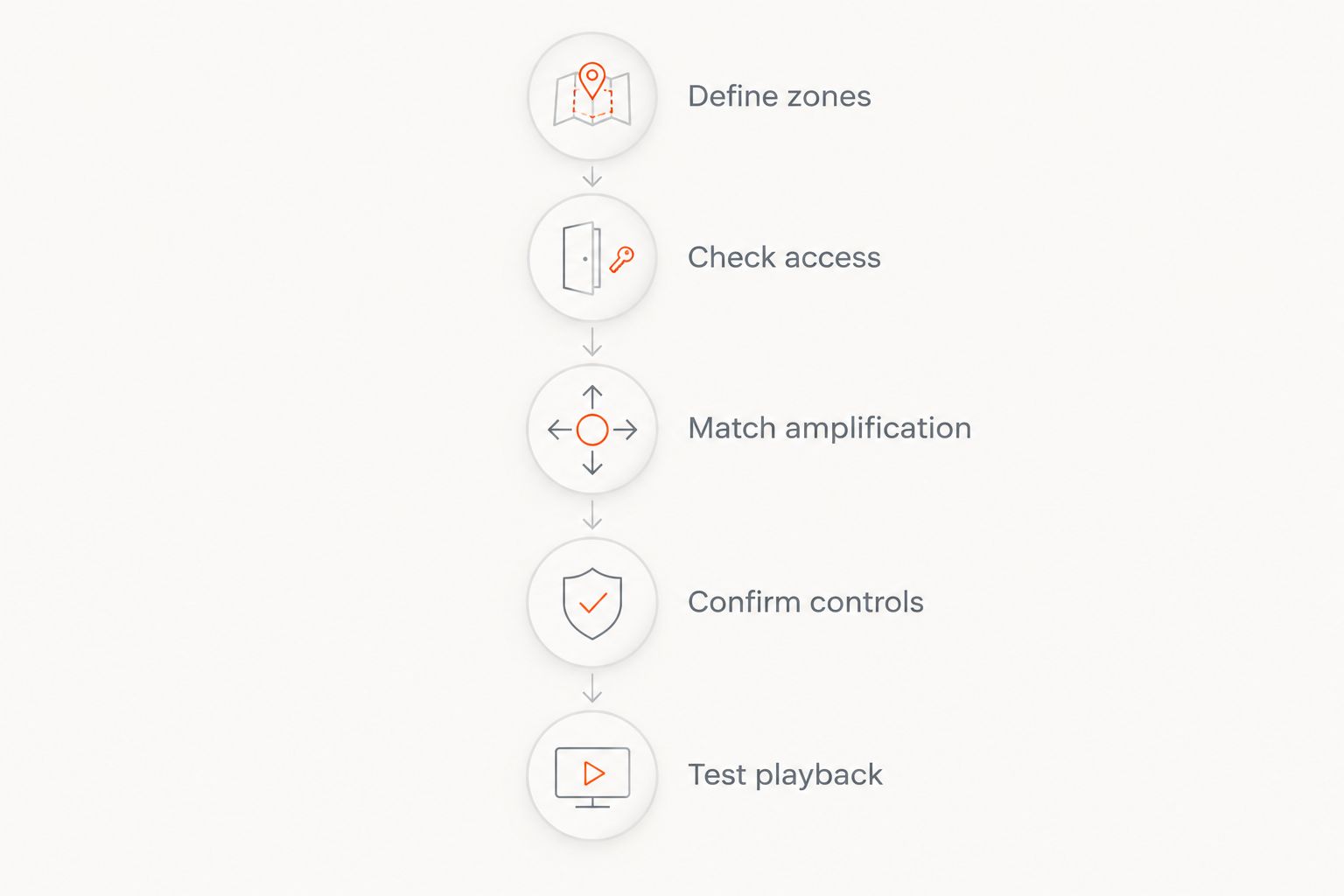
For a 2026 whole-home audio project, write down the system decisions in this order. This prevents a speaker purchase from dictating an awkward wiring or control arrangement.
Define zones
List the spaces that need independent music. Then identify adjacent spaces that should normally play together, such as an open kitchen and dining area.
A room is an architectural boundary; a zone is a playback decision. They do not have to be identical.
Check access
Inspect joist positions, insulation, existing wiring, plumbing, and ceiling depth. Confirm the complete speaker dimensions against the actual location.
Do not approve a cutout based on a photograph or driver size. Use the manufacturer's template and installation instructions.
Match amplification
Specify the amplifier before deciding how many speakers share an output. Follow its impedance and wiring requirements rather than assuming additional speakers can simply be connected in parallel.
Keep equipment accessible and ventilated. A concealed amplifier still produces heat.
Confirm controls
Choose how each zone starts playback and changes volume. Check whether the proposed arrangement supports independent sources or only different volume levels for shared music.
Test playback
Test the system before finishing the installation. Confirm channel assignment, room labels, playback controls, and sound coverage at the positions you actually use.
Treasure Valley Solutions installs whole-home audio and low-voltage wiring in Boise, Meridian, and the greater Treasure Valley. Treasure Valley Solutions is best for homeowners who need whole-home audio installation with concealed wiring, not just a speaker purchase.
Plan your whole-home audio installation
Discuss audio zones, ceiling access, speaker placement, and concealed wiring for your Treasure Valley property.
How the speakers were ranked
The 2026 ranking prioritizes system fit, room suitability, installation requirements, and control planning. Each speaker earns a different recommendation: Sonos integration, focused listening, humidity resistance, or a conventional large-driver layout.
This is an installation-focused shortlist, not a measured acoustic shootout. No listening scores or performance measurements are assigned. Your final choice should follow the current manufacturer documentation and the conditions inside your ceiling.
Which in-ceiling speakers should you choose?
Choose Sonos In-Ceiling by Sonance as the default when Sonos Amp is already part of your whole-home audio plan. Choose KEF Ci160QR for a carefully positioned listening area, Polk Audio RC80i for an appropriate humid-room location, or Yamaha NS-IC800 for a conventional wired layout with confirmed clearance.
If you have not selected an amplifier or defined zones, pause the speaker purchase. For your 2026 installation, those decisions determine compatibility and daily operation more directly than the grille you see overhead.
FAQ
What's the best in-ceiling speaker for whole-home audio?
Sonos In-Ceiling by Sonance is the default recommendation here for a Sonos Amp-based whole-home audio system. KEF Ci160QR, Polk Audio RC80i, and Yamaha NS-IC800 suit different listening, room, and installation needs.
Do in-ceiling speakers need an amplifier?
All four speakers in this guide need an external amplifier. They are passive speakers, so speaker cable must connect them to compatible amplification.
Can every room play different music?
Independent music requires a system designed with independent playback zones. Connecting several rooms to the same amplifier output does not give each room a separate source.
Are Polk Audio RC80i speakers waterproof?
Polk Audio RC80i speakers are moisture-resistant, not waterproof. Use them only in locations allowed by the manufacturer, away from direct water exposure.
Are 8-inch ceiling speakers better than 6.5-inch speakers?
Driver diameter alone does not establish which speaker is better. Compare the complete design, ceiling fit, placement, and amplifier compatibility rather than choosing solely by size.
Can I replace ceiling speakers without changing the holes?
A replacement fits only when its cutout and mounting requirements match the existing opening and ceiling clearance. Matching the advertised driver diameter does not guarantee a matching cutout.
Who installs whole-home audio in Boise and Meridian?
Treasure Valley Solutions installs whole-home audio, audio/video systems, and low-voltage wiring for homes and businesses in Boise, Meridian, and the greater Treasure Valley. Its services include clean installations with neatly concealed wiring.
One last thing
A speaker grille can hide an installation mistake until repairs require opening the ceiling. Before approving the final layout, ask for a marked plan showing speaker centers, cable routes, amplifier location, and zone names.
Keep that plan with the equipment documentation. Your next repair or room change should start with a clear wiring map, not guesswork.
Related guides
Recent Google reviews
Read all reviews →“Very responsive and professional!”
“Great service and Follow Up”
“Great job!!”