 (208) 991-3502
 Meridian, ID




You're standing in front of a wall of TVs at Costco or scrolling listings online, and the TCL TV keeps showing up at a price that seems too good. That reaction is normal. Ten years ago TCL was barely...
You're standing in front of a wall of TVs at Costco or scrolling listings online, and the TCL TV keeps showing up at a price that seems too good. That reaction is normal. Ten years ago TCL was barely a name in the US market, and now it's one of the top-selling TV brands in the country. So the question isn't unreasonable: is it actually a good television, or just a cheap one wearing a bigger brand's playbook.
This guide answers that directly. You'll learn what TCL actually is, who makes its panels, and where its QLED and Mini LED lineups sit in terms of picture quality, gaming performance, and long-term reliability. We'll also put it head-to-head with Samsung, LG, Sony, and Hisense so you can see where TCL wins on value and where it falls short.
We install and calibrate TVs across the Treasure Valley every week, from budget bedroom sets to reference-grade home theaters, so we've seen how TCL performs once it's mounted, connected, and actually used day to day, not just how it looks on a spec sheet.
Why TCL TVs have become so popular
A decade ago, most American shoppers had never heard of TCL. Today it's the second or third best-selling TV brand in the US, depending on the quarter, trading blows with Samsung and LG for shelf space at Costco, Best Buy, and Walmart. That climb didn't happen by accident. TCL bet early on Mini LED backlighting and quantum dot color, technologies that used to live exclusively in $2,000+ flagship sets, and pushed them down into TVs that cost half as much. Shoppers noticed. Once people started comparing a $600 TCL 6-Series against a $1,400 competitor and seeing similar brightness and contrast numbers, word spread fast.
Mini LED technology at a price nobody else can match
Mini LED is the single biggest reason TCL built its reputation. Instead of a handful of large LEDs sitting behind the screen, Mini LED backlighting uses thousands of tiny diodes grouped into hundreds of independently controlled dimming zones. More zones mean better local dimming, which means deeper blacks next to bright highlights without the blooming and haloing that plague cheaper LED TVs. TCL was one of the first brands to put this tech in mid-range TVs rather than reserving it for flagship models priced above $2,500. That decision is what let a $700 TCL QM8 compete on paper with TVs costing twice as much.
TCL didn't invent Mini LED, but it's the reason you can now buy it without spending flagship money.
Retail muscle and a straightforward buying experience
Availability matters as much as specs. TCL made a deliberate push into big-box retail, and that visibility built trust simply by repetition. Walking past the same brand at three different stores, all with strong ratings, makes a purchase decision feel safer. Here's where you'll typically find TCL stacked next to the major brands:
- Costco, often with exclusive sizes or bundled soundbars
- Walmart, where TCL holds a large share of the sub-$500 category
- Amazon, with frequent lightning deals during Black Friday and Prime Day
- Best Buy, carrying the higher-end QM8 and QM7 Mini LED series
That kind of distribution also means parts, warranty service, and replacement units are easy to find, which matters more than people expect once a TV is three years old and something goes wrong.
Smart features that don't feel like an afterthought
Most current TCL models run on Google TV, the same smart platform found on TVs from Sony and several other brands. That's a meaningful shift from TCL's earlier Roku-powered sets. Google TV brings a real app ecosystem, Chromecast built in, and Google Assistant voice control without an extra remote or hub. For a household already using Android phones, Google Home devices, or Chromecast, the integration is seamless in a way that budget brands rarely manage. You can read more about how the platform works directly from Google's own TV documentation, which covers the app library and voice features in more detail than any retailer listing will.
Value that holds up under scrutiny, not just on the spec sheet
Everyone expects a budget brand to look decent in a showroom under controlled lighting. TCL's popularity comes from holding up after that, in a living room with afternoon sun through the window, streaming a mix of Netflix, live sports, and console gaming. Independent testing labs and enthusiast reviewers have repeatedly measured TCL's higher-tier Mini LED sets hitting peak brightness above 1,000 nits and contrast ratios that rival OLED in a bright room, numbers that used to be reserved for premium brands. Zoom out and the picture is simple: TCL closed the performance gap faster than it closed the price gap, and that combination is what turned a little-known brand into a fixture in nearly every big-box TV aisle in the country.
We see the practical side of this every week during installs across the Treasure Valley. Clients who bought a TCL expecting a
How to choose the right TCL TV for your home
Picking a TCL TV isn't just about grabbing the biggest screen on sale. The right choice depends on your room's lighting, how far you sit from the screen, and what you actually watch. A TV that looks amazing in a dark home theater can wash out completely in a sun-facing living room, and a screen that's perfect for a bedroom nightstand setup will feel cramped in a great room with a sectional couch twelve feet back.
Start with screen size and viewing distance
Getting the size right changes everything about how a TV feels once it's mounted. A common rule of thumb is to divide your viewing distance in inches by 1.5 to 2 to land on an ideal screen size. Sit eight feet from the wall, and you're looking at something in the 65 to 75 inch range for a comfortable, immersive picture without straining your neck to take it all in.
- Bedrooms and offices: 43 to 55 inches
- Living rooms and family rooms: 65 to 75 inches
- Dedicated home theaters: 75 to 98 inches
Match the series to your budget and picture priorities
TCL's model numbers aren't random. Higher numbers generally mean better backlighting, more dimming zones, and higher peak brightness. Here's how the current lineup breaks down at a glance:
| Series | Best for | Backlight type |
|---|---|---|
| S-Class | Casual viewing, secondary rooms | Standard LED |
| Q-Class | Everyday streaming and sports | QLED |
| QM6/QM7 | Mixed movies and gaming | Mini LED |
| QM8/QM9 | Home theater, HDR-heavy content | Mini LED |
The right TCL TV is the one that matches your room's lighting and your viewing distance, not the one with the biggest number on the box.
Factor in how you'll actually use it
Gamers should prioritize a 120Hz refresh rate and HDMI 2.1 ports, both standard on TCL's QM7 and above, since they unlock variable refresh rate and quick frame transport for consoles like the PS5 and Xbox Series X. Movie watchers who keep the room dark benefit most from the deeper dimming zones in the QM8 and QM9, where black levels get closer to OLED performance. If sports and daytime viewing dominate your household, brightness matters more than contrast, and that's where Mini LED sets with peak brightness above 1,000 nits earn their keep against glare.
Don't overlook mounting and setup
Even the best TV underperforms with a bad installation. A TV mounted too high over a fireplace forces you to tilt your neck for every movie night, and hidden cable runs make the difference between a clean wall and a tangle of cords behind the stand. If you're weighing a TCL Mini LED against a pricier competitor, factor in professional mounting and calibration into your decision, since a properly leveled, color-calibrated install often closes more of the visual gap than another few hundred dollars of MSRP ever will.
TCL's TV lineup explained: series and models
TCL's naming system looks confusing until you learn the pattern. Every model starts with a letter, S, Q, or QM, followed by a number, and both pieces tell you something specific. The letter indicates the backlight tier, while the number tells you where it sits within that tier, with higher numbers meaning more dimming zones, better processors, and higher peak brightness. Once you know the code, reading a TCL model number becomes as easy as reading a car trim badge.
Entry-level: the S-Class and 4-Series
The S-Class sits at the bottom of TCL's current lineup and replaces what used to be called the 4-Series and 5-Series in older naming. These use standard LED backlighting with limited or no local dimming, which means blacks look more gray than true black and HDR content won't pop the way it does on pricier models. That said, for a bedroom TV, a dorm room, or a secondary set that mostly plays cable news and daytime TV, the S-Class delivers sharp 4K resolution and Google TV's full app library at prices that regularly dip under $250 for a 43-inch model.
Mid-range: Q-Class, QM6, and QM7
The Q-Class introduces quantum dot color, which widens the color gamut noticeably compared to the S-Class, giving reds and greens more depth without needing Mini LED backlighting. Step up to the QM6 and QM7, and you get actual Mini LED panels with several hundred local dimming zones, a real jump in contrast control. The QM7 in particular has become a favorite for hybrid households that split time between movies and gaming, since it pairs Mini LED contrast with a 120Hz panel and HDMI 2.1 support.
Once you understand that the letter tells you the backlight and the number tells you the tier, TCL's entire lineup stops feeling like a puzzle.
Flagship tier: QM8 and QM9
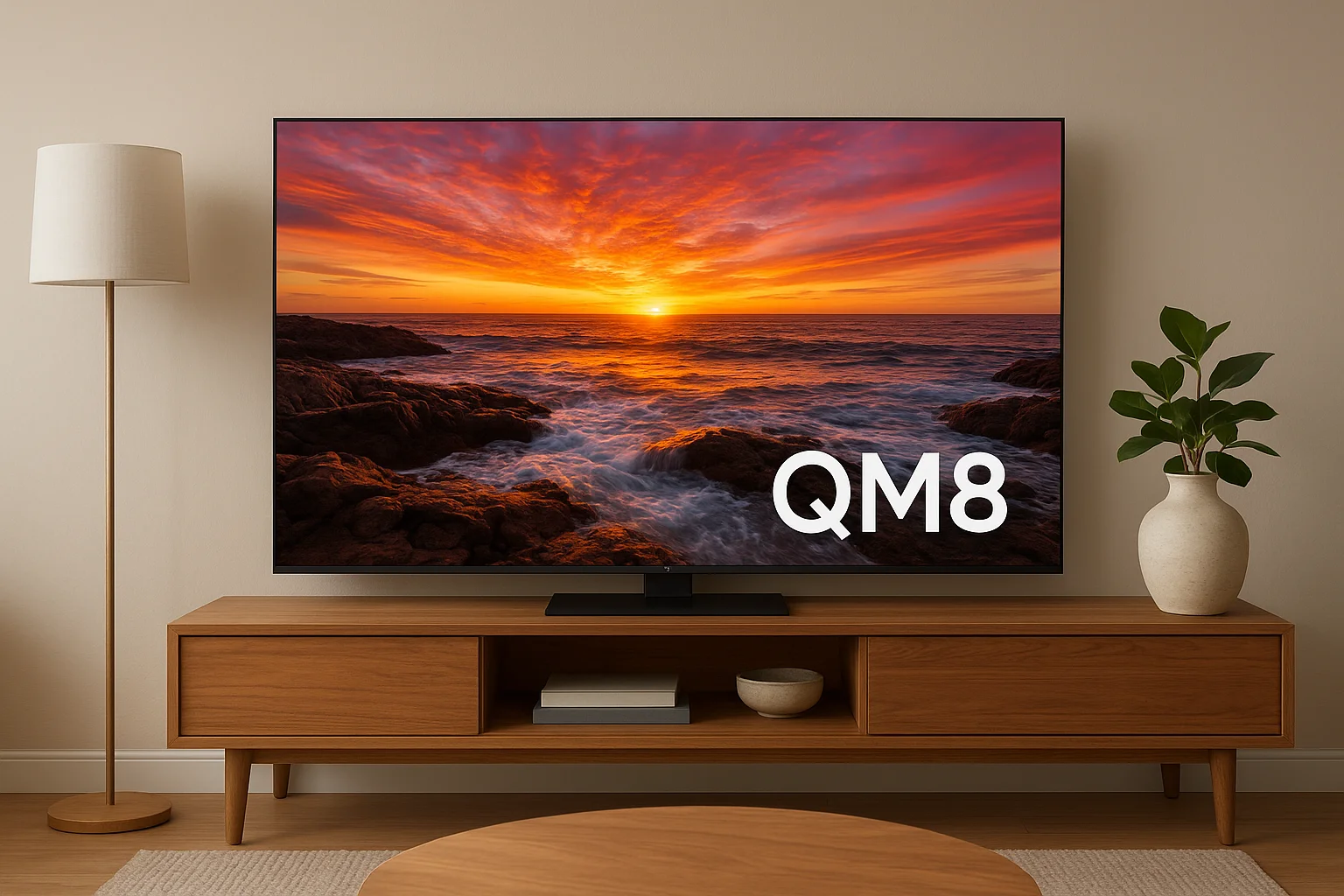
The QM8 and QM9 sit at the top of TCL's consumer lineup and compete directly with premium sets from Samsung and Sony on paper. These models pack over a thousand dimming zones in larger screen sizes, push peak brightness past 1,000 nits, and support every major HDR format including Dolby Vision. If you're building a dedicated home theater and want picture quality that rivals OLED in a room with some ambient light, this is the tier to shop.
| Series | Dimming zones | Peak brightness | Refresh rate |
|---|---|---|---|
| S-Class | None/edge-lit | 300-400 nits | 60Hz |
| Q-Class | Basic full-array | 400-600 nits | 60Hz |
| QM6/QM7 | 200-500+ | 600-1,000 nits | 120Hz |
| QM8/QM9 | 1,000+ | 1,000-2,000+ nits | 144Hz |
Specs shift slightly by screen size within each series, so a 75-inch QM7 won't have identical dimming zones to a 55-inch version, but the tier positioning holds true across the board.
How TCL compares to Samsung, Hisense, and Sony
Putting TCL side by side with the big three tells you more than any spec sheet alone. Samsung and Sony built their reputations over decades with premium engineering and matching premium prices. Hisense followed a path closer to TCL's, chasing value with similar Mini LED technology at a similar pace. Knowing where each brand actually wins helps you avoid paying for a name when the performance difference is marginal, and it helps you spot the situations where the extra money genuinely buys something better.
TCL vs Samsung: the closest fight on paper
Samsung still commands the top spot in global TV sales, and its Neo QLED lineup remains the benchmark TCL's engineers openly chase. Samsung's processing, upscaling, and Tizen smart platform are more refined, and its build quality feels a notch more premium in person. That refinement comes at a real cost though. A Samsung QN90 Neo QLED often runs $500 to $800 more than a comparably sized TCL QM8 with similar dimming zones and peak brightness. Buyers who care about resale value, gaming features like Samsung Gaming Hub, or a slightly better remote experience will find Samsung worth the premium. Buyers chasing raw picture performance per dollar usually walk away with the TCL.
TCL vs Hisense: two value brands racing each other
Hisense is TCL's most direct competitor, and the two brands leapfrog each other every model year on brightness and dimming zone counts. Both use Google TV on most current models, both push Mini LED aggressively, and both undercut Samsung and Sony on price by a wide margin. The real differences show up in fine details: TCL's motion handling tends to edge out Hisense in fast sports content, while Hisense sometimes wins on peak brightness in its top-tier ULED X models. Neither brand has a consistent, permanent lead, so shopping between them usually comes down to whichever is on sale at your local retailer that week.
When two brands trade the top spec every year, price and availability matter more than brand loyalty.
TCL vs Sony: where Sony still wins
Sony plays in a different category entirely. Its Bravia lineup uses proprietary processing, tighter color calibration out of the box, and superior audio in several models, all backed by decades of trust in home theater and gaming circles. A Sony Bravia 9 will outperform a TCL QM9 in fine picture detail and color accuracy in a side-by-side comparison. But that Bravia 9 also costs nearly double. For most households, that gap in refinement isn't worth the price difference unless reference-level accuracy matters for your specific use case, like a dedicated screening room.
| Brand | Price tier | Strength | Best for |
|---|---|---|---|
| TCL | Budget to mid-premium | Value per dollar, Mini LED at low prices | Most households |
| Samsung | Mid to premium | Refinement, resale value | Buyers wanting brand prestige |
| Hisense | Budget to mid-premium | Competing specs, frequent sales | Bargain hunters |
| Sony | Premium | Color accuracy, audio, gaming polish | Home theater purists |
Key features that set TCL TVs apart
Beyond the marketing terms, a handful of concrete features explain why TCL keeps winning over first-time buyers and repeat customers alike. These aren't gimmicks bolted on for a spec sheet; they show up in how the picture looks on movie night and how smoothly a console game responds when you're mid-match. Understanding them helps you see past the model number and know exactly what you're paying for.
Mini LED and quantum dot color working together
Pairing Mini LED backlighting with quantum dot color is the combination that actually separates TCL from most budget competitors. Mini LED handles contrast and local dimming, while quantum dots widen the color gamut so reds, greens, and skin tones look accurate instead of washed out or oversaturated. Most brands offer one or the other at this price point. TCL puts both in the same panel starting at the Q-Class tier, which is why a mid-range TCL often out-colors a same-priced TV from a brand that skipped quantum dots entirely.
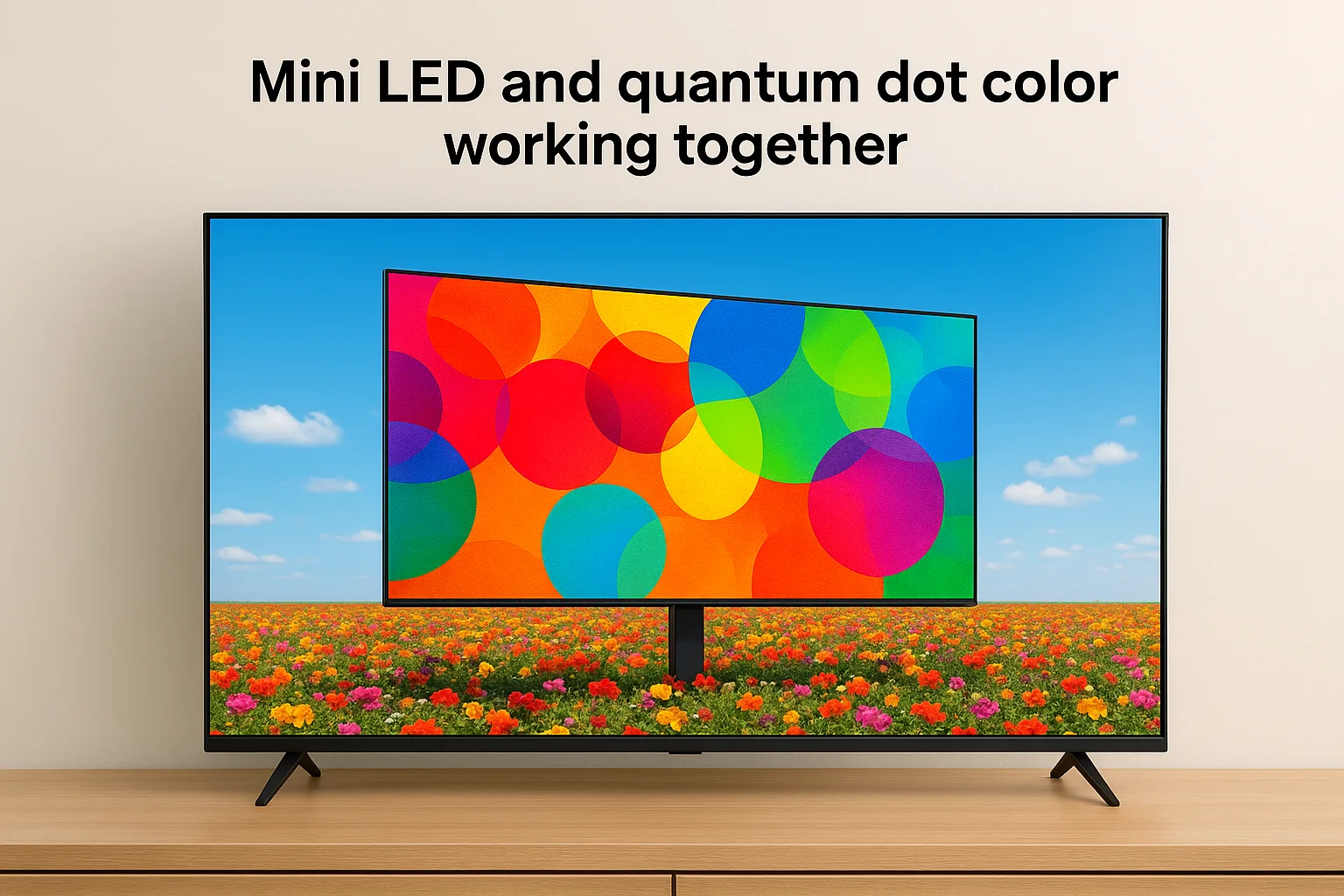
Two technologies that used to cost $2,000 apiece now ship together in a single $700 TCL panel.
A gaming feature set built for consoles, not just PC
Gamers get more here than a fast refresh rate. TCL's QM7 and above include a genuine gaming suite that used to be reserved for premium brands:
- HDMI 2.1 ports supporting 4K at 120Hz or higher
- Variable Refresh Rate (VRR) to eliminate screen tearing
- Auto Low Latency Mode (ALLM) that switches automatically when a console powers on
- A dedicated Game Bar overlay showing frame rate and input lag in real time
Sony and Samsung offer similar tools, but usually only above $1,200. TCL brings the same console-friendly package down into the $700 to $900 range on the QM7.
Google TV integration goes deeper than most competitors
Running Google TV as the default smart platform gives TCL an advantage that's easy to underestimate until you've lived with it. Built-in Chromecast means you can send content from a phone without extra hardware, and Google Assistant handles voice search, smart home commands, and app launching through the remote's microphone button. Households already using a Nest thermostat or Google Home speaker will notice the TV simply joins that ecosystem instead of requiring a separate setup. Google documents the full feature set on its official TV platform page, which is worth a look if you're comparing smart platforms across brands.
Design details that show up during installation
Slim profiles and thinner bezels have become standard across TCL's Q-Class and QM lineup, which matters more than people expect once a TV is wall-mounted rather than sitting on a stand. Thinner panels sit flatter against low-profile mounts, and narrower bezels make a multi-TV setup, like a sports bar wall or a home theater with a projector screen nearby, look more cohesive. We notice these small design choices constantly during installs, since they're the difference between a TV that looks built-in and one that looks bolted on.
Common questions about TCL TVs
Buyers researching a TCL TV tend to ask the same handful of questions before they commit, usually after reading one glowing review and one skeptical one back to back. Answering them directly here saves you from digging through forum threads that contradict each other.
Who actually makes TCL TVs?
Unlike Samsung or Sony, TCL doesn't outsource its panel manufacturing. TCL Technology owns CSOT (China Star Optoelectronics Technology), one of the largest LCD and Mini LED panel producers in the world, which means TCL controls its supply chain from raw panel to finished television. That vertical integration is a big part of why TCL can sell Mini LED technology at prices competitors can't match; it isn't buying panels from a third party and marking them up twice.
Are TCL TVs actually reliable long term?
Reliability is the question we hear most during install visits, usually from someone who got burned by a cheap brand a decade ago. Modern TCL sets, particularly the Q-Class and QM series, hold up well over a typical five to seven year ownership window when they're not left running at max brightness constantly or exposed to excess heat behind an enclosed cabinet. The most common failure points across any budget-friendly TV brand are backlight degradation and power supply issues, and TCL's failure rates in independent retailer return data sit roughly in line with Hisense and only slightly higher than Samsung.
A TCL TV installed correctly and ventilated properly will usually outlast the hype cycle that made it popular.
Do TCL TVs need a soundbar?
Built-in speakers are the weakest link on almost every flat-panel TV under two inches thick, and TCL is no exception. The thin cabinet design that makes wall-mounting look clean leaves little room for speaker drivers with real bass response, so dialogue can sound thin and effects lack punch straight out of the box. Pairing any TCL model, even a flagship QM9, with a basic soundbar noticeably improves the experience, and it's one of the most common upgrades we recommend during installation.
Is TCL as good as OLED?
No, not in absolute terms, but the comparison depends heavily on your room. OLED panels still produce perfect black levels and viewing angles that no LED-based TV, including TCL's best Mini LED sets, can fully replicate in a dark room. Where TCL closes the gap is brightness: in a living room with windows and afternoon sun, a QM8 or QM9 with dimming zones in the thousands can actually look more watchable than an OLED struggling against glare. Choose OLED for a dedicated dark theater room, and choose TCL's Mini LED tier for a bright, multi-purpose living space.
What size TCL TV sells the fastest?
Retail data consistently shows the 65-inch size as TCL's top seller across nearly every series, since it hits the sweet spot for average living room viewing distances without the price jump that comes with 75-inch and larger models.
Getting the best performance from your TCL TV
Buying the right series only gets you halfway there. A TCL TV straight out of the box is set to "Vivid" or "Standard" mode most of the time, which cranks brightness and sharpening to grab your attention on a showroom floor, not to look accurate in your living room. Getting the picture your TV is actually capable of takes a few adjustments and some attention to the space around it, and most of it takes less than twenty minutes.
Fix the picture mode before anything else
Start by switching out of the factory default. Movie or Filmmaker Mode disables the aggressive motion smoothing and oversharpening that make everything look like a soap opera, and it gets you closest to how content was actually mastered. From there, a handful of settings make the biggest difference:
- Turn off motion smoothing for film content, keep it low for sports
- Set backlight and brightness based on room lighting, not maxed out by default
- Enable Dolby Vision or HDR10+ matching for streaming apps that support it
- Disable oversharpening, since TCL panels are sharp enough natively
The single fastest upgrade for any TCL TV is switching out of the factory picture mode; it costs nothing and takes two minutes.
Placement changes what the panel can actually show you
Even a QM8 with a thousand dimming zones underperforms if it's fighting glare from a window across the room. Position the screen away from direct sunlight, or add blackout curtains if the living room faces west and gets hit hard in the evening. Height matters just as much: eye level while seated is the target, and a TV mounted too high over a fireplace forces the panel's viewing angle to work against you, especially on the wider Q-Class and S-Class models where off-axis contrast drops noticeably.
Calibration closes the rest of the gap
Basic in-menu adjustments handle most of the improvement, but a professional calibration goes further by measuring actual color accuracy and contrast with a colorimeter rather than relying on your eyes under one lighting condition. This step is where a TCL Mini LED set genuinely starts closing in on Samsung and Sony picture quality, since much of that price gap comes down to factory-tuned accuracy rather than raw hardware differences. We handle this during installs across the Treasure Valley, and clients are consistently surprised at how different a calibrated QM7 looks compared to the same TV fresh out of the box.
Ventilation and daily habits protect long-term performance
Heat is the quiet killer of any LED-based TV, and TCL is no exception. Avoid boxing the TV into a fully enclosed cabinet with no airflow, since trapped heat accelerates backlight degradation over years of use. Running the panel at max brightness constantly, especially on wall-mounted units in bright rooms, wears components faster than moderate daily use. Small habits like using a scheduled off-timer and dusting vents twice a year keep a TCL TV performing close to day-one levels well past the five-year mark.
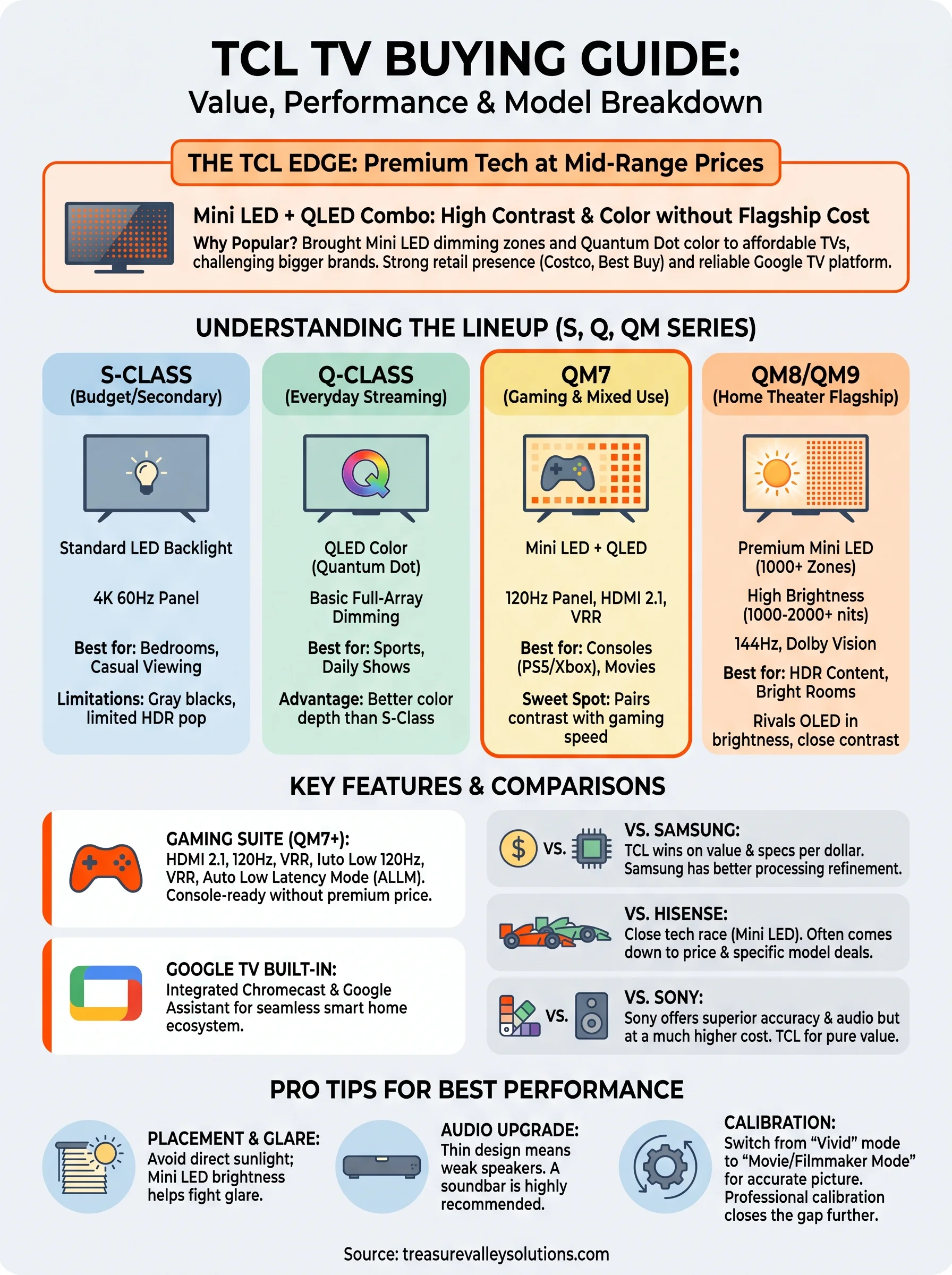
Finding the right fit for your space
A TCL TV earns its reputation honestly. You get Mini LED contrast, quantum dot color, and a full Google TV experience at a price that would have been unheard of five years ago from Samsung or Sony. Where TCL falls short of the premium brands, it's usually a small gap in refinement, not a dealbreaker, and for most households that gap isn't worth the extra few hundred dollars.
Getting the full picture out of any TV, though, comes down to more than the panel itself. Screen size, mounting height, ambient light, and calibration all decide whether that QM7 or QM9 actually looks the way it's capable of looking in your specific room.
That's where we come in. If you're in the Treasure Valley and want your new TCL mounted, wired, and calibrated properly the first time, reach out to our team and we'll help you get it right.
Need Expert Help?
Ready to implement these solutions in your own home or business?
Our Services
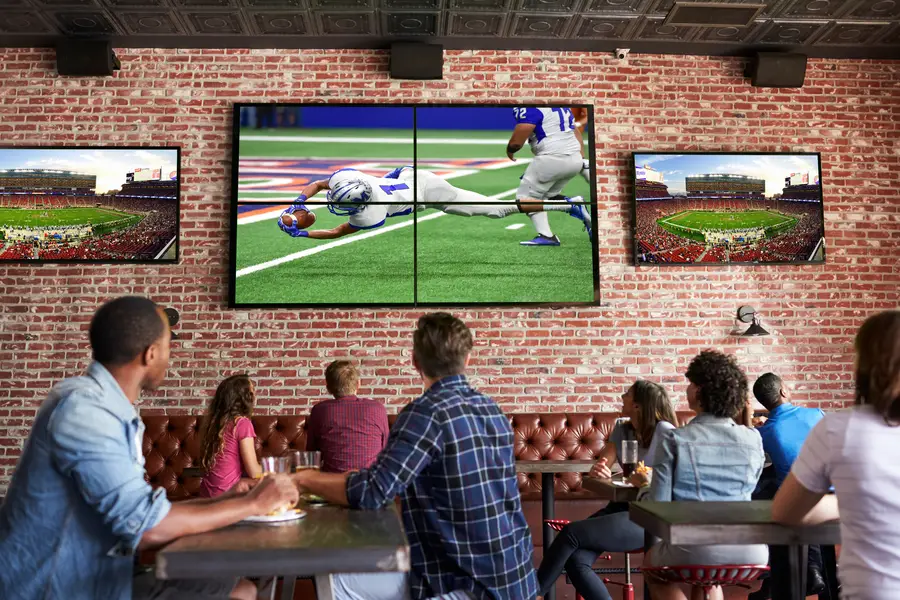
Expert TV Mounting Treasure Valley Homeowners & Businesses Trust

Cinematic experiences in the comfort of your home.
Serving the Treasure Valley
Local installation in your city