 (208) 991-3502
 Meridian, ID




Cameras from a big box store look great in the box, then end up mounted crooked, wired through a window, or blind to the one corner of your driveway where packages keep disappearing. That's what happe...
Cameras from a big box store look great in the box, then end up mounted crooked, wired through a window, or blind to the one corner of your driveway where packages keep disappearing. That's what happens when the install matters as much as the equipment. Hiring the right security camera installation contractors is the difference between a system you trust and one you fight with every time the app glitches.
If you're searching for home security camera installation companies near me, you want more than someone who can drill a hole and run a cable. You need a contractor who assesses your property, places cameras for real coverage, runs clean and hidden wiring, and configures everything so you actually get alerts that matter, not false triggers from every passing car or squirrel.
This article walks through exactly what to look for: licensing and insurance, experience with your specific property type, how they handle design and placement, what ongoing support looks like, and the questions that separate a qualified installer from someone with a ladder and a truck. By the end, you'll know how to compare local contractors with confidence instead of guessing based on price alone.
1. Custom smart home integrators
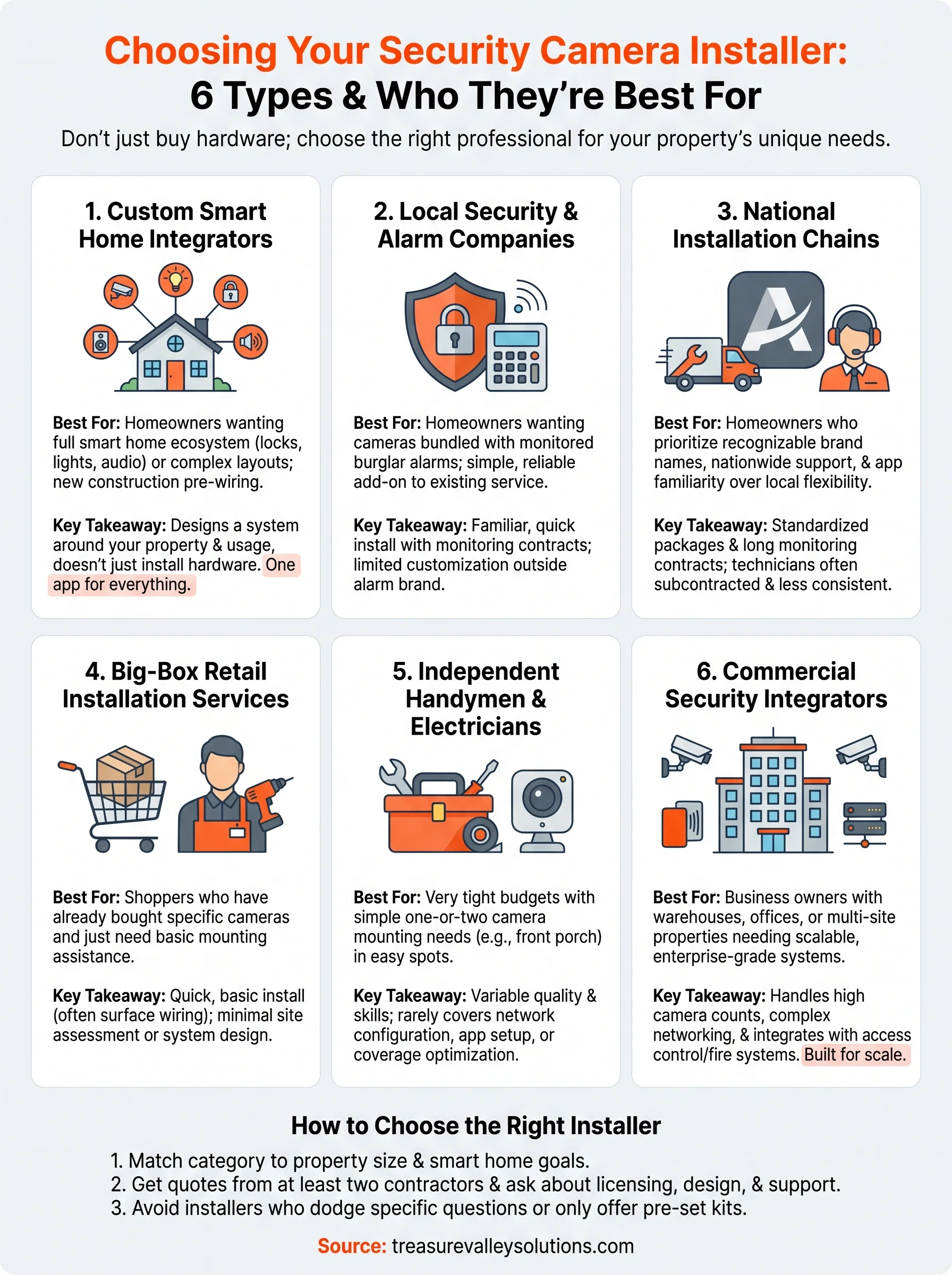
Custom integrators build your camera system as part of a bigger picture: lighting, locks, audio, and network gear that all talk to each other. Instead of slapping cameras on the exterior and calling it done, they design the whole layout around how you actually use your property, then verify which selected products can share controls; one-app operation is not assumed. Treasure Valley Solutions operates this way for homes and businesses across Meridian, Boise, Eagle, and Nampa, and it's the model we'd point most readers toward if you want a system that grows with your needs instead of boxing you into a single brand.
How they work
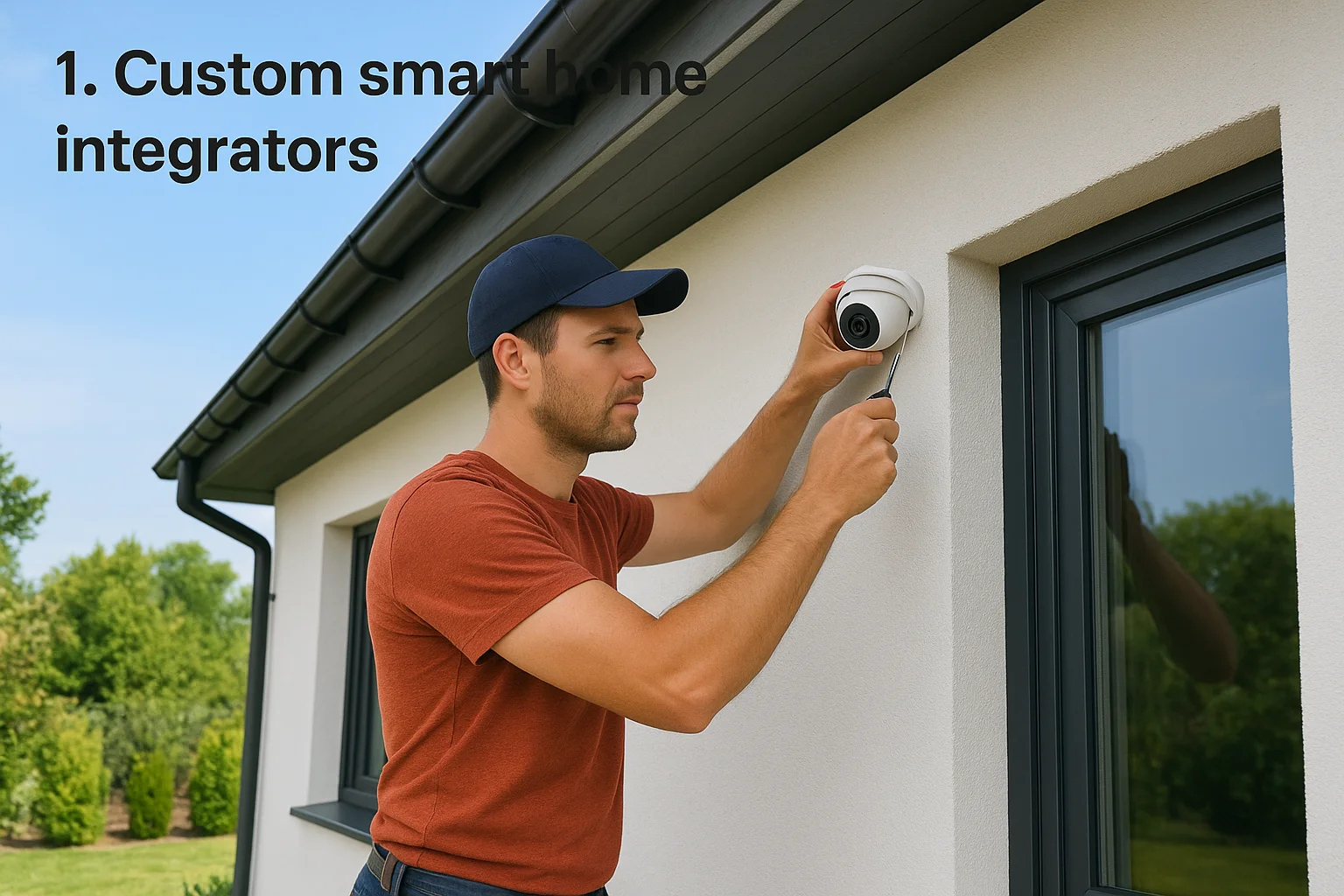
An integrator starts with a walkthrough of your property, mapping sightlines, power access, and network coverage before a single bracket goes up. They select cameras, NVRs, and mounting hardware based on your specific layout rather than a pre-packaged kit, then run wiring through walls and attics so nothing hangs exposed. Once installed, they configure motion zones, notification rules, and remote access, and they test the system on-site before they leave.
Who they're best for
This approach suits homeowners who also want smart locks, lighting, or whole-home audio tied into the same system, along with property managers running multiple units and business owners assessing whether specific camera and access-control products can be connected. It's also a strong fit for anyone building new construction, since pre-wiring during the build avoids drilling through finished walls later. If you want one point of contact for your entire smart home rather than separate vendors for cameras, locks, and Wi-Fi, this is the category to start with.
A custom integrator designs your camera system around your property, not the other way around.
Compare the written scope
Residential planning examples: a basic four-camera installed system is approximately $1,500–$2,500; a premium eight-camera installed system is approximately $3,000–$6,000+. These are nonbinding planning ranges, not hardware-only kit prices or commercial quotes. Final equipment, recording capacity, cable routes, labor, network work, programming, taxes and exclusions must be confirmed in a site-specific written estimate.
Questions to ask before hiring
Before signing a contract, ask these:
- Do you design a custom layout, or install a pre-set package?
- Can this system integrate with locks, lighting, or an alarm later?
- What happens if a camera fails after installation, who do I call?
- Are your technicians licensed and insured in Idaho?
- Will you walk me through the app and settings before you leave?
A contractor who answers these clearly, without dodging specifics, is one worth trusting with your property.
2. Local security and alarm companies
Local alarm companies have been wiring homes for burglar alarms and monitored security for decades, and most have added camera installation as a natural extension of that business. They know the neighborhoods, they carry monitoring contracts, and they're usually quick to respond when something breaks. For a straightforward camera and alarm combo, they're a solid, familiar option.
How they work
Technicians typically bundle cameras with a monitored alarm panel, sensors, and a central monitoring service you pay monthly. Installation is usually fast, often completed in a single visit, with cameras tied into the same app as your door sensors and alarm keypad. Customization is more limited than with an integrator since most companies work from a set list of compatible hardware.
Who they're best for
This path suits homeowners who want cameras alongside a monitored alarm system and don't need integration with lighting, locks, or audio. It also works well if you already have an alarm company you trust and simply want to add exterior cameras to the existing contract.
If all you need is cameras tied to an alarm you already monitor, a local alarm company keeps things simple.
Compare the written scope
Obtain current written equipment, installation and any recurring-service terms from the provider. Published comparisons here are not verified current third-party prices or TVS commercial rates. Compare ownership, recording access, cancellation terms and support inclusions rather than an advertised entry price.
Questions to ask before hiring
- Is monitoring required, or can I self-monitor?
- What's the contract length and cancellation policy?
- Can I add non-alarm-brand cameras later?
- Who owns the equipment if I cancel service?
3. National security camera installation chains
National chains like ADT and Vivint bring franchise-level scale to camera installation, with standardized packages, call centers, and technicians who follow the same install checklist whether you're in Boise or Baltimore. They're heavily advertised, which means most homeowners recognize the name before they even start shopping, but that recognition comes with less flexibility than a local integrator offers.
How they work
Sales happen mostly over the phone or online, with a technician dispatched afterward to install from a fixed equipment list. Contracts often bundle monitoring services with camera hardware, and installers are usually subcontracted rather than direct employees, which can mean less consistency between visits. Scheduling can also run days or weeks out depending on regional demand.
Who they're best for
This option fits homeowners who want a recognizable brand name and don't mind a longer-term monitoring contract in exchange for nationwide support and app familiarity. It's a reasonable fit if you move often and want a system that transfers between cities.
National brand recognition doesn't guarantee the technician on your roof knows your specific property.
Compare the written scope
Obtain current written equipment, installation and any recurring-service terms from the provider. Published comparisons here are not verified current third-party prices or TVS commercial rates. Compare ownership, recording access, cancellation terms and support inclusions rather than an advertised entry price.
Questions to ask before hiring
- Is the installer a direct employee or subcontractor?
- What's the total contract cost, not just the monthly fee?
- Can I cancel early without a penalty?
- Does equipment stay mine after the contract ends?
4. Big-box retail installation services
Stores like Best Buy's Geek Squad and similar retail chains sell cameras off the shelf and offer installation as an add-on service at checkout. It's a convenient option if you've already picked out hardware and just want someone else to mount it, but the service tends to stop at the basics rather than covering full property design.
How they work
You buy the camera system in-store or online, then schedule an installer through the retailer's service desk. Technicians mount the cameras, connect them to your Wi-Fi, and walk you through the app, usually in a single short visit. There's little to no site survey beforehand, so camera placement often follows wherever mounting is easiest rather than where coverage actually matters most.
Who they're best for
This fits shoppers who already own or picked out a specific camera brand and just need help getting it mounted and connected. It works fine for a single camera at the front door but falls short for anyone needing coverage across a large yard, warehouse, or multi-building property.
Retail installation gets a camera on the wall, not a system designed around your property.
Compare the written scope
Obtain current written equipment, installation and any recurring-service terms from the provider. Published comparisons here are not verified current third-party prices or TVS commercial rates. Compare ownership, recording access, cancellation terms and support inclusions rather than an advertised entry price.
Questions to ask before hiring
- Does the technician assess coverage, or just mount where I point?
- Is wiring hidden, or run along the surface?
- What happens if I need help after the visit?
- Can they install cameras from any brand, or only what they sell?
5. Independent handymen and electricians
Handymen and freelance electricians often pick up camera installation as one service among many, advertising on local marketplaces or through word of mouth. They can be a budget-friendly option for a simple job, but you're relying on general skills rather than someone who installs security systems every week.
How they work
Most work solo or in small two-person crews, booked through a listing site or a referral rather than a dedicated office. They'll mount cameras, run visible or in-wall wiring depending on their comfort level, and connect the system to your Wi-Fi, but network configuration and motion-zone tuning are often skipped unless you specifically ask. Availability and quality vary widely from one person to the next.
Who they're best for
This route suits homeowners with a tight budget who need one or two cameras mounted in an easy spot, like a front porch or garage. It's not the right choice for multi-camera coverage, hidden wiring, or any property where a missed blind spot has real consequences.
A handyman can mount a camera. A trained installer makes sure it actually catches what you need it to.
Compare the written scope
Obtain current written equipment, installation and any recurring-service terms from the provider. Published comparisons here are not verified current third-party prices or TVS commercial rates. Compare ownership, recording access, cancellation terms and support inclusions rather than an advertised entry price.
Questions to ask before hiring
- Are you licensed and insured for this type of work?
- Have you installed this specific camera brand before?
- Will you configure the app and notifications, or just mount hardware?
- Do you offer any warranty on your labor?
6. Commercial security integrators
Commercial integrators specialize in larger-scale surveillance for warehouses, retail chains, offices, and multi-tenant buildings, where camera count and network demands go well beyond what a residential installer typically handles. They work with enterprise-grade NVR systems, access control, and sometimes fire or life-safety integration, making them the right call when your property spans multiple buildings or requires compliance with industry regulations.
How they work
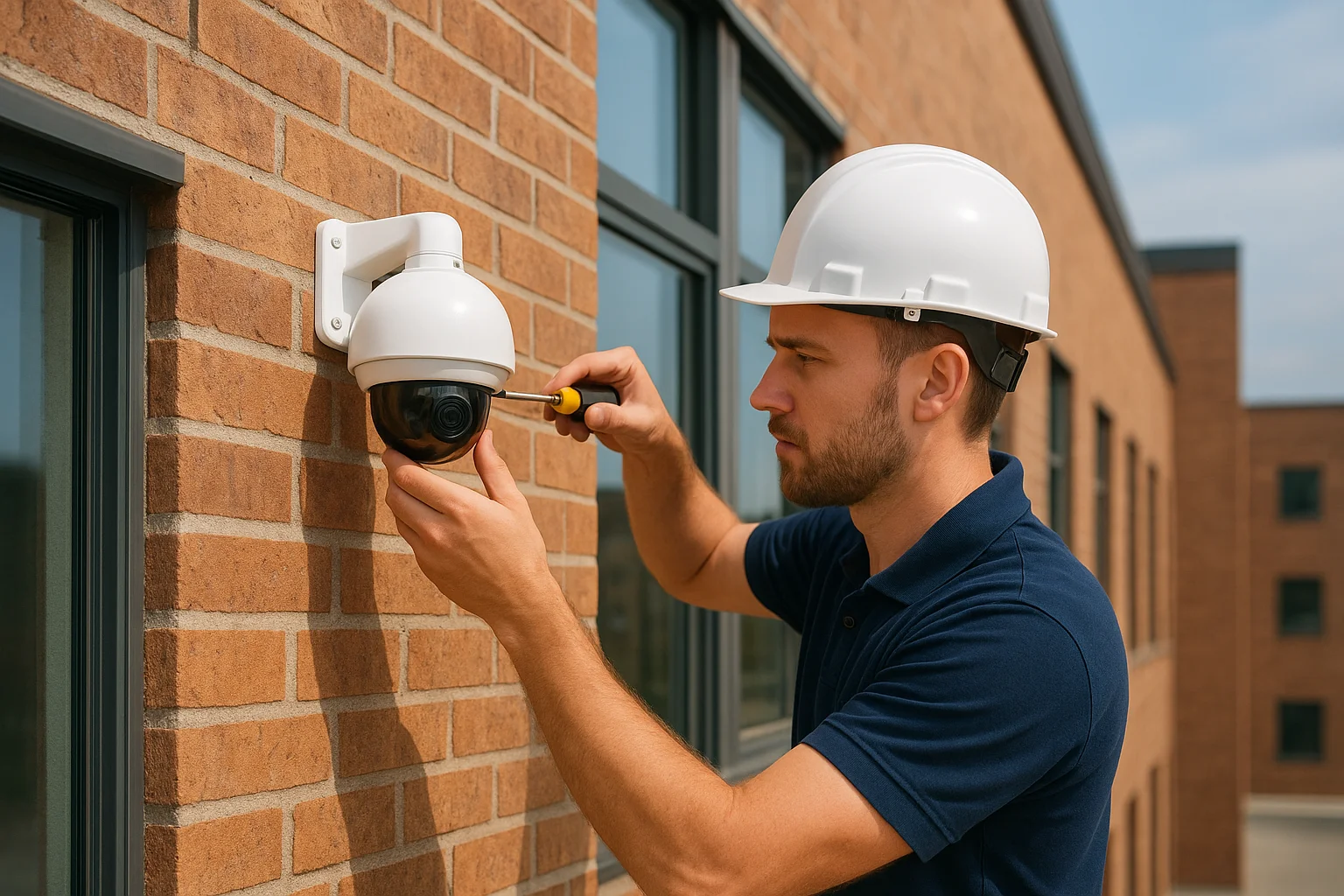
A commercial integrator starts with a site audit covering every entry point, loading dock, and blind corner, then designs a camera layout that accounts for network bandwidth, storage capacity, and future expansion. Installation crews run structured cabling to code, often coordinating with electricians and IT staff already on-site, and the buyer should ask what configuration assistance is available and confirm any support terms in writing; hardware repair or a service agreement is not assumed.
Who they're best for
This category suits business owners managing retail locations, warehouses, restaurants, or educational campuses that need dozens of cameras working as one system rather than isolated units. Treasure Valley Solutions assesses site-specific scalable coverage for commercial clients across the Treasure Valley, planning cameras and infrastructure around the site; shared controls or event-level access integration require exact-product verification and written scope.
A commercial property needs a camera system built for scale, not a residential kit stretched thin across too many square feet.
Compare the written scope
Obtain current written equipment, installation and any recurring-service terms from the provider. Published comparisons here are not verified current third-party prices or TVS commercial rates. Compare ownership, recording access, cancellation terms and support inclusions rather than an advertised entry price.
Questions to ask before hiring
- Have you installed systems of this scale before?
- Can the system scale as we add locations?
- What's included in ongoing maintenance?
- Do you offer a service level agreement for response time?
Finding the right installer for your property
The right choice depends on what you're protecting and how much you want that system to do. A single front-door camera doesn't need the same contractor as a warehouse with six loading docks. Match the category above to your actual property, not the one with the biggest advertising budget.
Before you sign anything, get quotes from at least two security camera installation contractors, ask every question listed in this guide, and pay attention to how clearly they answer. A contractor who dodges specifics on licensing, wiring, or support is telling you something important.
If you're comparing home security camera installation companies near me and want a team that designs around your property instead of pushing a pre-set package, see the camera systems we've designed and installed and get a look at what a properly planned system looks like before you decide who gets the job.
Keep capability and support claims specific
Provider categories describe approaches, not certifications or guaranteed results. Ask for actual project evidence, the camera/recorder/software versions, licensing requirements, configuration limits, permissions, recording/export tests and the work included in support. Remote viewing is not staffed monitoring; readable plate capture is not automated recognition/search. TVS does not advertise unconfirmed enterprise VMS, LPR, event-level integration, hardware repair, forensic recovery or response-time commitments here.
Compare your options
Your next step
Compare Professional Camera Installation OptionsReady for professional help? Request an estimateOur Services
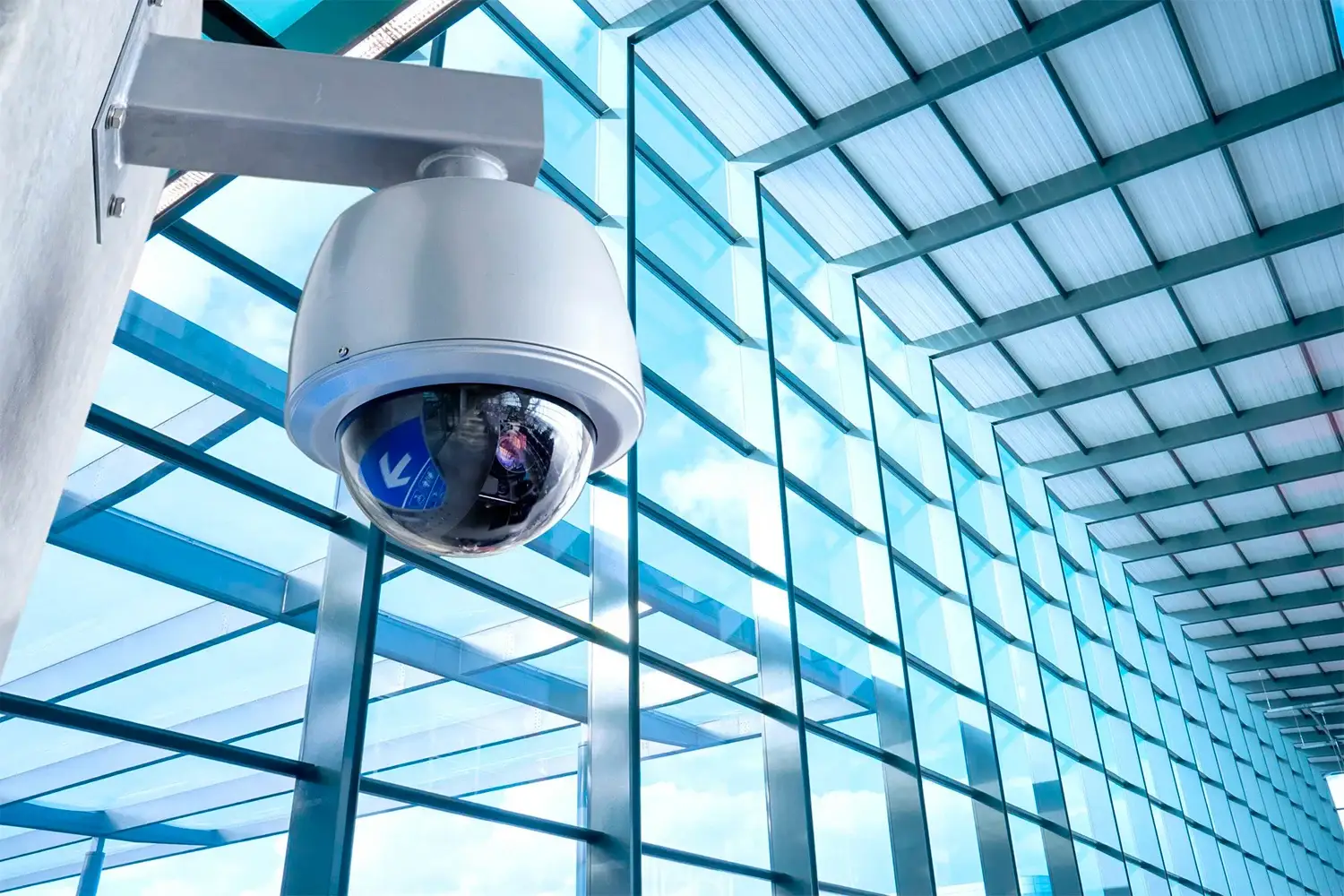
High-definition surveillance for peace of mind.
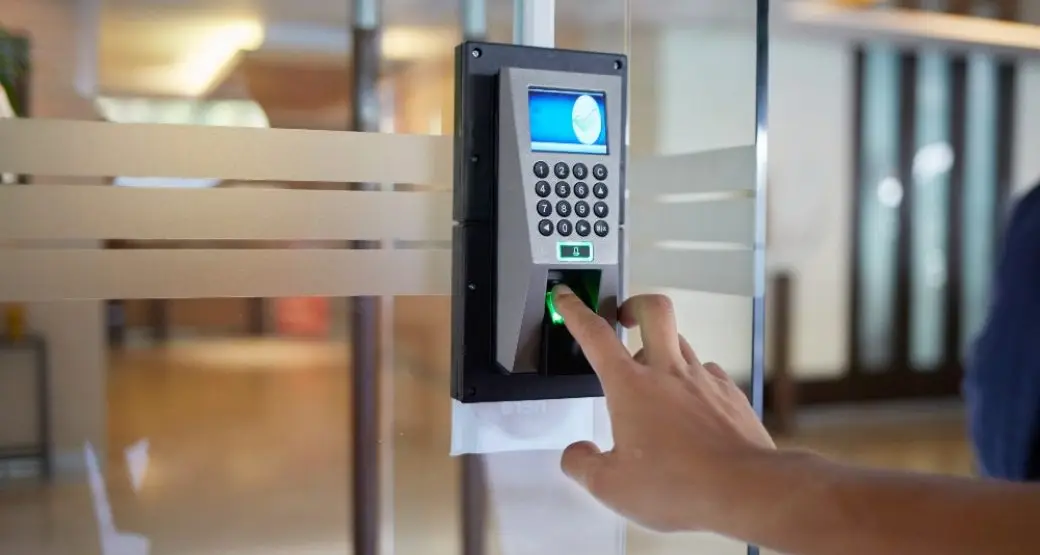
Comprehensive security solutions for home and business.
Serving the Treasure Valley
Local installation in your city