 (208) 991-3502
 Meridian, ID




The best route to security camera and installation in the Treasure Valley is a local integrator that designs the layout, supplies the cameras, and installs them for you. That suits most homeowners who...
The best route to security camera and installation in the Treasure Valley is a local integrator that designs the layout, supplies the cameras, and installs them for you. That suits most homeowners who want full coverage and one number to call. A retailer install fits a one or two camera job. A bundled alarm provider fits you if you want professional monitoring. A marketplace installer fits a tight budget, and doing it yourself fits a handy owner or renter with wireless cameras.
The trouble is that these routes look alike online and differ a lot in what the price includes. Who supplies the camera, who runs the cable, who sets up the app, and who picks up the phone when something stops recording? Quotes that skip those answers can't be compared fairly.
This article walks through five ways to get home cameras installed, covering how each works, who it suits, and what to weigh on cost. It then pulls the price drivers together with a worked example. We are Treasure Valley Solutions, a smart technology integrator in Meridian, Idaho, so we list ourselves first and tell you plainly where the other options win.
1. Treasure Valley Solutions, local design and install
A local integrator handles the whole job, from planning to programming. Treasure Valley Solutions has served the area since 2014 and treats home security camera installation as a design problem first and a mounting job second.
How it works
The process starts with a free on-site consultation and no-obligation estimate. We look at your property and plan around coverage goals, lighting, and recording needs. Cameras offer night vision, wide angles, and motion detection, with remote viewing from your phone or computer. You can choose cloud or local video storage.
Here is what the job typically covers:
- A site visit and a written estimate
- A camera placement plan based on sightlines and lighting
- Cabling, mounting, and network setup
- Programming of the app, alerts, and recording
A camera is only as good as its placement, lighting, and wiring, and only a site visit can check all three.
Who it suits
This route fits homeowners who want cameras that work with the rest of the house, such as a video doorbell, alarm, or UniFi network. It also fits owners of older systems. We assess aging cameras, recorders, and cabling before a staged upgrade, so you don't have to rip everything out at once. Builders and property managers can use our partner programs for pre-wiring and multi-unit work.
Cost and trade-offs
We don't publish a flat price because the cable runs, camera count, and storage choice change the total. You get a firm number after the visit. The quote includes design, a one-year warranty on all work, and a team that is fully licensed and insured. We answer inquiries within one business day and offer evening and weekend appointments based on availability. Larger projects can use payment plans or financing. See finished jobs on our work page.
2. Big-box retailer installation services
Retailers sell you the camera and attach an installer to the order. It's the fastest path when the job is small and the camera comes from their catalog.
How it works
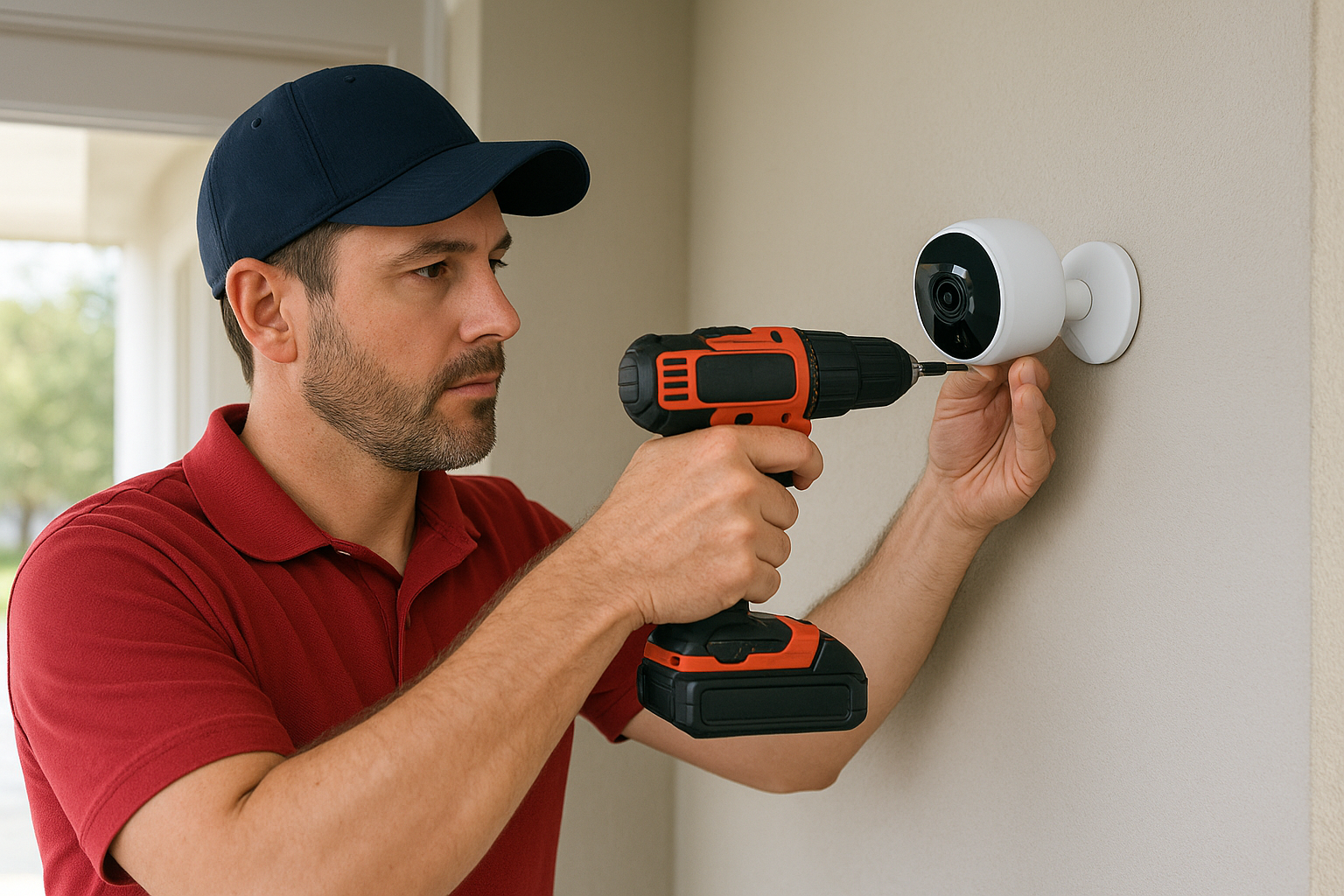
Best Buy, for example, offers wireless camera installation. A technician mounts your wireless cameras on a wall or ceiling and connects them to your Wi-Fi network. Lowe's lists security cameras with install services available, so you can filter for models that include it. You buy the product, add installation at checkout or book it afterward, and a technician comes to your home.
Who it suits
Retailer installs work well for one to three wireless cameras in a home with decent Wi-Fi coverage. They're a weaker fit when you need cabling through walls, many cameras, or advice on where to point them.
- Good fit: a doorbell, a porch camera, an indoor camera
- Poor fit: a whole-property layout, long outdoor runs, or mixed brands
Cost and trade-offs
Installation is priced as an add-on package, and the amount depends on the camera type and the retailer's current listing, so check the product page for your nearest store before you decide. The trade-offs are scope and support. Installers usually work with what you bought, you get limited design advice, and ongoing programming help is rarely part of the deal. Ask what happens if the camera drops off Wi-Fi a month later.
Retailer installs are quick and simple, but they cover the mounting, not the planning.
3. Security and alarm companies with bundled cameras
Alarm companies sell cameras as part of a security package. They supply the equipment, install it, and connect it to a monitoring plan.
How it works
The provider installs cameras, a panel, and sensors, then ties them to an app and often to a monitoring center that responds to alarms. Equipment is frequently tied to that provider's platform, so the cameras may not work with another service if you leave.
Who it suits
This option suits you if you want intrusion protection and cameras from one company, and you value someone watching the system when you're away. It also suits buyers who prefer a low upfront cost over owning the hardware outright.
Cost and trade-offs
Upfront cost is often lower, but you pay monthly and may sign a multi-year agreement. Before you commit, ask these questions:
- How long is the contract, and what does cancelling cost?
- Do you own the cameras after you pay them off?
- Can the cameras work with another service later?
- Is the monthly fee for monitoring, cloud video, or both?
For comparison, Treasure Valley Solutions installs smart alarm systems with touchscreen panels and app access, and we don't require contracts.
With a bundled provider, the contract terms matter as much as the camera.
4. Independent installers from home-service marketplaces
Marketplaces let you post a job and collect quotes from local electricians, handymen, and low-voltage technicians. It's a good way to price a simple install.
How it works
You describe the job, how many cameras, indoor or outdoor, wired or wireless, and whether you've already bought the equipment. Local pros reply with quotes and availability. You compare reviews and prices, then hire one directly.
Who it suits
This route suits people who already own the cameras and need labor only, or who want a basic install on a tight budget. It's less suited to complex networks or recorder setups unless the installer has proven experience with them.
Cost and trade-offs
Marketplace listings commonly quote ballparks from about $100 for a single-camera line installation to roughly $1,000 to $2,200 for an entire system. Treat those as general ranges, not Treasure Valley quotes. The risk is uneven quality, so vet each pro before booking:
- Ask for proof of license and insurance.
- Ask who configures the app and Wi-Fi.
- Ask what is warrantied if a camera fails or a wall hole leaks.
- Get the price in writing, including cable and mounts.
The lowest bid is only the lowest price if licensing, setup, and warranty are included.
5. Installing the cameras yourself
DIY is the cheapest route in cash and the most expensive in your time. It works best with wireless cameras, which is where an easy installation security camera earns its name.
How it works
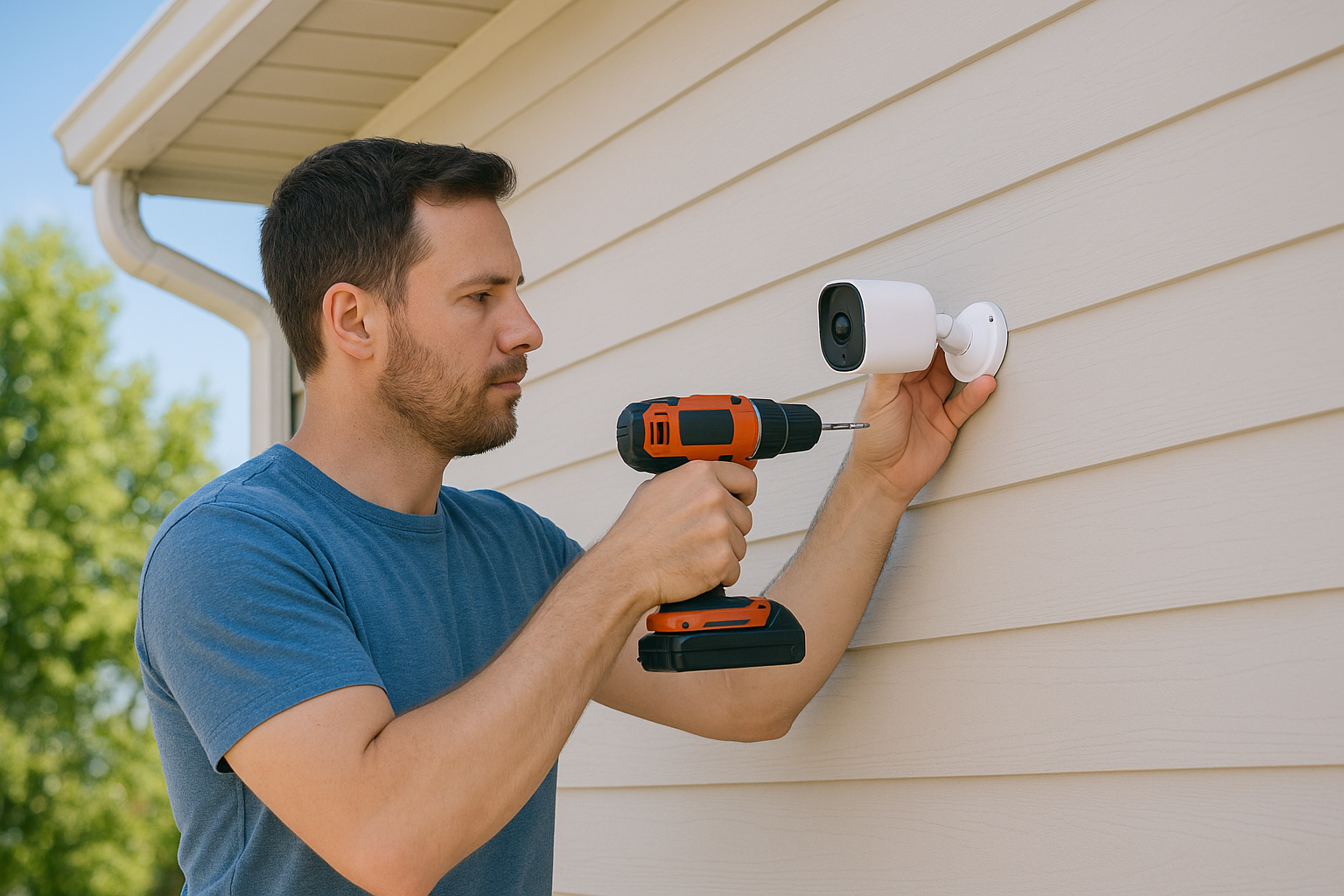
Home Depot's guide rates a full camera install as intermediate difficulty and puts it at about 2 to 4 hours. The core steps are:
- Sketch your layout and mark priority spots such as entry doors, driveways, and off-street windows.
- Choose wired or wireless. Wireless needs minimal drilling, but powering the cameras can be tricky.
- Mount each camera with the template and pilot holes.
- Power it, adjust the angle, and connect it to your network or recorder.
Battery and plug-in cameras are the easy end. Some models run on two AA lithium batteries and advertise up to two years of life, and some plug into a standard outlet. Wired systems need drilling, fish tape, and cable runs to a DVR or NVR.
Who it suits
DIY suits renters, handy owners, and anyone placing one to three cameras. Hire a professional if you're not comfortable drilling or running cable, as Home Depot's own guidance notes.
Cost and trade-offs
You pay for hardware only, but small mistakes cost more than they look. Outdoor cameras do best mounted above about 10 feet and out of direct weather. Distance from the router weakens Wi-Fi picture quality, and some budget cameras only connect to 2.4 GHz networks. Check that before you buy.
DIY saves the labor line, but only if you plan the camera positions before you drill.
What security camera installation costs
Installation cost depends on camera count, wiring, and recording choices, so no single figure applies to every home. A one-camera job and a whole-property system sit at opposite ends of the same range.
What moves the price
| Factor | Raises the price | Lowers the price |
|---|---|---|
| Wiring | Wired cameras, long runs, attic or crawlspace access | Battery or plug-in wireless cameras |
| Camera count | More cameras, more mounting points | One to three cameras |
| Recording | NVR or DVR, local storage hardware | Cloud storage, a small SD card |
| Network | New access points, PoE switches | Existing strong Wi-Fi |
| Scope | Design, programming, warranty | Mounting only |
A worked example
These round numbers are an illustration, not a quote. Say you buy four wireless cameras at $150 each, which is $600 in hardware. Installing them yourself costs $600 plus an afternoon. Hire an installer at an illustrative $100 per camera, or $400 in labor, and the total is $1,000. That sits at the low end of the $1,000 to $2,200 whole-system ballpark above. A wired four-camera system with recorder and cable runs lands higher because labor and materials grow with every wall you drill through. Your own estimate comes from a site visit, which is why we do it free.
Price the whole job, not just the camera: hardware, labor, cabling, storage, and the warranty on the work.
Picking your install route
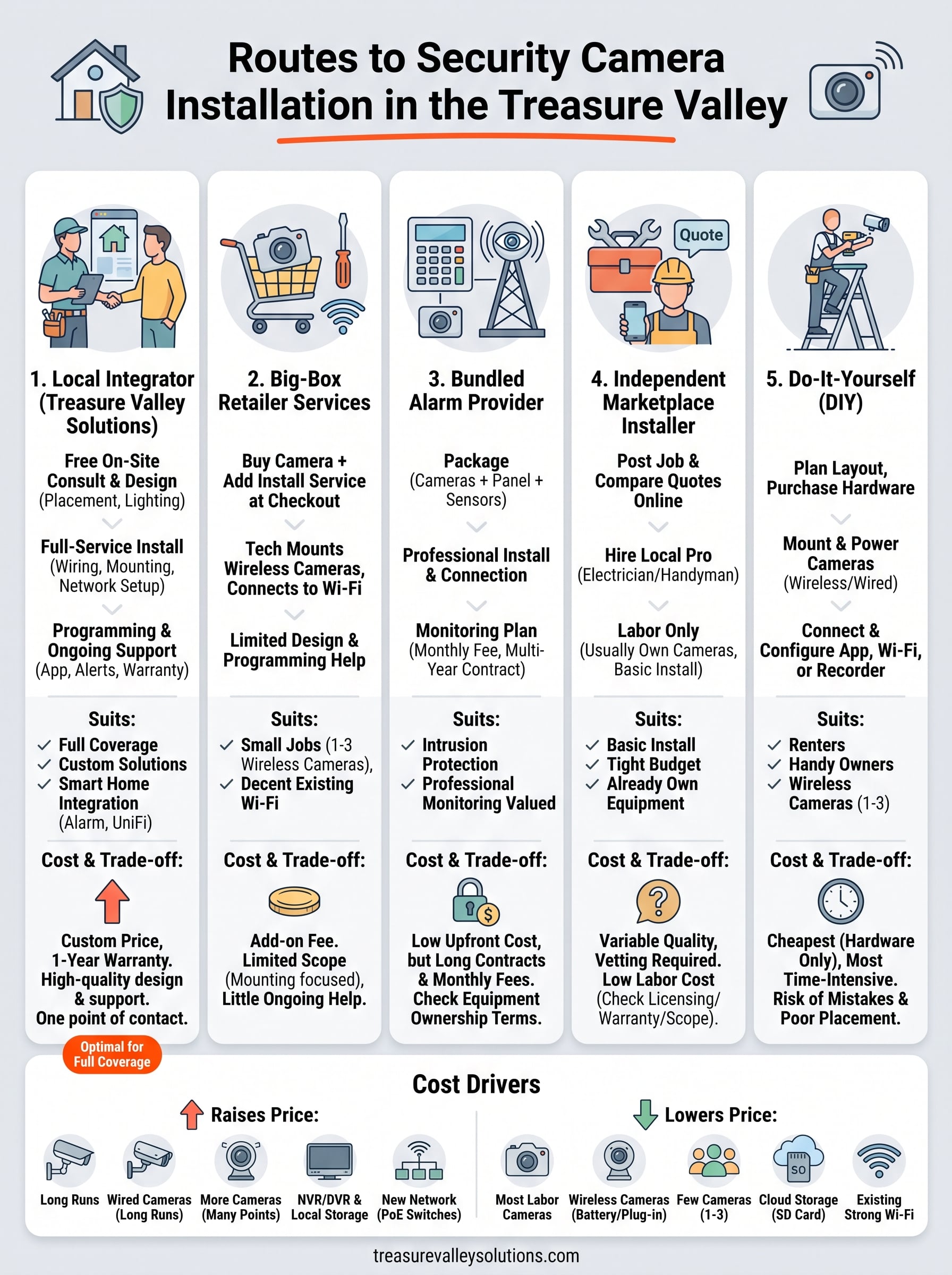
For a small wireless job, a retailer install or a confident DIY weekend is enough. For monitoring, a bundled alarm provider fits, as long as you read the contract. For a bare-labor budget job, a vetted marketplace pro works. When you want coverage designed around your property, wired where it should be, and supported after install, a local integrator is the safer pick.
If that sounds like you, request a free on-site estimate from Treasure Valley Solutions. We'll walk the property, plan the camera positions, and give you a clear quote with no obligation.