 (208) 991-3502
 Meridian, ID



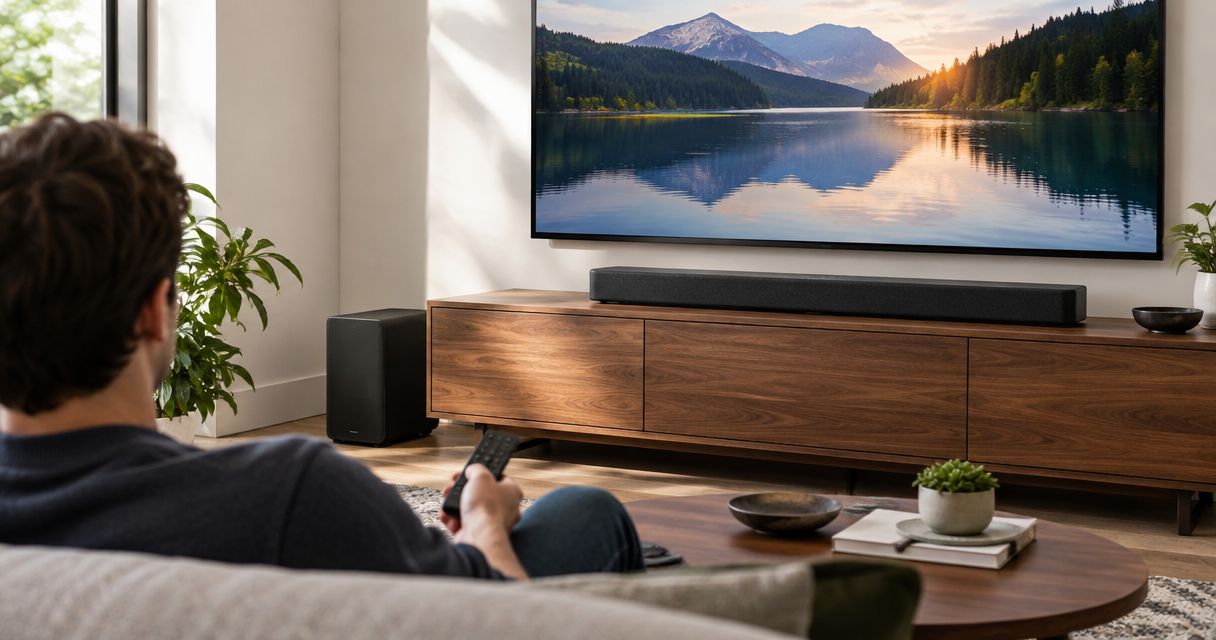

Compare the best soundbars for TVs in 2026. Sonos Arc leads for streaming; see Samsung, Sony and Yamaha picks for surround sound and smaller rooms.
Best overall for streaming: Sonos Arc. Best for surround sound with rear speakers: Samsung HW-Q990D. Best for connecting HDMI sources: Sony HT-A7000. Best for a compact stereo setup: Yamaha SR-C20A. This 2026 guide compares the best soundbars for TVs by room fit, connections and installation needs; Treasure Valley Solutions installs audio/video systems for homes and businesses throughout the Treasure Valley.
- The best soundbars for TVs match your room, connections and listening priorities—not just your television brand.
- Sonos Arc is the default recommendation for streaming-focused TV setups with HDMI eARC.
- Samsung HW-Q990D suits viewers who want a subwoofer and separate rear speakers.
- Sony HT-A7000 prioritizes HDMI source connections; Yamaha SR-C20A suits compact stereo setups.
Why this matters
A soundbar fixes a specific problem: television speakers that leave speech unclear or movies sounding thin. But choosing a larger bar does not solve every room problem. The wrong connection, blocked speakers or poorly placed rear channels can undermine the upgrade.
Buy for the room and signal path, not the largest channel count. A straightforward stereo setup can be the right answer for a bedroom, while a living-room movie system benefits from separate speakers behind the seating.
Treasure Valley Solutions provides soundbar-related audio/video installation alongside home theater and low-voltage wiring services. For your 2026 shortlist, decide where the speakers and cables will go before comparing feature lists.
What makes the best soundbars for TVs
Use these criteria to separate a suitable soundbar from one that creates installation problems:
- TV connection: Confirm whether your television provides HDMI ARC, HDMI eARC or optical output. Match the bar to the connection you will actually use.
- Dialogue control: Look for a speech-enhancement mode, then judge voices at your normal listening level. Clear dialogue matters more than an impressive demonstration scene.
- Room fit: Check the bar's width, height and speaker orientation against your screen, furniture and ceiling.
- Surround layout: Decide whether you can place rear speakers behind or beside the seating. Virtual surround and physically separate rear channels are different arrangements.
- Source connections: Count consoles, streaming players and disc players. Determine whether each connects to the television or directly to the soundbar.
- Installation demands: Include power outlets, cable routes, mounting clearance and everyday remote control in the decision.
Best soundbars for TVs at a glance
These 2026 picks serve different installation needs. The Sonos recommendation below refers to the original Sonos Arc, not the Arc Ultra; check the exact model name when comparing specifications.
| Soundbar | Best for | Standout feature | Key limitation |
|---|---|---|---|
| Sonos Arc | Streaming-focused TV setups | Dolby Atmos playback and Sonos multiroom integration | No separate HDMI source input |
| Samsung HW-Q990D | Surround sound with rear speakers | 11.1.4-channel system with subwoofer and rear speakers | Requires space and power for separate speakers |
| Sony HT-A7000 | Connecting HDMI sources | Two HDMI inputs alongside HDMI eARC | Separate rear speakers and subwoofer are additional components |
| Yamaha SR-C20A | Compact stereo setups | Approximately 60 cm-wide cabinet with built-in bass drivers | No Dolby Atmos playback |
Channel labels describe the speaker arrangement, not a universal quality score. In an 11.1.4-channel designation, the final number identifies height channels; it does not tell you whether your ceiling or seating position supports convincing overhead effects.
1. Sonos Arc: best soundbar for streaming-focused TV setups
The original Sonos Arc combines television audio, Dolby Atmos support and Sonos multiroom music playback in one bar. It connects to the television through HDMI ARC or eARC rather than acting as a hub for multiple HDMI sources.
That arrangement suits a television handling the streaming apps and source switching. It also gives you a path toward separate Sonos surround speakers and a compatible subwoofer without starting with those components.
Sonos Arc pros:
- Combines TV playback and networked music listening.
- Supports Dolby Atmos when the source and TV connection deliver a compatible signal.
- Offers speech enhancement and night listening controls.
- Can expand into a system with separate surround speakers.
Sonos Arc cons:
- No separate HDMI input for a console or disc player.
- The original Arc does not support Bluetooth audio playback.
- Upward-firing effects depend on ceiling shape and placement.
Best for: A living room where the television handles sources and you want music playback beyond TV sound.
Before choosing the Sonos Arc in 2026, check the television's audio pass-through settings. An eARC label alone does not establish that every connected source will deliver the format you expect. Follow the television and soundbar documentation for the complete connection path.
Verdict: Buy Sonos Arc for streaming and multiroom listening; skip it if direct HDMI source inputs are essential.
2. Samsung HW-Q990D: best soundbar for separate rear effects
The Samsung HW-Q990D is an 11.1.4-channel soundbar system with a separate subwoofer and rear speakers. It suits viewers who want sound physically originating behind the seating rather than relying entirely on a bar at the front of the room.
The separate components are the main reason to choose it—and the main installation commitment. Rear speakers need suitable positions and electrical power, even though they receive audio wirelessly.
Samsung HW-Q990D pros:
- Includes separate rear speakers for surround effects.
- Includes a separate subwoofer for low-frequency playback.
- Provides height channels for compatible Dolby Atmos material.
- Provides HDMI source inputs as well as a TV connection.
Samsung HW-Q990D cons:
- Rear speakers and the subwoofer add visible components to the room.
- Wireless audio connections do not remove the need for power cables.
- Seating against a wall limits rear-speaker placement choices.
Best for: A movie-focused living room with practical positions for rear speakers and a subwoofer.
Do not choose the Samsung HW-Q990D just because its channel count is larger. Choose it because you can use the complete speaker layout. Putting the rear speakers beside the television defeats the reason to select a system with separate rear channels.
Keep the subwoofer position flexible during setup. A location that looks tidy is not automatically the position that produces the most even bass at your seat.
Verdict: Buy Samsung HW-Q990D when you can accommodate the full surround layout; skip it when rear-speaker placement is impractical.
3. Sony HT-A7000: best soundbar for connecting HDMI sources
The Sony HT-A7000 is a 7.1.2-channel soundbar with two HDMI inputs and an HDMI eARC connection to the television. Those source inputs give you an alternative to routing every player or console through the TV.
That matters when your connection plan requires the soundbar to receive audio directly from a source. Sony also supports expansion with compatible separate subwoofers and rear speakers, but those components are not part of the standalone bar.
Sony HT-A7000 pros:
- Two HDMI inputs accommodate direct source connections.
- Supports Dolby Atmos and DTS:X playback.
- Includes built-in bass drivers for standalone operation.
- Supports expansion with compatible Sony surround components.
Sony HT-A7000 cons:
- Separate rear speakers and a separate subwoofer require additional components.
- The wide cabinet needs careful furniture and screen-clearance checks.
- Video pass-through settings and firmware need checking against your source requirements.
Best for: A setup where HDMI routing is a deciding factor rather than an afterthought.
For a 2026 installation, draw the signal path before choosing the Sony HT-A7000: source to soundbar, then soundbar to television, or source to television with audio returning over eARC. Neither arrangement is automatically right for every console, display and audio format.
Check the specific video features you need in Sony's current support documentation. HDMI connector shape alone does not establish support for every resolution, refresh rate or gaming feature.
Verdict: Buy Sony HT-A7000 for its HDMI connection flexibility; hold if you have not mapped your sources and display requirements.
4. Yamaha SR-C20A: best soundbar for compact stereo setups
The Yamaha SR-C20A is approximately 60 cm wide and combines stereo speakers with built-in bass drivers. It provides HDMI ARC, optical and Bluetooth connections without requiring a separate subwoofer.
Its purpose is straightforward television listening in a smaller physical footprint. It is not a substitute for a Dolby Atmos system or separate rear speakers.
Yamaha SR-C20A pros:
- Compact cabinet fits spaces that cannot accommodate a wide soundbar.
- Built-in bass drivers avoid a separate subwoofer enclosure.
- HDMI ARC supports a straightforward TV connection.
- Clear Voice mode targets dialogue intelligibility.
Yamaha SR-C20A cons:
- No Dolby Atmos decoding or dedicated height channels.
- No separate rear-speaker layout.
- No HDMI source input for direct console or disc-player connections.
Best for: A bedroom, secondary television or small viewing area where simple controls and limited equipment matter most.
Measure the space beneath the screen rather than choosing by television size alone. A compact bar still needs clearance around its drivers and must not block the television's remote-control receiver.
For everyday viewing, assess the Yamaha SR-C20A with spoken dialogue before trying action scenes. Your normal news program or drama is a better decision aid than a brief high-volume demonstration.
Verdict: Buy Yamaha SR-C20A for compact stereo listening; skip it if overhead effects or rear channels are requirements.
Get placement right before connecting anything
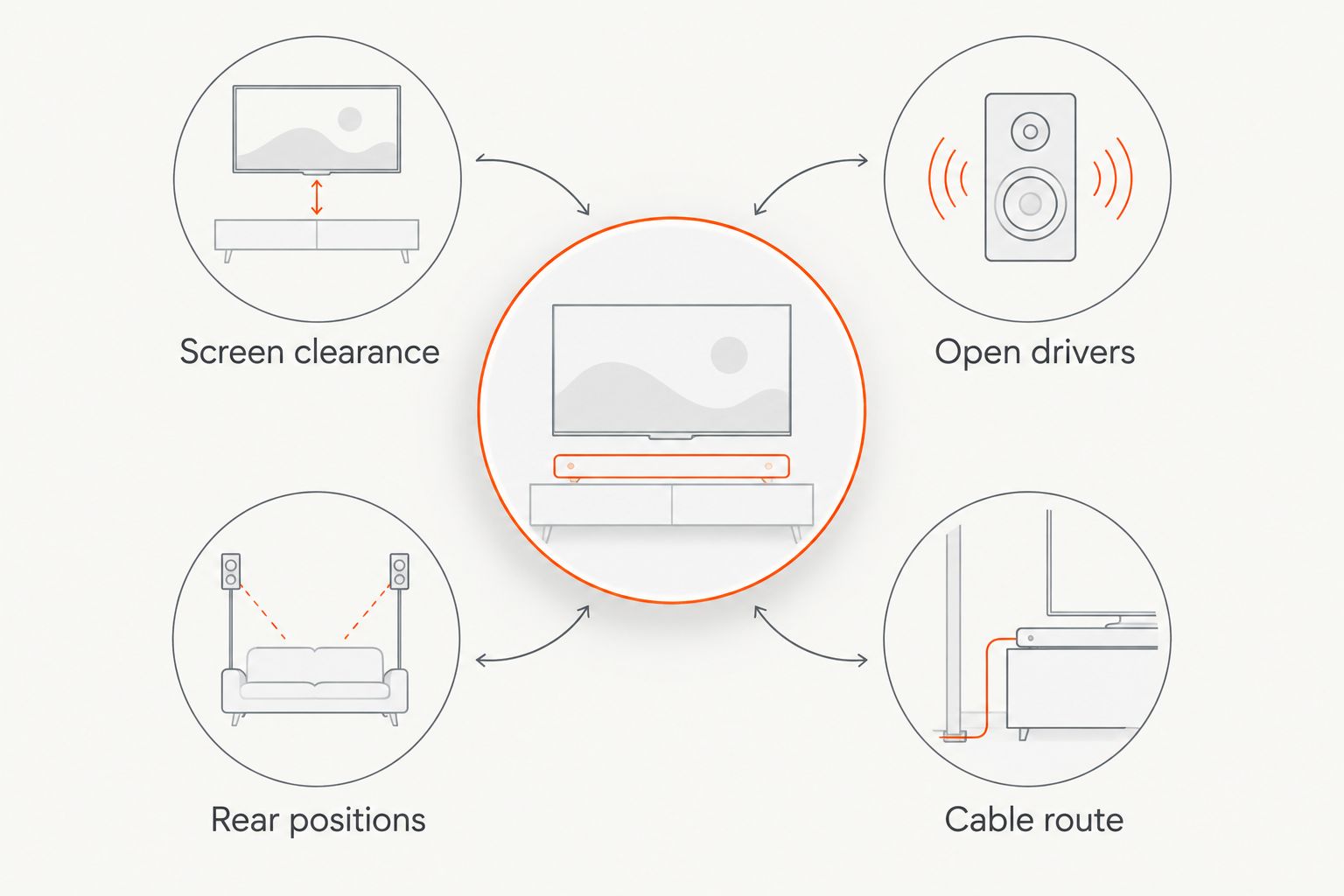
A soundbar installation starts with the furniture, screen and listening position. Use these checks before mounting the bar or concealing cables:
- Screen clearance: Keep the picture and remote-control receiver unobstructed.
- Open drivers: Keep speaker grilles clear; do not bury upward-firing speakers inside a cabinet.
- Rear positions: Put separate rear speakers where they can serve the seating area, with power available.
- Cable route: Plan the HDMI path and use an appropriate, code-compliant method for concealed wiring.
Test the entire setup before closing a wall or fixing cable covers in place. Confirm television control, streaming audio, each external source and any rear speakers. A clean-looking installation still needs to work reliably from the controls you use every day.
Treasure Valley Solutions installs home theater, audio/video and low-voltage wiring systems in Boise, Meridian and the greater Treasure Valley. Use the contact page to discuss the television, room layout and cable-concealment requirements.
How the soundbars are ranked
This ranking prioritizes connection fit, speaker layout, dialogue controls and installation demands. It is a specification-based buying guide, not a claim of hands-on comparative testing or measured acoustic performance.
The model features described here follow Sonos Arc product documentation, Samsung HW-Q990D specifications, Sony HT-A7000 specifications and Yamaha SR-C20A documentation. For a 2026 purchase decision, confirm the exact model, regional documentation and firmware-dependent features before committing to the installation.
Which soundbar should you choose?
Sonos Arc is the default soundbar recommendation for streaming-focused households that want Sonos multiroom audio. Choose Samsung HW-Q990D instead when separate rear speakers are central to your movie setup.
Choose Sony HT-A7000 when direct HDMI source connections determine the system design. Choose Yamaha SR-C20A when compact stereo listening is the goal. None of these choices requires replacing your television simply to match the soundbar's brand.
FAQ
What's the best soundbar for TVs in 2026?
Sonos Arc is the default pick here for streaming-focused TV setups with Sonos multiroom audio. Samsung HW-Q990D suits separate rear-speaker surround, Sony HT-A7000 suits HDMI source connections, and Yamaha SR-C20A suits compact stereo listening.
Do I need the same brand of soundbar as my TV?
No, the soundbar and television do not need matching brands. Match their audio connections and supported formats, then check whether any brand-specific features matter to your setup.
Is HDMI eARC better than optical for a soundbar?
HDMI eARC supports higher-bandwidth audio formats that optical cannot carry. The practical benefit depends on the television, soundbar, source and content, so check the complete signal path.
Will a Dolby Atmos soundbar work with any ceiling?
Upward-firing Dolby Atmos speakers depend on ceiling shape, surface and placement for reflected height effects. A high, angled or acoustically absorbent ceiling changes those reflections, so do not treat the Atmos label as a guarantee of overhead sound.
Do wireless soundbar rear speakers need power outlets?
The Samsung HW-Q990D rear speakers need electrical power even though their audio connection is wireless. Plan outlets and power-cable routes before deciding where the speakers will sit.
Can I put a soundbar inside a TV cabinet?
Avoid enclosing a soundbar when the cabinet blocks its speaker drivers. Upward-firing and side-firing speakers need clearance, and the manufacturer's placement instructions determine the appropriate arrangement.
Should I choose a soundbar or an AV receiver?
Choose a soundbar when you want fewer components and a simpler front-of-room setup. Choose an AV receiver with separate speakers when speaker placement, source routing and future component changes are priorities.
One last thing
The quiet dialogue scene is the test that matters. Before finalizing the setup, play familiar spoken content at your normal evening volume, then switch to another source. If voices become difficult to follow, adjust the dialogue mode, source output and placement before increasing overall volume.
Related guides
Recent Google reviews
Read all reviews →“Great job!!”
“Amazing customer experience. They went above and beyond installing my 2 TVs on the wall and setting up my ring doorbell. Thier price was very very reasonable. Great experience, have used their service twice now.”
“Professional, on time and the team did an outstanding job! 100% would recommend and will use again.”