 (208) 991-3502
 Meridian, ID



Rekeying a lock every time a tenant moves out costs money, and a lost key or a guest who never returns a copy costs more. Smart locks for rental properties fix that problem. You issue a code, set an e...
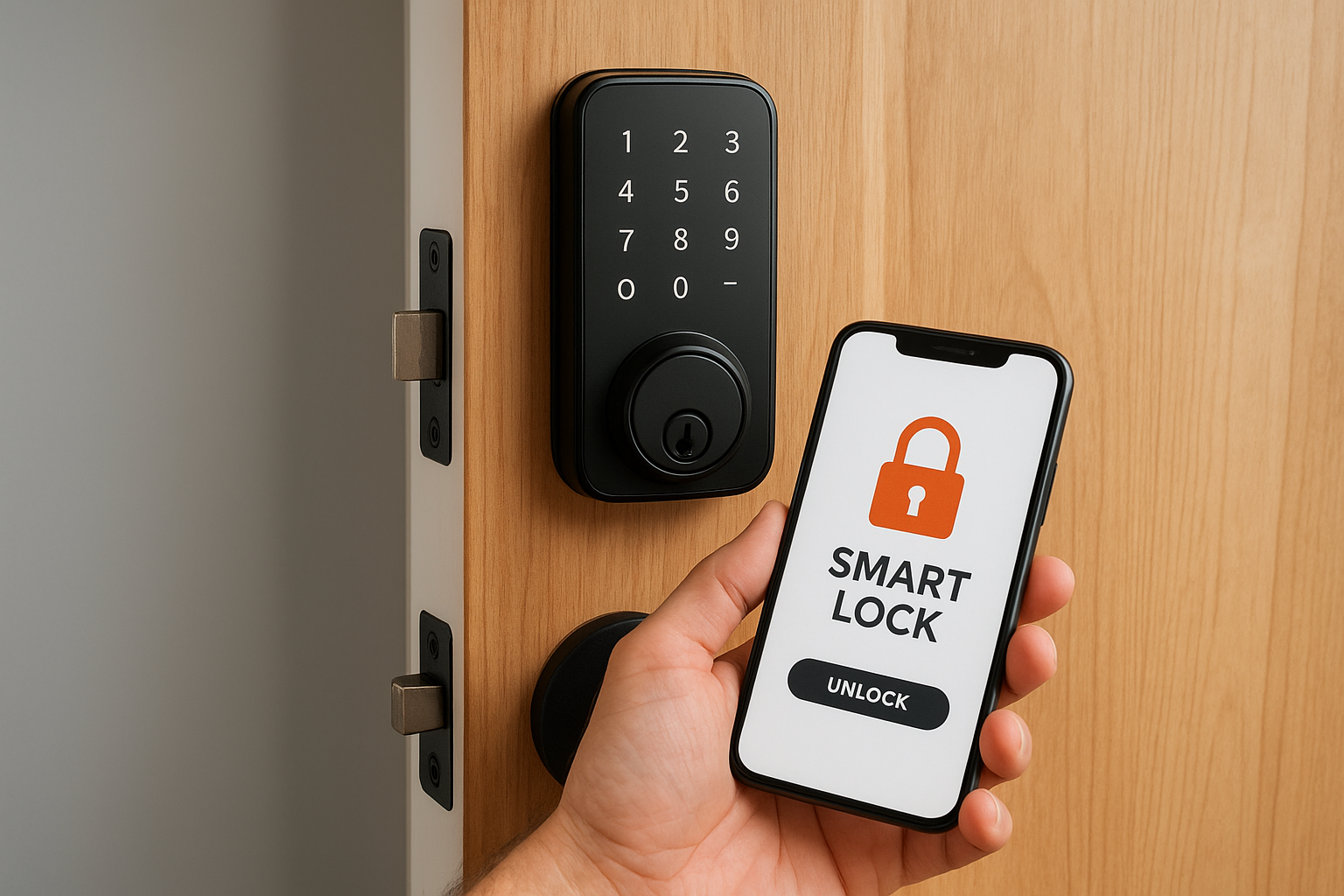
Rekeying a lock every time a tenant moves out costs money, and a lost key or a guest who never returns a copy costs more. Smart locks for rental properties fix that problem. You issue a code, set an expiration, and see who came and went, all from your phone.
The best pick depends on your setup. For long-term rentals, a keypad deadbolt with unique user codes is usually enough. For Airbnb and short-term stays, you want automatic code scheduling and a reliable Wi-Fi or hub connection. Renters should look for models that install without drilling and can go back on the original hardware at move-out.
Below, you'll find seven locks we rate for security, installation difficulty, and remote management. We install and program access control for property managers across Meridian, Boise, Eagle, and Nampa, so these picks come from what holds up in real units, not spec sheets. Each entry covers who it suits, what it costs to run, and where it falls short.
1. Treasure Valley Solutions professionally installed smart locks
How it works
Treasure Valley Solutions doesn't hand you a boxed lock and wish you luck. We design an access control setup around your doors, your Wi-Fi, and your tenants, then install and program it. The hardware comes from proven brands, so the lock fits the property instead of the other way around.
Programming is where most rentals go wrong. We configure user codes, schedules, and entry notifications before handoff, so you aren't sorting it out the night before a check-in.
Best for
This option suits owners who want the job done once and done right:
- Property managers who need consistent access control across multiple units
- Landlords running a mix of long-term and short-term rentals
- Builders and owners of new construction who want doors pre-wired
- Owners who would rather not troubleshoot hubs and apps themselves
Installation and remote management
Licensed, insured technicians handle the hardware install, network setup, and testing on every door. We try real codes before we leave, so you know the lock works the way you'll use it.
A smart lock only protects a rental if it is installed square, programmed correctly, and supported after move-in.
After that, you manage codes from your phone: add a tenant, expire a guest, review activity. When something acts up, you call a local team in Meridian that already knows your system.
Cost and drawbacks
Pricing is quoted per project, because it depends on door count, lock models, and network needs. Expect to pay more up front than you would for a retail lock and a Saturday of your own labor. We've kept pricing transparent since 2014, so you see the number before work starts.
The drawbacks are real. We serve the Treasure Valley only, and you need to schedule a visit. A renter who can't modify the door won't get much from this route. If you own the property, request a quote from Treasure Valley Solutions and we'll spec it for you.
2. Schlage Encode Plus
How it works
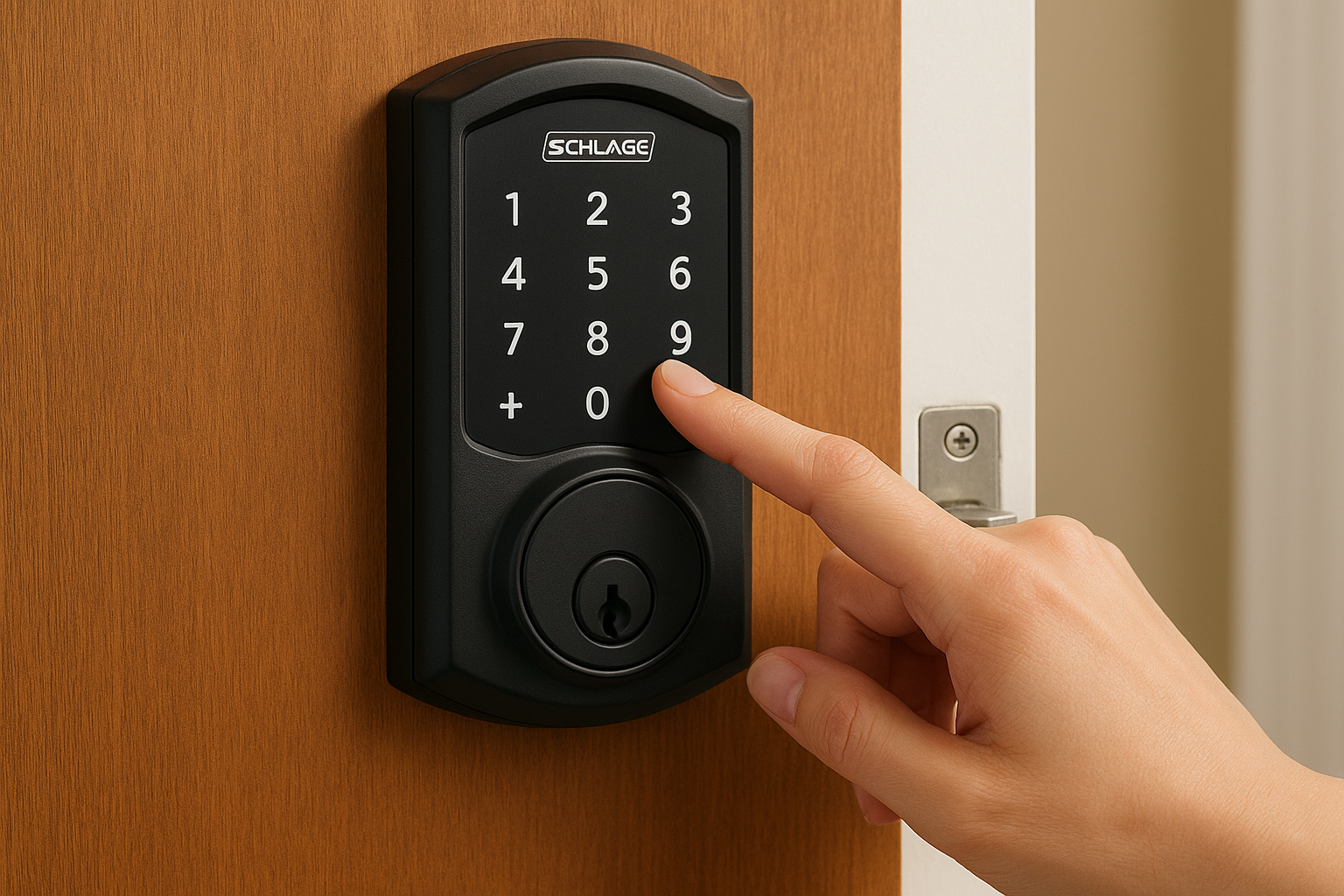
The Encode Plus is a keypad deadbolt with Wi-Fi built in, so you skip the hub and run everything from the Schlage Home app.
- Holds up to 100 access codes, each with optional schedules
- Works with Apple Home Key, Alexa, and Google Home
- Includes a key cylinder backup and a tamper alarm
Best for
Small landlords and hosts with one to a few doors get the most from it. Scheduled codes let a cleaner or guest in for a set window, and you get a notification when they do.
Large portfolios are a weaker fit. You manage each lock separately in the app, which gets tedious past a handful of units.
Installation and remote management
Installation takes 20 to 30 minutes with a screwdriver. It fits standard deadbolt cutouts, so you rarely need to drill, and you join it to your Wi-Fi during setup.
Once it's online, you can lock, unlock, and edit codes from anywhere.
Built-in Wi-Fi saves you a hub, but you pay for it in battery life.
Cost and drawbacks
Expect to pay roughly $300 to $350 per lock. Wi-Fi drains the four AA batteries faster than a hub-based lock, so check them every few months.
Because remote control depends on your internet, a router outage cuts you off. The keypad still works locally, and renters need landlord approval since it replaces the deadbolt.
3. Yale Assure Lock 2
How it works
The Yale Assure Lock 2 is a modular deadbolt. It ships with Bluetooth, and you add a plug-in network module for Wi-Fi, Z-Wave, or Zigbee. You pick a touchscreen or keypad model, with or without a key cylinder. It stores up to 250 PIN codes, which helps in units with frequent turnover.
Best for
Mid-size landlords and hosts who already run a hub, or plan to, get the most from it. The Z-Wave and Zigbee options let you tie several doors into one system instead of juggling separate apps.
Buy the network module that matches your setup, not the cheapest one.
For rentals, we lean toward the keyed version. A tenant locked out by a dead battery can still get in.
Installation and remote management
Installation takes about 30 minutes on a standard deadbolt prep. Once the module is installed, you can manage codes and check activity in the Yale Access app. Without a module, Bluetooth only works when you're standing near the door, so remote control is off the table.
Cost and drawbacks
Expect roughly $200 to $250 for the lock, plus the module if it isn't bundled. Wi-Fi versions often run $60 to $80 more.
The drawbacks are the extra module cost and the four AA batteries, which need checking every few months. Renters need landlord approval, since the lock replaces the existing deadbolt.
4. Kwikset Halo
How it works
The Halo is a Wi-Fi deadbolt, so you don't buy a hub. Its best feature for landlords is SmartKey rekeying. You reset the lock to a new physical key in seconds, with no locksmith, which matters when keys go missing between tenants.
SmartKey rekeying turns a lost key into a 30-second fix instead of a service call.
- Touchscreen, keypad, and fingerprint versions
- Up to 250 user codes
- Works with Alexa and Google Assistant
Best for
Budget-minded landlords with a few long-term units get the most value here. Rekeying is easy, and the code limit is generous. Hosts who want hands-off guest access can use scheduled codes too, though the app is less polished than Schlage's.
Installation and remote management
Expect 20 to 30 minutes on a standard prepped door with a screwdriver. Join the lock to your Wi-Fi in the Kwikset app, and you can lock, unlock, and edit codes remotely, then review the activity log.
Cost and drawbacks
Prices run roughly $170 to $250 per lock, depending on the model. That undercuts most rivals on this list.
Build quality sits in the mid-range, so busy multi-unit buildings may wear it faster. Wi-Fi also drains the four AA batteries quickly, and remote control stops if the internet drops. Renters need landlord approval.
5. August Wi-Fi Smart Lock
How it works
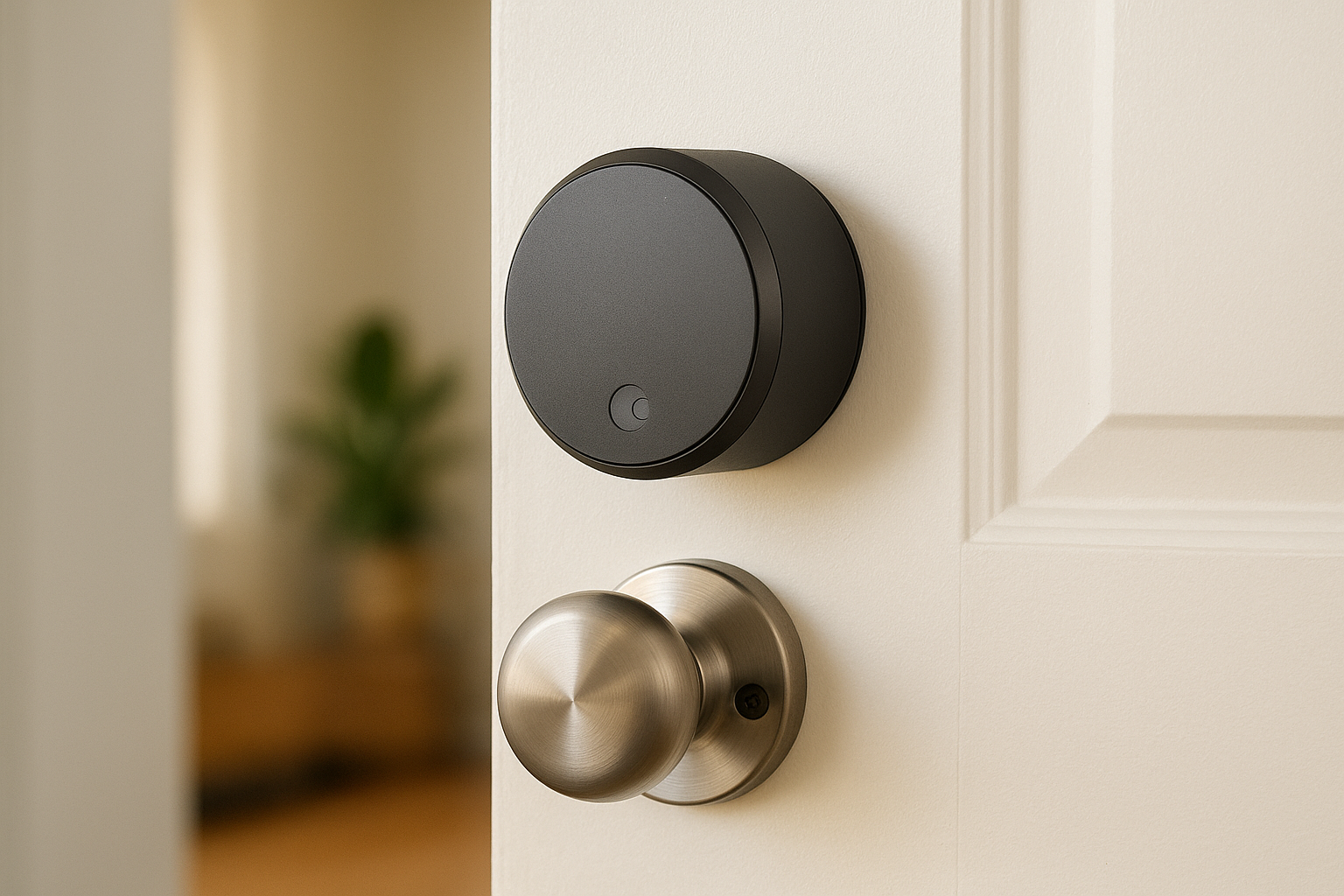
The August Wi-Fi Smart Lock is a retrofit lock. It replaces only the interior thumb-turn, so your existing deadbolt, outside keyway, and keys stay as they are. Wi-Fi is built in, so there is no hub to buy.
- Guest access through virtual keys with set start and end times
- Auto-lock and auto-unlock based on your phone's location
- Works with Alexa, Google Home, and Apple Home
Best for
Renters get the most from it, because nothing on the outside of the door changes. At move-out, you put the original thumb-turn back. Check your lease anyway.
August is the rare smart lock a renter can install and fully undo in an afternoon.
Short-term hosts can use it too, but guests need the app or the optional August keypad, which costs extra.
Installation and remote management
Setup takes 10 to 15 minutes with a screwdriver, and it fits most single-cylinder deadbolts. Confirm compatibility in the August app before you buy.
From the app, you can lock, unlock, and send guest keys from anywhere. The activity log shows who came and went.
Cost and drawbacks
Expect roughly $150 to $230, with the keypad adding about $50. Wi-Fi also drains the batteries faster than a hub-based lock.
Because the exterior hardware stays, security is only as good as your existing deadbolt. There is no built-in keypad, and remote control stops when your internet drops.
6. Schlage BE365 keypad deadbolt
How it works
The BE365 is the simple option on this list. It's a standalone keypad deadbolt with no Wi-Fi, no hub, and no app. You program codes at the keypad itself, and it stores up to 30 of them. It runs on four AA batteries and keeps a key cylinder as backup.
Best for
Long-term landlords get the most from it. If you want smart locks for rental properties that only need a unique code per tenant, this does the job for a fraction of the price. Owners with a few stable units and no need for an activity log are the target buyer.
Short-term hosts should look elsewhere. Without scheduled codes or notifications, you can't automate guest check-ins.
Installation and remote management
Expect about 20 minutes with a screwdriver on a standard deadbolt prep. Between tenants, you delete the old code and add a new one at the door.
The BE365 trades remote control for simplicity, and for many long-term rentals that is a fair deal.
There is no remote management at all. You have to be on site to change codes, and you won't see who entered.
Cost and drawbacks
Prices run roughly $120 to $160 per lock, the lowest here. That makes it practical for outfitting several doors on a tight budget.
The drawbacks are the missing entry history, scheduling, and alerts. Renters also need landlord approval, since the lock replaces the deadbolt.
7. Rently Smart Bolt
How it works
The Smart Bolt is a keypad deadbolt built around the Rently self-showing platform. It pairs with a Rently hub, and the system issues time-limited codes to prospects who verify their identity before a tour. The code stops working when the showing window ends.
Best for
Vacancy is where this lock pays off. Landlords and property managers with units that sit empty between tenants can skip sending an agent to meet every applicant at the door.
- Property managers filling several units at once
- Landlords who show properties on evenings and weekends
- Owners who want an entry log for every showing
It is a poor match for Airbnb hosts and renters. The system is built around leasing workflow, not guest stays.
Installation and remote management
Expect the deadbolt itself to mount like other locks on this list, with a screwdriver on a standard door prep. The extra step is pairing it with the Rently hub, so budget more time per unit than for a Wi-Fi lock. From the Rently dashboard, you can create and revoke codes and review who entered, all remotely.
Rently is a leasing tool first and a lock second, so buy it for the showings, not just the door.
Cost and drawbacks
Pricing is quote-based and typically pairs hardware with a monthly platform fee, so confirm the full cost with Rently before you commit. That recurring charge adds up across many doors.
It is overkill if you have one stable, long-term tenant. You also depend on the hub and the Rently service, and renters need landlord approval since the lock replaces the deadbolt.
Choosing the right lock for your rental
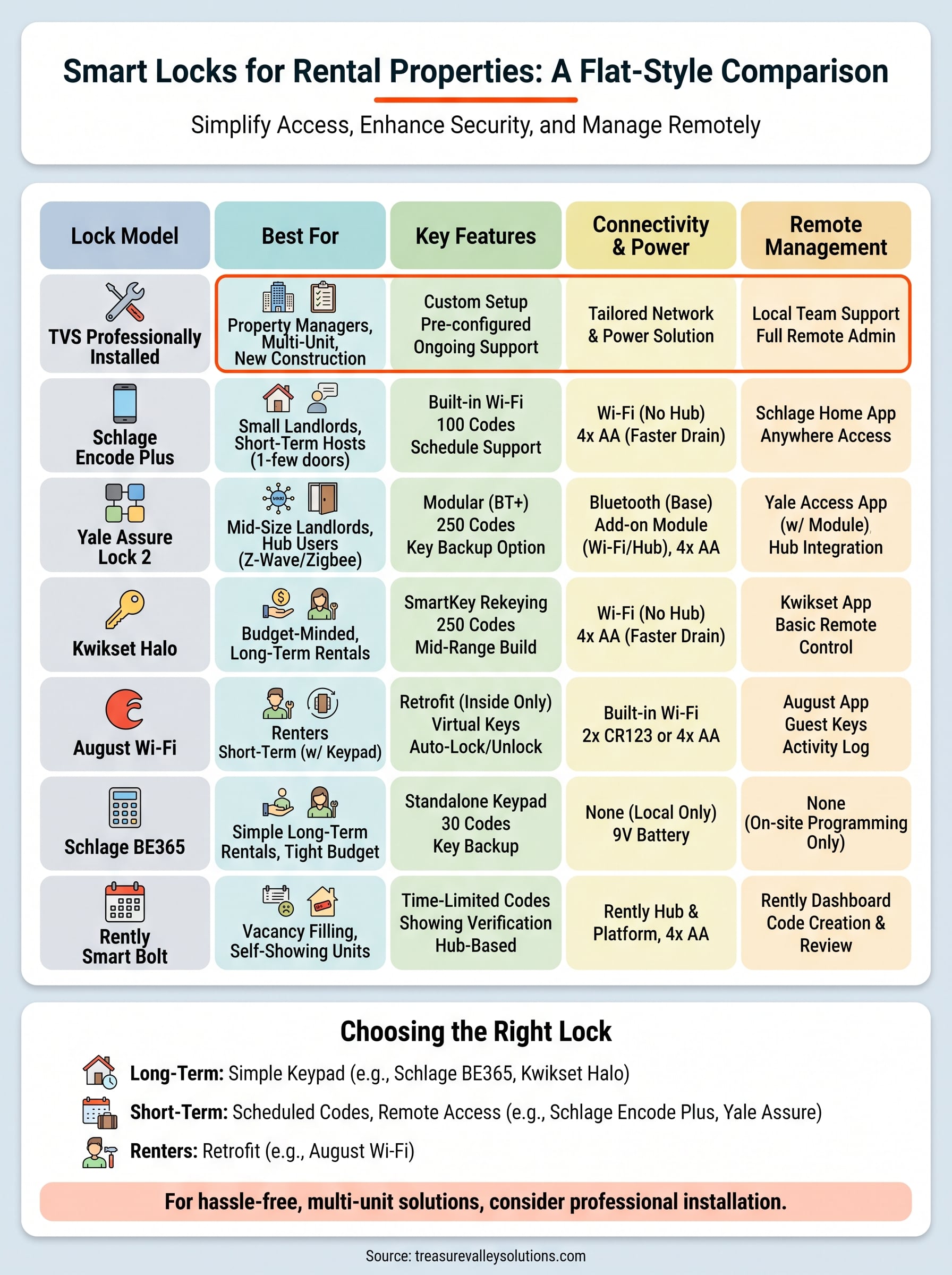
Match the lock to how you rent. Long-term landlords can stay simple with the Schlage BE365 or the Kwikset Halo. Short-term hosts need scheduled codes and remote access, which points to the Schlage Encode Plus or the Yale Assure Lock 2. Renters should start with August, and vacant units suit Rently.
Whichever you pick, the best smart locks for rental properties share the same traits: a solid deadbolt, an easy way to change codes between tenants, and remote control you will actually use. Skip features you won't touch.
If you own several doors, or you'd rather not spend a weekend on hubs and apps, let us handle it. We design, install, program, and support the whole system, so every door works on day one. Contact Treasure Valley Solutions to plan your rental's access control and get a quote before work starts.