 (208) 991-3502
 Meridian, ID



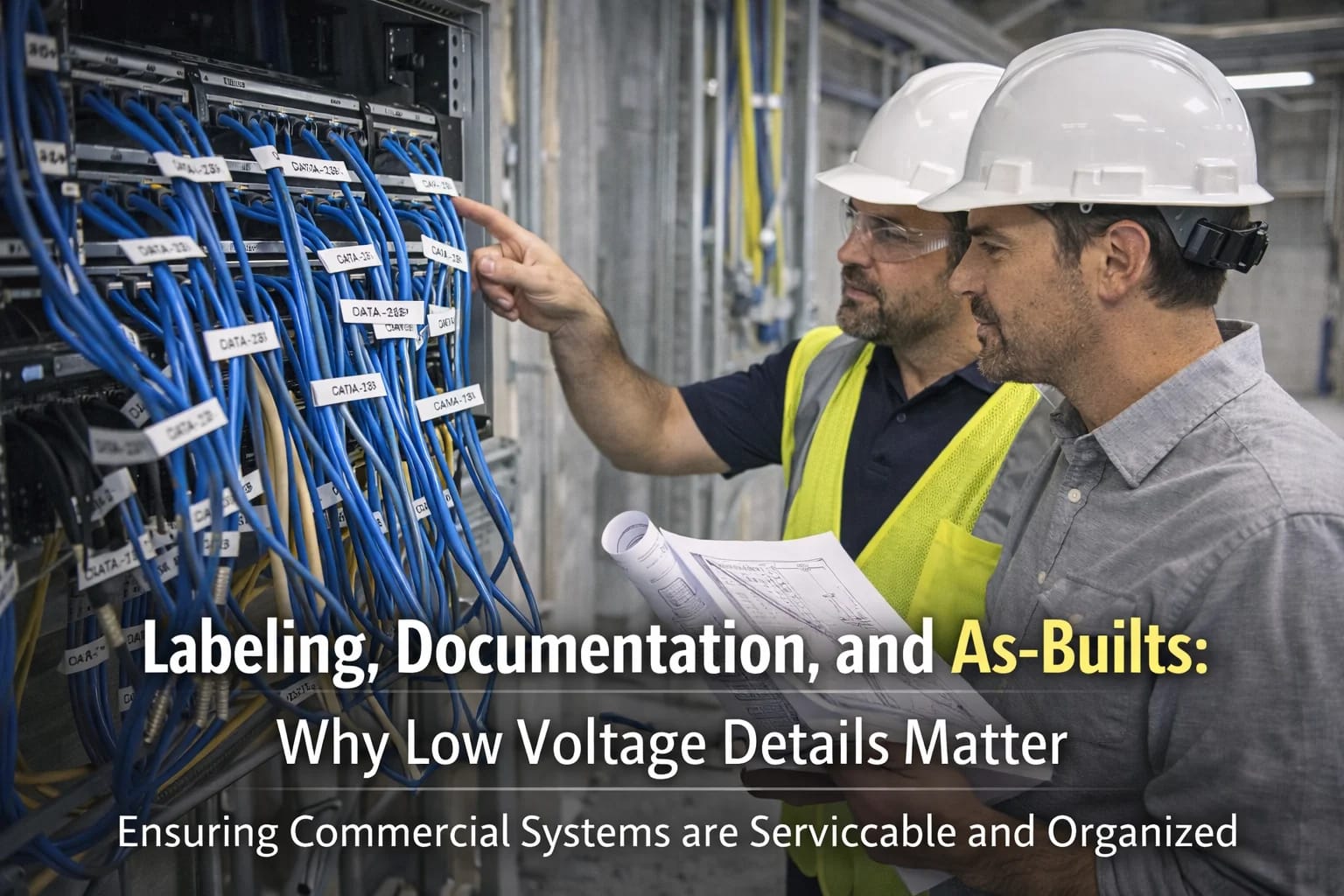

Low-voltage systems rarely fail because of bad equipment. They fail because no one knows how they were installed. This article explains why labeling, documentation, and as-builts are critical for commercial low-voltage systems—and how skipping them creates long-term problems. Written for general contractors and electricians who care about long-term project success.
Plan the right scope
Choose a conference-room project path
The Problem No One Notices Until Something Breaks
Most low-voltage systems work quietly in the background. Until they don’t.
When a camera goes offline, a network port stops working, or a system needs to expand, the first question is simple:
Where does this cable go?
If the answer isn’t clear, the real problem begins.
Poor labeling and missing documentation turn small issues into time-consuming investigations. What should take minutes can take hours.
Why Low Voltage Systems Depend on Documentation
Unlike power circuits, low-voltage systems often involve hundreds of cables that look the same. Without labels, they are impossible to trace quickly.
Documentation provides context:
What the cable supports
Where it starts and ends
How it connects to other systems
What was installed and why
Without that information, every change becomes guesswork.
Labeling Is Not Optional in Commercial Projects
Labeling is one of the simplest steps in a low-voltage install—and one of the most skipped.
Proper labeling allows technicians to:
Identify cables quickly
Avoid accidental disconnections
Troubleshoot faster
Make changes with confidence
Labels should be clear, consistent, and durable. Handwritten tags that fade or fall off do not last.
Good labeling saves time every time the system is touched.
As-Builts Capture Reality, Not Just Design
Construction drawings show intent. As-builts show what actually happened.
During construction, things change. Pathways shift. Device locations move. Equipment gets relocated.
As-built documentation records those changes so future teams are not working from outdated plans.
Without as-builts, the system exists only in the installer’s memory—which disappears the moment the project is finished.
Why GCs and Owners Feel the Pain Later
Poor documentation often does not cause immediate problems. It shows up months or years later.
When a tenant remodels, an owner upgrades systems, or a service call is needed, missing documentation slows everything down. Costs rise. Downtime increases. Frustration follows.
Clear documentation protects owners and reduces long-term operating costs.
Documentation Makes Expansion and Upgrades Easier
Commercial buildings change over time.
Well-documented low-voltage systems allow:
Faster expansions
Cleaner upgrades
Lower labor costs
Less disruption to occupied spaces
Teams can build on what exists instead of starting over.
The GC’s Role in Setting Expectations
General contractors play an important role by setting documentation expectations early.
When labeling and as-builts are included in the scope, they get done. When they are not discussed, they are often skipped.
Clear expectations lead to better long-term outcomes.
Final Takeaway
Low-voltage systems do not end when installation is complete.
Labeling, documentation, and as-builts turn a working system into a serviceable one. They protect the investment and make future work easier for everyone involved.
In commercial construction, details are not extra—they are essential.
Need Expert Help?
Ready to implement these solutions in your own home or business?
Our Services

Explore whole-home audio, commercial sound, Sonos setup, and surround sound installation in the Treasure Valley.

Home theater design and installation planned around your room, viewing goals, and equipment scope.

High-definition surveillance for peace of mind.
Comprehensive security solutions for home and business.
Serving the Treasure Valley
Local installation in your city