 (208) 991-3502
 Meridian, ID



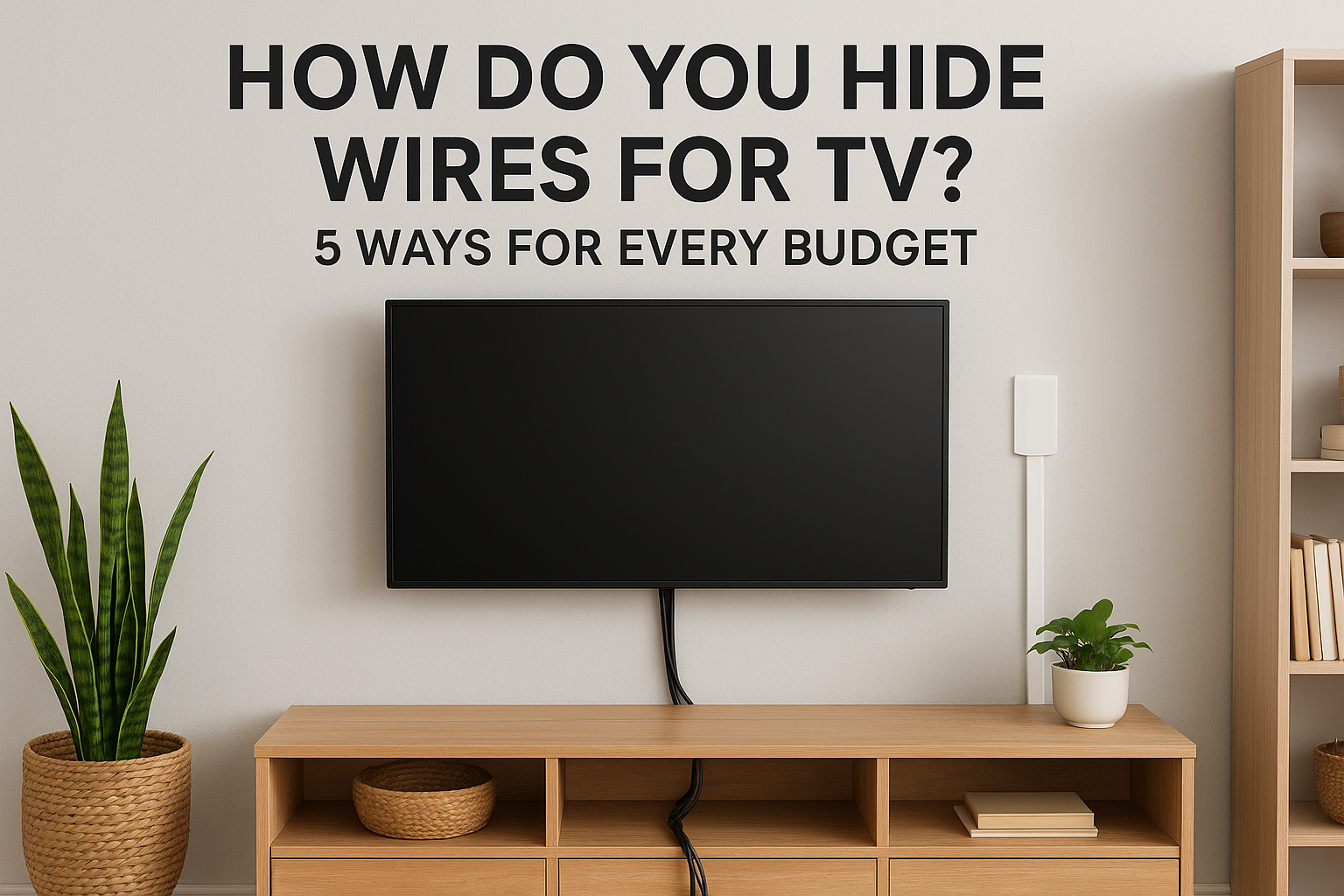

How do you hide wires for TV setups without tearing up a wall? Match the fix to your TV. On a stand, clips, sleeves and furniture hide most cables for under $30. On a wall, a paint-matched raceway hid...
How do you hide wires for TV setups without tearing up a wall? Match the fix to your TV. On a stand, clips, sleeves and furniture hide most cables for under $30. On a wall, a paint-matched raceway hides cords without cutting, an in-wall kit makes them disappear behind drywall, and a professional install handles brick, stone and awkward layouts. One rule applies to every option: never run a standard power cord inside a wall.
Dangling cables are the first thing you notice on a mounted TV. On a stand, they collect dust, trip people and tempt pets. Most advice stops at "buy a cord cover," which ignores that a TV on a console, a TV on drywall and a TV over a brick fireplace need different answers.
The five options below run from the least effort to the cleanest finish. Each one explains how it works, who it suits and what it costs. Treasure Valley Solutions mounts TVs and runs low voltage wiring across Meridian, Boise and the rest of the Treasure Valley, so the last option includes real pricing for pro help.
1. Cable clips and sleeves
Clips and sleeves are the fastest way to hide wires for a TV that sits on a stand. They need no tools and no wall work.
How it works
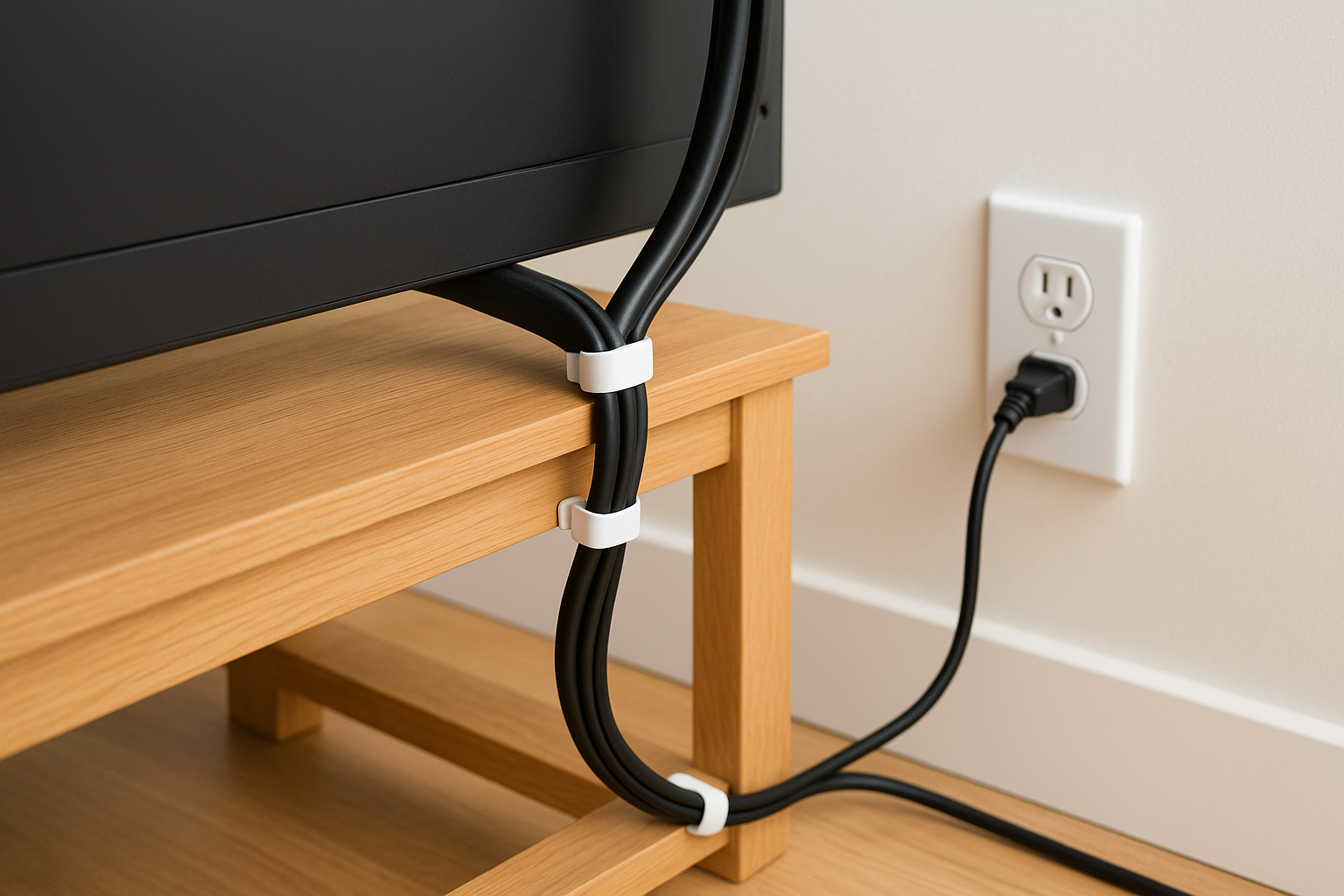
Adhesive clips pin individual cables to the back or legs of a stand, and a sleeve wraps several cables into one clean line. Together they turn a tangle into a single dark strand that sits out of sight. Follow this order:
- Unplug everything and straighten each cable.
- Slide the power, HDMI and audio cables into one sleeve.
- Clip the bundle along the back edge of the stand and down a leg.
- Leave about 6 inches of slack at the TV so you can pull it forward.
Who it suits
Renters and anyone with a stand-mounted TV should start here. It also fixes the cords crossing the floor between the console and the outlet, with no trunking involved. It does little for a wall-mounted TV, where the cable run is long and visible.
If your TV sits on furniture, bundling the cables beats trying to bury them.
Cost and effort
Expect to spend about $10 to $20 and 15 minutes. Wipe the surface with rubbing alcohol first so the adhesive holds. If you rent, pick clips with removable adhesive.
2. Paint-matched cord cover or raceway
A raceway is the best no-cut answer for a wall-mounted TV. It is a slim channel that holds the cables and disappears once painted.
How it works
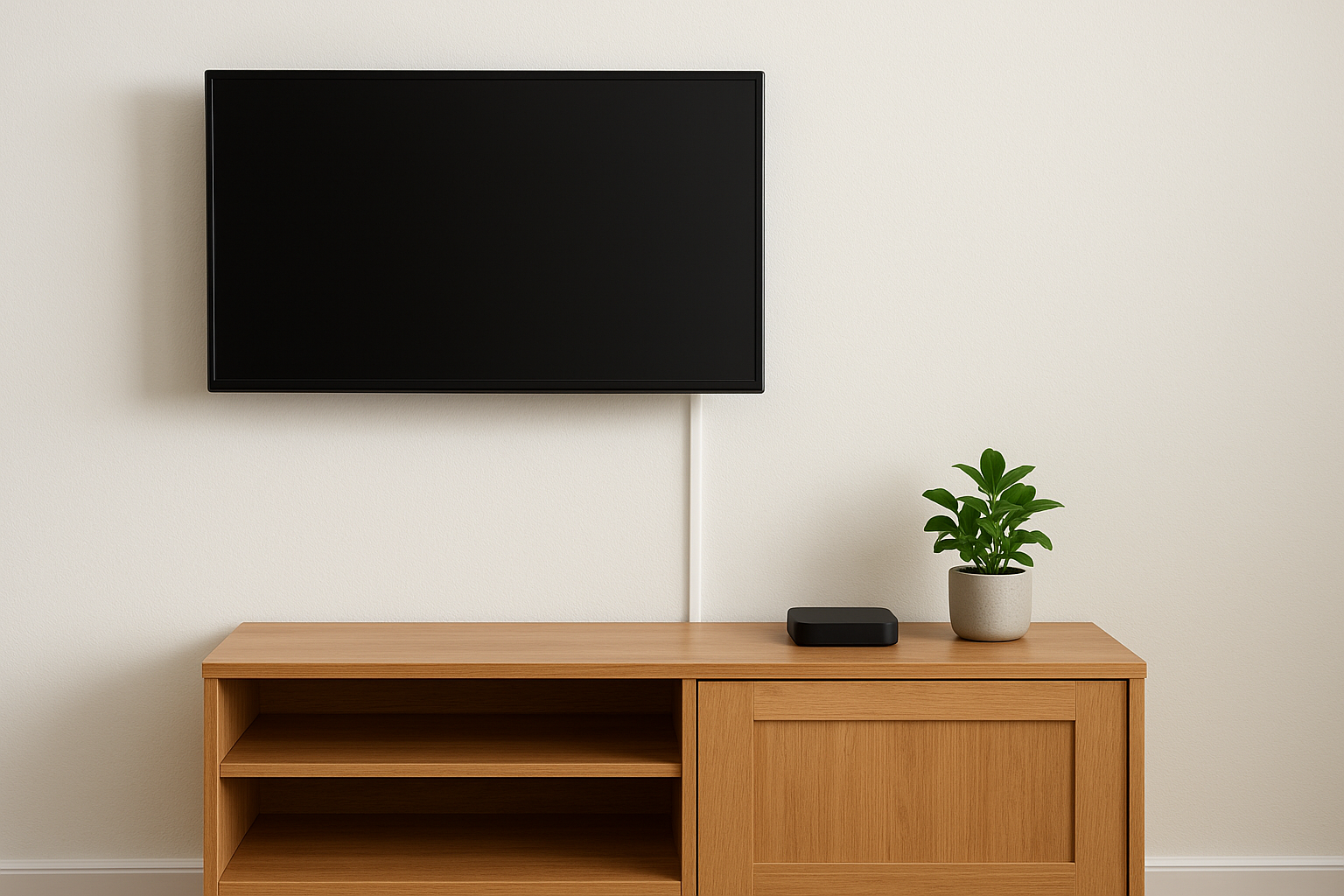
The channel sticks to the wall and runs straight down from the TV to the outlet or media shelf. You paint it the wall color, so it reads as a thin trim line instead of a cord. This is how most people hide wires on a wall TV without cutting the wall. The steps are simple:
- Measure from the bottom of the TV to the outlet, then add a few inches.
- Stick the base channel to the wall, using a level to keep it plumb.
- Lay in the power and HDMI cables, then snap the cover on.
- Paint the cover with two thin coats.
Who it suits
Choose it for drywall, brick, tile and rental walls where in-wall work is off the table. Above a fireplace, run the channel to the side of the opening and keep it well away from firebox heat, because plastic and hot masonry do not mix.
A painted raceway is the cleanest way to hide TV wires when you cannot or will not cut the wall.
Cost and effort
A kit typically costs $15 to $30 and takes about 30 minutes. Removal can lift paint, so test the adhesive on a hidden spot if you rent.
3. Furniture and decor that cover the cables
Furniture and decor hide wires for a TV by giving the cables somewhere to go, and they work best combined with option 1 or 2.
How it works
A media console with back-panel cutouts lets cords drop straight to a power strip inside a cabinet. Some Samsung models, such as The Frame, send signal over one slim cable to a separate box, which you can tuck into the console. For the visible run beside a wall TV, decor can do the covering:
- A tall plant or floor lamp next to the TV
- A narrow bookcase or art ledge
- A woven basket under the console for loose cords
- A sofa table that lets a couch sit a few inches off the wall
Who it suits
Pick this when you also need storage, or when a low-mounted TV hangs over a console. It answers what you can use as decor to hide TV wires, but it covers cables rather than removing them. Expect the best result when a clip or sleeve handles the bundling first.
Decor hides a cable run only if the cables are already bundled neatly behind it.
Cost and effort
Costs vary the most here. A basket or plant is usually under $30, while a console or bookcase costs far more, though you may want the storage anyway. Keep power strips ventilated, and never bury them under cloth or books.
4. In-wall cable kit for drywall
An in-wall kit is the do-it-yourself way to hide TV wires in the wall, and it leaves nothing visible between the TV and the floor.
How it works
You cut two openings, one behind the TV and one low on the wall near the outlet or media shelf. Then you fish the cables between them and finish each opening with a plate. Use in-wall rated cables, marked CL2 or CL3 for HDMI and other low voltage runs.
Power needs separate handling. A standard TV power cord must not run inside a wall. Use a kit with a recessed power inlet and outlet made for this purpose, or have a licensed electrician add an outlet behind the TV. Check your local code first.
Who it suits
This suits handy owners with ordinary drywall. It does not suit brick, concrete, stone or plaster over lath. Before you cut, use a stud finder that detects live wire, and look inside the opening for a horizontal firestop block. A block between your two openings means more cutting or a call to a pro.
In-wall means in-wall rated cable, and power always needs its own approved kit.
Cost and effort
Kits usually run $20 to $50, plus the cable. Plan on two to three hours the first time, and budget for a little patching if an opening lands in the wrong spot.
5. Professional in-wall wiring and mounting
Hiring a pro is the right call for masonry walls, TVs above fireplaces, big screens and any job where you do not want to touch power.
How it works
A pro mounts the TV, opens the wall, runs low voltage cables to a media location and patches around the work. At Treasure Valley Solutions, TV mounting includes basic external cable management in the base price. In-wall routing and wall repair are scoped on top of that, so we assess your wall in a free on-site estimate before quoting. Our low voltage wiring service covers Cat6 and Cat6A cabling for smart home, security, audio and video, and network systems, and builders can pre-wire before drywall goes up.
Who it suits
Choose this for brick, stone or concrete, for fireplace installs, and for new builds or remodels where cables can go in before the walls close. Our technicians are licensed and insured, work is under a one-year warranty, and a single TV mount typically takes 1 to 2 hours.
When the wall is hard or the TV is large, paying a pro costs less than repairing a bad cut.
Cost and effort
Base labor depends on screen size, with a $49 surcharge for brick, concrete, stone or tile walls. These totals cover mounting with basic cable management, and in-wall work is quoted after the visit.
| TV size and wall | Base labor | Wall surcharge | Mounting total |
|---|---|---|---|
| 55 in or smaller, drywall | $139 | none | $139 |
| 55 in or smaller, brick | $139 | $49 | $188 |
| 56 to 97 in, drywall | $169 | none | $169 |
| 56 to 97 in, stone | $169 | $49 | $218 |
| 98 in or larger, drywall | $199 | none | $199 |
Pick the fix that matches your wall
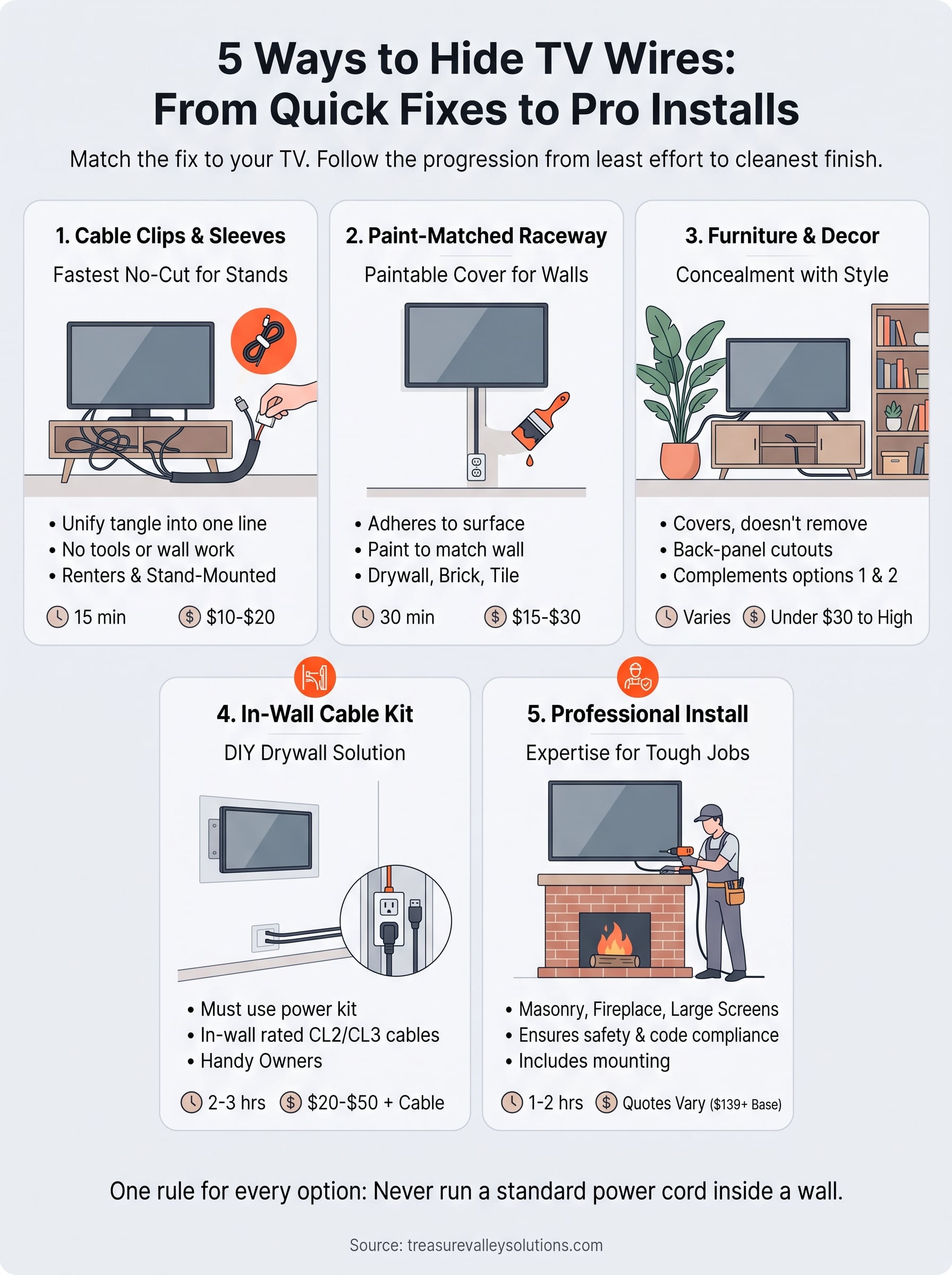
A TV on a stand needs clips, sleeves and smart furniture. A TV on a wall needs a painted raceway if you want no cutting, an in-wall kit if you have drywall and some patience, or a professional if the wall is masonry or the TV sits over a fireplace. Whatever you choose, keep power cords out of the wall unless the product is made for it.
If you want the cleanest result without the risk, request a free on-site estimate and we will look at your wall, your TV and the best way to hide the cables.