 (208) 991-3502
 Meridian, ID



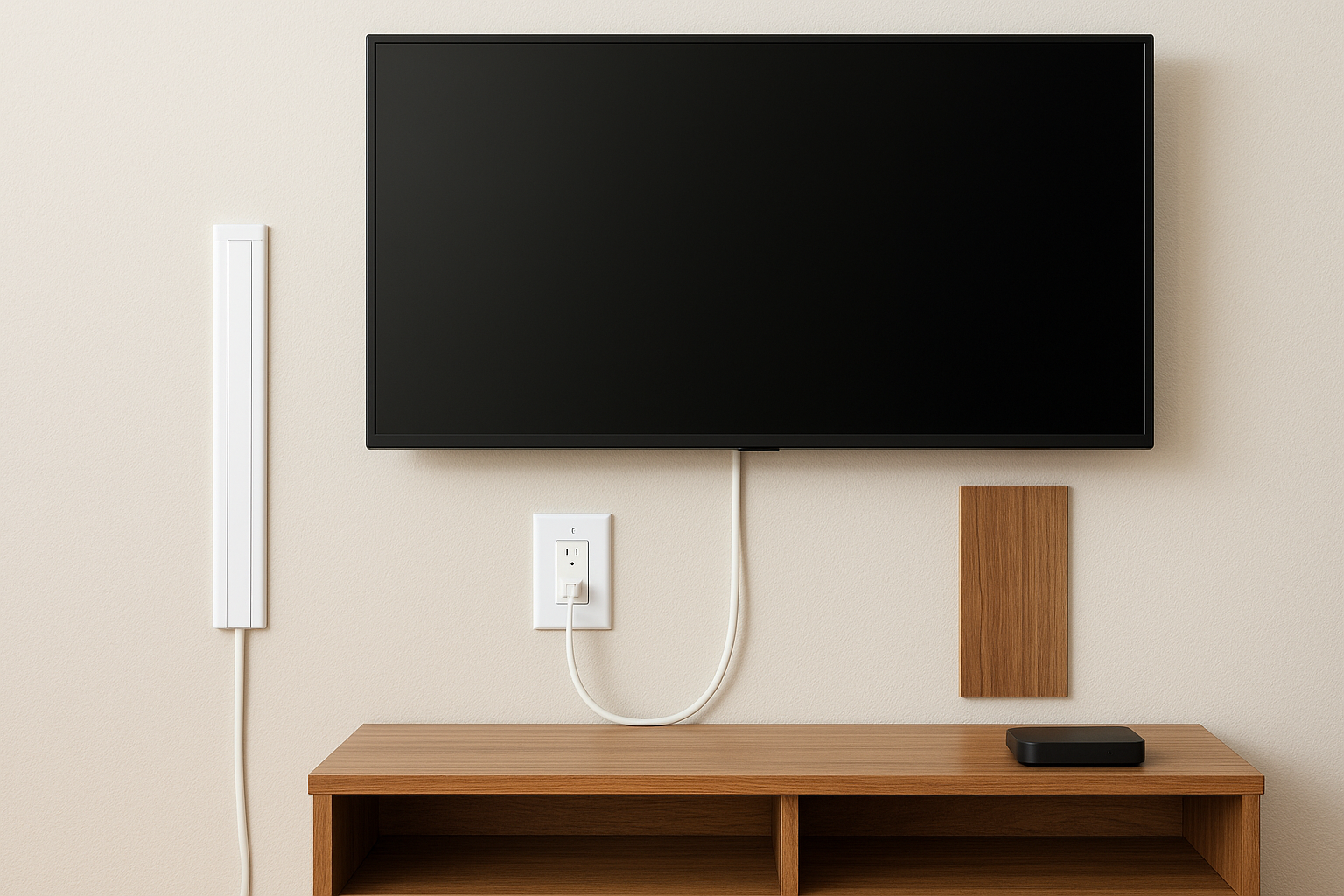

The short answer to how do you hide TV wires in the wall is to install an in-wall power and cable kit. Cut one opening behind the TV, cut a second near the outlet or media console, and pull the cables...
The short answer to how do you hide TV wires in the wall is to install an in-wall power and cable kit. Cut one opening behind the TV, cut a second near the outlet or media console, and pull the cables down the hollow space between them. If you can't cut the wall, a paint-matched raceway hides the same wires on the surface. Plan on two to four hours for the in-wall method.
Most people hit this problem right after mounting the TV, when a bundle of cords hangs down the wall. The fix looks simple, but it raises real questions. Can the power cord go inside the wall? What if a stud or fire block is in the way? What if the wall is brick? Getting these wrong costs you a patched hole or a code problem.
This guide walks you through the job in order. You'll pick a method and gather tools, mark the route, cut and fish the cable path, install the kit, and then hide what's left, including no-cut options. We mount TVs across Boise and the Treasure Valley, so the steps reflect what real walls throw at you.
Know your options and the safety rules first
Use an in-wall kit when you can open the wall, and a surface raceway when you can't. Choosing the right method before you touch a saw saves the most rework.
In-wall kit or surface cover
A kit with two wall plates is the cleanest result, because nothing shows except a small plate behind the TV and another by the outlet. A raceway or cover costs less effort and works on any wall, but it stays visible. Here is how the main methods compare.
| Method | Cuts the wall? | Best for | Main limit |
|---|---|---|---|
| In-wall power and cable kit | Yes, two openings | Drywall you own | Needs a clear stud bay |
| Paint-matched raceway | No | Renters, brick, concrete | Cover stays visible |
| Wood panel or trim cover | No | A built-in look | More carpentry and paint |
Safety rules and tools
Never run the TV's standard power cord, or an extension cord, inside a wall. Use a kit with a recessed power inlet and outlet made for in-wall use, and look for a UL listing. Low-voltage cables such as HDMI should be in-wall rated (CL2 or CL3). If you want a brand-new outlet behind the TV, hire a licensed electrician.
A normal power cord never goes inside a wall; only a listed in-wall kit or a properly installed outlet does.
Gather these before you start:
- In-wall power and cable kit (with plates and a tube)
- Stud finder that detects live AC wiring
- Drywall hand saw or oscillating multi-tool
- Fish tape or glow rod
- Pencil, painters tape, level, and utility knife
- Trash bag and dust mask
Step 1. Mark the route and check the wall
Put the top opening where the TV will cover it and the bottom opening just above your outlet or behind the media console. Then confirm the space between them is empty before you cut.
Place the two openings
Mark the top opening inside the footprint of the mount, so the TV hides it. Mark the bottom opening near the outlet, at a height the console or baseboard won't block. Keep both in the same stud bay, the hollow space between two studs. Leave at least 2.5 inches of clearance from any stud so the box fits.
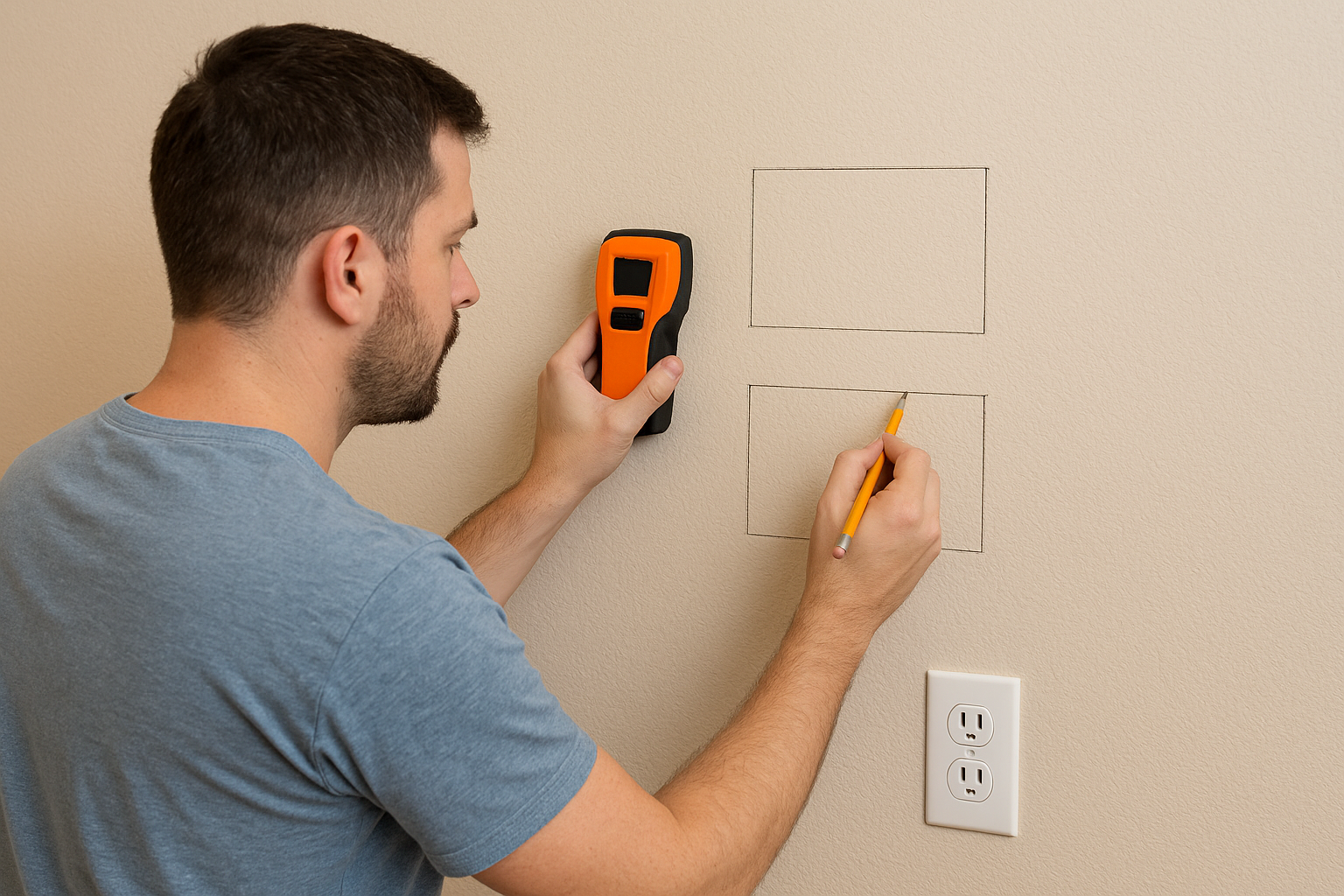
Here's a worked example. For a 65-inch TV, the top opening might sit 52 inches off the floor and the bottom opening 16 inches off the floor. That gives a vertical run of about 36 inches. Kits let you cut the tube to length, so that distance is no problem.
Scan the bay for blockers
Run the stud finder down the bay between your marks. You're looking for horizontal fire blocking, electrical wires, and pipes. If you find a block, choose another bay or cut a third opening to pass through it. Avoid exterior walls and chimney walls, where insulation and moisture barriers make the run harder.
If the wall is brick, concrete, stone, or tile, skip the cutting and go to Step 4.
Ten minutes with a stud finder decides whether the job is a clean pull or a hole you have to patch.
Step 2. Cut the openings and fish the cable path
Cut shallow, clean openings, then push a fish tape through the bay to guide the tube or cables. Go slowly. Drywall is easy to cut and hard to repair.
Cut clean openings
Follow this order for each opening:
- Tape a trash bag under the mark to catch dust, and put on your mask.
- Trace the kit's box or template, and check the outline with a level.
- Score the line with a utility knife.
- Cut with a drywall saw, no deeper than half an inch, then look inside with a flashlight.
- Repeat at the second mark.
Even when the stud finder shows nothing, stop cutting as soon as you break through. A saw that plunges in can nick a hidden wire.
Fish a path through the bay
Push the fish tape up from the bottom opening until it appears at the top opening, then tape it to the wall so it stays put. Insulation can snag the tube, so push it aside by hand. Cutting your holes a couple of inches from a stud also helps, because the tube slides along the side of the framing.
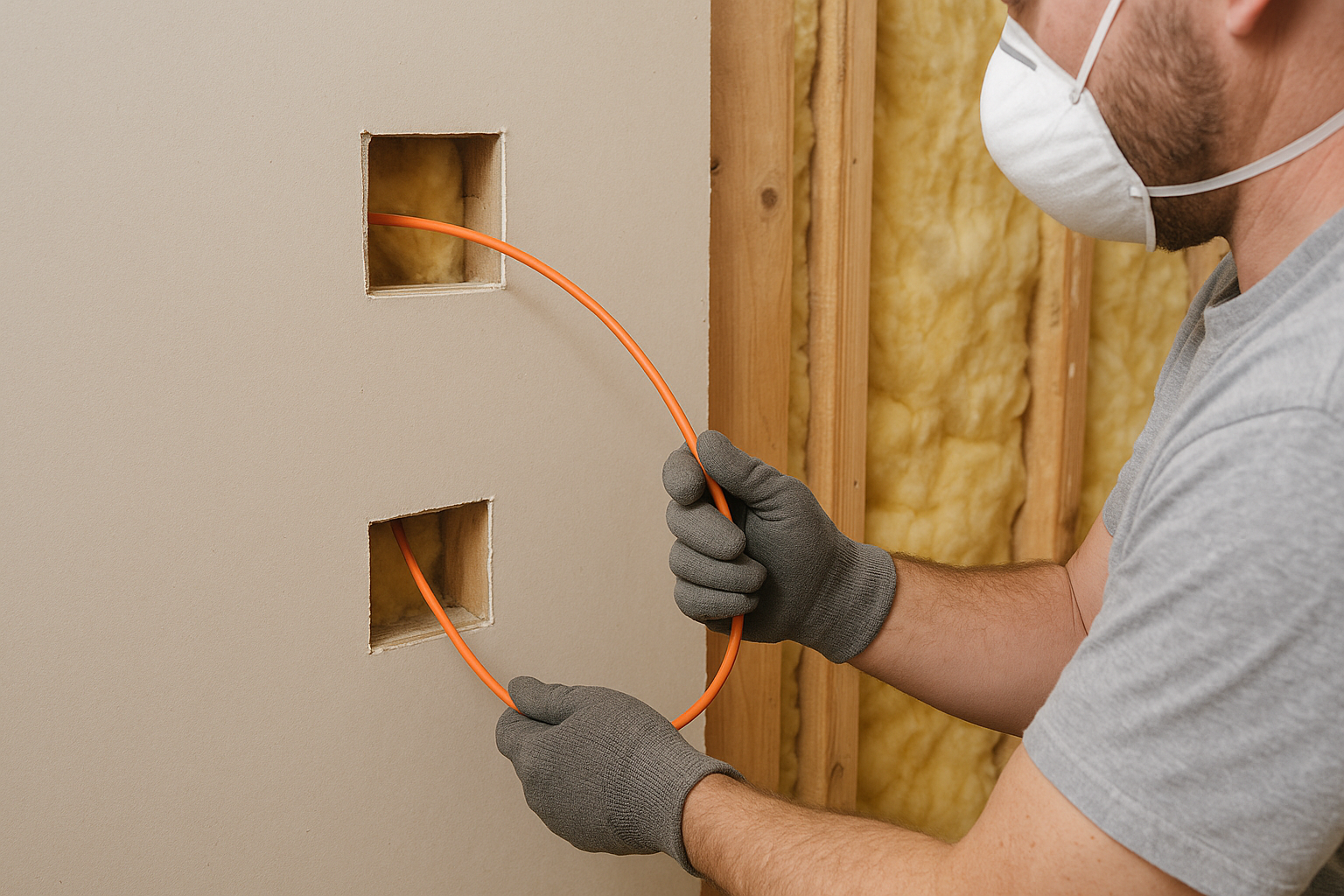
Hook the kit's tube, or a pull string, to the fish tape and draw it down through the bay. Cut the tube to length first if your kit calls for it.
Pull a string with the tube, because it makes every future cable change a two-minute job.
Step 3. Install the kit and connect the TV
Secure both plates, join the in-wall power cord between them, then feed the cables through the tube. Test every input before you hang the TV.
Set the plates and the power run
Push each box into its opening and turn the tabs until it grips the drywall. The top plate holds a recessed power inlet that sits behind the TV. The bottom plate holds a power outlet or plug that connects to your wall outlet. Connect them with the in-wall power cord that came in the kit, following its instructions, and snap on the covers.
Connect and test before hanging
Feed the HDMI, optical, or Ethernet cables through the tube from the top and pull them out at the bottom. Plug the TV into the recessed inlet, connect your devices, and power everything on before you lift the TV onto its bracket. Fixing a loose HDMI plug is much easier with the TV off the wall.
Test every connection before the TV goes back on the bracket, because the plate will be hidden once it hangs.
Step 4. Hide the leftovers without more cuts
Surface raceways and a tidy console cover everything the in-wall kit can't reach. They also solve the problem completely on walls you can't open. This is how to hide TV wires on a wall that stays closed.
Use a raceway on walls you can't cut
A paint-matched raceway is a slim channel that sticks to the wall and holds cables inside. To install one:
- Wipe the wall clean and dry.
- Measure from the TV to the outlet or console, and cut the channel to length.
- Test fit it, then stick down the adhesive backing.
- Lay the cables in and snap on the cover.
- Paint it the wall color for a nearly invisible finish.
This method needs no drilling, which is why it suits apartments and brick walls. A wood panel or trim cover looks more built-in but takes more carpentry.
Tidy the floor and the gear
Mount the power strip to the back of the console or the wall with two screws, using the slots on its back, and get it off the floor. Hide the cable box in a cabinet and add an infrared receiver so your remote still works. Leave ventilation holes or space around any box that gets warm.
Hidden wires in the wall mean little if a power strip still sprawls across the floor below.
Finish the job cleanly
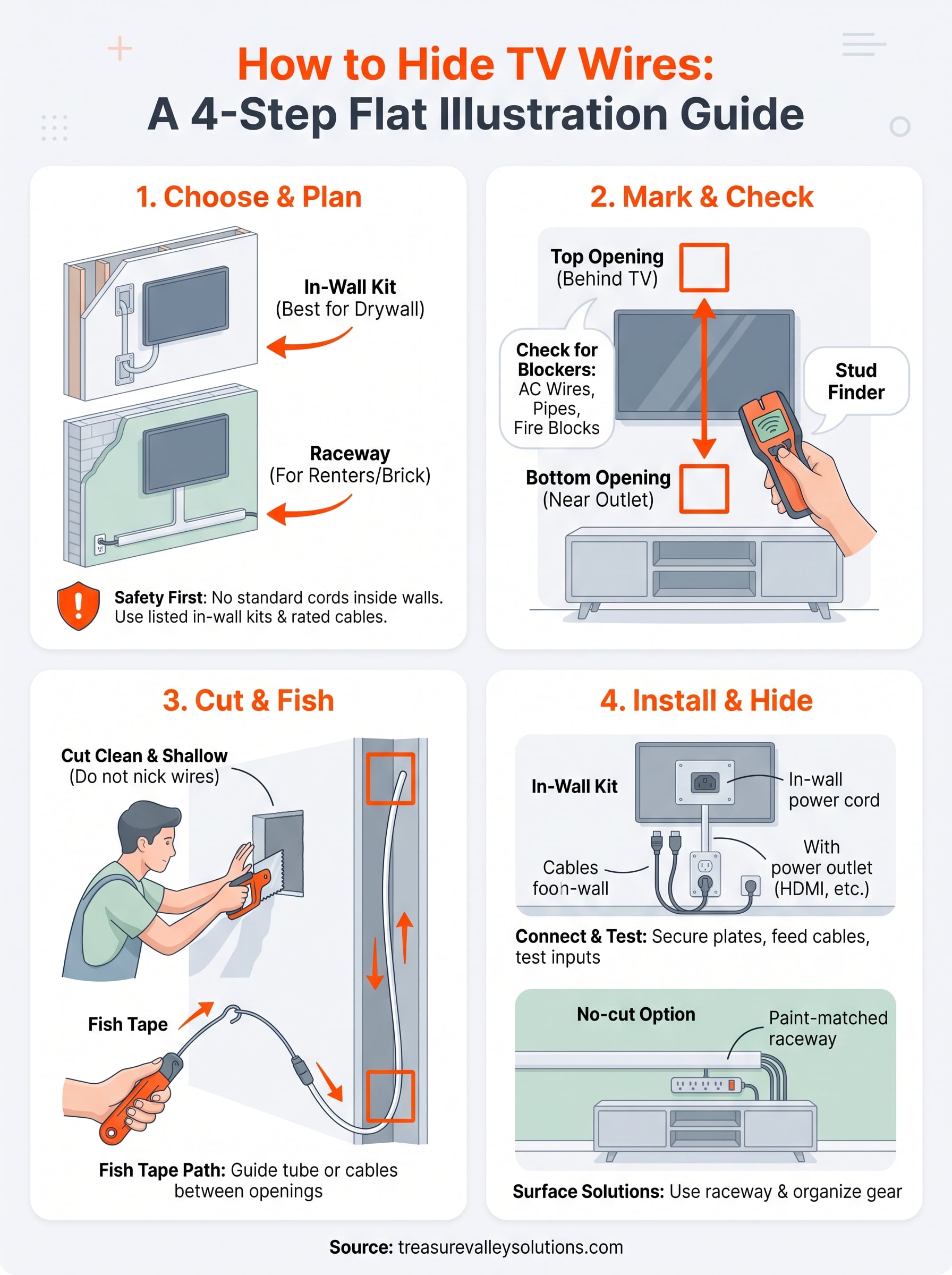
Hiding TV wires comes down to four moves: choose a safe method, mark a clear route, cut and fish carefully, and test before you hang the TV. When the wall won't open, a painted raceway gives you most of the result with no cutting.
If you'd rather leave the ladder in the garage, Treasure Valley Solutions mounts TVs and handles low voltage wiring across the Treasure Valley, and offers free on-site consultations with no obligation. Contact us for a free estimate and we'll look at your wall and suggest the cleanest route.