 (208) 991-3502
 Meridian, ID




Music shouldn't stop when you walk from one room to another. The best whole home audio systems let you enjoy your favorite playlists, podcasts, or movie soundtracks throughout your entire house, wheth...
Music shouldn't stop when you walk from one room to another. The best whole home audio systems let you enjoy your favorite playlists, podcasts, or movie soundtracks throughout your entire house, whether you're cooking in the kitchen, relaxing in the living room, or working in your home office. Choosing the right system depends on your budget, your home's layout, and whether you prefer wired reliability or wireless flexibility.
At Treasure Valley Solutions, we've designed and installed hundreds of multi-room audio setups across Idaho homes since 2014. We've seen what works, what frustrates homeowners, and what delivers lasting value. This guide breaks down five top-rated whole home audio systems at different price points, covering sound quality, ease of use, and installation considerations so you can make an informed decision for your space.
1. Treasure Valley Solutions custom whole-home audio
Our custom installations combine professional design with local support to deliver audio that fits your home's exact layout and listening preferences. We work directly with you to select speakers, amplifiers, and control systems that match your budget and aesthetic, then handle everything from pre-wiring to final programming. Unlike off-the-shelf systems, you get a tailored solution that integrates with your existing smart home setup and scales as your needs change.
What you get
Your system includes strategically placed speakers in every room you designate, a central amplifier or receiver, and intuitive control options through wall panels, mobile apps, or voice commands. We design for balanced sound across all zones, so your music plays at the right volume whether you're in a small bedroom or an open-concept living area. Every installation comes with professional wiring, discreetly routed through walls and ceilings, plus programming that lets you control individual rooms or synchronize your entire home.
Wired vs wireless options
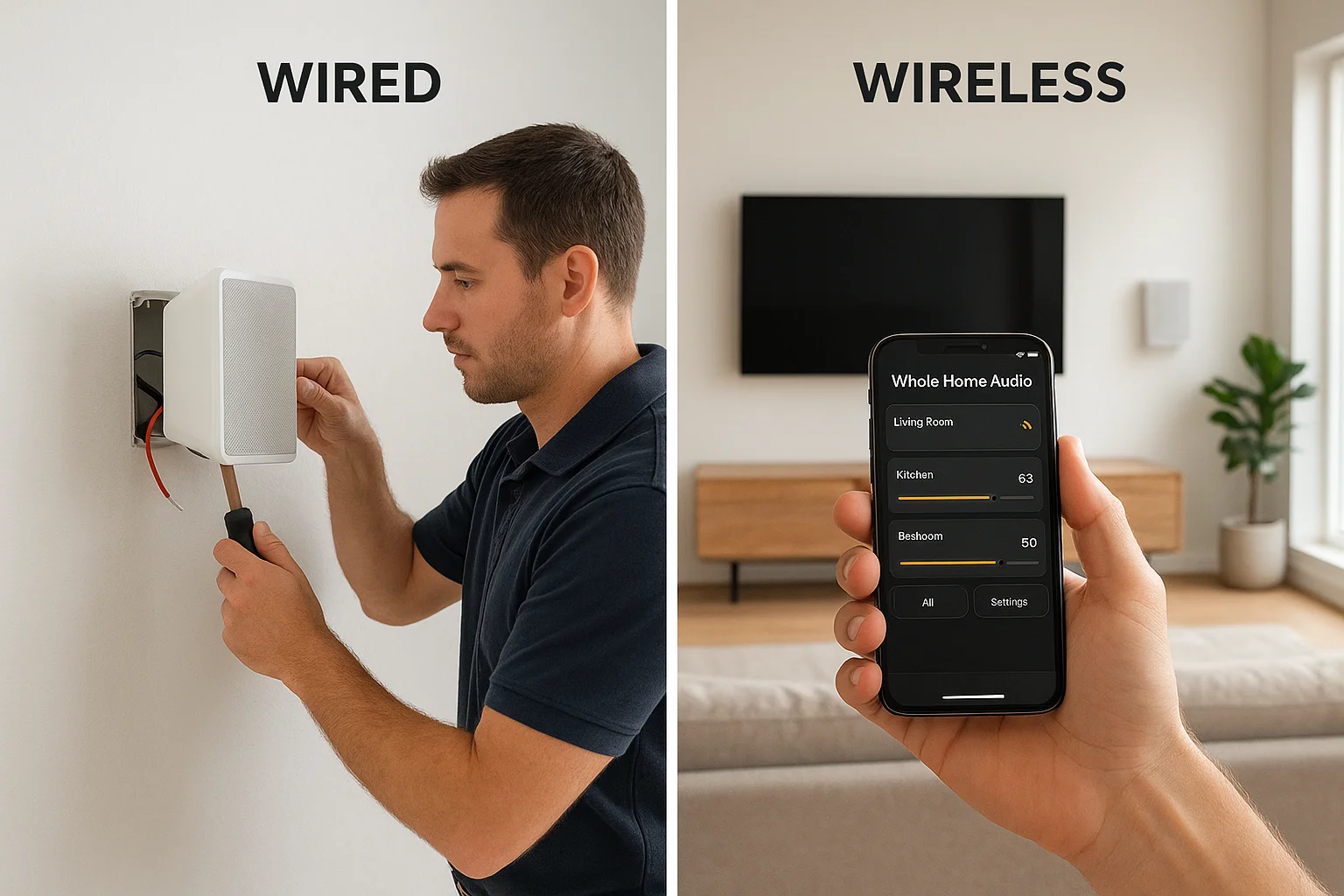
Wired systems deliver rock-solid reliability and superior sound quality because they run dedicated speaker cables from a central hub to each room. Wireless configurations use network-connected speakers that stream audio over your Wi-Fi, giving you faster installation and easier room additions. Most homeowners choose wired for new construction or major renovations, while wireless works better for retrofits where running cables isn't practical.
Who it fits best
This approach suits homeowners building or remodeling who want a permanent, high-quality audio solution that won't require frequent upgrades. Property managers and business owners also benefit from the durability and centralized control that custom installations provide. If you value long-term performance over plug-and-play convenience, a professionally designed system makes sense.
Custom installation gives you control over every speaker placement and sound characteristic, something pre-packaged systems can't match.
What it costs in 2026
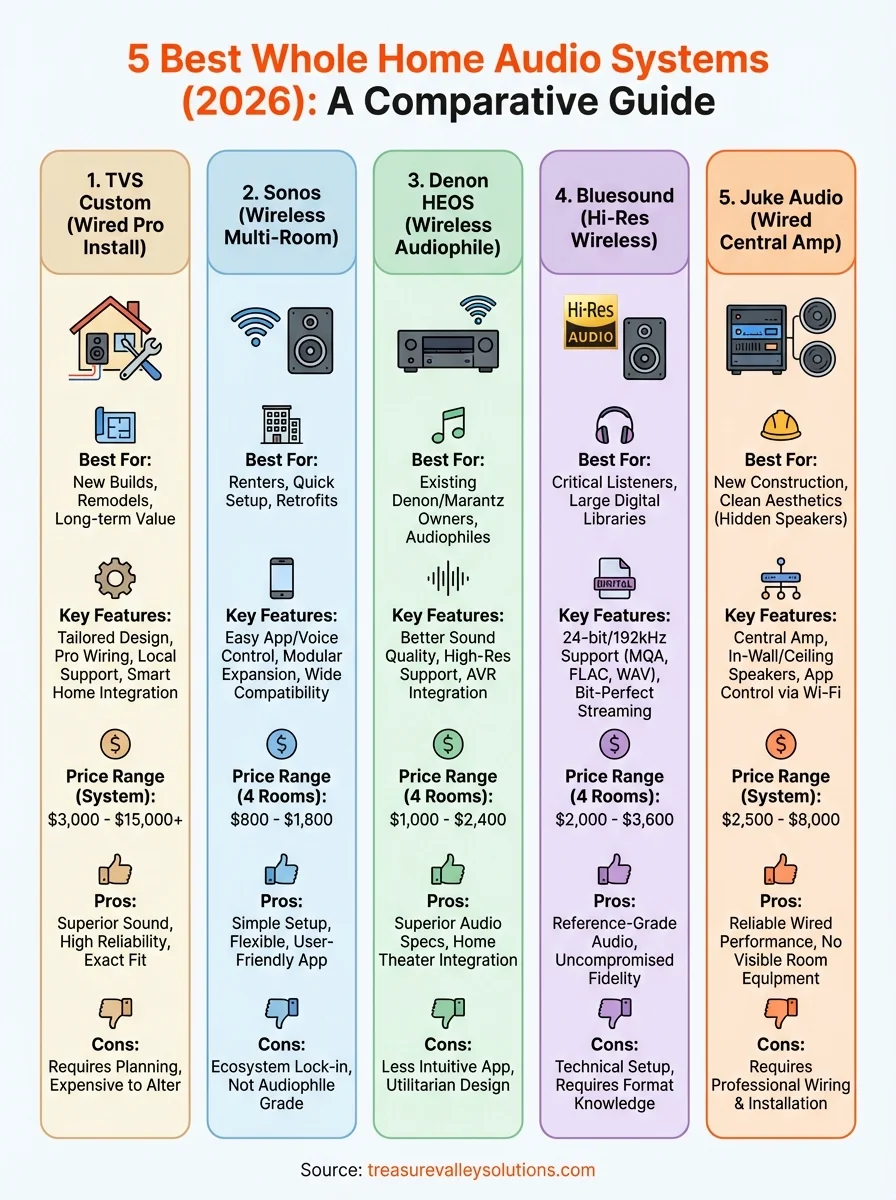
Expect to invest $3,000 to $15,000 depending on the number of rooms, speaker quality, and control features you choose. Basic setups covering three to four rooms with ceiling speakers and a mid-tier amplifier start around $3,500, while whole-home systems with high-end components and advanced automation can exceed $12,000.
Key trade-offs to know
Professional installation requires upfront planning and takes longer than ordering wireless speakers online. You'll coordinate with installers during construction or remodeling, and changes after walls close up become expensive. However, you gain superior sound quality, reliable performance, and a system that adds real value to your property.
2. Sonos multi-room system
Sonos delivers wireless multi-room audio through a range of speakers that connect to your home network and sync together through a single app. You place speakers wherever you want, plug them into power, and control everything from your phone without running cables through walls. This makes Sonos one of the best whole home audio systems for renters, homeowners who prefer quick setup, and anyone adding audio to existing spaces without major construction.
How it works
Each Sonos speaker joins your Wi-Fi network and communicates with other Sonos devices to create synchronized zones. You group rooms together or control them independently, streaming music from services like Spotify, Apple Music, or your local library through the Sonos app.
Best for
Sonos fits tech-comfortable homeowners who value ease of setup over audiophile-grade sound. The system works well in apartments and homes where wiring isn't an option, and you can move speakers between rooms as your layout changes.
Sound and expansion options
The lineup ranges from compact speakers like the Era 100 to larger models like the Era 300, plus soundbars and subwoofers. You start with one or two speakers and add more over time, building your system room by room without professional installation.
App, voice, and TV integration
The Sonos app gives you direct control over all speakers, while voice commands through Alexa or Google Assistant let you adjust volume and skip tracks hands-free. Sonos soundbars connect to your TV for unified home theater and music playback.
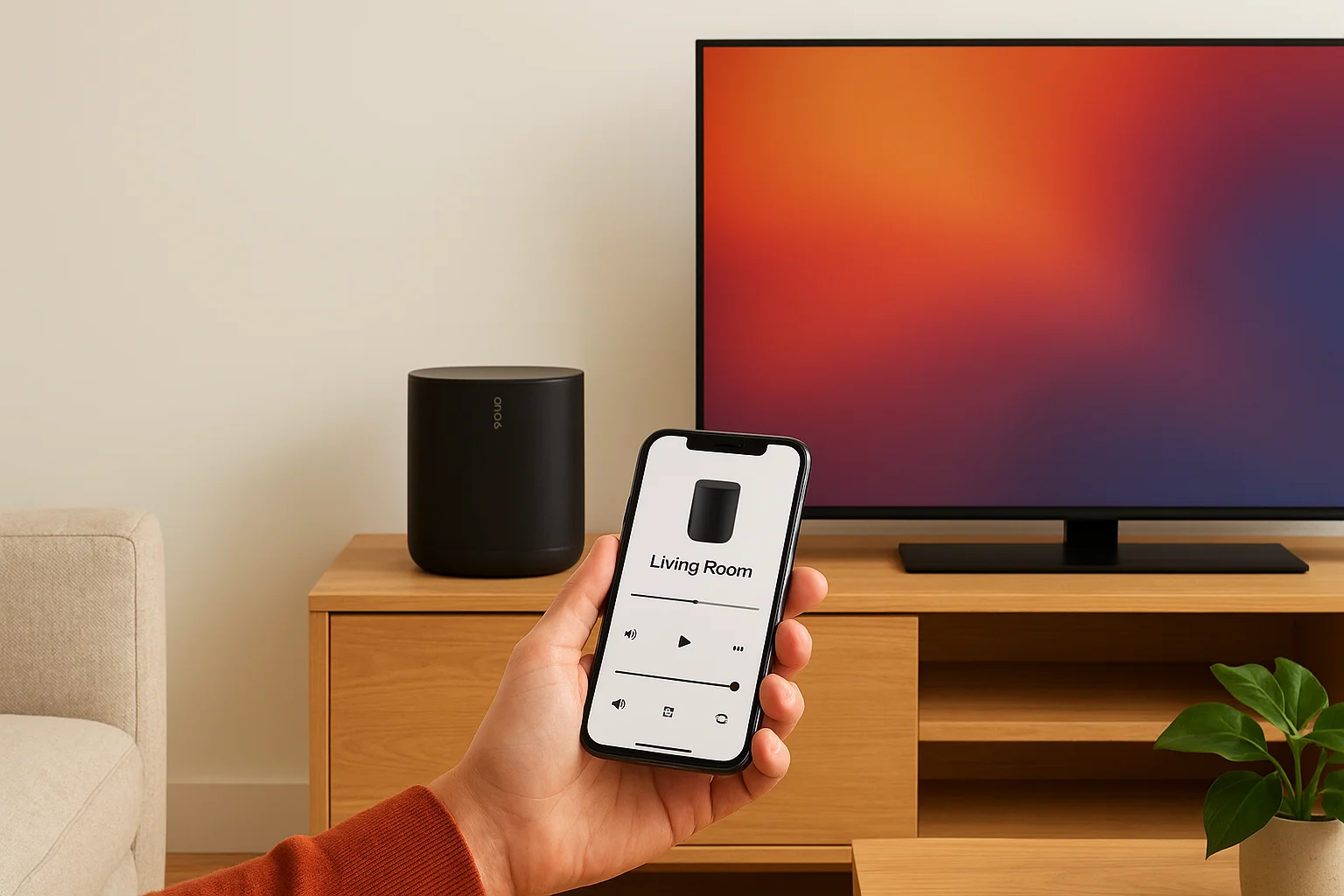
Sonos removes installation complexity but locks you into their ecosystem for future expansions.
Typical price range
Individual speakers cost $200 to $450, so outfitting a four-room home runs $800 to $1,800 depending on which models you choose.
3. Denon HEOS multi-room system
The Denon HEOS platform offers wireless audio through speakers, receivers, and soundbars that connect over your home network. You control the system through the HEOS app, which groups rooms, manages multiple streaming services, and coordinates playback across all your devices. HEOS competes directly with Sonos but appeals to homeowners who already own Denon or Marantz receivers and want to expand their existing setup into additional rooms.
How it works
HEOS devices join your Wi-Fi network and communicate through the app to create synchronized zones. You stream music from services like Pandora, Tidal, or Amazon Music, and the system plays the same track across all rooms or different content in each space.
Best for
HEOS fits audiophile-leaning homeowners who value sound quality over simplicity. The platform works well if you already own compatible Denon equipment and want to extend audio throughout your home without switching ecosystems.
Strongest features
Sound quality stands out as noticeably better than entry-level wireless systems, and the platform supports high-resolution audio formats. HEOS integrates with existing Denon AV receivers, letting you incorporate your home theater into your multi-room setup.
Limitations to watch for
The app feels less intuitive than Sonos, and setup takes more effort. Speaker design leans utilitarian, prioritizing performance over aesthetics in modern spaces.
HEOS delivers superior audio specs but requires more patience during initial configuration.
Typical price range
Speakers start at $250 and run up to $600 for premium models, so a four-room system costs $1,000 to $2,400.
4. Bluesound multi-room hi-res system
Bluesound targets serious listeners who want wireless convenience without compromising audio fidelity. The platform streams high-resolution audio up to 24-bit/192kHz, preserving studio-quality detail that compressed formats lose. You connect speakers to your network and control them through the BluOS app, which supports dozens of streaming services plus your local music library. Bluesound belongs among the best whole home audio systems for audiophiles who refuse to sacrifice sound quality for wireless flexibility.
How it works
Each Bluesound device connects to your Wi-Fi network and runs the BluOS software, which synchronizes playback across rooms. You stream from services like Qobuz, Tidal, or Spotify, and the system maintains bit-perfect audio when your source supports it.
Best for
This system fits critical listeners who hear the difference between compressed and lossless audio. Homeowners with extensive digital libraries or high-quality streaming subscriptions benefit most from Bluesound's technical capabilities.
Audio quality and sources
The platform supports MQA, FLAC, and WAV files without downsampling. Direct connections to network-attached storage give you full control over your music collection while preserving original recording quality.
Setup and control experience
Initial configuration requires more technical knowledge than Sonos. The app offers extensive settings but feels less polished for casual users who want instant results.
Bluesound delivers reference-grade audio quality but assumes you understand digital audio formats.
Typical price range
Speakers range from $500 to $900, putting a four-room setup between $2,000 and $3,600.
5. Juke Audio wired multi-room amplifier system
Juke Audio builds centralized amplifier systems that distribute audio through dedicated speaker wiring to every room in your home. You connect a single amplifier box to your network, run speaker cables to in-wall or in-ceiling speakers, and control everything through their app or wall-mounted keypads. This approach delivers the reliability of wired audio with modern streaming capabilities, making Juke a strong contender among the best whole home audio systems for homeowners who want permanent infrastructure without visible equipment.
How it works
The main amplifier connects to your home network and sends audio signals through speaker wires to each zone. You select different music sources for each room or synchronize the entire house, all managed through the Juke app on your phone or tablet.
Best for
This system fits new construction projects where you plan speaker placement during the build phase. Homeowners who value clean aesthetics benefit from the lack of visible speakers or equipment in living spaces.
Speaker and wiring requirements
You install passive speakers in walls or ceilings and run dedicated wiring back to the central amplifier location. Professional installation ensures proper wire gauge and speaker matching for optimal performance across all zones.
Control and streaming options
The Juke app provides full control over volume, sources, and zones. Integration with streaming services like Spotify gives you access to your music library without additional hardware in each room.
Typical price range
Complete systems start around $2,500 for basic setups and reach $8,000 for larger homes with premium speakers and advanced features.
Next steps
You've seen five proven options at different price points, from custom professional installations to wireless plug-and-play systems. The best whole home audio systems balance your budget against sound quality, installation complexity, and long-term flexibility. If you're building or remodeling, wired solutions deliver superior performance and lasting value. Wireless systems work better when you need immediate results without construction.
Most homeowners benefit from professional guidance before purchasing equipment. Your home's layout, existing infrastructure, and listening preferences all influence which system performs best in your specific space. A quick consultation helps you avoid expensive mistakes and ensures your investment matches your actual needs.
Schedule a free consultation with Treasure Valley Solutions to discuss your audio goals and get a custom recommendation for your home. We'll walk through your space, explain your options clearly, and design a system that fits your budget and delivers the sound experience you want.
Need Expert Help?
Ready to implement these solutions in your own home or business?
Our Services

Complete home automation and control.

Home theater design and installation planned around your room, viewing goals, and equipment scope.
Comprehensive security solutions for home and business.
Serving the Treasure Valley
Local installation in your city