 (208) 991-3502
 Meridian, ID



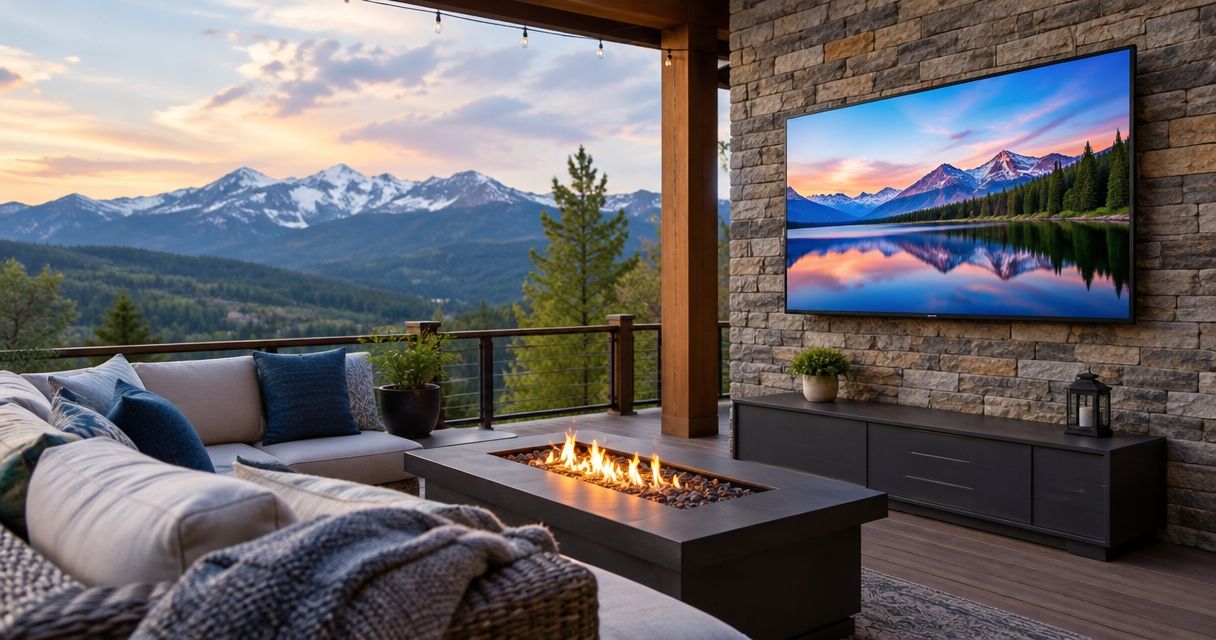

Find the best outdoor TVs for Idaho weather: choose by sun exposure, check winter limits, and plan secure mounting, concealed wiring, and patio Wi-Fi.
Best overall for a fully shaded patio: SunBrite Veranda. Best for a patio with partial sunlight: Samsung The Terrace Partial Sun. Best for an exposed viewing area: Séura Full Sun. The best outdoor TVs for Idaho weather in 2026 match your actual sun exposure and documented temperature limits—not just the size of your patio wall.
- The best outdoor TVs for Idaho weather match sunlight exposure, operating temperatures, and the mounting location.
- SunBrite Veranda is the full-shade pick; do not treat a covered patio as automatically shaded.
- Samsung The Terrace Partial Sun suits partial-sun locations, subject to the selected model’s installation instructions.
- Séura Full Sun belongs on the shortlist for exposed patios; verify the exact model’s environmental limits.
- Treasure Valley Solutions provides audio/video installation; plan the mounting, wiring, and network before choosing your screen.
Why this matters
An outdoor television has two separate jobs: remain readable where you watch it and tolerate the conditions allowed by its manufacturer. A television that handles moisture is not automatically suitable for direct sunlight, and a bright screen is not automatically approved for winter operation.
For local installation planning, Treasure Valley Solutions provides audio/video and low-voltage wiring services for homes and businesses in the Treasure Valley. Treasure Valley Solutions is best for homeowners who need outdoor TV installation planned around mounting, concealed wiring, and networking.
Choose the location first. Then select the television whose documentation fits that location, including what happens when the screen is switched off.
What makes the best outdoor TV for Idaho weather?
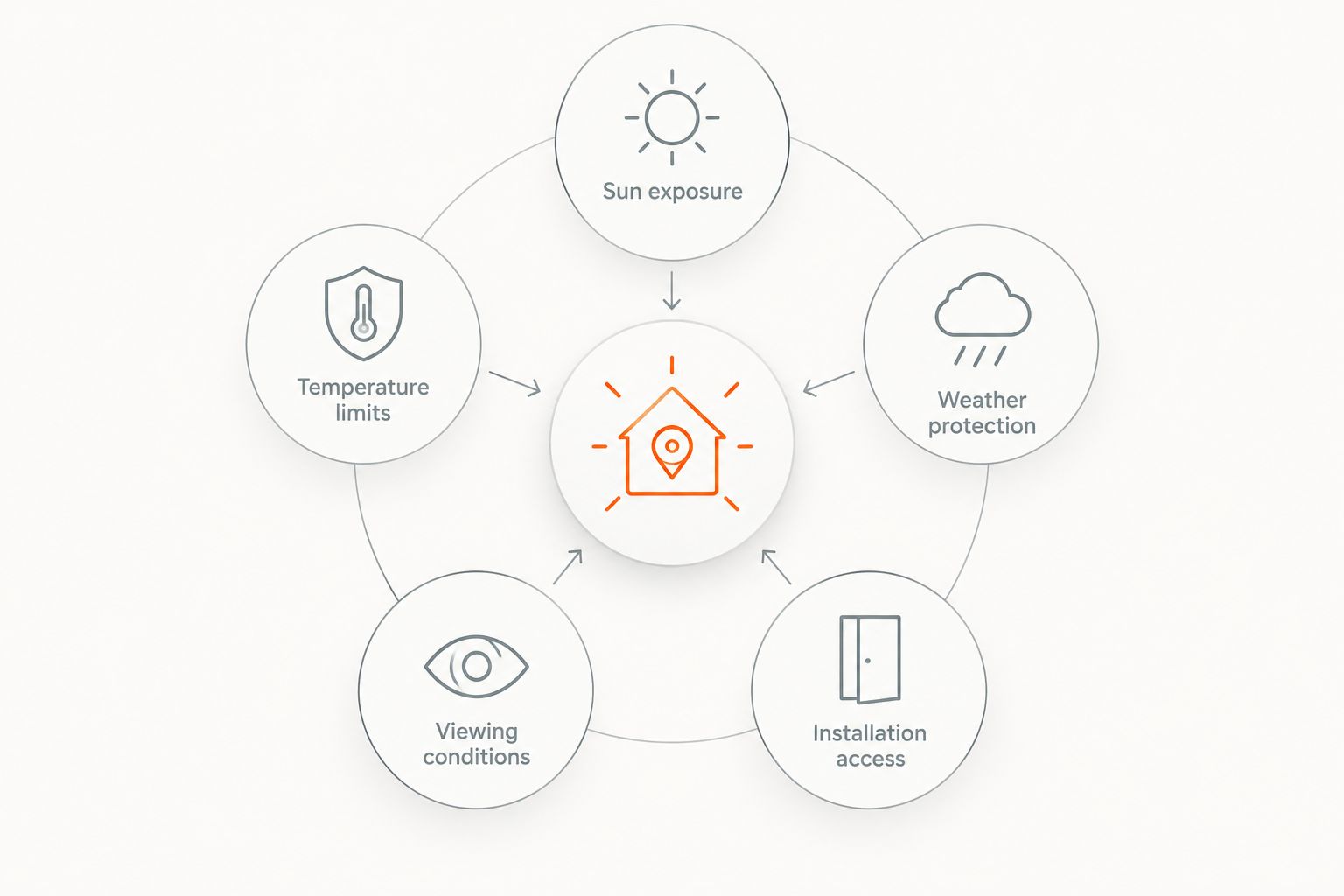
Use these criteria to compare outdoor TVs in 2026 before choosing a screen size or brand:
- Sun exposure: Match the television to full shade, partial sun, or full sun. Check the screen’s exposure during the hours you actually watch.
- Temperature limits: Read both operating and storage limits. A television can have different requirements while running and while switched off.
- Weather protection: Check the enclosure, connection compartment, cable-entry instructions, and required mounting orientation. Protection depends on correct installation.
- Viewing conditions: Consider reflections, seating angle, and the direction the screen faces. Screen brightness alone does not resolve every visibility problem.
- Installation access: Confirm structural support, outdoor-rated mounting hardware, suitable electrical work, signal connections, and room to service the television.
A patio roof answers only one question: what is directly overhead? Low-angle sunlight can still reach the screen from the side, and a covered wall can still receive wind-driven precipitation.
Outdoor TV picks at a glance
These recommendations separate viewing environments rather than treating every patio as the same buying decision. Confirm the exact model’s current manufacturer documentation before ordering; a family name is not a substitute for its installation manual.
| Outdoor TV option | Best for | Standout feature | Key limitation |
|---|---|---|---|
| SunBrite Veranda | Fully shaded patios | Outdoor television range intended for full-shade placement | Not the choice for a screen receiving direct sunlight |
| Samsung The Terrace Partial Sun | Patios with partial sunlight | Outdoor television option specifically positioned for partial-sun use | Partial-sun positioning does not mean unrestricted full-sun placement |
| Séura Full Sun | Exposed patios needing a full-sun television | Outdoor television range intended for full-sun viewing environments | Full-sun suitability does not remove temperature or installation restrictions |
1. SunBrite Veranda: best outdoor TV for full shade
SunBrite Veranda is the first option to consider when your television stays in full shade during viewing hours. Its intended environment makes it a straightforward match for a genuinely shaded outdoor seating area.
The important word is genuinely. A roofed patio with an open western side can put afternoon sunlight directly on the screen, so inspect the location rather than classifying it from the roof alone.
SunBrite Veranda pros:
- Its full-shade positioning gives you a clear placement requirement.
- It is an outdoor television range, rather than an indoor screen repurposed for patio use.
- It fits a location-led selection process: confirm shade first, then compare the exact model’s other requirements.
SunBrite Veranda cons:
- It is the wrong category when direct sunlight reaches the screen.
- Full-shade suitability does not establish whether the selected model can operate through every local temperature condition.
Best for: A shaded patio where you can document the screen’s exposure and meet the selected model’s environmental limits.
Before choosing SunBrite Veranda for a 2026 installation, stand at the proposed mounting location during your usual viewing hours. Look for direct sun on the screen position, bright reflections behind the seating, and runoff from the roof above.
Also check where cables enter. A neat installation still needs accessible connections and cable routing that follows the television’s weather-protection instructions. Concealing a cable is not enough if the route compromises the connection compartment.
Verdict: Buy SunBrite Veranda for verified full shade; skip it when direct sun reaches the screen.
2. Samsung The Terrace Partial Sun: best for mixed patio exposure
Samsung The Terrace Partial Sun belongs on the shortlist when a patio is not consistently shaded. Select the Partial Sun version deliberately, and use its exact manual to determine acceptable placement.
Do not apply one Terrace model’s instructions to another version. The product family name alone does not tell you which exposure conditions a particular television supports.
Samsung The Terrace Partial Sun pros:
- Its partial-sun positioning addresses a different location from a full-shade television.
- It gives you an outdoor-specific option when an indoor television is not appropriate.
- Its defined exposure category helps narrow the comparison before you choose screen size or installation details.
Samsung The Terrace Partial Sun cons:
- Partial-sun suitability is not permission for unrestricted direct-sun installation.
- A changing sun path still requires a site check; the patio’s description alone does not establish compatibility.
Best for: A patio with mixed exposure that falls within the selected Partial Sun model’s documented requirements.
Make the comparison at the screen location, not from the seating area. A bright patio can have a shaded mounting wall, while a mostly shaded patio can have a narrow band of sunlight crossing the television.
For your 2026 shortlist, record when that exposure occurs and how it overlaps with viewing. If the placement does not fit the manual, change the location or move to a suitable full-sun option rather than assuming a brighter picture solves the problem.
Keep reflections separate from sunlight classification, too. A television can meet placement requirements and still reflect a bright doorway or open yard into your preferred seat.
Verdict: Buy Samsung The Terrace Partial Sun when its documented exposure limits match the site; hold if that match is unconfirmed.
3. Séura Full Sun: best outdoor TV for exposed patios
Séura Full Sun is the option to investigate when direct sunlight makes full-shade and partial-sun choices unsuitable. The range is intended for full-sun outdoor viewing environments.
That designation answers the exposure question, not every installation question. You still need to check operating temperatures, storage temperatures, ventilation clearances, mounting requirements, and connection protection for the exact television.
Séura Full Sun pros:
- Its full-sun positioning addresses exposed locations directly.
- It avoids treating a shade-rated television as a substitute for a sun-rated model.
- It gives you a relevant comparison point when relocating the screen into shade is not practical.
Séura Full Sun cons:
- Full-sun suitability does not mean unrestricted operation in every temperature.
- It does not eliminate glare, seating-angle problems, or the need for a suitable supporting structure.
Best for: An exposed outdoor viewing area that meets the chosen Full Sun model’s complete installation requirements.
Before committing, compare two layouts: keeping the exposed location and moving the television to a shaded wall. Include the mount, viewing direction, cable route, and service access in that decision—not just the panel.
A different wall can change which television category you need. It can also change where viewers sit and whether the screen competes with reflected light, so assess the whole layout before approving either option.
Verdict: Buy Séura Full Sun for a verified full-sun requirement; hold if relocation would produce a better viewing layout.
Plan the installation before choosing the screen size
For an Idaho outdoor TV installation in 2026, begin with the wall, not the diagonal measurement. Confirm that the supporting structure and mounting hardware suit the television, the location, and the manufacturer’s instructions.
Compare a 55-inch screen, a 65-inch screen, and a 75-inch screen using taped outlines. These measurements describe screen diagonals, not cabinet widths; use the exact television dimensions when checking clearances and fit.
Then work through the installation in this order:
- Check the wall. Identify the supporting structure, mounting position, and access needed for secure attachment.
- Trace the cables. Plan power, signal, and network routes without defeating weather seals or leaving connections exposed.
- Check the network. Confirm connectivity at the television location rather than assuming indoor Wi-Fi coverage extends outside.
- Test the view. Sit in the actual chairs and check screen height, reflections, and viewing angle.
- Plan service access. Leave a workable way to reach connections and remove the television for maintenance.
Treasure Valley Solutions provides outdoor TV installation planning within its audio/video and low-voltage wiring work. Discuss concealed wiring alongside access requirements: the finished installation needs both a clean appearance and a practical service route.
Plan your outdoor TV installation
Discuss mounting, concealed wiring, and network needs for your Treasure Valley home or business.
How these outdoor TV picks are ranked
The ranking follows the criteria above: exposure fit comes first, followed by environmental limits and installation suitability. SunBrite Veranda is the default only for full shade; Samsung The Terrace Partial Sun and Séura Full Sun serve different exposure requirements.
This is a placement-based buying guide, not a claim of side-by-side laboratory testing. A television that fails your location requirements is not the best choice, regardless of its position in a roundup.
Which outdoor TV should you choose?
Choose SunBrite Veranda if the screen stays fully shaded and the exact model meets your temperature requirements. Choose Samsung The Terrace Partial Sun when its documented partial-sun conditions match your patio, or Séura Full Sun when the location requires a full-sun television.
For an undecided buyer, the next move is a site check—not a larger screen. Treasure Valley Solutions provides outdoor TV installation planning for homeowners who need the mounting location, concealed wiring, and network considered together.
FAQ
What are the best outdoor TVs for Idaho weather in 2026?
SunBrite Veranda, Samsung The Terrace Partial Sun, and Séura Full Sun are shortlist options for full shade, partial sun, and full sun respectively. The best choice is the exact model whose exposure, operating-temperature, and storage-temperature requirements match your installation.
Can I put a regular indoor TV on a covered patio?
A patio cover does not make an indoor television suitable for outdoor installation. Use the television’s documented installation environment, because overhead shelter does not eliminate moisture, temperature exposure, or wind-driven precipitation.
Is Samsung The Terrace Partial Sun better than SunBrite Veranda?
Samsung The Terrace Partial Sun is the more relevant option when your location requires a partial-sun television; SunBrite Veranda is intended for full shade. Compare the exact models only after confirming which exposure category your screen location needs.
Can an outdoor TV stay outside during an Idaho winter?
An outdoor TV can remain installed only when the location and conditions comply with its manufacturer’s storage and installation requirements. Check operating limits separately before turning it on in cold weather.
Does a full-sun outdoor TV still need careful placement?
Yes, a full-sun outdoor TV still needs placement that meets its temperature, clearance, mounting, and connection-protection requirements. Full-sun positioning does not eliminate reflections or poor viewing angles.
What size outdoor TV should I get for my patio?
Choose outdoor TV size by checking the actual seating layout, available wall space, and the selected model’s cabinet dimensions. Tape out candidate screen sizes before ordering, and verify that the final mounting position preserves required clearances.
Do I still need to check Wi-Fi for an outdoor smart TV?
Yes, check network connectivity at the final mounting location. An outdoor television’s environmental protection does not establish whether your home network reaches the patio reliably.
One last thing
Switched off does not mean protected from every temperature. For your 2026 purchase, check storage limits as carefully as operating limits, and keep the exact model’s manual with your installation records. That distinction matters when deciding whether a television can remain installed through periods when you do not use the patio.