 (208) 991-3502
 Meridian, ID



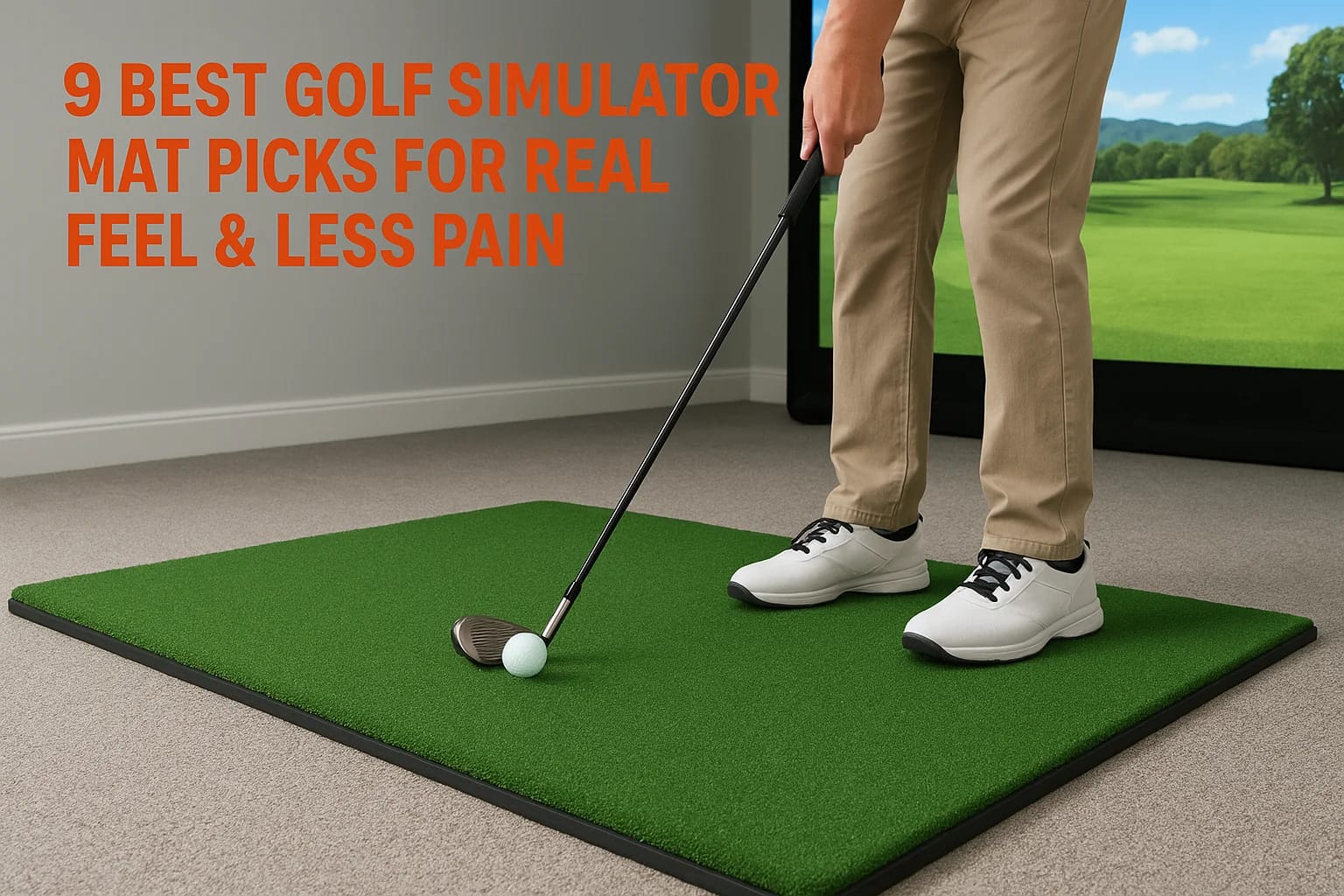

You spent good money on a launch monitor or projector setup, dialed in your screen and enclosure, and then stepped up to a cheap golf simulator mat that feels like hitting off a parking lot. Your wris...
9 Best Golf Simulator Mat Picks for Real Feel & Less Pain
You spent good money on a launch monitor or projector setup, dialed in your screen and enclosure, and then stepped up to a cheap golf simulator mat that feels like hitting off a parking lot. Your wrists ache after 30 minutes, your club bounces unnaturally, and the data your simulator spits out doesn't match reality. The mat matters more than most people think, it affects shot feedback, joint health, and how long you'll actually use the setup you invested in.
At Treasure Valley Solutions, we design and install dedicated entertainment spaces, home theaters, media rooms, and yes, golf simulator rooms, for homeowners across the Boise and Meridian area. We've seen firsthand how the right (and wrong) mat choice impacts the overall experience. A great room deserves equipment that matches.
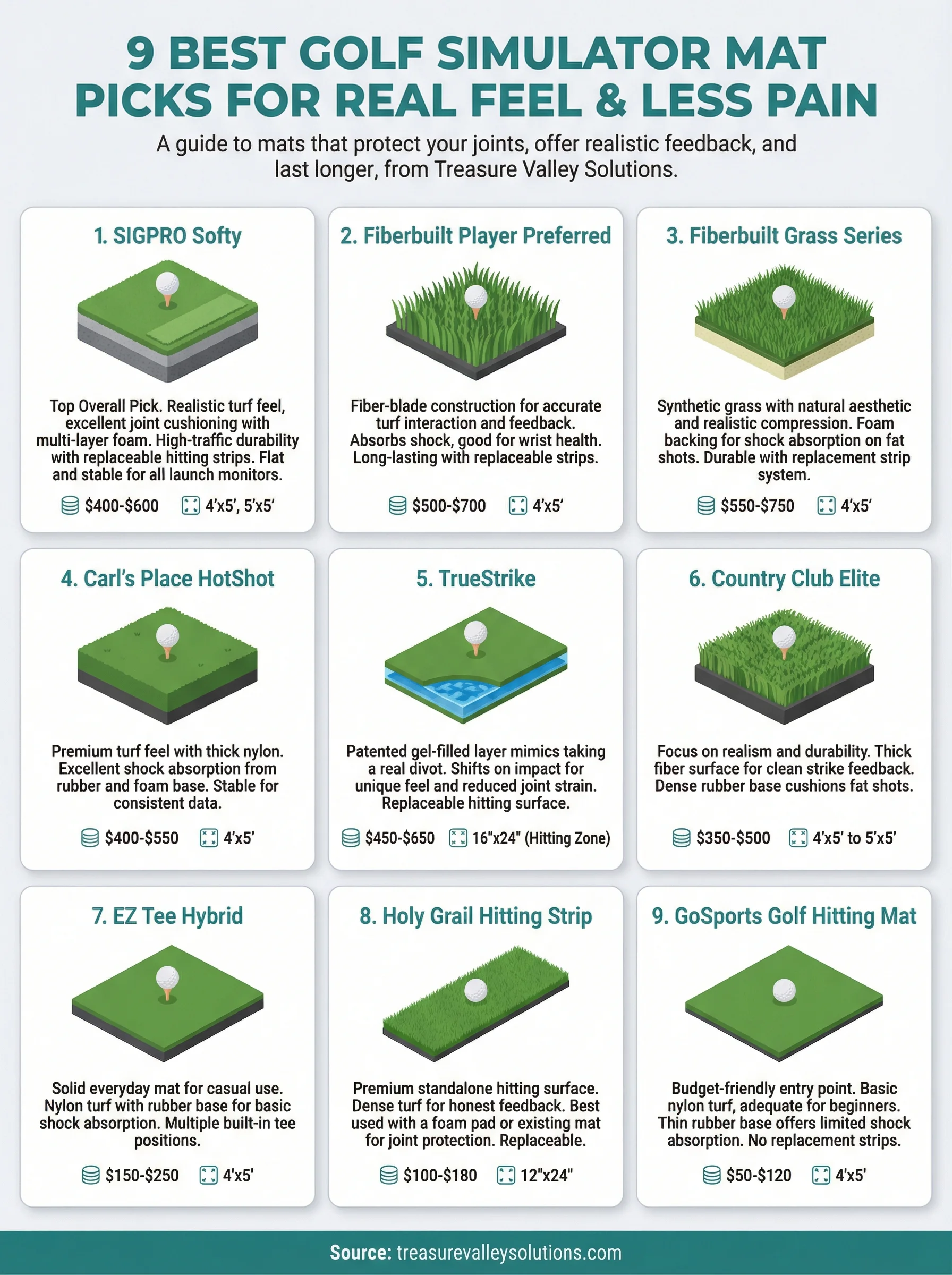
This guide breaks down nine of the best golf simulator mats available right now, compared across durability, feel, turf realism, and price. Whether you're building out a full simulator space or upgrading a garage setup, you'll walk away knowing exactly which mat fits your swing and your budget. No filler picks, no fluff, just honest recommendations.
1. SIGPRO Softy
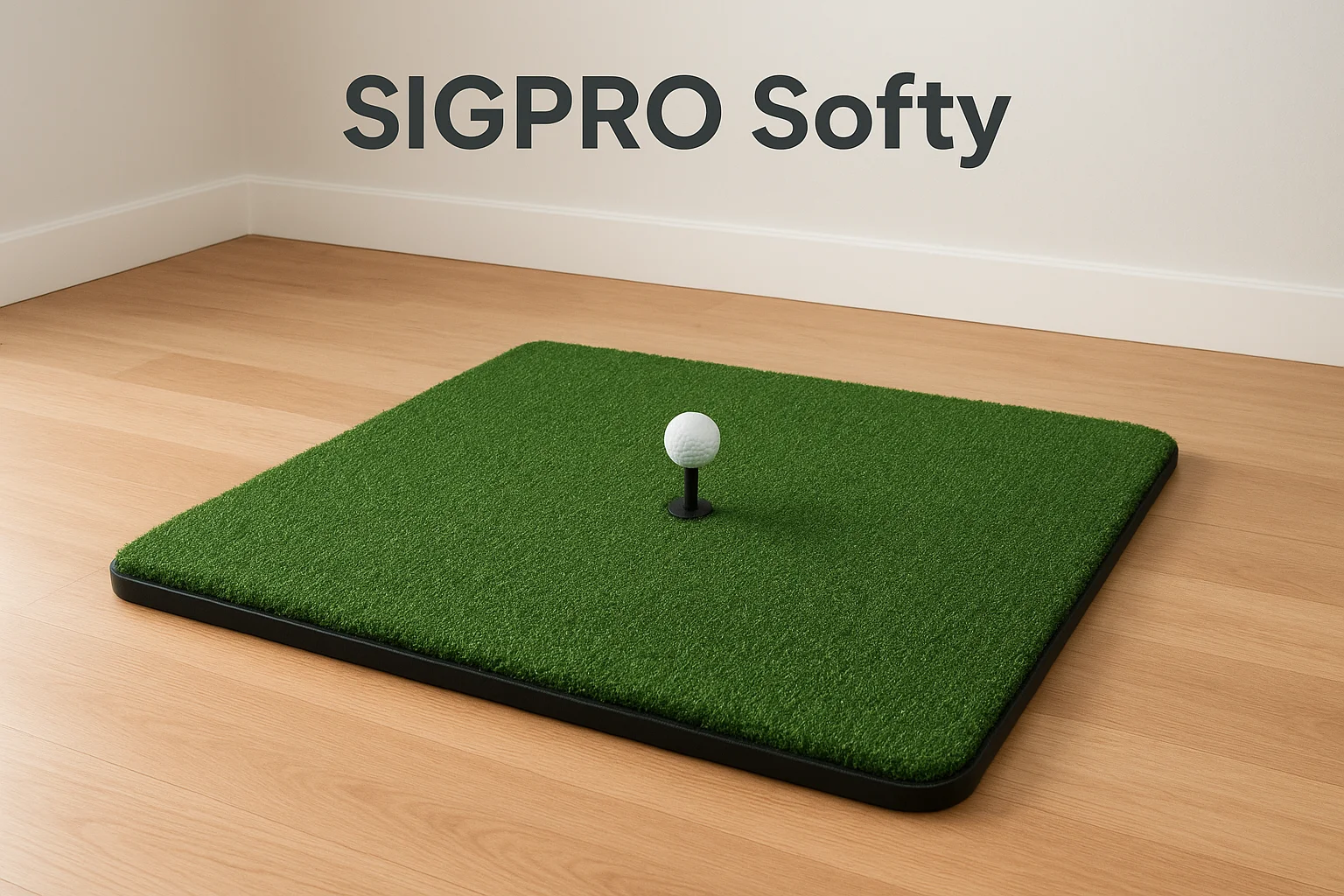
The SIGPRO Softy sits at the top of this list for a reason: it combines a realistic turf feel with enough cushion underfoot to protect your joints during long sessions. If you want a golf simulator mat that performs well across a wide range of skill levels and swing types, the Softy is the easiest recommendation on this list. Most golfers who try it don't go back to anything cheaper.
Feel and turf interaction
The Softy uses a dense nylon turf that mimics the resistance of real fairway grass without being overly stiff. Your club glides through the fibers naturally, which means you get honest feedback on your strike quality rather than the false bounce you'd get from a hard rubber mat. Heel-heavy mis-hits feel different from center strikes, and that difference is exactly what you need for meaningful practice that carries over to the course.
Joint comfort and mis-hit forgiveness
SIGPRO builds the Softy with a multi-layer foam base that absorbs shock from fat shots and chunked irons without sending that vibration straight into your wrists and elbows. Most golfers who switch from harder mats report noticeably less fatigue after extended sessions. The foam compresses under impact and rebounds, so the mat never feels dead even after thousands of swings.
If joint pain has been shortening your simulator sessions, the Softy's foam underlayer alone makes it worth the price difference over budget mats.
Tee options and launch monitor fit
The Softy comes with rubber tee inserts that accept standard rubber tees at multiple heights, so you can hit drivers, hybrids, and irons from the same surface without swapping anything out. The mat sits flat and stable on most flooring types, which matters for side-mounted launch monitors like the Mevo+ or R10 that read ball position relative to the mat surface. You won't get skewed readings from a mat that rocks or bunches.
Durability, maintenance, and replacement strategy
The turf fibers on the Softy hold up well under consistent use, but the high-traffic hitting zone will eventually show wear if you're hitting 200-plus balls per day. SIGPRO sells replacement hitting strips separately, so you don't have to replace the entire mat when the center wears down. Vacuuming the surface weekly and brushing the fibers back upright after sessions extends the usable life significantly, often pushing it past the two-year mark for daily users.
Typical sizes and price range
The Softy is available in several configurations, with the most common being 4' x 5' and 5' x 5' options. Pricing typically runs between $400 and $600 depending on size and any add-on accessories like side panels or tee bundles. For a dedicated simulator room, the 5' x 5' gives you enough space to set up comfortably without feeling cramped on wide stance shots.
2. Fiberbuilt Player Preferred
The Fiberbuilt Player Preferred runs on Fiberbuilt's fiber-blade construction rather than foam or rubber, which puts it in a different category from most simulator mats. If you want accurate turf interaction and a mat that holds up over years of daily use, this one is worth serious consideration.
Feel and turf interaction
Individual fiber blades compress and separate under your clubhead, closely replicating real turf behavior at impact. You get honest feedback on your strike quality with every swing.
Heel and toe strikes feel noticeably different from center contact, so the mat reinforces better ball-striking habits over time rather than masking poor contact.
Joint comfort and mis-hit forgiveness
Fiberbuilt's fiber base absorbs impact shock across the hitting zone, reducing the jarring that harder mats transfer into your wrists and forearms. The surface gives slightly on fat strikes rather than stopping your club dead.
Golfers managing wrist or elbow issues consistently report less discomfort on fiber-based mats compared to dense rubber alternatives.
Tee options and launch monitor fit
The Player Preferred accepts standard rubber tees directly through its fiber surface, so you can hit drivers through short irons from the same mat without any separate inserts.
Lying flat and staying stable under repeated swings, this mat keeps your launch monitor readings consistent from the first ball to the last.
Durability, maintenance, and replacement strategy
Fiber blades resist flattening far better than nylon turf, and Fiberbuilt sells replacement hitting strips so you can refresh the worn center zone without buying a whole new mat.
Brushing the surface periodically and clearing debris from the fiber blades extends its useful life well past what most nylon alternatives offer.
Typical sizes and price range
The Player Preferred typically comes in a 4' x 5' footprint, giving you enough room for a comfortable, natural stance.
Pricing runs $500 to $700, which is above entry-level golf simulator mat options, but the replacement strip system makes the long-term cost more manageable.
3. Fiberbuilt Grass Series
The Fiberbuilt Grass Series takes a different approach than the Player Preferred by using a synthetic grass surface that looks and feels closer to what you'd see on a real fairway. If you want a golf simulator mat that gives your setup a more natural aesthetic alongside solid performance, this model stands out.
Feel and turf interaction
The Grass Series uses densely packed synthetic turf fibers that compress under your clubhead at impact, giving you a more realistic turf-like feel than hard rubber mats. Your club moves through the surface cleanly, and thin shots feel distinct from solid contact, which keeps your feedback loop honest during practice.
Joint comfort and mis-hit forgiveness
The combination of the fiber turf layer and the foam backing underneath absorbs a meaningful amount of shock on fat strikes. Your wrists and elbows take less punishment than they would on a stiff mat, especially during longer sessions where cumulative impact adds up.
Golfers who practice daily report noticeably less arm fatigue on cushioned fiber mats compared to standard rubber alternatives.
Tee options and launch monitor fit
The Grass Series accepts standard rubber tees inserted directly into the turf surface, so you can adjust height easily without adapters. The mat lays flat and stays stable, which keeps your launch monitor readings accurate and repeatable across every session.
Durability, maintenance, and replacement strategy
The turf surface on the Grass Series handles consistent daily use well, and Fiberbuilt's replacement strip system means you can swap out the worn center section rather than replacing the entire mat. Brushing the fibers upright after sessions and vacuuming weekly keeps the surface performing longer.
Typical sizes and price range
The Grass Series typically comes in a 4' x 5' footprint, and pricing runs from $550 to $750 depending on configuration. It costs slightly more than entry-level options, but the build quality and replacement part availability justify that investment for dedicated simulator setups.
4. Carl's Place HotShot
The Carl's Place HotShot targets golfers who want a premium turf feel without the fiber-blade price tag. Carl's Place built its reputation on simulator enclosures, and the HotShot mat reflects that same attention to detail, making it a natural fit if you want your entire setup to feel cohesive and purpose-built.
Feel and turf interaction
Carl's Place designed the HotShot with a thick, short-pile nylon turf that delivers consistent resistance at impact. Your clubhead moves through the surface without the artificial bounce you get from low-quality mats, and center strikes feel noticeably cleaner than off-center contact, giving you feedback that actually translates to the course.
Joint comfort and mis-hit forgiveness
The HotShot sits on a thick rubber and foam base that absorbs shock from fat strikes and chunked irons. Your wrists and forearms take far less punishment compared to thin mats placed directly over hard flooring, and the stable base keeps the surface from shifting under your feet mid-swing.
If you're building a long-term simulator setup, joint protection matters as much as turf realism when choosing a golf simulator mat.
Tee options and launch monitor fit
Carl's Place includes a rubber tee insert system that accommodates multiple tee heights, so you can hit drivers and short irons from the same surface without adapters. The mat lies completely flat under repeated swings, which keeps side-mounted and overhead launch monitors producing reliable, consistent data across every session.
Durability, maintenance, and replacement strategy
The turf surface on the HotShot holds up well under frequent daily use, and the dense base resists compression even after extended periods of heavy swings. Brushing the fibers upright weekly and vacuuming the surface regularly keeps performance consistent over time.
Typical sizes and price range
Sizing options typically include a 4' x 5' footprint, with pricing ranging from $400 to $550. That puts it in competitive territory with the Fiberbuilt options while offering a slightly lower entry point for golfers managing a tighter build budget.
5. TrueStrike
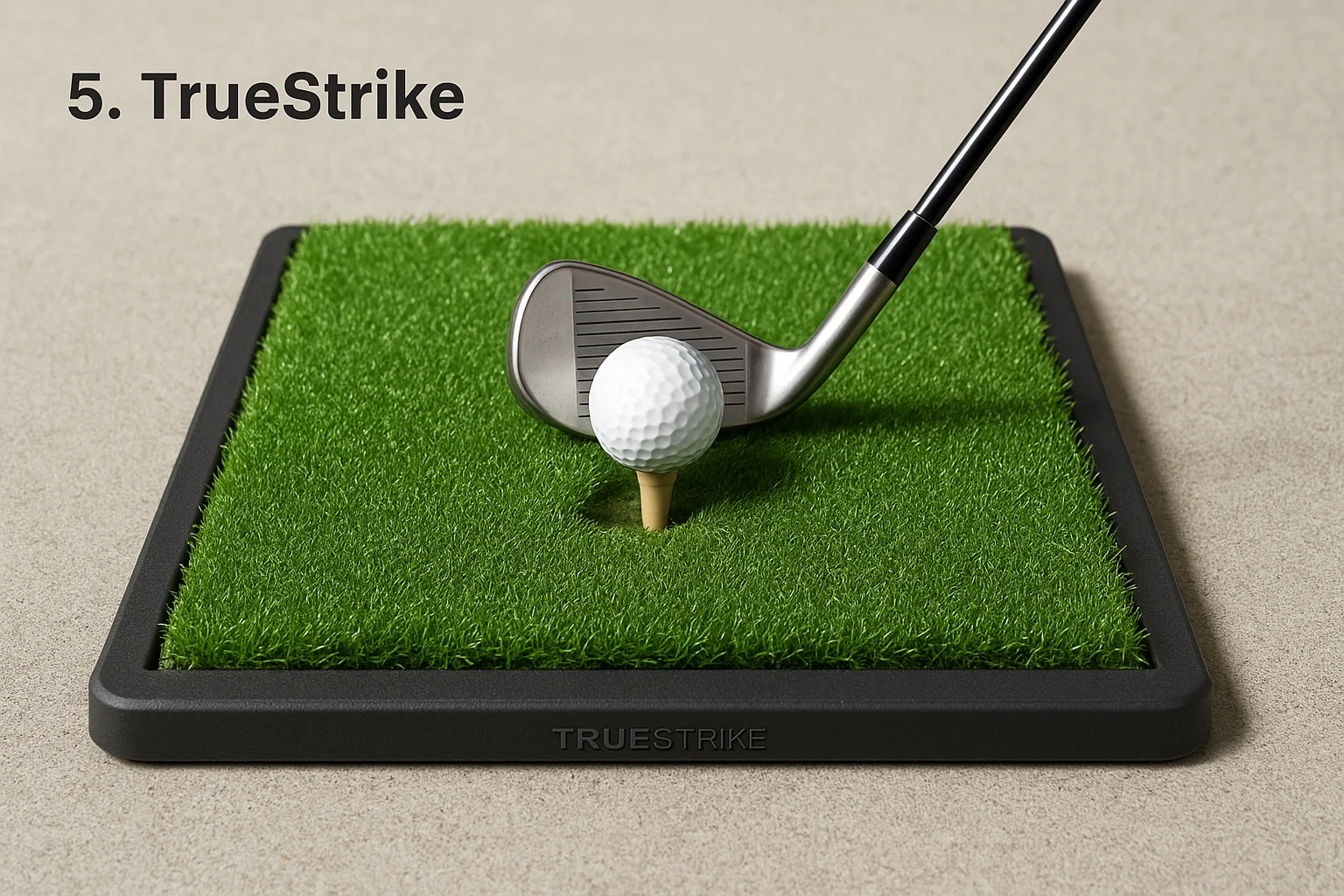
The TrueStrike takes a completely different approach to turf replication compared to every other golf simulator mat on this list. Instead of relying solely on turf fibers or foam, it uses a patented gel-filled layer beneath the hitting surface that allows the mat to slide forward on contact, mimicking the natural movement of a real divot. That single design feature sets it apart from most alternatives.
Feel and turf interaction
When your clubhead strikes the surface, the gel layer compresses and shifts forward, replicating the sensation of taking an actual divot through the hitting zone. Your club doesn't bounce or skid unnaturally. Center strikes feel noticeably different from heel and toe contact, which keeps your feedback accurate and transfers more directly to on-course performance.
Joint comfort and mis-hit forgiveness
The gel layer does double duty: it replicates turf movement and absorbs a significant portion of impact shock on fat shots. Your wrists and elbows take far less punishment than they would on a rigid rubber surface. For golfers who struggle with arm fatigue during long sessions, TrueStrike's shock absorption is one of the more practical advantages on this list.
If joint pain has been limiting how long you practice, the gel construction here addresses that problem more directly than most competitor designs.
Tee options and launch monitor fit
TrueStrike includes a single center tee insert that accepts rubber tees at adjustable heights. The mat sits on a stable rubber base, keeping it flat and stationary during your swing, which ensures your launch monitor captures reliable data every session.
Durability, maintenance, and replacement strategy
The hitting surface layer is replaceable independently from the gel base, so normal wear in the center strike zone doesn't mean buying an entirely new unit. Brushing the surface regularly keeps the fibers performing consistently.
Typical sizes and price range
TrueStrike typically comes in a single mat configuration covering roughly 16" x 24" for the hitting zone, and pricing runs from $450 to $650. Dual mat setups with a larger fairway section cost more but give you a wider stance platform.
6. Country Club Elite
The Country Club Elite is one of the most widely used golf simulator mat options in commercial simulator bays and dedicated home setups alike. Real Feel Golf Mats manufactures it with a focus on turf realism and long-term durability, and that combination has earned it a strong reputation among serious golfers who practice frequently.
Feel and turf interaction
The Country Club Elite uses a thick, multi-fiber nylon surface that closely replicates the feel of hitting off a well-maintained fairway. Your clubhead moves through the fibers with natural resistance, and clean center strikes feel noticeably different from mishits, giving you honest feedback that carries over to on-course performance.
Joint comfort and mis-hit forgiveness
The mat sits on a dense rubber base that cushions fat shots and reduces the shock that travels into your wrists and forearms. You can swing through the hitting zone repeatedly without the jarring impact that thinner mats transfer directly into your joints.
For golfers who practice daily, the rubber base here provides meaningful protection against the cumulative fatigue that cheaper mats cause over time.
Tee options and launch monitor fit
Country Club Elite mats include a built-in rubber tee insert that works with standard rubber tees at multiple heights. The mat lies completely flat on most surfaces, which keeps your launch monitor readings stable and consistent across every session without any adjustment.
Durability, maintenance, and replacement strategy
The nylon fiber surface resists heavy compression even under daily use, and the rubber base holds its shape over years of swings. Brushing the fibers upright after sessions and vacuuming the surface weekly keeps the hitting zone performing at its best.
Typical sizes and price range
The Country Club Elite comes in configurations ranging from 4' x 5' up to 5' x 5', with pricing running between $350 and $500 depending on size. That puts it in a competitive range for golfers who want proven durability without reaching into the top pricing tier.
7. EZ Tee Hybrid
The EZ Tee Hybrid targets golfers who want a solid, everyday golf simulator mat without committing to the price points that premium fiber or gel-based options require. It combines a nylon turf surface with a dense rubber base, giving you a functional setup that handles regular use without falling apart in the first season.
Feel and turf interaction
The nylon surface delivers consistent resistance at impact, and your club moves through the fibers without the harsh bounce that thin rubber mats produce. Strike quality differences are noticeable, though the feedback is less nuanced than fiber-blade options like the Fiberbuilt lineup.
Joint comfort and mis-hit forgiveness
The rubber base absorbs a reasonable amount of shock on fat strikes, reducing the direct impact your wrists and forearms absorb during extended sessions. It won't match the cushioning of a multi-layer foam or gel system, but it performs better than single-layer mats placed over hard flooring.
If your sessions run under an hour most days, the EZ Tee Hybrid's base provides enough shock protection for most casual to intermediate golfers.
Tee options and launch monitor fit
The EZ Tee Hybrid includes multiple built-in rubber tee positions at varying heights, which lets you hit drivers through wedges from a single surface. The mat stays flat under repeated swings, keeping your launch monitor data stable and repeatable from session to session.
Durability, maintenance, and replacement strategy
The hitting zone will show wear over time with heavy daily use, and the EZ Tee Hybrid does not offer a replacement strip option like Fiberbuilt or SIGPRO. Brushing the fibers upright after each session and vacuuming the surface weekly slows that wear down noticeably.
Typical sizes and price range
Sizing typically runs 4' x 5', and pricing falls between $150 and $250, making it one of the more accessible options on this list for golfers working with a tighter budget.
8. Holy Grail Hitting Strip
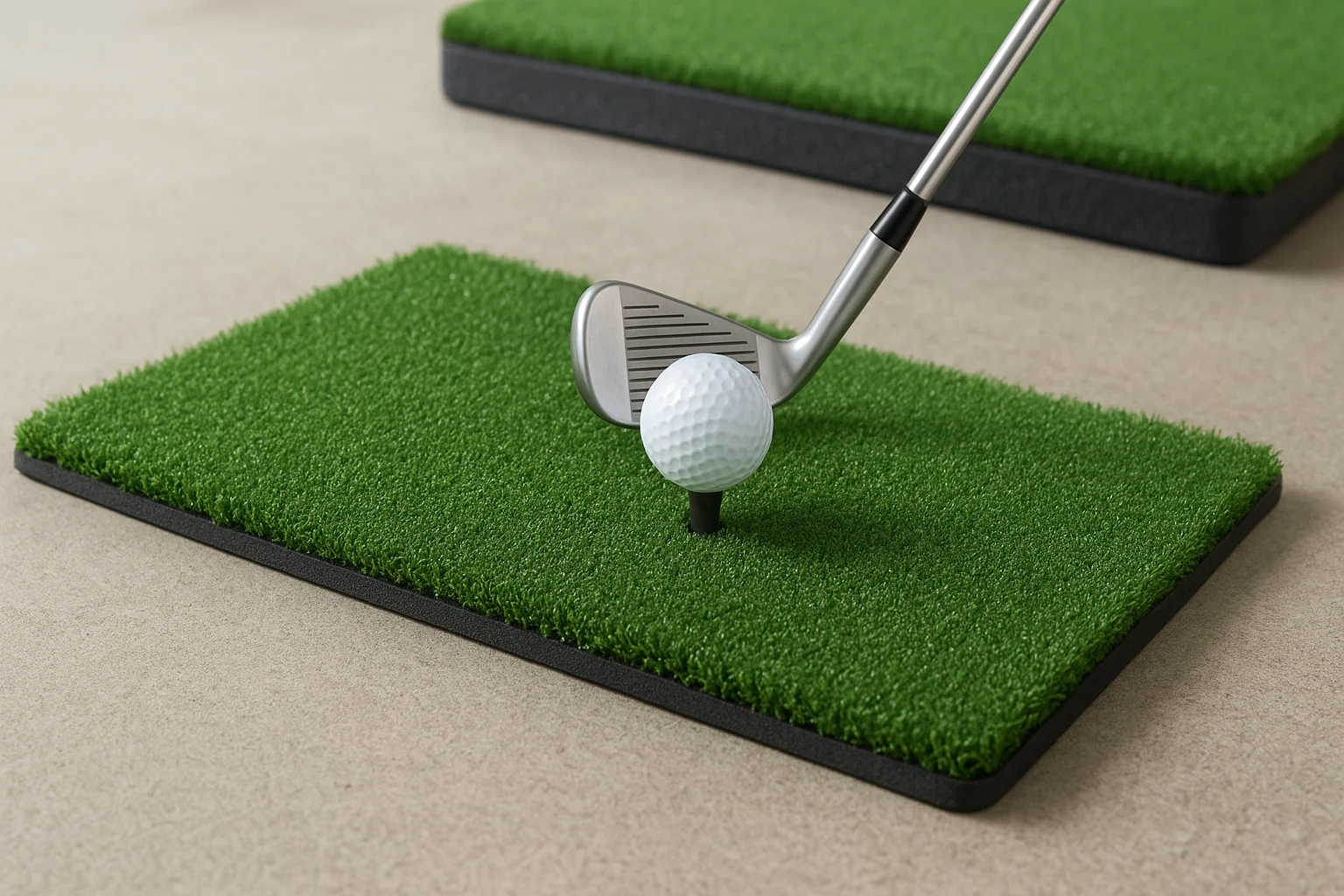
The Holy Grail Hitting Strip takes a different approach from full-size mats: it functions as a standalone hitting surface designed to drop into an existing mat frame or sit on a foam pad, giving you a premium turf feel without replacing your entire setup.
Feel and turf interaction
The Holy Grail uses a dense, short-pile synthetic turf that delivers honest feedback at impact. Your club interacts with the fibers in a way that closely mimics real fairway turf, and thin strikes feel noticeably different from pure center contact, which keeps your practice loop useful rather than misleading.
Joint comfort and mis-hit forgiveness
The strip itself is relatively thin, so joint protection depends heavily on what you place underneath it, whether that is a foam pad, a rubber underlayer, or an existing mat base. Pair it correctly, and it handles fat shots with reasonable forgiveness. Use it on bare concrete, and your wrists will feel every fat strike by the end of the session.
The Holy Grail works best when paired with a quality foam or rubber underlayer that handles shock absorption while the strip handles turf realism.
Tee options and launch monitor fit
The surface accepts standard rubber tees inserted directly through the turf fibers, and it sits flat without curling or shifting during your swing. That stability keeps your launch monitor data consistent and repeatable across sessions.
Durability, maintenance, and replacement strategy
The turf fibers hold up well under consistent use, and the strip's core value is that you replace only the hitting surface rather than an entire mat when the center zone wears down. Brushing the fibers upright after sessions extends the life considerably.
Typical sizes and price range
The Holy Grail Hitting Strip typically measures around 12" x 24", and pricing runs between $100 and $180, making it one of the most affordable ways to upgrade the feel of an existing golf simulator mat setup without starting over.
9. GoSports Golf Hitting Mat
The GoSports Golf Hitting Mat sits at the budget end of this list, and that positioning is both its biggest strength and its clearest limitation. If you need a golf simulator mat to get started without a large upfront investment, GoSports gives you a functional surface that handles casual use without demanding serious commitment money upfront.
Feel and turf interaction
The GoSports mat uses a basic nylon turf surface that provides adequate resistance at impact for beginners and casual players. Your clubhead moves through the fibers without excessive bounce, but feedback between clean strikes and mishits is less distinct compared to premium options like the Fiberbuilt or SIGPRO Softy. That reduced feedback is the main trade-off you accept at this price point.
Joint comfort and mis-hit forgiveness
The mat includes a thin rubber base layer that provides basic shock absorption on fat strikes. Your wrists and elbows receive some protection during shorter sessions, though the cushioning falls short of multi-layer foam systems when practice runs long.
If you plan to hit more than 100 balls per day consistently, placing an additional foam pad underneath the GoSports mat reduces the cumulative joint stress that the base alone cannot handle.
Tee options and launch monitor fit
GoSports mats typically include one or two rubber tee inserts at standard heights, covering drivers through short irons without adapters. The mat lies flat on most surfaces, keeping your launch monitor data reasonably consistent during shorter sessions.
Durability, maintenance, and replacement strategy
The nylon fibers compress noticeably faster than those on premium mats under daily heavy use, and GoSports does not offer replacement hitting strips. Brushing the fibers upright after each session and vacuuming the surface weekly slows wear but won't match the longevity of higher-end options.
Typical sizes and price range
GoSports mats typically come in footprints around 4' x 5', with pricing ranging from $50 to $120. That makes it the most accessible entry point on this list for golfers testing a simulator setup before committing to higher-end gear.
Your next step
Every golf simulator mat on this list serves a different type of golfer. If you practice daily and need long-term durability with honest turf feedback, the SIGPRO Softy or Fiberbuilt options are worth the investment. Budget-conscious setups starting out do just fine with the GoSports or EZ Tee Hybrid until you're ready to upgrade.
Picking the right mat is one piece of the puzzle. The room around it matters just as much, from proper ceiling height and flooring to enclosure placement and launch monitor positioning. At Treasure Valley Solutions, we design and install complete golf simulator rooms for homeowners across the Treasure Valley area, handling every detail from initial layout to final calibration so your setup performs the way it should from day one.
If you're ready to build a dedicated simulator space that you'll actually use, reach out to our team and we'll walk you through the options.
Need Expert Help?
Ready to implement these solutions in your own home or business?
Our Services
View All Services
Serving the Treasure Valley
Local installation in your city