 (208) 991-3502
 Meridian, ID




Traditional keys are easy to copy, simple to lose, and impossible to track. That's why more businesses, hotels, and property managers are switching to key card door lock systems, a smarter way to cont...
Traditional keys are easy to copy, simple to lose, and impossible to track. That's why more businesses, hotels, and property managers are switching to key card door lock systems, a smarter way to control who enters your building and when. Whether you're securing an office, managing a rental property, or upgrading a hospitality space, understanding how these systems work is the first step toward better access control.
At Treasure Valley Solutions, we design and install custom access control solutions for commercial and residential clients throughout the Treasure Valley area. We've helped property managers simplify tenant access, businesses monitor entry points, and building owners eliminate the hassle of rekeying locks every time someone leaves.
This guide covers the types of key card systems available, how they actually work, the costs involved, and what to consider before choosing the right system for your property.
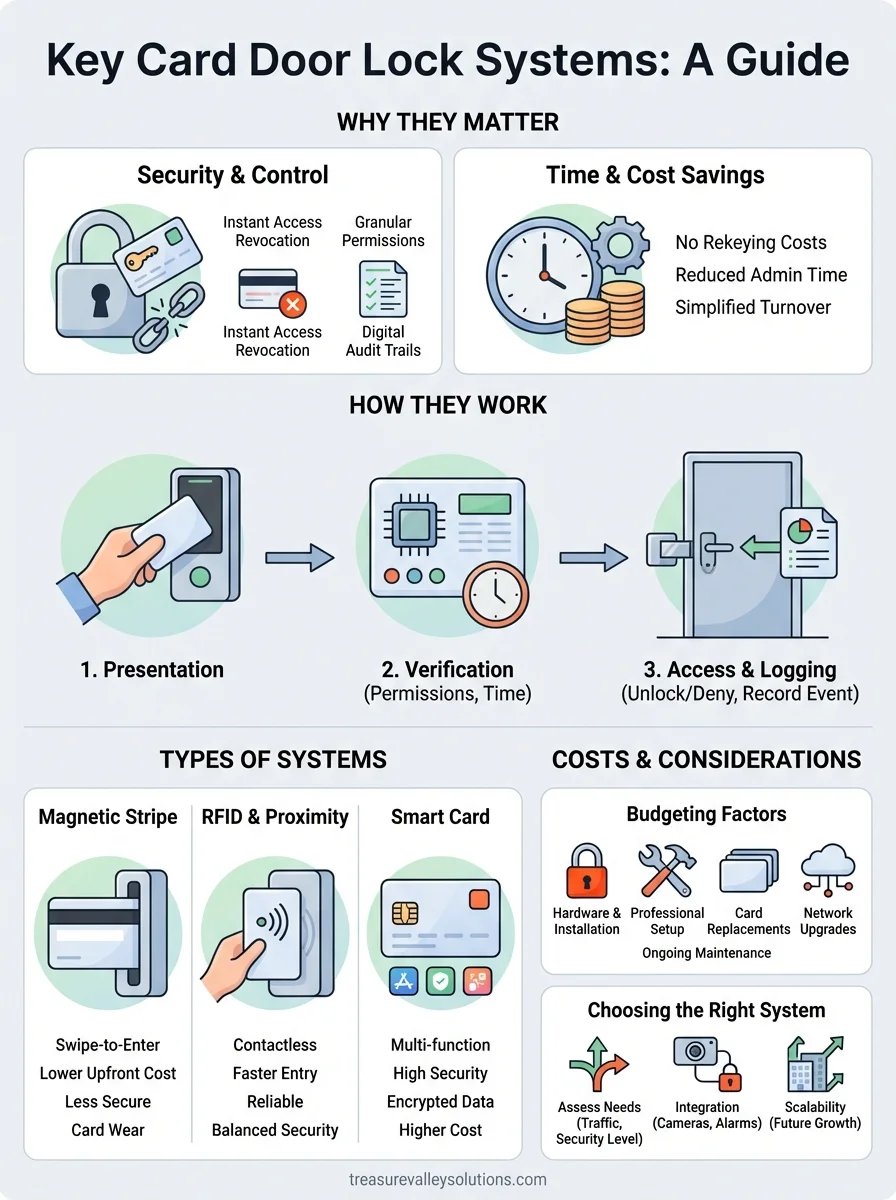
Why key card door lock systems matter
You can't remotely deactivate a traditional metal key. You can't see who used it or when they entered your building. And every time an employee leaves or a tenant moves out, you face the choice of rekeying every lock or accepting the risk that someone still has access. Key card door lock systems solve these problems by giving you complete control over who enters your property and the ability to revoke access instantly without replacing any hardware.
Security advantages over traditional keys
Physical keys create security gaps you can't close. When someone loses a key or doesn't return it, you have no way to know if it's been copied or who might use it next. You're forced to either rekey the entire building or live with the vulnerability. Key cards eliminate this problem because you can deactivate a lost card in seconds from your computer or phone, and the old card becomes worthless.
Cards also give you granular control over access levels. You can program certain cards to open only specific doors, work only during business hours, or expire after a set period. This means your cleaning crew can access common areas but not executive offices, temporary contractors can't enter after their project ends, and delivery personnel can use service entrances without accessing restricted zones. Traditional keys can't provide this level of control.
Key card systems let you grant temporary access without the risk of unauthorized copies or forgotten returns.
Time and cost savings
Replacing lost keys and rekeying locks costs you time and money. Property managers spend hours tracking down maintenance staff, scheduling locksmith visits, and distributing new keys to authorized users. With key card systems, you replace a lost card for a few dollars and reprogram the system in minutes. No locksmith needed, no disruption to your operations, and no wondering if someone made copies before reporting the loss.
Employee turnover becomes simpler to manage. When someone leaves your company or a tenant breaks their lease, you delete their access credentials immediately. You don't coordinate key returns, change locks, or worry about whether they kept a copy. The system automatically logs their final exit and prevents future entry, giving you documentation that the access was properly terminated.
Audit trails and accountability
Every card swipe creates a digital record. You know exactly who entered which door and at what time, data that's impossible to capture with traditional keys. This tracking matters when investigating security incidents, verifying employee attendance, or proving someone was in a specific location during a specific timeframe. Property managers use these logs to resolve disputes about after-hours access, while business owners rely on them to ensure staff are following security protocols.
These records also help you identify usage patterns and security weak points. You might discover that certain doors are propped open frequently, that someone's entering after hours without authorization, or that high-traffic entry points need additional security measures. Traditional keys give you none of this information.
How key card door lock systems work
Key card door lock systems replace mechanical keys with electronic credentials stored on plastic cards. When you present a card to a reader, the system checks whether that card has permission to unlock the door, then either grants or denies access based on the programmed settings. The entire process happens in milliseconds, and every attempt gets recorded in a central database that tracks who accessed which doors and when.
The basic technology
Most key card systems use one of two core technologies: magnetic stripe cards or RFID (Radio Frequency Identification) chips. Magnetic stripe cards work like credit cards, storing data in a magnetic band that a reader detects when you swipe the card through a slot. RFID cards contain tiny chips that transmit data wirelessly when you hold the card near a reader, which means you don't need physical contact to unlock the door.
The reader connects to a control panel that stores all access permissions and user data. This panel acts as the system's brain, deciding whether to unlock the door based on the card's credentials, the current time, and any special restrictions you've programmed. In networked systems, multiple readers throughout your building connect to a single control panel or cloud server, letting you manage all access points from one location.
Key card systems create an electronic chain of verification between the card, reader, and control panel before granting access.
What happens during each entry
You hold your card near the reader or swipe it through the slot. The reader captures the unique identifier stored on your card and sends that information to the control panel. The panel checks its database to verify three things: whether your card is active, whether you have permission to access that specific door, and whether you're attempting entry during authorized hours.
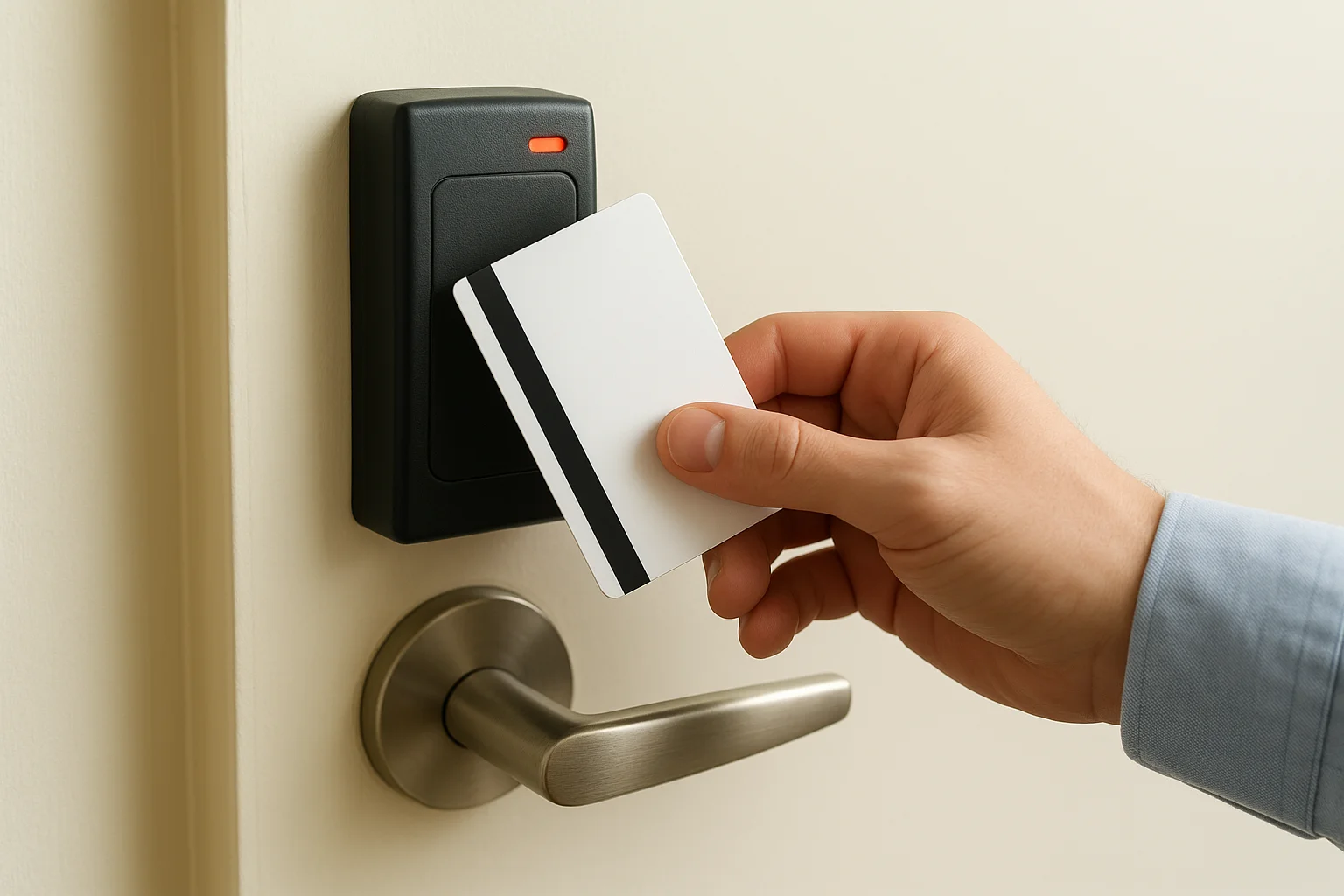
If all checks pass, the control panel sends an electronic signal to unlock the door, usually by releasing an electromagnetic lock or triggering a motorized strike. The entire transaction gets logged with a timestamp and your card number. If any check fails, the door stays locked and the system records the denied attempt, which helps you identify potential security issues or unauthorized access attempts.
Types of key card door lock systems
Key card door lock systems come in three main categories, each using different technology to store and transmit access credentials. Your choice depends on your security requirements, budget, and how many doors you need to control. Understanding the differences helps you select a system that matches your operational needs without paying for features you won't use.
Magnetic stripe systems
Magnetic stripe cards store data in a magnetic band similar to credit cards and hotel room keys. You swipe these cards through a reader slot to unlock doors, and the system reads the encoded information to verify access. These systems cost less upfront than other options, making them attractive for smaller buildings or budget-conscious projects.
The technology has limitations you should consider. Magnetic stripes wear out over time from repeated swiping and exposure to magnetic fields, which means you'll replace cards more frequently than with other systems. Someone can also copy or clone magnetic stripe cards more easily than RFID or smart cards, creating security vulnerabilities if your property handles sensitive information or valuable assets.
RFID and proximity cards
RFID cards contain tiny radio frequency chips that communicate wirelessly with readers when you hold them near the door. You don't need to make physical contact or swipe the card, which speeds up entry and reduces wear and tear on both cards and readers. Most commercial buildings and hotels use RFID systems because they balance cost, convenience, and security effectively.
RFID technology eliminates card swiping and provides faster, more reliable access control for high-traffic entry points.
These systems operate on different frequencies. Low-frequency RFID cards work from about one to six inches away from the reader, while high-frequency cards can activate readers from several feet away. The shorter read range typically provides better security because someone needs to intentionally present their card rather than accidentally triggering the reader while walking past.
Smart card systems
Smart cards contain embedded microprocessors that can store encrypted data, process information, and even run security applications. You might use the same card for building access, computer login, time tracking, and payment systems within your facility. This multi-function capability makes smart cards ideal for large organizations that want to consolidate multiple credentials into one platform.
The advanced technology comes with higher costs. Smart card systems require specialized readers and more complex software, and the cards themselves cost more to produce and replace. However, the enhanced security and functionality often justify the investment for properties handling sensitive data or requiring strict access control protocols.
Costs and budgeting for key card access
Key card door lock systems require upfront investment and ongoing expenses that vary based on the technology you select, the number of doors you secure, and whether you choose a standalone or networked system. Understanding the full cost picture helps you avoid budget surprises and select a system that delivers value without straining your resources. Most installations range from a few thousand dollars for basic setups to tens of thousands for enterprise-level networks.
Initial equipment and installation
You'll spend between $500 and $2,500 per door for hardware, including the card reader, electronic lock mechanism, and control panel connections. Basic magnetic stripe systems start at the lower end, while advanced RFID or smart card readers with biometric integration push costs higher. Your building's existing infrastructure affects installation expenses, too. Properties with modern electrical systems and structured cabling spend less than older buildings that need extensive retrofitting.
Professional installation adds $150 to $300 per door, depending on complexity and your location. Simple installations on standard door frames cost less than specialized mounting on glass doors, turnstiles, or heavy security gates. You also need to budget for the control panel or server that manages all access points, which runs $1,000 to $5,000 for networked systems serving multiple doors.
Professional installation ensures your system integrates properly with existing security infrastructure and meets local building codes.
Ongoing operational expenses
Card replacement represents your most frequent expense. Basic RFID cards cost $1 to $3 each, while smart cards run $5 to $15 per unit. Properties with high turnover or careless users might spend hundreds annually on replacements. Software licensing for cloud-based systems typically costs $50 to $200 per door annually, though some vendors charge per user instead of per access point.
Maintenance contracts protect your investment. Most vendors charge 10 to 15 percent of the initial hardware cost annually for service agreements that cover repairs, software updates, and technical support. This expense becomes worthwhile when you consider the cost of system downtime or emergency service calls without a maintenance plan.
Hidden costs that add up
Network infrastructure upgrades catch many buyers off guard. Cloud-connected systems need reliable internet at every access point, which might require new cabling or wireless access points costing $200 to $500 per location. Integration with existing security cameras, alarm systems, or building management platforms often requires custom programming that adds $1,000 to $3,000 to your project budget.
How to choose the right system for your building
Selecting the right key card door lock systems depends on your building's layout, user volume, and security requirements. A small office with ten employees needs different features than a multi-story commercial property with hundreds of daily entries. You need to evaluate your current needs and future growth plans before committing to a system that might become inadequate or unnecessarily complex.
Assess your property's specific needs
Start by counting how many access points you need to control and how many people will use the system daily. Properties with high traffic volumes benefit from RFID or smart card systems that process entries quickly without physical swiping. Buildings with lower traffic can save money with magnetic stripe readers that cost less upfront but require more frequent card replacements.
Your security level matters more than technology preferences. Properties storing sensitive information, valuable inventory, or handling regulated materials need systems with encryption, audit trails, and multi-factor authentication options. Standard office spaces with basic security needs can operate effectively with simpler systems that focus on convenience over advanced security features.
Match your system's capabilities to your actual security requirements rather than paying for features you'll never activate or monitor.
Evaluate integration requirements
Check whether you need your access control system to connect with existing security cameras, alarm systems, or building management platforms. Networked systems that share data across multiple platforms cost more but provide comprehensive security by linking access events to video footage and other building systems. Standalone systems work fine if you only need basic entry control without cross-platform functionality.
Consider scalability and future growth
Choose systems that let you add doors and users without replacing core infrastructure. Cloud-based platforms typically offer easier expansion than on-premise servers because you avoid hardware limitations. Properties planning to add floors, wings, or separate buildings should prioritize systems with proven scalability and vendor support for multi-site deployments. Smaller properties with stable footprints can select simpler systems that match their current size without paying for unused capacity.
Installation, maintenance, and common issues
Key card door lock systems require proper installation and regular upkeep to function reliably. You'll face fewer problems when you understand what's involved in setup, what maintenance tasks prevent failures, and how to resolve common issues before they disrupt access to your building. Most problems stem from poor installation, neglected maintenance, or simple user errors that you can fix quickly.
Professional vs DIY installation
You should hire licensed professionals for key card door lock systems installations rather than attempting DIY work. Professional installers ensure your card readers mount securely, wiring meets electrical codes, and all components integrate correctly with your control panel. They also configure software settings, test every door thoroughly, and document your system for future reference. Improper installations create security gaps, cause premature hardware failures, and void manufacturer warranties that protect your investment.
DIY installation might seem cost-effective, but you risk misaligned readers, incorrectly wired locks, and software configuration errors that compromise security. Properties with multiple access points or complex integration requirements especially need professional expertise to avoid problems that become expensive to fix later.
Regular maintenance requirements
Your system needs quarterly inspections of all card readers and door hardware to catch wear before it causes failures. Check reader surfaces for damage, clean sensors with approved solutions, and verify that electronic locks engage and release smoothly. Battery-powered components require annual replacement even if they still function, because weak batteries cause intermittent failures that frustrate users and create security risks.
Software updates protect against security vulnerabilities and add new features. Cloud-based systems typically update automatically, but on-premise servers require manual updates that you should schedule quarterly. Back up your access database monthly so you can restore permissions quickly after system failures or hardware replacements.
Regular maintenance prevents 80 percent of access control failures and extends hardware life by years.
Troubleshooting common problems
Cards that stop working usually need replacement rather than repair. Demagnetized stripes, cracked RFID chips, and physical damage prevent cards from transmitting credentials properly. Check your system logs to verify whether the card itself failed or whether access permissions expired.
Readers that fail intermittently often suffer from loose wiring connections or environmental interference. Metal objects near RFID readers, strong magnetic fields, or moisture intrusion can disrupt signal transmission. Tighten all connections, relocate readers away from interference sources, and weatherproof exterior installations to prevent water damage that corrodes electronics.
Final takeaways
Key card door lock systems give you control and visibility that traditional keys can't match. You'll eliminate the cost and hassle of rekeying locks, track every entry with detailed logs, and revoke access instantly when someone leaves your organization. The technology you select depends on your security requirements, budget, and the number of doors you need to manage.
Properties handling sensitive information or valuable assets need RFID or smart card systems with encryption and advanced features. Smaller buildings with basic security needs can start with magnetic stripe readers and upgrade later as requirements change. Professional installation and regular maintenance prevent most problems and protect your long-term investment.
At Treasure Valley Solutions, we design and install custom access control solutions for commercial and residential properties throughout the Treasure Valley area. We'll assess your building's layout, recommend the right technology for your needs, and handle everything from installation to ongoing support. Contact us today to discuss your access control project.
Need Expert Help?
Ready to implement these solutions in your own home or business?
Our Services
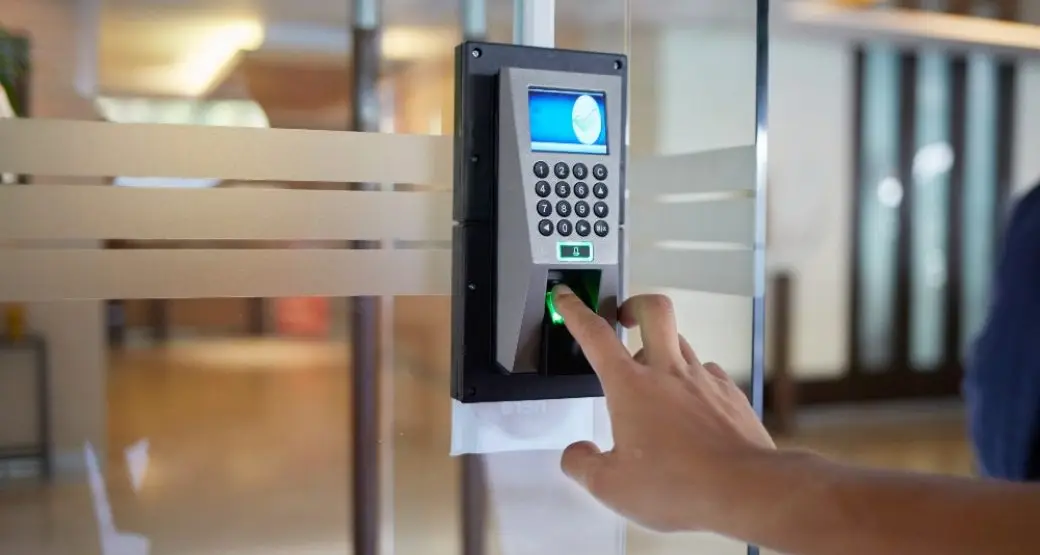
Comprehensive security solutions for home and business.
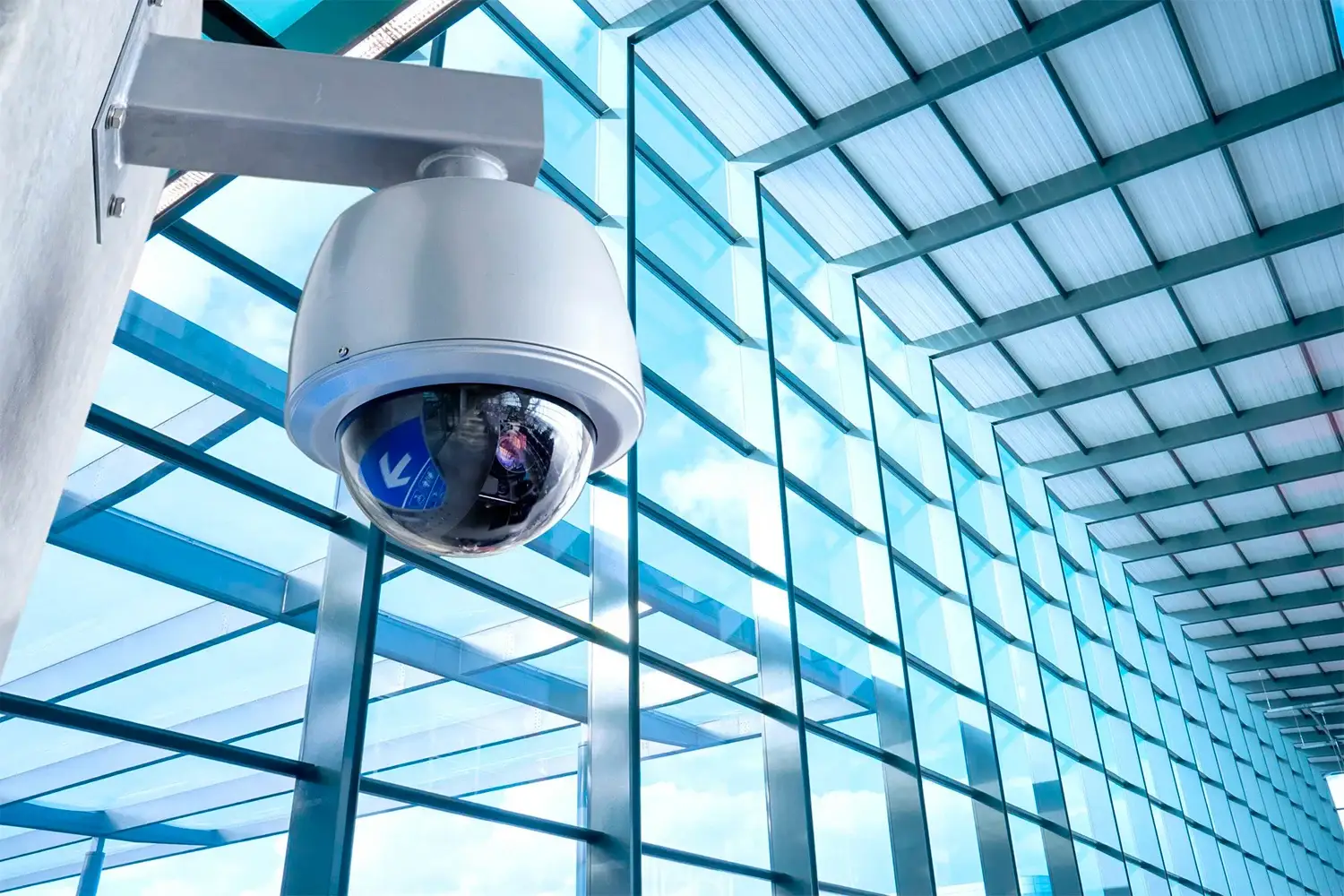
High-definition surveillance for peace of mind.

Complete home automation and control.
Serving the Treasure Valley
Local installation in your city