 (208) 991-3502
 Meridian, ID


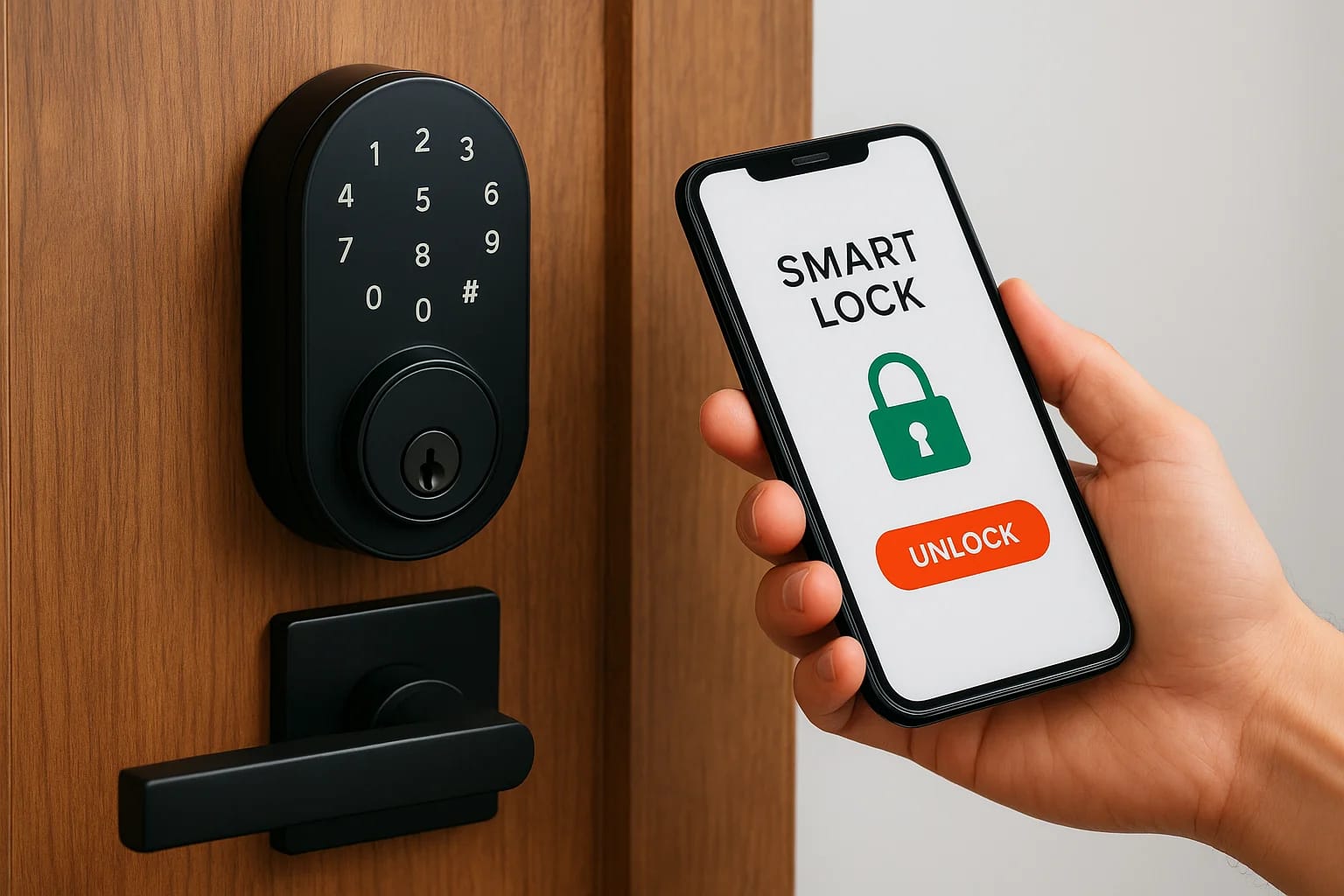

You're standing at your front door, arms full of groceries, fumbling for keys that somehow migrated to the bottom of your bag. Or maybe you're miles from home, wondering if you remembered to lock up....
You're standing at your front door, arms full of groceries, fumbling for keys that somehow migrated to the bottom of your bag. Or maybe you're miles from home, wondering if you remembered to lock up. These everyday frustrations have driven millions of homeowners to ask: what is a smart lock, and could it actually make my life easier? The short answer is yes, but the technology behind these devices, and the real-world benefits they deliver, deserve a closer look.
A smart lock replaces or upgrades your traditional deadbolt, allowing you to lock and unlock your door using a smartphone, keypad, voice command, or even biometrics. At Treasure Valley Solutions, we've installed smart locks in homes and businesses across the Boise area since 2014, and we've seen firsthand how this technology transforms security and convenience for our clients.
This guide covers how smart locks work, what benefits they offer, and whether they're truly safe and reliable for your home or business.
What a smart lock is and what it is not
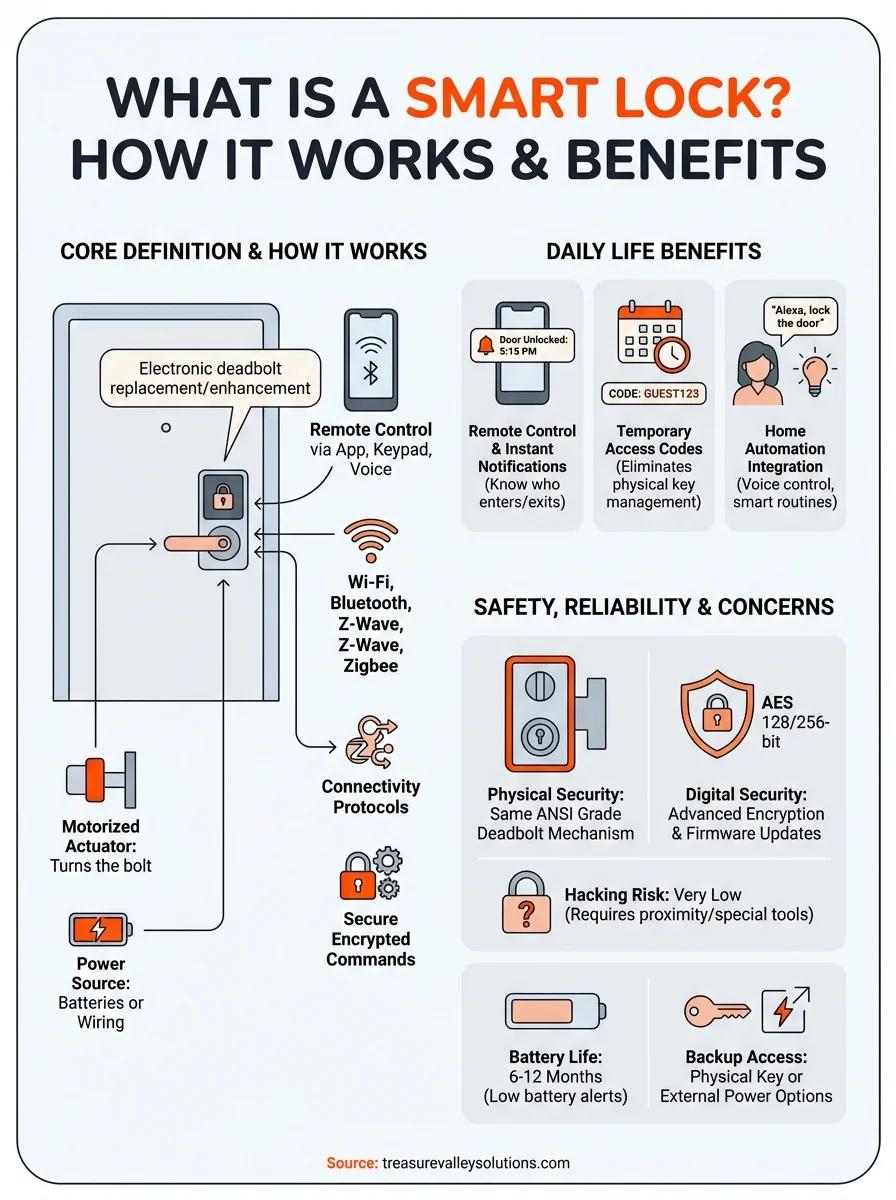
A smart lock is an electronic locking mechanism that connects to your home network or smartphone, allowing you to control access without a physical key. You can unlock your door remotely, grant temporary access to guests or service providers, and receive notifications when someone enters or exits. These devices install on your existing door, often working alongside your current hardware, and they communicate through Wi-Fi, Bluetooth, Z-Wave, or Zigbee protocols depending on the model and your home automation setup.
The core definition
Understanding what is a smart lock means recognizing it as a replacement or enhancement to your traditional deadbolt. You install the device on the interior side of your door, and it either replaces your entire lock assembly or attaches to your existing deadbolt mechanism. The lock includes an electric motor that turns the bolt when you send a command from your phone, enter a code on a keypad, or use a voice assistant like Alexa or Google Assistant.
Most smart locks maintain physical key compatibility as a backup option, though some newer models skip the keyhole entirely. You control these devices through a dedicated app, which lets you lock or unlock from anywhere, create custom access codes for family members or service providers, and view a history of who came and went. The technology removes the need to hide spare keys under doormats or coordinate physical key exchanges when someone needs temporary access.
What smart locks are not
Smart locks are not completely keyless entry systems in the way many people imagine. You still need power (batteries or hardwired electricity) for the electronic components to function, and you'll need to maintain that power source for reliable operation. These devices don't magically know who should have access; you must program permissions and manage user codes or smartphone credentials just as you would manage physical keys.
Smart locks enhance your existing security setup rather than creating an entirely new security system from scratch.
They're also not standalone security solutions. A smart lock protects your entry point but doesn't include cameras, motion sensors, or alarm systems unless you integrate it with a broader home security setup. You can't expect the lock alone to monitor your property or alert you to suspicious activity beyond the lock itself being engaged or disengaged. Finally, these devices require basic technical setup and occasional troubleshooting, unlike traditional locks that function purely mechanically once installed.
Why smart locks matter for homes and businesses
Understanding what is a smart lock becomes immediately relevant when you consider how often you interact with your doors. You lock and unlock entry points dozens of times weekly, coordinate access for family members, guests, or employees, and worry about whether you secured everything before leaving. Smart locks address these daily challenges by giving you complete control over who enters your property and when, without the limitations of physical keys that get lost, copied, or require in-person exchanges.
Real-world scenarios where smart locks solve problems
Your teenager arrives home from school while you're at work, and you want immediate confirmation they made it safely inside. A smart lock sends you a notification the moment they unlock the door. You run a vacation rental or manage commercial properties, and coordinating key handoffs with guests or contractors wastes hours of your time every month. Smart locks let you create temporary access codes that expire automatically, eliminating physical key management entirely.
Business owners face different but equally pressing needs. Your employees need building access at different times, but tracking who has keys and changing locks when someone leaves costs hundreds of dollars per incident. Restaurants and retail locations require staff access outside normal hours for opening or closing procedures, but you want to monitor exactly when someone enters. Smart locks create audit trails showing who accessed the building and when, giving you accountability that traditional keys can't provide.
Property managers and business owners save significant time and money by eliminating physical key management and gaining remote control over access permissions.
The cost of not upgrading
Staying with traditional locks means you continue dealing with lost key replacements, emergency locksmith calls at premium rates, and the security risk of not knowing who has copies of your keys. You sacrifice the convenience of remote access control when you need to let someone in while you're away, and you miss the peace of mind that comes from real-time notifications about entry activity at your property.
How smart locks work
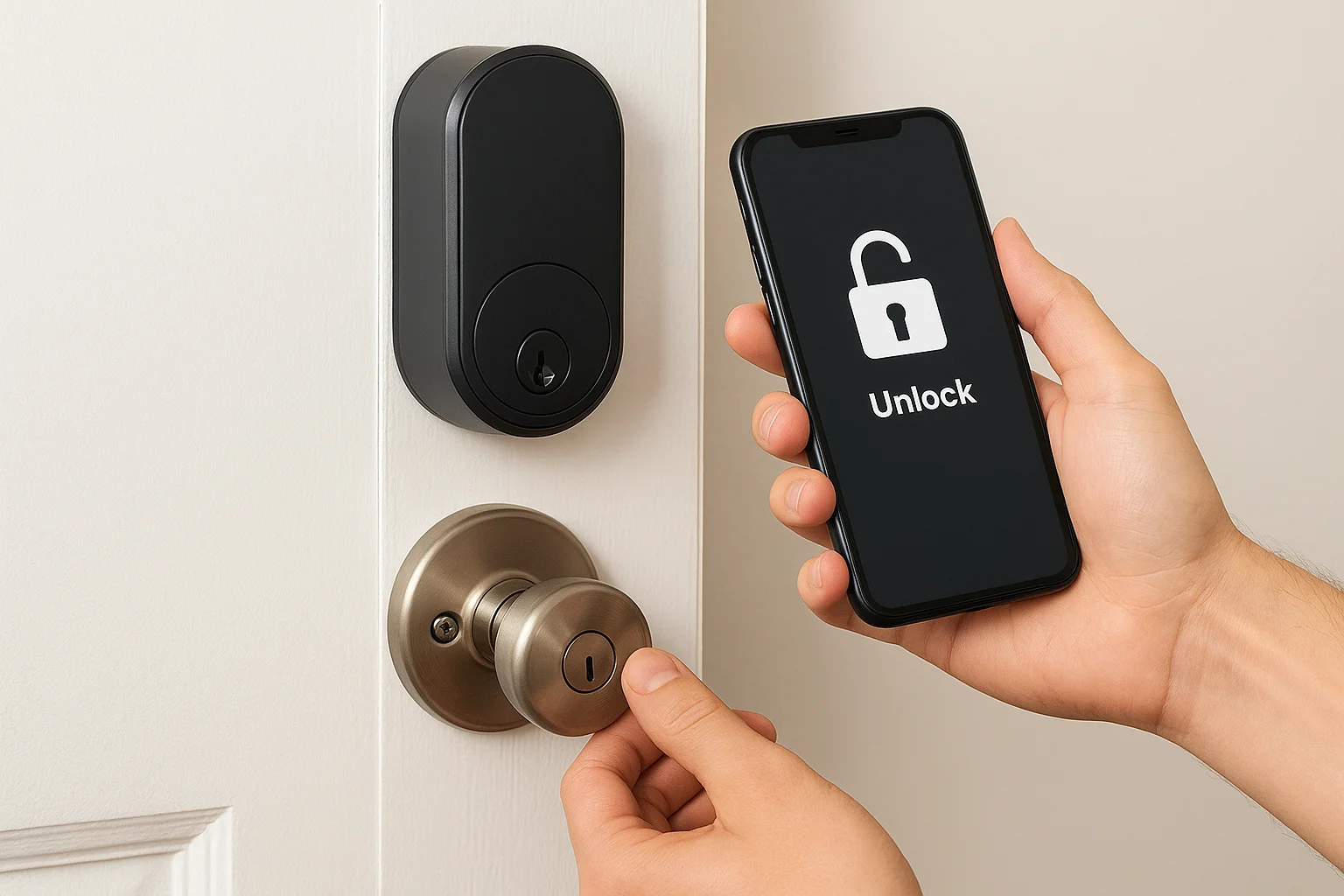
Understanding what is a smart lock requires looking at the physical mechanism and the digital communication that make these devices function. The lock combines traditional deadbolt hardware with an electric motor, circuit board, and wireless radio that receives commands from your smartphone or other control device. When you send an unlock command, the motor rotates the bolt mechanism exactly as your hand would turn a traditional key, and the entire process completes in one to three seconds depending on the model and connection type.
The basic mechanism
Your smart lock contains a motorized actuator that physically turns the deadbolt when it receives an authenticated command. The device draws power from batteries (typically four AA batteries lasting six to twelve months) or connects to your home's electrical system through low-voltage wiring. A circuit board inside the lock processes incoming signals, verifies authorization, and triggers the motor to engage or disengage the bolt.
The lock maintains a secure connection to your control device through encryption protocols that prevent unauthorized access attempts. Each command you send includes encrypted credentials that the lock verifies before responding, ensuring that only authorized users can control the device. Most models include backup options like physical keys or external battery terminals in case your primary power source fails.
Smart locks use the same reliable deadbolt mechanism as traditional locks, but add electronic control and monitoring capabilities.
Connection methods
Your smart lock communicates through Wi-Fi, Bluetooth, Z-Wave, or Zigbee depending on the model you choose. Bluetooth models connect directly to your smartphone when you're within range (typically 30 to 50 feet), making them simple to install but limiting remote access. Wi-Fi-enabled locks connect to your home network and allow control from anywhere with internet access, though they consume more battery power than Bluetooth alternatives.
Z-Wave and Zigbee locks require a compatible hub like SmartThings or a similar home automation controller, but they integrate seamlessly with other smart home devices and create more reliable mesh networks throughout your property.
Smart lock features that actually change daily life
The features that define what is a smart lock go beyond basic locking and unlocking. You gain specific capabilities that directly address daily frustrations, save time, and provide peace of mind in situations where traditional locks leave you stuck. These practical features matter more than technical specifications when you're deciding whether smart lock technology fits your lifestyle or business operations.
Remote control and notifications
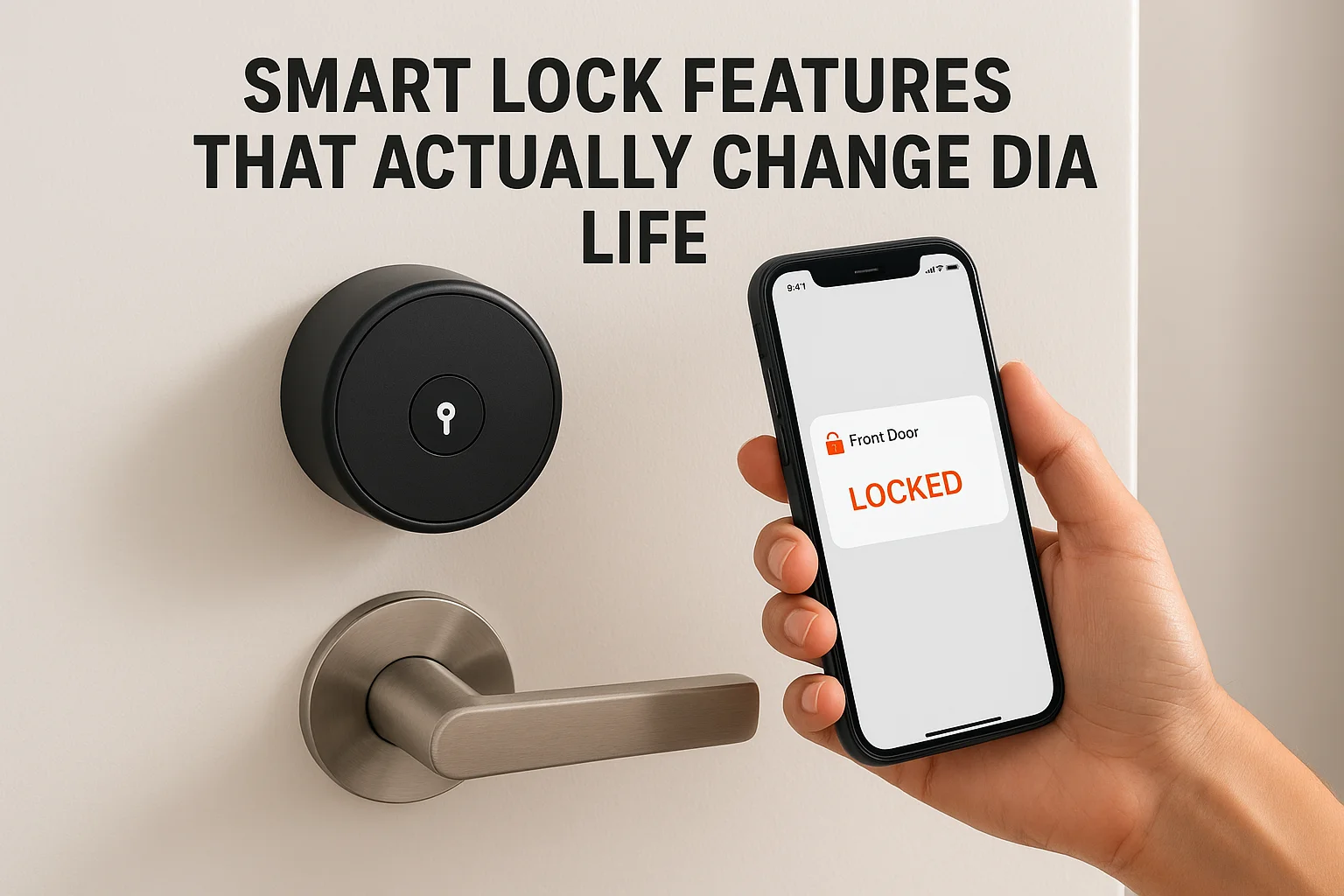
You unlock your door from anywhere using your smartphone, eliminating the need to rush home when a contractor arrives or your kids forget their keys. The lock sends instant notifications to your phone whenever someone enters or exits, so you know exactly when family members arrive home safely or when employees access your business after hours. This visibility removes the uncertainty that comes with traditional locks where you have no way to confirm whether someone locked up properly or arrived when expected.
Remote control proves especially valuable during unexpected situations. Your house cleaner arrives early while you're in a meeting, or a delivery driver needs access to your garage. You grant entry without interrupting your schedule or making the other person wait, then lock the door remotely once they leave.
Temporary access codes
You create unique access codes for different people, each with custom schedules and expiration dates. Your vacation rental guests receive a code that works only during their reservation dates, service providers get one-time access codes that expire after their appointment, and family members have permanent codes that remain active indefinitely. This feature eliminates physical key management and lets you revoke access instantly without changing locks or collecting keys when someone no longer needs entry.
Integration with home automation
Your smart lock connects with voice assistants, allowing you to lock doors by simply saying "Alexa, lock the front door" as you head to bed. The lock also works with other smart devices to create automated routines, like having your lights turn on automatically when you unlock the door after sunset, or your thermostat adjusting when the last person leaves and locks up.
Smart locks eliminate the frustration of coordinating physical keys while giving you complete visibility and control over property access.
Safety, reliability, and common concerns
You want to know whether smart locks actually protect your property as well as traditional locks, and whether the connected technology creates new vulnerabilities. The answer involves understanding both physical security and digital protection, plus the practical reality of how these devices perform in daily use. Smart locks face scrutiny because they introduce electronics and wireless connectivity to a security device that traditionally relied on purely mechanical operation, so examining what is a smart lock from a safety perspective requires looking at multiple factors.
Physical security compared to traditional locks
Your smart lock uses the same deadbolt mechanism as high-quality traditional locks, with the same Grade 1 or Grade 2 ANSI ratings that indicate resistance to forced entry. The electronic components sit on the interior side of your door, protected from tampering by anyone outside. Installation quality matters more than the technology itself when it comes to physical security, because even the best lock fails if your door frame, strike plate, or mounting hardware isn't properly secured.
Most break-ins occur through forced entry methods like kicking in doors or breaking windows, not by sophisticated lock picking or hacking attempts. Your smart lock provides the same physical barrier as a traditional deadbolt while adding electronic monitoring that alerts you to unauthorized access attempts.
Digital security and hacking concerns
Smart locks use AES 128-bit or 256-bit encryption for all wireless communications, the same security standard that protects online banking transactions. Manufacturers regularly release firmware updates to address any discovered vulnerabilities, which you install through the companion app. Successful hacking attempts require proximity to your lock and specialized equipment, making your device a far less attractive target than simply breaking a window.
Smart locks provide the same physical protection as traditional locks while adding encrypted digital security and real-time monitoring capabilities.
Battery life and backup access
Your smart lock runs on standard AA batteries that typically last six to twelve months depending on usage frequency and connection type. The device warns you weeks in advance when batteries run low, giving you plenty of time to replace them. Most models include backup options like physical key access or external battery terminals that let you power the lock temporarily if batteries die unexpectedly.
A simple wrap-up
You now understand what is a smart lock, how these devices function, and why thousands of homeowners and business owners have made the switch from traditional locks. Smart locks deliver real security combined with modern convenience, eliminating key management frustrations while giving you complete control over property access from anywhere.
The technology works reliably through encrypted wireless connections, the physical security matches or exceeds traditional deadbolts, and features like temporary access codes and real-time notifications solve daily problems that mechanical locks can't address. Battery life extends for months, backup access options protect against unexpected failures, and professional installation ensures your system integrates properly with your existing doors and automation setup.
At Treasure Valley Solutions, we've installed smart lock systems throughout the Boise area since 2014, customizing solutions for homes, businesses, and property managers. Contact our team to discuss which smart lock technology fits your security needs and daily routine.
Need Expert Help?
Ready to implement these solutions in your own home or business?
Our Services

Complete home automation and control.

Intelligent lighting control and automation.
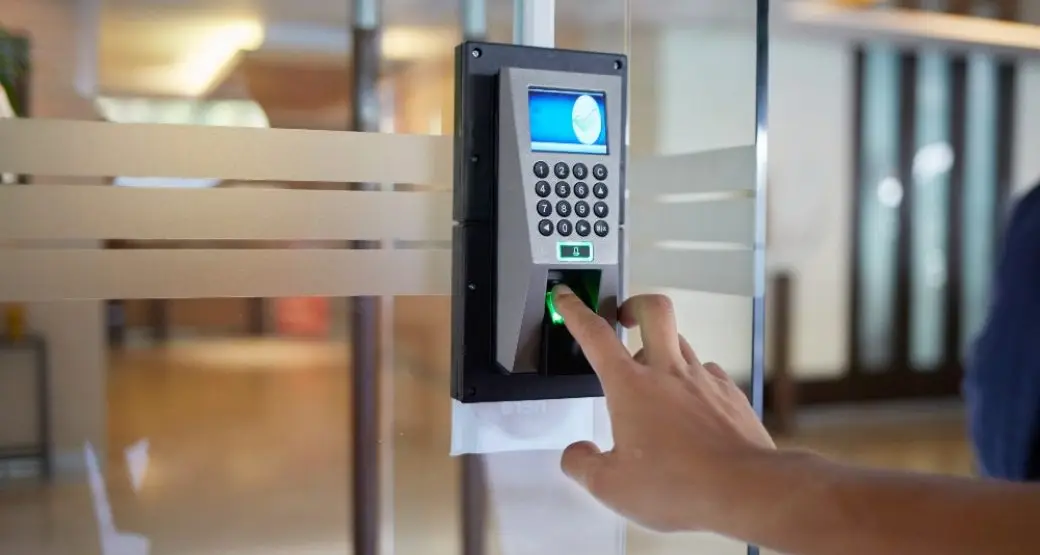
Comprehensive security solutions for home and business.
High-definition surveillance for peace of mind.
Serving the Treasure Valley
Local installation in your city