 (208) 991-3502
 Meridian, ID


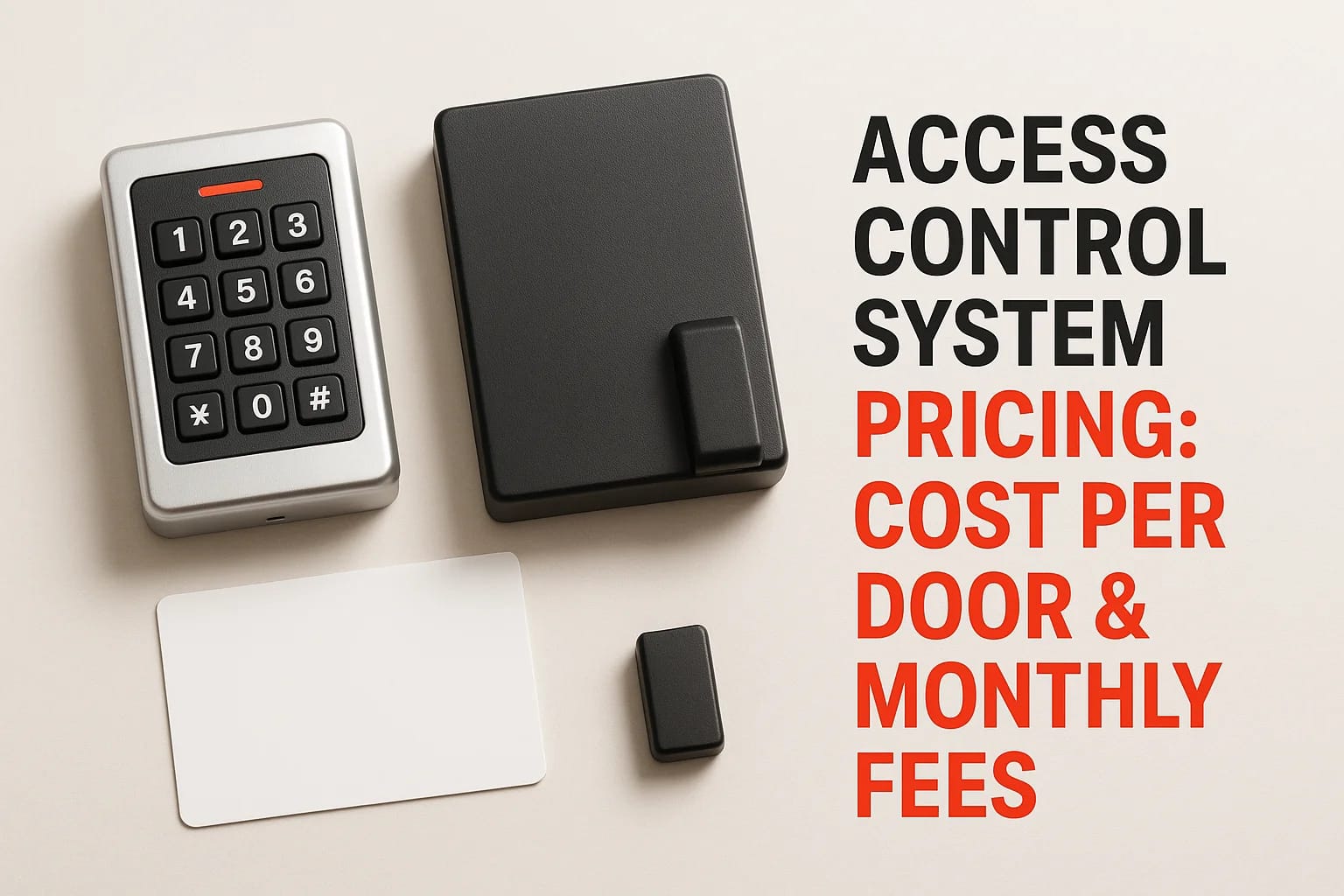

Whether you're securing a single office door or an entire commercial building, access control system pricing can be surprisingly hard to pin down. Costs shift based on the type of hardware you choose,...
Access Control System Pricing: Cost Per Door & Monthly Fees
Whether you're securing a single office door or an entire commercial building, access control system pricing can be surprisingly hard to pin down. Costs shift based on the type of hardware you choose, how many doors you need to cover, whether you go with a cloud-based platform or an on-premise server, and what kind of ongoing fees come with it. Without a clear breakdown, it's easy to overspend, or worse, underinvest in a system that doesn't actually meet your needs.
At Treasure Valley Solutions, we design and install custom access control systems for businesses, property managers, and institutions across the Boise and Meridian area. Since 2014, we've helped clients navigate these exact cost decisions, matching them with hardware and software that fits their building, their workflow, and their budget, without paying for features they'll never use.
This guide breaks down what you can realistically expect to pay for an access control system in 2026. We'll cover per-door cost ranges, the differences between keypads, fob readers, and mobile-credential systems, monthly software and licensing fees, and the installation costs that often get overlooked. By the end, you'll have a clear picture of where every dollar goes, and how to get the most from your investment.
Why access control pricing varies
Access control system pricing doesn't follow a single formula. The final number depends on a combination of factors that interact with each other, and changing one variable often shifts your entire budget. The number of doors, the type of hardware, the software model, and your installation environment each pull the cost in different directions. Understanding what drives price before you request a quote puts you in a much stronger position to compare proposals and avoid surprises on invoice day.
The number of doors you're securing
The most direct cost driver is how many doors you need to control. Each door requires its own reader, controller, and wiring run, so the per-door cost multiplies quickly as your project grows. A single entry door for a small office and a 20-door commercial building are completely different scopes, even if both use identical hardware at each door.
Larger projects often benefit from volume pricing on hardware and more efficient installation labor, since a technician running cable through one building covers more doors per hour than on a single-door job. The per-door cost typically drops as your door count rises, but the total investment obviously increases. Knowing your current door count and your likely growth over the next three to five years helps you choose a system that won't need a full replacement too soon.
If you're planning for growth, installing a controller that supports additional doors now costs far less than replacing the entire system later.
The type of credential and reader hardware
How people authenticate matters as much as how many doors you cover. A basic keypad that accepts a PIN code costs far less than a smart card reader or a mobile credential reader that pairs with a smartphone app. Biometric readers that scan fingerprints or use facial recognition sit at the highest end of the hardware range, both in unit cost and in the complexity of managing enrolled users.
Your choice of reader also determines what backend controller and software you need, which creates downstream effects on both upfront cost and monthly fees. A standalone keypad may require no ongoing software subscription at all, while a cloud-connected mobile-access system almost always carries a recurring per-door or per-user fee.
Software, hosting, and licensing model
The software side of access control system pricing is where many buyers get caught off guard. On-premise systems require a dedicated server and a one-time software license, which can run from a few hundred to several thousand dollars upfront, but they often carry no recurring monthly fees once installed. Cloud-based systems flip this model, trading a lower upfront cost for a monthly subscription that covers hosting, remote management, and automatic updates.
Your choice between cloud-hosted and on-premise software shapes total cost of ownership over three to five years more than almost any single hardware decision. A cloud system that looks affordable at installation can cost significantly more over time if you're paying per door per month across a large facility.
Installation environment and site conditions
The physical conditions of your building directly affect installation labor costs, and this is a line item that's easy to underestimate. Concrete walls, conduit requirements, long cable runs, multi-story buildings, and existing door hardware all add time to an installation. A door that's already prepped with the right frame and rough-in wiring takes far less labor to equip than one that needs a new power supply, a door strike, and a 200-foot cable run through finished ceilings.
Older buildings and retrofit projects almost always cost more to install than new construction where a technician can run cable before walls close. If your building falls into the retrofit category, asking your installer to walk the site before quoting gives you a more accurate number from the start.
Typical cost per door by system type
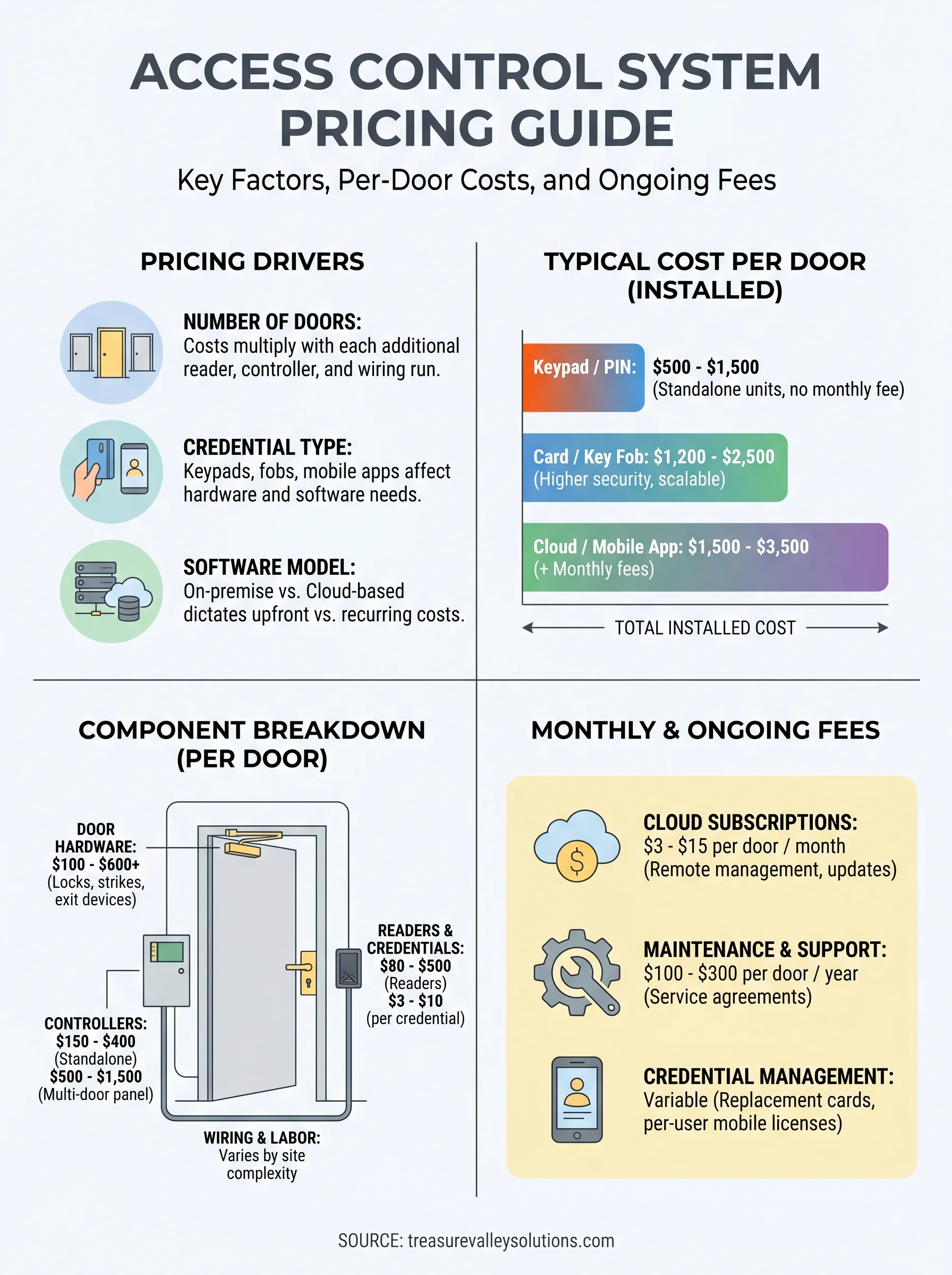
The ranges below reflect total per-door installed costs, including the reader, controller, locking hardware, and standard labor. These numbers give you a working baseline for access control system pricing before you layer in site-specific conditions, software subscriptions, or volume discounts on larger projects.
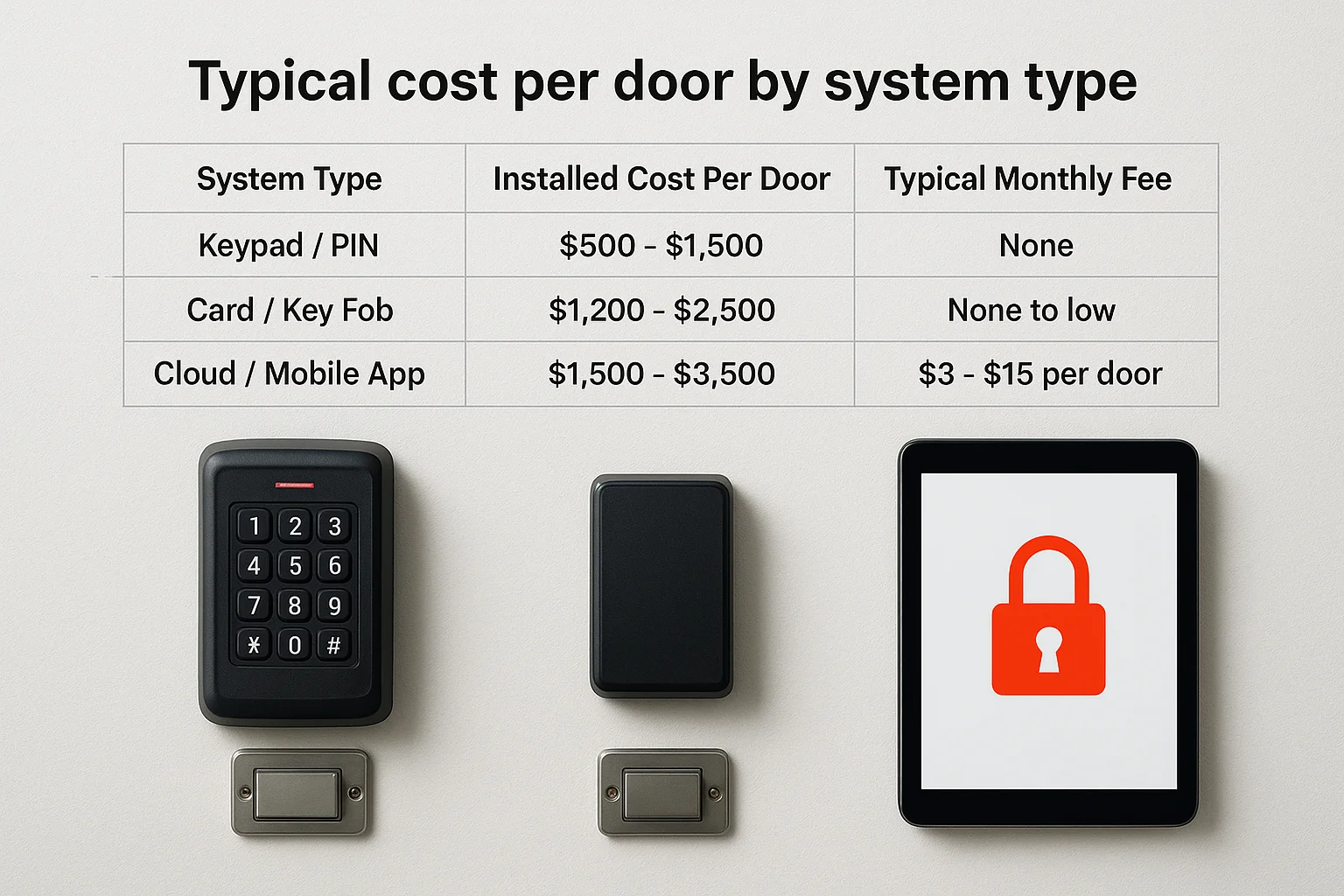
| System Type | Installed Cost Per Door | Typical Monthly Fee |
|---|---|---|
| Keypad / PIN | $500 - $1,500 | None |
| Card / Key Fob | $1,200 - $2,500 | None to low |
| Cloud / Mobile App | $1,500 - $3,500 | $3 - $15 per door |
Keypad and PIN-based systems
Keypad systems are the most affordable entry point. A single door with a keypad reader, electronic strike, and a basic controller typically runs $500 to $1,500 installed, which makes them a practical choice for low-traffic doors like storage rooms or staff-only entrances. Because these systems function as standalone units, there's no ongoing software subscription, which keeps your long-term cost flat and predictable.
The main limitation is individual credential control. PINs can be shared, observed by others nearby, or forgotten, and revoking someone's access means changing the code for everyone on that door, not just one person. For doors where rotating access isn't a regular need and your team stays stable, a keypad gets the job done at a price that's difficult to beat.
Card, fob, and mobile credential systems
Card and fob readers typically land between $1,200 and $2,500 per door installed, depending on reader quality, lock type, and whether the system ties into a central controller or a cloud platform. Issuing and revoking individual credentials is straightforward, which is why property managers and offices with regular staff turnover prefer this format. Encrypted smart card readers that resist credential cloning sit toward the top of this range and make sense anywhere you need a stronger security layer.
Mobile credential systems, where users unlock doors through a smartphone app, push costs to $1,500 to $3,500 per door installed plus a recurring cloud fee of $3 to $15 per door each month. That monthly fee adds up quickly across larger facilities, but the tradeoff includes real-time remote management, detailed access logs, and the ability to issue or revoke credentials from anywhere without touching the physical hardware.
For a 10-door facility running on a cloud platform, budget at least $30 to $150 per month on top of your upfront installation cost.
Hardware and install line items that drive cost
When you're comparing quotes or building a budget, knowing each line item prevents sticker shock and helps you catch proposals that leave something out. Access control system pricing is rarely a single number. It's a stack of components, and each one has its own cost range depending on quality, brand, and how much labor it takes to get it installed correctly.
Door hardware: locks, strikes, and exit devices
The locking mechanism is often the most overlooked cost in a per-door budget. Depending on your door type, you'll need either an electric strike, a magnetic lock, or an electrified lock body, and these range from $100 to $600 or more per door before labor. Magnetic locks are common on glass doors and aluminum frames, while electric strikes work well on standard wood or metal door frames. If your door requires a request-to-exit sensor or a push bar with electrified trim, add another $150 to $400 to that line item.
Budget for the complete door hardware package upfront, not just the reader, or your quote will fall short before installation even begins.
Controllers and wiring
Every door needs a controller, which is the hardware that processes credentials and signals the lock to open. Standalone controllers handle one or two doors and cost $150 to $400 per unit. Multi-door panel controllers that manage four to eight doors in a centralized way run $500 to $1,500 depending on the brand and feature set. Your cable run length and wall construction directly affect labor time, since a 150-foot run through a drop ceiling and a 20-foot surface mount are completely different jobs. Expect to pay $75 to $150 per hour for a licensed low-voltage technician, and estimate labor by the complexity of your site rather than just the door count.
Readers and credentials
Reader quality affects both security and total cost more than most buyers expect. A basic proximity reader runs $80 to $200, while an encrypted smart card or mobile-ready reader climbs to $200 to $500 per unit. If you're issuing physical credentials, card or fob cost adds $3 to $10 per credential, which is easy to underestimate on a 50-person team. For any system using smartphone-based access, confirm whether the mobile app and credential management platform carry a separate licensing fee on top of the hardware cost.
Monthly fees and ongoing costs
The upfront hardware and installation numbers tell only part of the access control system pricing story. Recurring fees often catch buyers off guard, especially when a system that looks affordable at installation quietly accumulates costs over a three-to-five-year ownership window. Before you commit to any platform, you need a clear picture of what you'll pay every month after the technicians pack up and leave.
Software subscriptions and cloud platform fees
Cloud-based access control platforms charge a monthly fee to keep your system connected, managed, and updated. Most cloud platforms price their subscriptions on a per-door basis, typically ranging from $3 to $15 per door per month depending on the provider and the feature tier you select. A basic plan might cover remote unlock and access logs, while a higher tier adds video integration, visitor management, and advanced reporting. On a 10-door facility, that range translates to $30 to $150 per month before tax, every month, indefinitely.
If you're comparing cloud and on-premise systems purely on installation cost, you're missing the variable that matters most over time: what you'll spend across 36 or 60 months.
On-premise systems work differently. You pay a one-time software license that typically runs $300 to $2,000 depending on the platform and the number of doors it manages, and then you own that license without ongoing fees. The tradeoff is that you take on responsibility for server hardware, software updates, and any IT support that comes with maintaining a local system. Neither model is automatically cheaper. The right choice depends on your door count, your IT resources, and how long you plan to keep the system running.
Maintenance, support, and credential management
Hardware doesn't stay maintenance-free forever. Readers, door strikes, and controllers are mechanical and electronic components that wear down, and most professional installers offer annual service agreements that cover inspections, adjustments, and priority response if something fails. These contracts typically run $100 to $300 per door per year depending on the scope of coverage and the complexity of your system.
Credential management is another cost that grows with your team. Replacing lost key fobs at $5 to $15 each seems minor until you're running a 75-person facility with regular turnover. Smartphone-based systems eliminate physical credential replacement costs, but they may require a per-user licensing fee on top of the per-door subscription depending on the platform you choose.
How to budget and get accurate quotes
Getting an accurate number for access control system pricing starts well before you contact an installer. The more information you bring to that conversation, the more useful the quote you'll get back. Buyers who go in with vague requirements often receive vague estimates, and those estimates tend to expand once installation actually begins.
Map your doors before anything else
Start by walking your facility and listing every door you want to control, not just your main entry, but server rooms, supply closets, stairwell access points, and any door where you need a record of who entered and when. For each door, note the wall material, the existing lock hardware, and the approximate cable run distance to your server room or nearest electrical panel. This site inventory takes 30 minutes and dramatically sharpens the quotes you receive because it removes guesswork from the installer's side of the estimate.
Once you have your door list, decide what credential type fits your workflow. A small office with a stable team of eight people has different needs than a property management company rotating tenants through 40 units every year.
Request fully itemized quotes
Ask every vendor to break out hardware, labor, software licensing, and ongoing fees as separate line items rather than accepting a single bundled number. Itemized quotes let you compare proposals side by side without guessing where one installer is cutting corners or padding margins. Pay close attention to whether the quote includes door hardware like strikes and exit devices, because these are frequently omitted from initial estimates and added back during installation.
An itemized quote that includes hardware, labor, credentials, and monthly fees tells you far more than a single bottom-line number ever will.
Calculate total cost over three years
Monthly software fees and maintenance contracts add up fast, and a system that looks affordable at installation can cost significantly more over a 36-month window than one with a higher upfront price and no recurring fees. Build a simple spreadsheet that adds your installation cost to 36 months of monthly fees and one annual maintenance visit. This three-year total is the number you should use to compare options, not the day-one installation quote alone. It keeps your access control system pricing evaluation honest and surfaces the true cost difference between cloud and on-premise platforms.
What to do next
You now have a complete picture of access control system pricing, from per-door hardware costs to the monthly software fees that shape your total investment over time. The biggest takeaway is that no single number defines what a system will cost you. Your door count, credential type, installation environment, and software model all interact, and understanding each variable before you request a quote puts you in control of the outcome.
Getting accurate pricing starts with a site walkthrough and a clear list of the doors you need to cover. The more specific your requirements, the more accurate the numbers you'll get back. If you're ready to move from research to an actual plan, our team at Treasure Valley Solutions has been designing and installing custom access control systems across the Boise and Meridian area since 2014. Request a free consultation and we'll walk your site and build a quote that reflects your actual needs.
Need Expert Help?
Ready to implement these solutions in your own home or business?
Our Services
Comprehensive security solutions for home and business.
High-definition surveillance for peace of mind.
Serving the Treasure Valley
Local installation in your city