 (208) 991-3502
 Meridian, ID



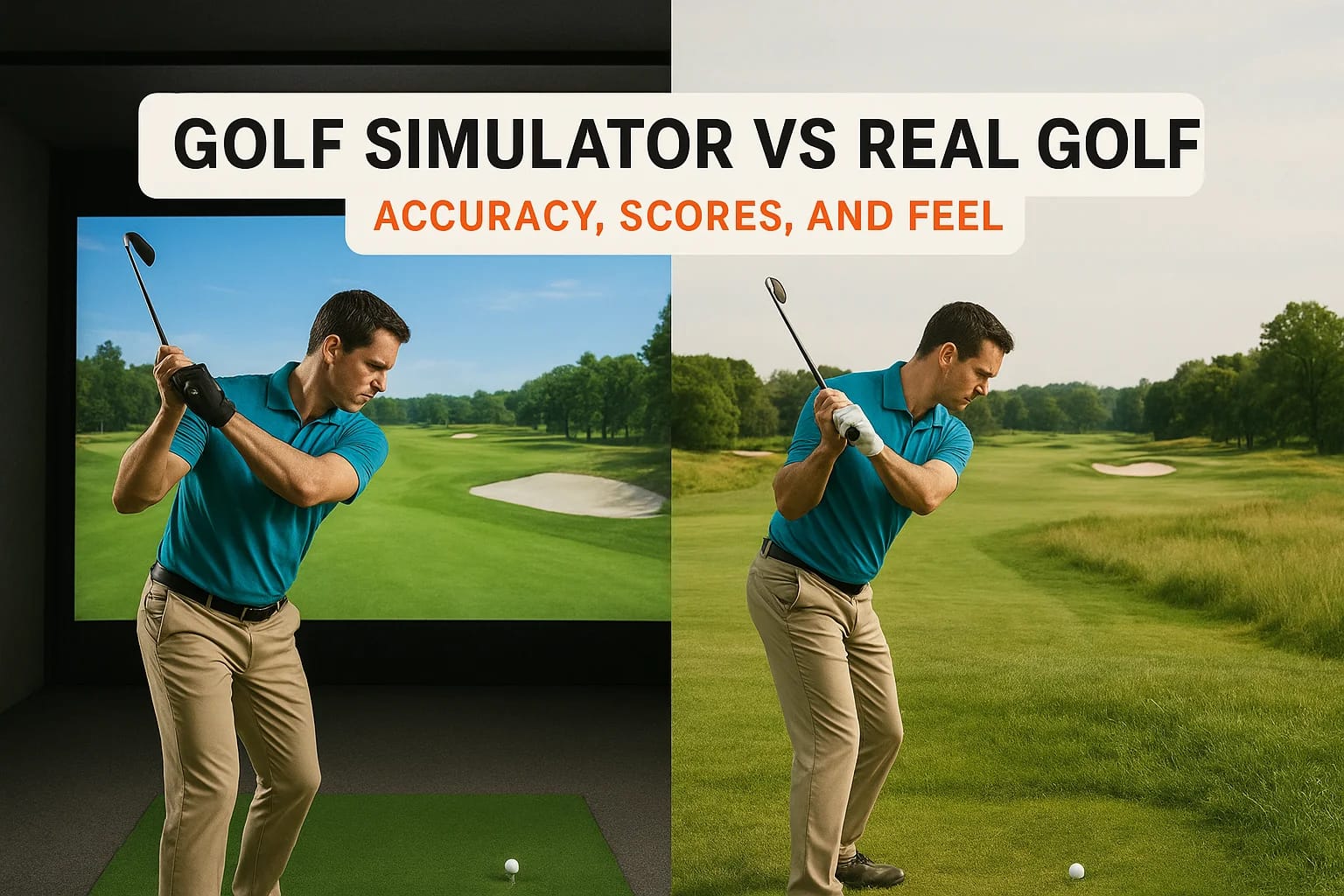

You step up to the tee, take your swing, and watch the ball sail straight down the fairway, except you're standing in your basement, not on a course. The golf simulator vs real golf debate comes up th...
You step up to the tee, take your swing, and watch the ball sail straight down the fairway, except you're standing in your basement, not on a course. The golf simulator vs real golf debate comes up the moment anyone considers adding a simulator to their home. And honestly, the questions are fair: Will the numbers match what happens outside? Will practice on a screen actually help your game? Why do scores seem so different between the two?
We install and integrate golf simulator setups as part of our custom home entertainment and AV systems here at Treasure Valley Solutions. We've seen firsthand how clients react when their simulator scores don't line up with their course scores, and we've learned what factors drive that gap. It's not always about the technology being wrong. Often, it's about understanding what each experience measures and what it leaves out.
This article breaks down the real differences in accuracy, scoring, and feel between golf simulators and on-course play. We'll cover where simulators excel, where they fall short, and how to get the most out of both, whether you're building a dedicated sim room or just trying to figure out why your handicap doesn't match your screen.
What a golf simulator can and cannot replicate
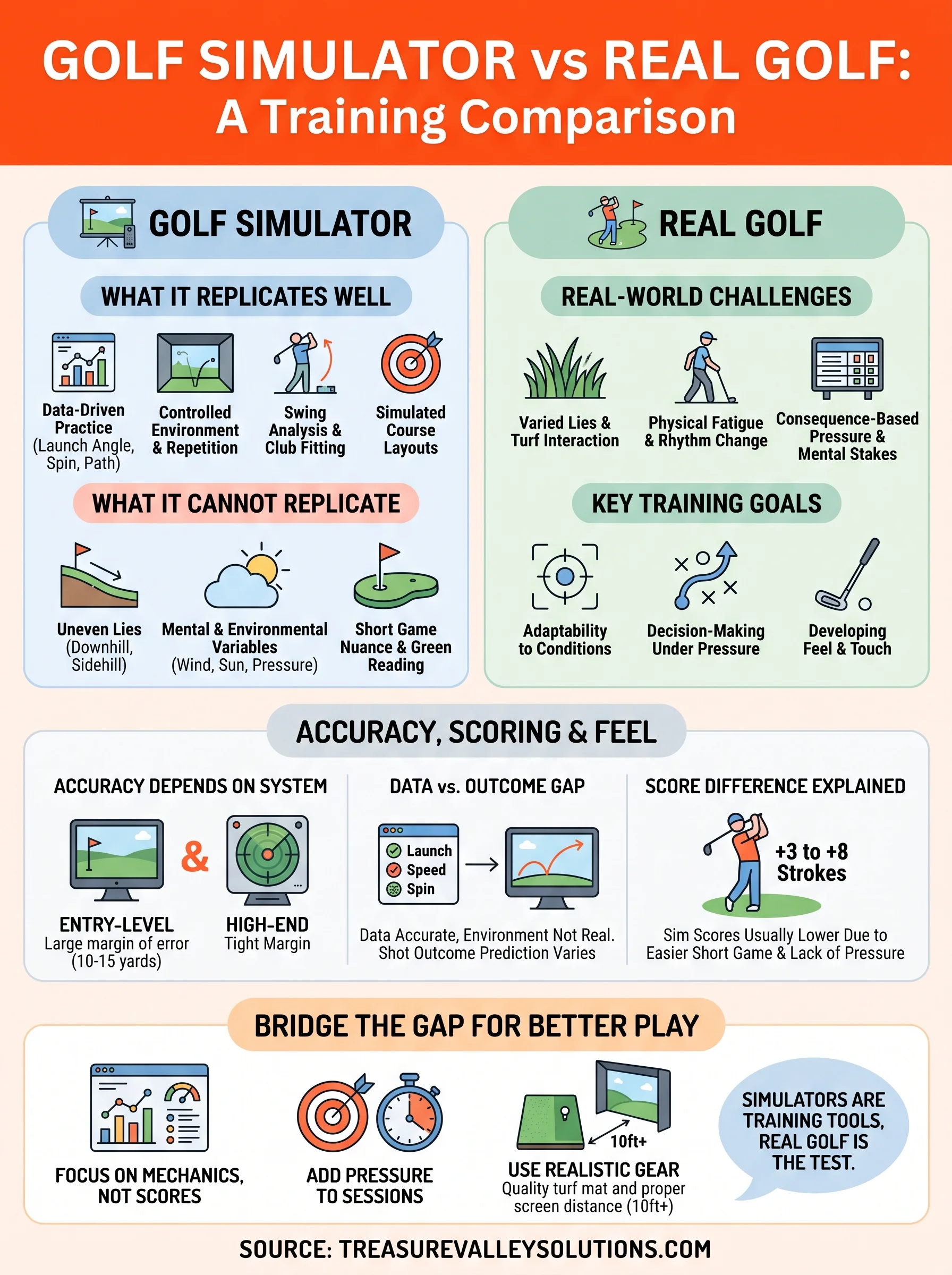
A golf simulator captures a lot of what makes golf useful for training. Ball flight data, including launch angle, spin rate, carry distance, and club path, gets measured with solid accuracy by modern systems. When you're working on your swing mechanics, a simulator gives you real-time feedback that most golfers never get from hitting at a driving range without launch monitor support.
What simulators replicate well
The strongest area for simulators is data-driven practice. You can hit hundreds of shots in a controlled environment, track your numbers, and identify patterns in your swing without ever leaving your home. High-end systems also simulate realistic course layouts with detailed elevation and wind conditions, so you're not just hitting into a blank screen. For club fitting, swing analysis, and repetition-based training, simulators compete directly with the best practice tools available to amateur golfers.
The data a simulator produces is the same data professional fitters and instructors use to diagnose swing problems.
Here's what simulators handle well:
- Launch angle and ball speed
- Spin rate and axis
- Club face angle at impact
- Shot shape and carry distance
- Simulated course routing and yardages
What simulators cannot replicate
The gap in the golf simulator vs real golf comparison shows up the moment you remove physical conditions from the equation. Simulators cannot give you uneven lies: a downhill chip, a ball above your feet, or a buried lie in thick rough. Every shot in a simulator is hit from a flat mat, which changes how you set up, how you shift your weight, and what your body learns to do under pressure.
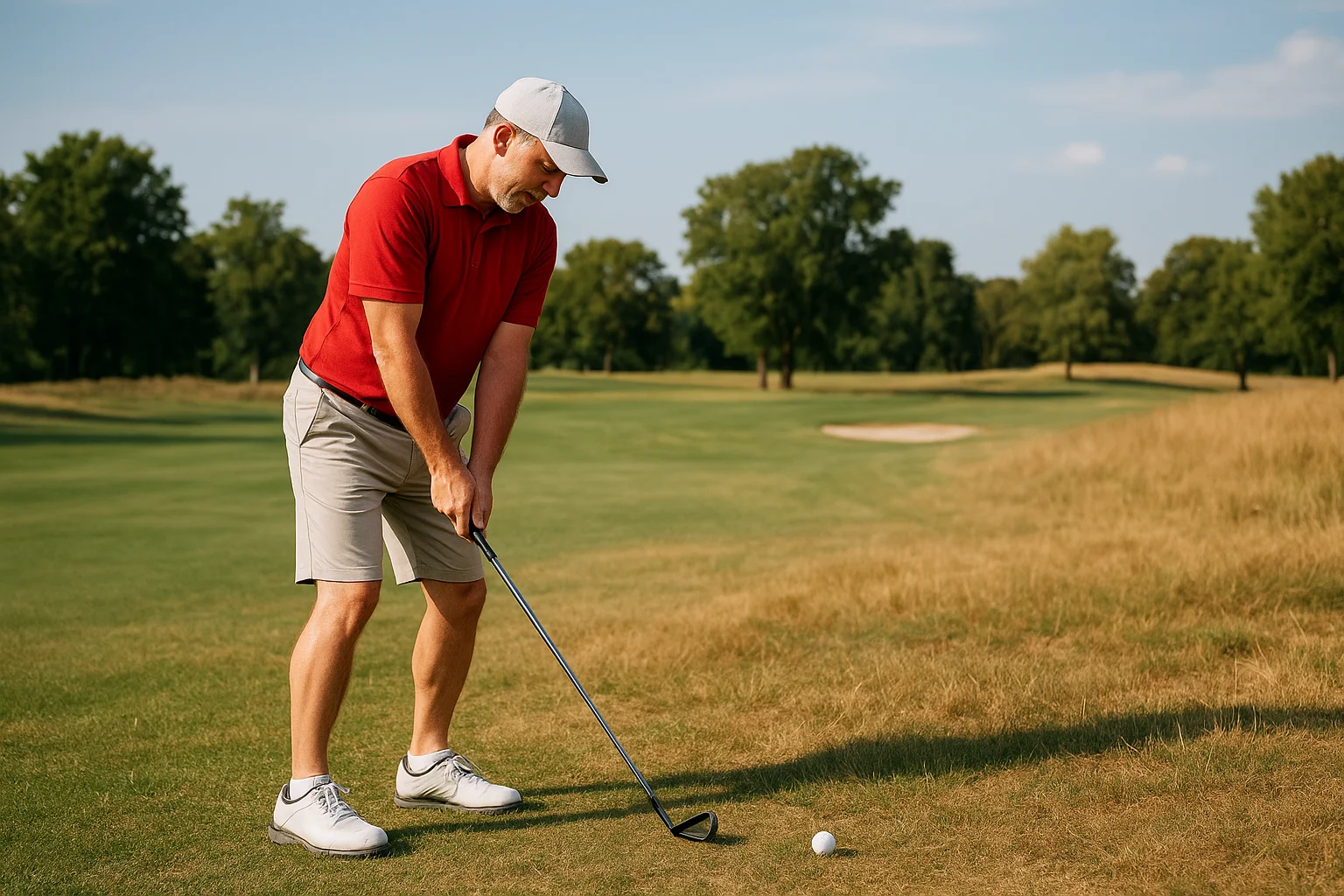
Real golf also adds mental and environmental variables that no screen can produce. The wind gusts at the wrong moment. The sun gets in your eyes. You walk 500 yards between shots and arrive with tired legs and a different rhythm. These conditions force adaptations that simulators simply skip. That's not a flaw in the technology. It's just a different context, and understanding that difference helps you use both tools more effectively.
How accurate are golf simulators, really
The honest answer is: it depends on the system. Entry-level simulators use basic camera setups that estimate ball flight from a small number of data points, which means the margin of error can be significant, sometimes 10 to 15 yards on carry distance alone. High-end systems like Trackman and Foresight Sports use Doppler radar or high-speed cameras to track the actual ball flight path, producing numbers that instructors and tour professionals trust for real fitting and training decisions.
Data accuracy vs. physical accuracy
When comparing golf simulator vs real golf on pure data, the gap has narrowed considerably over the past decade. A quality simulator will give you launch angle, ball speed, and spin rate within a tight margin of what you'd see on a professional launch monitor outdoors. The limitation is not the numbers themselves, it's what the numbers represent. A simulator measures impact and projects the rest. It does not track the ball through actual air, over actual ground, or into actual wind.
The data is accurate; the environment the data is applied to is not real.
For most golfers, the swing data a mid-to-high-end simulator produces is reliable enough to guide real practice decisions. Where accuracy breaks down is in shot outcome prediction, especially on short game shots where green firmness, slope, and turf interaction play a large role that no simulator fully solves yet.
Why your simulator score differs from your course score
Most golfers shoot 3 to 8 strokes better on a simulator than on the actual course. That gap in the golf simulator vs real golf comparison is not random. It comes from specific, predictable differences in conditions and how the game is scored across each environment.
The short game gap
Simulators struggle most with putting and chipping accuracy. Greens in simulator software use flat, generalized surfaces that ignore real-world breaks, grain direction, and speed variations you face on an actual course. You might sink a 20-foot putt on a sim with ease because the ball rolls along a digital line without interference. On a real green, reading that same putt correctly takes a skill set that simulator play rarely develops in full.
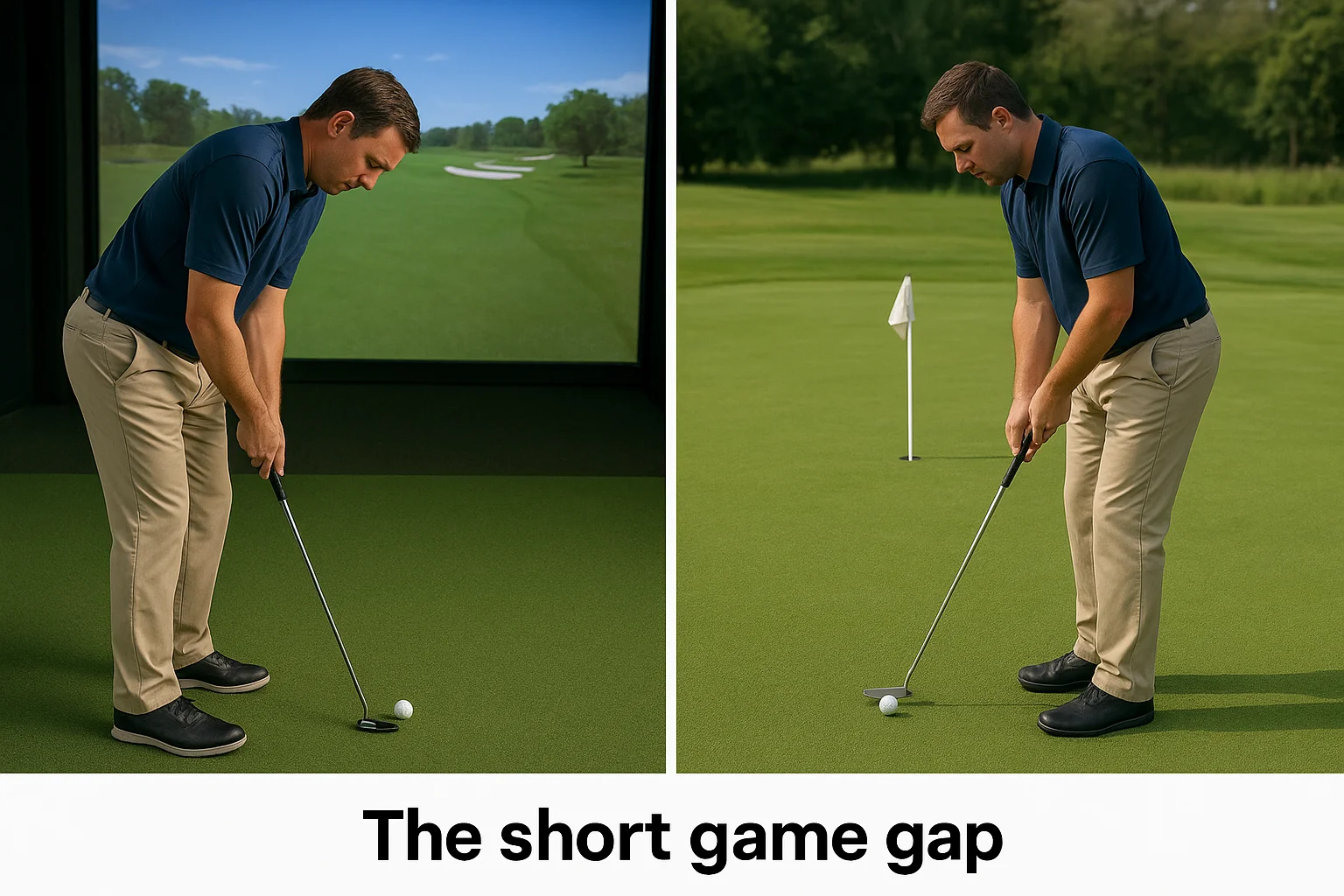
The majority of strokes saved or lost in golf happen within 100 yards of the hole, precisely where simulators are least realistic.
Mental pressure plays a role
On a course, every shot carries a physical consequence: a bad drive means a walk into the rough, a missed chip leaves you scrambling for the next stroke. That pressure builds across 18 holes and affects your decision-making and tempo in ways a simulator round does not replicate. In a sim, resetting a poor shot takes seconds. That convenience removes the consequence-based focus that real golf demands. Your body and mind stay relaxed, which is useful for learning mechanics, but it does not reflect how you actually perform when the stakes feel real.
How to make simulator practice translate outside
The biggest mistake golfers make with a simulator is treating it like a game instead of a training tool. When you approach the golf simulator vs real golf gap with intention, simulator sessions can directly improve your on-course performance. The key is structuring your practice around transferable skills rather than just playing rounds and watching your score.
Focus on mechanics, not scores
Your simulator gives you exact data on every swing, which most golfers ignore in favor of watching the ball flight on the screen. Use that data. Set specific targets for launch angle, club path, and spin rate, and measure whether your adjustments actually change those numbers. Tracking your metrics across sessions builds a feedback loop that transfers directly to your real swing, regardless of what the course conditions throw at you.
The golfer who practices with a purpose on a simulator improves faster than the one who just plays simulated rounds.
Add pressure to your simulator sessions
Your brain adapts to whatever environment you train in most. If every simulator shot carries zero consequence, your course performance under pressure will suffer. Build pressure into your sessions by setting rules: one shot per hole, no retries, and a target score you have to beat. You can also practice your pre-shot routine on every single shot in the simulator, so that routine becomes automatic before you ever step onto a real tee box.
How to set up a sim that feels more like golf
The physical environment around your simulator shapes how closely the experience mirrors actual golf. When the setup feels right, your body adopts postures and habits that carry over to the course more naturally. Small adjustments to your space, mat, and screen distance can close a meaningful portion of the golf simulator vs real golf gap before you ever swing.
Choose a mat that reacts like turf
Your hitting mat is the single biggest factor in how authentic the experience feels underfoot. Cheap foam mats give no feedback on strike quality and can mask fat shots entirely, which builds bad habits fast. Look for mats with realistic turf resistance that penalize poor contact the way real fairway or rough would, so your swing learns to adapt.
The mat you hit off every day trains your divot habit, for better or worse.
Match your screen distance to real depth perception
Many home setups place the impact screen too close, which compresses your visual field and makes every shot look shorter than it plays. Aim for at least 10 feet between your hitting position and the screen to give your eyes a truer sense of depth and trajectory. That distance also reduces the startle effect from fast ball impacts and gives your brain more accurate visual feedback on shot shape. Getting both elements right, the mat and the screen setup, moves your simulator from a novelty into a training environment worth investing in.
Key takeaways and next steps
The golf simulator vs real golf comparison comes down to one clear truth: simulators and courses measure different things, and both have real value when you use them correctly. Simulators give you controlled, data-rich practice that drives faster mechanical improvement. Real golf tests your ability to perform under pressure, on uneven terrain, and with consequences attached to every shot. Neither replaces the other, and treating them as competing options misses the point entirely.
Your biggest wins come from pairing both intentionally: use your simulator to lock in mechanics and build repeatable swing patterns, then take those patterns to the course where conditions stress-test them. Pay attention to your mat quality, your screen distance, and how much pressure you add to your sessions. Small setup decisions shape how much your practice transfers. If you're ready to build a simulator space that actually trains your game, explore our past installations to see what a well-designed setup looks like.
Need Expert Help?
Ready to implement these solutions in your own home or business?
Our Services
View All Services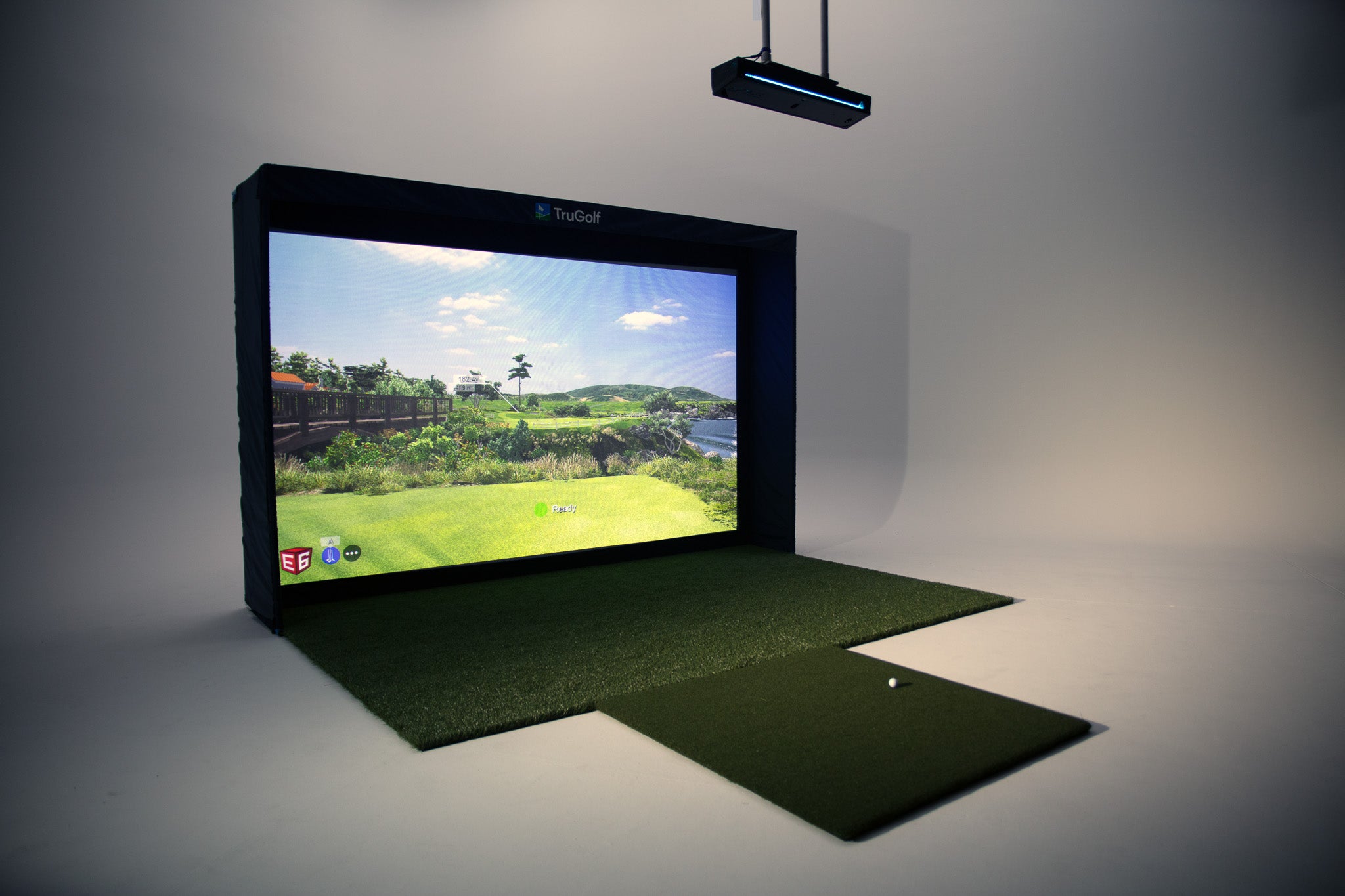
Serving the Treasure Valley
Local installation in your city