 (208) 991-3502
 Meridian, ID



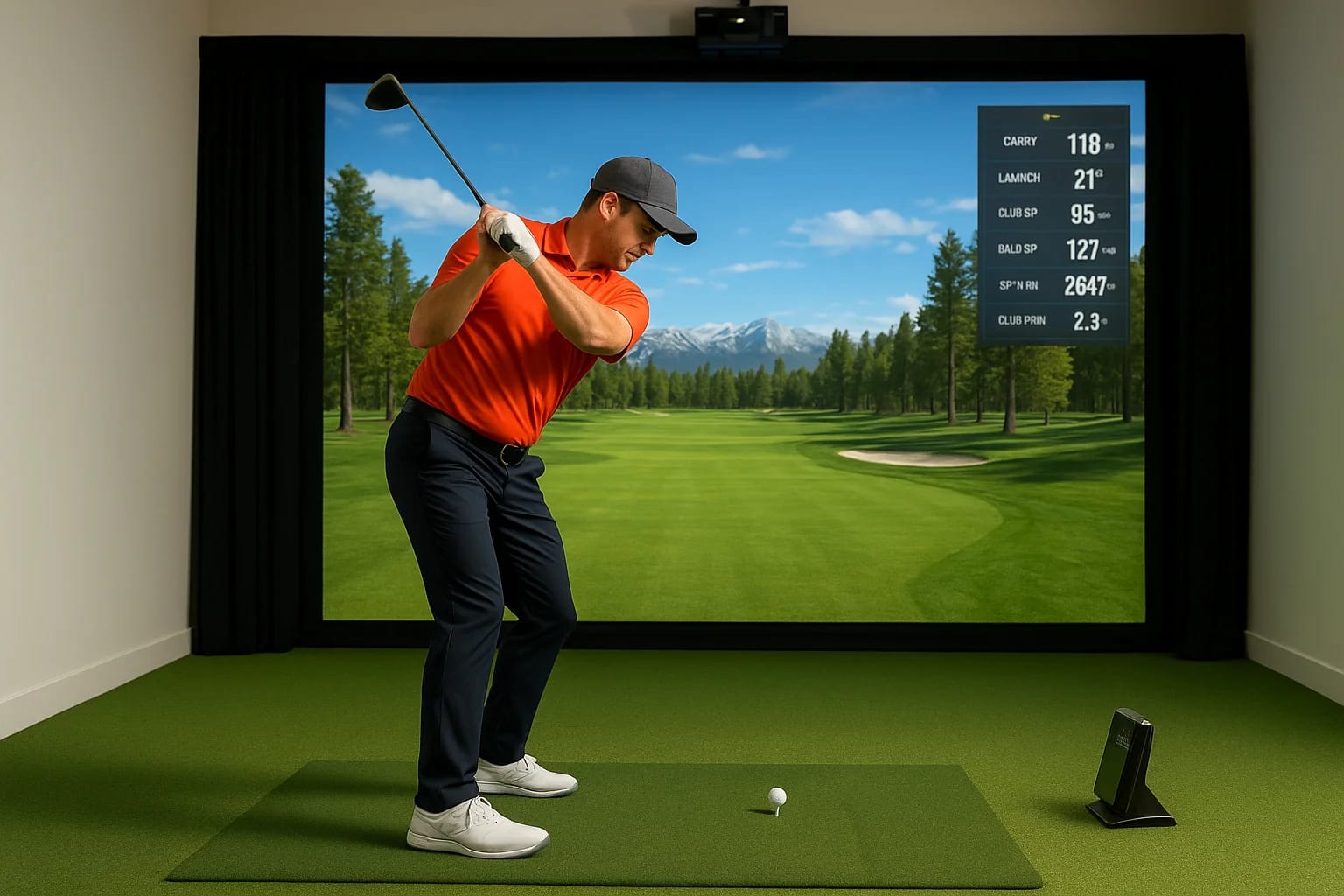

Idaho's golf season has a hard cutoff. Once fall settles into the Treasure Valley, your clubs collect dust for months, and your swing goes with them. That's exactly where golf simulator benefits start...
Idaho's golf season has a hard cutoff. Once fall settles into the Treasure Valley, your clubs collect dust for months, and your swing goes with them. That's exactly where golf simulator benefits start to make a real case. A properly built simulator gives you year-round access to practice, play, and improve without fighting weather, fading daylight, or packed tee sheets.
But is a golf simulator actually worth the investment, or is it just an expensive piece of rec room furniture? If you want accurate swing data, consistent practice conditions, and the ability to play world-class courses from your own home or office, the value stacks up quickly. At Treasure Valley Solutions, we design and install custom golf simulator setups across the Boise area, from projectors and screens to audio, networking, and room layout, so we see firsthand how these systems change the way people train and play.
Below, we'll walk through five specific benefits of owning a golf simulator and show how each one helps you build a better game regardless of the season.
1. Build a reliable simulator with pro integration
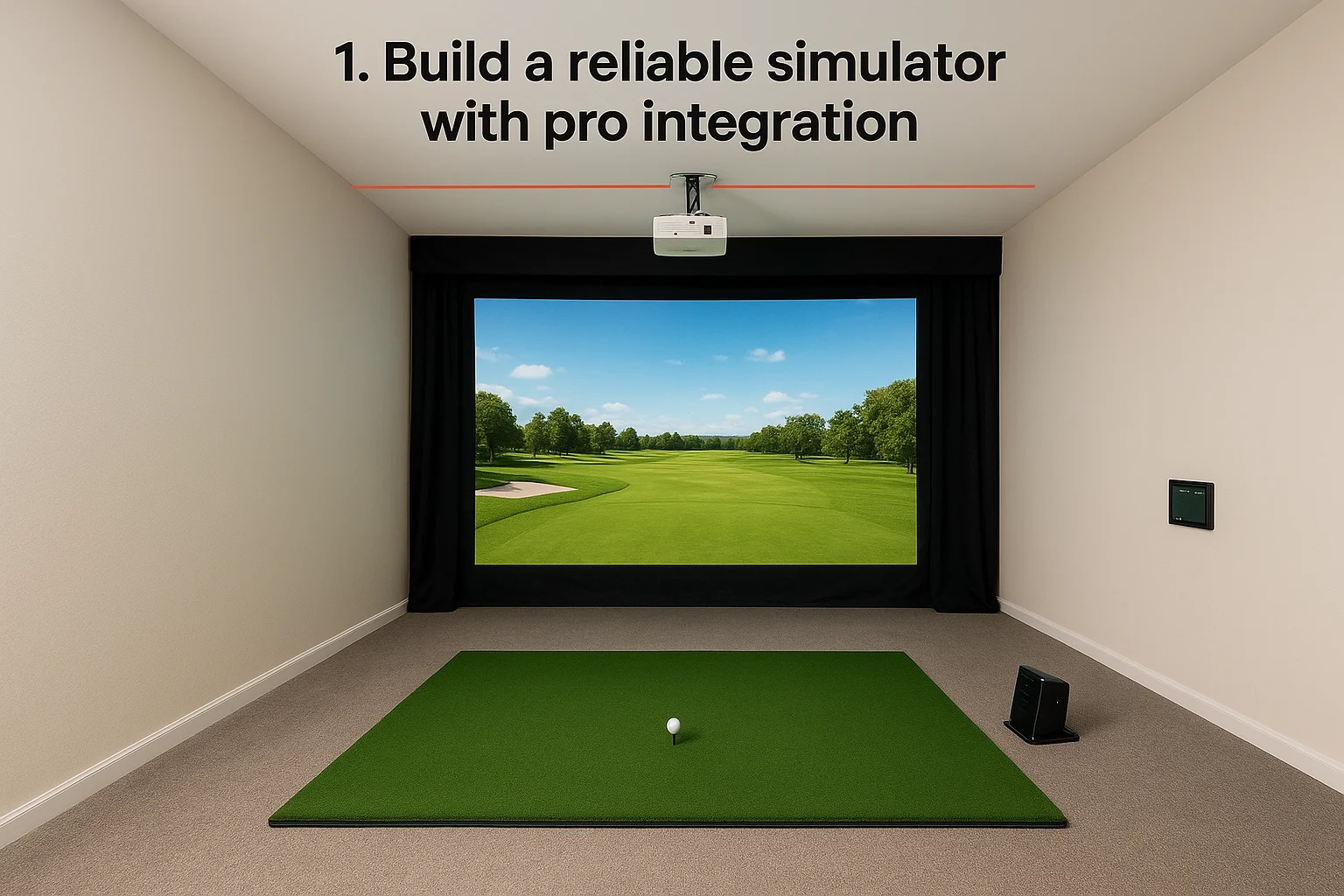
A golf simulator is only as good as the room it lives in. If the projection, screen, hitting surface, and launch monitor aren't calibrated to work together, you end up with inaccurate readings and a frustrating experience that doesn't reflect real play.
What the benefit means in real life
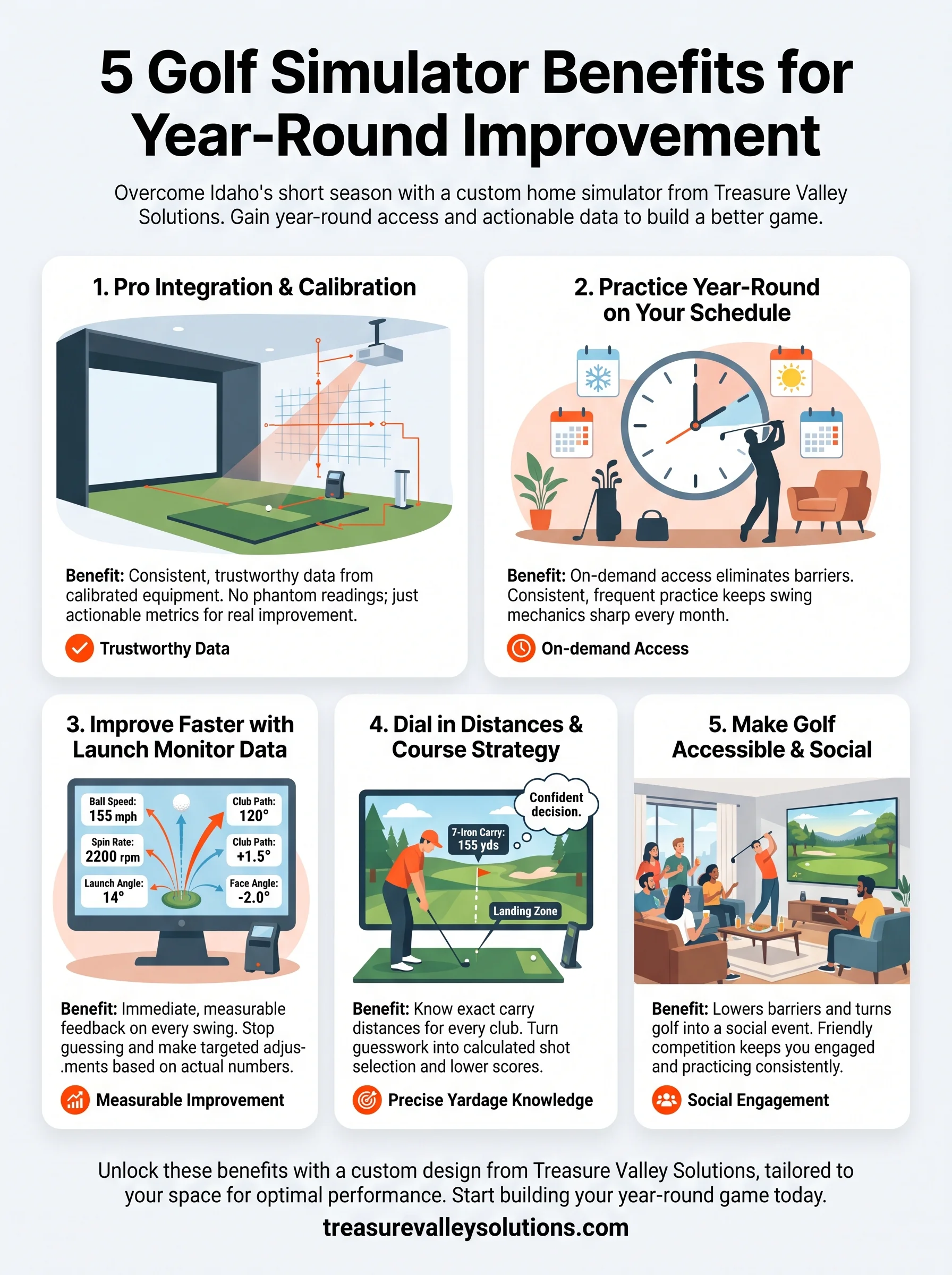
Professional integration means every component is selected and configured as a complete system, not pieced together from random parts. The screen absorbs impact without distorting the image, the projector throws a sharp picture at the correct throw distance, and the launch monitor sits at the right angle to track your ball reliably. You get a setup that performs consistently every single time you step up to hit.
How it helps your game
When your equipment performs consistently, your practice data becomes trustworthy and actionable. You stop second-guessing whether a bad number came from a bad swing or a bad sensor. That clarity lets you make real, targeted adjustments to your technique instead of chasing phantom readings.
A simulator that gives you accurate, repeatable data every session is the foundation all other golf simulator benefits are built on.
What you need for it to work
Your space needs a minimum ceiling height of around 10 feet to swing freely without restriction. Beyond that, you need a quality launch monitor, a short-throw projector, an impact-rated screen, and a proper hitting mat. Integrating the room into your home automation system also lets you control lighting and audio instantly from one interface.
Pitfalls to avoid
The biggest mistake is buying consumer-grade components and expecting professional results. A ceiling that's too low forces a flattened swing plane, and a projector placed at the wrong distance creates image distortion that throws off the whole experience. Have a professional integrator spec the room before any hardware gets purchased, not after.
2. Practice year-round on your schedule
Idaho winters and packed summer tee sheets don't care about your practice schedule. A home golf simulator removes both barriers, giving you on-demand access to practice whenever your calendar opens up.
What the benefit means in real life
Whether it's a Tuesday evening after work or a Sunday morning, your simulator is ready the moment you are. You skip the tee time, the commute, and the wait. 30 minutes of focused hitting before dinner counts just as much as a full range session.
How it helps your game
Consistent, frequent practice builds skill faster than long, sporadic range trips. When you practice several times a week all year, your swing mechanics stay sharp through every month of the calendar.
The golfers who improve most aren't the ones who practice longest; they're the ones who practice most often.
What you need for it to work
Your room needs to stay set up and ready at all times. A permanent installation removes setup friction so you actually step in and swing.
Pitfalls to avoid
Don't treat your simulator as a temporary setup. If getting started takes effort, you'll skip sessions. Commit to a permanent, dedicated space and your practice frequency will follow naturally.
3. Use launch monitor data to improve faster
A launch monitor turns every swing into a data point you can act on. Instead of guessing why a shot went left or came up short, you see the exact numbers immediately: ball speed, spin rate, launch angle, club path, and face angle all appear on screen right after impact.
What the benefit means in real life
One of the most practical golf simulator benefits is having access to real-time swing metrics without hiring a coach for every session. You hit a shot, and within seconds the data tells you what actually happened and why the ball went exactly where it did.
How it helps your game
When you can see your club face angle was two degrees open at impact, you stop guessing and start fixing. Data-driven practice produces measurable improvement faster than hitting balls by feel alone.
Golfers who train with launch monitor data close skill gaps faster because they fix the right problem every time.
What you need for it to work
A quality launch monitor delivers accurate, repeatable numbers worth trusting. Pair it with simulator software that logs your sessions so you can track trends across weeks and months, not just single sessions.
Pitfalls to avoid
Avoid fixating on a single metric at the expense of the full picture. Chasing ball speed while ignoring spin rate or club path creates lopsided improvement that rarely shows up on the course.
4. Dial in distances and course strategy at home
Knowing your exact carry distances for every club is one of the most underrated advantages of owning a simulator. Most recreational golfers estimate yardages based on feel, and that guesswork costs strokes every round.
What the benefit means in real life
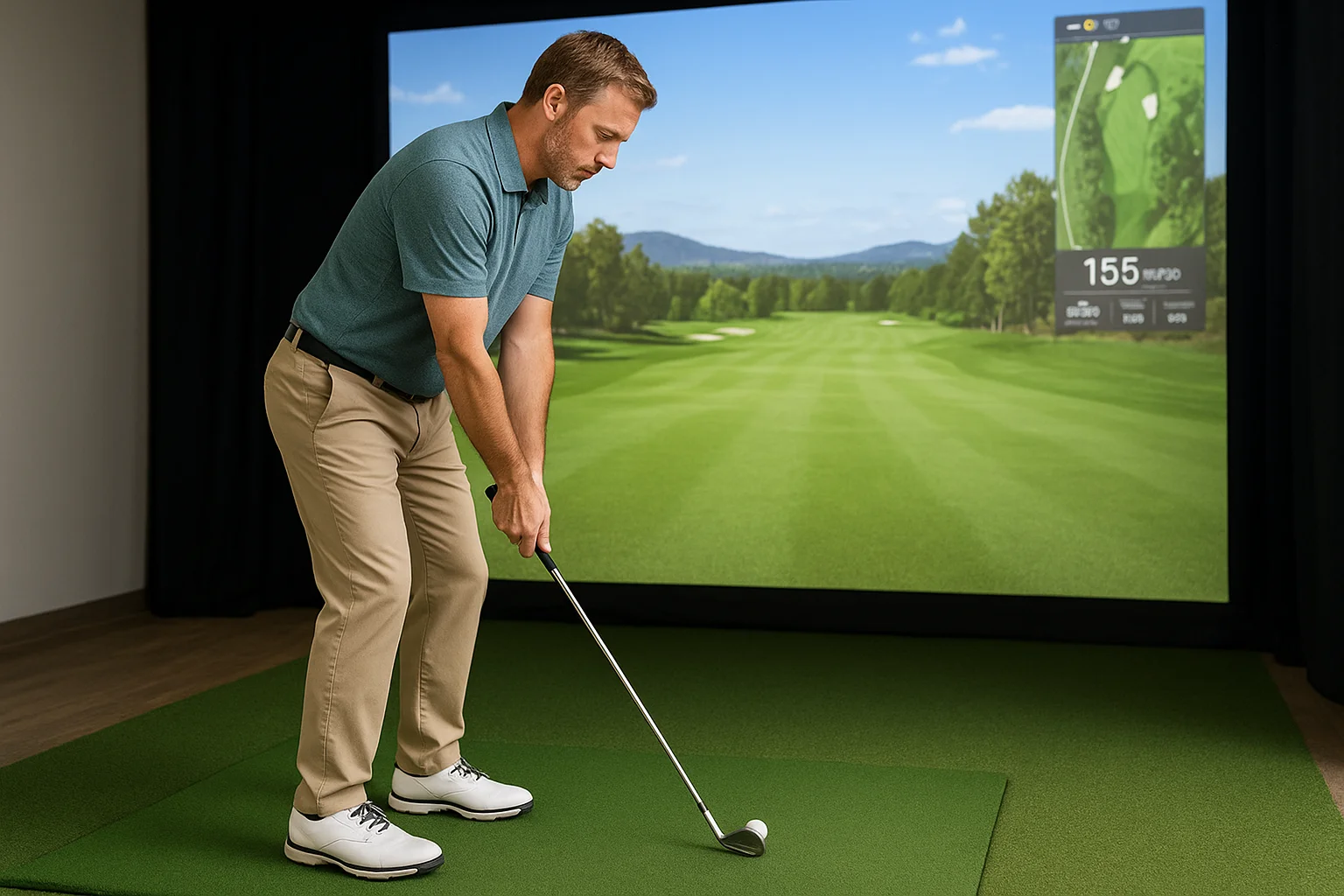
Your simulator gives you a controlled environment to hit each club repeatedly and record consistent carry numbers. You can also load specific courses and study hole layouts, hazard positions, and landing zones before you ever step on the real tee box.
How it helps your game
One of the clearest golf simulator benefits is the confidence that comes from knowing your 7-iron carries 155 yards, not "somewhere around 150." That certainty changes how you approach par-3s and layup decisions on the course, turning guesswork into calculated shot selection.
Precise yardage knowledge is one of the fastest ways to drop scores without changing your swing at all.
What you need for it to work
You need simulator software that tracks carry distance separately from total distance and lets you replay specific course scenarios. Logging data across multiple sessions gives you reliable averages rather than outliers from a single good or bad swing.
Pitfalls to avoid
Avoid logging distances from suboptimal swings or cold sessions. Record your numbers after a proper warm-up so the data reflects real on-course performance, not early sluggishness.
5. Make golf more accessible, social, and worth it
A simulator doesn't just improve your individual game. It also lowers the barriers that keep people from playing more often, and it turns golf into something you can share with friends, family, or coworkers without booking tee times weeks in advance.
What the benefit means in real life
Your simulator becomes a social space where guests can play Augusta National, Pebble Beach, or Torrey Pines from your basement or office. Non-golfers can pick up a club and participate without pressure, and competitive rounds with friends happen on your schedule, not the course's.
How it helps your game
One of the more overlooked golf simulator benefits is that playing with others keeps you engaged and practicing more consistently. Friendly competition sharpens your focus under light pressure, which carries directly onto the real course.
Playing regularly, even casually with friends, does more for your game than occasional solo range sessions.
What you need for it to work
You need enough physical space for multiple people to watch comfortably while one person hits. Good room audio and lighting control make the experience feel immersive rather than like standing in a garage.
Pitfalls to avoid
Don't underestimate room design. Cramped seating and poor lighting kill the social atmosphere. Plan the layout with viewers in mind from the start.
A simple next step
The golf simulator benefits covered in this article don't happen automatically. They come from a setup that's properly designed, installed, and calibrated from the start. A screen that wobbles, a projector that sits at the wrong distance, or a launch monitor that reads inconsistently will undermine every benefit on this list.
If you're in the Boise or Treasure Valley area and want to build a simulator that actually performs, Treasure Valley Solutions designs and installs custom setups tailored to your space and your goals. We handle the projector, screen, hitting surface, room audio, and lighting so everything works together the first time you step in to swing.
The next step is simple: tell us about your space and what you're trying to build. Contact our team and we'll walk you through what a custom installation looks like for your home or office.
Need Expert Help?
Ready to implement these solutions in your own home or business?
Our Services
View All Services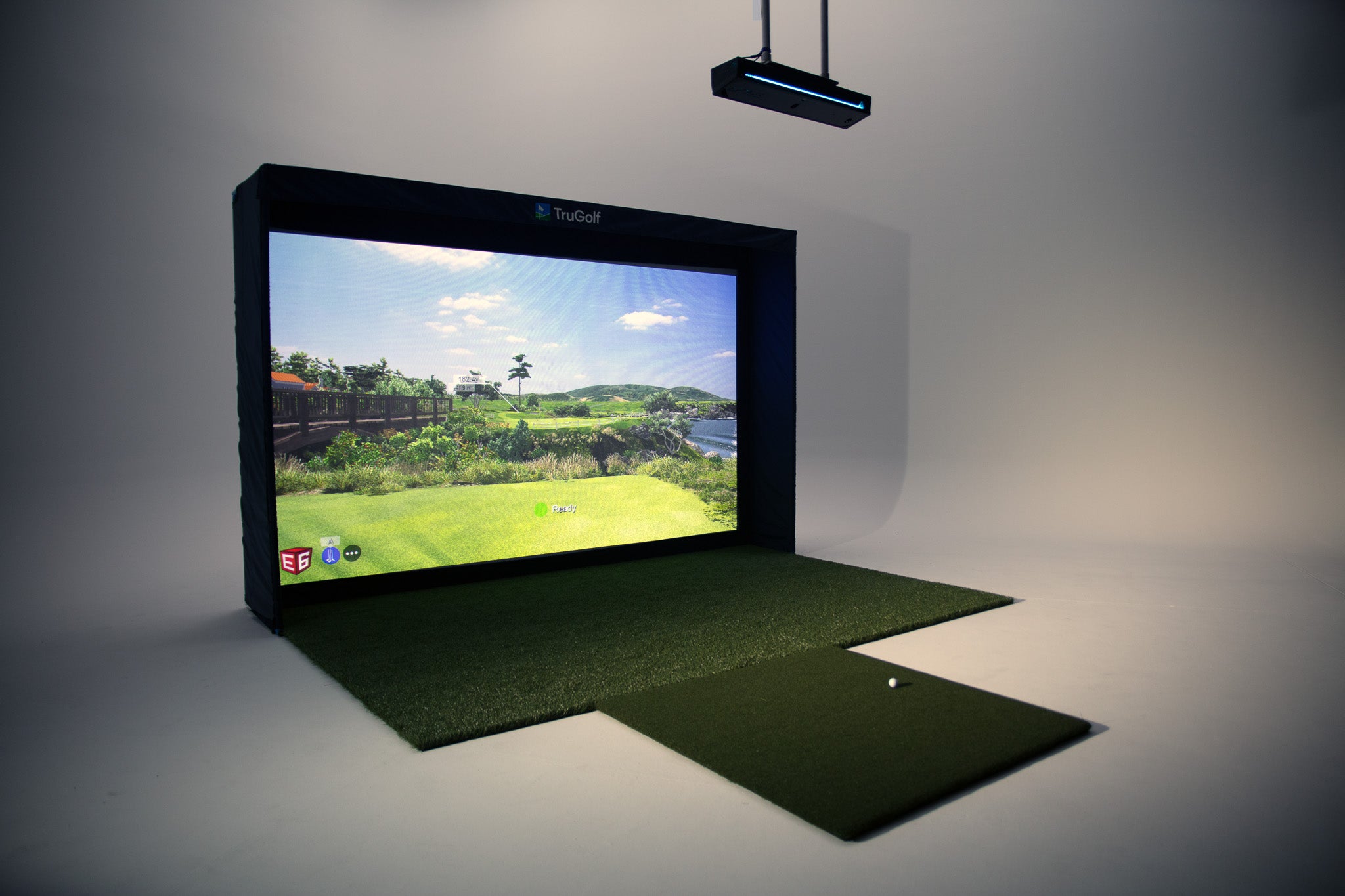
Serving the Treasure Valley
Local installation in your city