 (208) 991-3502
 Meridian, ID



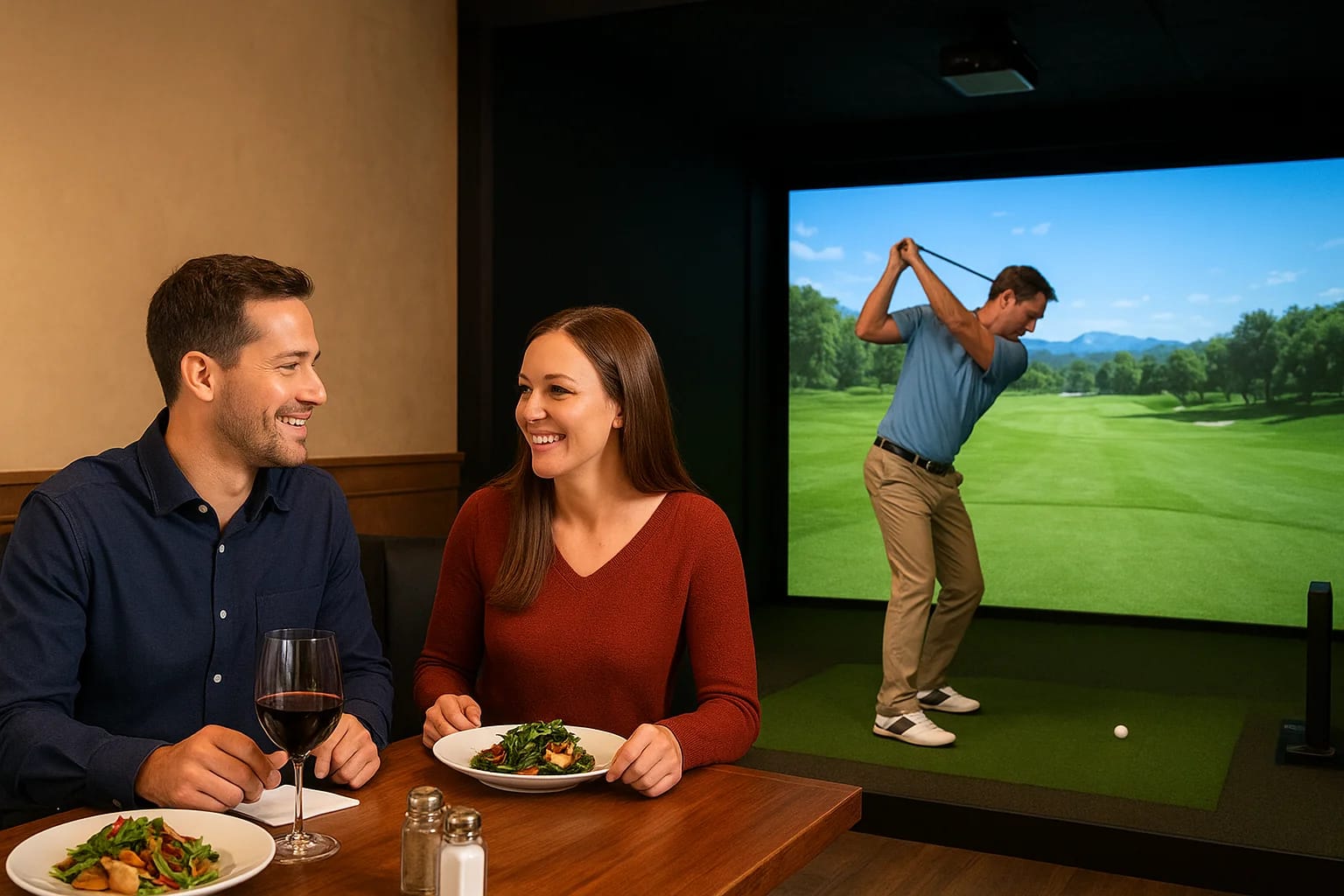

A restaurant golf simulator combines two things people already love, good food and golf, into a single venue experience. These setups pair full-service dining with enclosed bays where guests hit real...
A restaurant golf simulator combines two things people already love, good food and golf, into a single venue experience. These setups pair full-service dining with enclosed bays where guests hit real golf balls into a high-definition screen, using launch monitors and projection technology to simulate famous courses from around the world. It's a concept that's been gaining serious traction with restaurant and bar owners looking to stand out and keep guests longer.
But behind the entertainment factor sits a stack of technology that has to work together seamlessly. Projectors, impact screens, launch monitors, surround sound, networking, and display systems all need to be designed, installed, and integrated correctly, or the experience falls flat. That's where a company like Treasure Valley Solutions comes in. We help restaurants and hospitality businesses across the Treasure Valley build out commercial AV and technology systems that actually perform, from concept through ongoing support.
This article breaks down exactly what a restaurant golf simulator is, how the technology works behind the scenes, and what goes into creating an experience guests want to come back to.
Why restaurants add golf simulators
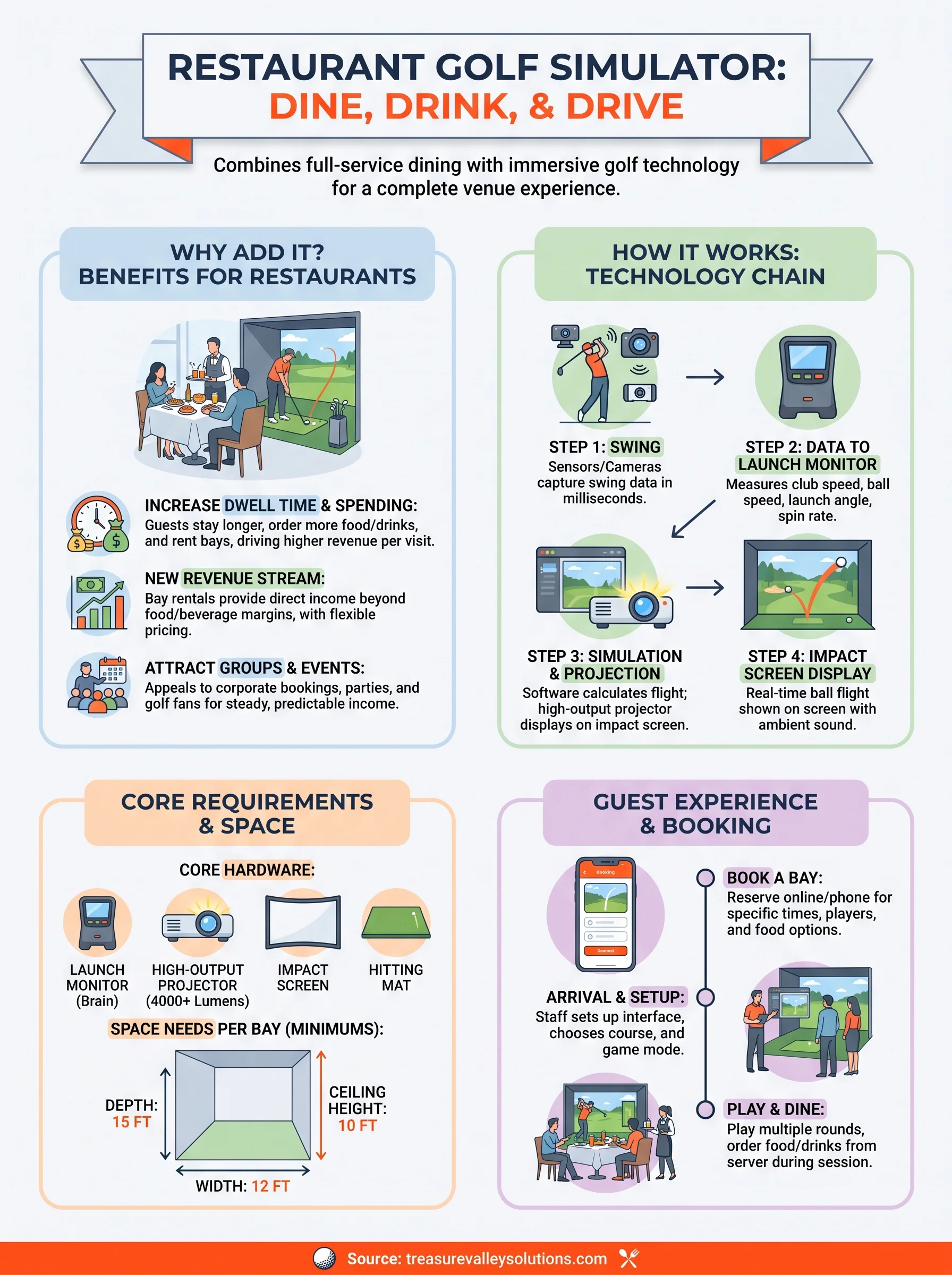
The core reason is simple: dwell time drives revenue. A guest who finishes dinner in 45 minutes and leaves spends far less than one who books a bay for two hours, orders multiple rounds of drinks, and adds food throughout the session. A restaurant golf simulator gives your guests a concrete reason to stay longer and spend more because the experience itself becomes the destination, not just the meal.
A new revenue stream beyond food and drink
Bay rentals fundamentally change your business model. Instead of relying solely on food and beverage margins, you add a direct, technology-driven income stream. Most venues charge by the hour per bay, with rates that shift based on time of day and day of the week. This structure lets you maximize revenue during peak evening hours while filling slower afternoon slots with corporate bookings, group events, or golf league nights.
Bay rental revenue can account for a meaningful share of total income, often enough to offset installation costs within the first few years of operation.
Attracting groups and repeat visitors
Simulators pull in demographics that a standard bar or restaurant typically misses. Corporate events, birthday parties, and casual date nights all become a natural fit when you offer a private bay with full food service. Groups also tend to spend more per person because the shared experience makes the bill feel justified, and they often rebook because there is always a new course to play or a score to beat.
- Corporate team outings and client entertainment
- Bachelor and bachelorette events
- Birthday and milestone celebrations
- Regular golf fans looking for year-round play
This variety of guest types makes your weekly and monthly revenue more predictable because you are not dependent on one type of crowd. When the experience keeps guests engaged, they return, they bring others, and they book in advance, which gives your operation more stability than a traditional dining setup can provide.
How a restaurant golf simulator works
A restaurant golf simulator translates your real swing into a virtual round through a chain of connected hardware and software. When you step into a bay and address the ball, sensors and cameras capture your swing data in milliseconds, measuring club speed, ball speed, launch angle, and spin rate with high precision.
From swing to screen
Your swing data travels instantly to a launch monitor positioned at the front or side of the bay. The launch monitor sends those measurements to the simulator software, which calculates the exact flight path of the ball and renders it on the impact screen in real time, dropping your shot onto a digital replica of a real course.
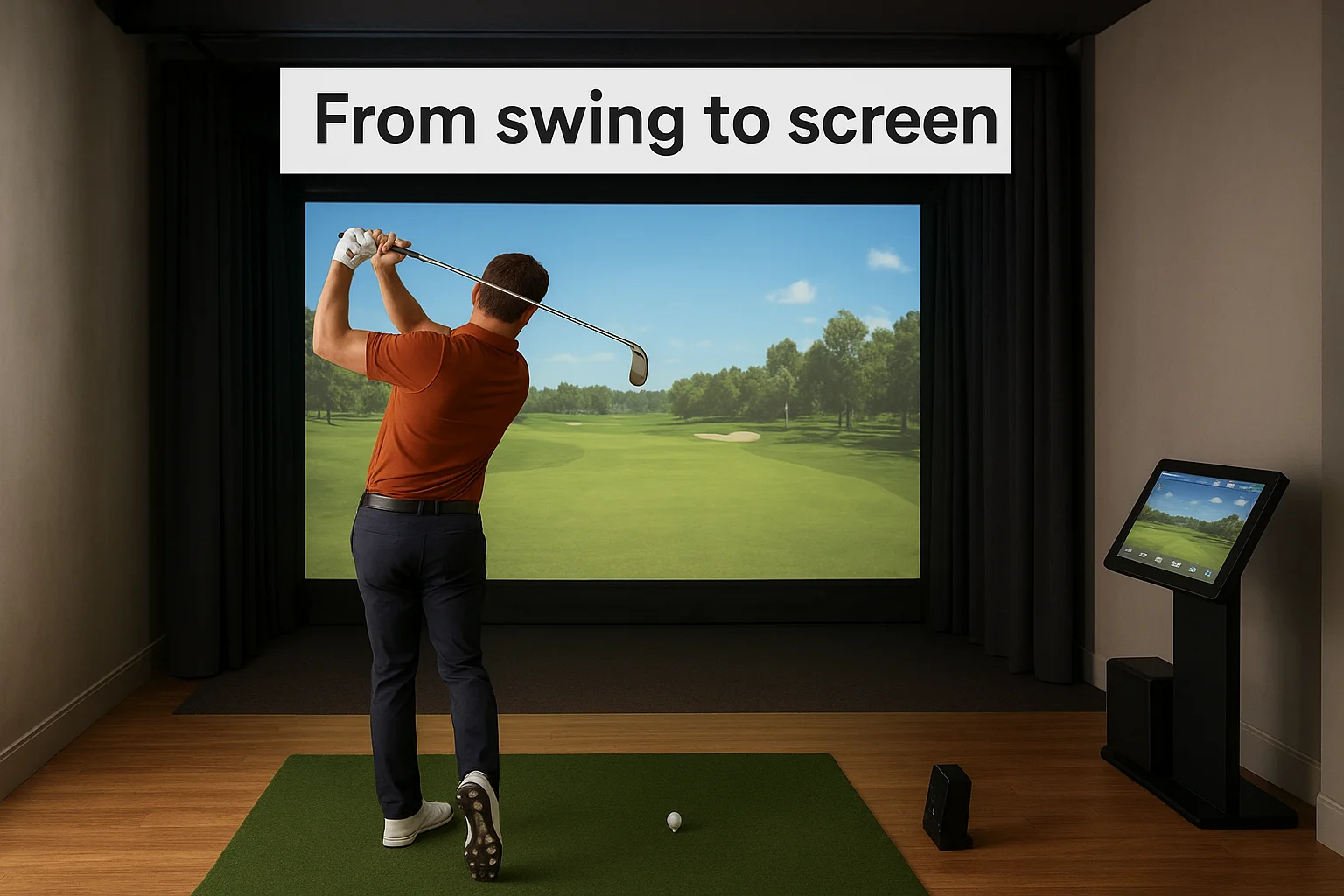
The entire process from impact to on-screen ball flight takes under a second, which is what makes the experience feel natural rather than mechanical.
The high-output projector mounted above or behind the hitting position throws a crisp, bright image onto the screen at all times. Meanwhile, the audio system fills the bay with ambient course sounds, and a touchscreen interface lets you switch courses, track scores, or adjust settings between shots. Every component runs through a centralized control system, so venue staff can manage all bays from a single point without interrupting your session.
What equipment and space a venue needs
Running a restaurant golf simulator requires more than clearing out a room and mounting a screen. Each bay needs a specific combination of hardware working together, and the physical space has to meet minimum requirements before any installation begins.
Core hardware components
The essential gear for each bay includes a launch monitor, a high-output projector, an impact screen, and a hitting mat. Your launch monitor is the brain of the operation, capturing ball and club data with every swing. Projector brightness matters more than most owners expect, since venue lighting can wash out a dim image and ruin the experience.
Plan for a projector rated at least 4,000 lumens per bay to maintain image quality under typical restaurant ambient lighting conditions.
Space and ceiling requirements
Bay dimensions and ceiling height are the two factors that determine whether a space is even viable. Most setups need a minimum of 15 feet in depth, 12 feet in width, and 10 feet of ceiling clearance. Tighter dimensions limit the swing space and create safety concerns.
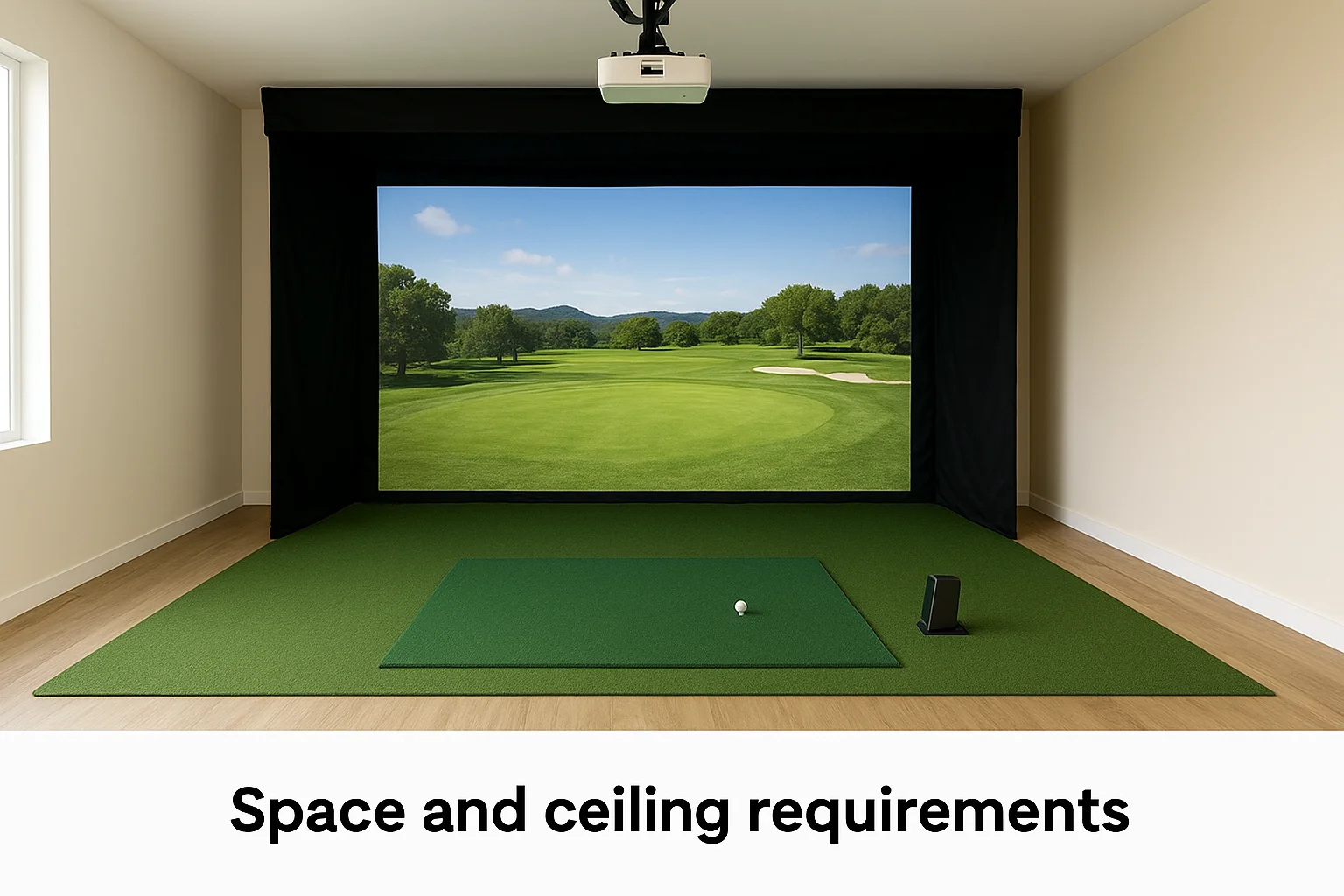
- Minimum depth: 15 feet
- Minimum width: 12 feet
- Minimum ceiling height: 10 feet
A professional site assessment before committing to any layout saves you from costly structural changes later.
What to expect when you book a bay
Booking a bay at a restaurant golf simulator venue is straightforward, but knowing what to expect ahead of time helps you make the most of your session. Most venues let you reserve online or by phone, and you'll typically choose a time slot, select the number of players, and confirm whether you want food service built into the experience.
Booking in advance is almost always worth it, since peak evening slots fill up quickly, especially on weekends.
What the booking process looks like
When you arrive, staff will walk you through the bay controls and simulator interface before your session starts. You pick a course, enter player names, and the system tracks scores automatically throughout your round. You don't need to be an experienced golfer to enjoy it since most venues offer multiple difficulty settings and game modes that work for beginners and serious players alike.
What happens during your session
Your session runs for a set block of time, typically one to two hours per bay. A server checks in regularly so you can order food and drinks without leaving the bay. Most venues also let you pause and resume mid-round, so you're never rushing through a meal to keep pace with your tee time.
How to choose the right venue near you
Not every restaurant golf simulator delivers the same quality, and the differences matter more than you might expect. Before you book, spend five minutes researching the venue so your experience matches what you're paying for.
Check the equipment and course library
The launch monitor brand and projector quality directly determine how accurate and enjoyable your session will be. Look for venues that list their specific hardware, names like Trackman, Foresight, or Full Swing signal a serious investment in the technology. A large course library also matters because it keeps repeat visits fresh.
A venue that can't tell you what launch monitor it uses is often working with entry-level gear that won't satisfy experienced golfers.
Look at the full experience, not just the golf
Food quality and service setup inside the bay separate a good venue from a forgettable one. Read recent reviews specifically mentioning whether staff check in regularly and whether the food arrives quickly enough to fit a timed session. You should also confirm the minimum booking requirements upfront, since some venues require a food and drink minimum per bay that can catch groups off guard. A quick call or website visit usually answers both questions before you commit.
Conclusion
A restaurant golf simulator brings together real technology, dining, and entertainment in a way that works for both guests and venue owners. The experience depends on quality equipment, proper installation, and a space designed to handle the physical and technical demands of each bay.
Whether you're a guest choosing where to spend an evening or a restaurant owner considering adding simulators to your space, the fundamentals stay the same: the hardware has to perform, the environment has to support it, and the experience has to feel worth the time and money.
If you're a business owner in the Treasure Valley looking to add commercial AV or simulator technology to your venue, Treasure Valley Solutions can help you design and install a system that actually delivers. Contact our team to talk through your project and get a clear picture of what it takes to build it right.
Need Expert Help?
Ready to implement these solutions in your own home or business?
Our Services
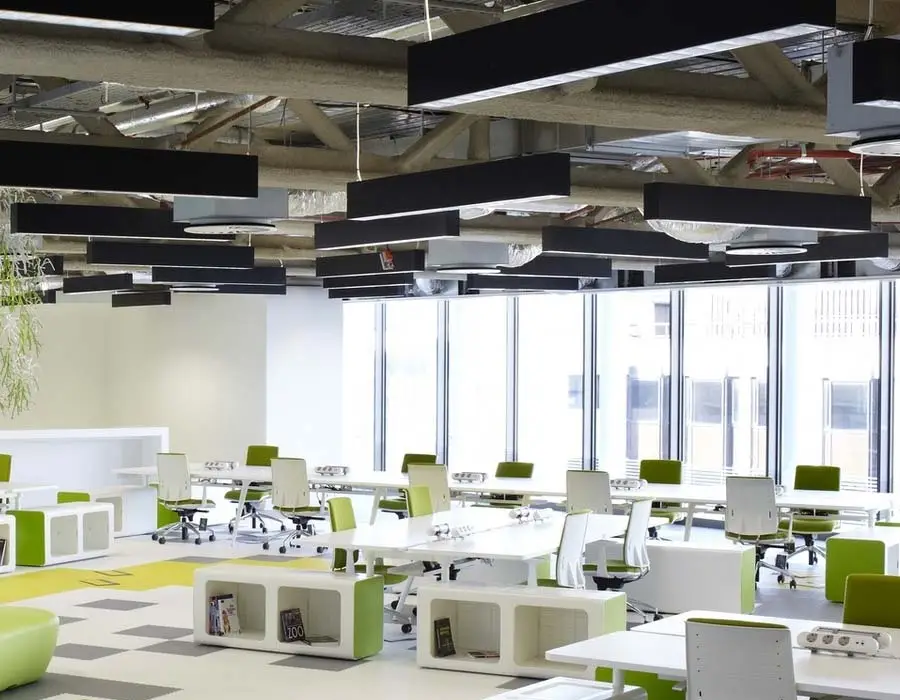
Explore whole-home audio, commercial sound, Sonos setup, and surround sound installation in the Treasure Valley.
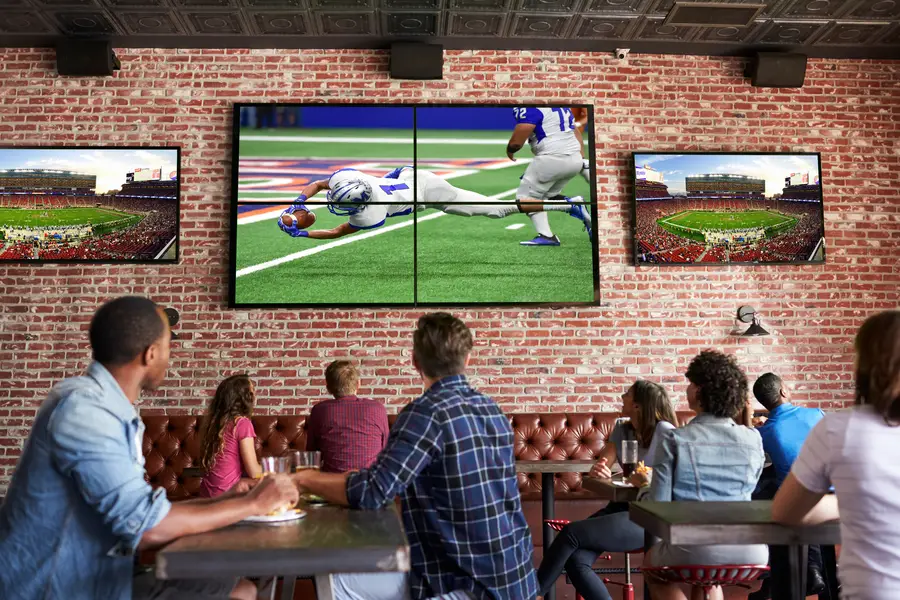
Expert TV Mounting Treasure Valley Homeowners & Businesses Trust
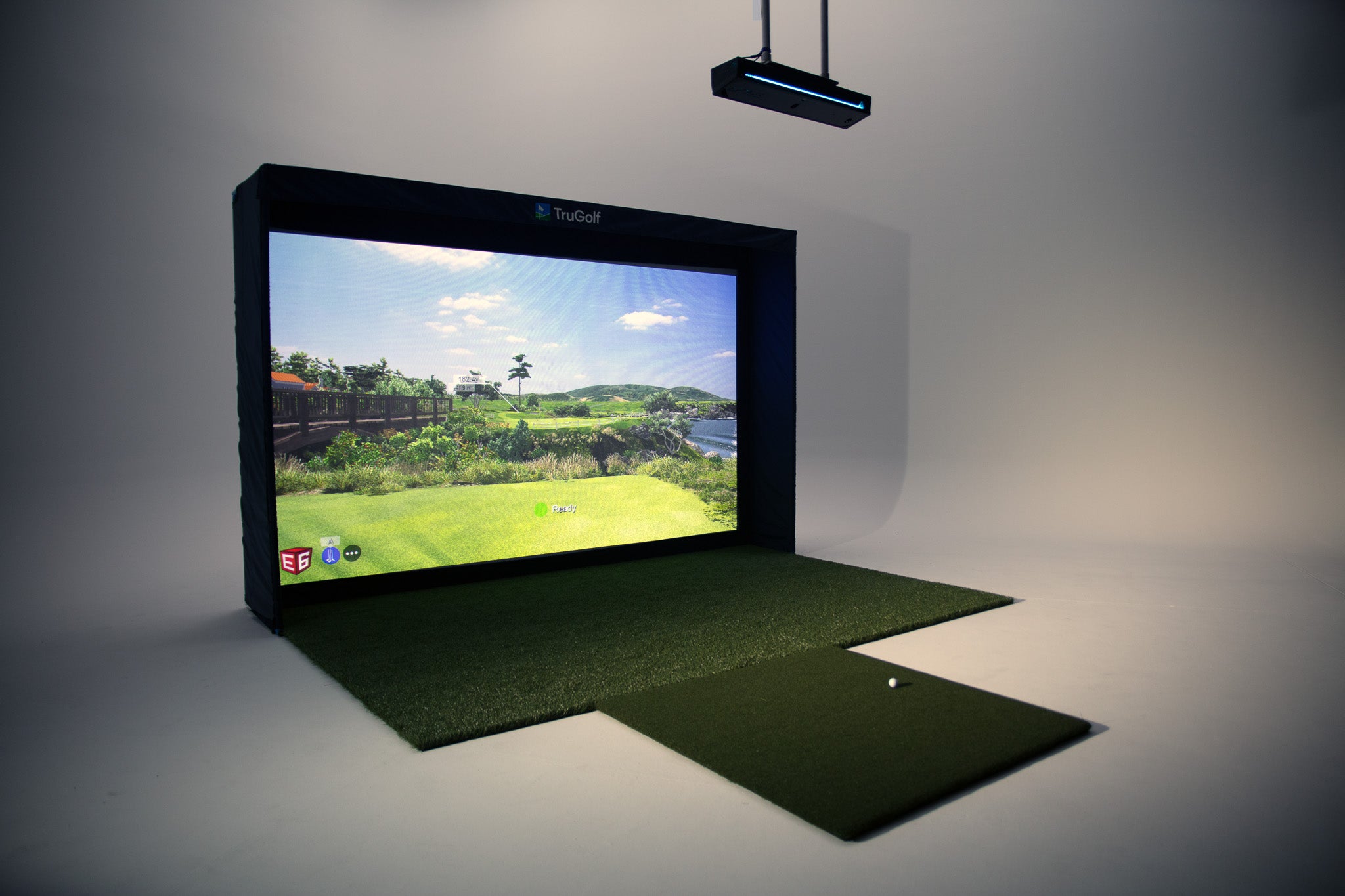
Room-first golf simulator planning, equipment coordination and AV installation for Treasure Valley homes, builders and venues.
Serving the Treasure Valley
Local installation in your city