 (208) 991-3502
 Meridian, ID



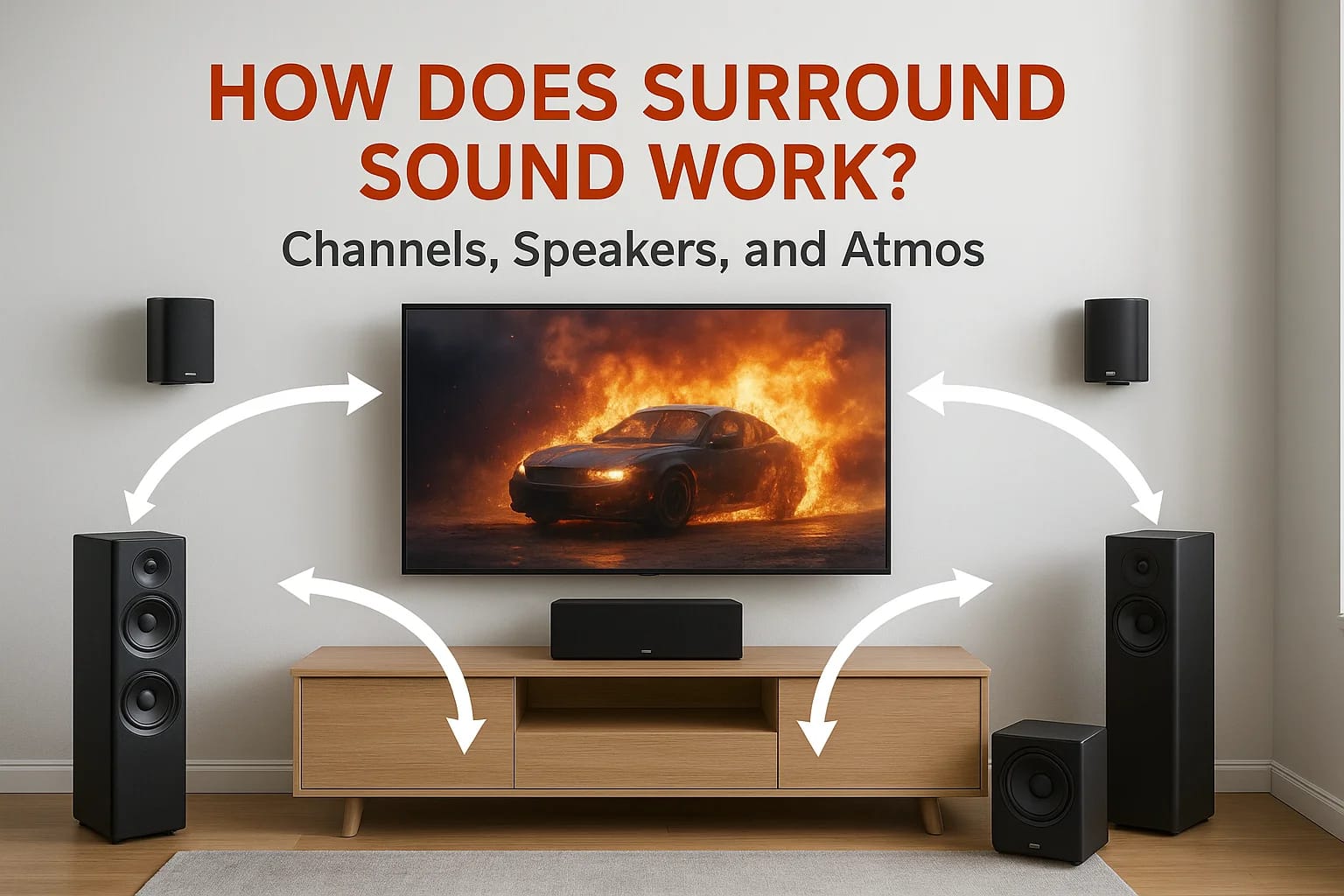

You're sitting in a movie theater, and a helicopter sweeps from behind you, roars overhead, and fades into the distance ahead. That experience isn't magic, it's engineering. Understanding how does sur...
You're sitting in a movie theater, and a helicopter sweeps from behind you, roars overhead, and fades into the distance ahead. That experience isn't magic, it's engineering. Understanding how does surround sound work starts with a simple idea: placing multiple speakers around a room so that sound reaches your ears from different directions, mimicking how you hear in real life.
The technology behind it involves splitting audio into distinct channels, each assigned to a specific speaker, so your brain perceives depth, direction, and movement. From the classic 5.1 channel setup to newer formats like Dolby Atmos that add height, the systems vary in complexity but share the same goal: putting you inside the sound.
At Treasure Valley Solutions, we design and install surround sound systems for homes and home theaters across the Boise and Meridian area. This article breaks down the core principles behind surround sound, channels, speaker roles, placement, and processing, so you can make informed decisions about your own setup.
Why surround sound feels real
Sound localization is something your brain does automatically, even in everyday life. Two ears, separated by your head, give your brain enough data to pinpoint audio sources in three-dimensional space. Surround sound systems exploit this ability deliberately, using precisely placed speakers to feed different signals to each ear at slightly different times and volumes, tricking your brain into perceiving sound as coming from specific locations around the room.
How your ears locate sound
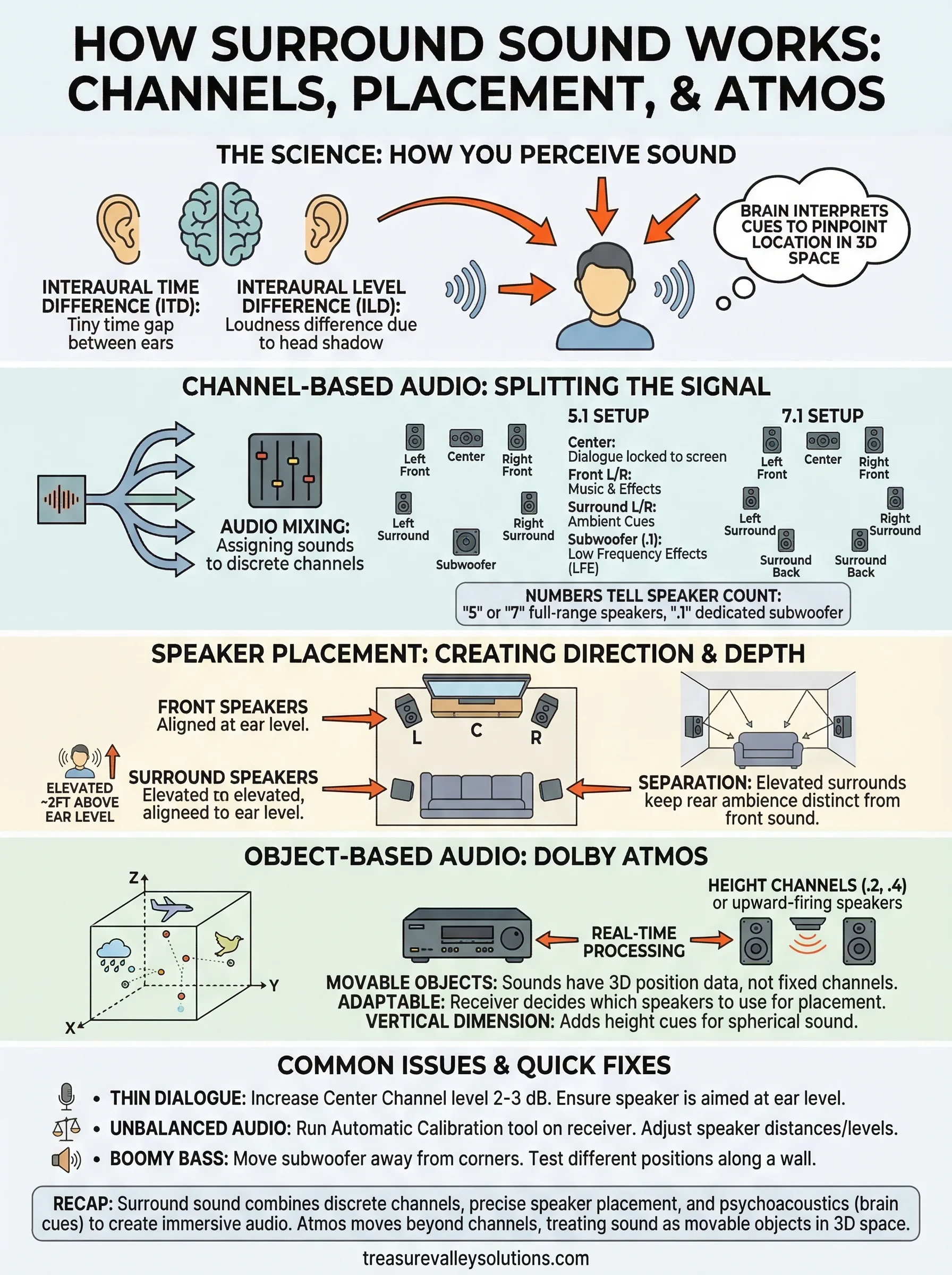
Your brain uses two primary cues to localize sound. Interaural time difference (ITD) refers to the tiny gap in time between when a sound reaches one ear versus the other. If a sound comes from your right, it hits your right ear a fraction of a millisecond before your left. Interaural level difference (ILD) is the difference in loudness between the two ears, because your head blocks and absorbs some sound before it reaches the far ear.
These two cues work together constantly, even when you're not paying attention. When a surround sound system plays a sound effect through a speaker to your left at a specific volume and timing, your brain reads those cues and places the sound exactly where the speaker is. That's why a well-designed surround setup makes dialogue feel like it's coming from the screen while ambient sounds float around the room from different directions.
The role of psychoacoustics
Psychoacoustics is the study of how humans perceive sound, and it's the science behind why surround sound feels convincing rather than artificial. Engineers who design audio formats use psychoacoustic research to decide which sounds should come from which channels, how much delay to add between speakers, and how to blend audio so the transitions between speaker zones feel seamless to your ears.
Your brain fills in gaps in audio information automatically, which is why even a modest surround system can produce a convincing sense of space if the content and speaker placement are right.
One important concept is the precedence effect, also called the Haas effect. When the same sound arrives from two directions, your brain locks onto the first arrival and ignores the slightly delayed copy. Sound engineers use this principle to steer your perception of where audio originates without making individual speakers obvious. Understanding how does surround sound work means recognizing that the system isn't just about volume, it's about timing, placement, and the way your brain interprets everything it hears.
How channel-based surround splits audio
A surround sound system works by splitting a single audio mix into multiple discrete channels, each carrying different audio information routed to a specific speaker. Rather than sending the same signal to every speaker, the audio engineer or processing software assigns dialogue, ambient effects, music, and directional sounds to separate tracks during the mixing stage. Your receiver reads those channels and routes each one to the correct speaker in your room, keeping every element of the soundtrack exactly where it was intended to land.
What the numbers in 5.1 and 7.1 mean
The numbers in a system name tell you exactly how many speakers and subwoofers the format uses. In a 5.1 system, the "5" refers to five full-range speakers and the ".1" refers to one dedicated subwoofer handling only low-frequency content, sometimes called the LFE channel (Low Frequency Effects). A 7.1 system adds two more surround speakers behind the listening position, widening the rear sound field. The subwoofer counts separately because it carries a completely different frequency range from the main channels.
A 5.1 setup covers the vast majority of professionally mixed content available today, including most Blu-ray discs, streaming platforms, and games.
What each channel does
Each channel in a standard 5.1 layout has a specific, defined role rather than a shared one. The center channel carries most of the dialogue, keeping speech locked to the screen so voices never seem to drift left or right. The front left and right channels handle music and wide sound effects, while the two surround channels deliver ambient cues from the sides and rear. Knowing how does surround sound work at the channel level explains why muting any single speaker noticeably changes what you hear, since each one carries unique audio content that the others do not replicate.
How speaker placement creates direction and depth
Placement determines how well your brain maps audio to physical locations, and even a well-specced system sounds flat if the speakers are in the wrong positions. The industry follows standardized placement guidelines built around decades of psychoacoustic research, and staying close to those angles and distances is the fastest way to get a setup that actually sounds immersive rather than just loud.
Where each speaker belongs
The front three speakers (left, center, right) should sit at roughly ear level when you're seated, with the center channel aligned directly with your screen. Your two surround speakers go to the sides or slightly behind your listening position, elevated about two feet above ear level. That height difference helps your brain separate rear ambience from front-facing sound, keeping both zones perceptually distinct instead of blending into one wall of noise.
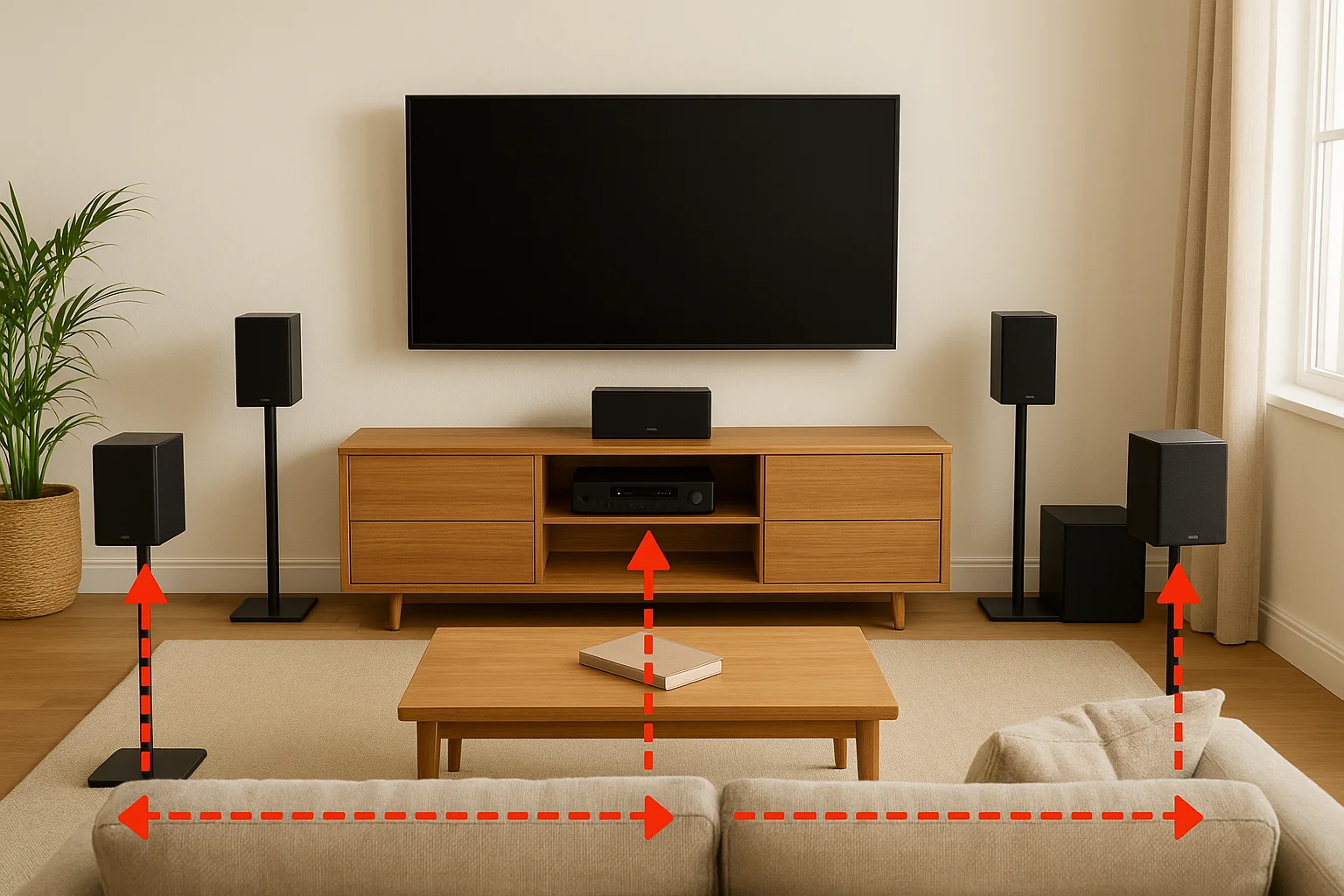
Moving your surround speakers even slightly behind your seated position rather than directly beside you creates a noticeably wider rear sound stage in most rooms.
Understanding how does surround sound work at the placement level also means recognizing that small adjustments have real consequences. A surround speaker aimed at the back wall instead of toward your ears changes the reflected sound pattern enough to collapse the sense of depth the format was designed to create.
Why the subwoofer placement works differently
Low-frequency sound is largely non-directional, which is why the subwoofer sits on a separate channel entirely. Bass wavelengths are long enough that your brain cannot pinpoint their source the way it can with midrange or high-frequency sounds.
This gives you genuine flexibility in subwoofer positioning. Most rooms allow it to sit in a corner or along a wall without breaking the spatial illusion, since no one can actually tell where the bass is coming from.
How Dolby Atmos and object-based audio work
Channel-based formats assign audio to fixed tracks tied to specific speakers, but Dolby Atmos takes a fundamentally different approach. Instead of locking sounds to channels, it treats every individual sound effect as a movable object with its own position data in three-dimensional space. Your receiver reads that position data in real time and decides which combination of speakers to use to place the sound where the mix engineer intended it to land.
What makes object-based audio different
Understanding how does surround sound work in the Atmos era means shifting from thinking about fixed speaker assignments to thinking about coordinates in space. A sound engineer working in Atmos can place a raindrop overhead, move it forward, and drop it to floor level, all within seconds, without assigning it to any specific speaker. Your Atmos-capable receiver interprets those coordinates and routes the audio dynamically, which makes the format far more adaptable to different room configurations than a traditional 5.1 or 7.1 layout.
Because Atmos renders audio based on speaker position rather than fixed channels, the same mix sounds accurate in a two-speaker bar setup, a 5.1.2 home theater, or a 9.1.4 dedicated screening room.
How height channels change the experience
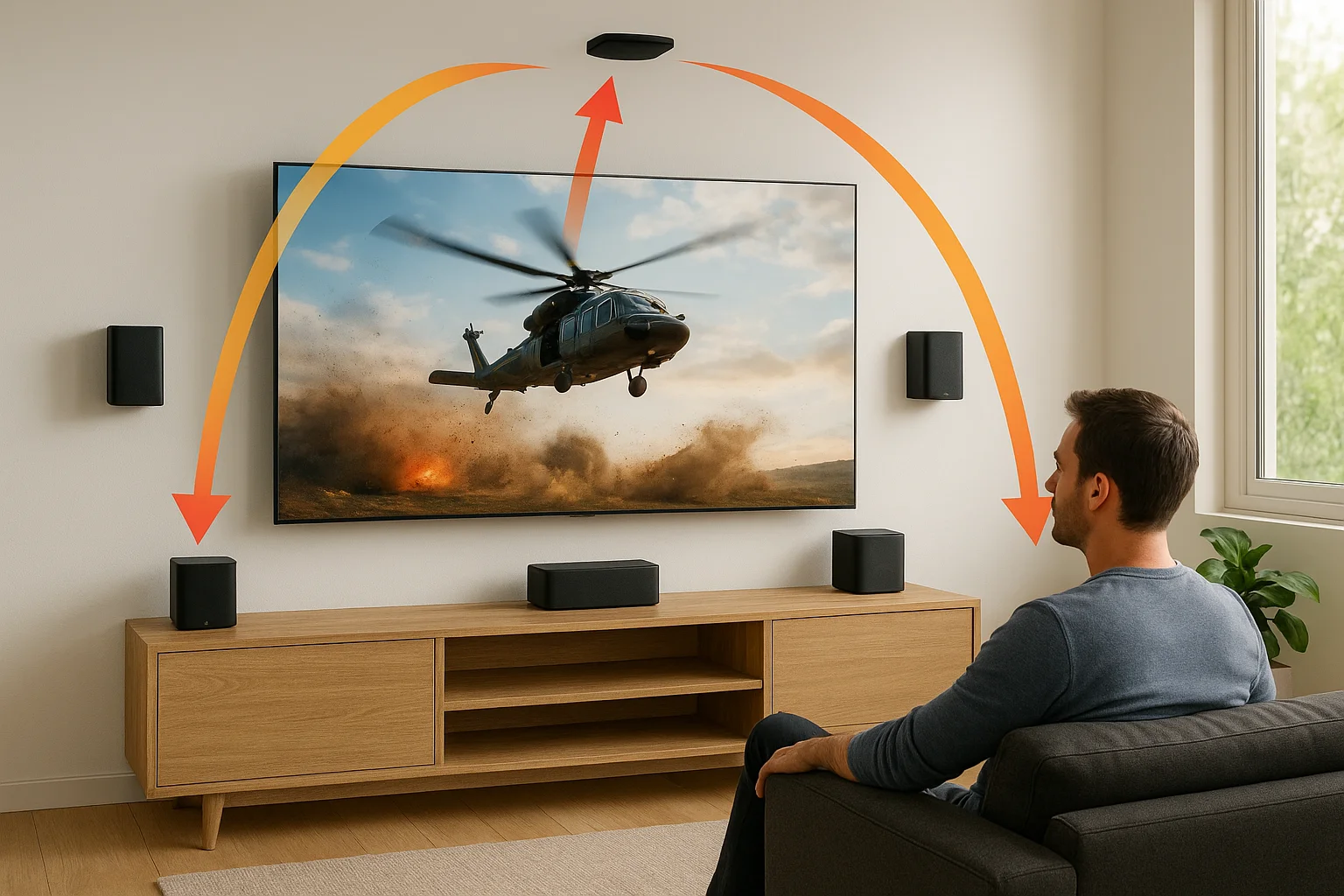
The ".2" or ".4" you see appended to Atmos configurations like 5.1.2 or 7.1.4 refers to dedicated height speakers, either ceiling-mounted or upward-firing units that bounce sound off the ceiling toward your ears. These channels carry overhead audio objects like aircraft, rainfall, and spatial ambience, adding a vertical dimension that standard surround formats cannot reproduce. Your brain combines those overhead cues with the horizontal surround field to build a genuinely spherical listening environment rather than a flat, two-dimensional one.
Common surround sound issues and how to fix them
Even a well-designed system can develop predictable problems once it's in a real room. Most issues trace back to calibration, placement, or receiver settings rather than faulty hardware, so you can usually fix them without replacing anything.
Dialogue sounds thin or buried
The center channel carries most of your dialogue, so if voices sound quiet or muffled under music and effects, raise the center speaker level by 2-3 dB in your receiver settings and test again.
If that doesn't resolve it, confirm the speaker is aimed directly at your seated ear level rather than pointing away or blocked by furniture placed in front of it.
Audio feels unbalanced between speakers
When one side of the room sounds louder than the other, the cause is almost always unequal speaker distances from your listening position or mismatched levels in your receiver. Most AV receivers include an automatic calibration tool that measures each speaker with a microphone and corrects for distance and level differences automatically. Run that process before touching any manual settings.
If your room has hard floors and bare walls, excessive reflections blur the soundstage. A rug and soft furnishings absorb those reflections and sharpen directional cues noticeably.
Bass sounds boomy or disappears
Understanding how does surround sound work in a physical room means accepting that bass frequencies interact with walls and create standing waves, spots where bass stacks up or cancels depending on where you sit.
Moving the subwoofer away from corners and testing different positions along the front or side wall usually smooths out the response without requiring any receiver adjustments. Start by pulling it at least 12 inches from any wall surface, then try placing it roughly one-third of the room's length from the front wall and listen for the most even bass response at your seat.
A quick recap
How does surround sound work comes down to three connected ideas: splitting audio into discrete channels, placing speakers at specific angles so your brain maps sound to physical locations, and using psychoacoustic principles like interaural time difference to make that placement feel convincing. Standard formats like 5.1 and 7.1 assign fixed roles to each speaker, while Dolby Atmos moves beyond channels entirely by treating every sound as a movable object in three-dimensional space.
Your room matters as much as your gear. Speaker positioning, calibration, and acoustic treatment directly affect whether your system sounds immersive or flat, regardless of what you spent on equipment. Most common problems, buried dialogue, uneven levels, boomy bass, trace back to placement and receiver settings rather than hardware failures.
If you want a surround sound system designed and installed the right way for your specific space, see examples of our home theater and audio work to get a sense of what's possible.
Need Expert Help?
Ready to implement these solutions in your own home or business?
Our Services

Home theater design and installation planned around your room, viewing goals, and equipment scope.

Expert TV Mounting Treasure Valley Homeowners & Businesses Trust

Explore whole-home audio, commercial sound, Sonos setup, and surround sound installation in the Treasure Valley.
Serving the Treasure Valley
Local installation in your city