 (208) 991-3502
 Meridian, ID




You don't need a country club membership or a three-hour block of free time to practice golf at home. With the right drills, a solid routine, and a few smart gear choices, your garage, spare room, or...
Practice Golf At Home: Drills, Routines & Gear That Work
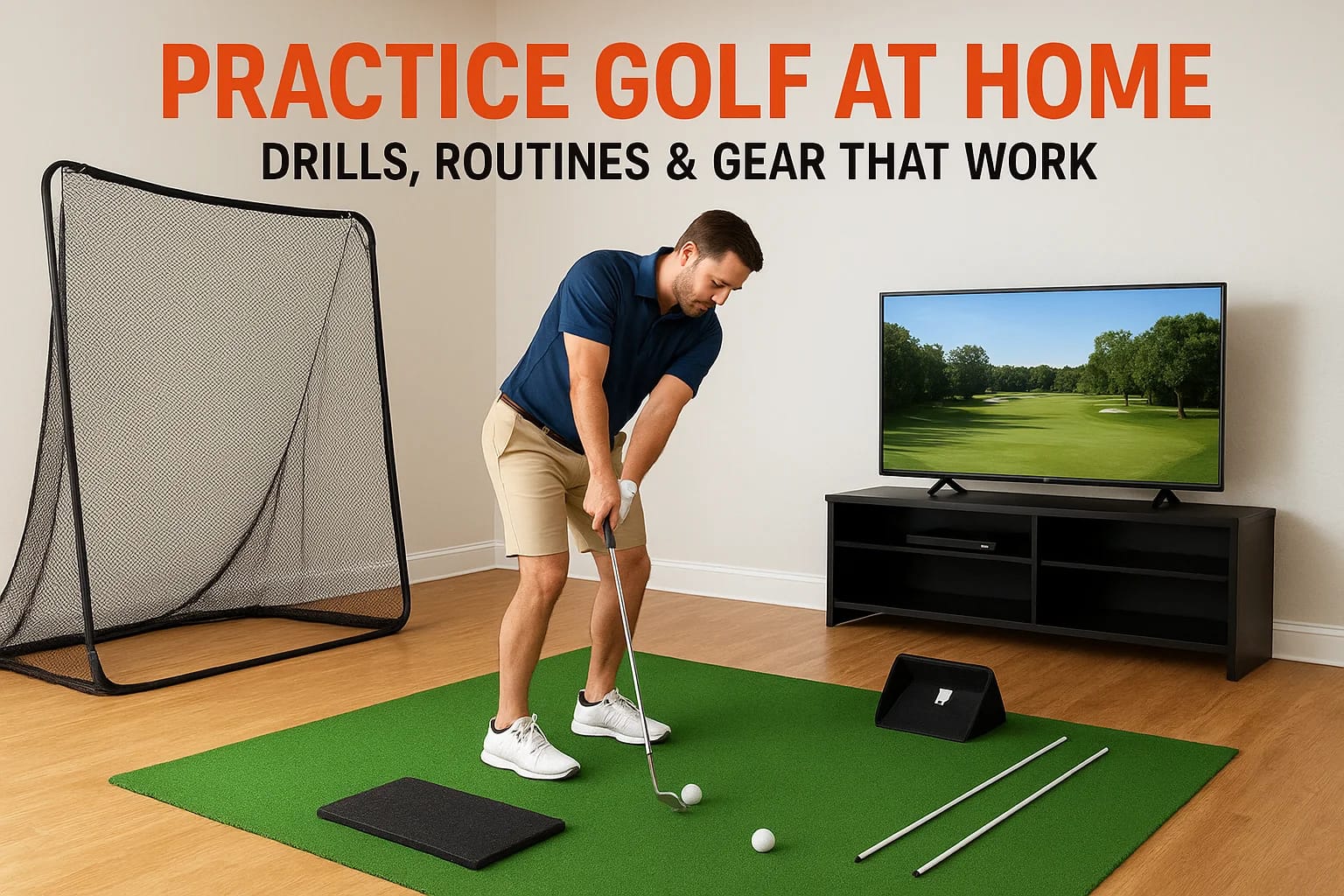
You don't need a country club membership or a three-hour block of free time to practice golf at home. With the right drills, a solid routine, and a few smart gear choices, your garage, spare room, or backyard can become a legitimate training space that actually improves your game.
The key is knowing what to practice and what equipment is worth the investment. A putting mat and a net can go a long way, but dedicated golfers are increasingly turning to golf simulators, full AV setups with launch monitors, projectors, and impact screens, to get real course feedback without leaving the house. That's where a company like Treasure Valley Solutions comes in. We design and install custom home technology systems across the Boise and Meridian area, including the kind of integrated AV and lighting setups that make a home golf simulator actually perform the way it should.
This guide covers practical drills, daily routines, and gear recommendations to help you sharpen every part of your game at home, from short game touch to full-swing power.
Choose goals and the metrics you will track
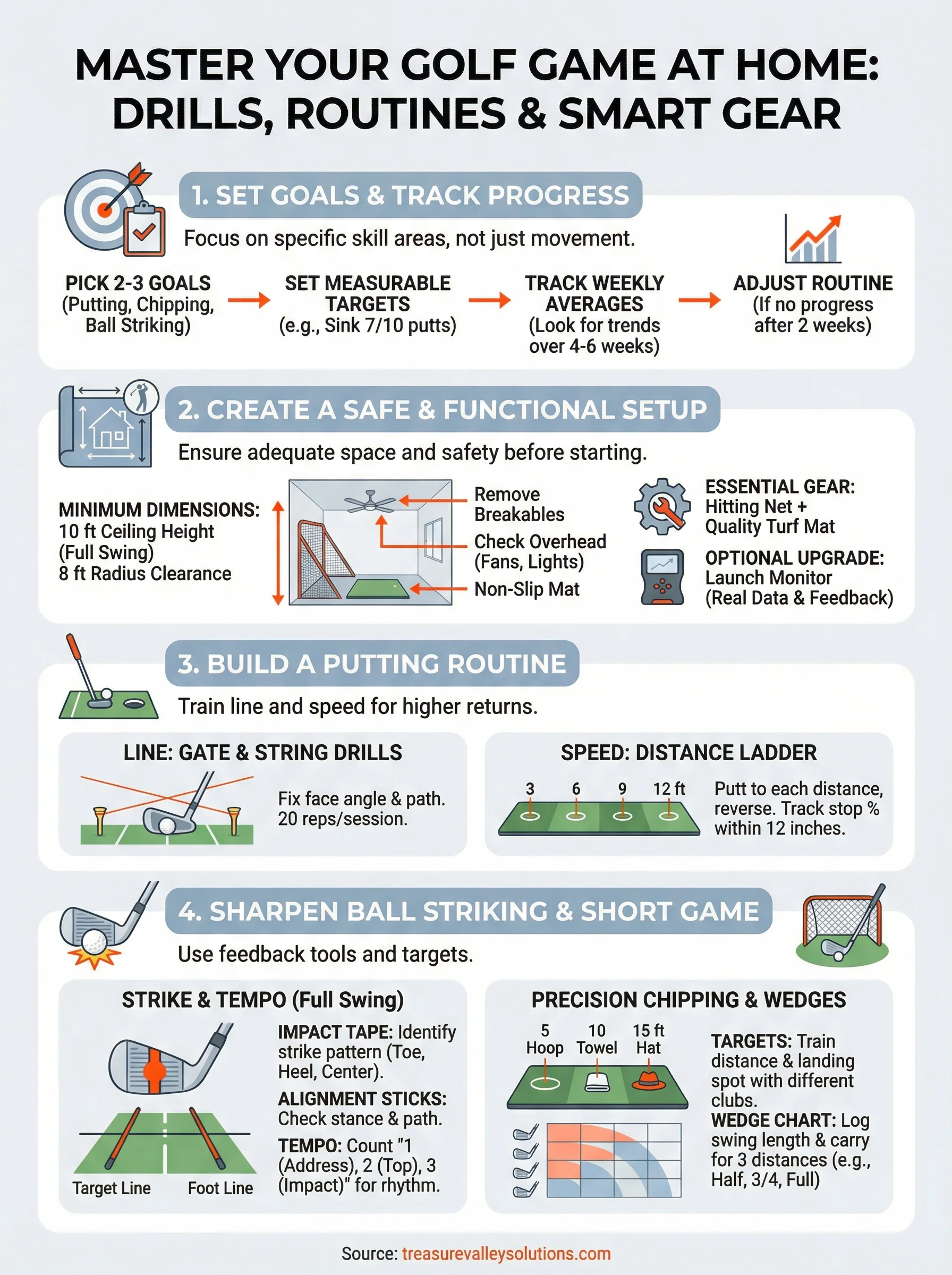
Before you buy a single piece of gear or design a routine, decide what you're actually trying to improve. Most golfers practice golf at home without a clear target and then wonder why their scores don't move. Picking two or three specific goals gives your sessions direction and makes it easy to spot real progress over time.
Without a target, every session is just movement, not improvement.
Set specific targets for each skill area
Breaking your game into skill areas helps you assign a measurable goal to each one. Putting, ball striking, and short game are the three buckets most amateur golfers should prioritize at home. For each bucket, pick one testable target you can check repeatedly in your practice space.
| Skill Area | Example Goal | How to Measure |
|---|---|---|
| Putting | Sink 7 out of 10 six-foot putts | Count made putts per set of 10 |
| Chipping | Land 8 out of 10 chips within a hula hoop | Count chips inside the target zone |
| Ball striking | Hit 15 consecutive shots with a centered strike | Use impact tape on the clubface |
| Tempo | Complete 20 swings at a consistent 3:1 ratio | Record and review with a phone camera |
Track your numbers every week
Write your results down after every session, even if it's just a quick note on your phone. Tracking weekly averages instead of single-session scores smooths out the noise from good and bad days. You want to see a trend line moving in the right direction over four to six weeks, not just celebrate one strong session.
Set a brief weekly check-in where you compare your current numbers to the goal you set. If your six-foot putt percentage climbed from 60% to 72% over three weeks, that's real progress worth noting. If a specific drill isn't producing results after two weeks of honest effort, swap it for a different approach rather than grinding through something that isn't working. Keeping the feedback loop short is what separates structured practice from just going through the motions.
Create a safe at-home setup in any space
A poorly designed practice space causes injuries and frustration before you even start. When you practice golf at home, the first step is making sure your setup is safe, functional, and sized correctly for the drills you plan to run. You don't need a large room, but you do need enough clearance to swing freely without hitting walls, lights, or furniture.
Pick the right space and clear it properly
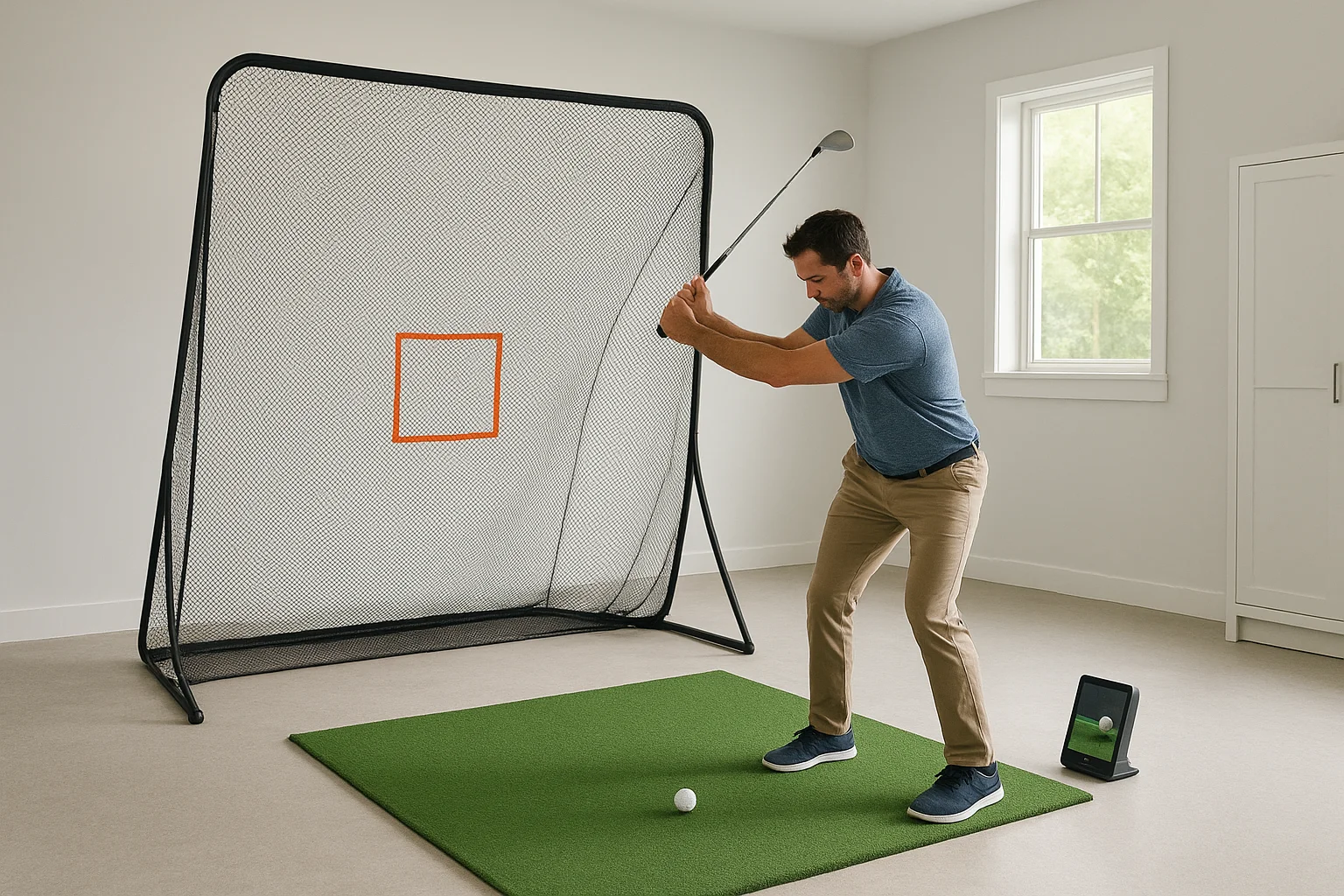
Your garage, basement, or backyard are all viable options. Measure at least 10 feet of ceiling height for full-swing work, and clear a minimum 8-foot radius around your hitting position before you swing anything. Remove any items that can shatter or fall, and check overhead pipes or light fixtures before your first session.
A swing that clips a ceiling fan once can end your practice session and your season.
Confirm each of these before you hit a single ball:
- Ceiling height: 10 ft minimum for full swings, 8 ft for short game only
- Side clearance: 4 ft minimum on each side of your stance
- Forward clearance: 8 ft from ball position to net or impact screen
- Floor surface: non-slip mat or rubber flooring to prevent slipping during the swing
Choose gear that fits your available space
You don't need to fill a room with equipment to build a solid setup. A hitting net and a quality turf mat cover the basics for ball striking and chipping in a compact footprint. If your space allows, adding a launch monitor gives you real swing data without requiring a full simulator build, and most modern units connect directly to a tablet or phone for instant feedback.
Build a putting routine for line and speed
Putting accounts for roughly 40% of your strokes in a typical round, which makes it the highest-return skill to train when you practice golf at home. A flat surface and a decent putting mat are all you need to build real consistency in both line and speed, the two variables that determine whether the ball drops or lips out.
Train your line with gate and stroke drills
Gate drills are the fastest way to expose a path problem in your stroke. Set two tees or pencils just wider than your putter head about six inches in front of the ball. If your putter face is open or closed at impact, you will clip one of the tees immediately.
Consistent face angle at impact matters more than a perfect stroke path.
Pair the gate drill with a string line check: stretch a piece of string from your ball to the target and use it as a visual reference for both your aim and your follow-through direction. Run 20 putts through the gate before each session and log how many pass cleanly.
Control speed with a distance ladder
Speed control separates good putters from average ones, and a distance ladder is the most practical tool to train it at home. Place targets at 3, 6, 9, and 12 feet from your mat, then putt to each distance in order and reverse back to 3 feet.
- Start each session with 5 putts at each distance
- Rest 30 seconds between each ladder set
- Record how many stop within 12 inches of the target
Tracking your stop percentage at each distance over several weeks shows you exactly where your speed control breaks down, whether it's on short putts or longer lag putts.
Train strike, tempo, and swing path at home
Ball-striking improvements are available to you at home if you use the right feedback tools. Impact tape and alignment sticks cost almost nothing but give you the same quality of information a professional instructor pulls from a video analysis session. The goal here is to identify your current patterns first, then make targeted adjustments rather than guessing.
Use impact tape and alignment sticks to fix your strike
Impact tape sticks directly to your clubface and shows you the exact contact point after every swing. Put a fresh strip on your 7-iron, take ten swings into a net, then peel it off and look at the cluster of marks. Toe strikes, heel strikes, and high-face contact each produce a distinct pattern that tells you exactly what your swing path is doing at the moment of impact.
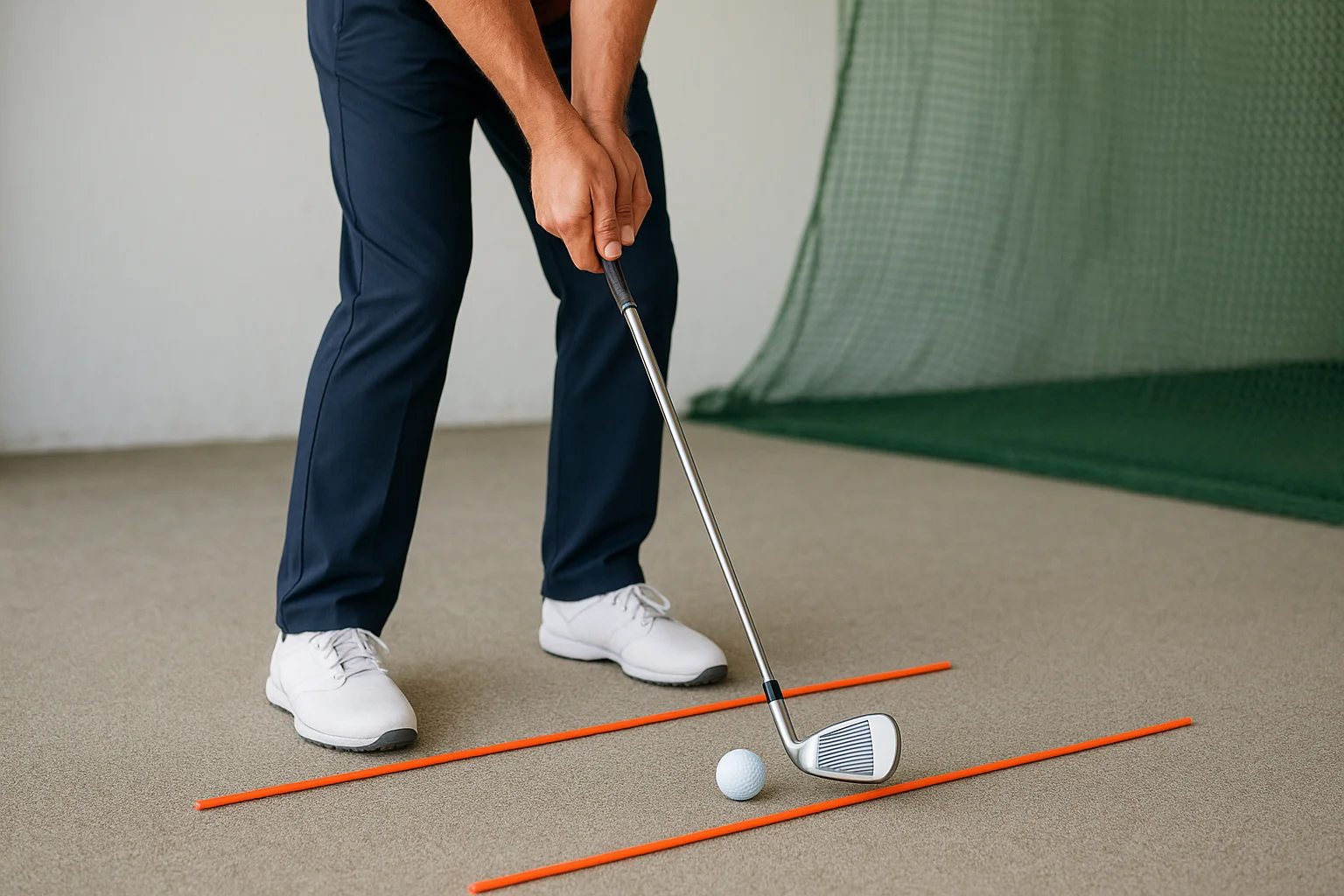
Lay two alignment sticks on the ground, one along your target line and one just outside the ball to mark your foot line. This setup takes thirty seconds to arrange and immediately shows whether your stance and path are aligned. Check your foot position against the sticks before every drill set.
Count out loud to build consistent tempo
Most amateur golfers rush the downswing, which collapses timing and wrecks contact. A simple three-count method works well when you practice golf at home: say "one" at address, "two" at the top of your backswing, and "three" at impact, keeping each count the same duration.
Consistent tempo produces consistent ball-striking far more reliably than any mechanical swing tip.
Once you hold the three-count rhythm for fifteen consecutive swings, add a real ball to confirm the timing holds under contact pressure.
Practice chipping and wedges without a full range
Your short game accounts for more of your scorecard than most golfers admit, and chipping and wedge play are skills you can sharpen significantly when you practice golf at home. You don't need a grass range or a putting green to build consistent touch around the green. A small hitting mat, a net, and a few physical targets give you everything required to train the feel and precision that lower your scores.
Chip shot consistency comes from deliberate repetition in a controlled space, not from occasional range sessions.
Set up targets for precision chipping
Place three targets at different distances from your mat, such as a hula hoop, a folded towel, and a hat, at 5, 10, and 15 feet. Chip to each one in sequence and count how many land within the target zone per set of 10. This format trains your distance control and landing spot selection at the same time, which mirrors the decision-making you use on the course.
- 5 feet: pitch shot with a 56-degree wedge
- 10 feet: bump-and-run with a 9-iron
- 15 feet: lofted chip with a 60-degree wedge
Run a wedge distance control drill
Pick one wedge, such as your 52-degree, and commit 15 minutes to hitting full, three-quarter, and half swings into your net. After each swing, note your swing length and estimated carry distance based on your launch monitor or feel. Logging these numbers over two weeks builds a reliable mental chart you can reference on the course when you need a precise yardage.
| Swing Length | Approximate Carry |
|---|---|
| Full | 100 yards |
| Three-quarter | 80 yards |
| Half | 60 yards |
Keep it simple and take it to the course
The best home practice routine is one you actually follow. Pick two or three drills from this guide and repeat them consistently for four weeks before adding anything new. Spreading your attention across too many skills at once slows progress and makes sessions feel overwhelming. When you practice golf at home with a short, focused routine, the skills transfer to the course faster because your reps are deliberate and measurable.
Take your tracking numbers to the range once a month to confirm that your home gains hold up under real conditions. Consistency between your home sessions and your on-course performance is the clearest sign that your training is working. If you want to take your home setup further with a properly installed simulator, projector, or AV system that delivers real course feedback, explore what a custom home technology setup looks like and see what Treasure Valley Solutions has built for golfers in the Boise and Meridian area.