 (208) 991-3502
 Meridian, ID



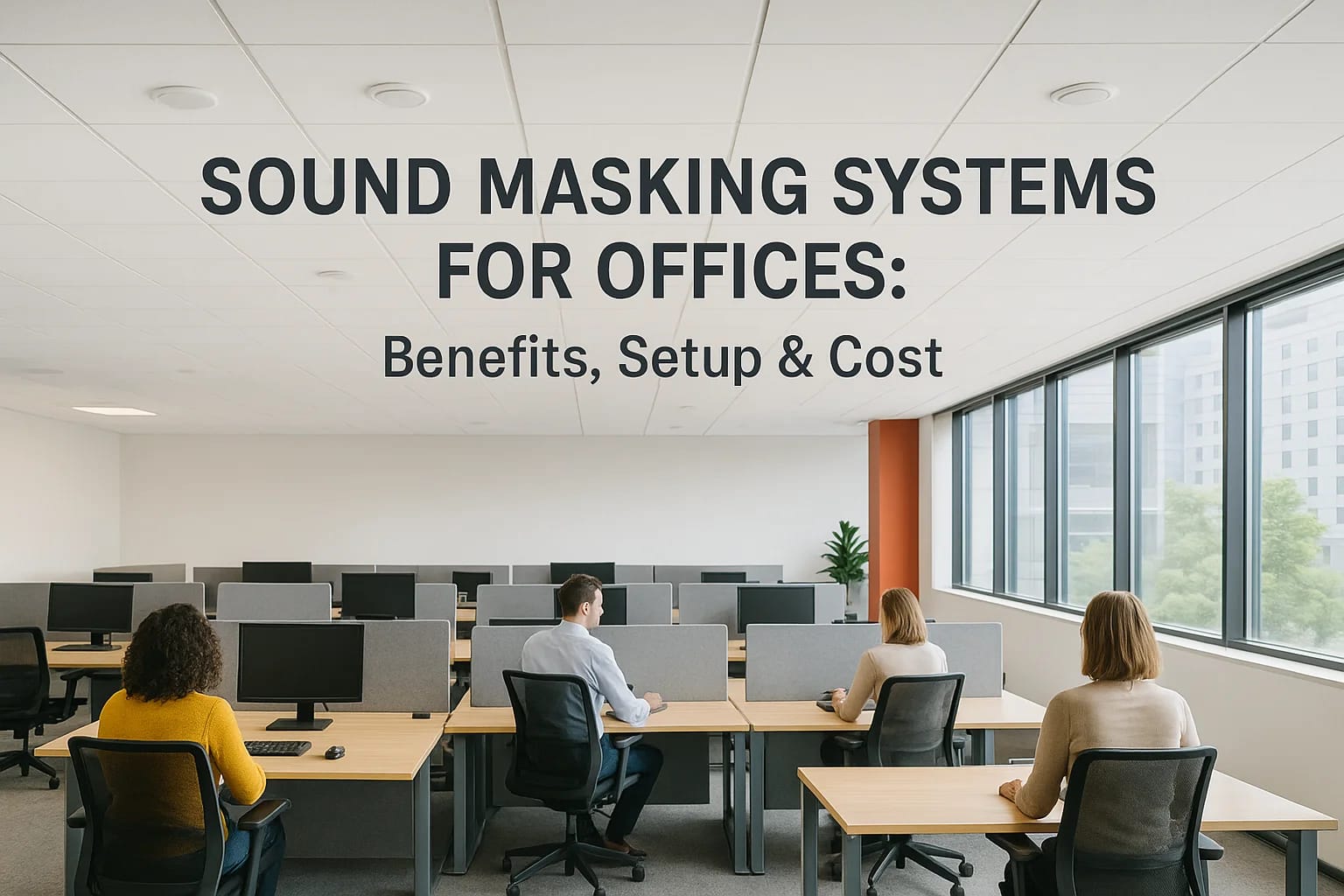

Open office layouts promise collaboration but often deliver constant distraction. Conversations from neighboring desks, phone calls echoing across the room, and the general hum of activity can tank pr...
Sound Masking Systems For Offices: Benefits, Setup & Cost
Open office layouts promise collaboration but often deliver constant distraction. Conversations from neighboring desks, phone calls echoing across the room, and the general hum of activity can tank productivity and compromise confidential discussions. Sound masking systems for offices offer a proven solution, adding a layer of ambient sound that makes speech less intelligible and reduces noise distractions without creating an unnaturally silent environment.
At Treasure Valley Solutions, we design and install commercial audio systems throughout the Boise and Meridian area, including professional sound masking installations for offices of all sizes. We've seen firsthand how the right acoustic treatment transforms a chaotic workspace into one where employees can actually focus and private conversations stay private.
This guide covers how sound masking works, the benefits it brings to your office environment, what a typical setup involves, and what you can expect to invest in a system that fits your space.
What sound masking is and what it is not
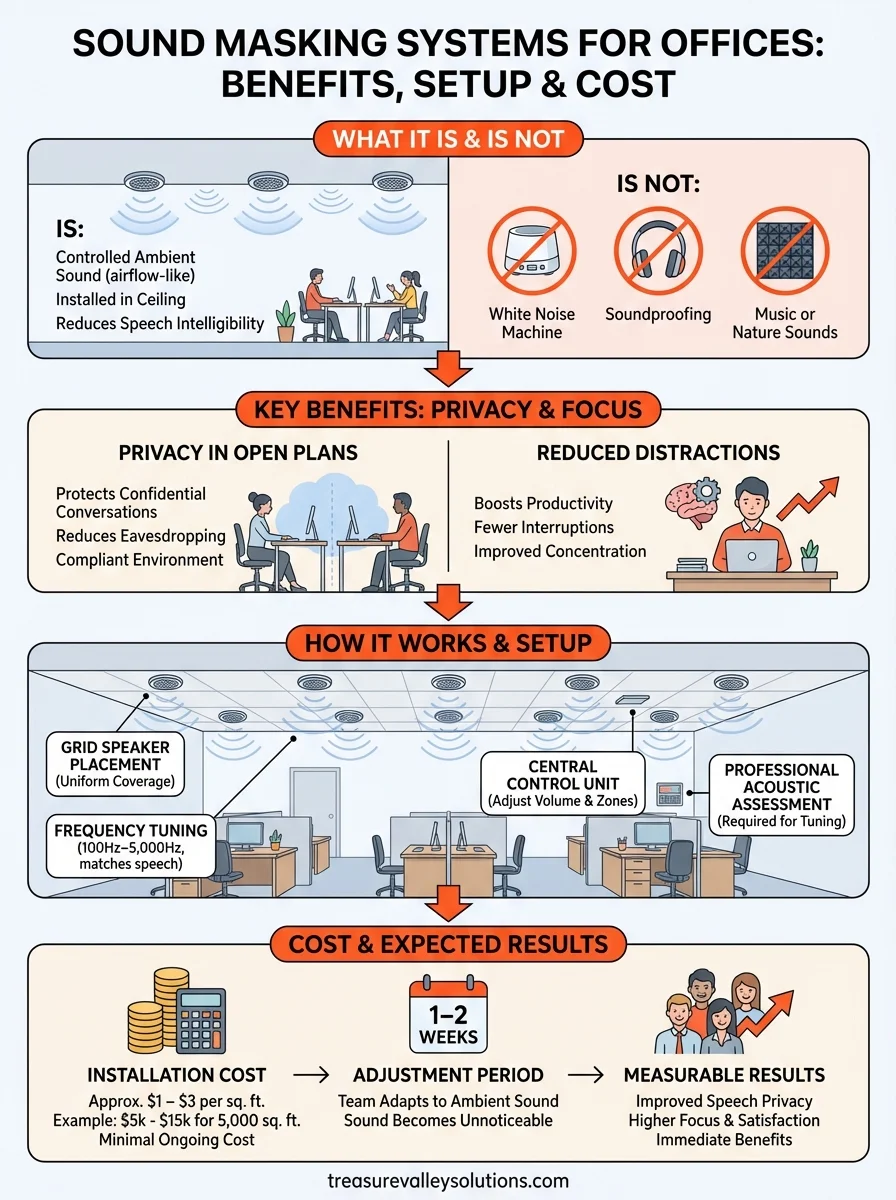
Sound masking adds controlled ambient sound to your workspace through speakers installed in or above the ceiling. This engineered background noise resembles airflow or gentle ventilation and sits at a frequency range specifically designed to reduce the intelligibility of human speech. You won't notice the masking sound itself after a few minutes, but you'll immediately notice that conversations happening fifteen feet away no longer pull your attention away from your work.
What sound masking actually does
The system emits a continuous, low-level sound that raises the baseline noise floor in your office without creating discomfort. When someone speaks across the room, their voice blends into this ambient layer rather than standing out sharply against silence. Your brain receives fewer distracting audio cues because the difference between speech and background noise narrows. Sound masking systems for offices use specialized speakers that distribute this engineered sound evenly throughout your space, ensuring consistent coverage without dead zones or overly loud spots.
Sound masking doesn't eliminate noise; it makes unwanted noise less noticeable and less distracting by changing how your brain processes ambient sound.
What sound masking is not
Sound masking is not white noise from a desktop machine or a Bluetooth speaker playing nature sounds. Those approaches create uneven coverage, often sound artificial, and can introduce their own distractions. It's also not soundproofing or acoustic treatment that absorbs or blocks sound waves. Acoustic panels reduce echo and reverberation, while sound masking works by adding sound strategically. You won't confuse a properly tuned system with music, radio static, or the hum from old HVAC equipment. Professional systems use tunable frequencies calibrated to your specific office layout and ceiling height, not generic audio files on loop.
Why offices use sound masking for privacy and focus
Your office layout might encourage collaboration, but it also broadcasts every conversation to anyone within earshot. Open floor plans and cubicle farms create environments where confidential discussions about client matters, HR issues, or financial details become unintentional public announcements. Employees hesitate to take sensitive calls at their desks or lower their voices to whispers, which actually makes conversations more noticeable because your brain naturally strains to hear incomplete information.
Speech privacy in open floor plans
Sound masking systems for offices solve this problem by making speech less intelligible beyond a certain distance. When your team discusses proprietary information or conducts performance reviews, the masking sound prevents casual eavesdropping without forcing anyone into conference rooms for basic conversations. You maintain compliance with privacy regulations while giving employees the freedom to work at their desks. Clients and partners visiting your office gain confidence that their sensitive discussions remain confidential.
Reduced distractions boost productivity
Every time a nearby conversation pulls your attention away, you lose several minutes regaining focus on complex work. Masking systems cut these interruptions by making ambient speech blend into the background, which means your team spends less time mentally battling environmental noise and more time completing projects. Studies show that reducing acoustic distractions can improve concentration and reduce stress levels throughout the workday.
When speech becomes less distracting, employees report higher satisfaction with their workspace and better ability to handle detailed tasks.
How office sound masking systems work
Sound masking systems for offices rely on a network of small speakers installed above your ceiling tiles or mounted in the plenum space. These speakers emit engineered sound at frequencies between 100 Hz and 5,000 Hz, which matches the frequency range of human speech and makes conversations less distinct as they travel across your workspace. A central control unit manages the system, allowing your facilities team to adjust volume levels and frequency curves for different zones based on ceiling height, furniture layout, and ambient noise conditions.
Speaker placement and coverage
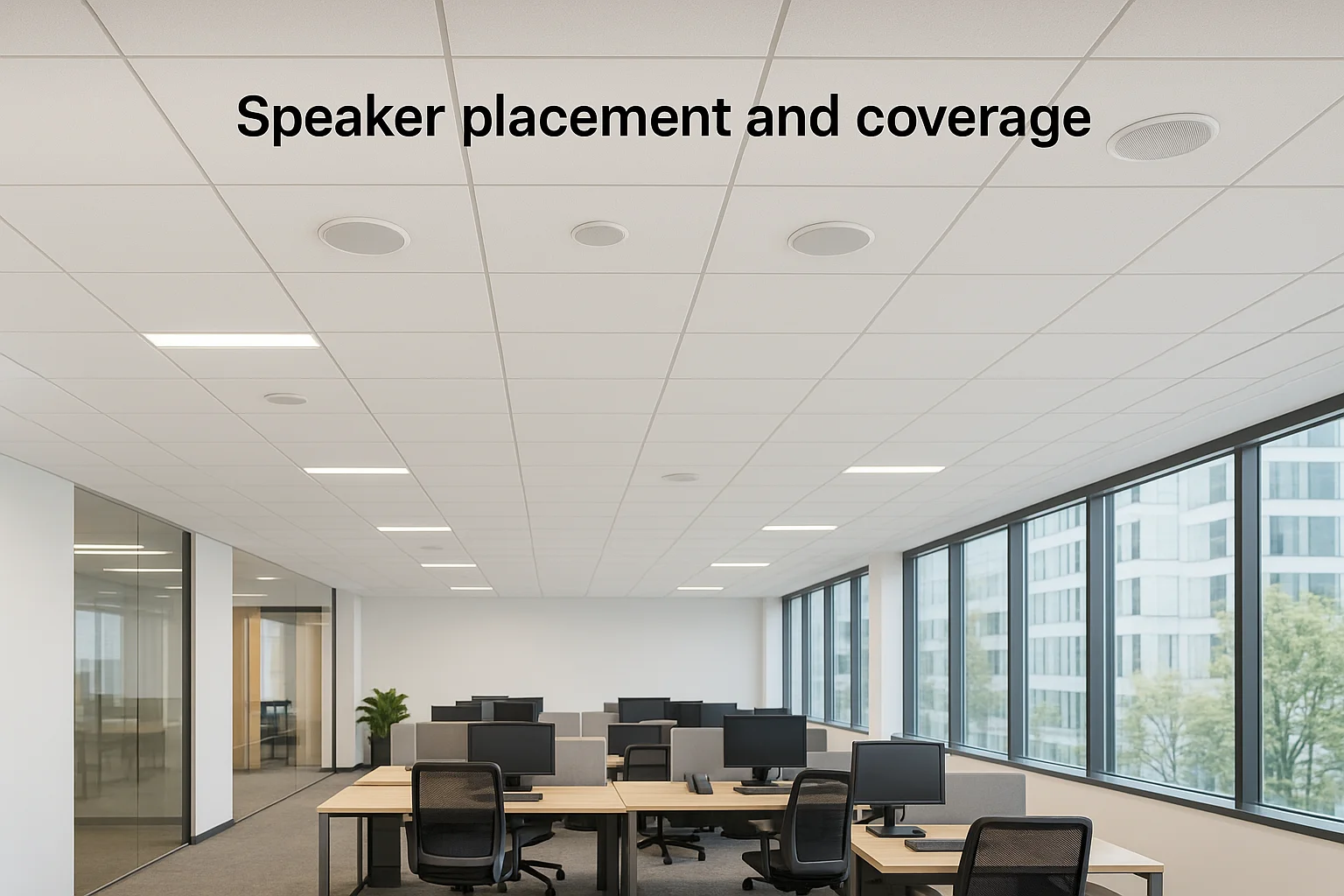
Your installer positions speakers in a grid pattern across the ceiling, typically spacing them 10 to 15 feet apart depending on your office layout and ceiling height. This arrangement creates uniform sound distribution without noticeable variations as employees move through your space. Corner offices, conference rooms, and open collaboration areas can each receive separate zone controls to account for different acoustic needs. The speakers themselves measure just a few inches in diameter and blend into standard drop ceilings.
Frequency tuning and volume control
Professional installers tune your system using specialized measurement equipment that captures sound levels at desk height throughout your office. They adjust the frequency curve to match your specific environment, ensuring the masking sound feels natural rather than mechanical or intrusive. Volume typically ranges from 42 to 48 decibels, roughly equivalent to a quiet library or the ambient hum in a modern office building.
Proper tuning makes the difference between a system that disappears into the background and one that becomes its own distraction.
How to plan and install an office system
Planning your installation starts with a detailed acoustic assessment of your workspace. Your installer measures ceiling heights, identifies different zones like open areas versus private offices, and documents existing noise sources such as HVAC systems or nearby traffic. This assessment determines how many speakers you need, where to position them, and what frequency tuning will work best for your specific environment.
Working with professional installers
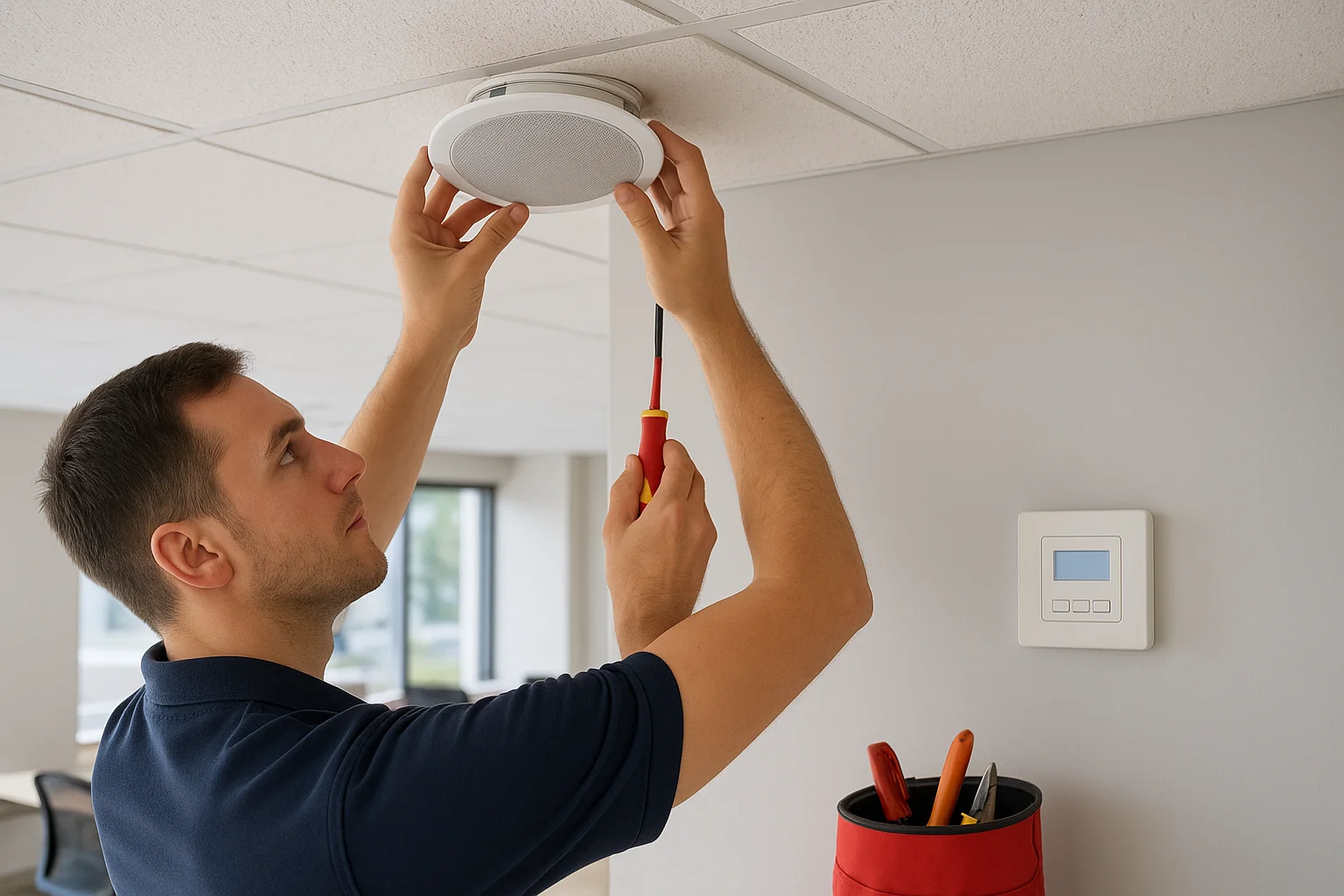
You should hire certified installers who specialize in commercial audio systems rather than attempting a DIY approach. Professional teams run low-voltage wiring through your ceiling plenum, mount speakers according to the grid pattern your acoustic assessment identified, and connect everything to a central controller. They complete the installation during off-hours to minimize disruption to your team and ensure all wiring meets local building codes.
Testing and tuning after installation
Your installer measures sound levels at multiple desk locations after mounting all speakers and uses specialized equipment to adjust frequency curves and volume for each zone. This tuning process takes several hours but ensures sound masking systems for offices perform as intended rather than creating new distractions. Most installers return after a few weeks to make final adjustments based on employee feedback.
Proper tuning requires professional equipment and expertise you won't find in standard audio installation services.
Cost, maintenance, and expected results
Sound masking systems for offices typically cost between $1 and $3 per square foot for professional installation, depending on your ceiling height, office layout, and the number of zones you need. A 5,000-square-foot office might invest $5,000 to $15,000 for a complete system including speakers, wiring, control units, and labor. Larger installations with complex zone controls or specialty requirements can exceed these estimates.
Installation costs and ongoing expenses
Your initial investment covers hardware, professional installation, and system tuning. Most systems require minimal maintenance beyond occasional speaker checks and software updates, which your facilities team can handle internally. You won't face significant ongoing costs unless you expand your office or reconfigure zones. Control units typically carry three to five year warranties covering defects and component failures.
What to expect after installation
Your team needs one to two weeks to adjust to the new ambient sound, after which most employees report they no longer notice the masking itself. You should see fewer distractions, improved concentration on detailed work, and better speech privacy in open areas within the first month. Confidential conversations stay confidential, and employees spend less time seeking quiet spaces for focused work.
Properly installed systems deliver results immediately, though employee satisfaction increases as everyone adjusts to the improved acoustic environment.
Next steps for a quieter office
Sound masking systems for offices transform workspaces where constant distractions and privacy concerns undermine productivity and employee satisfaction across your organization. Your team deserves an environment where they can focus on complex work without fighting background conversations, and your clients deserve confidence that sensitive discussions remain confidential. Professional installation ensures your system performs correctly from day one rather than creating new acoustic problems that require expensive corrections down the road.
Treasure Valley Solutions designs and installs commercial audio systems throughout the Boise and Meridian area, including sound masking solutions tailored to your specific office layout and acoustic requirements. We handle the entire process from initial acoustic assessment through final system tuning and employee training, ensuring your investment delivers measurable results in both speech privacy and workplace focus. Contact our team to schedule an acoustic assessment and discuss how sound masking can improve your office environment.
Need Expert Help?
Ready to implement these solutions in your own home or business?
Our Services
Whole-home audio and high-fidelity sound systems.

Cinematic experiences in the comfort of your home.
Serving the Treasure Valley
Local installation in your city