 (208) 991-3502
 Meridian, ID



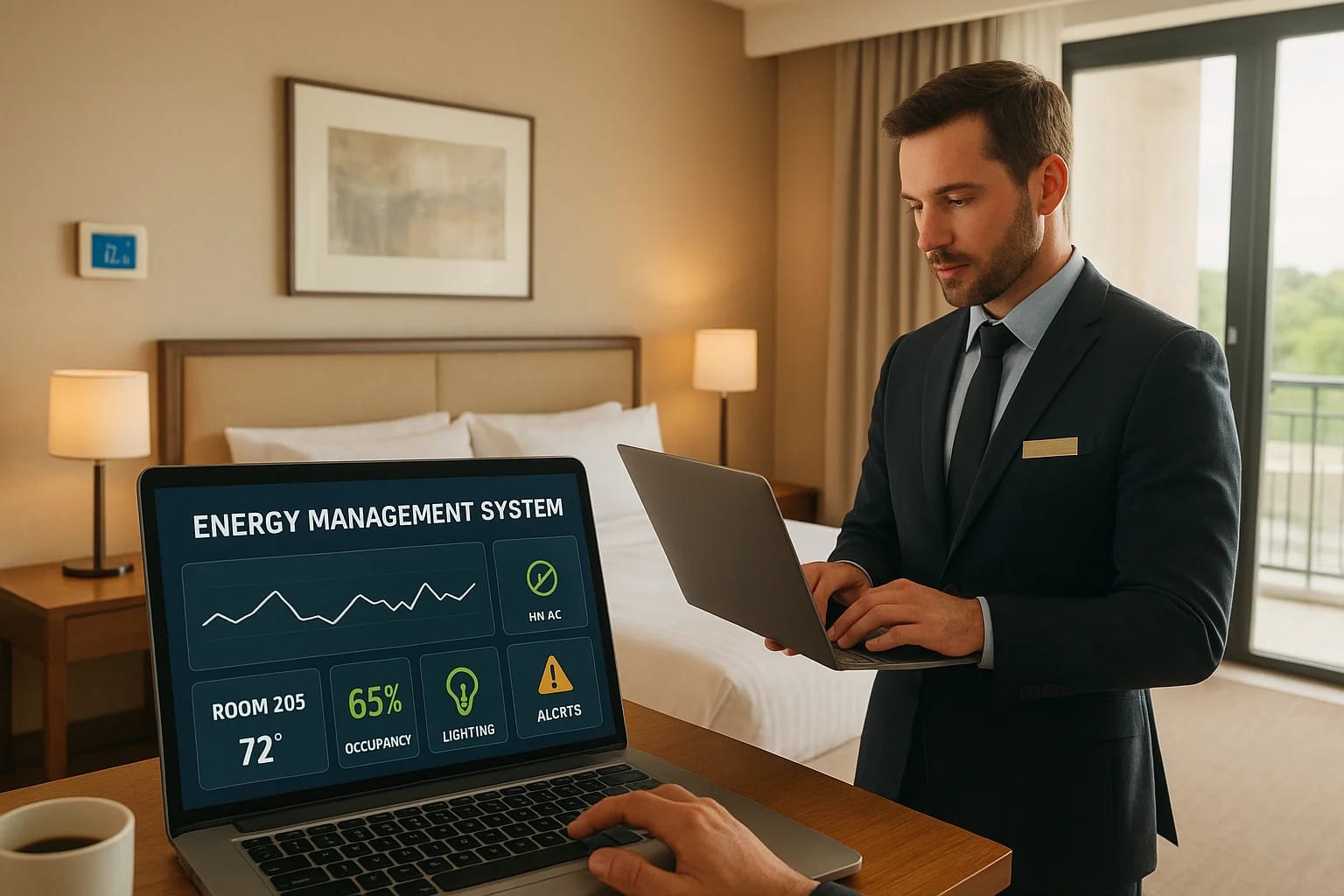

Running a hotel means managing countless operational costs, and energy bills often sit near the top of that list. Between HVAC systems running around the clock, lighting in hundreds of rooms, and gues...
Running a hotel means managing countless operational costs, and energy bills often sit near the top of that list. Between HVAC systems running around the clock, lighting in hundreds of rooms, and guest expectations for comfort, hotel energy management systems have become essential tools for properties looking to cut costs without sacrificing guest experience. These integrated technology solutions can reduce energy consumption by 20-45% while actually improving comfort levels.
Whether you're operating a boutique hotel in downtown Boise or managing a larger hospitality property, understanding how these systems work, and which options deliver real results, can make a significant difference in your bottom line. The right system does more than just lower utility bills; it creates a smarter building that responds to occupancy patterns, weather conditions, and guest preferences automatically.
At Treasure Valley Solutions, we design and install commercial automation and control systems for hospitality clients throughout Idaho's Treasure Valley. We've seen firsthand how the right energy management technology transforms hotel operations. In this guide, we'll break down how hotel energy management systems actually work, the key features to look for, and a comparison of top-rated solutions currently on the market.
Why hotels use energy management systems
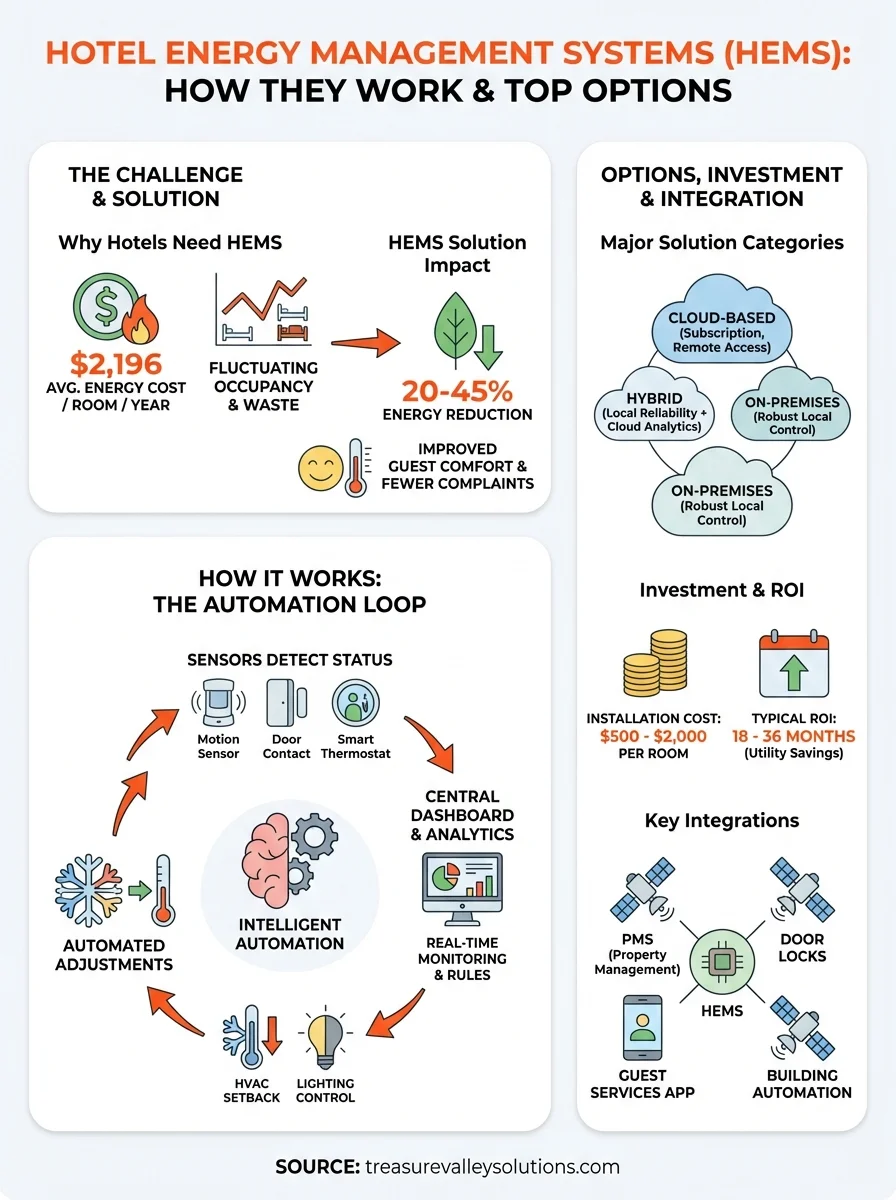
Hotels face unique energy challenges that make traditional building management approaches ineffective and expensive. Your property runs 24/7 operations with constantly fluctuating occupancy rates, meaning some rooms sit empty while others need full climate control. The hospitality industry spends an average of $2,196 per available room annually on energy costs, making it one of the largest controllable expenses after labor. Property managers who implement hotel energy management systems typically see those costs drop by 20% or more within the first year, translating to thousands of dollars saved monthly even for mid-sized properties.
Cost reduction and bottom-line impact
Energy waste happens constantly in hotels without intelligent controls. Your HVAC system might cool an empty room to 68 degrees for days after a guest checks out, or hallway lighting runs at full brightness during daylight hours when nobody needs it. These inefficiencies add up quickly across dozens or hundreds of rooms. Automated systems cut this waste by adjusting temperatures based on actual occupancy and setting appropriate lighting levels based on time of day and natural light availability.
The financial case becomes even stronger when you factor in demand charges from utilities. Many properties pay premium rates during peak usage hours, and smart load management helps you avoid those spikes by staggering equipment operation and reducing overall demand during expensive periods. This benefit alone can save larger hotels tens of thousands annually.
Guest expectations and competitive advantages
Modern travelers expect comfort without thinking about the technology behind it. You need rooms that reach the right temperature quickly when guests arrive, with lighting that responds to their needs. Poor climate control ranks among the top three guest complaints in hospitality surveys, directly affecting your online reviews and repeat bookings. Management systems prevent these issues by maintaining ideal conditions in occupied rooms while saving energy in vacant ones.
Properties with visible sustainability efforts also attract a growing segment of environmentally conscious travelers. Certification programs like LEED or Energy Star can increase your property value and appeal to corporate travel programs that prioritize green hotels. The technology helps you achieve these certifications while delivering measurable results you can promote in your marketing.
"Hotels that invest in energy management technology typically recover their initial investment within 18 to 36 months through utility savings alone."
Regulatory compliance and reporting requirements
Building codes continue tightening energy efficiency standards, and many jurisdictions now require commercial properties to track and report energy usage. Your hotel needs systems that can generate these reports automatically rather than requiring manual data collection. Compliance penalties for missing reporting deadlines or exceeding consumption limits can be substantial, making automated tracking essential for risk management.
Insurance companies increasingly offer premium discounts for properties with modern monitoring and control systems. These technologies reduce risks from equipment failures, water damage from frozen pipes, and fire hazards from overheated systems. Automated alerts let your maintenance team respond to problems before they become expensive emergencies or guest service issues.
How hotel energy management systems work
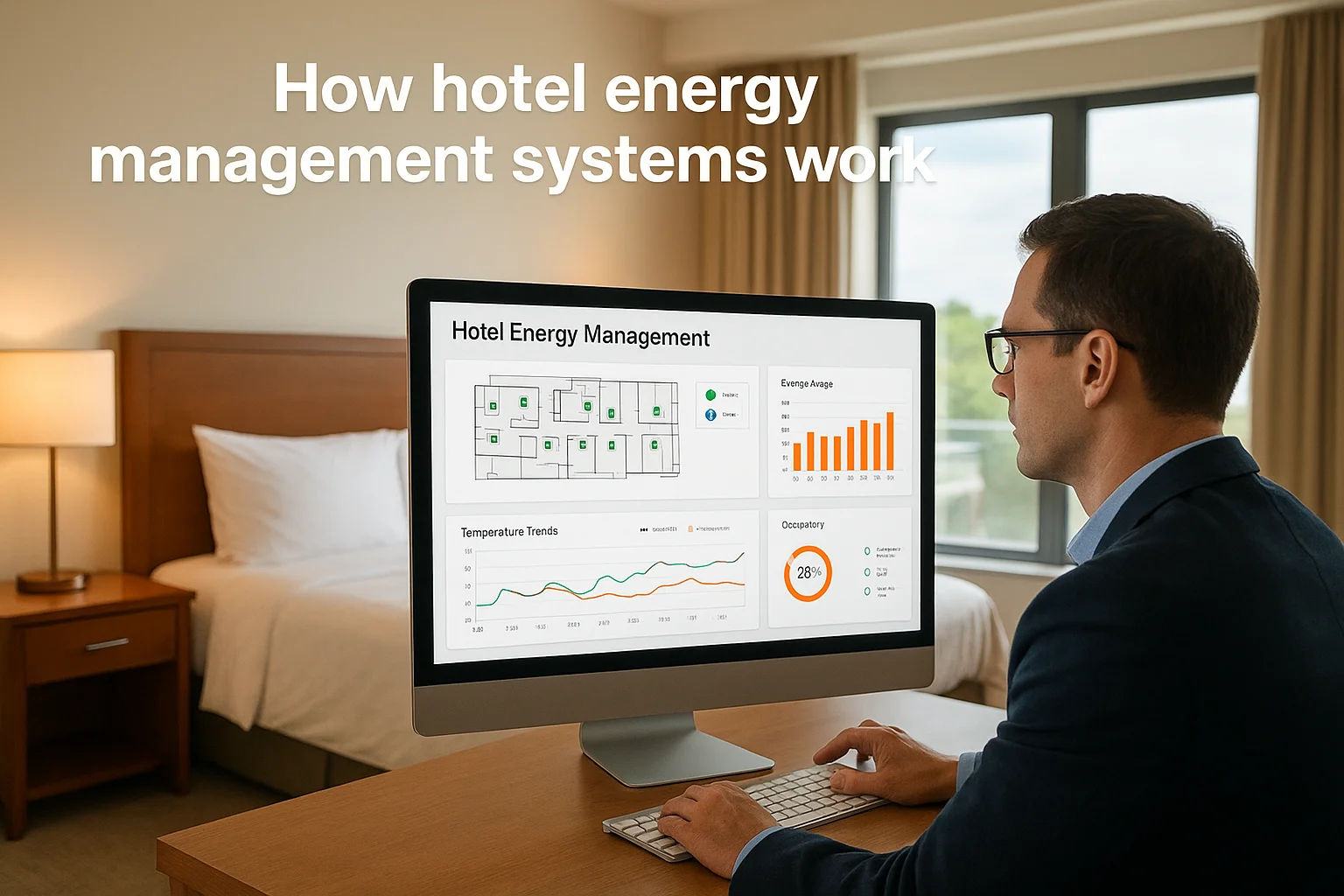
Hotel energy management systems connect your building's mechanical equipment, sensors, and room controls into a unified platform that makes decisions based on real-time data. The technology monitors occupancy status, temperature readings, time schedules, and external conditions to automatically adjust HVAC output, lighting levels, and other energy-consuming systems throughout your property. You get a central dashboard that shows exactly what's happening in every room and common area, with the ability to set rules that optimize energy use without requiring constant manual intervention.
Occupancy detection and automation triggers
Your system relies on multiple sensor types to determine whether guests actually occupy rooms. Motion sensors detect movement, door contacts register when someone enters or exits, and smart thermostats can identify temperature adjustment patterns that indicate presence. When these sensors confirm a room sits empty, the system automatically shifts to an energy-saving mode by raising cooling setpoints or lowering heating targets by several degrees.
The technology works on programmable logic that you customize for your property's needs. You might set occupied rooms to maintain 72 degrees while vacant rooms drift to 78 degrees in summer or 65 degrees in winter. Check-out triggers can put rooms into deep setback mode immediately after guests leave, preventing hours of unnecessary climate control. Advanced systems even pre-condition rooms before expected arrivals, ensuring comfort meets guests without wasting energy during extended vacancy periods.
"Smart sensors and automated triggers eliminate the largest source of energy waste in hotels: conditioning spaces when nobody occupies them."
Centralized monitoring and control
Property managers access the entire system through web-based interfaces or mobile apps that display real-time status updates. You see which rooms currently consume the most energy, identify equipment running inefficiently, and spot maintenance issues before they escalate into costly failures. Remote adjustments let you respond to guest requests or building issues without dispatching staff to individual rooms.
The platform collects historical data that reveals usage patterns across days, weeks, and seasons. This analytics capability helps you make informed decisions about equipment upgrades, staffing schedules, and operational policies that drive additional savings over time.
Key components and must-have features
Effective hotel energy management systems combine multiple hardware and software elements that work together to optimize your property's performance. You need specific components installed throughout your building to achieve meaningful energy reductions while maintaining guest comfort. Understanding these core features helps you evaluate vendors and ensure your investment delivers the capabilities your property requires. The right combination of sensors, controllers, and software creates a system that pays for itself through utility savings and operational efficiency.
Smart thermostats and HVAC controls
Your HVAC equipment represents the largest energy consumer in any hotel, making intelligent thermostats essential for meaningful savings. These devices replace standard wall controls with connected units that receive commands from your central system and adjust temperatures based on occupancy status and scheduling rules. Advanced models include built-in sensors that detect when guests actually occupy rooms, eliminating the need for separate motion detectors in smaller installations.
Look for thermostats that support multiple setpoint modes including occupied, vacant, and maintenance temperatures. You should be able to enforce minimum and maximum temperature limits that prevent guests from setting extremes that waste energy or create service issues. The best units also provide local override capabilities so guests can adjust comfort levels temporarily without permanently changing your energy-saving settings.
Energy monitoring and analytics dashboards
Real-time visibility into consumption patterns across your property gives you the data needed to identify problems and measure improvement. Quality hotel energy management systems include software platforms that track energy usage by room, floor, equipment type, and time period. You get visual displays showing which areas consume the most power and how your property compares to baseline performance or industry benchmarks.
"Analytics dashboards transform raw energy data into actionable insights that drive continuous improvement in hotel operations."
Your system should generate automated reports for regulatory compliance and internal review. Historical data analysis reveals seasonal patterns, helps predict future consumption, and identifies equipment degradation before failures occur. Customizable alerts notify your maintenance team when systems operate outside normal parameters or when specific rooms exceed expected energy thresholds.
Costs, savings, and ROI expectations
Understanding the financial investment required for hotel energy management systems helps you build a realistic business case and secure approval from ownership or stakeholders. Your total costs depend on property size, existing infrastructure, and the feature complexity you select, but most hotels spend between $500 and $2,000 per room for complete installations. Smaller boutique properties might invest $25,000 to $50,000 for basic systems, while larger full-service hotels could spend $200,000 or more for comprehensive platforms with advanced analytics and integration capabilities.
Initial investment breakdown
Hardware expenses include smart thermostats, occupancy sensors, door contacts, network infrastructure, and central control equipment. You pay $150 to $400 per room for quality thermostats and sensors, plus additional costs for common area controls and equipment monitoring devices. Installation labor typically adds 30% to 50% on top of hardware prices, though properties with existing network cabling and modern HVAC systems face lower installation costs than those requiring infrastructure upgrades.
Software licensing and professional services represent the other major cost component. Most vendors charge annual subscription fees between $50 and $150 per room for cloud-based platforms that include updates, monitoring, and support. Properties that choose on-premises systems pay higher upfront software costs but avoid ongoing subscription expenses. Configuration and training services usually add $5,000 to $15,000 to your initial investment depending on system complexity and staff training needs.
Expected savings and payback periods
Hotels implementing comprehensive energy management systems reduce utility costs by 20% to 35% annually, with some properties achieving reductions exceeding 45% when combining controls with operational improvements. A 100-room property spending $150,000 yearly on energy typically saves $30,000 to $52,500 after system installation. These savings continue year after year, making the financial return extremely attractive compared to most capital improvements.
"Most hotel properties recover their complete energy management system investment within 18 to 36 months through utility savings alone."
Your actual payback period depends on local energy rates, climate conditions, and how aggressively you operated before installation. Properties in regions with high electricity costs or extreme weather conditions see faster returns. Additional benefits like reduced maintenance expenses, extended equipment life, and improved guest satisfaction add value beyond direct energy savings but prove harder to quantify precisely.
Top options and vendor comparison criteria
Selecting the right hotel energy management systems requires evaluating multiple vendors against specific performance criteria rather than choosing based solely on price or brand recognition. You face options ranging from integrated building automation platforms to specialized hospitality solutions, each offering different features, pricing models, and integration capabilities. Your property's size, existing infrastructure, and operational priorities determine which solution delivers the best combination of functionality and value for your specific situation.
Major solution categories
Three primary types of systems dominate the hotel energy management market. Cloud-based platforms offer subscription pricing with remote access and automatic updates but require reliable internet connectivity and create ongoing operating expenses. Traditional building automation systems provide robust control and local operation without internet dependence, though they cost more upfront and require on-site servers. Hybrid solutions combine local control with cloud analytics, giving you operational reliability plus remote management capabilities.
You also find vendors specializing exclusively in hospitality versus companies offering general commercial building solutions adapted for hotels. Purpose-built hospitality platforms typically include features like integration with property management systems, guest service workflows, and hotel-specific reporting that general solutions lack. Properties with unique requirements or existing building systems might prefer flexible platforms that customize easily over rigid hotel-specific products.
"The best hotel energy management system for your property balances immediate energy savings with long-term operational flexibility and integration capabilities."
Critical evaluation factors
Start your vendor comparison by confirming compatibility with your existing HVAC equipment, thermostats, and property management software. Systems requiring complete equipment replacement cost significantly more than solutions working with your current infrastructure. Request detailed integration specifications and ask vendors about properties with similar equipment configurations to yours.
Examine the vendor's installation process, training programs, and ongoing support options. You need partners who understand hospitality operations and respond quickly when issues affect guest experience. Check how vendors handle software updates, whether they charge for feature additions, and what support response times they guarantee in service agreements. Properties throughout Idaho's Treasure Valley benefit from working with local integrators who understand regional building codes and can provide responsive on-site service when technology issues arise.
How to plan installation and integrations
Planning your hotel energy management systems installation carefully prevents costly mistakes and minimizes disruption to your guests. You need a systematic approach that addresses infrastructure readiness, timeline coordination, and integration requirements before equipment arrives on site. Properties that rush installations often face extended downtime, compatibility issues, and performance problems that erase potential savings. Taking time upfront to assess your building's systems, create detailed integration plans, and coordinate with vendors pays dividends through smoother implementation and faster return on investment.
Pre-installation assessment steps
Start by documenting your current HVAC equipment, controls, and network infrastructure across your entire property. You need accurate counts of rooms, thermostats, HVAC zones, and existing automation systems to generate realistic project quotes. Schedule a site survey with potential vendors so they identify infrastructure gaps, wiring requirements, and compatibility issues specific to your building. Your electrical panels must have adequate capacity for new devices, and network switches need sufficient ports and bandwidth to handle connected controls.
Create a phased rollout plan if your property can't afford complete installation downtime. You might equip one floor at a time during low occupancy periods, allowing your maintenance team to learn the system gradually while keeping most rooms available. Coordinate installation timing with scheduled maintenance activities or planned renovations to maximize efficiency and minimize guest impact.
"Thorough pre-installation assessment reduces implementation surprises and keeps your hotel energy management systems project on schedule and within budget."
Integration planning and testing
Your system needs to communicate with property management software, door locks, and guest services platforms for maximum effectiveness. Request detailed integration specifications from your vendor showing exactly how data flows between systems and which APIs or protocols they support. Properties using major property management systems like Opera or Maestro typically find integration straightforward, while custom software requires additional development work.
Demand comprehensive testing before final acceptance. Your vendor should demonstrate that occupancy detection triggers temperature adjustments correctly, guest check-ins activate room conditioning on schedule, and reporting functions capture accurate consumption data. Testing reveals configuration errors and compatibility problems while technicians remain on site to fix issues immediately.
Where to go from here
You now understand how hotel energy management systems reduce costs, improve guest comfort, and deliver measurable returns on investment through intelligent automation. Your next step involves evaluating your property's specific needs and identifying which solution category best fits your operational goals and existing infrastructure. Schedule site assessments with vendors who demonstrate hospitality experience and can show you reference properties with similar configurations to yours.
Properties throughout Idaho's Treasure Valley benefit from working with local technology integration specialists who understand regional building requirements and provide responsive on-site support when issues arise. At Treasure Valley Solutions, we design and install commercial automation and control systems for hospitality properties, including comprehensive energy management solutions tailored to your building's infrastructure and operational workflows. Contact our team to discuss how smart technology can reduce your energy costs while enhancing guest experiences at your property.
Need Expert Help?
Ready to implement these solutions in your own home or business?
Our Services
Whole-home audio and high-fidelity sound systems.
Expert TV Mounting Treasure Valley Homeowners & Businesses Trust

Intelligent lighting control and automation.
Serving the Treasure Valley
Local installation in your city