 (208) 991-3502
 Meridian, ID






 January 2, 2026
Installing a TV over a fireplace? Proper outlet placement is critical. Learn how offset outlets, clear center bays, and correct height prevent costly mistakes.
Mounting a TV over a fireplace has become a timeless design choice in both new construction and remodels. When it’s done correctly, the result is clean, balanced, and built to last. When it’s done wrong, it leads to failed inspections, blocked mounts, exposed wiring, overheating equipment, and expensive rework.
The biggest mistakes we see don’t come from the TV mount itself—they come from poor outlet placement during rough-in.
This guide explains exactly how outlets should be installed over a fireplace, based on real-world mounting requirements, standard stud layouts, and long-term serviceability—not guesswork.
Why Fireplace TV Outlet Placement Is Different
A fireplace wall is not a standard wall.
It introduces:
Heat considerations
Mantel clearance rules
Masonry or stone substrates
Limited stud access
Tight tolerances for flush TV mounting
Because of this, outlet placement needs to be intentional—not “close enough.”
Incorrect placement can:
Block recessed or in-wall TV mounts
Prevent the TV from sitting flush
Force surface-mounted raceways
Violate manufacturer heat ratings
Fail electrical or building inspections
Most of these issues are preventable with one simple layout decision.
The Most Important Rule: Keep the Center Stud Bay Clear
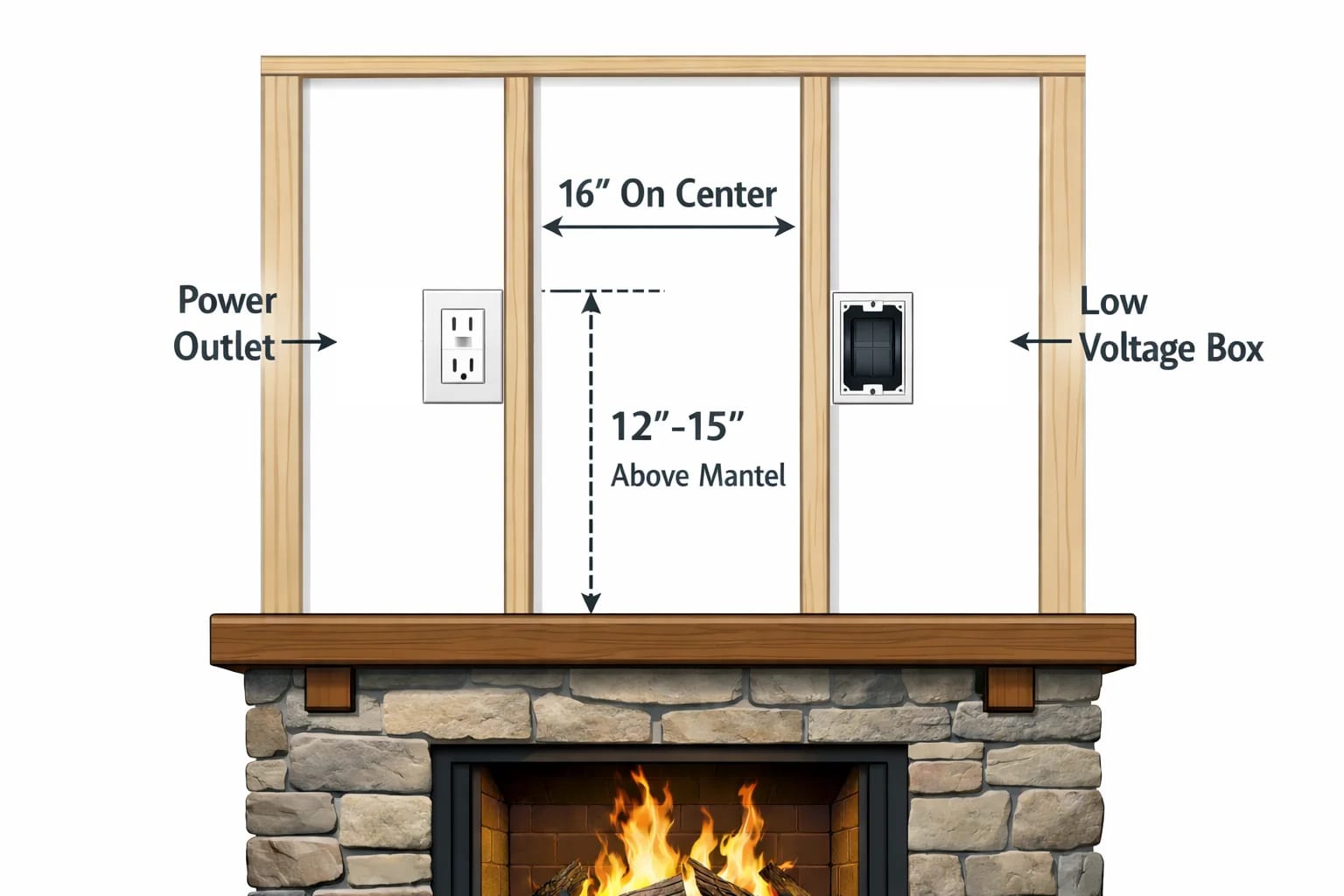
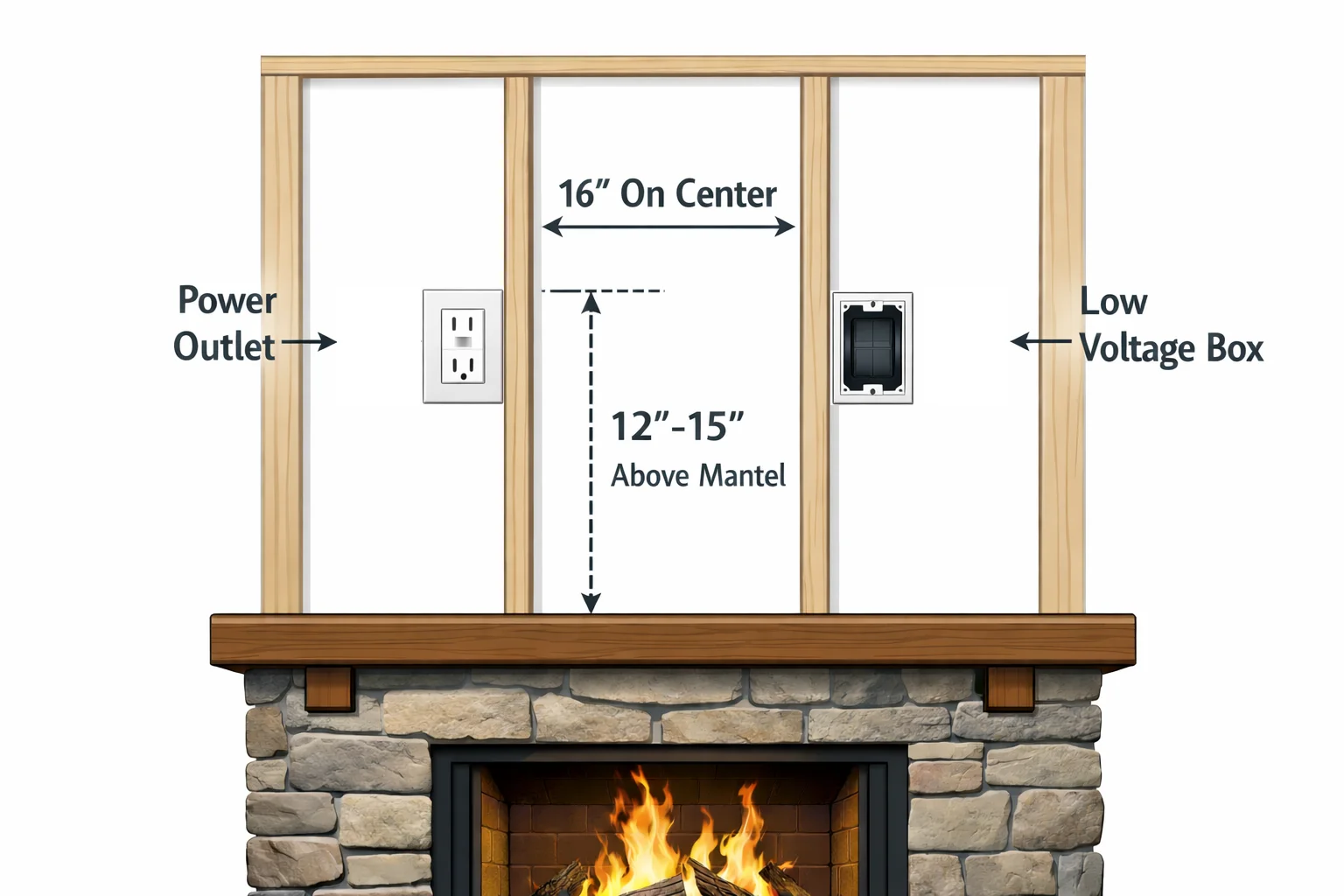
If a TV may ever be installed over a fireplace, the center 16” on-center stud bay must remain completely open.
This center bay should be:
Centered directly over the fireplace
Free of electrical boxes
Free of low-voltage rings
Reserved for the TV mount or recessed enclosure
Why This Matters
Most quality TV mounts—including recessed and in-wall mounts—are designed to fit inside a standard 16” on-center stud cavity.
If you place an outlet in the center:
❌ Recessed mounts won’t fit
❌ Mounting plates collide with electrical boxes
❌ The TV can’t sit flush
❌ The install becomes custom, costly, or impossible
Leaving the center bay open preserves compatibility, flexibility, and future upgrades.
Where the Outlets Should Go (Exact Placement)
Instead of placing outlets in the center, they should be offset to the adjacent studs.
Recommended Layout
🔌 Power outlet
Mounted to the first stud to the LEFT of center
Box physically attached to the stud (not floating)
Recessed-style outlet recommended
🔧 Low-voltage box
Mounted to the first stud to the RIGHT of center
Box physically attached to the stud
Used for HDMI, Ethernet, audio, or control wiring
Recessed-style outlet recommended
This layout:
Keeps the center bay clear
Allows recessed TV mounts to fit cleanly
Prevents conflicts with mounting hardware
Looks clean behind the TV once installed
Vertical Placement: 12–15 Inches Above the Mantel
Outlet height matters just as much as horizontal placement.
Vertical Rule of Thumb
Both the power outlet and low-voltage box should be installed:
➡️ 12 to 15 inches ABOVE the top of the mantel (vertical measurement)
This spacing:
Keeps outlets safely above rising heat
Aligns with most TV mounting heights
Allows room for mantel deflection
Works across a wide range of TV sizes
Always verify:
Fireplace manufacturer specs
TV manufacturer heat tolerances
Local code requirements
But in most residential installs, 12–15 inches above the mantel is the practical sweet spot.
Use Recessed Boxes—Not Standard Outlets
A standard electrical box behind a wall-mounted TV often causes:
The plug to push the TV forward
The mount to sit unevenly
Visible gaps or tilt
Best Practice
Use recessed electrical boxes for power
Use recessed low-voltage brackets for signal wiring
This allows:
Flush TV mounting
Hidden cords
Reduced strain on connectors
A clean, professional finish
If the TV can’t sit flat, something upstream was installed wrong.
Don’t Forget Low-Voltage Wiring
Power alone isn’t enough.
Any fireplace TV install should also plan for:
HDMI (with future upgrades in mind)
Ethernet (far more reliable than Wi-Fi for streaming)
Audio wiring (soundbars or surround systems)
Control wiring (IR, automation, smart home)
Running these after stone, brick, or drywall is finished is:
Messy
Expensive
Often avoided altogether
Planning them during rough-in is old-school wisdom—and it still wins every time.
Heat: The Silent Problem Behind Fireplace TVs
Even when outlets are placed “correctly,” heat can still be an issue.
Consider:
Gas vs wood-burning fireplaces
Mantel depth and deflection
Stone or tile heat retention
TV manufacturer heat ratings
A simple test:
If you can’t comfortably hold your hand where the TV will sit while the fireplace is running, it’s too hot.
Outlet placement alone won’t solve that—but poor placement will make it worse.
Builder & Remodeler Guidance: Make This the Standard
For builders and remodelers, this layout should be treated as default best practice, not a special request.
Standardizing This Layout:
Reduces change orders
Prevents failed inspections
Keeps electricians and AV teams aligned
Delivers better results for homeowners
Leaving the center bay open and offsetting outlets is a small rough-in choice that prevents big finish-stage problems.
Why DIY Fireplace TV Installs Often Fail
Fireplace walls are where DIY installs most often go sideways.
Common mistakes include:
Centered outlets blocking mounts
Extension cords or power strips (not allowed)
Ignoring heat exposure
No low-voltage planning
Mounting too high just to “clear” the fireplace
A fireplace wall is one place where professional planning pays for itself.
The Treasure Valley Solutions Standard
At Treasure Valley Solutions, every fireplace TV install is designed to be:
🔒 Code-compliant
📐 Properly spaced and centered
🔧 Compatible with recessed mounts
🔥 Conscious of heat and clearance
🧼 Clean, hidden, and future-ready
Whether we’re working with homeowners, builders, or remodelers, we design these walls to work today and years from now.
Thinking About Mounting a TV Over Your Fireplace?
Before outlets are placed—or before you discover they’re in the wrong spot—it’s worth getting a second set of eyes on the plan.
A short consultation can prevent:
Rework
Inspection issues
Equipment damage
Compromised aesthetics
Good infrastructure disappears. Bad infrastructure never does.
Need Expert Help?
Ready to implement these solutions in your own home or business?