 (208) 991-3502
 Meridian, ID



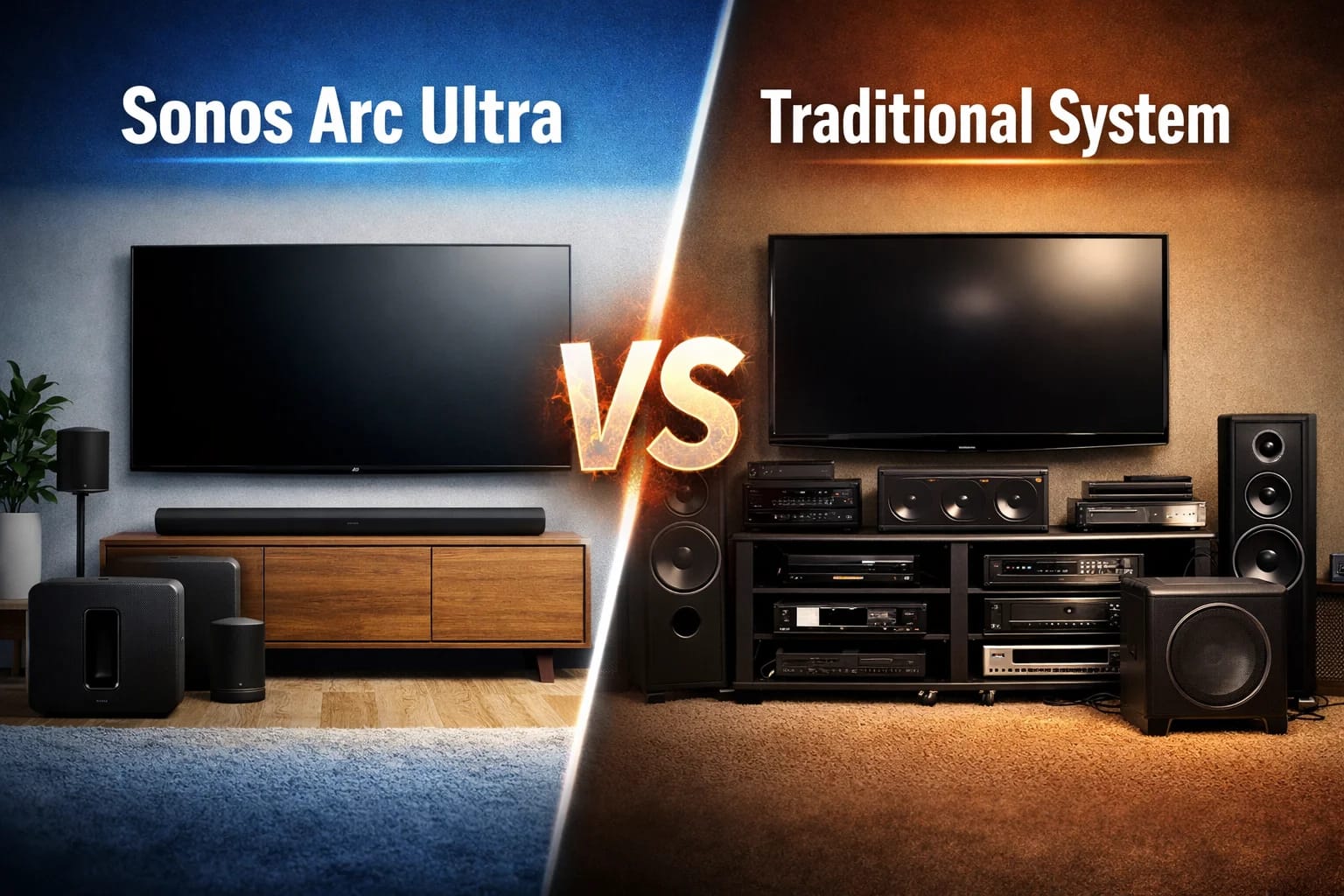

Learn the difference between a Sonos Arc Ultra home theater and a traditional receiver-based system so you can choose the right setup for your home.
Two Different Ways to Build a Home Theater
Home theater systems have changed a lot over the years.
In the past, most systems required a large AV receiver, several wired speakers, and a complex setup.
Today, many homeowners choose a simpler option. A Sonos Arc Ultra home theater delivers immersive sound with far less equipment.
Both systems can sound great. The difference is how they work and how easy they are to live with.
Understanding these differences can help you decide which system fits your home best.
What a Traditional Home Theater System Looks Like
A traditional home theater system usually includes several components.
Most systems have:
An AV receiver
Five to nine wired speakers
One or more subwoofers
Speaker wire running through the room
The receiver acts as the brain of the system. It powers the speakers and controls the audio settings.
These systems can sound excellent. But they often require careful setup and a lot of wiring.
Many homeowners also need a cabinet or equipment rack to hold the receiver and other devices.
How a Sonos Arc Ultra System Works
A Sonos Arc Ultra home theater takes a different approach.
Instead of using a receiver, the soundbar acts as the main audio system.
Additional speakers connect wirelessly to create surround sound.
A typical system may include:
Sonos Arc Ultra soundbar
Sonos Subwoofer
Sonos surround speakers
The speakers communicate through the home network. This removes the need for long speaker wires running across the room.
The system also installs much faster than a traditional system.
Installation Differences
One of the biggest differences between these systems is installation.
Traditional systems require speaker wire to run to every speaker. This can involve cutting drywall or fishing wires through walls.
A Sonos system usually requires far less wiring.
The soundbar connects to the TV with one cable. Surround speakers connect wirelessly.
This makes Sonos systems easier to install in finished homes.
Professional installation still improves performance, but the process is much simpler.
Ease of Use
Traditional receivers offer many audio settings and adjustments.
For audio enthusiasts, that level of control can be appealing.
However, many homeowners find receivers confusing. Switching inputs, adjusting settings, and managing remotes can become frustrating.
Sonos systems focus on simplicity.
The system can be controlled with:
Your TV remote
The Sonos app
Voice assistants
AirPlay
This allows the system to stay easy for the whole family to use.
Sound Performance
Both systems can deliver impressive sound.
Traditional systems can support very large speaker setups. This makes them popular for dedicated theater rooms.
Sonos systems focus on balanced sound for living spaces.
Modern Sonos soundbars use advanced audio processing to create wide surround effects and clear dialogue.
When paired with surround speakers and a subwoofer, the system produces immersive sound that works well for movies, sports, and music.
For many homes, the difference in sound quality is smaller than people expect.
Design and Appearance
Appearance matters in many living rooms.
Traditional systems often require several speakers placed around the room.
While some people enjoy that look, others prefer a cleaner space.
A Sonos system keeps the room simple.
The soundbar sits under the TV. Surround speakers are compact. The subwoofer can hide beside furniture.
The result is a home theater that blends into the room instead of dominating it.
Expandability
Both systems can expand over time.
Traditional systems allow additional speakers and equipment upgrades.
Sonos systems offer a different kind of flexibility.
You can add speakers in other rooms and create a whole-home audio system.
Music can play throughout the house while still supporting a full home theater in the living room.
This makes Sonos appealing for homeowners who want audio beyond just one room.
Which System Is Right for You?
Both options have strengths.
A traditional system may be best for:
Dedicated theater rooms
Large speaker setups
Audio enthusiasts who want deep customization
A Sonos Arc Ultra system may be better for:
Living room home theaters
Clean design with minimal equipment
Simple daily use
Whole-home audio expansion
For many homes, the simplicity and performance of Sonos make it a great choice.
The Bottom Line
Home theater systems no longer need racks of equipment and complex wiring.
A Sonos Arc Ultra home theater can deliver powerful surround sound while staying simple and clean.
For homeowners who want great sound without the complexity, it offers a modern approach to home theater.
Need Expert Help?
Ready to implement these solutions in your own home or business?
Our Services

Cinematic experiences in the comfort of your home.

Expert TV Mounting Treasure Valley Homeowners & Businesses Trust

Whole-home audio and high-fidelity sound systems.
Serving the Treasure Valley
Local installation in your city