 (208) 991-3502
 Meridian, ID



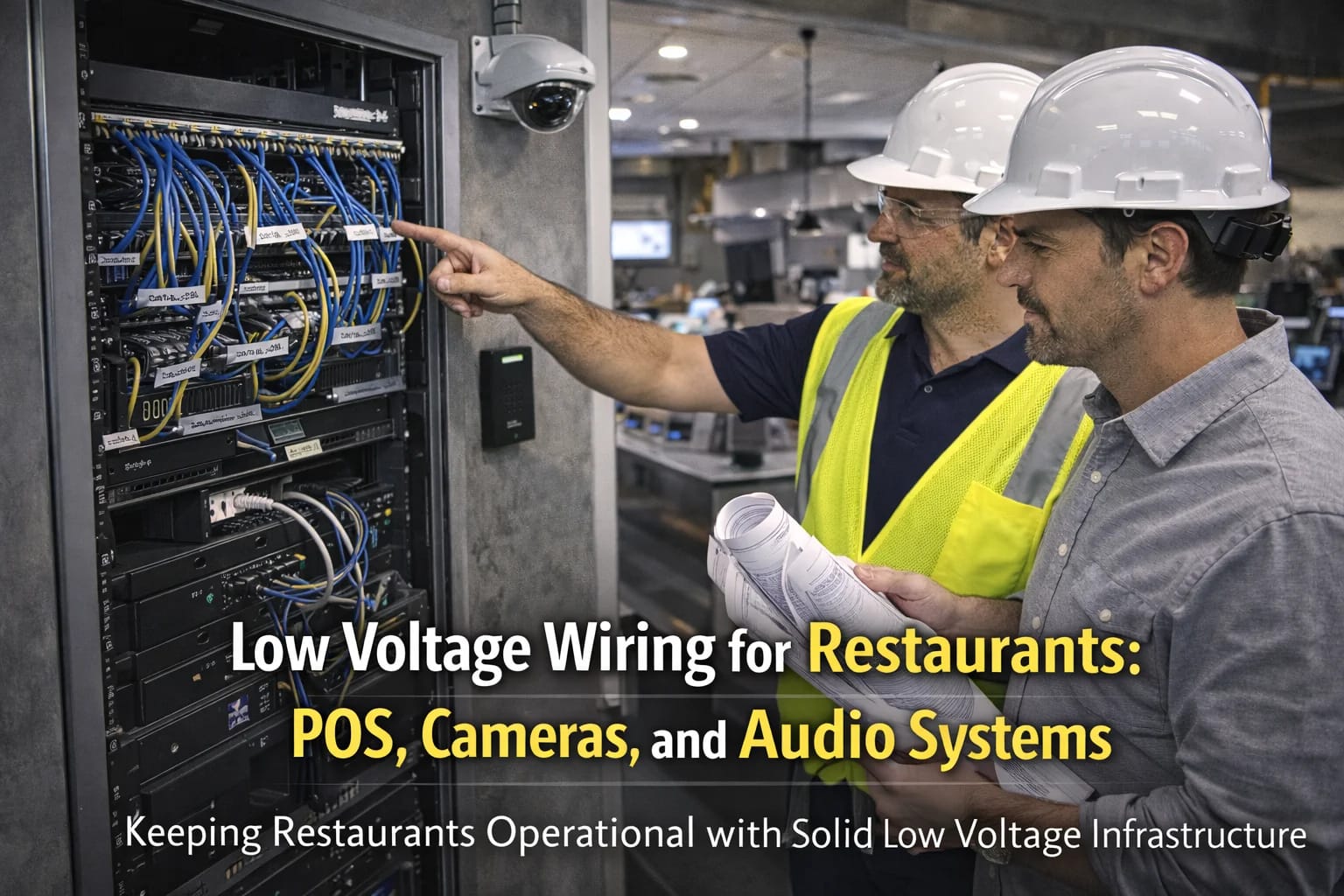

Restaurants rely on low-voltage systems to stay operational, secure, and profitable. This article explains how low-voltage wiring supports POS networks, security cameras, and audio systems—and why poor planning causes outages and rework. Written for general contractors and electricians working on restaurant builds.
Why Restaurants Are a High-Risk Environment for Low Voltage
Restaurants are fast-paced environments where downtime costs money immediately.
When POS systems go offline, orders stop. When cameras fail, security gaps appear. When audio systems don’t work, customer experience suffers.
All of these systems depend on low-voltage wiring that must perform reliably under challenging conditions.
POS Systems Depend on Network Stability
Modern restaurant POS systems rely on constant network connectivity.
Registers, handheld devices, kitchen displays, and payment terminals all depend on low-voltage infrastructure. Poor cabling, overloaded networks, or missing redundancy can bring operations to a halt.
Planning network pathways and capacity early helps prevent outages during peak hours.
Security Cameras and Access Control in Restaurants
Restaurants face unique security challenges.
Cash handling, employee access, delivery doors, and public spaces all require monitoring. Cameras and access control systems often rely on PoE and centralized network equipment.
Low-voltage planning must account for camera coverage, cable protection, and reliable power delivery.
Audio Systems Shape the Dining Experience
Background music and paging systems are part of the restaurant experience.
Poorly planned audio wiring leads to uneven sound, interference, or system failures. Speaker placement, cable routing, and control access must be considered during construction—not after opening day.
Low-voltage wiring plays a key role in consistent audio performance.
Kitchens Create Harsh Conditions for Cabling
Heat, grease, moisture, and cleaning chemicals create tough conditions for low-voltage systems.
Cabling near kitchens must be routed carefully, protected properly, and kept accessible for service. Ignoring these conditions shortens system life and increases maintenance calls.
Why Early Planning Matters More in Restaurants
Restaurant projects often move fast and open on tight timelines.
Late changes to low-voltage systems cause delays, failed inspections, or rushed installs. Early coordination allows pathways, device locations, and network rooms to be set before finishes go in.
That planning protects schedules and opening dates.
Coordination Between Trades Is Critical
Restaurants pack a lot of systems into small spaces.
Low voltage must share ceilings and walls with HVAC, fire protection, lighting, and plumbing. Without coordination, access is lost and rework follows.
Early collaboration keeps systems organized and serviceable.
The GC’s Role in Restaurant Low Voltage Success
General contractors help restaurant projects succeed by ensuring low voltage is part of early design and scheduling discussions.
Clear expectations reduce last-minute changes and protect turnover timelines.
Final Takeaway
Restaurants rely on low-voltage systems every minute they are open.
When POS, cameras, and audio systems are planned early, restaurants operate smoothly. When they are not, problems appear fast and often.
For restaurant projects, low voltage planning is business-critical.
Compare your options
Your next step
Compare Commercial Camera PlanningReady for professional help? Request an estimateOur Services
Explore whole-home audio, commercial sound, Sonos setup, and surround sound installation in the Treasure Valley.

Home theater design and installation planned around your room, viewing goals, and equipment scope.
High-definition surveillance for peace of mind.
Comprehensive security solutions for home and business.
Serving the Treasure Valley
Local installation in your city