 (208) 991-3502
 Meridian, ID




When you're ready to upgrade your lighting to smart control, one question comes up fast: smart bulbs vs smart switches, which one actually makes sense for your home? Both options promise convenience a...
When you're ready to upgrade your lighting to smart control, one question comes up fast: smart bulbs vs smart switches, which one actually makes sense for your home? Both options promise convenience and automation, but they work differently, cost differently, and fit different situations entirely.
The answer isn't the same for everyone. Smart bulbs give you color options and individual bulb control, while smart switches replace your existing wall switches and work with whatever bulbs you already own. Each approach has real trade-offs in terms of upfront cost, installation complexity, and long-term usability. Choosing the wrong one can mean wasted money or a frustrating setup that doesn't match how you actually live.
This guide breaks down the pros, cons, costs, and installation requirements of both options so you can make a confident decision. At Treasure Valley Solutions, we design and install smart lighting systems throughout the Boise area every day, so we've seen what works in real homes and what causes headaches. By the end, you'll know exactly which solution fits your space, your budget, and your daily routine.
Why the smart bulbs vs smart switches choice matters
Your lighting setup isn't just about flipping switches anymore. When you commit to smart lighting, you're making a decision that affects your daily routine, your wallet, and how long your investment actually lasts. The wrong choice means you'll either replace bulbs constantly, deal with compatibility headaches, or wish you'd gone the other route after spending hundreds of dollars.
What happens when you pick the wrong approach
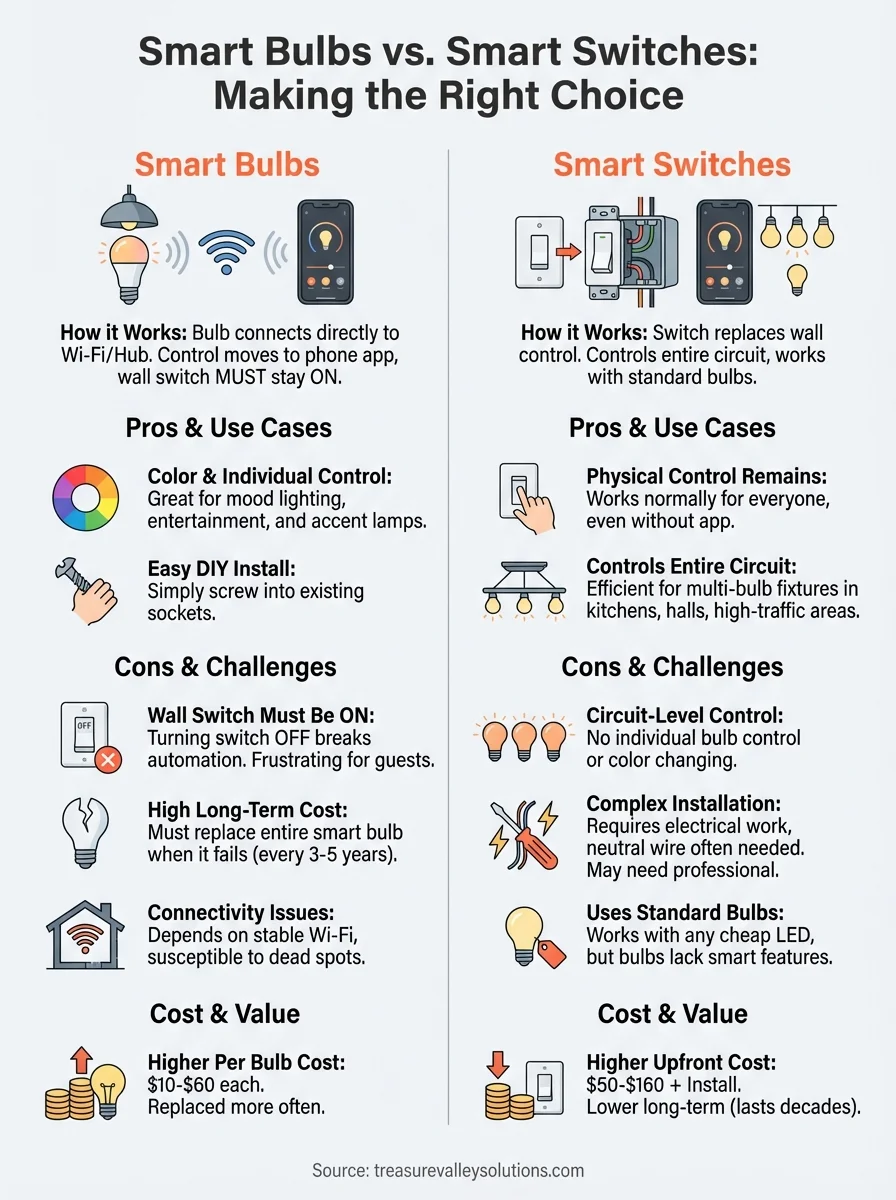
Smart bulbs require you to leave wall switches in the "on" position at all times, or they lose power and stop responding to your app or voice commands. If someone in your house flips that switch off out of habit, your automation stops working until you physically turn it back on. This creates daily frustration in homes where not everyone understands the system or where guests visit regularly.
Smart switches avoid this problem entirely because they replace the physical switch itself. You get smart control and traditional switching in one device, which means your family can use the lights normally without breaking your automations. But smart switches require proper wiring and installation, and they control entire circuits, not individual bulbs. If you want different colors or brightness levels in the same room, switches alone won't give you that flexibility.
The smart bulbs vs smart switches decision determines whether you're controlling individual lights or entire circuits, which changes everything about how your system works.
The commitment you're actually making
Most people don't realize they're locked into an ecosystem once they start buying smart bulbs. You can't easily mix brands if you want consistent control, and replacing every bulb in a room adds up fast. Smart switches, on the other hand, work with any standard bulb you install, which gives you more flexibility down the road if you want to change brands or upgrade to newer LED technology.
Your choice also determines who can install your system. Smart bulbs screw into existing sockets, so anyone can do it. Smart switches require turning off breakers, handling live wires, and understanding your home's electrical setup. If you're not comfortable with electrical work, you'll need a professional for switches, which adds to your upfront cost but creates a more permanent solution.
How smart bulbs and smart switches work
Understanding the fundamental difference between these two technologies helps you predict what will work in your home and what won't. Smart bulbs and smart switches both give you app control and automation, but they accomplish this through completely different methods that affect everything from installation to daily use.
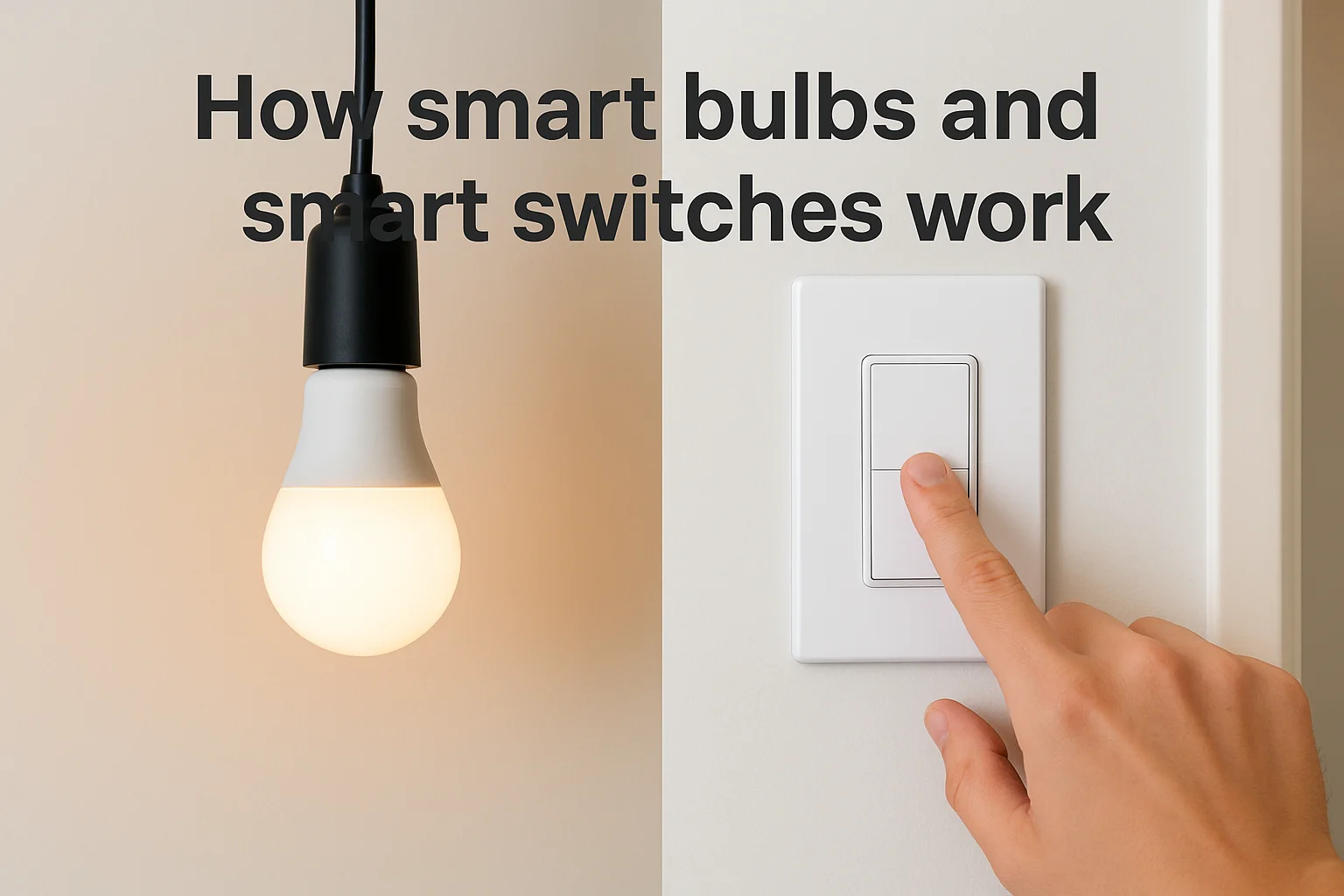
Smart bulbs connect directly to your network
Smart bulbs contain built-in wireless radios that communicate with your phone, hub, or voice assistant. You screw them into your existing light sockets just like regular bulbs, then connect them to your Wi-Fi network or a hub like Zigbee or Z-Wave. Each bulb acts as its own device with a unique address, which means you can control each one individually through an app.
The bulb itself handles all the smart functions, including dimming, color changes, and scheduling. This design gives you precise control over every light in a fixture, but it also means the bulb needs constant power. If someone flips the wall switch off, the bulb loses power and stops responding to digital commands until you restore electricity by turning the switch back on.
When you choose smart bulbs, you're moving control from the wall switch to your phone, which changes how everyone in your house interacts with lighting.
Smart switches replace your existing wall controls
Smart switches install directly into your electrical box where your current light switch sits. They intercept the power flowing to your lights and use wireless connectivity to receive commands from your phone or voice assistant. Unlike smart bulbs, the switch controls the entire circuit, so every light connected to that switch responds the same way.
Your existing bulbs stay in place and function normally. The switch itself becomes smart, which means you don't need special bulbs and family members can still use physical switching without breaking your automation. Installation requires basic electrical work since you're replacing the switch mechanism and connecting to your home's wiring.
Pros and cons you will actually notice day to day
The real test of any smart lighting system happens after installation, when you're living with your choices every single day. The smart bulbs vs smart switches debate becomes concrete when you see how your family actually uses the lights, whether guests can figure out your setup, and whether you're constantly fixing problems or enjoying genuine convenience.
Daily convenience factors
Smart bulbs give you precise control over individual lights, which means you can dim one lamp while keeping another bright, or create different color zones in the same room. This flexibility works great for mood lighting and entertainment spaces where you want dynamic scenes. The downside hits when someone flips the wall switch off by habit, killing power to your bulbs and forcing you to physically turn it back on before your app works again.
Smart switches eliminate the wall switch confusion entirely because they replace the physical switch itself. Your family and guests can use them normally without breaking your automation, and you still get app control and voice commands. The trade off is that every light on that circuit responds the same way, so you lose individual bulb control unless you install multiple switches or add smart bulbs into the mix.
Physical switches work with muscle memory that's hard to break, which makes smart switches the more reliable choice in homes where not everyone uses the app.
Flexibility and control limitations
Color changing and multiple brightness zones require smart bulbs specifically, since switches can't provide those features on their own. If you want your living room lights to shift through colors during movie night, bulbs are your only option. Switches give you on, off, and dimming, which covers most normal lighting needs without the complexity of managing individual bulb connections.
Costs, energy use, and long-term value
The smart bulbs vs smart switches decision hits your wallet differently depending on how many lights you're controlling and how long you plan to keep the system. Smart bulbs cost more per light initially, but switches require professional installation that adds to your upfront expense. Understanding these numbers helps you budget correctly and avoid surprises later.
Upfront investment breakdown
Smart bulbs typically run $10 to $60 each depending on features like color changing and brand quality. If you're outfitting a living room with six bulbs, you're looking at $60 to $360 just for that one space. Installation costs nothing because you screw them in yourself, but you'll need to buy a hub if your bulbs require one, adding another $50 to $100.
Smart switches cost $25 to $80 per switch for quality units, but one switch controls all the lights on that circuit. The same living room might need just one or two switches, bringing your hardware cost to $50 to $160. Professional installation adds $75 to $150 per switch if you're not comfortable with electrical work, which makes the upfront investment higher but eliminates ongoing bulb replacement costs.
Smart switches cost more upfront but work with standard bulbs forever, while smart bulbs require replacing the entire smart unit when they burn out.
Energy consumption and replacement cycles
Smart bulbs draw small amounts of standby power even when off because they maintain wireless connectivity. This phantom load typically adds $1 to $3 per year per bulb to your electricity bill. Smart switches consume similar standby power but control multiple bulbs, making them more efficient in multi-bulb fixtures.
Replacement cycles matter more than most people realize. Smart bulbs last 15,000 to 25,000 hours, which means you'll replace them every three to five years depending on usage. When they fail, you're buying another $10 to $60 smart bulb, not a $2 standard LED. Smart switches last decades and work with whatever inexpensive bulbs you choose, which means your long-term costs stay lower even after the higher installation expense.
Setup, wiring, and compatibility pitfalls to avoid
Installation complexity separates smart bulbs from smart switches more than any other factor. The smart bulbs vs smart switches debate often comes down to who can actually install your system and what mistakes will cost you time or money. Understanding common setup problems before you buy prevents frustration and helps you choose the option that matches your skill level and home's electrical configuration.
Smart bulb connection challenges
Smart bulbs require a stable wireless network throughout your home, which means dead spots and weak signals will cause control problems. You'll need to test your Wi-Fi coverage in every room before committing to bulbs, or invest in mesh networking equipment to eliminate gaps. Distance from your router matters more than manufacturers admit, and metal fixtures can block signals completely.
Hub compatibility creates another layer of complexity. Some bulbs need proprietary hubs, others work with standard protocols like Zigbee or Z-Wave, and budget options use Wi-Fi directly. You can't mix ecosystems easily, which means choosing one brand locks you in for that entire room or house. Bulbs that require frequent firmware updates add maintenance you probably didn't expect.
If your home has thick walls or multiple floors, smart bulbs may struggle with connectivity while smart switches work reliably because they're hardwired.
Smart switch installation requirements
Smart switches need a neutral wire in your electrical box, which many older homes lack. Without this wire, most modern smart switches won't function, forcing you to either run new wiring or buy specialized switches that cost significantly more. You'll need to check your boxes before ordering switches to avoid returns and delays.
How to choose the right mix for your home
The smart bulbs vs smart switches debate assumes you need to pick one solution for your entire house, but the best approach combines both based on how you actually use each space. Your bedroom needs different controls than your kitchen, and forcing one technology everywhere creates unnecessary compromises and costs. Strategic placement of bulbs and switches gives you the benefits of both without the downsides of committing fully to either.
Match your decision to actual use patterns
Smart switches work best in high-traffic areas where multiple people use the lights and physical switching matters most. Your kitchen, hallways, bathrooms, and entryways benefit from switches because guests and family members can operate them normally without breaking your automation. These spaces typically use standard white light anyway, so you're not giving up features you'd actually use.
Smart bulbs make sense in dedicated entertainment spaces and bedrooms where you want color options, individual control, and scene settings. Your living room during movie night, accent lighting in your office, or bedside lamps all benefit from bulb-level control that switches can't provide. These are also spaces where you control access more tightly, reducing the risk of someone flipping switches off by accident.
Install switches where convenience matters most and bulbs where customization creates real value, rather than forcing one solution everywhere.
Start with switches, add bulbs where needed
Replace your most-used wall switches first to establish reliable baseline control throughout your home. This gives you automation that works consistently while keeping costs manageable. Then add smart bulbs to specific fixtures where you want color, dimming zones, or special effects that justify the higher per-bulb investment.
Make a simple lighting plan
Start by walking through your home and listing every room where you want smart control. Write down how many switches and light fixtures each space has, then note whether you need basic on/off functionality or specific features like color changing or individual bulb control. This inventory shows you exactly where switches make sense and where bulbs add real value.
The smart bulbs vs smart switches decision becomes clearer when you see your actual needs written down. Prioritize your highest-traffic areas for switches first since they provide the most reliable daily operation. Then identify one or two spaces where bulbs would create experiences you'd actually use regularly, not just features that sound interesting.
If you're uncertain about wiring requirements or compatibility, or how to design a system that scales as your needs change, contact our team at Treasure Valley Solutions for a consultation. We design and install custom smart lighting throughout the Boise area based on how you actually live, not cookie-cutter solutions that create problems later.
Need Expert Help?
Ready to implement these solutions in your own home or business?
Our Services

Intelligent lighting control and automation.

Complete home automation and control.
Serving the Treasure Valley
Local installation in your city