 (208) 991-3502
 Meridian, ID



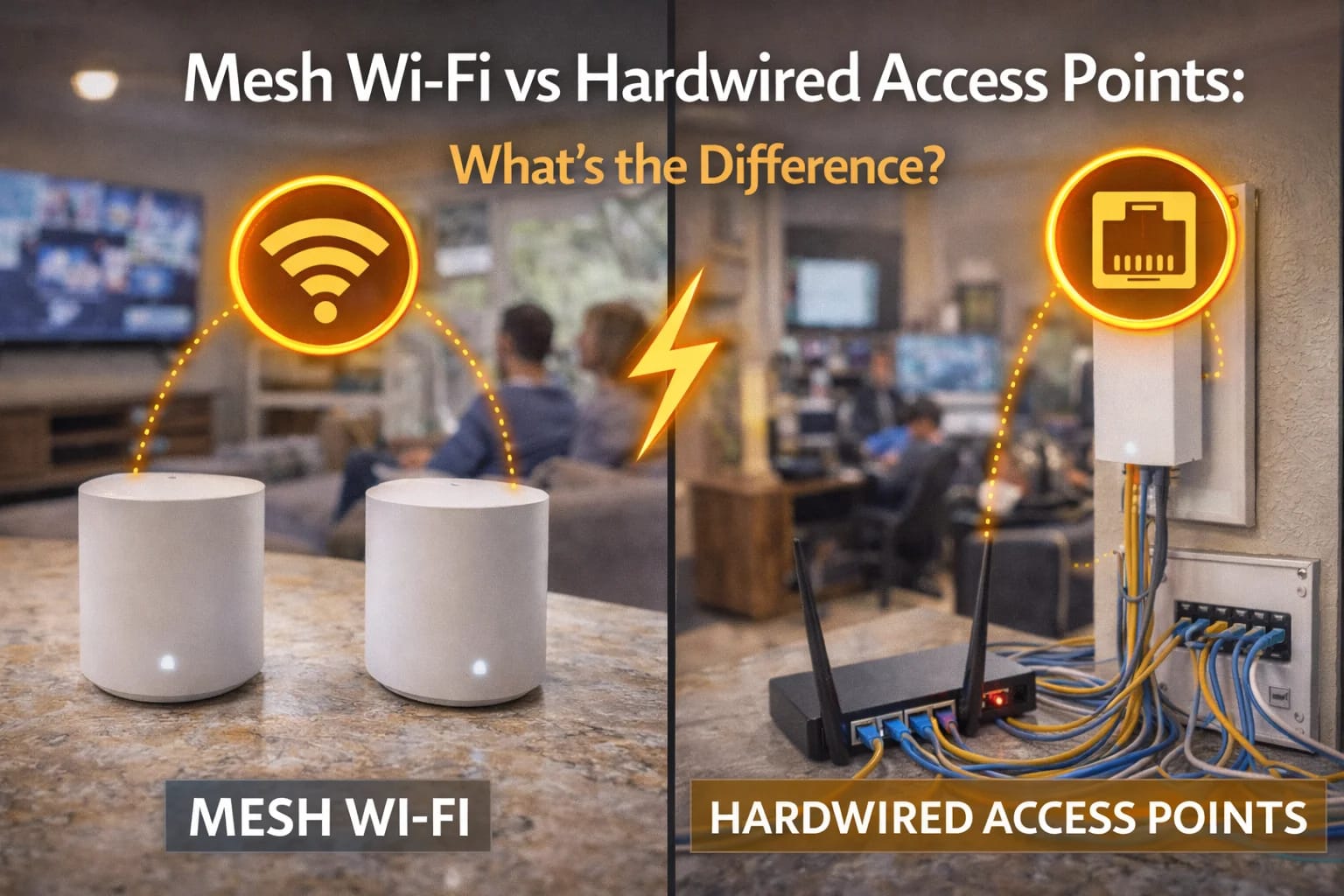

Mesh Wi-Fi and hardwired access points both improve coverage—but they work very differently. Learn which option delivers better reliability long term.
When Wi-Fi problems start showing up—dead zones, buffering, dropped connections—many homeowners are told the same thing:
“Just get a mesh Wi-Fi system.”
Sometimes that advice works. Sometimes it only helps a little. And sometimes it doesn’t solve the problem at all.
For homeowners in the Treasure Valley, understanding the difference between mesh Wi-Fi systems and hardwired access points is key to choosing a solution that actually fixes Wi-Fi issues instead of masking them.
This guide explains how each system works, where each makes sense, and why long-term reliability usually depends on more than just wireless hardware.
What a Mesh Wi-Fi System Actually Is
Mesh Wi-Fi systems use multiple wireless nodes placed around the home to extend coverage beyond what a single router can handle.
Each node communicates with the others to create a unified Wi-Fi network. Devices automatically connect to the strongest node as you move through the house.
Mesh systems are popular because:
They’re easy to install
They don’t require new wiring
They improve coverage quickly
For small to mid-sized homes with light to moderate usage, mesh Wi-Fi can be an effective upgrade from a single router.
The Limitation of Wireless Backhaul
The key limitation of most mesh systems is how the nodes communicate with each other.
In many mesh setups, nodes use wireless backhaul—meaning the same Wi-Fi signal that serves your devices is also used to pass data between nodes.
As network demand increases, this shared bandwidth becomes a bottleneck. Performance may look good at first, then degrade as more devices connect or usage increases.
This is why some homeowners notice that mesh systems help coverage but don’t fully resolve speed or reliability issues.
What Hardwired Access Points Do Differently
Hardwired access points also use multiple Wi-Fi devices throughout the home—but they’re connected using wired network cabling instead of wireless links.
Each access point has a direct, high-speed connection back to the network, allowing it to operate independently and at full capacity.
Hardwired access points excel at:
Consistent speed
Reliable connections
Supporting heavy device loads
Eliminating wireless bottlenecks
Because each access point is wired, performance doesn’t drop as more devices connect or as usage increases.
This approach relies heavily on proper low voltage wiring and structured cabling, concepts covered throughout
👉 https://treasurevalleysolutions.com/services/
Why Hardwired Access Points Scale Better
The biggest difference between mesh Wi-Fi and hardwired access points shows up over time.
As homes add:
More streaming devices
More work-from-home usage
More smart home technology
More security cameras
Mesh systems without wired backhaul often struggle to keep up. Hardwired access point systems scale naturally because each access point has its own dedicated connection.
This makes them the preferred choice in:
Larger homes
Multi-story homes
Smart homes
Homes with remote work needs
Installation Differences Matter
Mesh systems are designed for convenience. They’re typically plug-and-play and require minimal planning.
Hardwired access point systems require:
Network cabling
Strategic access point placement
Thoughtful design
While this adds upfront planning, it also delivers more predictable and reliable results—especially in homes where Wi-Fi performance is critical.
This planning mindset aligns with broader infrastructure strategies outlined in
👉 https://treasurevalleysolutions.com/solutions/homeowner-solutions/
New Construction vs Existing Homes
The right solution often depends on the home itself.
In new construction, hardwired access points are almost always the best choice. Wiring can be installed cleanly, access points can be placed optimally, and the system is ready for future growth.
In existing homes, mesh Wi-Fi may be a practical first step—especially if running new wiring isn’t feasible immediately. However, many existing homes can still support hardwired access points through strategic wiring upgrades.
The best approach balances performance goals with the realities of the home.
When Mesh Wi-Fi Makes Sense
Mesh Wi-Fi can be a good fit when:
The home is smaller or single-story
Device usage is moderate
Wiring upgrades aren’t practical
Convenience is the top priority
For many households, mesh systems are an improvement over a single router—but they’re not a cure-all.
When Hardwired Access Points Are the Better Choice
Hardwired access points are often the better solution when:
Wi-Fi reliability is critical
Multiple people work from home
Streaming and gaming happen simultaneously
Smart home devices are always connected
These systems deliver consistent performance that doesn’t degrade under load.
Frequently Asked Questions
Is mesh Wi-Fi bad?
No. It’s just limited by wireless backhaul.
Can mesh systems be hardwired?
Some can—and performance improves dramatically when they are.
Are hardwired access points expensive?
They’re most affordable during construction, but targeted upgrades are often worthwhile.
Do hardwired systems replace Wi-Fi?
No. They are Wi-Fi—they’re just supported by wiring.
Is professional design necessary?
Yes. Placement and design matter more than brand.
Choosing the Right Wi-Fi Solution
Mesh Wi-Fi and hardwired access points aren’t competing technologies—they’re tools designed for different situations.
For Treasure Valley homeowners who want the best long-term performance, reliability, and scalability, hardwired access points supported by proper network design consistently deliver better results.
The key isn’t buying more hardware—it’s choosing the right approach for how the home is actually used.
Need Expert Help?
Ready to implement these solutions in your own home or business?
Our Services

Complete home automation and control.

Intelligent lighting control and automation.
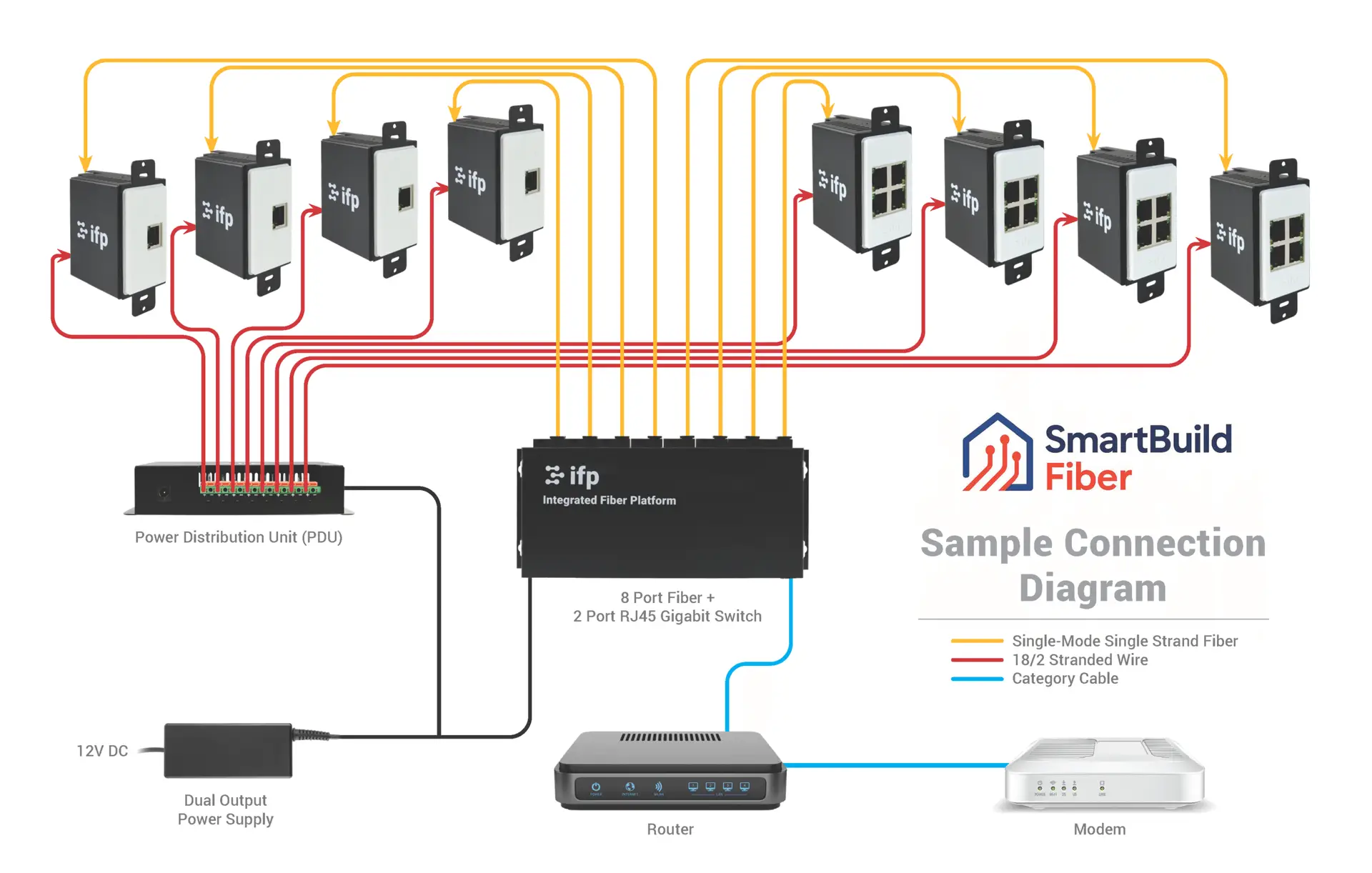
Future-proof fiber optic infrastructure.

Home theater design and installation planned around your room, viewing goals, and equipment scope.
Serving the Treasure Valley
Local installation in your city