 (208) 991-3502
 Meridian, ID



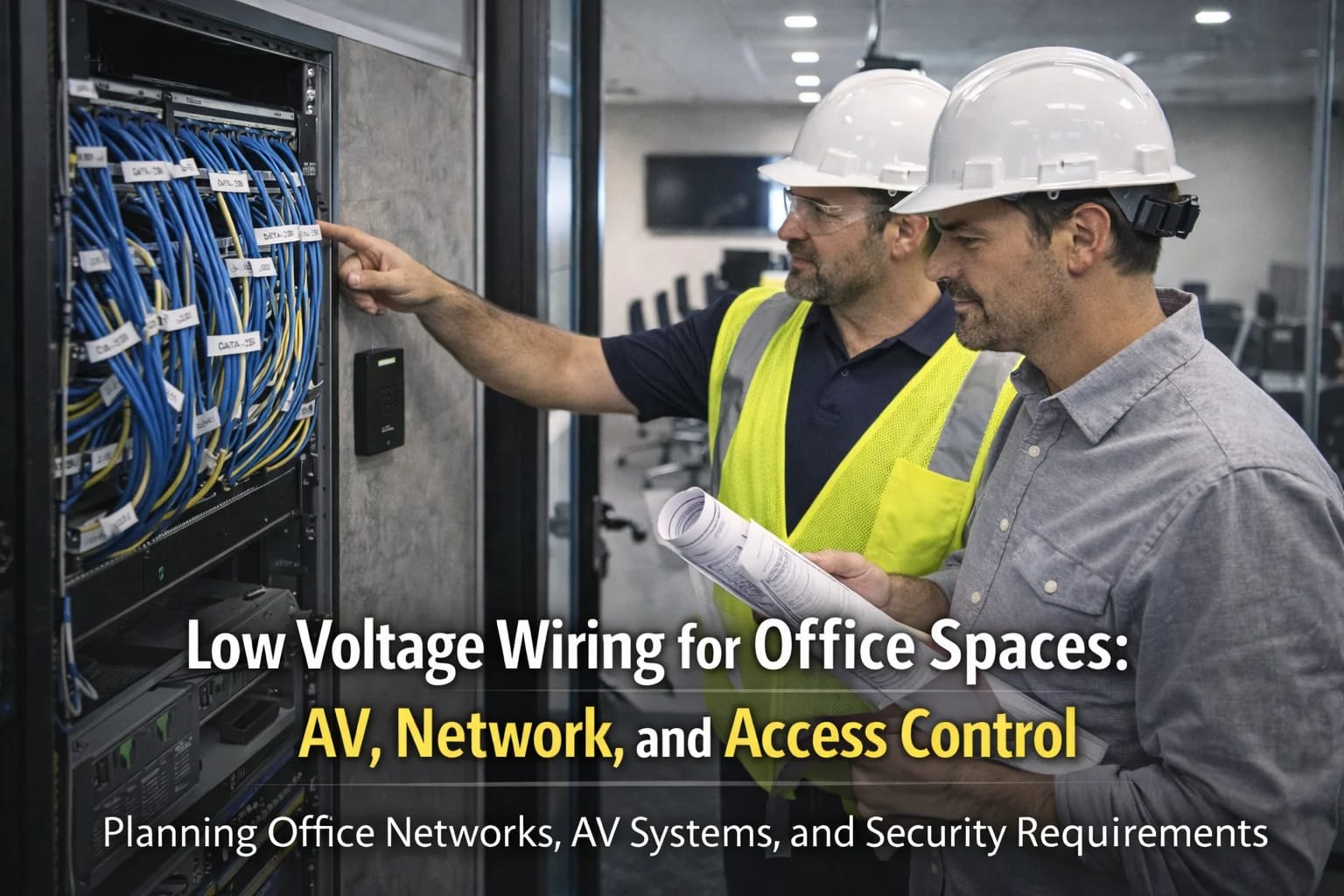

Modern offices depend on low-voltage systems to stay productive, secure, and connected. This article explains how low-voltage wiring supports office networks, conference room AV, and access control—and why early planning matters. Written for general contractors and electricians working on commercial office projects.
Plan the right scope
Choose a conference-room project path
Why Offices Depend So Heavily on Low Voltage Systems
Office buildings run on connectivity.
Employees rely on networks for nearly every task. Meetings depend on audio and video systems. Access control protects people, data, and property.
All of these systems rely on low-voltage wiring working correctly behind the scenes. When it doesn’t, productivity suffers quickly.
That’s why office projects require careful low-voltage planning from the start.
Network Infrastructure Is the Backbone of the Office
In an office environment, the network is no longer optional infrastructure. It supports computers, phones, printers, cloud services, and smart building systems.
Poorly planned network cabling leads to dropped connections, slow performance, and frustrated users. Coverage gaps in wireless networks create dead zones that impact daily work.
Proper planning ensures cable routes, access point placement, and network rooms support how the office will actually be used.
Conference Room AV Requires More Than Screens
Conference rooms often look simple on plans. In reality, they are one of the most demanding spaces in an office.
Audio, video, control systems, displays, and network connectivity must all work together. Small mistakes in cabling or device placement can cause echo, lag, or unreliable connections.
Low-voltage wiring must support both current AV needs and future upgrades as meeting technology evolves.
Access Control and Security Integration
Offices also rely on access control systems to manage who can enter the building and specific areas within it.
Card readers, door controllers, and cameras often depend on PoE and network connectivity. These systems must be reliable and secure at all times.
Integrating access control into the broader low-voltage plan avoids conflicts and improves long-term serviceability.
Why Early Planning Prevents Office Rework
Office spaces change frequently.
Teams grow. Layouts shift. Technology upgrades follow. When low-voltage systems are planned without flexibility, every change becomes disruptive.
Early planning allows for spare capacity, accessible pathways, and device placement that adapts over time.
That flexibility saves owners money and reduces downtime.
Coordination Between Trades Is Critical in Offices
Office ceilings often fill quickly with lighting, HVAC, fire protection, and low-voltage systems.
Without coordination, space becomes crowded and access is lost. Late changes create rework and delays.
Early collaboration keeps systems organized and accessible.
The GC’s Role in Office Low Voltage Success
General contractors play a key role by ensuring low voltage is part of early design and coordination meetings.
Clear expectations around pathways, device locations, and scope help keep office projects moving smoothly.
Low voltage planning protects schedules and client satisfaction.
Final Takeaway
Office buildings rely on low-voltage systems more than almost any other commercial space.
When networks, AV, and access control are planned early, offices run smoothly. When they are not, problems surface quickly.
For office projects, low voltage is essential infrastructure—not an afterthought.
Need Expert Help?
Ready to implement these solutions in your own home or business?
Our Services

Explore whole-home audio, commercial sound, Sonos setup, and surround sound installation in the Treasure Valley.

Home theater design and installation planned around your room, viewing goals, and equipment scope.

High-definition surveillance for peace of mind.

Comprehensive security solutions for home and business.
Serving the Treasure Valley
Local installation in your city