 (208) 991-3502
 Meridian, ID



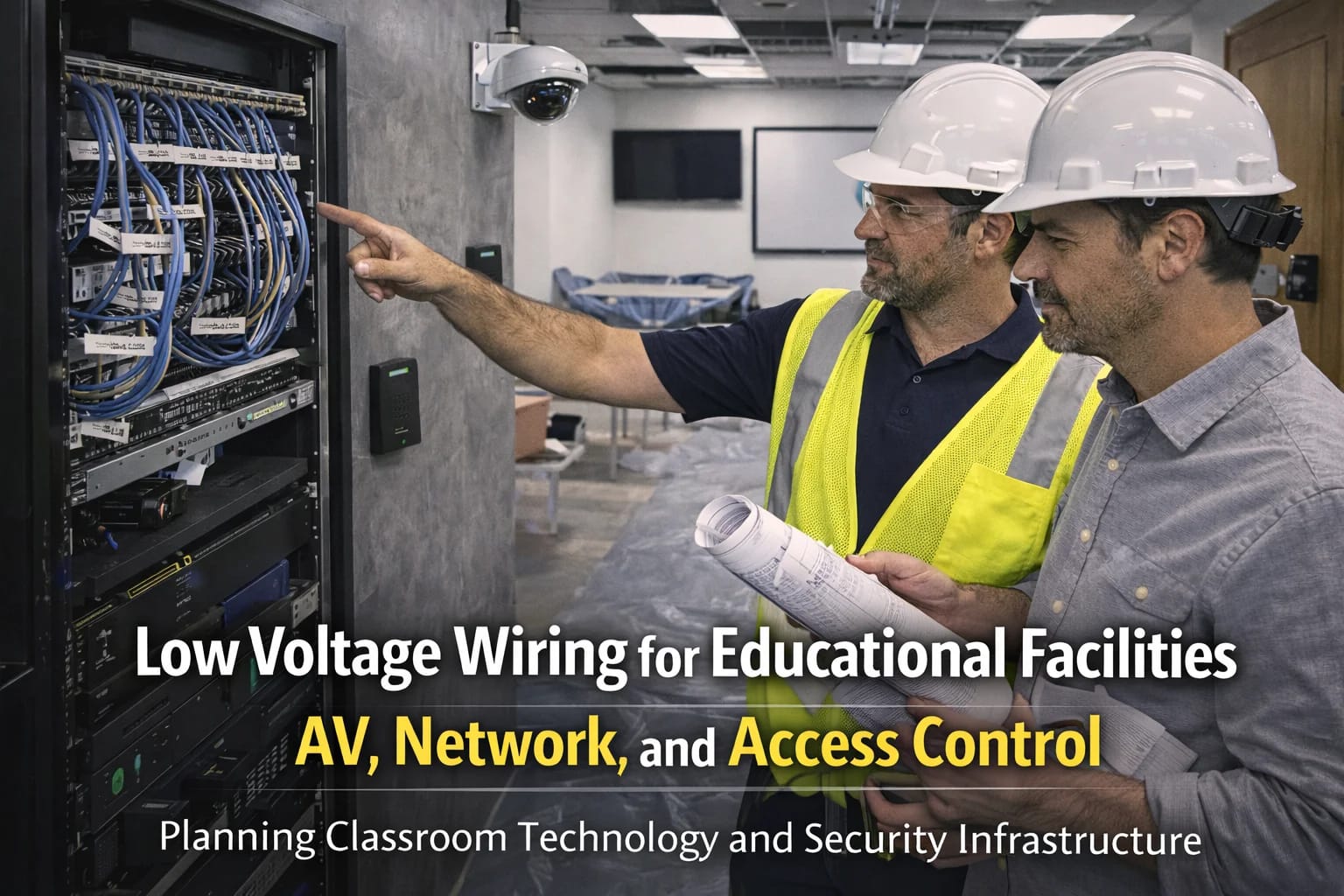

Educational and training spaces rely on low-voltage systems to deliver instruction, safety, and connectivity. This article explains how low-voltage wiring supports classrooms, training rooms, and shared learning spaces—and why planning for reliability and scalability matters. Written for general contractors and electricians working on educational projects.
Plan the right scope
Choose a conference-room project path
Why Educational Spaces Depend on Low Voltage Systems
Modern education depends on technology.
Classrooms rely on networks, displays, audio systems, and secure access. Training facilities depend on reliable AV, streaming, and collaboration tools. When low-voltage systems fail, instruction stops.
That makes low-voltage planning critical for educational environments.
Classroom Technology Starts with Infrastructure
Smart displays, projectors, audio systems, and student devices all depend on low-voltage wiring.
Poorly planned cabling leads to connection issues, audio problems, and unreliable systems. Instructors lose time troubleshooting instead of teaching.
Reliable infrastructure supports consistent learning experiences.
Network Reliability Is Non-Negotiable
Educational facilities often support many devices at once.
Students, instructors, and staff all rely on network access. Wi-Fi coverage must be consistent, and bandwidth must support peak usage.
Low-voltage planning must account for density, coverage, and future growth.
AV Systems in Training and Lecture Spaces
Training rooms and lecture halls place heavy demands on AV systems.
Microphones, speakers, cameras, displays, and control systems must work together seamlessly. Cabling must support clean signal paths and future upgrades.
Mistakes in AV wiring are difficult to correct once spaces are finished.
Security and Access Control in Education
Schools and training centers require controlled access and monitoring.
Cameras, access control systems, and emergency communication tools often rely on PoE and network connectivity. These systems must remain operational at all times.
Early coordination ensures coverage, reliability, and compliance.
Why Scalability Matters in Educational Facilities
Educational needs change over time.
Programs expand. Classrooms are repurposed. Technology evolves. Low-voltage systems must support these changes without major reconstruction.
Scalable planning protects long-term usability.
Coordination Challenges in Active Campuses
Educational facilities often remain occupied during construction.
Low-voltage work must be coordinated carefully to avoid disruption. Clear pathways, staging areas, and scheduling reduce impact on daily operations.
Good planning keeps projects on track without interfering with learning.
The GC’s Role in Educational Low Voltage Success
General contractors help educational projects succeed by ensuring low voltage is part of early design and coordination meetings.
Clear scope, proper pathways, and documented systems reduce future issues and support long-term performance.
Final Takeaway
Educational and training facilities rely on low-voltage systems to function every day.
When wiring is planned early and installed correctly, technology supports learning instead of interrupting it. When it’s not, small issues become constant distractions.
For educational projects, low voltage is foundational infrastructure.
Need Expert Help?
Ready to implement these solutions in your own home or business?
Our Services

Explore whole-home audio, commercial sound, Sonos setup, and surround sound installation in the Treasure Valley.

Home theater design and installation planned around your room, viewing goals, and equipment scope.
High-definition surveillance for peace of mind.
Comprehensive security solutions for home and business.
Serving the Treasure Valley
Local installation in your city