 (208) 991-3502
 Meridian, ID



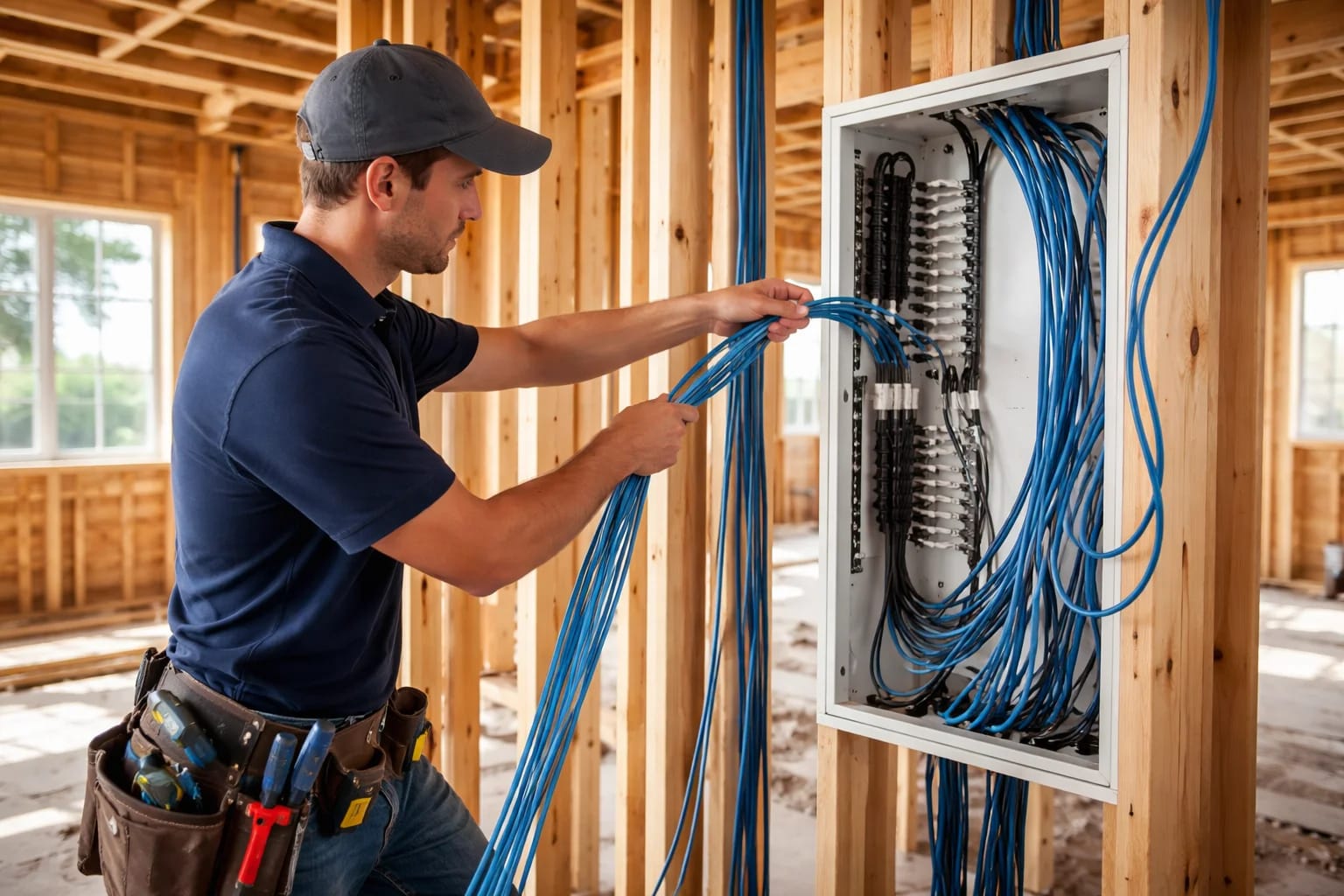

Low-voltage wiring is the foundation of every smart home. Learn how proper planning future-proofs your home, improves performance, and saves money long-term.
Introduction: The Technology Most Homeowners Don’t Think About—Until It’s Too Late
Smart homes aren’t built on gadgets. They’re built on infrastructure.
Yet many homeowners focus on visible tech—smart TVs, doorbells, speakers, and cameras—without realizing that the real foundation of a future-ready home is low-voltage wiring. When it’s planned early and installed correctly, everything works better. When it’s skipped or rushed, upgrades become expensive, messy, and frustrating.
Low-voltage wiring is the silent system behind modern living. It supports your internet, audio, security, lighting controls, cameras, and automation—today and for years to come.
In this guide, we’ll explain what low-voltage wiring is, why it matters, and how proper planning can protect your home from becoming outdated far sooner than it should.
What Is Low-Voltage Wiring?
Low-voltage wiring refers to cabling that carries less than 50 volts of electricity. Unlike standard electrical wiring, it’s designed for communication, control, and data—not power delivery.
Common low-voltage wiring types include:
Ethernet (Cat6 / Cat6A)
Speaker wire
Coaxial cable
Control wiring
Alarm and sensor wiring
Fiber optic cabling
These wires connect the systems that make your home smarter, safer, and more comfortable. Without them, smart devices rely on Wi-Fi alone—which introduces performance issues, dropouts, and limitations as your home grows.
Why Low-Voltage Wiring Is the Backbone of a Smart Home
Smart devices come and go. Infrastructure lasts decades.
Low-voltage wiring allows your home to adapt as technology evolves. It provides:
Faster, more reliable connections
Reduced wireless congestion
Better audio and video quality
Seamless system integration
Easier upgrades over time
Think of it like building roads instead of dirt paths. You might not see them every day—but everything depends on them working properly.
The Cost of Not Planning Low-Voltage Wiring Early
Many homeowners only realize the importance of low-voltage wiring after moving in. Unfortunately, retrofitting later often means:
Cutting drywall
Running surface-mounted conduit
Limited device placement
Higher labor costs
Compromised aesthetics
What costs a fraction during construction or renovation can become a major expense later. Worse, some upgrades may not be possible at all without visible wiring or signal compromises.
Future-proofing is less about buying more tech and more about preparing the home to accept it.
What Systems Rely on Low-Voltage Wiring?
1. Home Networking & Wi-Fi Performance
Reliable internet starts with wired connections.
Strategically placed Ethernet runs allow for:
Hardwired TVs and computers
Dedicated Wi-Fi access points
Faster speeds and lower latency
This eliminates dead zones and ensures your network can handle streaming, work-from-home demands, and smart devices—simultaneously.
2. Whole-Home Audio & Video
Wireless speakers are convenient—but wired systems deliver unmatched reliability and sound quality.
Low-voltage wiring supports:
In-ceiling and in-wall speakers
Distributed audio zones
Home theaters
Outdoor entertainment systems
With proper wiring, your audio system feels invisible yet powerful.
3. Security Systems & Cameras
Modern security systems rely heavily on low-voltage wiring for stability and reliability.
This includes:
Hardwired cameras
Alarm sensors
Motion detectors
Video doorbells
Access control
Wired security systems are harder to disable, more dependable, and often record higher-quality footage.
4. Smart Lighting & Shades
Lighting control and automated shades depend on communication wiring that links switches, keypads, and controllers.
The result?
One-touch lighting scenes
Automated schedules
Energy efficiency
Cleaner wall aesthetics
5. Smart Home Automation & Control
From thermostats to voice assistants, automation systems rely on a mix of wired and wireless communication.
Low-voltage wiring ensures:
Faster system response
Fewer dropped commands
Stable integrations between platforms
What Does “Future-Proofing” Really Mean?
Future-proofing doesn’t mean guessing what technology you’ll use in 20 years.
It means:
Installing flexible infrastructure
Running extra wiring where it matters
Using higher-grade cabling
Centralizing systems for expansion
Good low-voltage design anticipates change instead of fighting it.
Key Low-Voltage Wiring Strategies for a Future-Ready Home
Run More Ethernet Than You Think You Need
Data demands always increase.
Best practice includes:
Multiple Ethernet runs to TVs
Dedicated lines for offices
Ceiling drops for Wi-Fi access points
Centralized network rack
Unused cables today become lifesavers tomorrow.
Centralize Your Technology
A structured wiring panel or equipment rack keeps systems organized and serviceable.
Benefits include:
Easier troubleshooting
Cleaner installs
Simplified upgrades
Better airflow and equipment longevity
Use Conduit for Expandability
Conduit allows new cables to be pulled later without opening walls.
It’s especially valuable for:
TV locations
Home theaters
Offices
Outdoor runs
Choose Quality Cable Types
Not all cables are created equal.
For longevity:
Use Cat6 or Cat6A Ethernet
Rated speaker wire for in-wall use
Outdoor-rated cable where needed
Cutting corners here limits future performance.
Low-Voltage Wiring for Remodels vs New Construction
New Construction
This is the ideal time to plan.
Walls are open. Costs are lower. Options are unlimited.
Builders who integrate low-voltage wiring early deliver homes that feel modern, flexible, and premium from day one.
Remodels & Existing Homes
While more challenging, strategic upgrades are still possible.
Professional planning focuses on:
Minimal wall disruption
Wireless-wired hybrids
Targeted infrastructure improvements
The key is knowing where wiring delivers the most long-term value.
Why Professional Low-Voltage Design Matters
DIY solutions often focus on devices—not systems.
A professional low-voltage installer:
Designs around your lifestyle
Coordinates with electrical and construction trades
Follows code and best practices
Delivers clean, labeled, serviceable installs
The difference shows up every day you live in the home.
Common Low-Voltage Mistakes Homeowners Make
Relying entirely on Wi-Fi
Running too few Ethernet lines
Skipping conduit
Poor cable labeling
No centralized equipment location
Each mistake reduces flexibility and increases future costs.
How Low-Voltage Wiring Increases Home Value
Future-ready homes stand out.
Buyers increasingly expect:
Strong Wi-Fi coverage
Smart-ready infrastructure
Security and automation options
Well-planned low-voltage wiring makes your home easier to upgrade, easier to live in, and more attractive long-term.
Final Thoughts: Build the Foundation Once—Enjoy the Benefits for Decades
Technology will always change. Your walls shouldn’t need to.
Low-voltage wiring is one of the smartest investments you can make in your home—quietly supporting comfort, security, and convenience for years to come.
Whether you’re building, remodeling, or planning ahead, the right infrastructure makes everything else better.
Need Expert Help?
Ready to implement these solutions in your own home or business?
Our Services

Complete home automation and control.

Intelligent lighting control and automation.

Explore whole-home audio, commercial sound, Sonos setup, and surround sound installation in the Treasure Valley.

Home theater design and installation planned around your room, viewing goals, and equipment scope.
Serving the Treasure Valley
Local installation in your city