 (208) 991-3502
 Meridian, ID



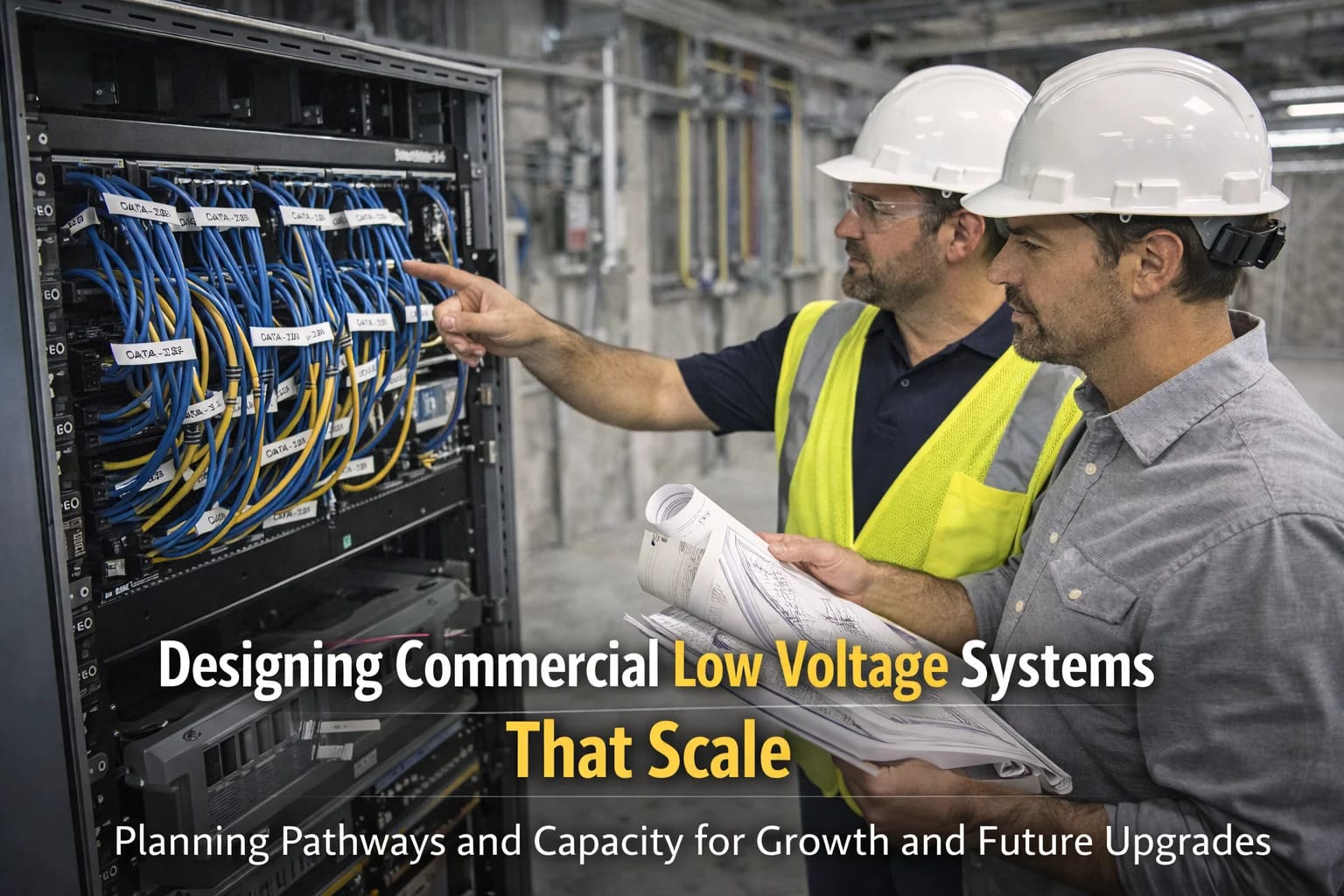

Commercial buildings rarely stay the same, but many low-voltage systems are designed as if they will. This article explains how scalable low-voltage planning helps commercial projects adapt to growth, tenant changes, and new technology. Written for general contractors and electricians focused on long-term performance.
Why Scalability Matters in Commercial Buildings
Very few commercial buildings stay exactly as they were on opening day.
Offices add staff. Restaurants change layouts. Retail spaces rotate tenants. Technology evolves faster than construction cycles.
When low-voltage systems are designed only for current needs, every future change becomes harder and more expensive than it should be.
Scalable design accepts change as a given and plans for it.
The Cost of Designing Only for Today
Low-voltage systems that lack scalability often work well at first. Problems appear later.
Adding devices may require opening walls. Network capacity may hit limits sooner than expected. Equipment rooms may fill up with no room to expand.
Each of these issues creates downtime, added labor, and frustration for owners and operators.
Good design prevents these problems by leaving room to grow.
Scalability Starts with Pathways and Space
The most important part of scalable low-voltage design is not the cable. It’s the pathway.
Extra conduit to key areas, accessible cable trays, and clear routes make future changes easier. Equipment rooms should include space for additional racks, power, and cooling.
These choices cost little during construction and save significant time and money later.
Planning Network Capacity for Growth
Network demands rarely shrink.
More devices, higher bandwidth, and increased reliance on cloud services all place pressure on infrastructure. Designing with higher-capacity cabling and switching allows systems to scale without full replacement.
Even if current needs are modest, planning for higher capacity protects the investment.
Device Placement with the Future in Mind
Device locations should consider how spaces may change.
Wireless access points, cameras, and displays should be placed where coverage can adapt to new layouts. Avoiding tight or inaccessible locations helps future teams work without disruption.
Flexibility in placement supports long-term usability.
Documentation Supports Scalable Systems
Scalable systems depend on clear documentation.
Accurate labeling and as-builts allow future expansions to build on what exists instead of starting over. Without documentation, scalability exists only in theory.
Good records turn planning into real-world flexibility.
Why GCs Benefit from Scalable Low Voltage Design
For general contractors, scalable design reduces future callbacks and protects reputation.
Buildings that adapt easily reflect well on everyone involved. Owners remember projects that continue to perform long after completion.
Planning for scalability adds value without adding complexity.
Electricians and Low Voltage Teams Work Smarter
Scalable design also benefits the trades.
Future work becomes cleaner and more predictable. Existing infrastructure supports change instead of resisting it.
That makes future projects faster and less disruptive.
Final Takeaway
Scalable low-voltage design accepts that change is inevitable.
By planning pathways, capacity, and documentation early, commercial projects remain flexible and cost-effective over time.
In commercial construction, scalability is not a luxury. It’s smart planning.
Need Expert Help?
Ready to implement these solutions in your own home or business?
Our Services
Explore whole-home audio, commercial sound, Sonos setup, and surround sound installation in the Treasure Valley.

Home theater design and installation planned around your room, viewing goals, and equipment scope.
High-definition surveillance for peace of mind.
Comprehensive security solutions for home and business.
Serving the Treasure Valley
Local installation in your city