 (208) 991-3502
 Meridian, ID



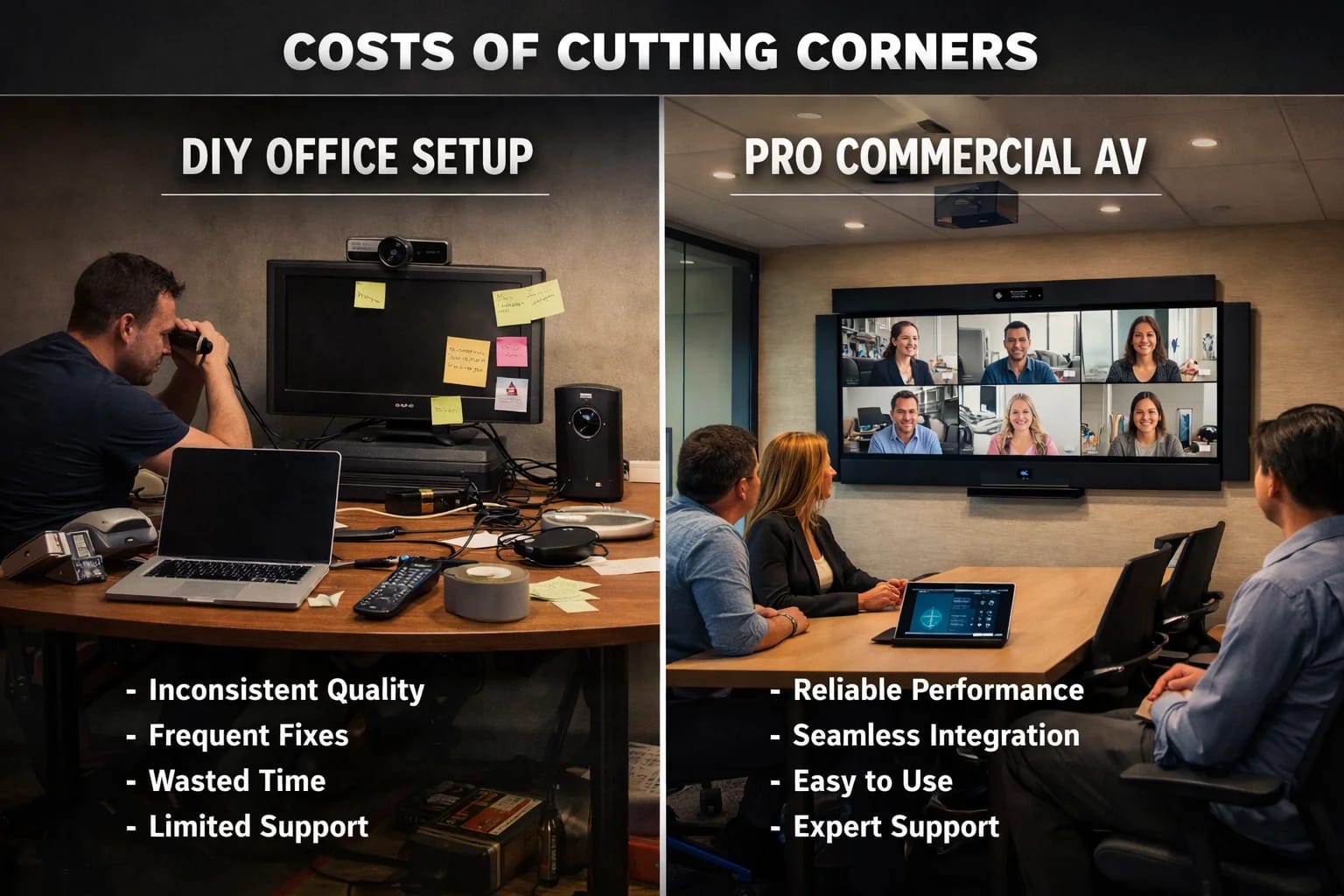

DIY AV can look like a win at first, but the long-term costs add up fast. This post compares DIY office setups with professionally designed commercial AV, breaking down reliability, usability, scalability, and support. What starts as savings often turns into lost time, frustrated teams, and repeat fixes. In the end, the real value comes from systems that work consistently and grow with your business.
Introduction: Why DIY AV Looks Cheaper Than It Really Is
At first glance, DIY office AV looks like a win.
A TV from Costco.
A webcam from Amazon.
A soundbar that claims to do it all.
The invoice is small. The box shows up fast. And for a while, things mostly work.
But over time, most businesses discover the truth: DIY AV isn’t cheaper—it just delays the cost.
The Upfront Cost Difference (What Everyone Sees)
DIY setups usually win on sticker price.
DIY AV typically includes:
Consumer TV or monitor
Webcam or laptop camera
Soundbar or speakerphone
Minimal or no cabling
Commercial AV includes:
Professional displays
Dedicated microphones and speakers
Cameras designed for room coverage
Structured cabling and control systems
On paper, DIY costs less. In practice, that’s only the beginning.
The Hidden Cost of Downtime
DIY AV fails quietly—and often.
Common issues include:
Audio cutting out mid-meeting
Cameras freezing or framing poorly
Wireless connections dropping
Meetings starting late while tech is “fixed”
Every delay costs:
Staff time
Productivity
Momentum
Credibility
Those costs rarely show up on an invoice—but they’re very real.
IT Time Is Not Free
DIY AV systems lean heavily on internal IT.
That means:
Troubleshooting instead of strategic work
Emergency fixes before meetings
Repeated adjustments for different users
Commercial AV systems reduce IT involvement by being designed to just work—consistently, for everyone.
Scalability: Where DIY Breaks Down Fast
DIY setups don’t scale well.
As soon as you add:
More rooms
More users
Hybrid meetings
Multiple locations
Inconsistencies multiply. Each room works differently. Training becomes harder. Support becomes reactive.
Commercial AV systems are designed for repeatability and growth.
User Experience: The Silent Cost
When AV is unreliable, people stop trusting it.
That leads to:
Workarounds
Avoided features
Reduced collaboration
Frustration
Professional AV systems focus on simplicity, not just capability. One-touch controls and consistent behavior matter more than feature lists.
Equipment Lifespan and Replacement Cycles
Consumer AV gear is built for short-term use.
That means:
Faster wear
Shorter warranties
Frequent replacements
Commercial-grade AV hardware is built for daily use, longer lifespans, and ongoing support—reducing replacement costs over time.
Documentation, Support, and Accountability
DIY AV usually has:
No system documentation
No clear ownership
No long-term support plan
Commercial AV systems include:
As-built documentation
Known equipment paths
Support options when something changes
That alone saves hours of future guesswork.
When DIY AV Does Make Sense
DIY AV can be fine for:
Small huddle spaces
Temporary setups
Non-critical rooms
But once meetings matter—clients, training, leadership, or remote teams—DIY quickly shows its limits.
The Real Cost Comparison
Area | DIY Office AV | Commercial AV |
|---|---|---|
Upfront Cost | Lower | Higher |
Reliability | Inconsistent | High |
IT Support | Frequent | Minimal |
Scalability | Poor | Excellent |
User Experience | Varies | Consistent |
Long-Term Cost | Higher | Lower |
Final Thoughts: Cheap AV Is Rarely Inexpensive
DIY office AV isn’t wrong—it’s just often misapplied.
Commercial AV systems cost more upfront because they’re designed to:
Work every day
Support real people
Scale with your business
Reduce friction instead of creating it
In the long run, reliability always wins.
Need Expert Help?
Ready to implement these solutions in your own home or business?
Our Services
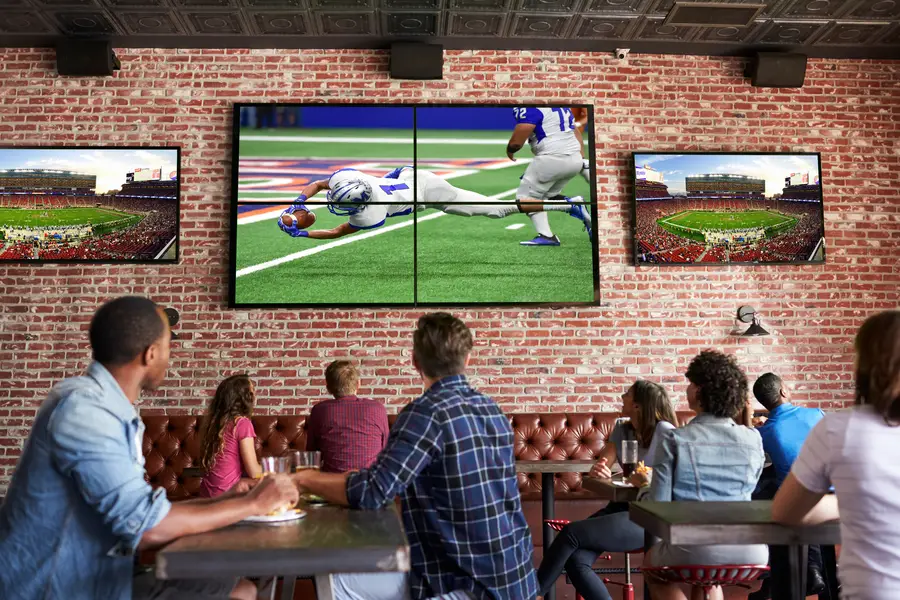
Expert TV Mounting Treasure Valley Homeowners & Businesses Trust

Cinematic experiences in the comfort of your home.
Whole-home audio and high-fidelity sound systems.
Professional conference and training room AV systems with video conferencing integration.
Serving the Treasure Valley
Local installation in your city