 (208) 991-3502
 Meridian, ID


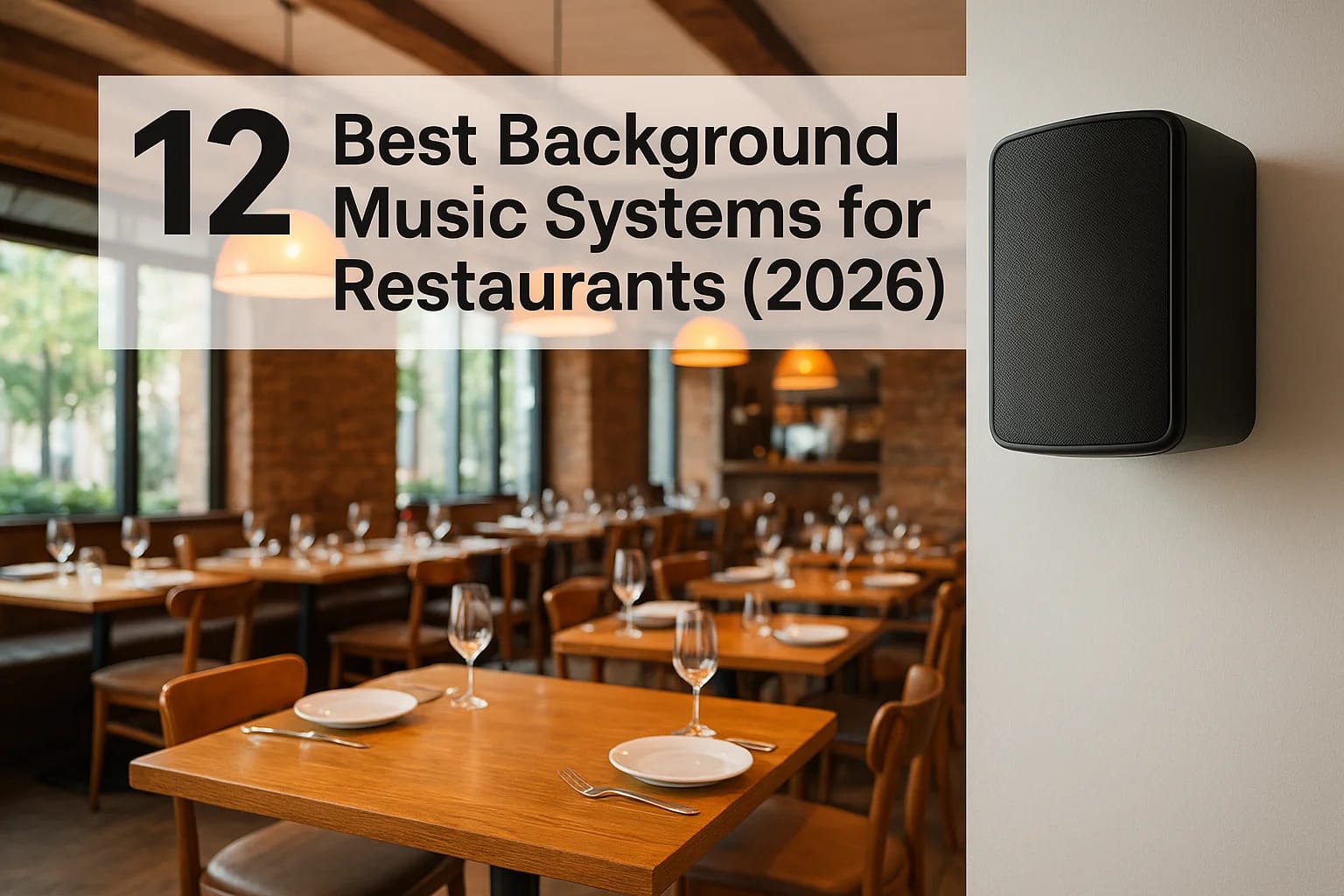

The right soundtrack can transform a dining experience. Whether it's a cozy brunch spot or a bustling steakhouse, background music systems for restaurants do more than fill silence, they shape how gue...
The right soundtrack can transform a dining experience. Whether it's a cozy brunch spot or a bustling steakhouse, background music systems for restaurants do more than fill silence, they shape how guests feel, how long they stay, and whether they come back. Studies consistently show that music tempo, volume, and genre directly influence customer behavior, from ordering patterns to tip amounts.
But choosing the right system isn't as simple as plugging in a Bluetooth speaker. Restaurants need commercial-grade equipment that delivers consistent sound across different zones, complies with music licensing requirements, and holds up in demanding environments. You're looking at ceiling speakers, amplifiers, streaming services, and potentially professional installation, all working together seamlessly.
At Treasure Valley Solutions, we've designed and installed ambient audio systems for restaurants and hospitality businesses throughout the Boise and Meridian area since 2014. We've seen firsthand what works in real-world commercial settings and what ends up collecting dust in a back closet.
This guide breaks down the 12 best background music systems for restaurants in 2026, covering hardware options, licensed streaming platforms, and complete system packages. Whether you're opening a new location or upgrading an existing setup, you'll find practical recommendations based on budget, venue size, and feature requirements.
1. Treasure Valley Solutions
Treasure Valley Solutions delivers fully custom ambient audio systems designed specifically for the layout, acoustics, and operational needs of your restaurant. Based in Meridian, Idaho, we've been installing background music systems for restaurants throughout the Boise metro area since 2014. Unlike packaged solutions that force you to adapt your space to their limitations, we build systems around your exact floor plan, ceiling height, and how guests move through your venue.
What it is
You get a purpose-built audio system that combines commercial-grade speakers, amplifiers, network infrastructure, and licensed streaming integration into one cohesive setup. We use equipment from manufacturers like Sonos Pro, Bose Professional, JBL, and QSC, selecting components based on your venue's specific acoustic challenges rather than defaulting to a single brand. Your system includes zone control so you can adjust volume independently in the dining room, bar, and patio without affecting other areas. Staff can control everything from wall-mounted keypads, tablets, or smartphones without needing technical training.
How the system gets designed and installed
Our process starts with an on-site consultation where we map your space, identify acoustic dead zones, and discuss how you want music to function during different service periods. We measure ceiling heights, note surface materials that affect sound reflection, and determine optimal speaker placement before you see a quote. Installation includes running all necessary wiring, mounting speakers, programming zone controls, and connecting your chosen streaming service. We test volume levels in every zone while your space is empty and during simulated service conditions to ensure coverage is consistent.
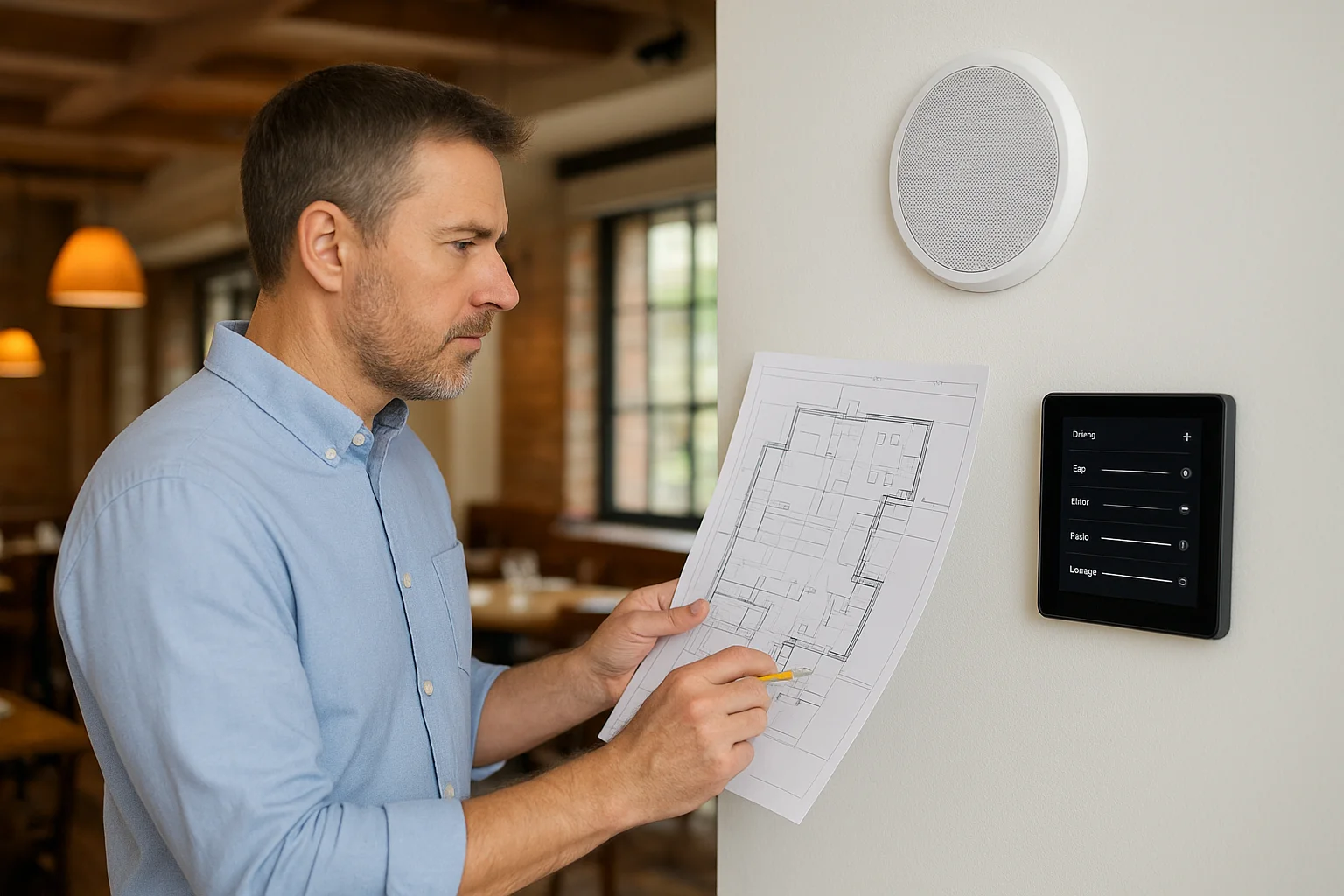
The system gets programmed with your preferred playlists and scheduling before we leave, so you're not figuring out operation on opening day.
Our technicians handle all network configuration if you're integrating with existing Wi-Fi or adding dedicated Ethernet runs for audio. You receive training on daily operation, troubleshooting common issues, and making playlist adjustments. We also provide ongoing support after installation, whether you need programming changes, additional zones, or help with a connectivity issue.
Best fit for restaurant types and layouts
This approach works best for independent restaurants that need a system tailored to unique architectural features or customer flow patterns. If your venue has multiple dining areas with different ambiance requirements, high ceilings that create audio challenges, or an outdoor patio that needs weatherproof speakers, a custom design ensures every zone sounds correct. We frequently work with new restaurant builds where we coordinate with general contractors to pre-wire audio infrastructure before walls get closed up, avoiding visible conduit and retrofit complications.
Restaurants that value local support and want a provider who can respond quickly when technical issues arise during service also benefit from our model. Chain locations with corporate audio standards typically need standardized packages instead.
Budget range and what drives the total cost
Expect to invest $8,000 to $25,000 for a complete system in most restaurant settings. Smaller spaces with straightforward layouts and basic zoning fall toward the lower end, while multi-room venues with complex acoustic requirements and advanced automation push costs higher. The biggest cost drivers are number of zones, speaker count, amplifier capacity, and whether you need extensive new wiring or can leverage existing infrastructure. Outdoor audio adds weatherproof equipment and potentially additional amplification. Systems that integrate with existing network infrastructure cost less than venues requiring dedicated network runs for audio streaming.
2. Sonos Pro
Sonos Pro brings Wi-Fi-based multi-room audio into commercial restaurant settings with equipment designed specifically for business installations. You get rack-mounted amplifiers, ceiling speakers, and app-based control that work together through your network infrastructure. The platform scales from single-room setups to complex multi-zone venues without requiring specialized audio training to operate. Staff can adjust volume, switch playlists, or schedule daypart changes from any smartphone or tablet connected to your network.
What it is
This system uses Sonos architectural speakers powered by dedicated amplifiers that connect to your restaurant's network. You install ceiling speakers throughout your venue, wire them back to centrally located amplifiers, and control everything through the Sonos Pro app. The platform integrates with dozens of licensed music streaming services including Soundtrack Your Brand, Rockbot, and SiriusXM for Business. Unlike consumer Sonos products, Pro components include commercial warranties and support contracts designed for restaurant operating hours and demands.
How zones, scheduling, and control work
You create separate audio zones for different areas like the dining room, bar, and patio, controlling each independently. The Sonos Pro app lets you set scheduled volume adjustments and playlist changes based on time of day, so brunch music automatically transitions to dinner ambiance without staff intervention. Multiple users can access control simultaneously from their devices, and you can restrict certain features to prevent unauthorized changes during service.
You can group zones together when you need the same audio throughout the venue or split them for different experiences in each area.
Network requirements and reliability basics
Sonos Pro requires a stable Wi-Fi network with sufficient bandwidth to stream audio to multiple zones simultaneously. Your network needs dedicated access points positioned to provide coverage where amplifiers get installed, and most installations benefit from a separate VLAN for audio traffic. The system maintains local caching of recently played content, so brief network interruptions don't cause immediate playback issues. If your internet connection drops completely, cached content continues playing until connectivity returns.
Typical costs and ongoing fees
Expect to invest $3,500 to $12,000 for hardware depending on venue size and speaker count. A basic two-zone setup with four ceiling speakers costs around $4,000, while larger installations with eight or more zones scale proportionally. You pay no ongoing licensing fees to Sonos itself, but you need a subscription to a commercial music service which typically runs $30 to $50 monthly per location.
3. Bose Professional installed audio
Bose Professional delivers installed audio systems built around commercial-grade amplifiers and ceiling speakers designed for demanding restaurant environments. You get rack-mounted equipment that drives multiple speaker zones from a central location, controlled through wall panels or network interfaces. The platform prioritizes straightforward operation and consistent sound quality across your entire venue without requiring audio engineering expertise to maintain.
What it is
This system uses Bose DesignMax ceiling speakers paired with amplifiers like the PowerSpace series to create a complete restaurant audio solution. You install speakers throughout your space, run wiring back to centralized amplification equipment, and control everything through dedicated interfaces or third-party control systems. Bose designs these components specifically for commercial installations where equipment runs continuously and needs to deliver reliable performance year after year. The hardware integrates with most commercial music streaming services and existing network infrastructure.
Speaker and amplifier options that fit restaurants
Bose offers multiple speaker models sized for different ceiling heights and acoustic requirements. The DesignMax DM2C and DM6C handle typical dining rooms with 8 to 12-foot ceilings, while larger models cover spaces with higher ceilings or challenging acoustics. PowerSpace amplifiers provide configurable output channels so you can drive different speaker zones at appropriate power levels from one rack-mounted unit. These amplifiers include built-in DSP for equalization and volume limiting, preventing staff from accidentally distorting audio or damaging speakers.
Zoning, wall controls, and staff-friendly operation
You create independent audio zones for different restaurant areas, controlling each through wall-mounted volume knobs or touchscreen panels. The ControlSpace EX series processors handle zone mixing and source routing behind the scenes, letting staff adjust volume without accessing rack equipment. Systems integrate with Control4, Crestron, or simple Bluetooth receivers for source flexibility.
Staff can adjust dining room volume from wall controls while the bar plays different content at a separate level.
Typical costs and install complexity
Expect to invest $6,000 to $18,000 for a complete Bose Professional system depending on venue size and zone count. Hardware costs run higher than Wi-Fi-based alternatives, but installed reliability and professional support justify the investment for many restaurants. Installation requires running speaker wire from each location back to your amplifier rack and programming zone controls, typically adding $2,000 to $5,000 in labor for professional setup.
4. Bluesound Professional
Bluesound Professional uses wired Ethernet connections instead of Wi-Fi to deliver high-resolution audio streaming across multiple zones in your restaurant. You get rack-mounted players and amplifiers that connect directly to your network through Cat6 cables, eliminating wireless interference and bandwidth competition. The platform supports Power over Ethernet (PoE), so you can power remote amplifiers through the same cable that carries audio data, reducing electrical infrastructure requirements.
What it is
This system combines network-connected audio players with professional amplifiers and ceiling speakers to create a complete restaurant audio solution. You install BSP125 or BSP500 amplifiers in equipment racks or remote locations, connect them to your network via Ethernet, and control everything through the BluOS app. Each amplifier includes built-in streaming capabilities without requiring separate source devices, and you can mix different content across zones or group areas together when needed.
Wired streaming approach and multi-zone control
You run Cat6 Ethernet cables from your network switch to each Bluesound amplifier location, creating dedicated bandwidth for audio streaming. The BluOS platform handles zone control and source management through smartphone and tablet apps, letting staff adjust volume, switch playlists, or change streaming services without accessing equipment racks. Multiple users can control the system simultaneously, and you can set access permissions to prevent unauthorized changes during service.
Power over Ethernet support means you install amplifiers near speaker locations without running separate electrical circuits.
Best fit for PoE, Ethernet-first restaurants
This approach works best for restaurants with existing structured cabling or new builds where you're installing network infrastructure anyway. Venues that experience Wi-Fi congestion during peak hours benefit from the dedicated wired connection that doesn't compete with guest devices or payment terminals. Restaurants with distributed audio zones in separate buildings or outdoor areas use PoE to simplify remote amplifier installations.
Typical costs and scaling considerations
Expect to invest $5,000 to $14,000 for a complete Bluesound Professional system depending on zone count and amplifier placement. Hardware costs run higher than basic Wi-Fi systems, but network reliability and high-resolution audio quality justify the investment for restaurants prioritizing consistent performance. Adding zones later requires purchasing additional amplifiers and running new Ethernet drops, so accurate initial planning reduces future expansion costs.
5. JBL Professional 70V distributed audio
JBL Professional offers 70-volt distributed audio systems built around commercial-grade speakers and amplifiers designed for restaurants that need consistent coverage across large or acoustically challenging spaces. You get transformer-isolated speakers that connect to a central amplifier using standard speaker wire, allowing you to run longer cable distances without signal degradation. The platform delivers reliable performance in demanding commercial environments where equipment operates continuously throughout service hours.
What it is
This system uses 70V ceiling speakers like the Control series paired with Crown or JBL amplifiers that output constant-voltage audio instead of traditional low-impedance signals. You install speakers throughout your venue, wire them back to a centrally located amplifier, and tap each speaker to the appropriate wattage level based on room size and acoustic requirements. The transformer-based design lets you connect dozens of speakers to a single amplifier channel without complex impedance calculations that limit traditional speaker systems.
How a 70V system works in dining rooms and patios
You run two-conductor speaker cable from your amplifier to each speaker location, then adjust the power tap on each speaker to deliver appropriate volume for that zone. Dining rooms typically use 5 to 10-watt taps for even background coverage, while outdoor patios need higher wattage settings to overcome ambient noise and open-air acoustic challenges. The amplifier drives all connected speakers simultaneously, and you create different zones by connecting separate groups of speakers to individual amplifier channels.
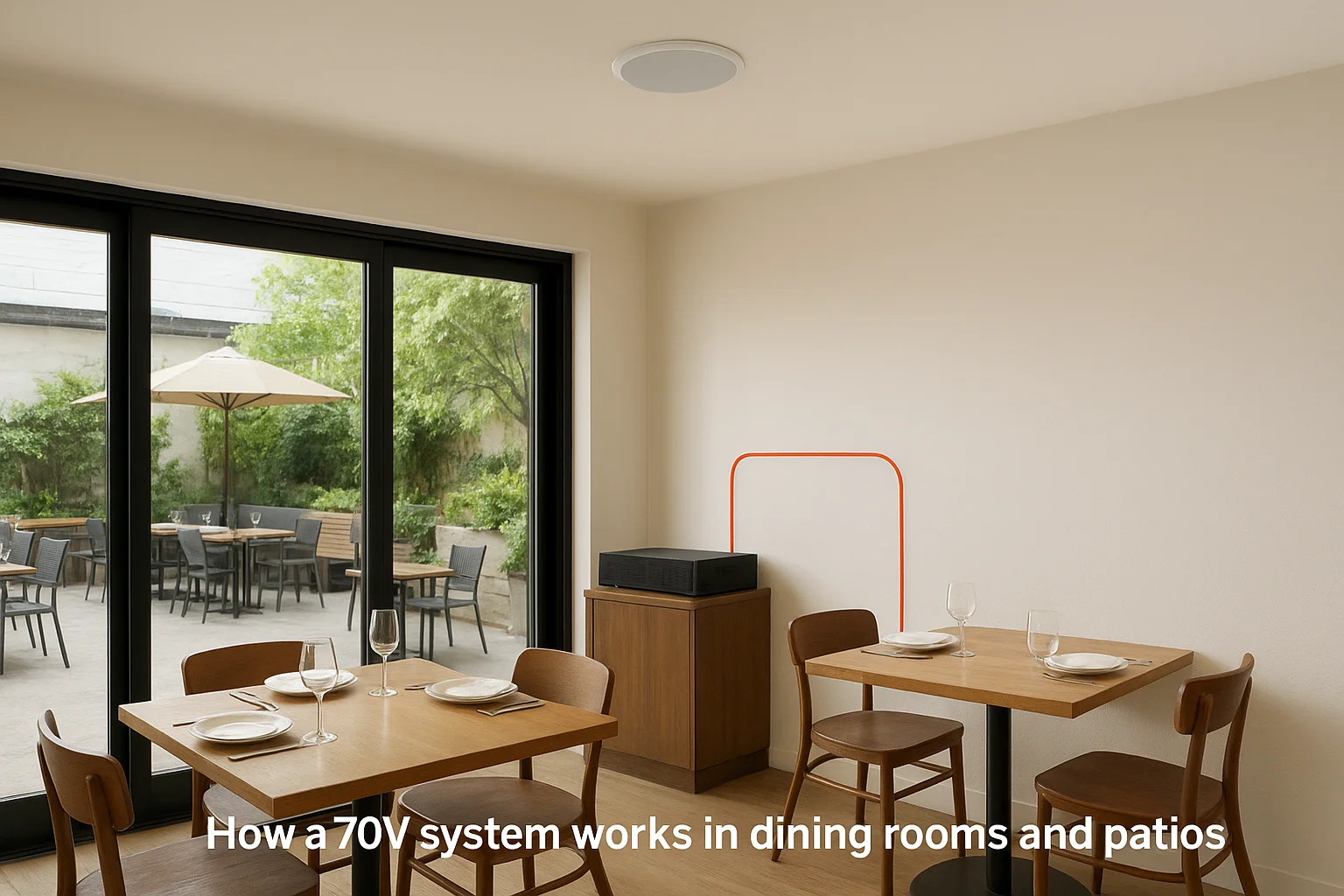
You can run speaker wire hundreds of feet without signal loss, making 70V systems ideal for restaurants with remote outdoor areas or distributed dining spaces.
Strengths and trade-offs vs. Wi-Fi speakers
The wired connection eliminates network bandwidth concerns and wireless interference that affect streaming-based background music systems for restaurants. You get predictable performance without dependence on your internet connection or router capacity. Installation requires running physical cables to every speaker location, adding labor costs and limiting flexibility for future layout changes. These systems lack the sophisticated zone control and scheduling features that network-connected platforms provide, typically requiring separate control systems for advanced automation.
Typical costs and install considerations
Expect to invest $4,500 to $13,000 for a complete JBL 70V system depending on speaker count and amplifier capacity. Hardware costs run lower than premium network audio platforms, but installation labor adds significantly due to extensive cable runs. Adding zones or relocating speakers later requires new wiring, making accurate initial planning critical for controlling long-term costs.
6. QSC restaurant audio system
QSC delivers commercial audio platforms that combine background music with paging capabilities and television audio in a single integrated system. You get rack-mounted processing equipment that handles multiple audio sources, manages zone distribution, and provides flexible control options for restaurant staff. The platform scales from basic dining room coverage to complex multi-room venues with separate audio requirements for bars, patios, and private dining areas.
What it is
This system centers around Q-SYS Core processors paired with amplifiers and speakers to create a complete restaurant audio solution. You install ceiling speakers throughout your space, connect them to amplifiers like the CXD or SPA series, and control everything through network-connected touchscreens or wall-mounted keypads. The Q-SYS platform handles mixing multiple sources including streaming services, microphones for announcements, and television audio feeds into your speaker zones without requiring separate equipment for each function.
Mixing, zoning, and volume control options
You route different audio sources to separate zones based on your operational needs, so the dining room plays background music while the bar displays sports audio and paging announcements reach all areas simultaneously. The system provides priority ducking that automatically reduces music volume when staff make announcements through connected microphones. Staff control zones through dedicated touchscreens that display source options, volume levels, and preset selections without accessing equipment racks.
You can set up the system so paging automatically overrides all zones, then returns to previous audio levels when the announcement ends.
Best fit for restaurants that need paging and TVs
This approach works best for sports bars and restaurants that need to manage multiple televisions alongside background music and staff communication. Venues with large footprints or multiple service areas benefit from centralized audio management that eliminates separate systems for music, paging, and display audio. Restaurants planning future expansion appreciate the scalability that adds zones without replacing core equipment.
Typical costs and how packages scale
Expect to invest $9,000 to $22,000 for a complete QSC system depending on zone count and feature complexity. Basic configurations with music and paging start around $10,000, while advanced installations with television integration and extensive zone control push costs higher. Adding zones later requires purchasing additional amplifiers and speakers but leverages existing processing infrastructure to control expansion expenses.
7. AtlasIED Atmosphere
AtlasIED Atmosphere delivers cloud-based audio management combined with local processing hardware that gives you complete control over background music systems for restaurants through a web interface. You get centralized scheduling and zone control without requiring on-site servers or complex programming equipment. The platform handles everything from simple background music to complex multi-source environments where different areas need independent audio feeds throughout the day.
What it is
This system uses Atmosphere AZM zone mixers installed at your restaurant that connect to cloud-based management software through your internet connection. You install speakers throughout your venue, wire them to the AZM hardware, and control all settings through a browser-based dashboard accessible from any connected device. The local processing unit handles audio mixing and distribution even if your internet connection drops, while the cloud interface manages scheduling, playlist updates, and system monitoring across single or multiple locations.
How sources, zones, and scheduling work
You connect multiple audio sources including streaming services, local media files, microphones for paging, and auxiliary inputs to the AZM processor. The system routes these sources to different zones based on schedules you create through the web interface, automatically transitioning from breakfast playlists to lunch music without staff intervention. Each zone gets independent volume control and source selection, letting your dining room play different content than your bar or patio simultaneously.
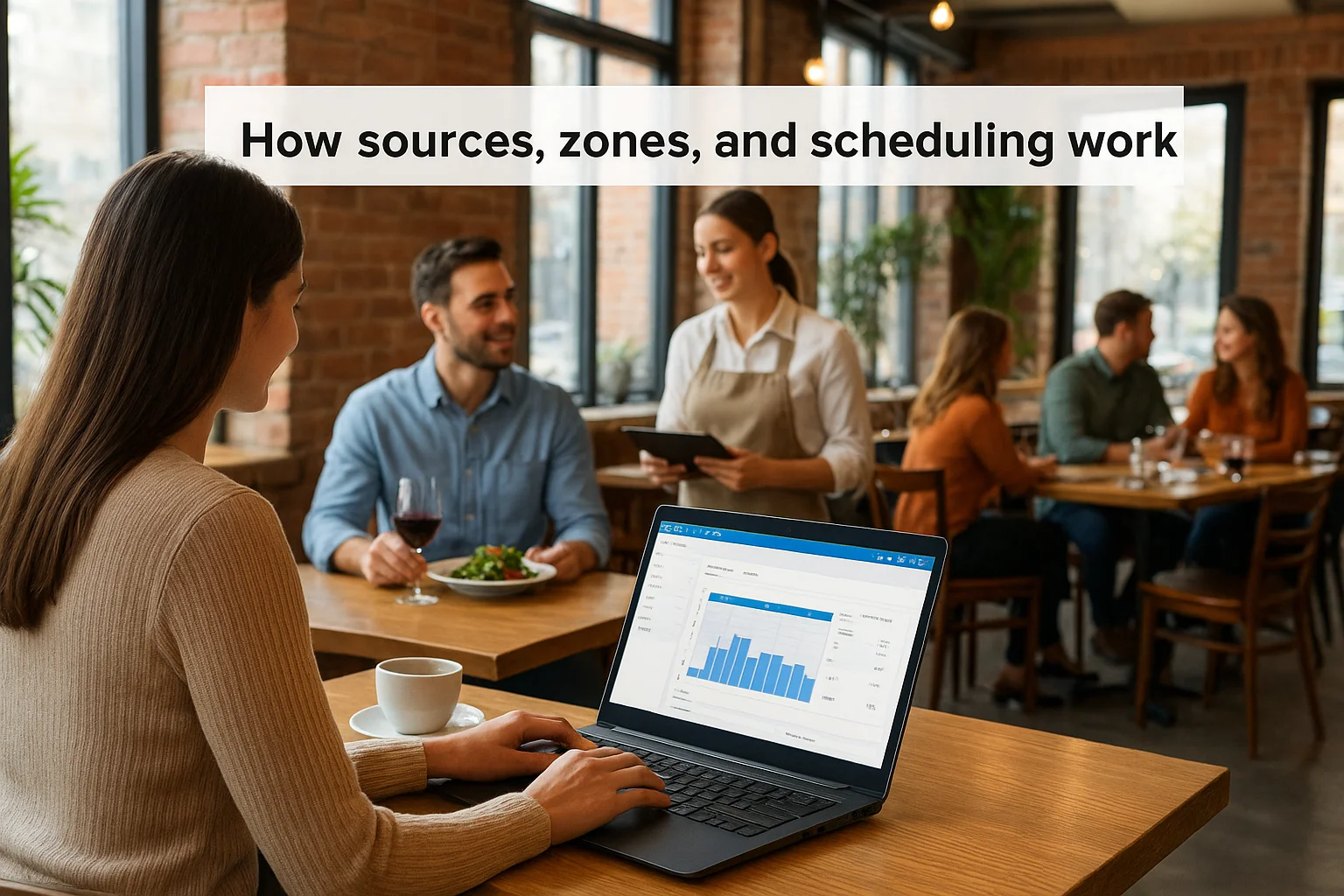
You set up daypart schedules once in the cloud interface, and the system executes those changes automatically every day without requiring staff to remember manual adjustments.
Best fit for multi-room and multi-use venues
This approach works best for restaurants with distinct service areas that need different audio experiences throughout the day. Venues operating breakfast through late-night service benefit from automated scheduling that adapts music to each daypart. Restaurant groups managing multiple locations use the cloud platform to standardize audio programming across properties while maintaining local volume control at each site.
Typical costs and install requirements
Expect to invest $7,000 to $16,000 for a complete AtlasIED Atmosphere system depending on zone count and audio source requirements. Hardware costs include the AZM processor, amplification if needed, and ceiling speakers throughout your space. You pay a monthly subscription of $30 to $60 per location for cloud management features and ongoing software updates.
8. Bogen paging and background music
Bogen provides straightforward commercial audio solutions that combine background music distribution with overhead paging systems in a single integrated package. You get utilitarian equipment designed for restaurants that prioritize functional audio coverage and reliable paging without advanced networking features or complex control interfaces. The platform delivers consistent performance in commercial environments through simple analog signal routing and straightforward zone selection.
What it is
This system uses Bogen amplifiers like the C Series or X Series paired with ceiling speakers to create basic restaurant audio infrastructure. You connect audio sources through line-level inputs on the amplifier, install speakers throughout your venue, and control output through front-panel knobs or optional wall-mounted volume controls. The equipment handles both music distribution and paging through the same speaker system, automatically reducing music volume when someone speaks into a connected microphone.
How it handles zones, paging, and simple source selection
You create separate audio zones by connecting different speaker groups to individual amplifier outputs, controlling volume independently for each area. The system routes paging signals to all zones simultaneously, ensuring announcements reach every part of your restaurant regardless of current music settings. Source selection happens through manual switching on the amplifier itself or optional remote selectors that let staff choose between connected devices like streaming players, CD players, or auxiliary inputs.
You connect a paging microphone directly to the amplifier, and the system automatically ducks music volume across all zones when you press the talk button.
Best fit for budget-minded commercial installs
This approach works best for smaller restaurants that need reliable background music systems for restaurants and basic paging without investing in network infrastructure or sophisticated control platforms. Venues with straightforward layouts and minimal zone requirements benefit from the simplicity and lower hardware costs. Restaurants operating on tight budgets appreciate equipment that delivers consistent performance without ongoing subscription fees or mandatory professional programming.
Typical costs and upgrade paths
Expect to invest $2,500 to $7,000 for a complete Bogen system depending on amplifier capacity and speaker count. Hardware costs run significantly lower than network-connected platforms, though limited control features and manual operation represent meaningful trade-offs. You can upgrade later by adding external streaming devices, zone controllers, or replacing the amplifier with more capable equipment while keeping existing speakers and wiring.
9. Rockbot for Business
Rockbot for Business combines licensed music streaming with restaurant-specific playlist curation and customer engagement tools in a single platform. You get access to professionally curated music channels alongside the ability to create custom playlists from a commercial-licensed catalog that covers everything from classic rock to ambient jazz. The platform includes built-in scheduling that automatically adjusts your music throughout service periods, and you can let customers request songs from their phones to increase engagement during slower hours.
What it is
This system delivers cloud-based music streaming through dedicated hardware or your existing compatible devices connected to your restaurant's audio system. You access the Rockbot dashboard through web browsers or mobile apps to control music selection, scheduling, and customer interaction features. The platform handles all music licensing through partnerships with PROs like ASCAP, BMI, and SESAC, so you avoid separate licensing complications that affect consumer streaming services used in commercial settings.
How music, playlists, and scheduling work
You choose from hundreds of pre-built channels organized by genre, mood, and energy level, or you build custom playlists from Rockbot's licensed music library. The scheduling system lets you assign different playlists to specific days and times, automatically transitioning from relaxed morning music to upbeat dinner ambiance without manual intervention. Your staff adjusts volume and skips tracks through the mobile app, and you can enable customer song requests that let guests influence the playlist through a web interface accessed by scanning QR codes posted in your venue.
You set scheduling rules once, and the platform executes those changes automatically every day while letting you override selections manually when needed.
Hardware integration and multi-location control
Rockbot works with dedicated streaming devices they provide or integrates with Sonos systems you already own. You connect their hardware to your existing amplifiers and speakers through standard audio connections, avoiding complete system replacements. Restaurant groups managing multiple locations control all properties through a single dashboard that lets you standardize music programming across venues or customize each location independently.
Subscription costs and add-on fees to expect
Expect to pay $35 to $70 monthly per location depending on which features you activate. Basic music streaming starts around $35, while plans including customer engagement tools and advanced analytics cost more. You pay separate hardware fees if you need Rockbot's dedicated streaming devices instead of using compatible equipment you already own.
10. Soundtrack
Soundtrack provides professionally curated music channels built specifically for hospitality businesses that need commercial-licensed streaming without creating playlists from scratch. You get access to hundreds of ready-made music programs organized by atmosphere, cuisine type, and customer demographic, all managed through a straightforward web interface. The platform handles all music licensing through agreements with major rights organizations, eliminating the legal complications that come with using consumer streaming services in commercial settings.
What it is
This system delivers cloud-based music streaming through dedicated hardware players that connect directly to your restaurant's existing amplifiers and speakers. You receive a Soundtrack Business Player that plugs into your audio system using standard connections, then control everything through web browsers or mobile apps. The platform focuses on professionally programmed channels created by music supervisors who understand how tempo, genre, and energy levels affect customer behavior in restaurant environments.
How it manages playlists, branding, and dayparting
You select from pre-built music channels that match your restaurant concept, then customize those channels by filtering out unwanted genres or adjusting the mix of familiar versus discovery tracks. The scheduling system lets you assign different channels to specific times of day, automatically switching from relaxed brunch ambiance to energetic dinner service without manual intervention. Soundtrack also offers branded channels that reinforce your restaurant's identity through consistent music curation across all service periods.
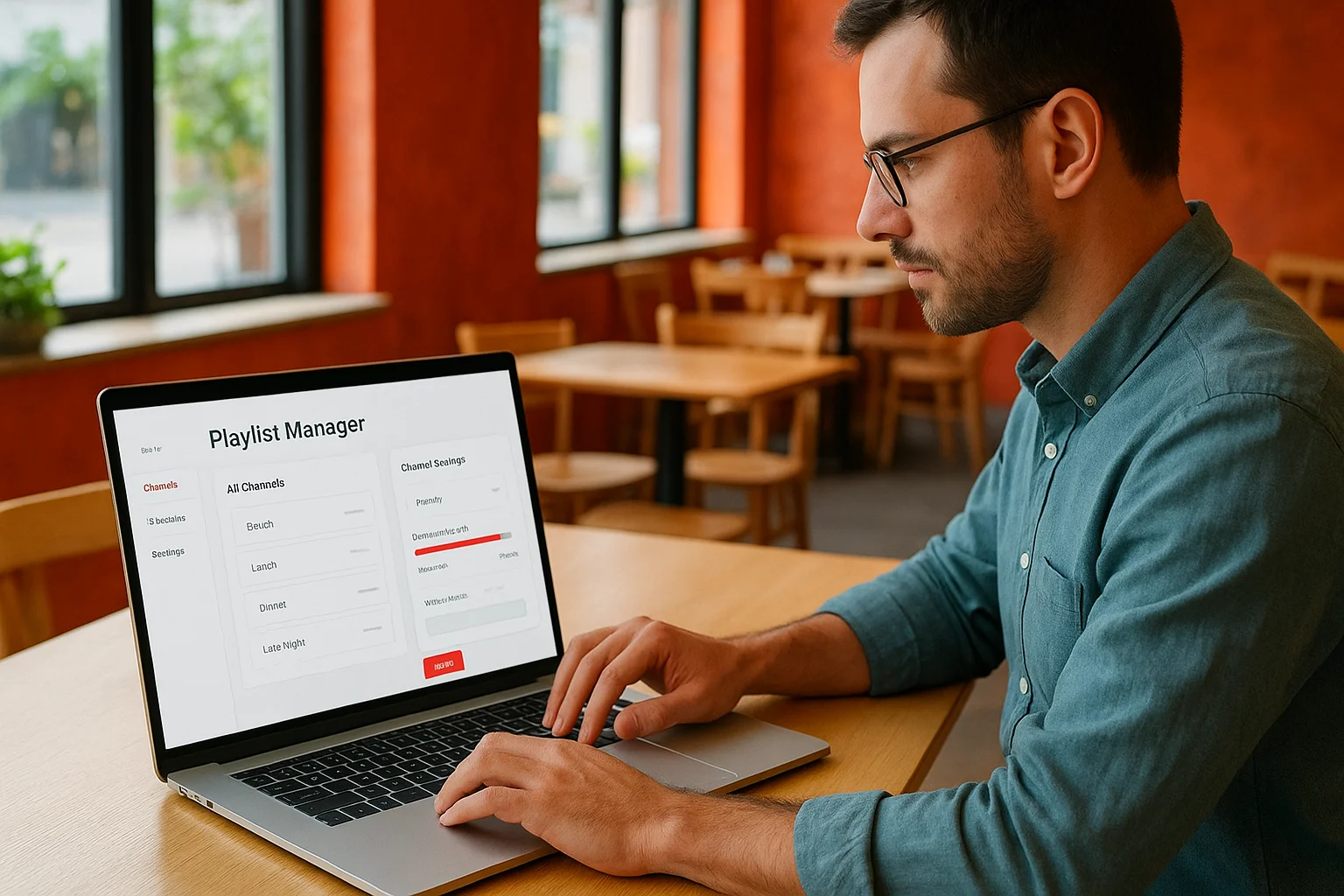
You set up your weekly schedule once, and the platform rotates through thousands of licensed tracks while maintaining the atmosphere you defined.
Best fit for restaurants that want curated music fast
This approach works best for new restaurants that need professional-quality background music systems for restaurants immediately without spending time building custom playlists. Venues that lack dedicated staff for music management benefit from the expertly programmed channels that handle curation automatically. Restaurant groups standardizing atmosphere across multiple locations use Soundtrack to ensure consistent music programming that matches their brand guidelines.
Subscription costs and licensing notes
Expect to pay $35 to $50 monthly per location depending on your chosen plan level. Basic subscriptions include standard channels and scheduling, while premium plans add advanced features like custom channel creation and detailed analytics. You pay a one-time hardware fee of $200 to $300 for the Soundtrack Business Player, though some subscription tiers include hardware as part of the initial setup.
11. Cloud Cover Music
Cloud Cover Music delivers turnkey streaming solutions designed specifically for restaurants that need commercial-licensed background music without managing playlists or worrying about legal compliance. You get fully automated music programming that handles everything from song selection to license reporting through a simple web interface. The platform emphasizes straightforward operation that lets you set preferences once and trust the system to deliver appropriate music throughout your service hours.
What it is
This system provides cloud-based music streaming through dedicated hardware devices that connect to your existing restaurant audio equipment. You receive a Cloud Cover player that plugs into your amplifiers and speakers using standard audio connections, then configure all settings through a web dashboard accessible from any internet-connected device. The platform focuses on hands-off operation with professionally curated channels that automatically refresh content and handle all legal compliance requirements without ongoing attention from your staff.
How it handles licensing, explicit filters, and scheduling
Cloud Cover manages all music licensing through direct agreements with rights organizations, so you avoid the separate fees and paperwork that commercial music use requires. The system includes built-in explicit content filtering that prevents songs with profanity or inappropriate lyrics from playing in your family-friendly dining environment. You set scheduling rules through the web interface to automatically switch between different music styles based on time of day, and the platform maintains those settings without requiring daily management.
You enable explicit filters once in your account settings, and the system blocks inappropriate content across all channels without ongoing monitoring.
Best fit for hands-off background music control
This approach works best for restaurant operators who want professional background music systems for restaurants without dedicating staff time to playlist curation or music management. Venues with limited technical resources benefit from the automated operation that requires minimal ongoing attention after initial setup. Restaurants concerned about licensing compliance appreciate the built-in legal coverage that eliminates risk from unauthorized music use.
Subscription costs and setup options
Expect to pay $25 to $40 monthly per location depending on your selected feature set. Basic plans include standard channels and scheduling, while higher tiers add custom channel options and priority support. You pay a one-time hardware fee of $150 to $250 for the Cloud Cover streaming device, or you can lease equipment as part of your monthly subscription to reduce upfront costs.
12. SiriusXM for Business
SiriusXM for Business provides satellite-delivered music channels through dedicated receivers that eliminate dependence on your restaurant's internet connection. You get continuous streaming from dozens of commercial-licensed music channels without worrying about bandwidth limitations or network outages. The platform delivers consistent audio quality through satellite signals that work independently from your local infrastructure, making it a reliable option for venues with unreliable internet service.
What it is
This system uses dedicated satellite receivers that connect directly to your existing restaurant audio equipment through standard analog connections. You install a small satellite dish on your building's exterior, run coaxial cable to the receiver unit, and connect the receiver's audio outputs to your amplifiers and speakers. The platform provides access to commercial-licensed music channels organized by genre, decade, and format, all broadcast continuously through SiriusXM's satellite network without requiring streaming bandwidth from your internet connection.
How channels, receivers, and zone audio typically get set up
You select channels using the receiver's front panel controls or included remote, switching between programmed stations that broadcast different music formats throughout the day. Basic installations connect a single receiver to your entire audio system, playing the same channel across all zones. Multi-zone setups require multiple receivers connected to separate amplifier channels or zone controllers, letting you play different SiriusXM channels in your dining room versus your bar area.
You tune to your preferred channel once, and the satellite signal delivers continuous music without any interaction needed from your staff during service.
Best fit for simple, consistent background music
This approach works best for restaurants in areas with limited internet bandwidth or venues that experience frequent connectivity issues. Locations that prefer straightforward operation without managing playlists or configuring network settings benefit from the plug-and-play simplicity. Restaurants satisfied with pre-programmed music channels rather than custom playlist control find the limited selection adequate for basic background music systems for restaurants.
Subscription costs and operational limitations
Expect to pay $30 to $50 monthly per receiver depending on your chosen channel package. Installation costs include the satellite dish, receiver hardware, and professional mounting, typically adding $300 to $600 upfront. You face limited customization options compared to streaming platforms, with no ability to build custom playlists or schedule automatic channel changes. Each zone requiring different audio needs its own receiver subscription, increasing costs for multi-room venues.
Next steps
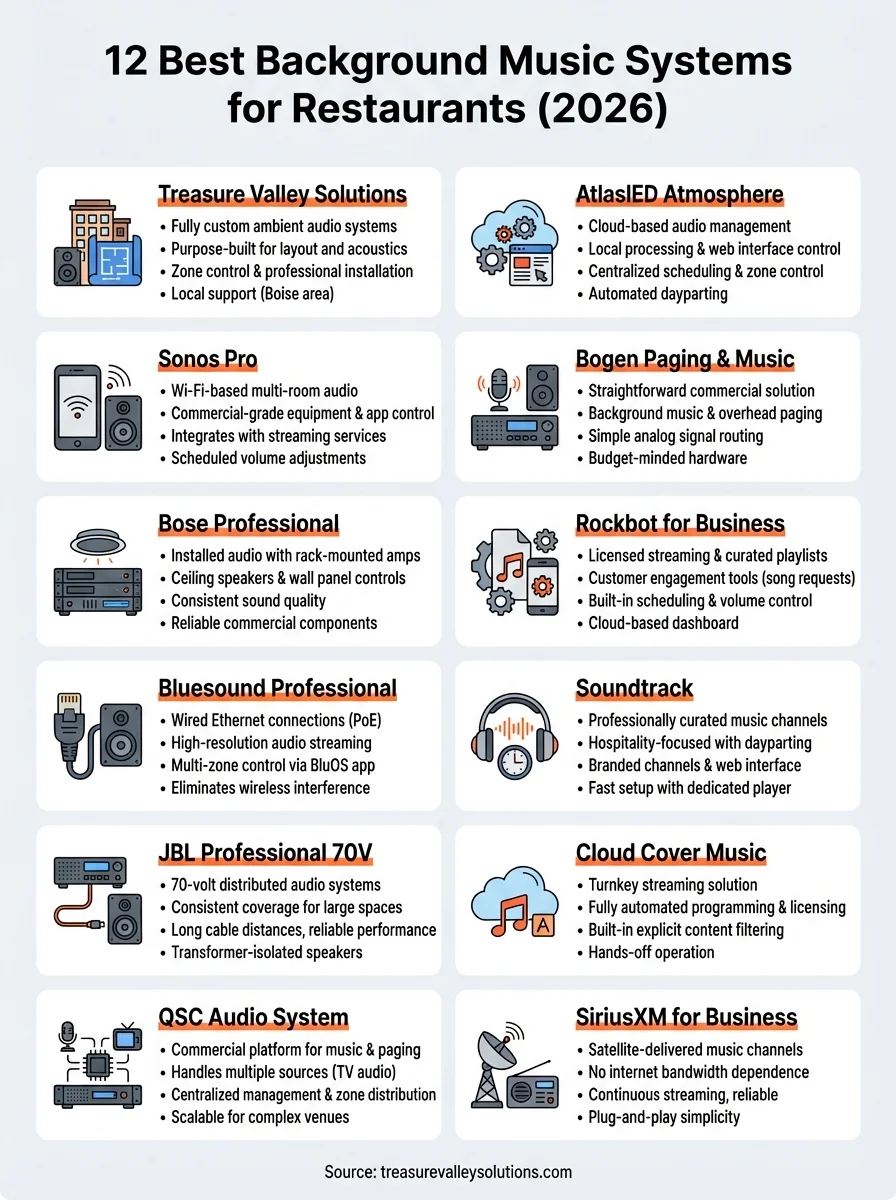
Choosing the right background music systems for restaurants depends on your specific venue layout, budget constraints, and operational requirements. You now have detailed information about twelve different options, from simple satellite-based solutions to sophisticated network audio platforms with advanced zone control and automated scheduling.
Your next move depends on where you're located and how much customization you need. If you're operating a restaurant in the Boise or Meridian area and want a system designed specifically for your space, contact our team at Treasure Valley Solutions for a comprehensive site consultation. We'll evaluate your acoustic challenges, recommend appropriate equipment, and provide a detailed quote based on your exact requirements.
For restaurants outside our service area, review the options in this guide based on your specific priorities. Systems like Sonos Pro and Bose Professional work well when you need reliable installed audio with professional support. Streaming platforms like Rockbot and Soundtrack deliver licensed music without hardware complexity. Match your choice to your venue's needs, budget, and technical comfort level.
Need Expert Help?
Ready to implement these solutions in your own home or business?
Our Services
Whole-home audio and high-fidelity sound systems.

Cinematic experiences in the comfort of your home.
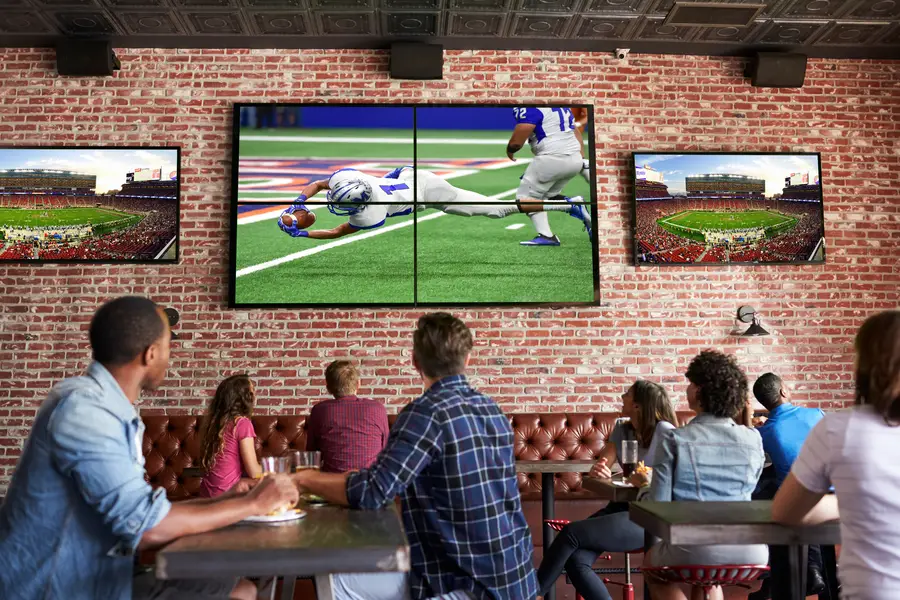
Expert TV Mounting Treasure Valley Homeowners & Businesses Trust
Serving the Treasure Valley
Local installation in your city